The Andes and the Páramo Circuit: Eloping Above Bogotá
A cathedral cut two hundred metres inside a salt mountain, a shrine above a city of eight million, and a high moor full of plants that grow nowhere else on earth.
This is the circuit couples do not know exists, and the one I would pick for myself.
Bogotá sits at two thousand six hundred metres, higher than most of the peaks people fly to the Rockies for. It is cold, it is enormous, and the country immediately around it is genuinely strange in a way the postcard version of Colombia is not.
The Andes and the Páramo circuit is three things: a shrine on a mountain above eight million people, a cathedral carved inside a working salt mine, and a high moor covered in plants that exist almost nowhere else.
(Continued on Page 2, Col. 1)
Monserrate, and the altitude nobody warns you about
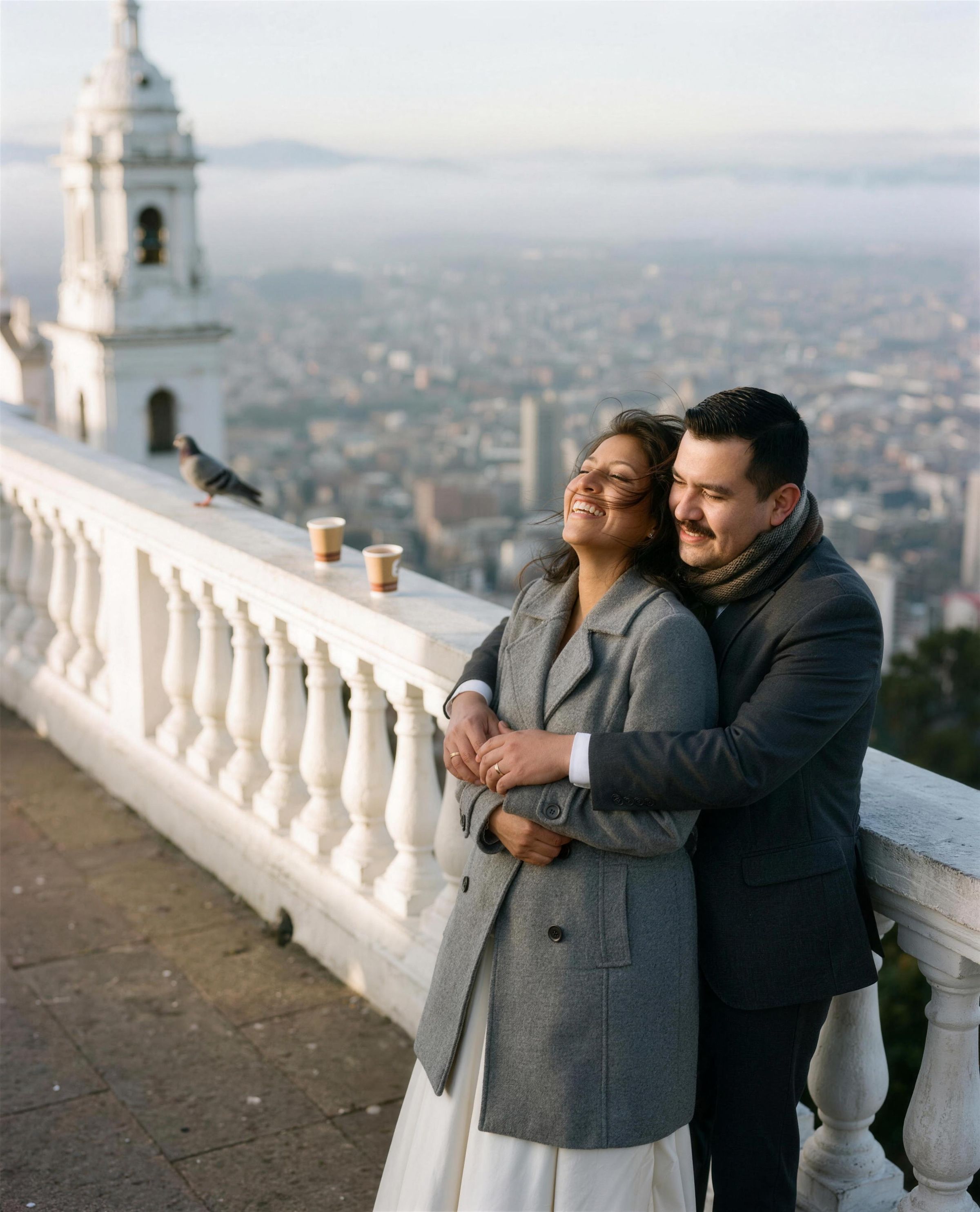
Monserrate is the mountain on the eastern edge of Bogotá with a white church on top of it, reached by funicular or cable car, and at dawn it is the single best view in the country: eight million people underneath a layer of cloud with the Andes running away behind.
Here is the part that catches people. The summit is over three thousand one hundred metres. That is higher than any road pass in the Canadian Rockies. Couples arrive from sea level, walk up a flight of stairs in wedding clothes, and discover that their lungs have opinions.
So I build the circuit with altitude in mind: two days in the city before we go up, water constantly, and the ceremony scheduled for a time when you are not also short of breath. It is a small planning decision that changes whether you enjoy the morning.
A cathedral inside a mountain
Zipaquirá is fifty minutes north of the city, and underneath the town there is a working salt mine with a cathedral cut into it: naves, a cross carved out of the rock and lit from within, and chambers two hundred metres below the surface.
There is no natural light down there, and I am going to be honest that it is a difficult room to photograph. It is also the most extraordinary interior I have ever worked in, and the couples who marry in it come out having done something almost nobody has done.
It is not a permit in the Canadian sense; it is an access arrangement, made in Spanish, with the people who run the mine. That is my job and it is one of the reasons this circuit is not a self planned day.
The páramo, which is the reason to come
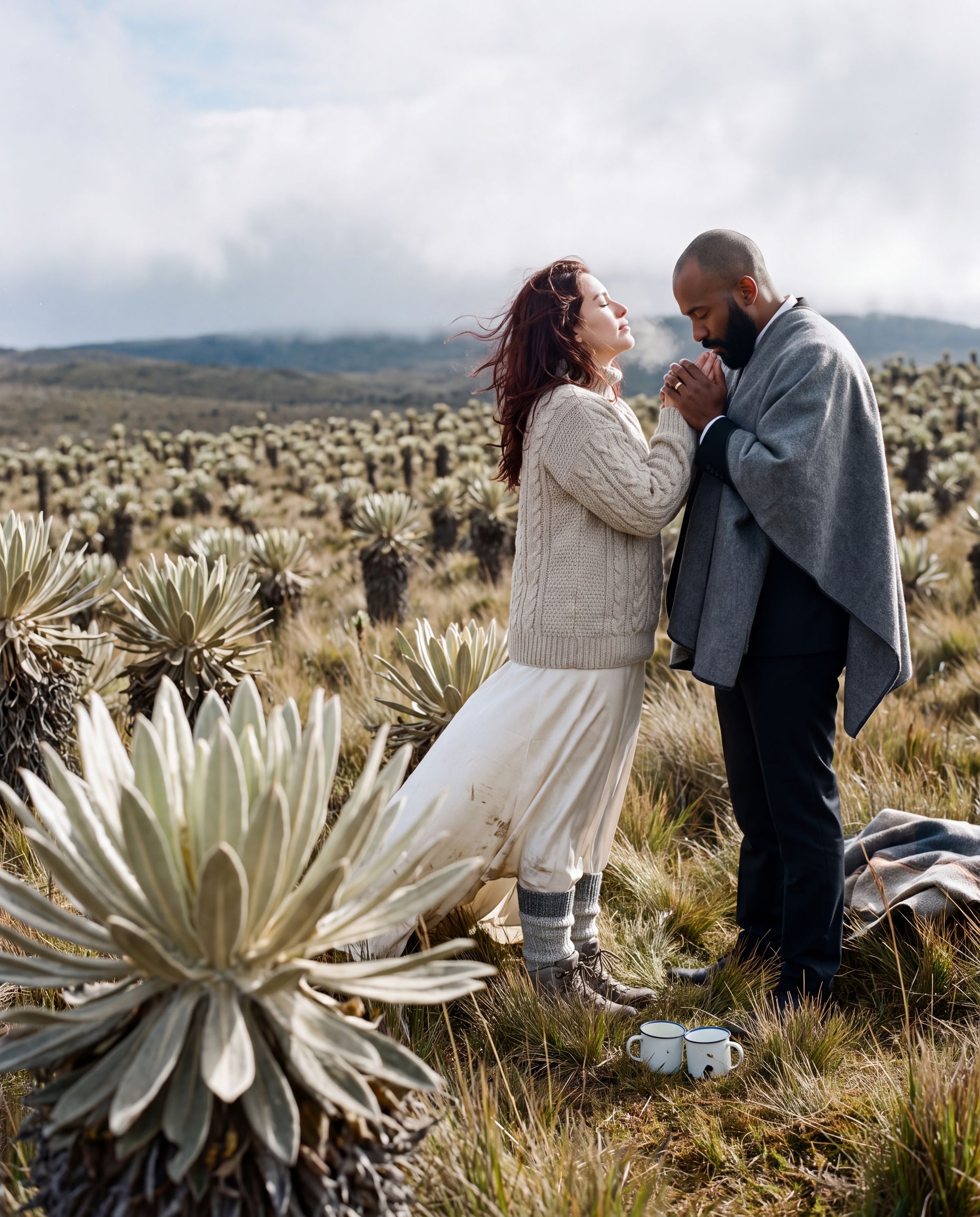
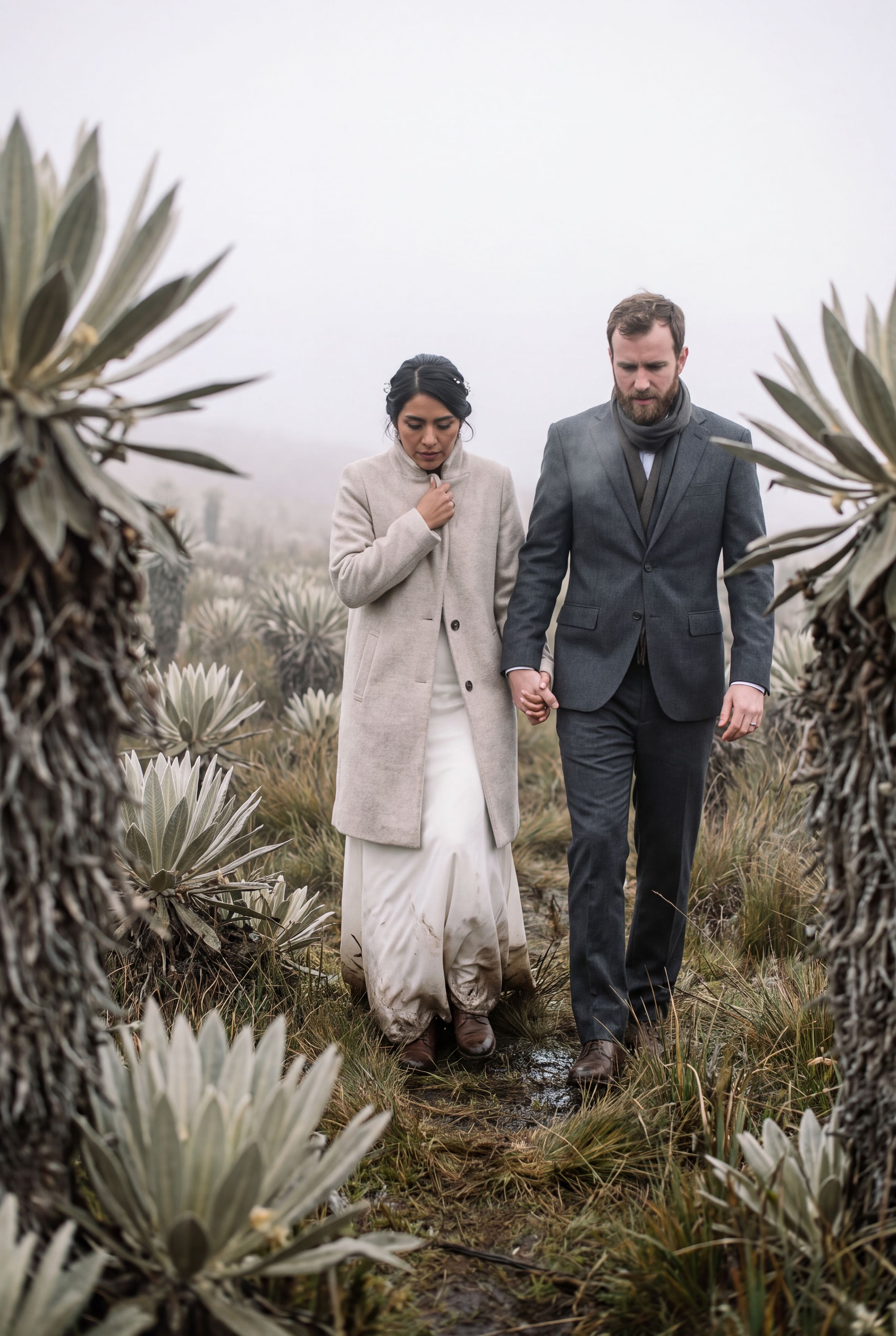
Above the treeline and below the snowline, the Colombian Andes do something that happens almost nowhere else. The páramo is a high wet moor covered in frailejones: thick woolly stalks with silver leaves that grow about a centimetre a year, so a waist high one has been standing since before you were born.
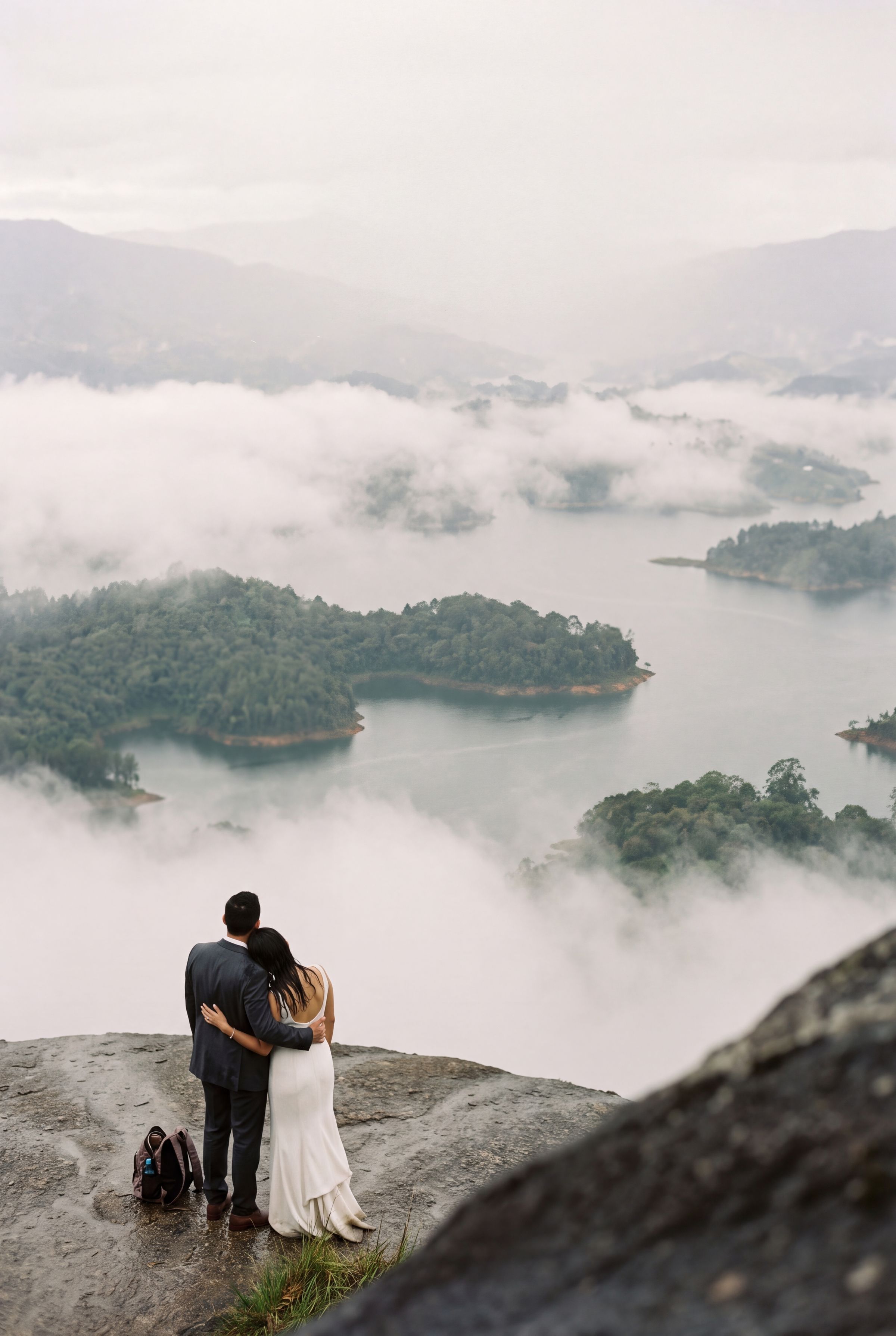
It is cold, it is usually in cloud, and it is completely unlike any image anybody has in their head of Colombia. Standing in a field of them in a dress, in fog, at three thousand five hundred metres, is the most otherworldly frame I make anywhere in the country.
Chingaza and Sumapaz are both within reach of the city. Access is regulated, because the páramo is where Bogotá's water comes from and the ecosystem is fragile. That means a permit and a guide, and it means we do not wander off the track.
What it costs
The Essential, from US$7,800. One elopement day on the circuit, designed, booked and run: officiant, the legal route, florals, hair and makeup, private transport, a signature experience, dinner, and photography and video throughout.
The Curated Signature, from US$13,500. Two elopement days, which on this circuit is what I would push for, because Monserrate at dawn and the páramo in cloud are two completely different worlds and cramming them into one day means rushing both. A cinematic film, around 350 images, the Studio Editorial and the Signature album.
The Curated Adventuremoon, from US$19,000. Four days across more than one circuit, with the internal flight on a buffer day.
Bogotá prices identically to the Mountains circuit and below the Caribbean, for the same reason: it is a real city rather than a tourist economy, and vendors charge accordingly.
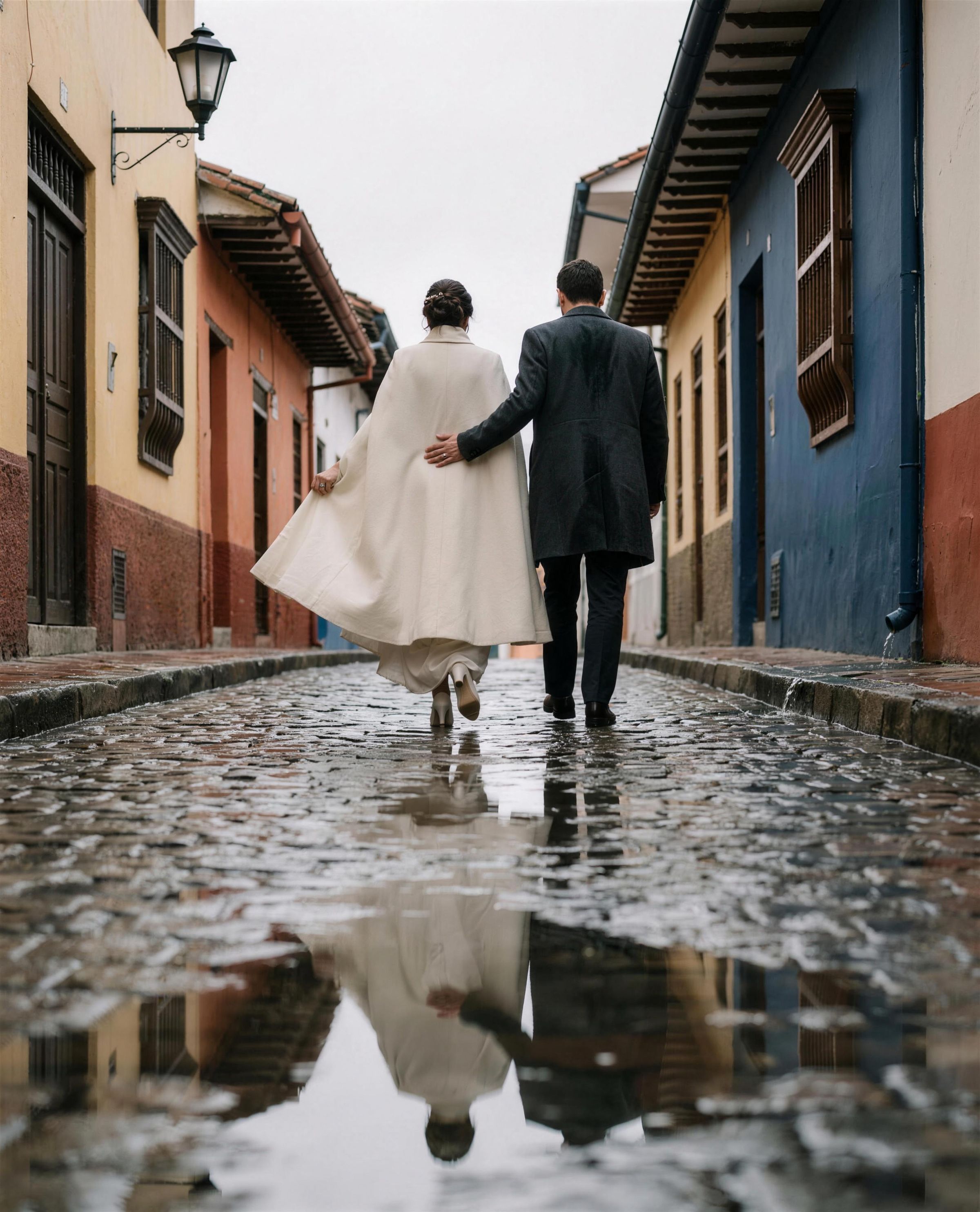
La Candelaria, for the half of the day that is indoors
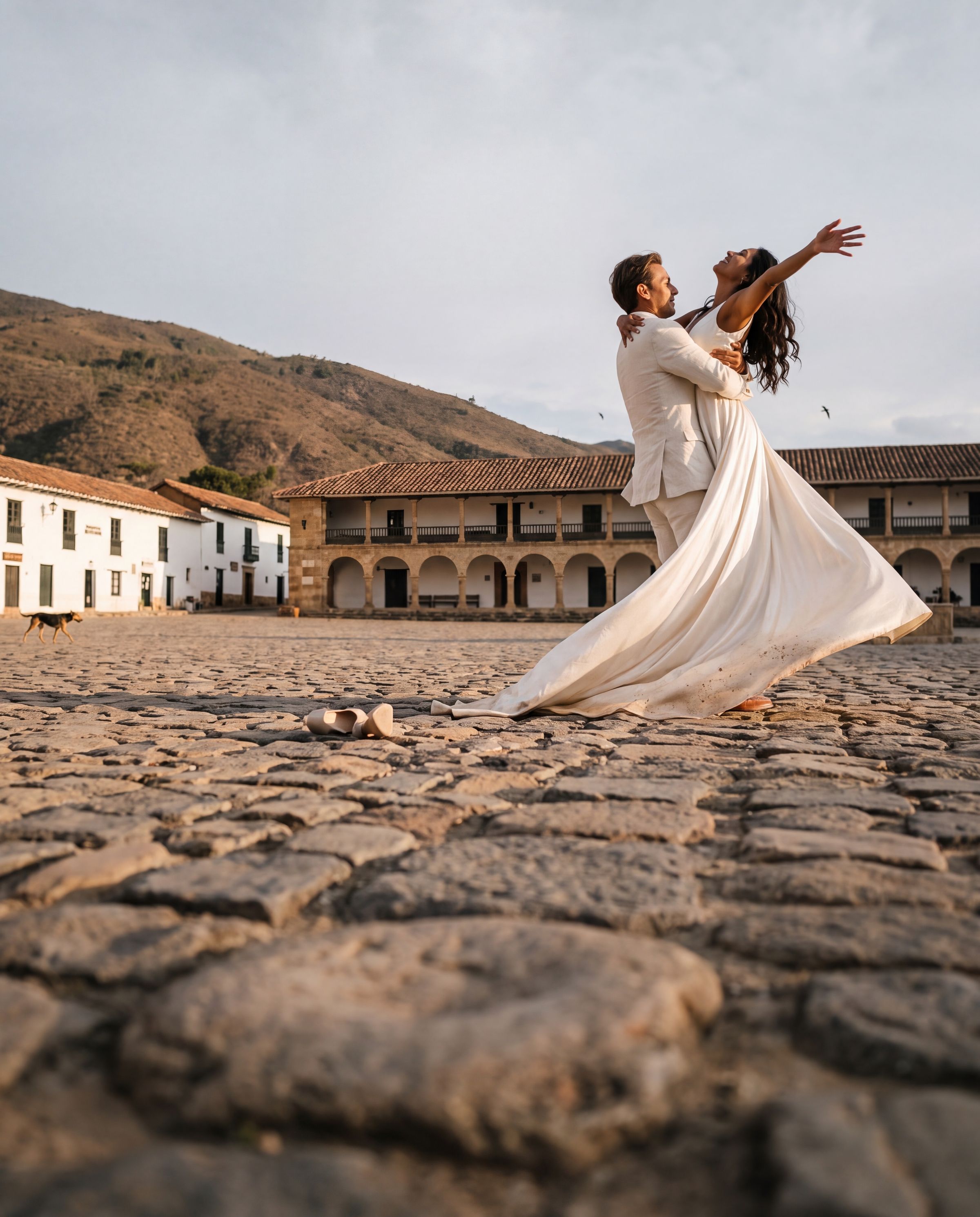
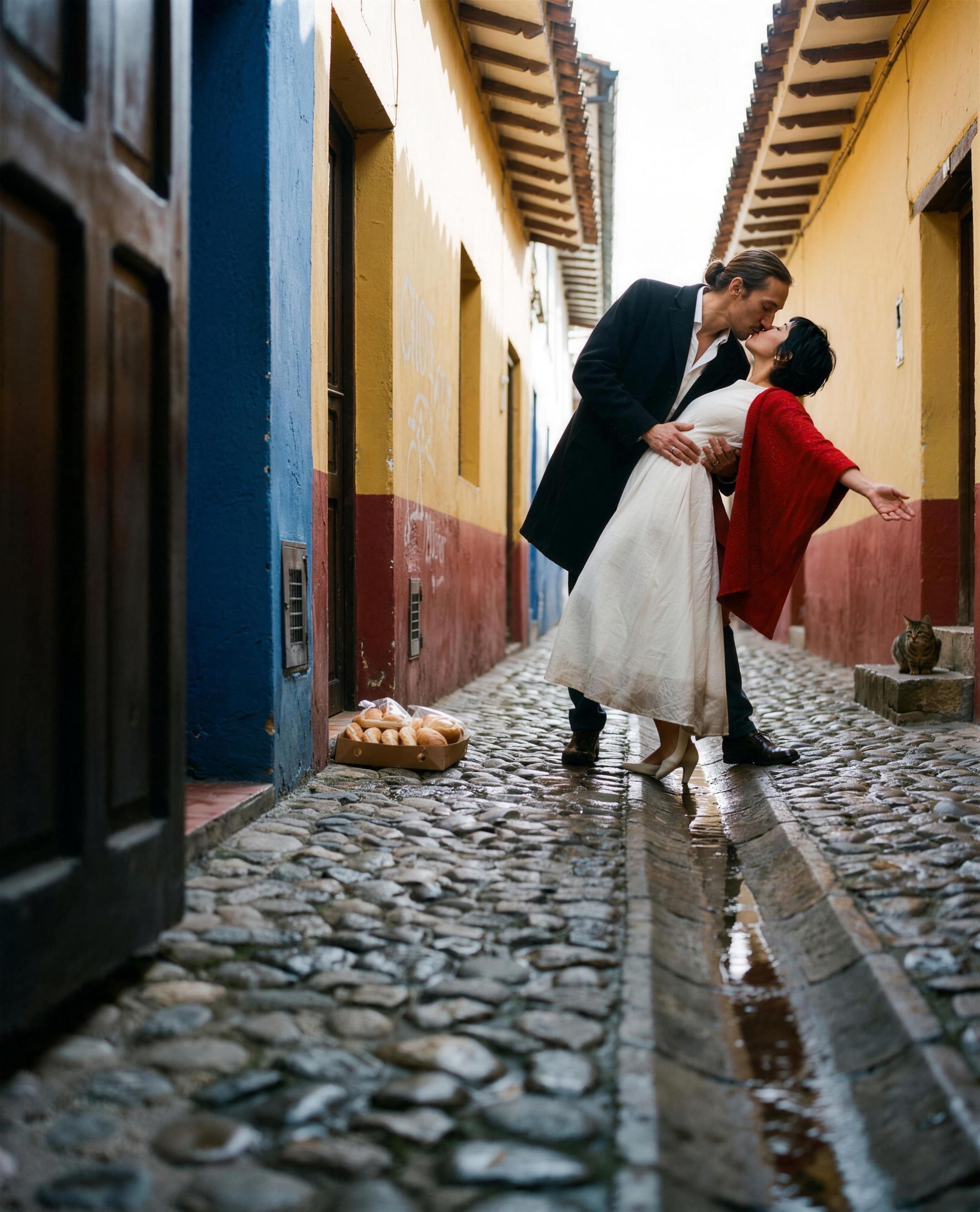
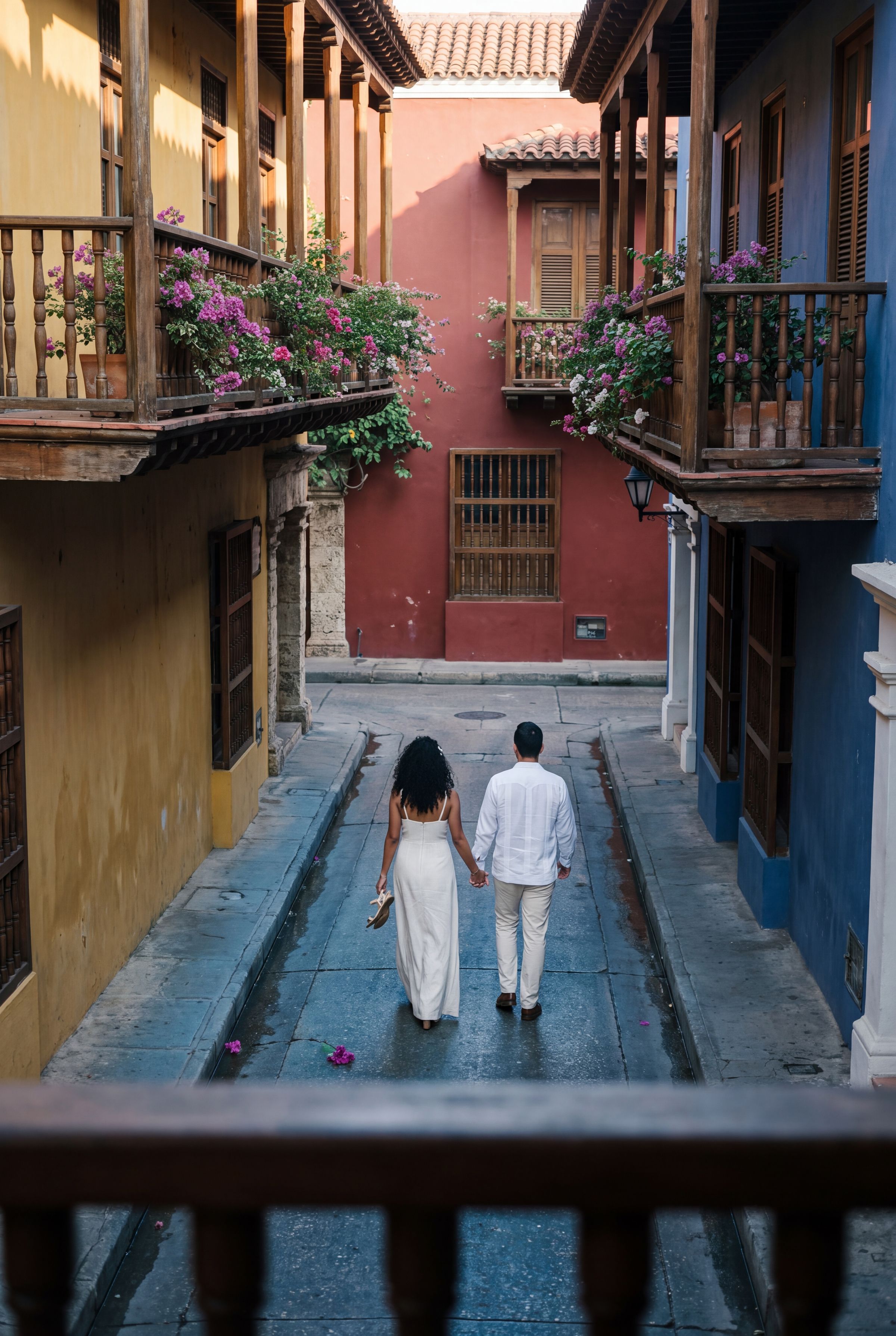
The old quarter is painted, steep and full of doorways, and it is where the circuit goes when the weather on the mountain says no. Ochre and oxblood walls, colonial balconies, and streets narrow enough that the light bounces.
This matters more here than on the other circuits. Bogotá is genuinely wet and genuinely cold, and any honest plan for this city has an indoor and a low altitude version already scouted. The couples who have the best day are the ones who agreed in advance that the fog was allowed to happen.
What a two day version actually looks like
Day one goes up. Cable car or funicular before dawn so you are on Monserrate while the city underneath is still under cloud and still mostly asleep. Down into La Candelaria for the middle of the morning while the light is bouncing between painted walls. A long lunch, because at this altitude you will want one.
Day two goes out. North to Zipaquirá and two hundred metres underground, or east into Chingaza for the páramo. Both are an hour or so from the city and neither is a thing you can bolt onto the end of a Monserrate morning without ruining one of them.
That is why I push the Signature harder on this circuit than on the other two. The Mountains circuit compresses into one day acceptably. This one genuinely does not: a shrine at three thousand metres and a moor at three thousand five hundred are separate expeditions, and pretending otherwise produces a rushed day and a thin gallery.
What to wear at three thousand metres
This is the circuit where clothing decisions actually change the day, so it is worth its own section.
It is fourteen degrees and wet. Not cold enough to look like a winter elopement, not warm enough for a slip dress. The couples who get this wrong spend the morning miserable and it shows in every frame, because a face that is cold looks like a face that is cold.
Bring a real coat and plan to take it off for four minutes. A long wool overcoat over a wedding dress at Monserrate is not a compromise, it photographs beautifully, and it means you can stay up there for an hour instead of twelve minutes.
Shoes matter more than usual. The páramo is a bog. It is wet ground with tussocks and standing water between them, and the walk out to a good stand of frailejones is genuinely muddy. Boots under the dress, always, and a second pair for afterwards.
Skip the veil in the páramo. The wind up there is constant and it will spend the whole time wrapped around a plant that took forty years to grow. Save it for La Candelaria where the walls block the wind and it does what a veil is supposed to do.
When to come
Bogotá has no summer. It runs about fourteen degrees all year, every month, and it rains a lot. Pack for a cool wet spring and you will be right in January and right in July.
December through March and July through August are the drier windows and the ones I would book.
April, May, October and November are the wet ones. The páramo is at its most atmospheric in exactly that weather, so this is a genuine trade rather than a season to avoid: wetter days, better fog, worse odds on the summit view.
Nothing about the price moves across the year.
What is not included
Your flights and your accommodation. I name the airport, the arrival day and the exact hotel that puts you in the right place at the right hour, and you book both yourselves. Booking travel on your behalf needs an agency licence I do not hold.
Additional guests beyond the small number the tier covers, and meals outside the planned dining.
My travel is inside the number. There is no separate fee for getting me there.
Who this circuit is actually for
Not for couples who want warm. It is cold, it is wet, and the good frames are made in fog.
It is for couples who want somewhere genuinely odd. A cathedral inside a mountain and a moor full of plants that look like nothing else on the planet is not a beach in a nicer country, and it will not photograph like anybody else's elopement.
If you want colour and heat, take the Caribbean. If you want green and gentle, take the Mountains. If you want strange, this is the one.
The full ladder for every circuit is here. The circuits are laid out properly in the Colombia guide. Or tell me which one you keep coming back to and I will tell you honestly whether it is the right one for the two of you.
Enquiries to the publisher, armanarai.com.