Do You Need a Permit to Elope in the Canadian Rockies?
Banff, Jasper, Mount Revelstoke, Canmore and Kananaskis all answer this differently, and the order will surprise you. Jasper asks for the least. Canmore is not the loophole everybody thinks it is.
Short answer, because it is the reason you are here. Banff wants a form. Jasper wants nothing, as long as you stand somewhere public. Mount Revelstoke wants a form and caps you at twenty people. Canmore, which everybody calls the easy option, is the most administered of the four. Kananaskis is its own system again.
That ordering is the opposite of what most couples assume, and it is the opposite of what most of the internet says. So this post goes jurisdiction by jurisdiction, and where a claim is not published anywhere official, I say that instead of repeating it.
One thing before the detail. A permit is not a reservation. Nothing described below buys you an empty lakeshore. It buys you permission to hold a ceremony in a place other people are also entitled to be standing in, which is why timing does more work than paperwork ever will.
(Continued on Page 2, Col. 1)
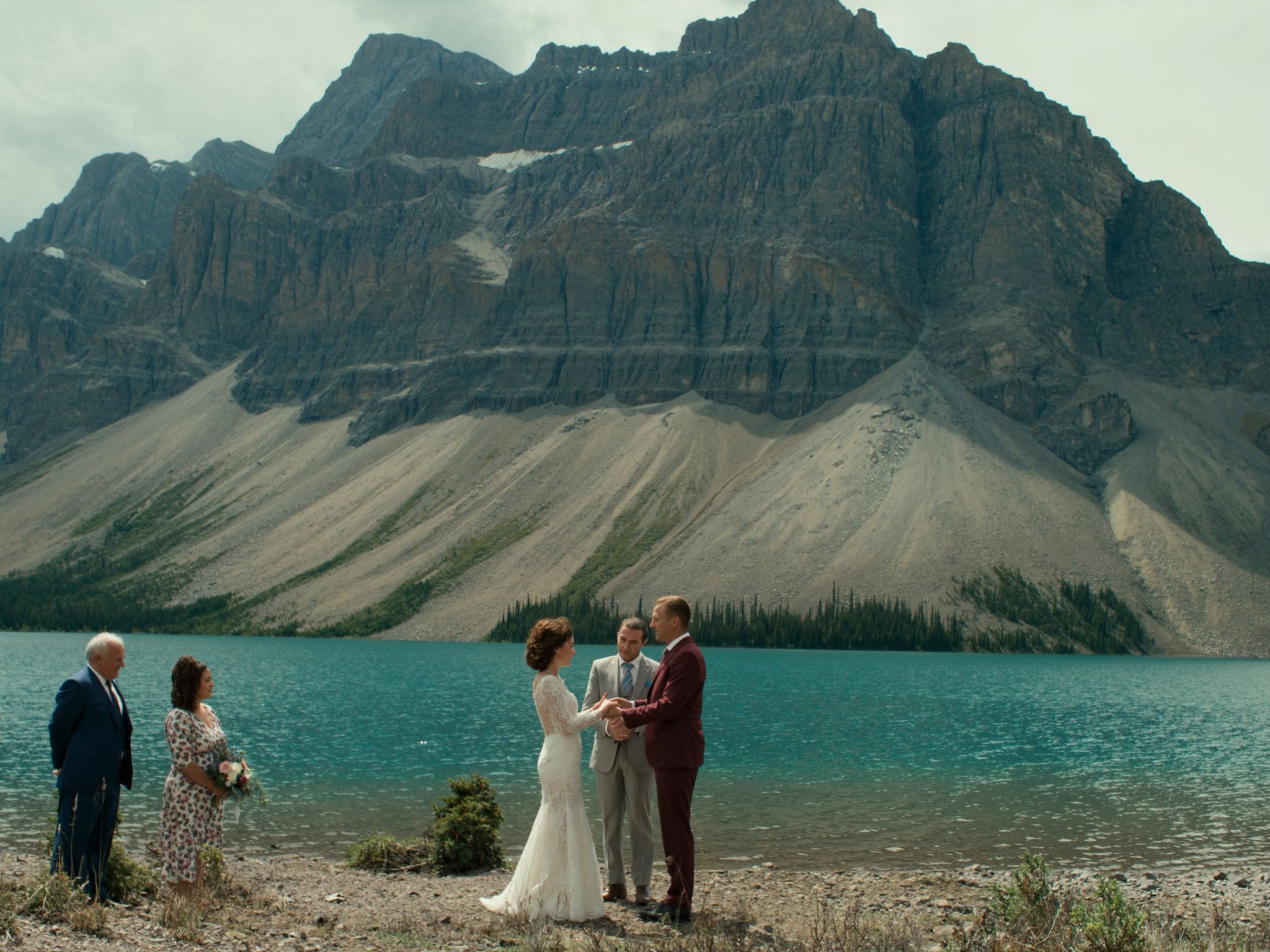
Banff: a registration form, not a permit
You will read almost everywhere that a Banff elopement needs a Parks Canada Special Event Permit. It does not.
Parks Canada's Banff wedding page asks organisers to complete a wedding ceremony registration form, which is how you acknowledge the conditions attached to holding a ceremony inside the park. You read it, you sign it, you return it. That is the baseline for a normal elopement.
What Parks Canada does not publish, and I have looked: a fee for that form, a deadline for returning it, a list of approved ceremony locations, or a ceremony size limit. Wedding blogs supply all four of those and they disagree with each other. One says the form is due three days ahead, another says thirty. Neither number is on the Parks Canada page.
The Special Events Licence is a different and much heavier track. It is for larger or more complex events, Parks Canada asks for applications a full year before the date and accepts them up to two years out, and their guidance is that events under fifty participants may not require it at all. Every elopement I have ever run sits far below that.
What actually pushes you toward the licence is not headcount. It is structures, amplified sound, and anything affecting access or wildlife. An arch is a structure. Rows of chairs are a structure. Two people and an officiant standing on a shore are not, and that distinction decides more Banff plans than any number does.
The twenty person cap, and the park it actually belongs to
Every planner in Alberta will tell you Banff caps ceremonies at twenty people. I have said for a long time that Parks Canada does not publish that number for Banff, which is true. What I had wrong is where it came from.
Mount Revelstoke and Glacier National Parks publish it outright. Their wedding page states a maximum of twenty participants may attend the ceremony. That is a real, published, hard cap, and it applies in the Meadows in the Sky, at Eva Lake, and anywhere else inside those two park boundaries.
Somewhere along the way it was copied onto Banff and it has been repeated so often that it now gets quoted at couples as settled fact. If you are planning under twenty guests anyway, none of this matters to you. If you are at twenty five and somebody has told you Banff will not allow it, ask them to show you where Banff says so.
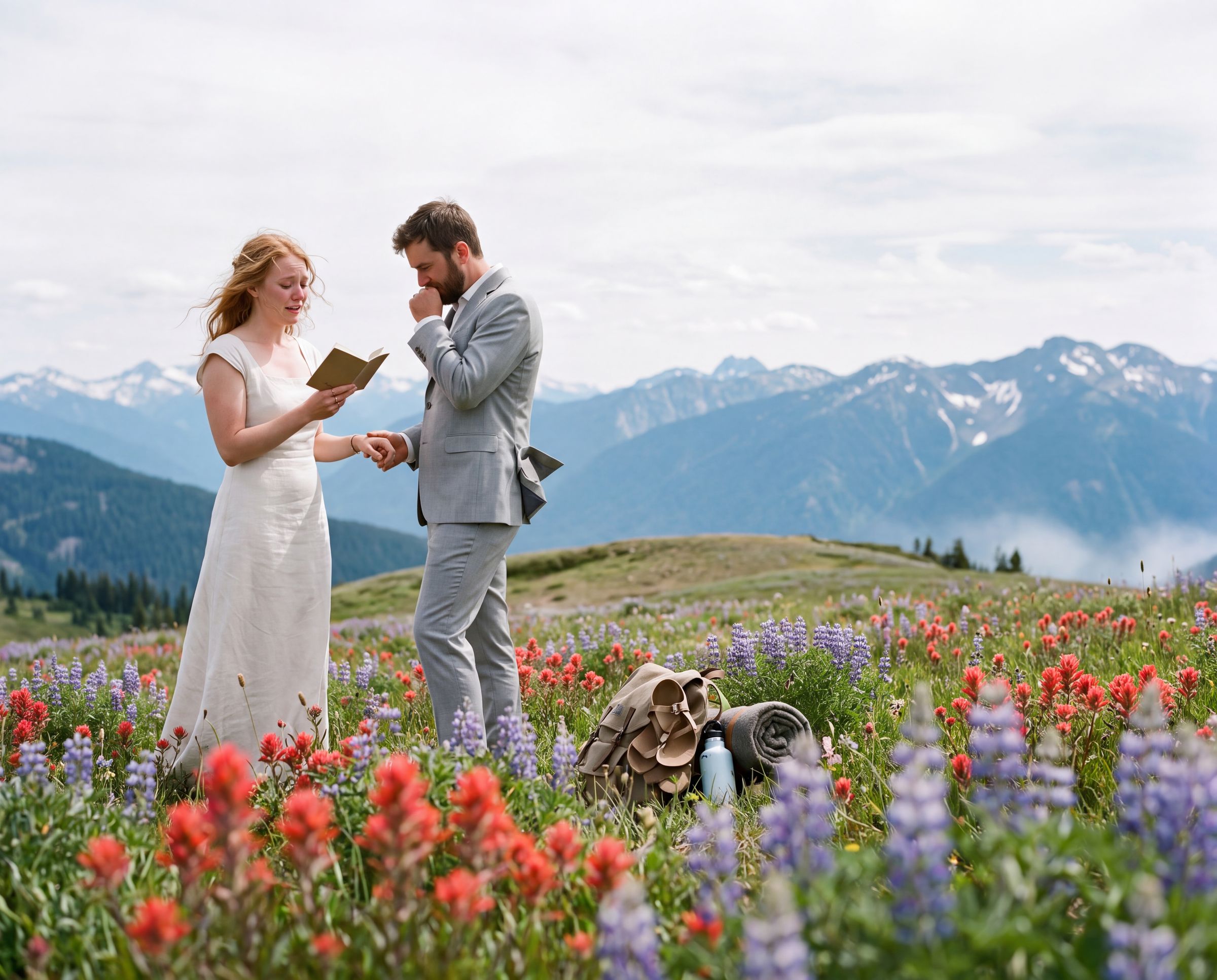
Jasper asks for the least of anywhere
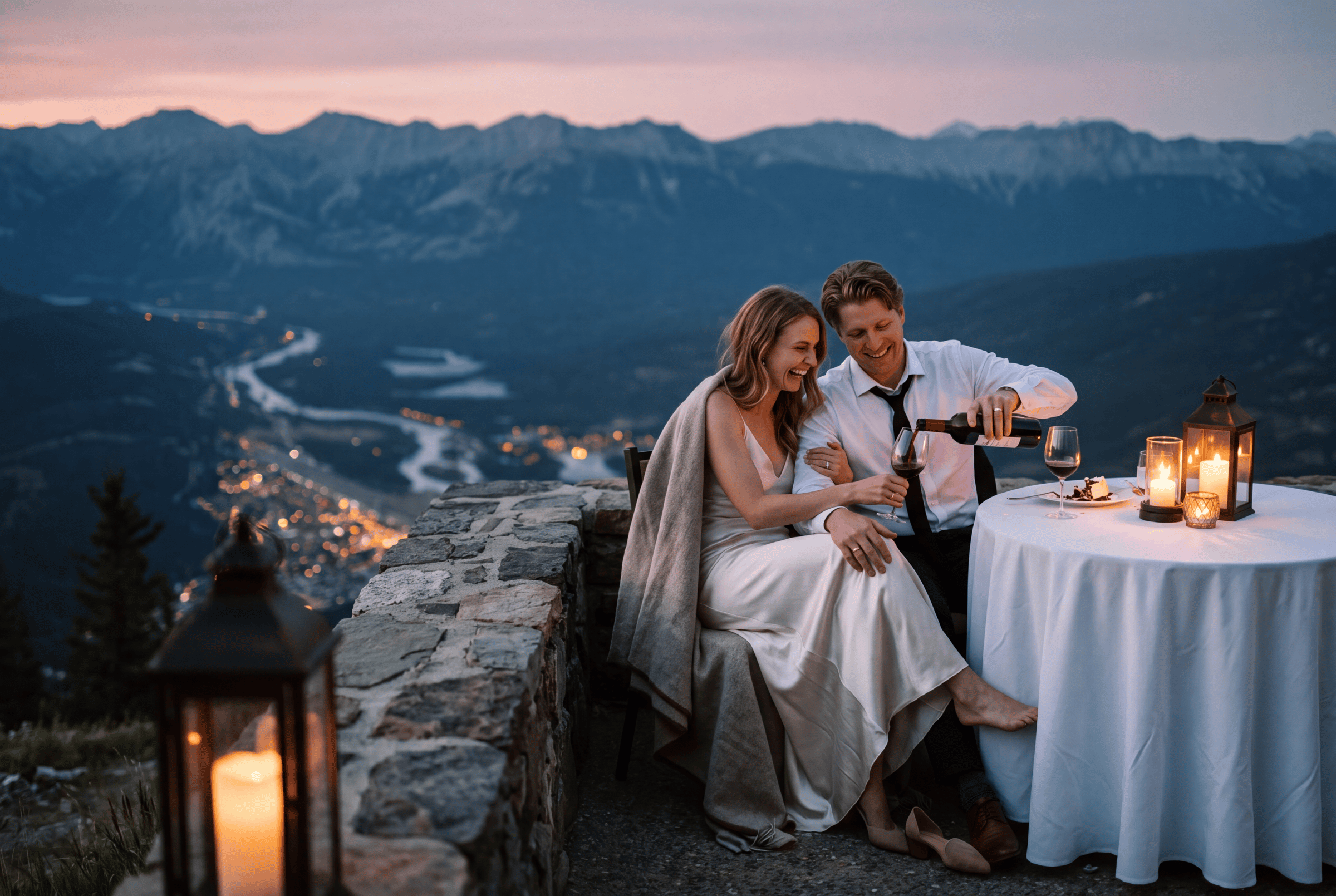
This is the single most useful thing in this post and almost nobody knows it.
Parks Canada's Jasper wedding page says a ceremony in a public area requires no formal approval process or permission, provided you are not using a reservable location. No form. No licence. No application window. You turn up and you get married.
Two conditions still apply, and they apply everywhere in the mountain parks: every participant and guest needs a valid national park pass, and any vendor conducting business needs a Parks Canada business licence. Neither of those is a ceremony permit.
The exception is reservable locations, and Pyramid Island is the one couples want. That is booked through Parks Canada like any other venue rather than permitted, which is a better position to be in, because a booking actually holds the place and a permit never does.
If the paperwork is what has been putting you off the Rockies, this is your answer. Jasper is also cheaper than Banff, quieter, and has darker skies. The permit position is the part nobody has priced in yet.
Mount Revelstoke and Glacier: a form and a hard number
Mount Revelstoke and Glacier run the same registration form model as Banff, plus the published twenty participant cap, plus a Special Event Permit if your event trips the usual triggers of exclusive use, vendors, food service, infrastructure or fifty plus people.
So inside those boundaries, this is stricter than Banff on paper. The reason I still send couples to Revelstoke is everything outside the boundary. The valley is surrounded by crown land, and the ridges, river flats, forest roads and heli landings out there need no wedding permit at all. That contrast, tight inside the park and genuinely free outside it, is the whole argument for the place.
The full version is in the Revelstoke guide, and the direct comparison with Banff's paperwork is here.
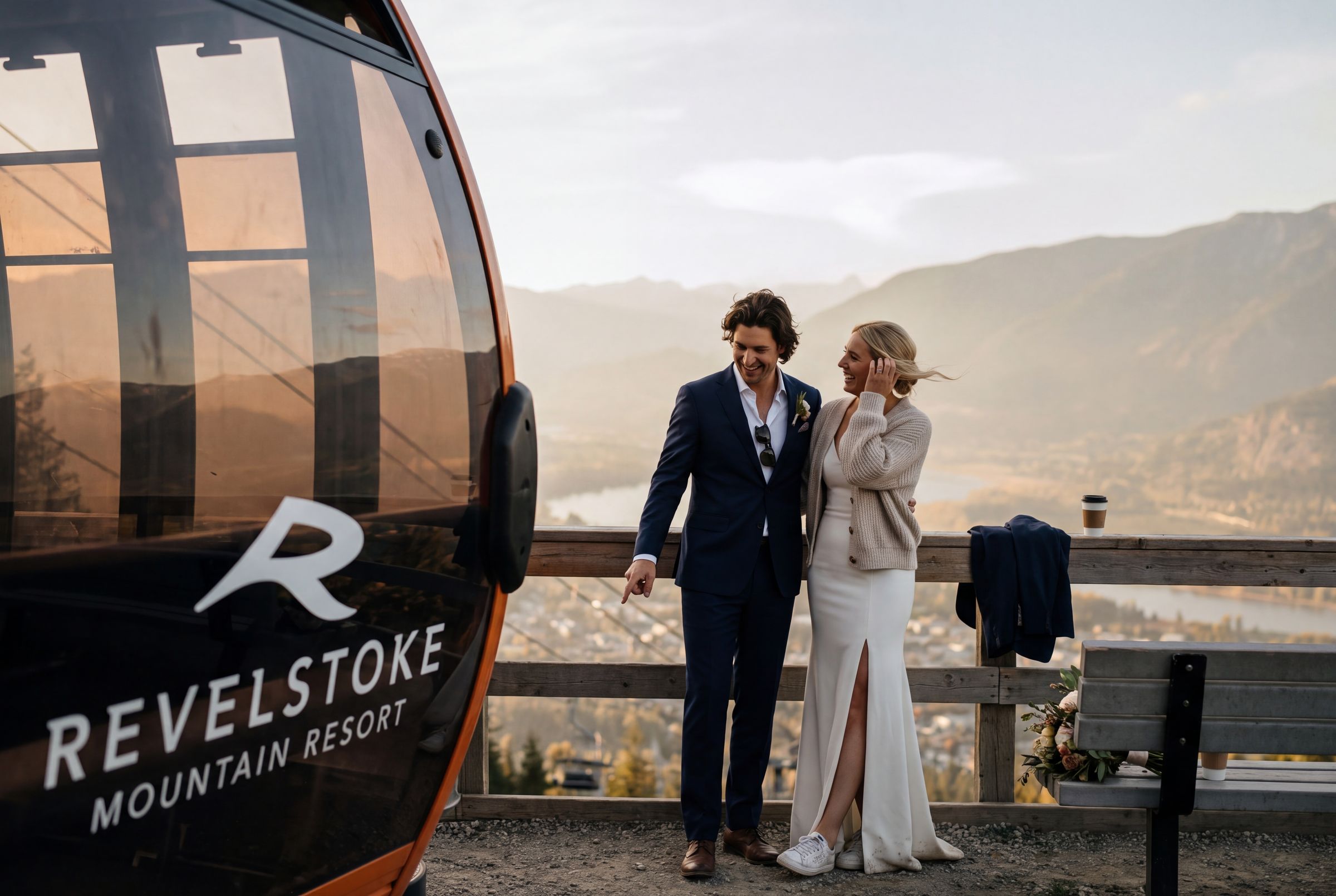
Canmore is not the loophole
Here is where I have to correct something I have said myself.
Canmore sits outside Banff National Park, twenty minutes down the valley, so the logic everybody reaches for is that Parks Canada has no say and therefore nothing is required. The first half is right and the conclusion is wrong.
The Town of Canmore runs a rental and permit system for wedding functions in Town parks and venues. Events on Town of Canmore property require an event permit, and the Town lists parks, trails, parking lots, streets and roads as Town venues. The organiser may also need a Special Event business licence in order to get a Community Event Permit.
And there is a detail specific to photography. The Town treats wedding photography as a professional service subject to a film permit, rather than as commercial filming, with the film permit fee waived when you have booked a wedding venue. That is a more explicit position on photography than Parks Canada takes in Jasper.
None of this makes Canmore a bad idea. It is a very good idea for other reasons and I write about those separately. It is simply not the place you go to escape paperwork. If that is the goal, the answer is Jasper.
Kananaskis: a third system, and a pass
Kananaskis Country is provincial rather than federal, so Parks Canada is irrelevant here and Alberta Parks takes over. Alberta Parks requires special permits or letters of authority for certain activities in provincial parks, and weddings and special events are handled through that process rather than being free use of the land.
Separately from any ceremony permission there is the Kananaskis Conservation Pass. Vehicles parked at provincial park and public land sites in Kananaskis Country and the Bow Valley need one. Arriving on foot, by bicycle or on horseback does not trigger it, since the pass attaches to a parked vehicle.
The useful boundary detail: the Conservation Pass does not apply in Canmore townsite or on other municipal land inside the region. So a day that parks in town and walks needs nothing, and a day that parks at a Kananaskis trailhead needs a pass per vehicle, including your officiant's.
The business licence to ask your photographer about
This is the requirement that catches people, and the consequence lands on the couple rather than the vendor.
Every business operating inside a mountain national park needs a Parks Canada business licence, and their permits pages name wedding photography and videography specifically. A photographer making images with the intent to sell them requires one. A visitor taking photographs for personal use, as a hobby, not for sale, does not.
Beyond that, commercial filming and photography at a scale that needs its own permit has a lead time: Parks Canada asks for those applications at least twenty business days before the activity. That is a month of working days, which is why a photographer flown in at three weeks' notice is a problem nobody notices until the day.
Ask to see the licence. Any vendor who has one will produce it in about four seconds and will not be offended. Somebody who becomes vague is telling you something.
The park pass everyone forgets
Small, obvious, and the single most common thing that goes wrong on the morning.
Every participant needs a valid national park entry pass. Banff's wedding page states it explicitly and Jasper's says the same for participants and guests. Not one pass for the couple. Not the vehicle you happen to arrive in. Everyone.
It reliably catches parents flying in from somewhere else, meeting you at a trailhead, arriving in their own hire car with no idea a pass exists. It is a small amount of money and a large amount of standing at a gate at six in the morning while somebody sorts it out.
Buy them in advance for everyone who will be there, including your officiant if they are not local. I do this as a matter of course and it is one of the least glamorous useful things in the job.
The Alberta marriage licence, which is the easy part
After all of the above, the legal marriage itself is refreshingly simple, and Alberta is one of the easiest jurisdictions in the world for two foreigners to marry in.
The provincial fee is $40. Registry agents add a service charge of their own that varies between agents, so most couples pay somewhere around a hundred dollars all in. You will see $150 quoted, including on this site until today. That is an agent total, not the licence fee, and it is not a number anybody publishes as fixed.
No waiting period, so you can marry the same day it is issued. Valid three months. No residency or citizenship requirement, and no period of time you must have been in Alberta first. Both of you need to be eighteen or over. You need a registered officiant and witnesses, and your officiant will confirm the number when you book them.
Get it on a weekday, in advance, not on the morning and not on a long weekend when half of Alberta is also in the mountains. Registry agents are all over Canmore and Banff.
Drones, in one paragraph
All Parks Canada places are no drone zones for recreational use. That is their wording, it covers every national park in this post, and there is no version of it that bends for a wedding.
Non-recreational use requires permission, and commercial drone work in a national park needs both a commercial film permit and a restricted activity permit. That is a real process with real lead time, not something arranged the week before.
So if somebody is promising you aerial footage over Maligne or Moraine, they are either working with permits you can ask to see, or they are planning to fly and hope. The second one is your problem, not theirs.
What I would actually do
Ranked by how much administration stands between you and being married, cheapest first in effort rather than money:
Jasper, in a public area. Nothing required beyond passes and a licensed vendor. Banff. One form, no fee, no deadline published. Mount Revelstoke crown land, outside the park. Nothing. Canmore or Kananaskis. A municipal or provincial permit process and, in Kananaskis, a parking pass. Inside Mount Revelstoke or Glacier. A form and a twenty person ceiling.
Now the part that matters more than any of it. None of this is what makes a Rockies elopement good or bad. I have never had a day fail on paperwork and I have watched plenty be spoiled by arriving at the right place at the wrong hour. The forms take an afternoon. Standing at Moraine at half past five instead of half past nine is what you are actually buying.
Prices for every Canadian city are on the pricing page, the whole country is in the Canadian elopement guide, and the two hubs are Banff and Jasper.
Tell me the park and the month and I will tell you what it actually takes →
Enquiries to the publisher, armanarai.com.