The Mountains Circuit: Eloping Across Antioquia and the Coffee Axis
Medellín, Guatapé and the wax palms, joined by road rather than by a domestic flight. What the circuit costs, how the days are shaped, and why the driving is the point.
I do not sell a Medellín elopement. I sell a circuit that starts there.
That distinction matters more than it sounds. Colombia changes completely every two hours by road, and the reason to bring an elopement here rather than to Mexico or Costa Rica is precisely that. A day spent entirely in one city wastes the country. A route through three of them is the whole argument.
The Mountains circuit runs Antioquia and the Coffee Axis. You fly into Medellín, and everything after that is a drive.
(Continued on Page 2, Col. 1)
What the circuit actually is
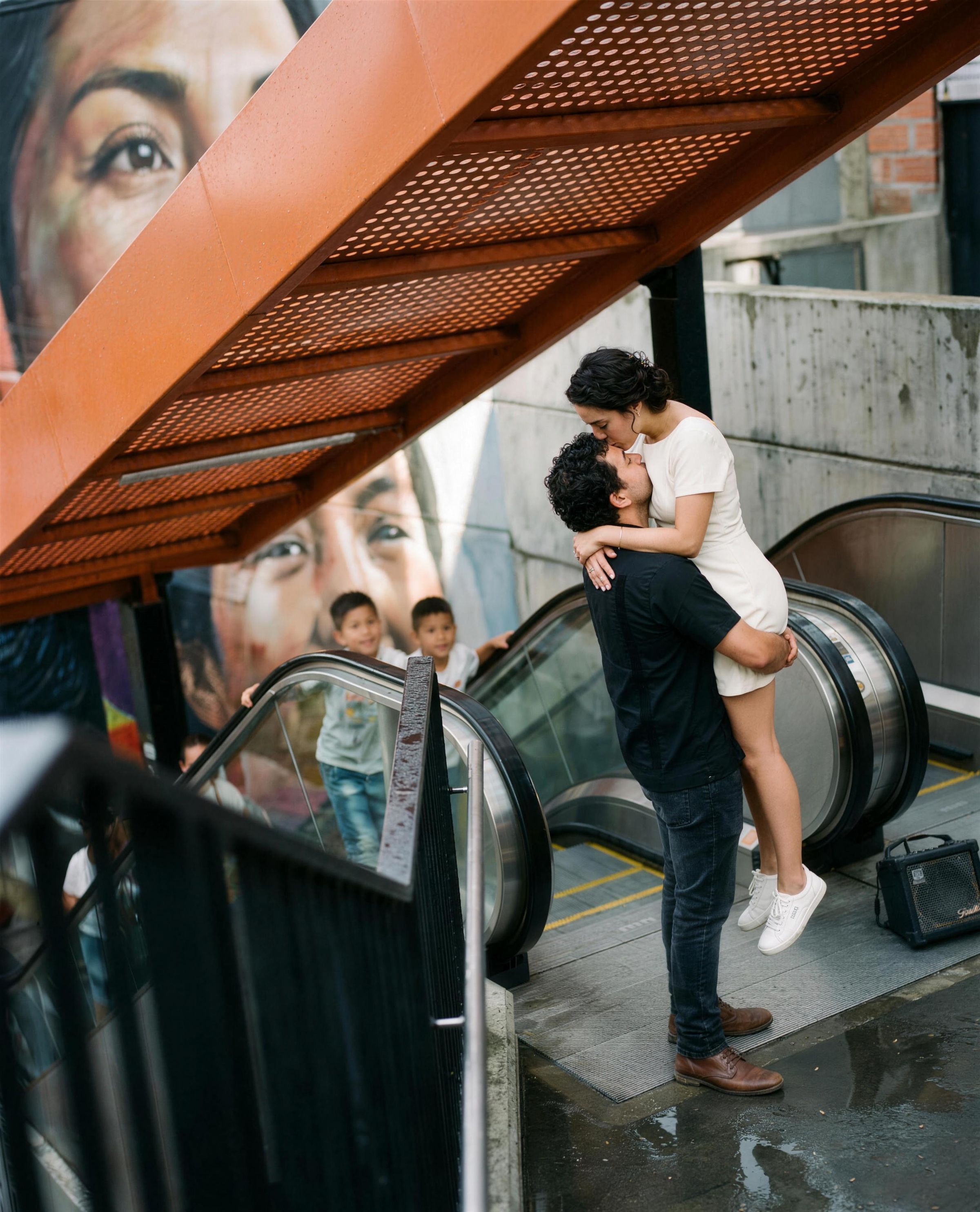
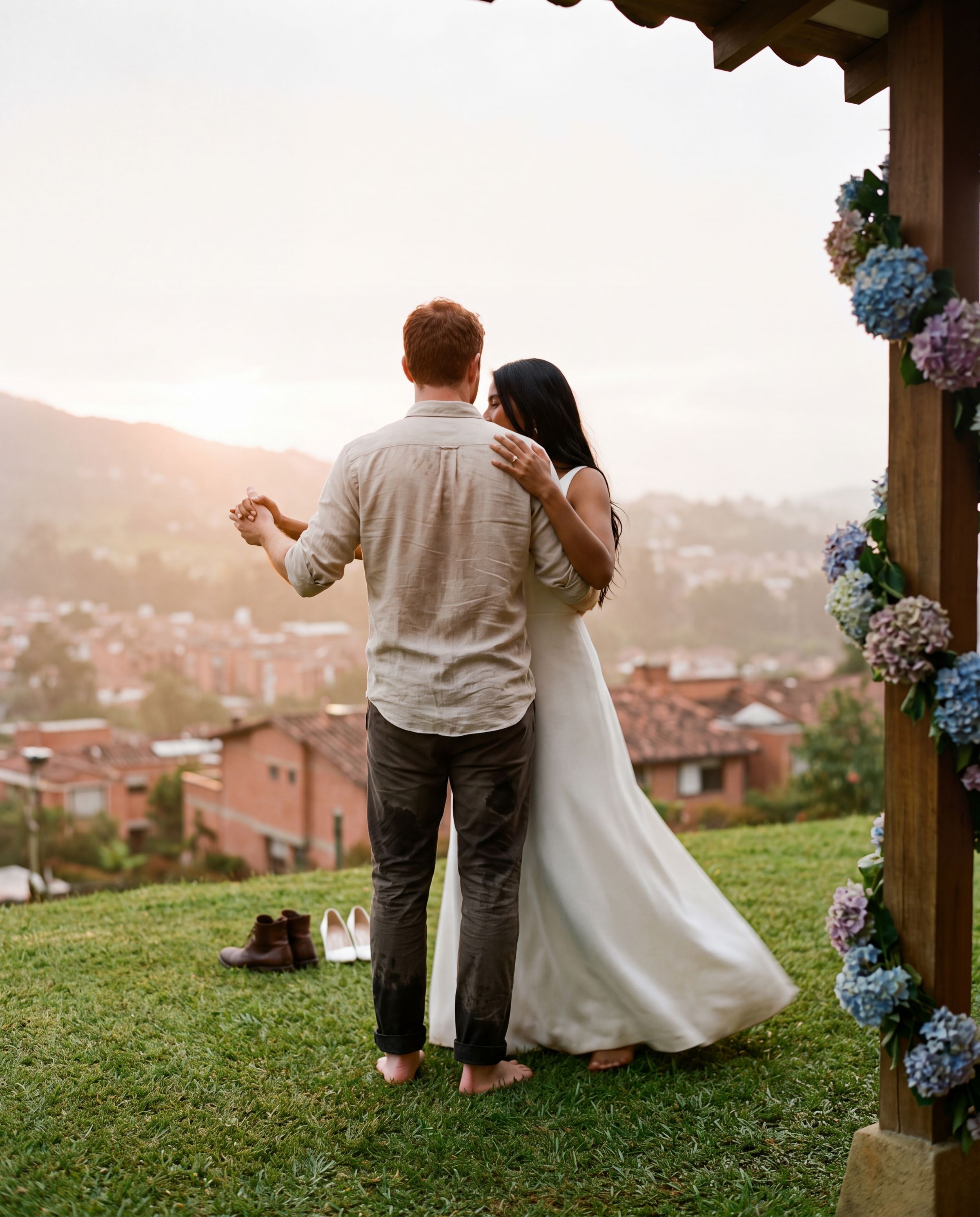
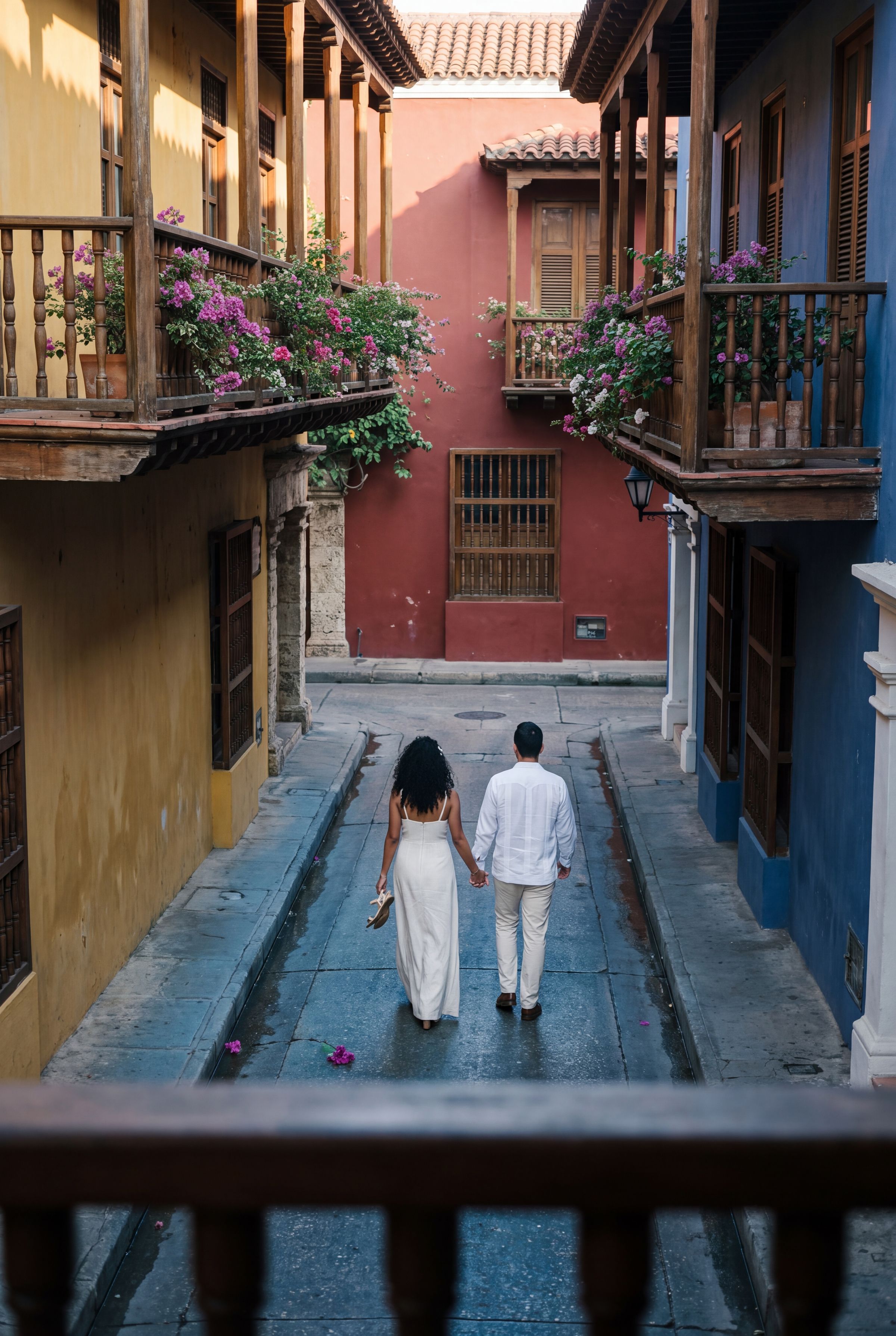
Medellín is the base and the softest landing in Colombia. It sits at fifteen hundred metres in a valley near the equator, which is why they call it the City of Eternal Spring and why it runs low to mid twenties every month of the year. A cable car climbs the valley wall. There are courtyards in El Poblado that nobody outside the neighbourhood knows about.
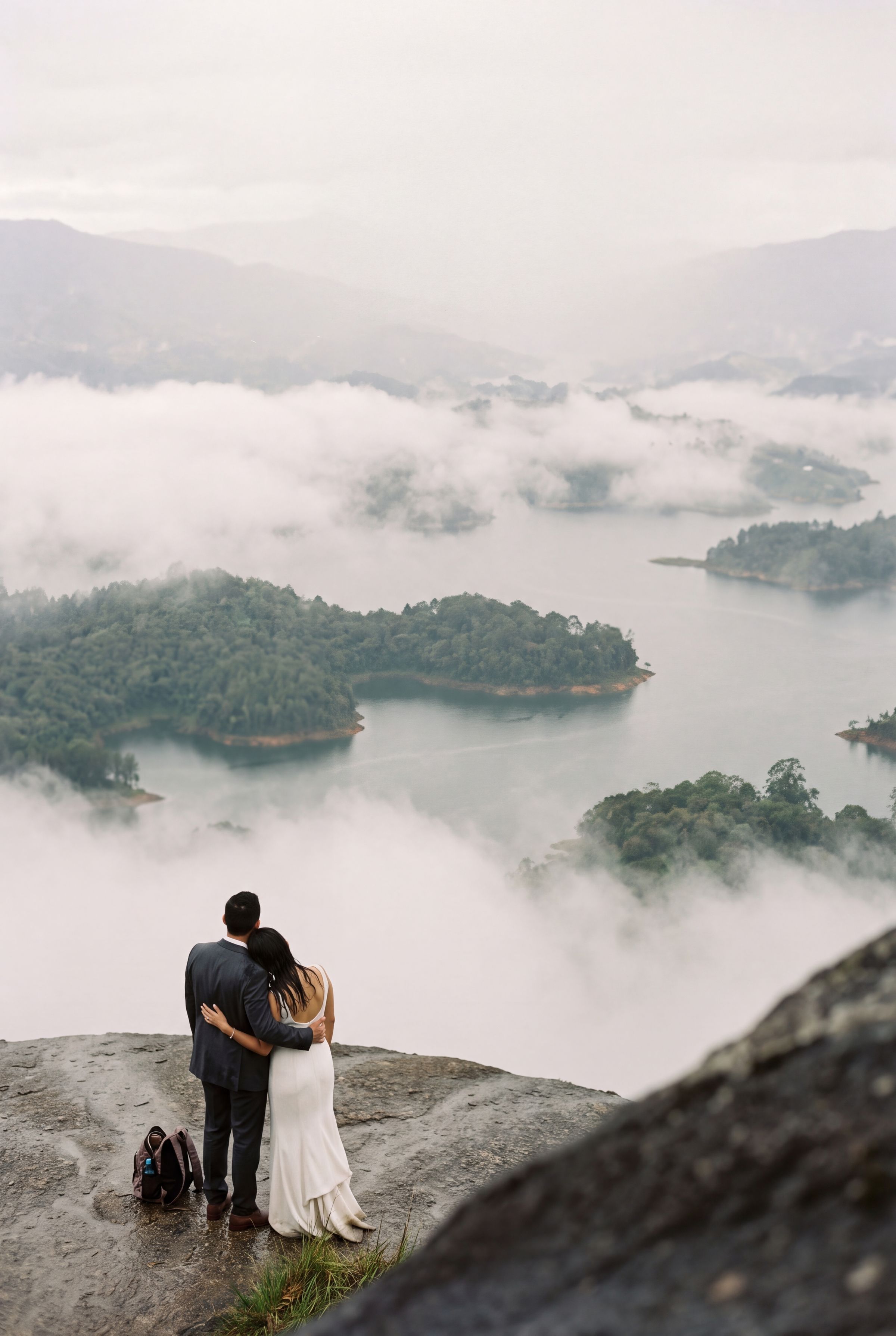
Guatapé is ninety minutes east: a monolith with seven hundred and forty steps cut into a crack in its side, and beneath it a flooded valley that became a labyrinth of green water and islands. The town's houses carry painted panels along their lower walls, one per building, each telling you what the family inside does.
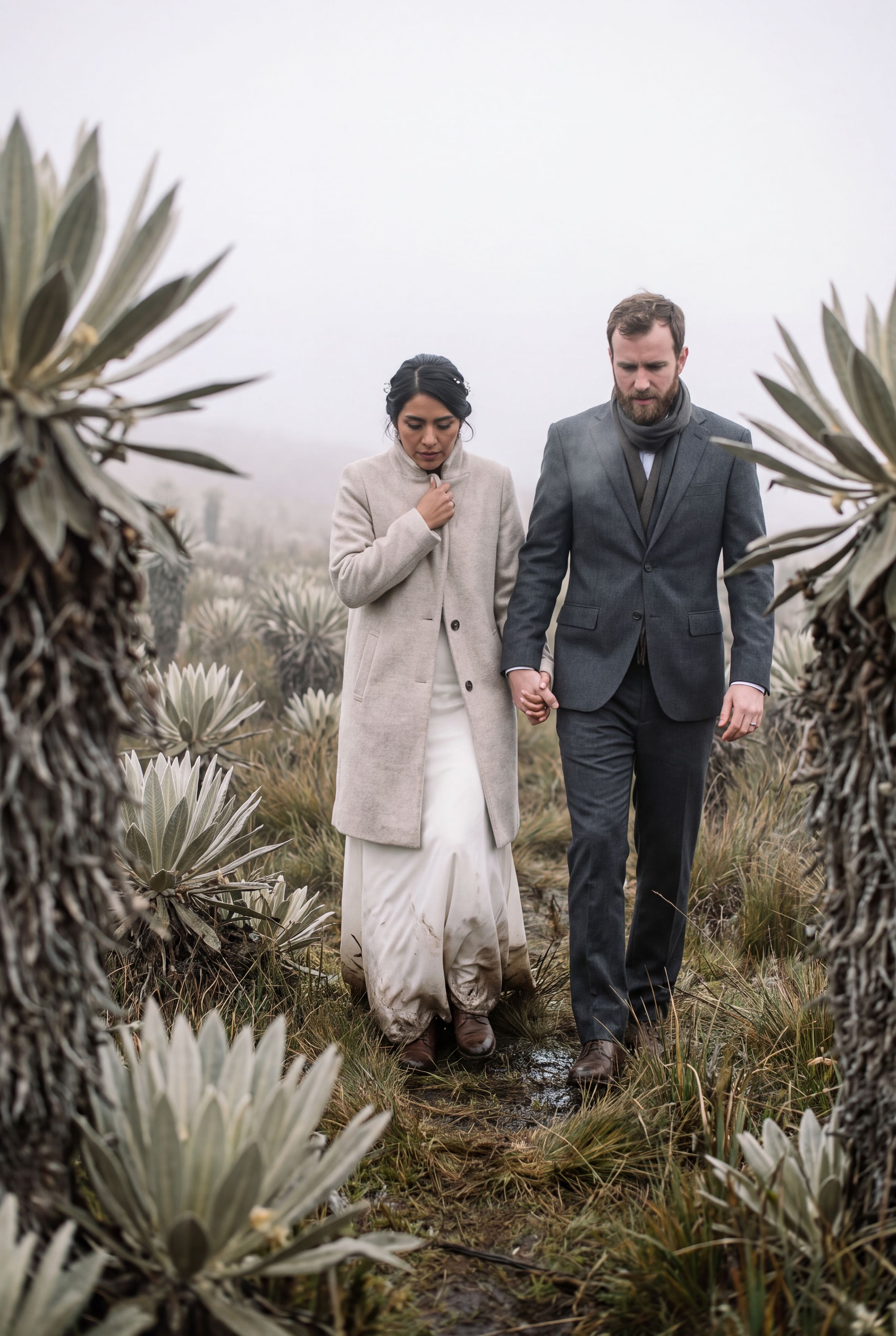
The Coffee Axis is further south, and it is where the circuit ends up if you have the days for it. Working fincas under cloud, and the Cocora valley, where wax palms grow to sixty metres and stand in open pasture like something that got the scale wrong.
All three are connected by roads I drive constantly. No internal flight, no airport at six in the morning, no ceremony hanging on a delayed domestic hop.
Why the driving is the point and not the tax
Most destination elopements treat transport as dead time. You get ready in one place, marry in a second, eat in a third, and the two hours in between are spent in a car with the dress across the back seat.
On a circuit the drive is doing something. You leave the city in the morning with the valley behind you, the road climbs into cloud forest, and by the time you are standing on the rock at Guatapé the country has changed twice underneath you. You arrive somewhere having travelled to it, which is not the same as being delivered to it.
An elopement is a spiritual union in the cosmos, not a contract signed in a concrete prison we call a wedding hall. The scenery is the passage. The vows are the destination. That is not decoration on top of the logistics, it is the reason the logistics are shaped this way.
The three tiers, and what each one buys you
The Essential, from US$7,800. One elopement day on this circuit. I design it, source and book every vendor, and run it on the ground: officiant, the legal route, florals, hair and makeup, private transport, a signature experience, dinner. Photography and video throughout, because I do not sell those separately. An edited gallery, a fast sneak peek, and the album.
The Curated Signature, from US$13,500. Two elopement days, so the circuit actually opens up. Day one is the ceremony and the city. Day two leaves. All in country transport, richer florals and styling, a stronger activity chapter, an elevated dinner, and the Studio Editorial included. A cinematic film, around 350 edited images, and the Signature album.
The Curated Adventuremoon, from US$19,000. Four days across more than one circuit, so the Mountains and the Caribbean in a single trip, with the internal flight placed on a buffer day and never before a ceremony. Coverage across all four days and the Heirloom album.
The Mountains circuit is the cheapest of the three Colombian routes, and the reason is plain: Medellín is a working city of two and a half million people where a florist charges what a florist charges, and Cartagena is a walled city that receives cruise ships.
What a two day version actually looks like
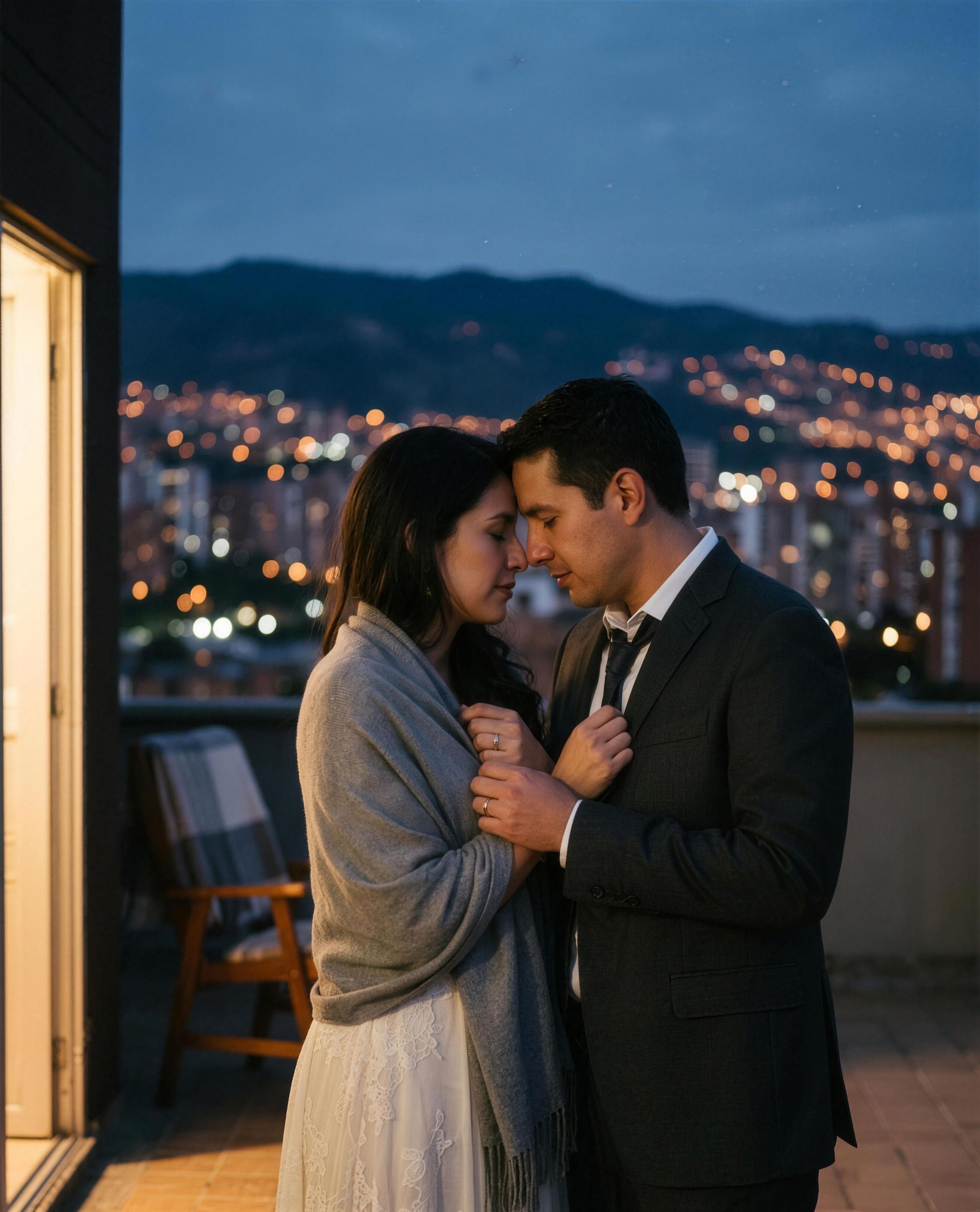
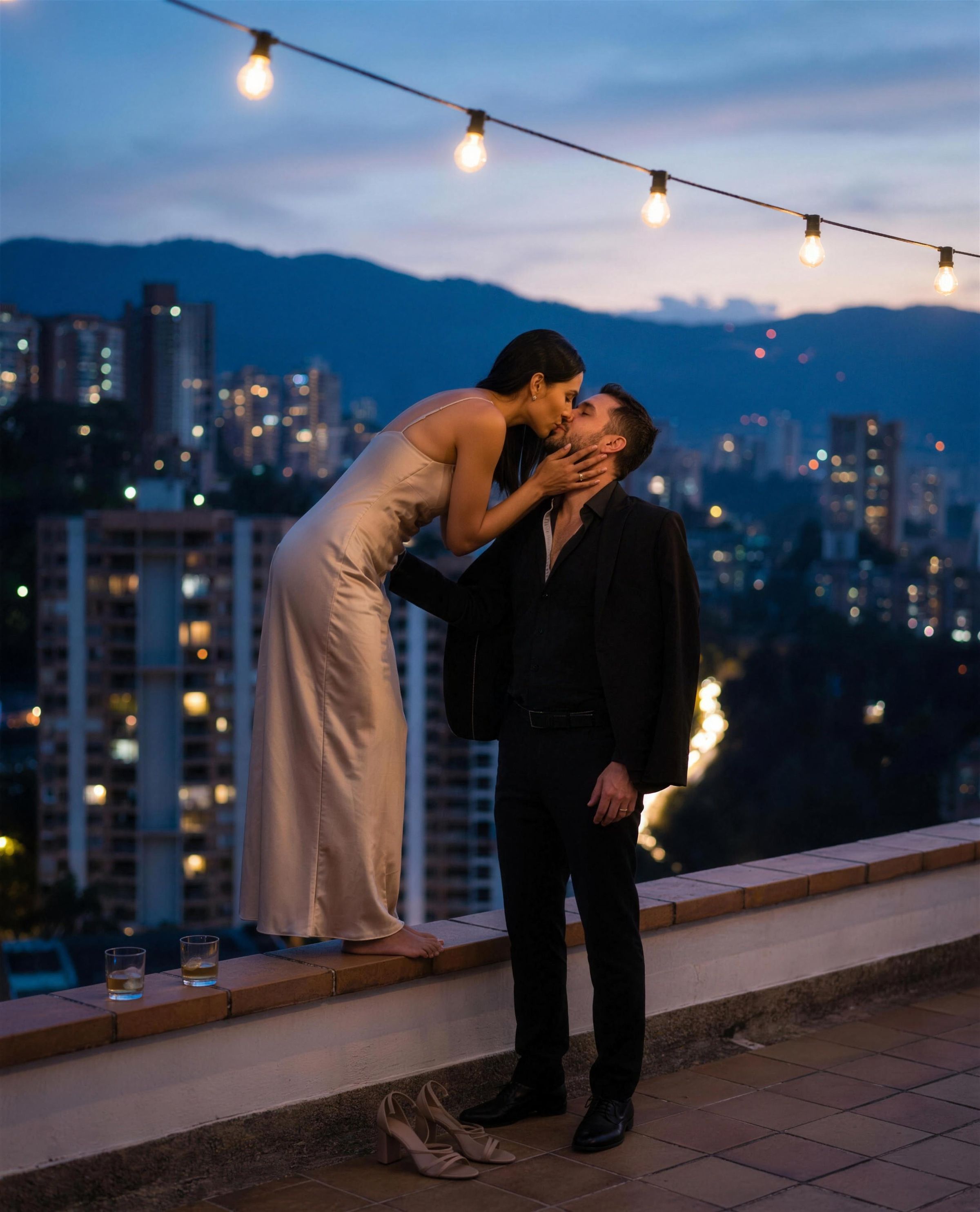
Day one is the city. Getting ready somewhere with good light, the ceremony wherever we have chosen, then Medellín itself: the courtyards, the cable car climbing the valley wall in the late afternoon, a rooftop as the lights come up across the whole basin, and a table somewhere that will keep it as long as you want.
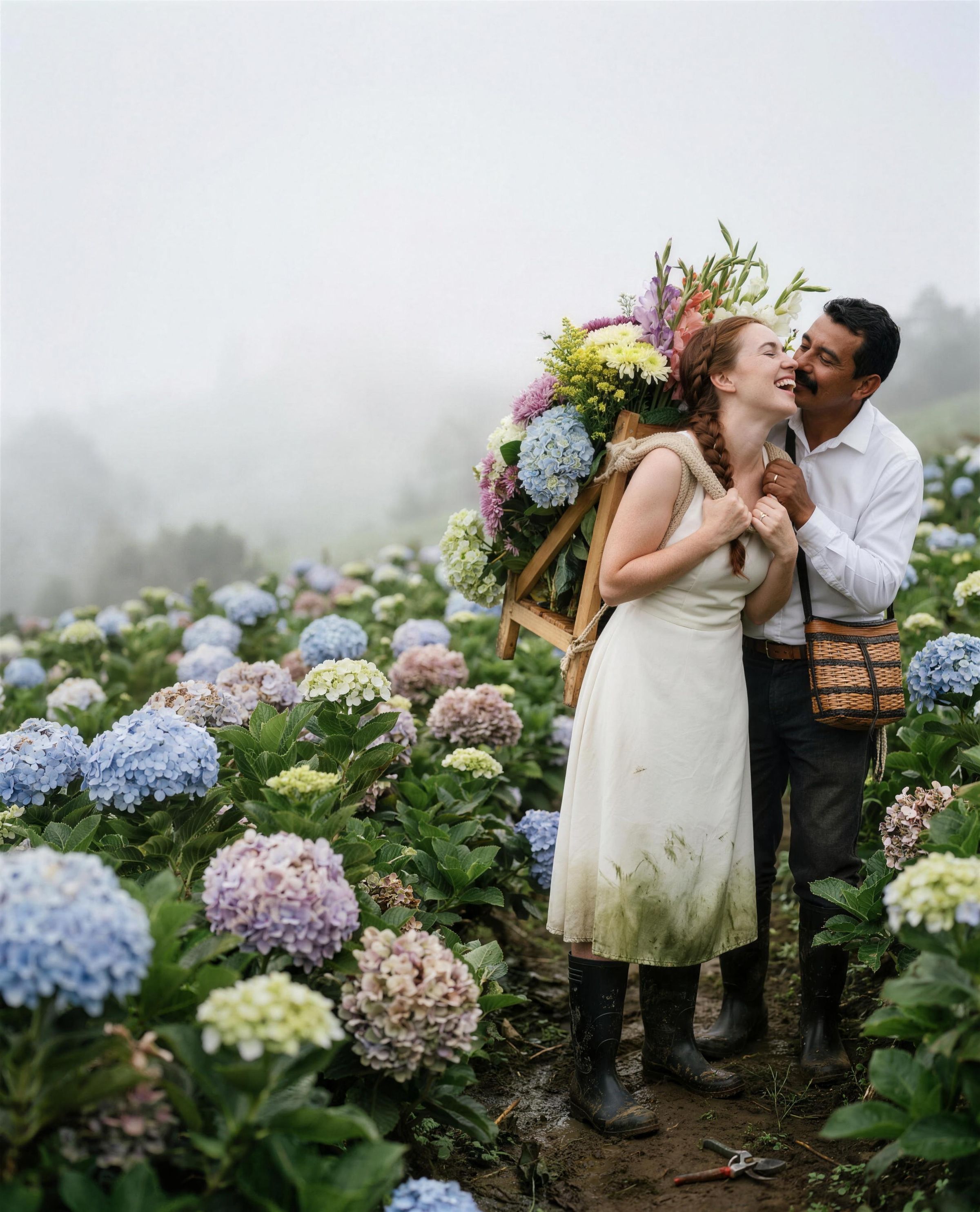
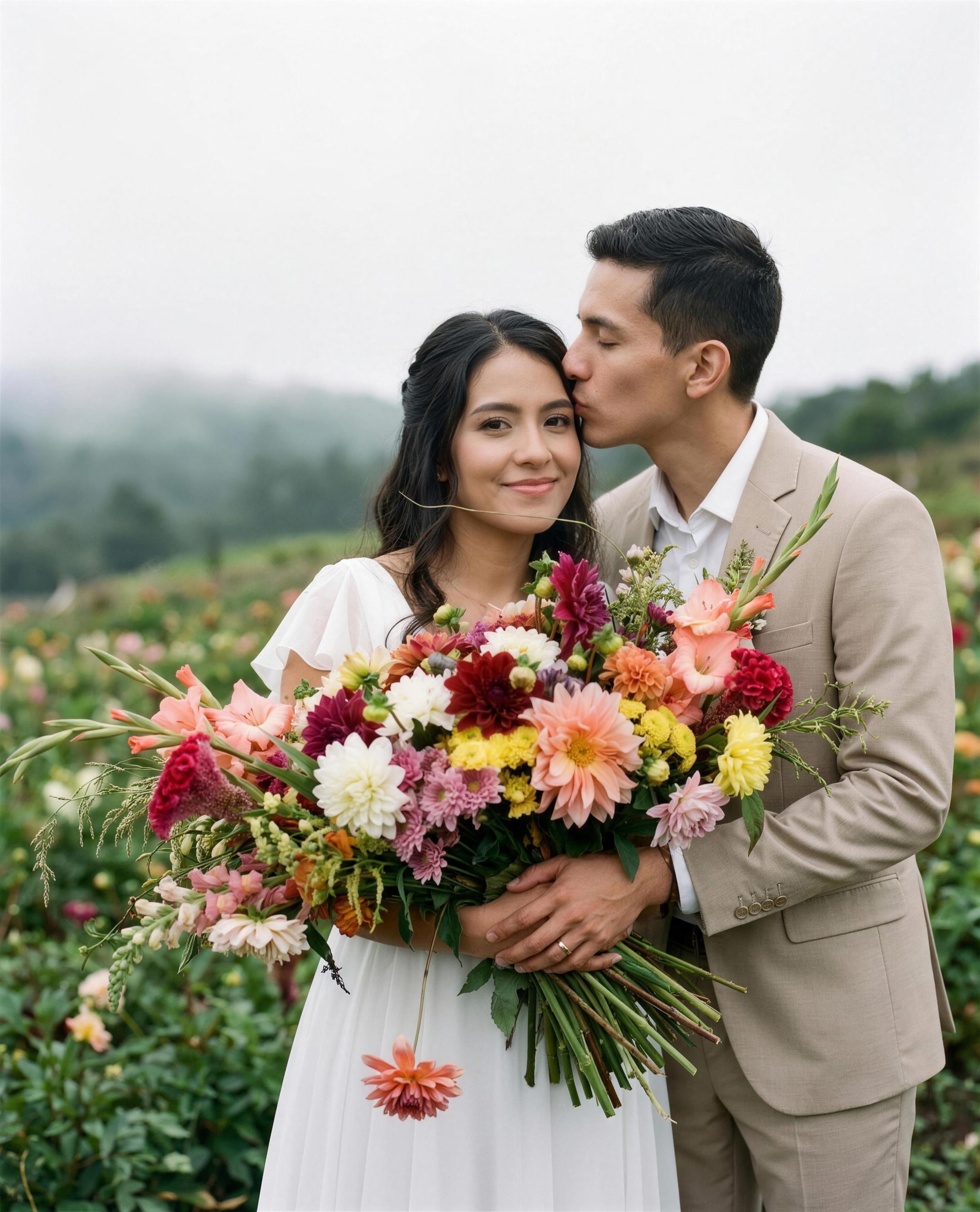
Day two leaves. East to the reservoir and the monolith, or south into the coffee country, or up to Santa Elena on the ridge where the flower farms are and where the men who carry the silletas grow what they carry.
The reason day two produces the photographs couples love is not the scenery. It is that by then you have stopped performing. On day one everyone is aware of the camera and aware that it is The Day. On day two you are two people on a trip who happen to be married now, and that reads in every frame.
The legal route, honestly
A legally binding civil marriage in Colombia means a notaría, apostilled and translated documents, and a process measured in weeks. It is entirely doable and I have arranged it.
What most couples do instead is file the legal marriage at home and treat the day here as the real one. It costs less, it removes weeks of paperwork from the middle of your planning, and it does not make the ceremony less true. If a legally binding Colombian marriage matters to you, say so in the first conversation, because it changes the timeline rather than the price.
There is no ceremony permit to worry about on this circuit in the way there is in a Canadian national park. What there is instead is access: the good places at Guatapé and in the coffee country are private land, and getting you onto them at the right hour is a conversation in Spanish with the family that owns it.
When to come
Medellín has no season that makes the day worse, which is unusual enough to be worth saying twice. It sits near the equator at altitude, so there is no winter and no summer, only drier months and greener ones, and twelve hours of daylight every day of the year. Golden hour lands near a quarter to six in January and near a quarter to six in July.
December through March is the driest stretch and the easiest to plan around.
April, May, October and November carry afternoon rain that usually arrives late and passes fast. I build those days to finish outside before it does, and the light after a Colombian afternoon storm is the best light of the year.
Nothing about the price changes across the calendar. There is no peak season surcharge because there is no peak season.
What is not included
Your flights. I will tell you which airport, which arrival day and roughly what to pay. You book them. José María Córdova is well connected to the US and increasingly to Europe.
Your accommodation. Same. I name the specific hotel or apartment that puts you in the right neighbourhood at the right hour, and explain why the cheaper one twenty minutes away costs you the morning. You make the booking. I do not book travel on anyone's behalf, because that needs an agency licence I do not hold, and I would rather say so plainly than dress it up as a philosophy.
My own travel is inside every number. No travel fee, no per diem, no flight surcharge appearing later.
The safety question, since everybody asks
Medellín in 2026 is not the Medellín of the documentaries. There is a metro, there is a cable car system running up the hillsides, and the neighbourhoods you will spend your time in feel closer to a large European city than to the reputation.
I am not going to tell you it is Zurich. Phones get taken, and there are areas I would not send you to at night and do not plan days in. The standard local advice about not flashing an expensive phone on a quiet street after dark is standard because it is correct.
What actually removes the risk is structural. You are with someone who speaks Spanish. Private transport is inside every tier, so you are never hailing a car. Every location is one I have stood in before and every vendor is someone I have used. Two people in wedding clothes with a stranger's phone are a target. Two people with a driver and a plan are not.
Which circuit is yours
Take the Mountains if you want green, altitude, cool evenings and the most variety per hour of driving in the country. It is also the best value of the three and I would say that even if it paid me less, which it does.
Take the Caribbean instead if you want colonial stone, heat and open water, and you are willing to pay a few hundred more per tier for a city priced for cruise ships. Take the Andes and the páramo if you want high, strange, cold country and a cathedral cut inside a mountain.
If you have nineteen thousand and three weeks, take the Adventuremoon and do more than one. Mountains and Caribbean in a single trip is the thing Colombia can do that nowhere else on my list can.
The full ladder for every circuit is here. The circuits are laid out properly in the Colombia guide. Or tell me which one you keep coming back to and I will tell you honestly whether it is the right one for the two of you.
Enquiries to the publisher, armanarai.com.