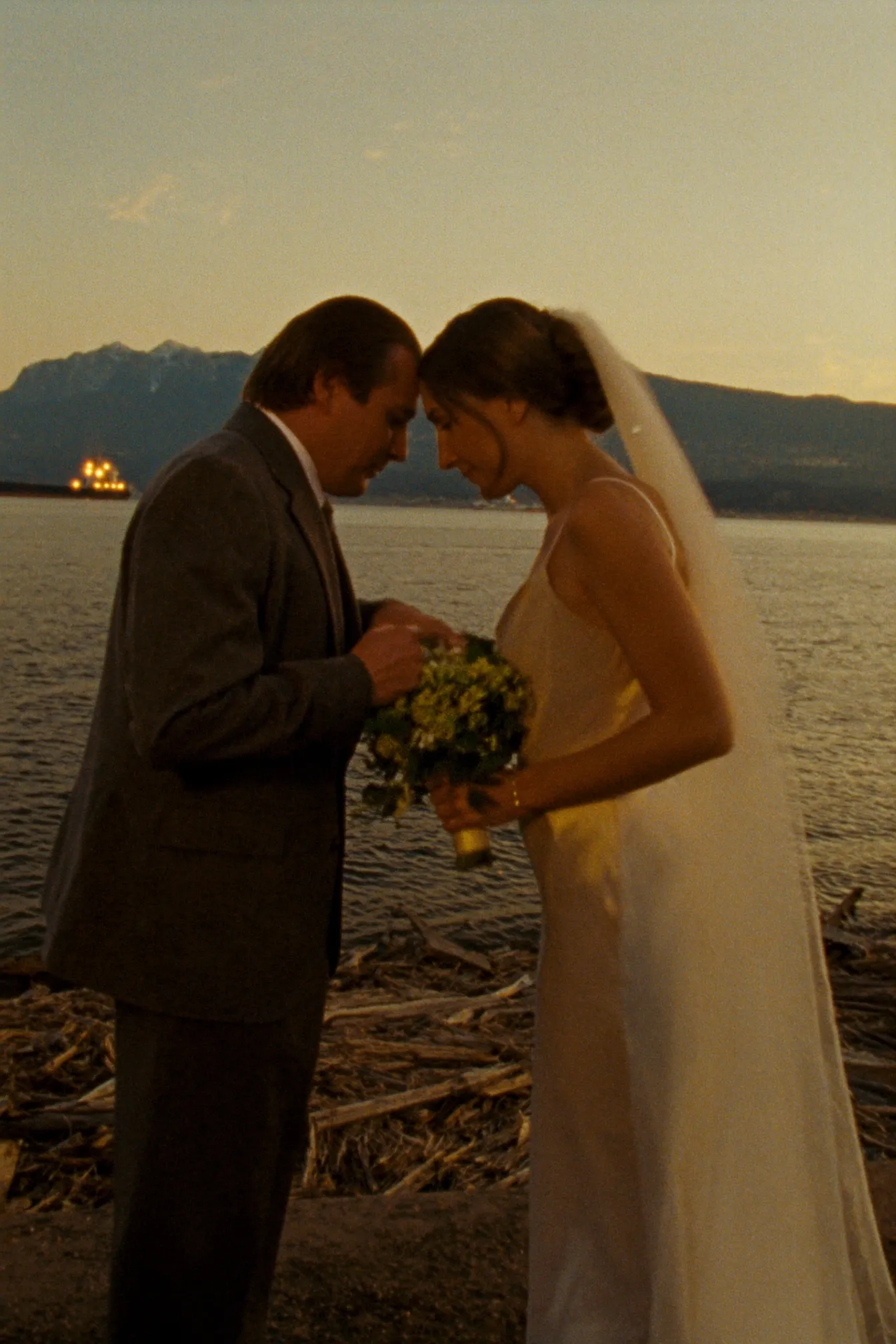
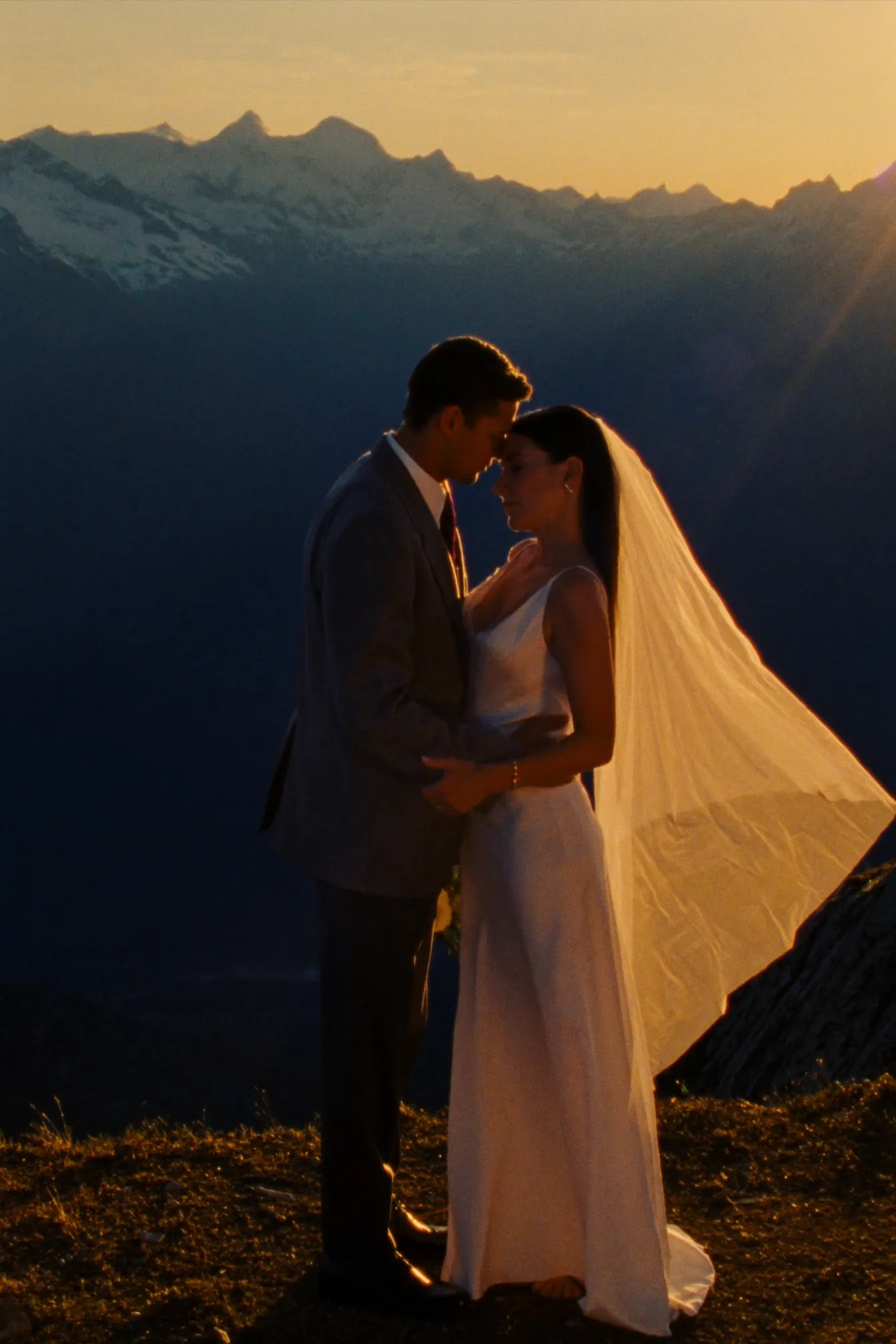
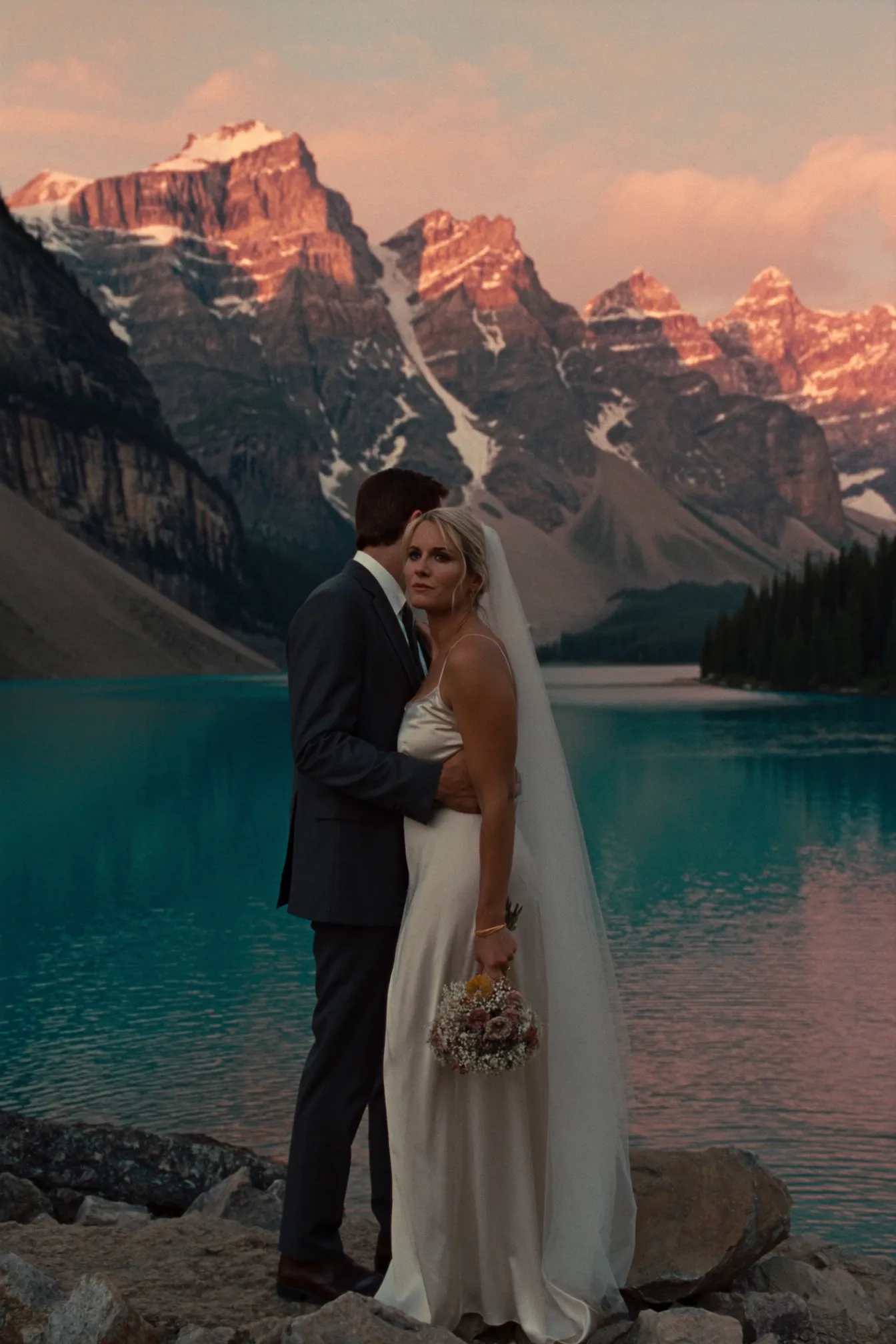
What you wear to a Toronto elopement affects the photographs differently depending on which location you choose. The Distillery District is an architectural environment where formal structure reads most powerfully against brick and iron. High Park in cherry blossom season rewards softer, lighter fabrics. The Toronto Islands are a natural setting with variable wind. Scarborough Bluffs require footwear that can handle a moderate gravel descent. None of these is a prohibitive constraint, but each shapes what looks right in the final images.
Dressing for the Distillery District
The Distillery District’s red brick and iron architecture creates a visual context that favours structured silhouettes and strong colour contrast. White and ivory dresses read cleanly against the warm brick tones. Dark suits in charcoal, navy, and forest green anchor the frame against the same backgrounds. The cobblestone surface of the Distillery lanes is uneven but more navigable than the rougher stone of Old Montreal, and block heels or low wedges handle the ground well.
The lanes also channel wind, particularly in cooler months. A structured dress with some weight will move attractively in this environment; light chiffon can become difficult to manage in gusts. For fall and winter sessions, the same layering approach that works in any cold-weather setting applies: a tailored coat worn open as part of the composition reads as deliberate rather than practical.
Dressing for the Season
Toronto’s temperature range across the year is significant: late July can reach 35 degrees Celsius and high humidity; January regularly drops below minus fifteen with wind chill. What you wear must work in the actual conditions rather than the ideal version of them.
For High Park cherry blossom sessions in late April, temperatures average 10 to 15 degrees Celsius. A light layer under the dress or a wrap that photographs as part of the look is practical. For summer Island sessions, breathable fabrics are essential. For winter Distillery sessions, the layering principle applies fully: heavy coat, gloves, and warm boots are not concessions to the cold but components of the visual composition when chosen deliberately.
His Outfit: What Works in Toronto
Toronto’s elopement locations span industrial architecture, urban parks, natural coastline, and winter forest. A well-fitted suit works across all of them if the colour is chosen relative to the specific backdrop. Navy and charcoal read well against brick. Mid-grey works well in spring and summer park settings. For winter sessions, a long overcoat adds visual weight that photographs proportionately next to the fuller silhouette of a layered dress.
For Scarborough Bluffs specifically, the dramatic scale of the cliffs and lake tends to visually reduce figures in the frame. Stronger colour choices and cleaner silhouettes hold the frame better at that scale than pale or neutral choices that blend into the cliff or the sky.
Colour Against Different Toronto Backgrounds
Against the Distillery brick: white, ivory, and black all produce strong results. Deep jewel tones add dramatic richness. Light pastels and blush can disappear against warm brick tones.
Against cherry blossoms: white produces the cleanest contrast against the pink and white canopy. Dusty rose and mauve read as intentional. Avoid pink and red which compete with the blossoms directly.
Against the ravine in autumn: white and ivory with any fall-season clothing choice works well. Deep burgundy, forest green, and burnt orange are harmonious. Avoid yellow and gold, which are too close in tone to the foliage to provide contrast.
Against snow: white and ivory photograph beautifully with correct exposure. Black and charcoal provide maximum graphic contrast. Red against snow is bold and works well for a deliberate editorial statement.
Destination Wedding Photographer
Vancouver · Medellín · Worldwide