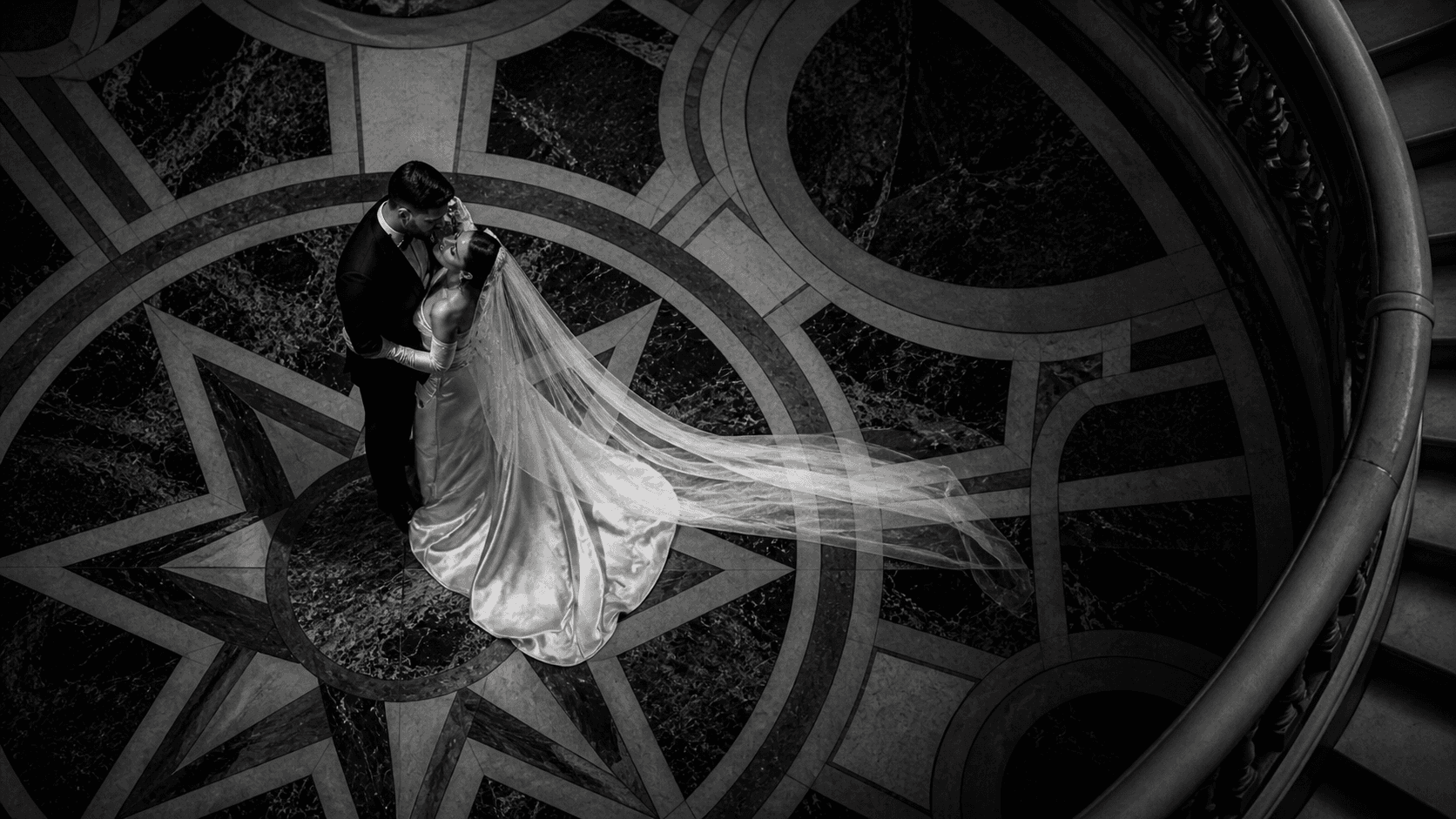
There is a window of time at the end of most wedding days that photographers think about from the moment they arrive in the morning. It begins approximately forty minutes before sunset and ends fifteen to twenty minutes after. During this window, the sun drops below the horizon and the sky acts as a giant diffusion panel, scattering light in every direction simultaneously and eliminating the harsh shadows that make outdoor photography difficult during the middle of the day.
Wedding photographers call this golden hour. It is the window when the worst camera in competent hands can produce extraordinary images, and when a skilled photographer with time and access to couple can produce work that looks genuinely cinematic. Most couples lose it entirely, or reduce it to ten rushed minutes between cocktail hour and dinner. Here is how to protect it.
What Golden Hour Actually Is (and Is Not)
Despite the name, golden hour is not always an hour. Depending on your latitude, the season, and cloud cover, the usable window can be as short as twenty minutes or as long as ninety. In Colombia, near the equator, the sun drops faster and the golden window is typically thirty to forty-five minutes of very intense, warm light. In Scandinavia in summer, the sun barely sets at all and the golden quality can persist for hours.
The light during golden hour has three qualities that make it exceptional for portraits: it is warm (shifting toward orange and red wavelengths), it is directional (coming from a low angle that creates natural depth and dimension), and it is soft (scattered by the atmosphere rather than concentrated). These three qualities together produce the kind of skin tones and natural highlights that photographers spend significant time trying to recreate in other conditions.
The period immediately after sunset, sometimes called the blue hour, is also extraordinary, though in a different register: the sky becomes a deep gradient from orange to violet, the ambient light goes cool and diffuse, and the resulting images have a cinematic quality that is completely different from the warmth of true golden hour. Both are worth protecting.
Why Most Couples Lose It
The most common wedding timeline places cocktail hour from approximately 5pm to 6pm, with the couple unavailable for the entirety of this period because they are doing portraits, having a moment alone, or handling administrative obligations. Dinner begins at 6pm or 6:30pm. At a summer wedding, sunset may not arrive until 8pm or later, which means golden hour is theoretically available, but by then the couple has been separated from their photographer for two hours and the formal schedule of the evening has taken over.
At fall and winter weddings, the problem is more acute. Sunset at 5pm or earlier in northern latitudes means golden hour falls directly during cocktail hour, and unless it is specifically protected in the timeline, it disappears entirely.
How to Build a Timeline That Protects the Light
The first step is knowing exactly when sunset falls on your wedding date at your location. This is a two-minute Google search (search "sunset time [your city] [your date]") that very few couples do in advance. From that time, work backward: identify a thirty to forty-five minute window ending approximately fifteen minutes after sunset. That is your golden hour session window.
The second step is making that window non-negotiable in your schedule. This means informing your wedding planner, your venue coordinator, and your photographer that you will be leaving the cocktail hour for portraits during this specific window. Most planners have managed this before and know how to handle it. Guests, in my experience, barely notice a twenty-five minute absence during cocktail hour.
The third step is keeping the session mobile and unencumbered. Golden hour portraits require minimal setup: no elaborate lighting equipment, no large entourage. Just the couple, the photographer, and access to a location with the sky visible. Your venue grounds, a nearby rooftop, or a quiet street outside the venue all work perfectly. The light does the rest.
What to Wear for Golden Hour
Warm tones, ivory, champagne, blush, terracotta, warm neutrals, photograph beautifully in golden light. Pure white can blow out slightly in very intense golden light; off-white and ivory are more forgiving. Rich jewel tones, deep burgundy, forest green, navy, also work extraordinarily well when backlit. Avoid very cool grays and blues if you want to maximize the warmth of the light.
When the Weather Does Not Cooperate
Overcast light, the diffuse, even illumination of a cloud-covered sky, is actually excellent for portraits. It eliminates harsh shadows entirely, flatters skin tones uniformly, and produces a moody, intimate quality that suits wedding photography well. Some of my favorite wedding portraits have been shot on completely overcast days.
The one condition that is genuinely challenging is direct midday sun with no clouds. If your portraits are scheduled for 2pm in summer with no shade available, the light will be harsh, shadows will fall directly under the eyes, and the resulting images will require significant post-processing to recover. If this is your situation, the best solutions are shade (find a building, tree line, or overhang that blocks direct sun) or wait (reschedule the formal portraits to late afternoon if the timeline allows).
The difference between wedding photographs that feel timeless and ones that feel ordinary is rarely about the location, the attire, or even the photographer. It is about forty-five minutes of extraordinary light that most couples never even knew they were losing.
Now you know. Protect it.
Destination Wedding Photographer
Vancouver · Medellín · Worldwide


