Is Colombia Safe for a Destination Elopement?
Answered with the advisories open rather than with reassurance, including the risk nobody selling Colombia mentions.
Yes, for the trip you are actually planning. And I am going to answer this with the advisories open rather than with reassurance, because a couple deciding whether to fly their family somewhere deserves the real position.
I am not a neutral party. I sell Colombian elopements. So everything below is either what a government publishes or something specific enough that you can check it.
(Continued on Page 2, Col. 1)
What the United States actually says
The US State Department has Colombia at Level 3, Reconsider Travel. That is the overall country rating and I am not going to soften it. Level 3 is a real signal.
What matters much more is the breakdown. The Level 4, Do Not Travel designations are specific: Arauca, Cauca excluding Popayán, Valle del Cauca excluding Cali, Norte de Santander, and the area within ten kilometres of the Venezuela border.
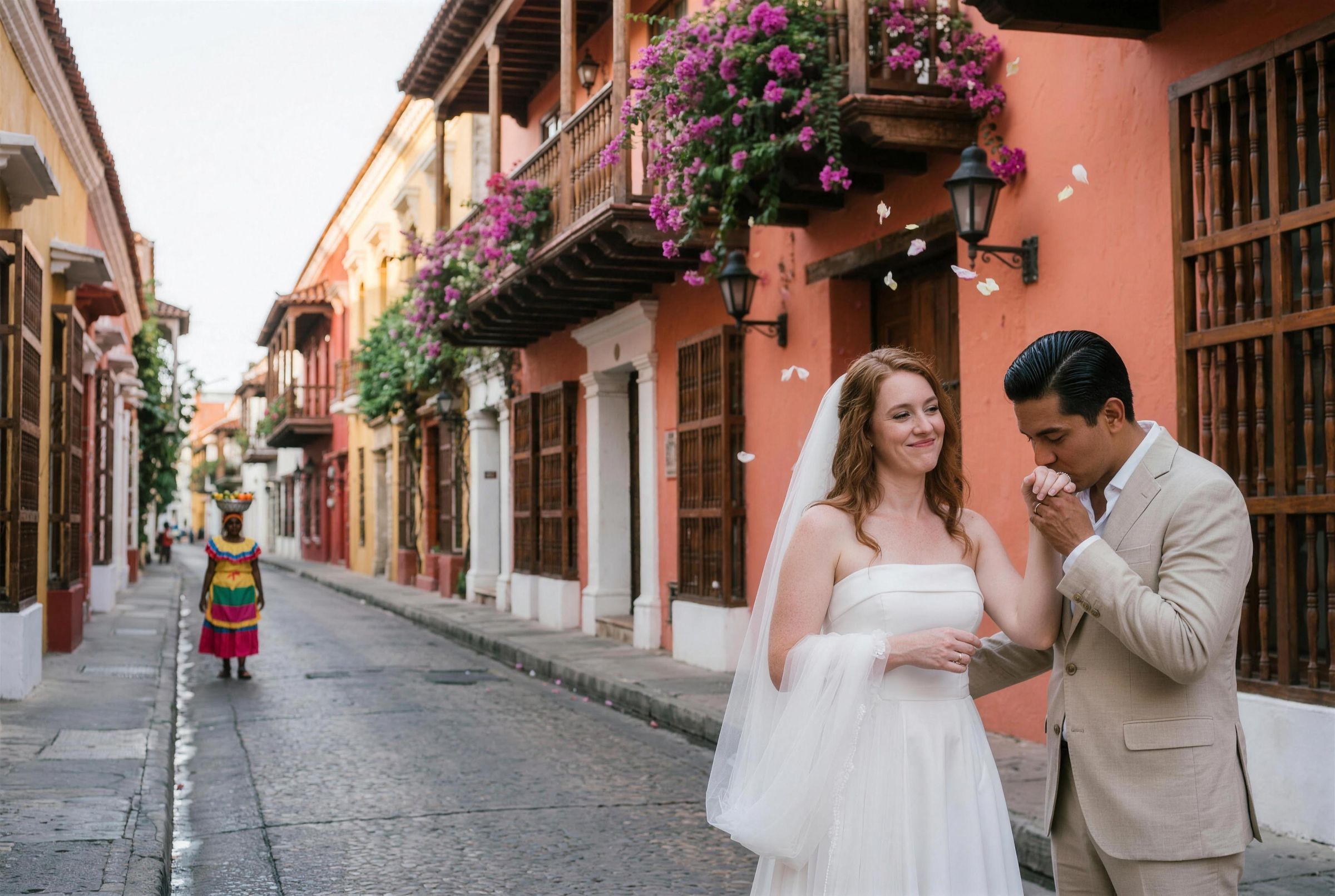
Look at that list against a map of where an elopement happens. Cartagena is on the Caribbean coast. Medellín and Guatapé are in Antioquia. Salento is in Quindío. Bogotá is Bogotá. Not one of the places I work is inside a Level 4 area, and the Level 4 areas are mostly border regions and departments with active armed group presence, hundreds of kilometres from any of it.
What the United Kingdom says, which is more granular
The FCDO advises against all but essential travel to a long list of specific areas, and the list is worth reading precisely because it is so granular.
It covers all of Norte de Santander and all of Arauca, Puerto Carreño and the Venezuela border strip, Chocó except Quibdó, Nuquí, Bahía Solano and Capurganá, western Valle del Cauca including Buenaventura, Jamundí, parts of Nariño, southern Córdoba, Urabá and Bajo Cauca in Antioquia, southern Bolívar, most of Guaviare, parts of Caquetá, the Ariari in southern Meta, and parts of Putumayo.
Two things to notice. Antioquia appears on that list, and Medellín and Guatapé do not. Urabá and Bajo Cauca are the far north of a large department; the parts you would visit are not restricted. And Chocó is listed with the coastal towns explicitly carved out by name, which is the same thing said in the Chocó guide.
Precision like that is a good sign. A government that names four towns as exceptions has looked closely rather than painted a country.
What both of them still flag, and you should take seriously
Being outside a restricted zone is not the same as being risk free, and the FCDO says so directly.
It flags Bogotá, Medellín, Cali and the Caribbean coast for pickpocketing, mugging and armed robbery. These are big Latin American cities with real inequality and real street crime, and the honest comparison is not with a small town at home. It is with Rome, Barcelona or Mexico City, where you would also not walk down an unlit street at two in the morning with a phone out.
The practical version: nothing on display, a card rather than a roll of cash, registered transport rather than a flagged taxi at night, and the same instinct you would use anywhere. None of that is Colombia-specific advice. It is city advice.
The risk nobody selling Colombia mentions
Here is the thing I would want to know, and it costs me nothing to say because it does not apply to a couple who arrives together.
The US Embassy has warned specifically about robberies and drugging connected to online dating applications, and reported eight suspicious deaths of US citizens in Medellín in the last two months of 2023, several involving drugging, robbery and dating apps. The advisory language states plainly that US citizens have been drugged, robbed and killed by people they met that way.
The associated risk is scopolamine, known locally as burundanga, used to incapacitate someone before robbing them, usually administered in a drink or a cigarette. Express kidnapping, including the taxi-based pattern locals call the paseo millonario, is also documented.
Why tell you this when you are travelling as a couple and none of it is aimed at you? Because the practical lesson generalises: do not accept drinks you did not watch being made, do not leave a glass unattended, and use booked transport rather than a car you hailed on a street at night. That is the whole defence and it is not onerous.
Where we actually are, hour by hour
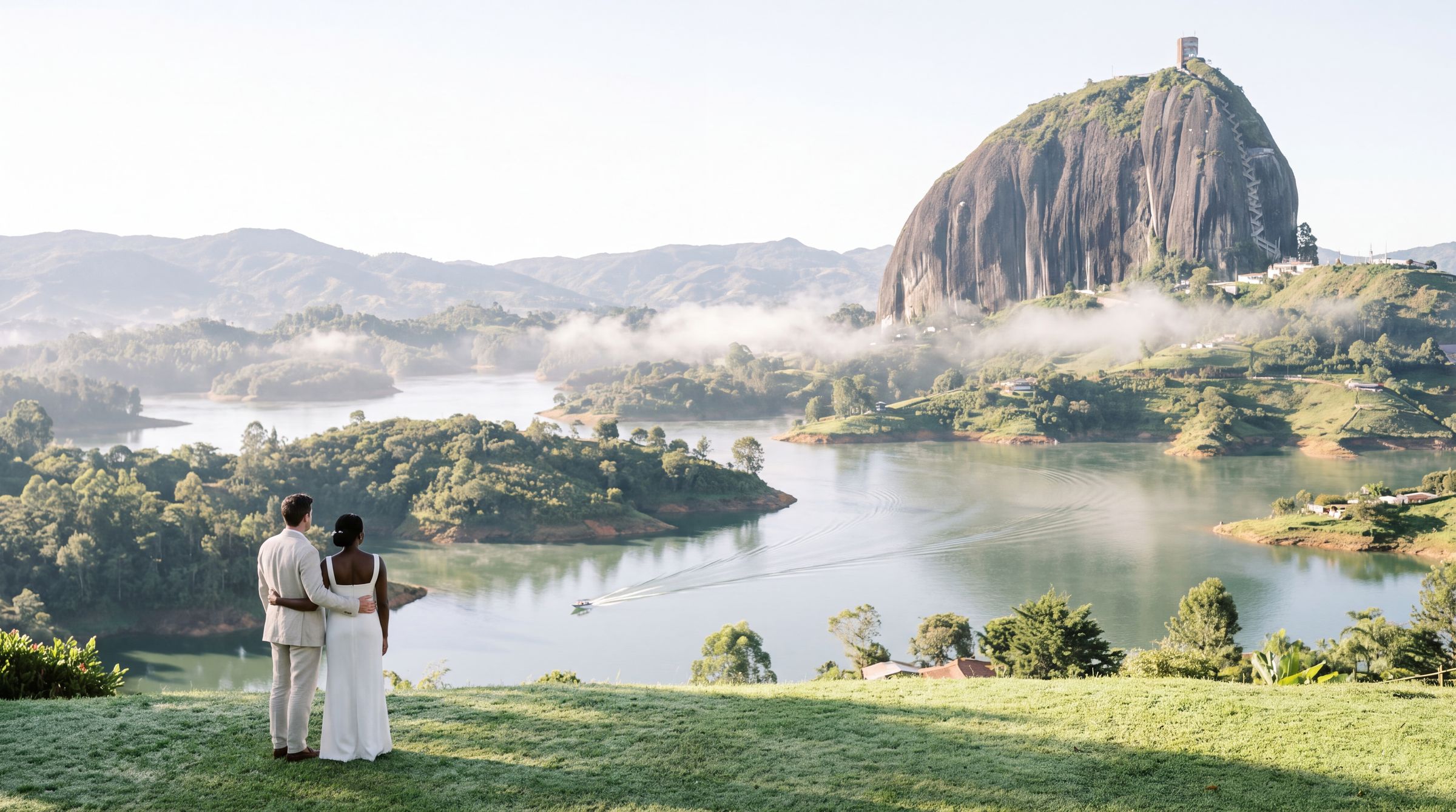
Abstract risk is hard to judge, so here is the concrete version of where an elopement day actually puts you.
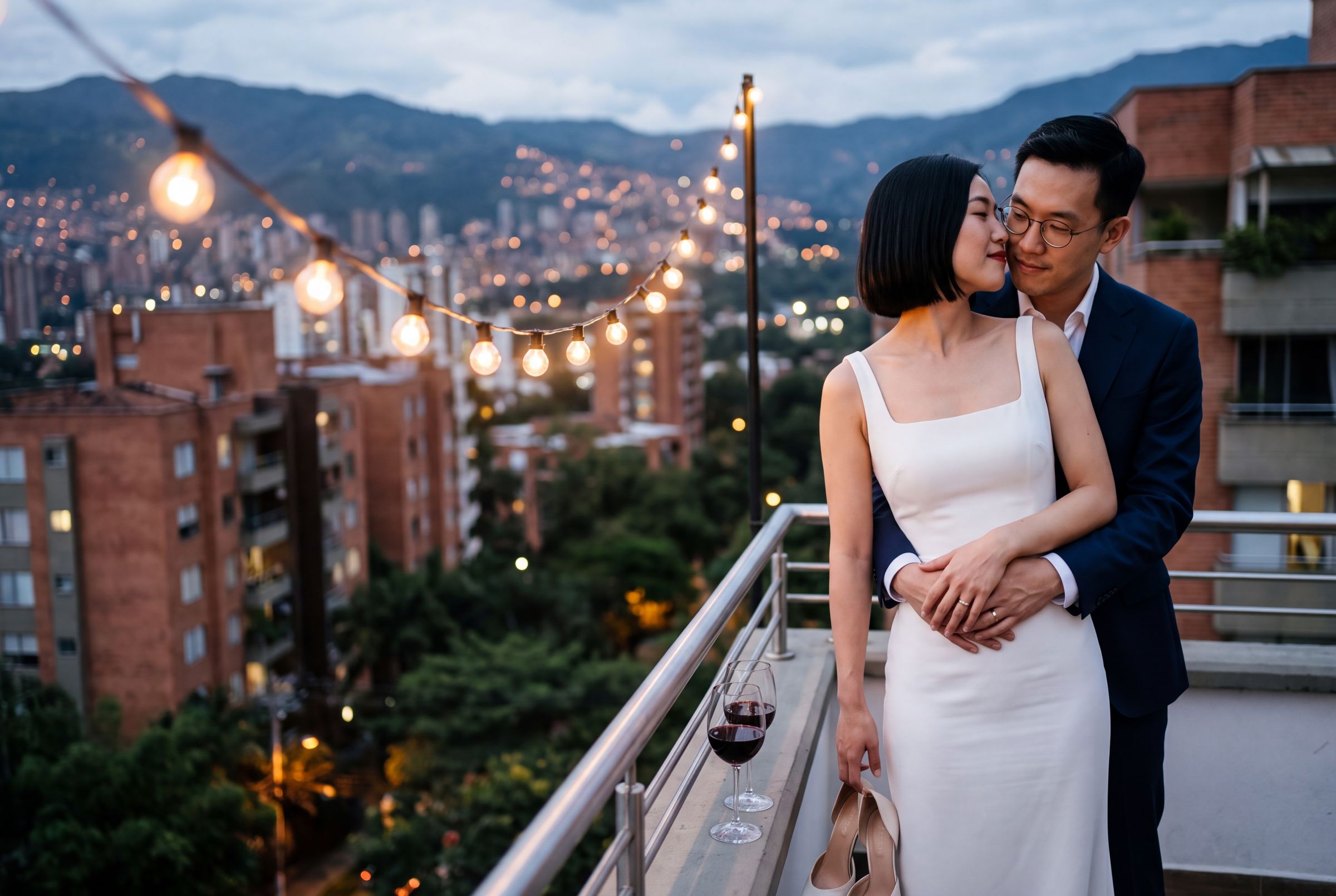
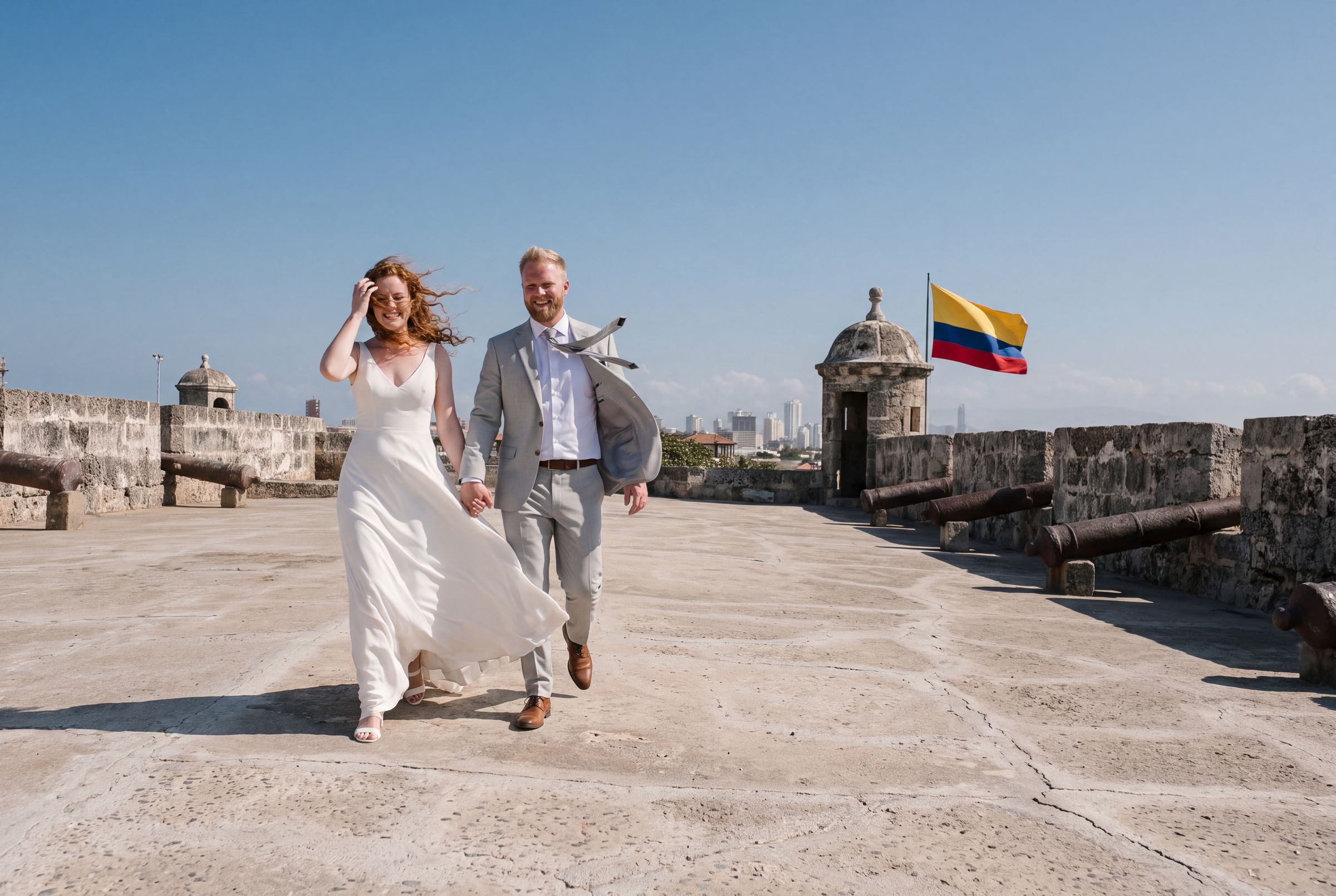
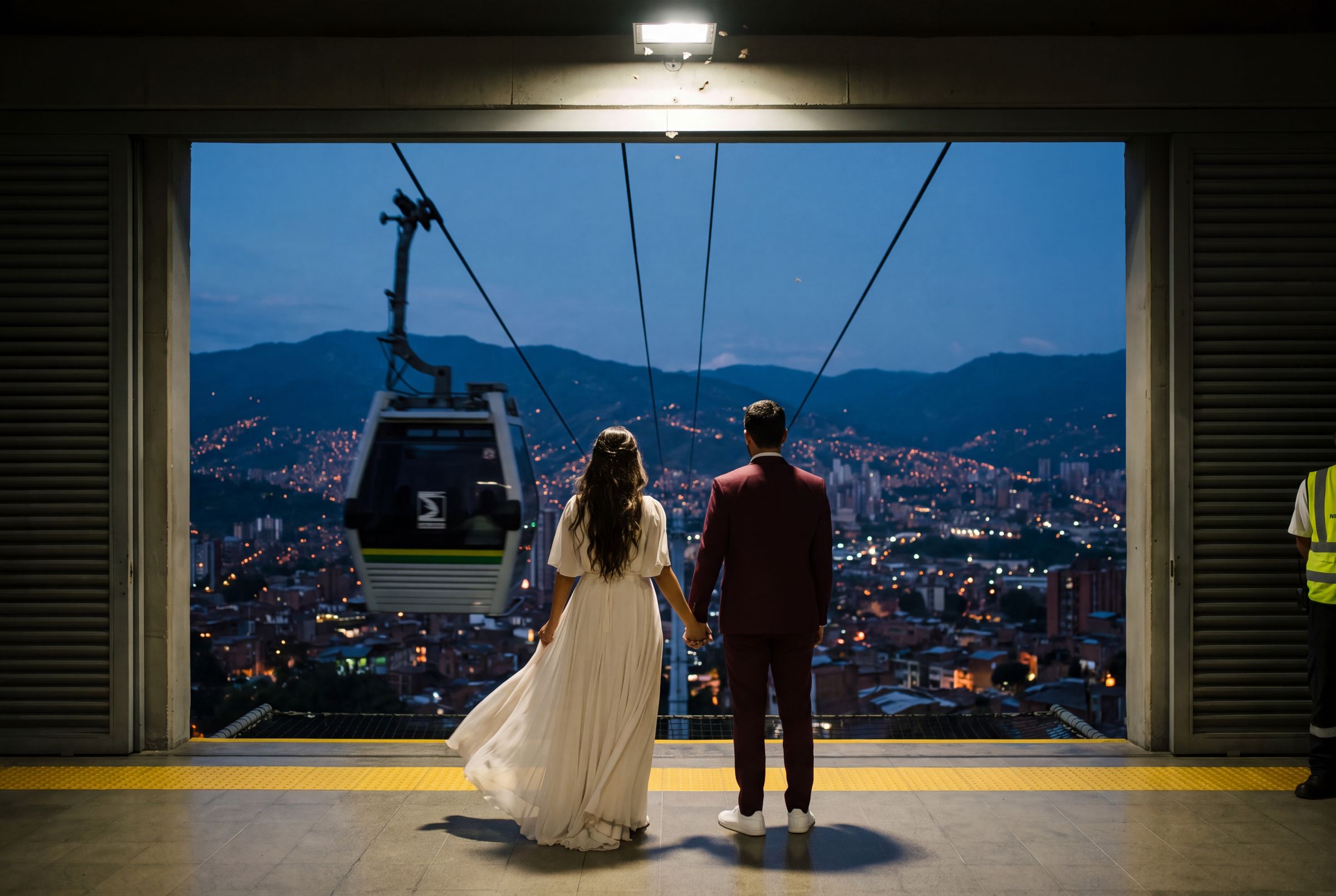
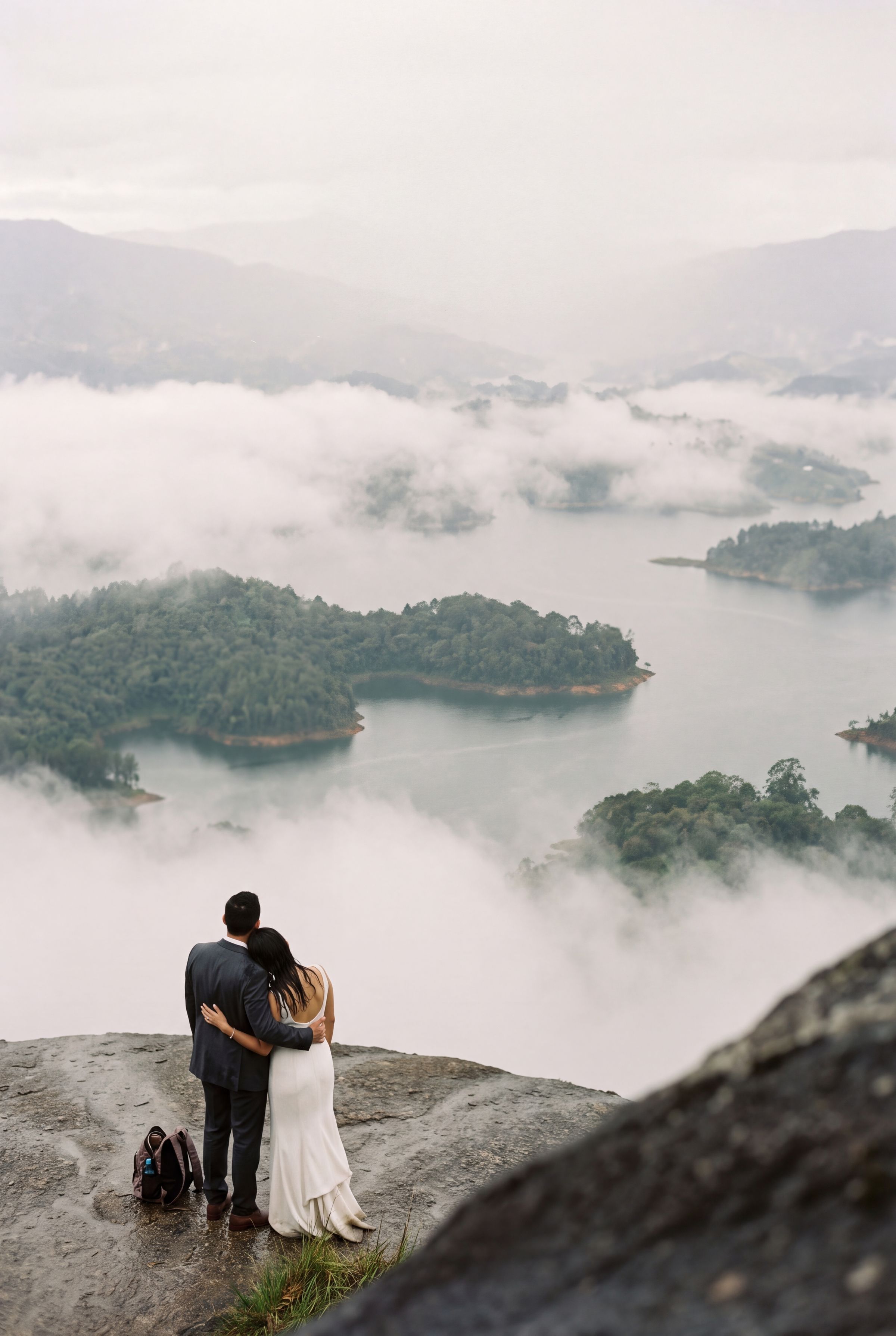
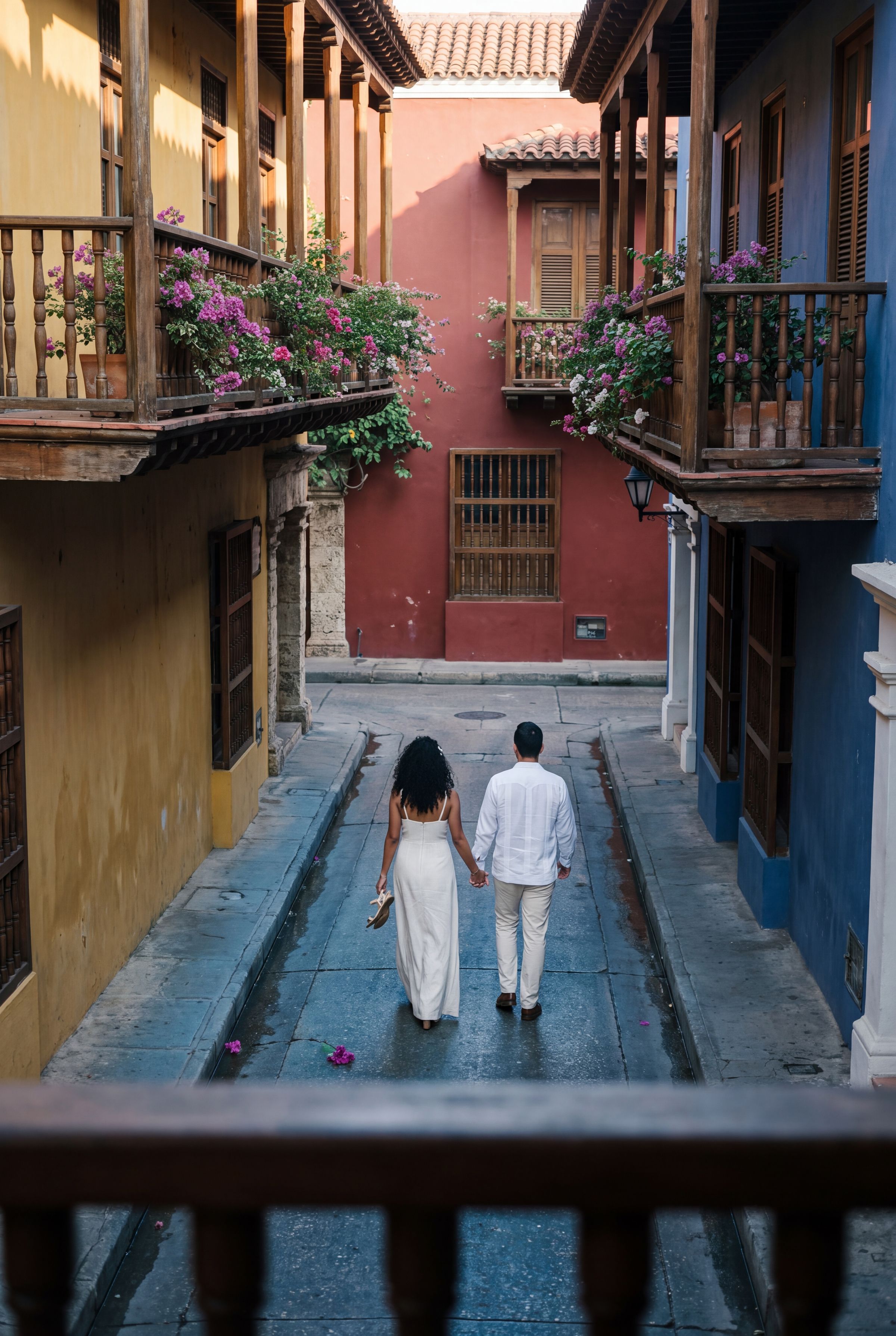
Cartagena: inside the walled city and on the ramparts at dawn, which is a small, dense, heavily policed historic centre, then on a boat to the Rosario islands. Medellín: El Poblado and Laureles, the Metrocable, the flower farms up at Santa Elena, and Comuna 13 with a local guide in daylight, which is now one of the most visited places in the city. Guatapé: a small tourist town and a reservoir. Salento: a village of about eight thousand people in the coffee hills.
These are not frontier towns. They are the places Colombia's entire tourism economy is built on, and they are busy with visitors at every hour I would be photographing you.
The number that says the most
If you want one statistic rather than an argument, use this one.
Colombia recorded 6,696,835 non-resident visitors in 2024, up 8.5 per cent on the year before, with foreign non-resident arrivals at 4,504,357. Through the first eight months of 2025 the ministry reported 4,483,600 non-resident visitors with foreign arrivals up another 5.3 per cent.
Several million people a year are having an ordinary, uneventful, very enjoyable time in exactly the places described above. That is not proof that nothing happens to anyone. It is context for how unusual it is when it does.
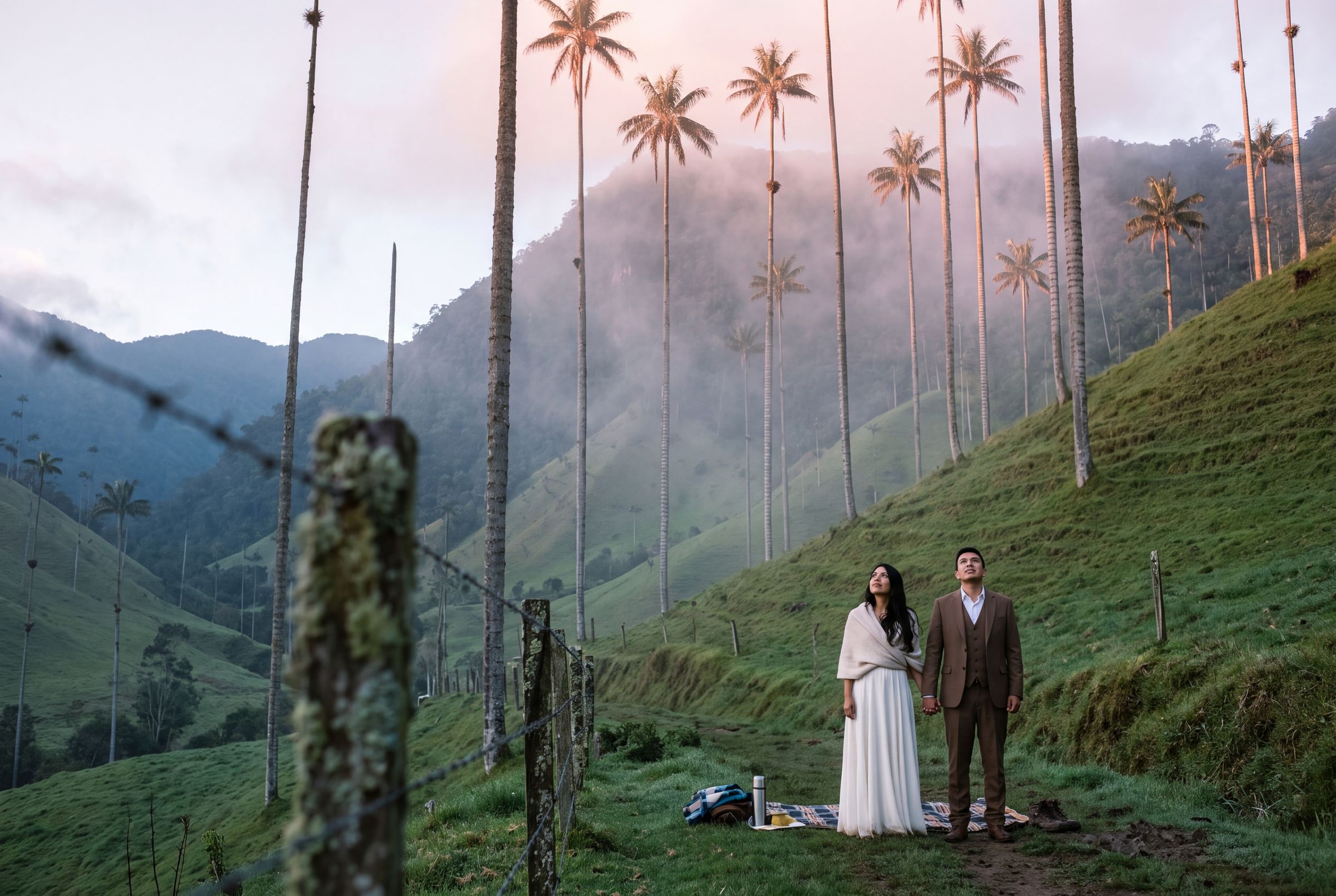
What changes because the person running your day is from here

This is the part that actually moves the risk, and it is not a statistic.
Every decision on the day is made by somebody who knows the ground: which street at which hour, which driver, which neighbourhood is fine at eight in the evening and not at eleven, when to put the camera away. You never wander into an area by accident because you are never navigating.
Transport is booked rather than hailed. Vendors are people I have worked with repeatedly. There is no evening where you are standing on a street corner with expensive things trying to work out where you are.
The single most dangerous thing a visitor does in a Latin American city is improvise at night while obviously a tourist. A curated day removes the improvising.
What to tell the family member who is worried
Almost every couple who books Colombia has one relative who reacts badly, and the reaction is usually about a version of the country that stopped being current a long time ago.
What actually helps is not an argument, it is specifics. Send them the advisory itself rather than a blog post. The Level 4 list is four departments and a border strip, all of them nameable, none of them anywhere near the itinerary. That lands better than any reassurance, because it is the same source they are worried about.
The second thing that helps is the itinerary with addresses on it. A worried parent calms down considerably when they can see the hotel, the neighbourhood and the fact that somebody who lives there is with you all day.
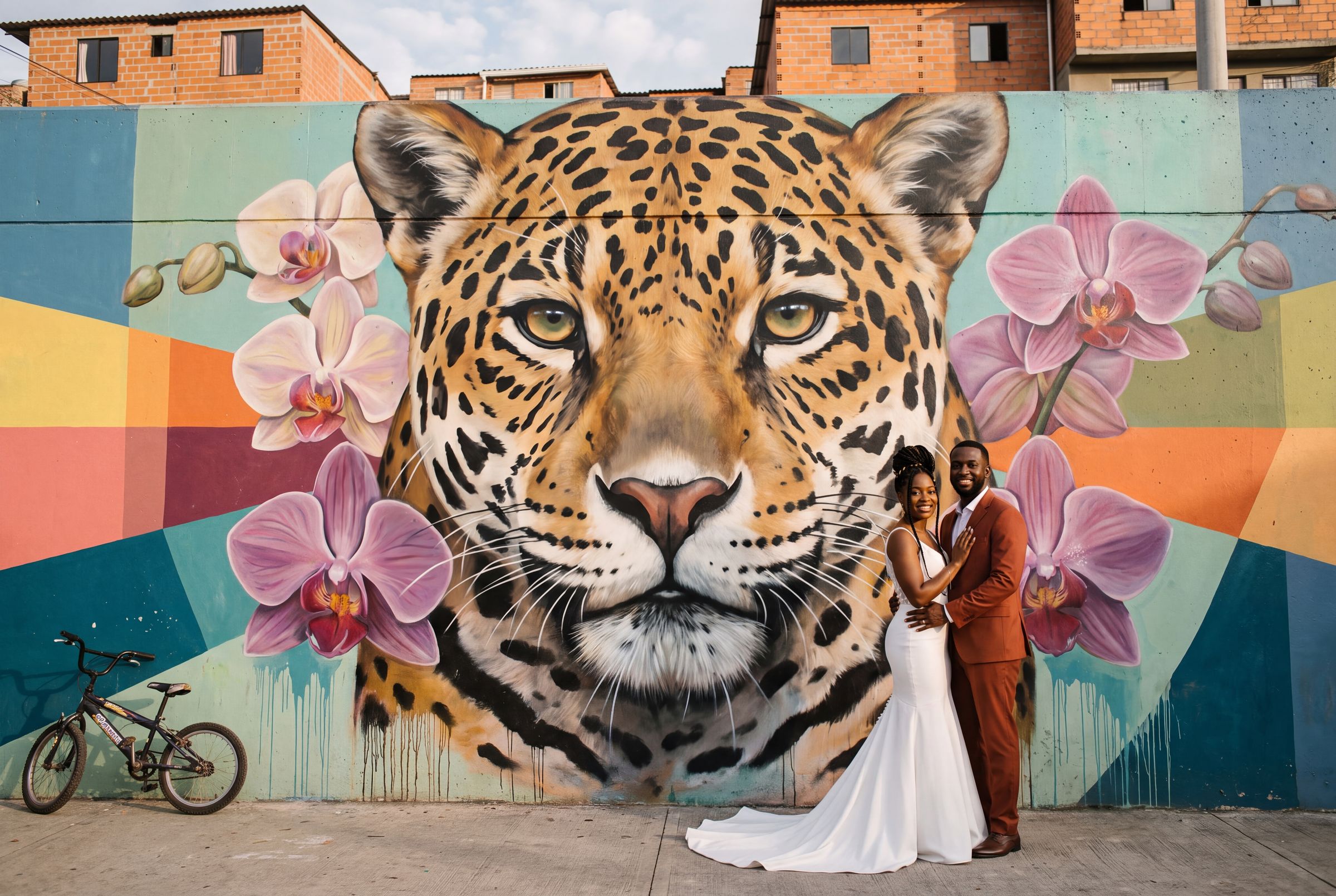
And the third: Comuna 13, which is the place people have usually heard the worst about, is now one of the most visited neighbourhoods in the city. That transformation is the whole story of modern Medellín in one location, and it is a better answer than any statistic.
The honest bottom line
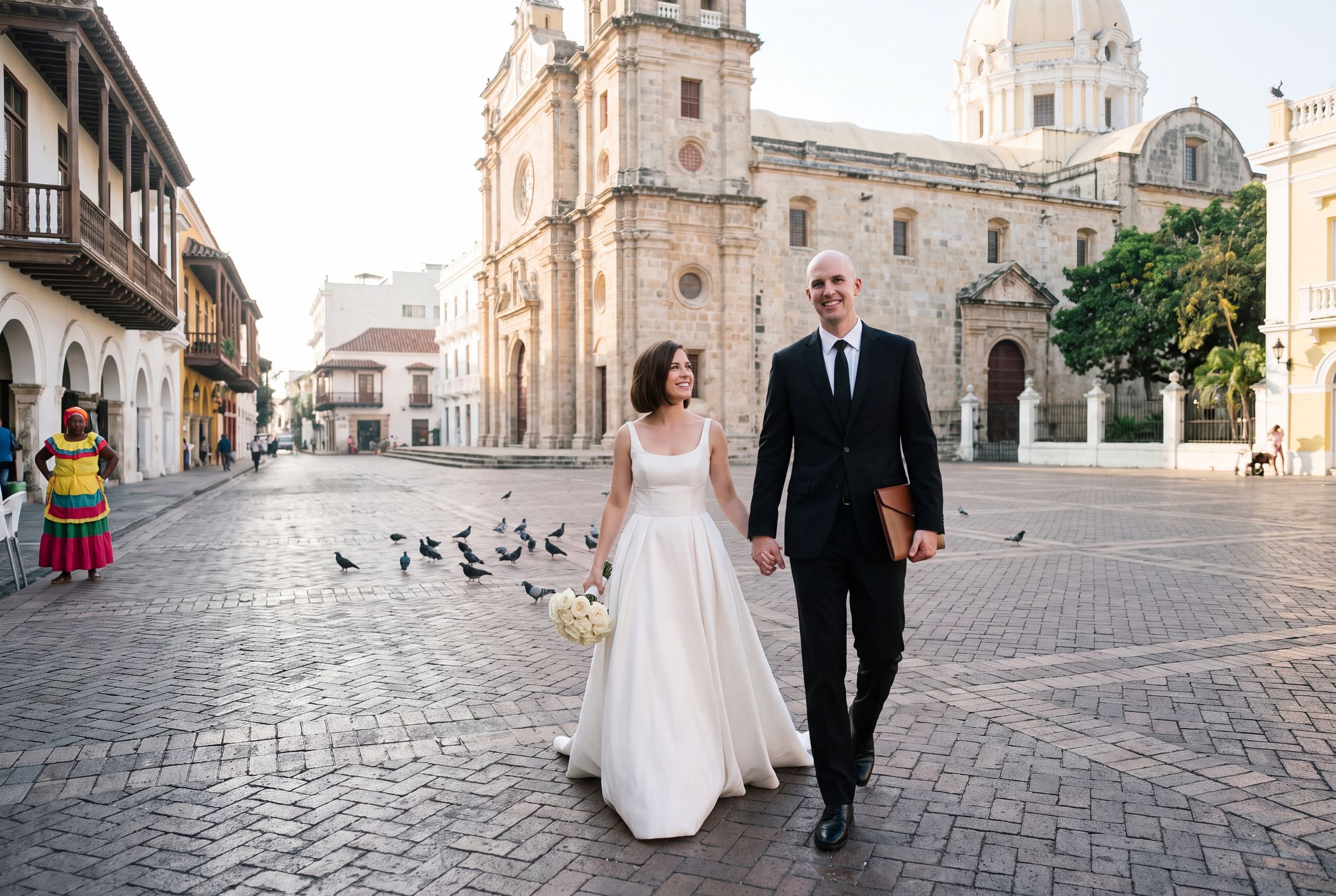
Colombia has genuine security problems in specific regions and I have listed them by name rather than waving at them. Those regions are not where anybody holds an elopement, and no advisory I have read puts Cartagena, Medellín, Bogotá, Guatapé or Salento in a restricted category.
What is left is urban crime in large cities, which is real, ordinary, and substantially mitigated by not navigating for yourself.
Read the current advisories yourself before you commit. Both governments update them and the version that matters is the one live on your date. Read your own country's as well as these two. If after reading them you are still uneasy, that is a legitimate answer and I would rather build you a day in Mexico or Costa Rica than talk you into a country you will spend the whole trip worrying about.
The circuits are laid out in the Colombia elopement guide, the money is in what a Colombia elopement costs, and the Pacific coast has its own honest treatment in how to elope in Chocó.
Ask me the question you are actually worried about and I will answer it straight →
Enquiries to the publisher, armanarai.com.