A Bahia Solano Elopement on Colombia's Pacific Coast
The northern town, the dependable airstrip and the whales. Which beach, how you reach it, and how long the walk takes.
Bahía Solano is the practical end of the Colombian Pacific. It is the northern town, the one with the most dependable air service, and the one I send couples to when the whales matter or when the trip has no slack in it for a missed flight.
It is not the prettiest place on this coast. Nuquí is prettier. Bahía Solano is a working town with a port and an airstrip and fishing boats pulled up on the sand, and the beauty is all in the twenty minutes around it rather than in the streets. That is worth knowing before you arrive expecting a village.
The wider argument for this coast, the rain figures, the security position and the money are in how to elope in Chocó. This is the ground: which beach, how you reach it, and how long the walk takes.
(Continued on Page 2, Col. 1)
The town, the airstrip and El Valle
Two settlements matter and they are not the same place. Bahía Solano holds the airstrip, the port and the services. El Valle is south of it, smaller, with the long open beach and the surf, and it is where most of the lodges couples actually stay in sit.
Between them is a rough track that gets covered by tuk-tuk in a bumpy half hour, which is the single piece of road transport on the whole plan. Everything else moves by boat or on foot.
Stay at El Valle, fly into Bahía Solano. That is the shape almost every trip takes, and it means your arrival day includes a transfer that is itself worth looking out of.
El Almejal, which is where most of this happens
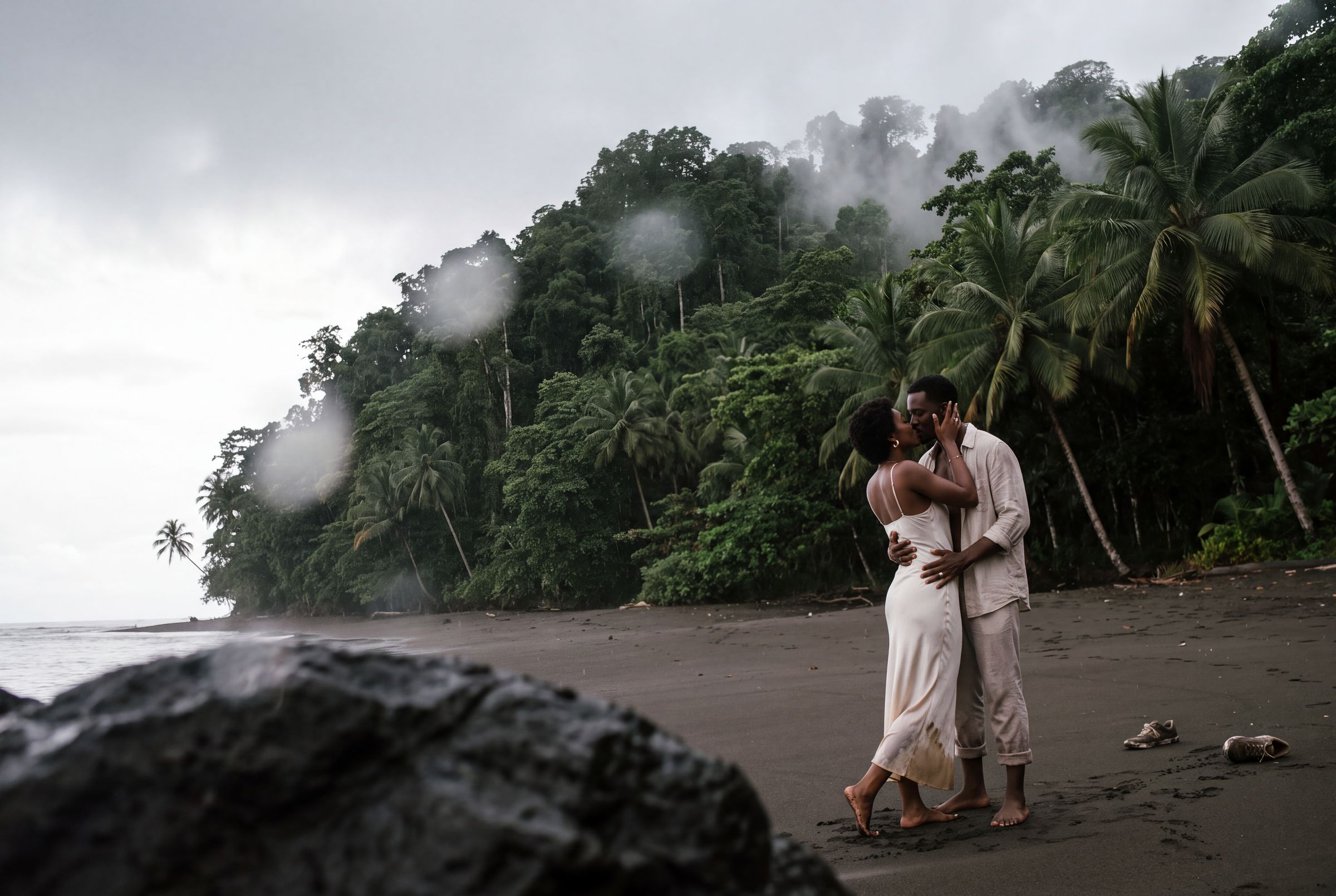
El Almejal is the beach immediately north of El Valle and it is the one you have seen if you have seen any picture of this coast. Roughly a kilometre and a half of wide dark sand, with driftwood the size of vehicles and rock outcrops standing out of the water at the north end. It surfs.
You reach it on foot from El Valle in about twenty minutes going north, or you are already on it, because the lodges sit at its edge.
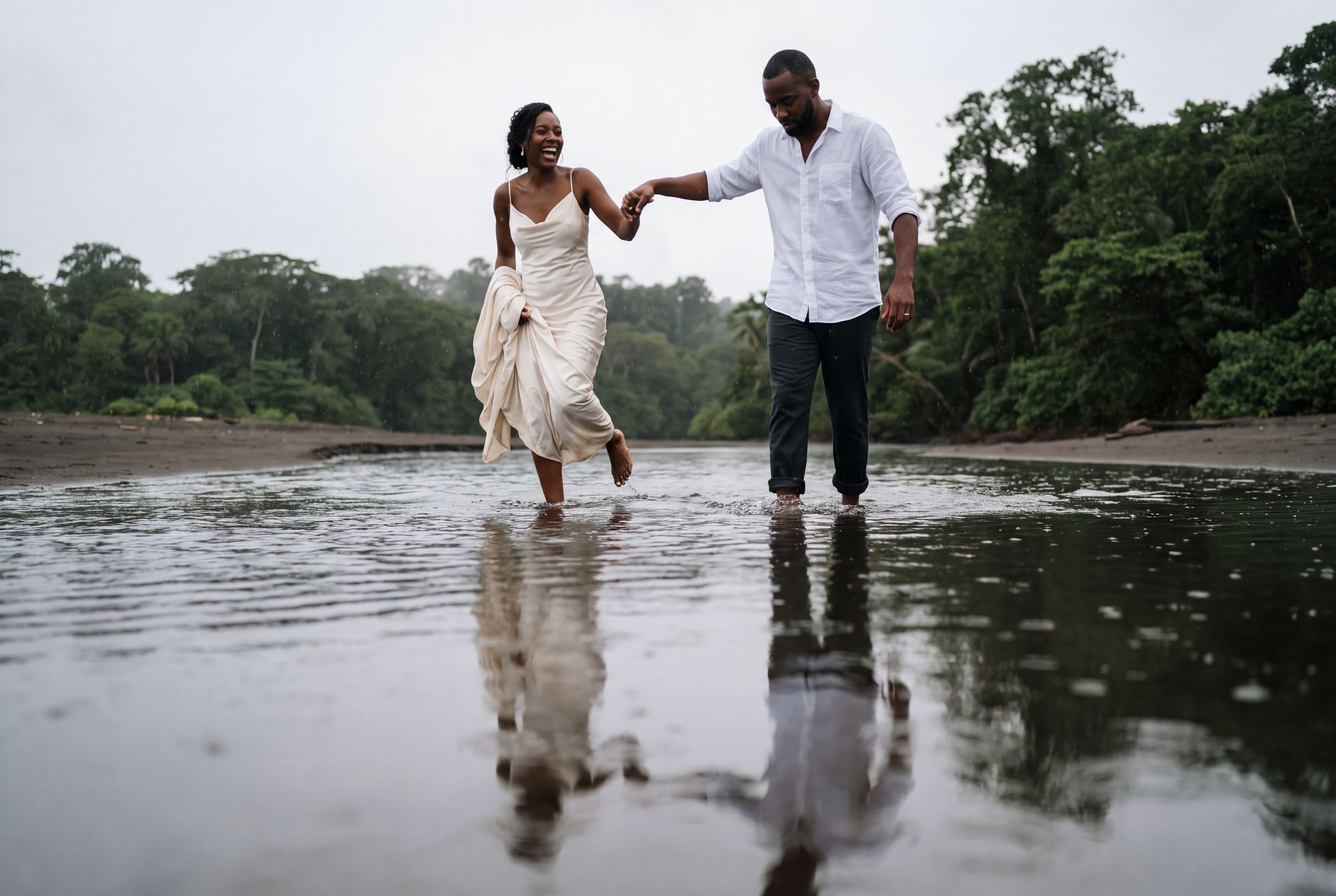
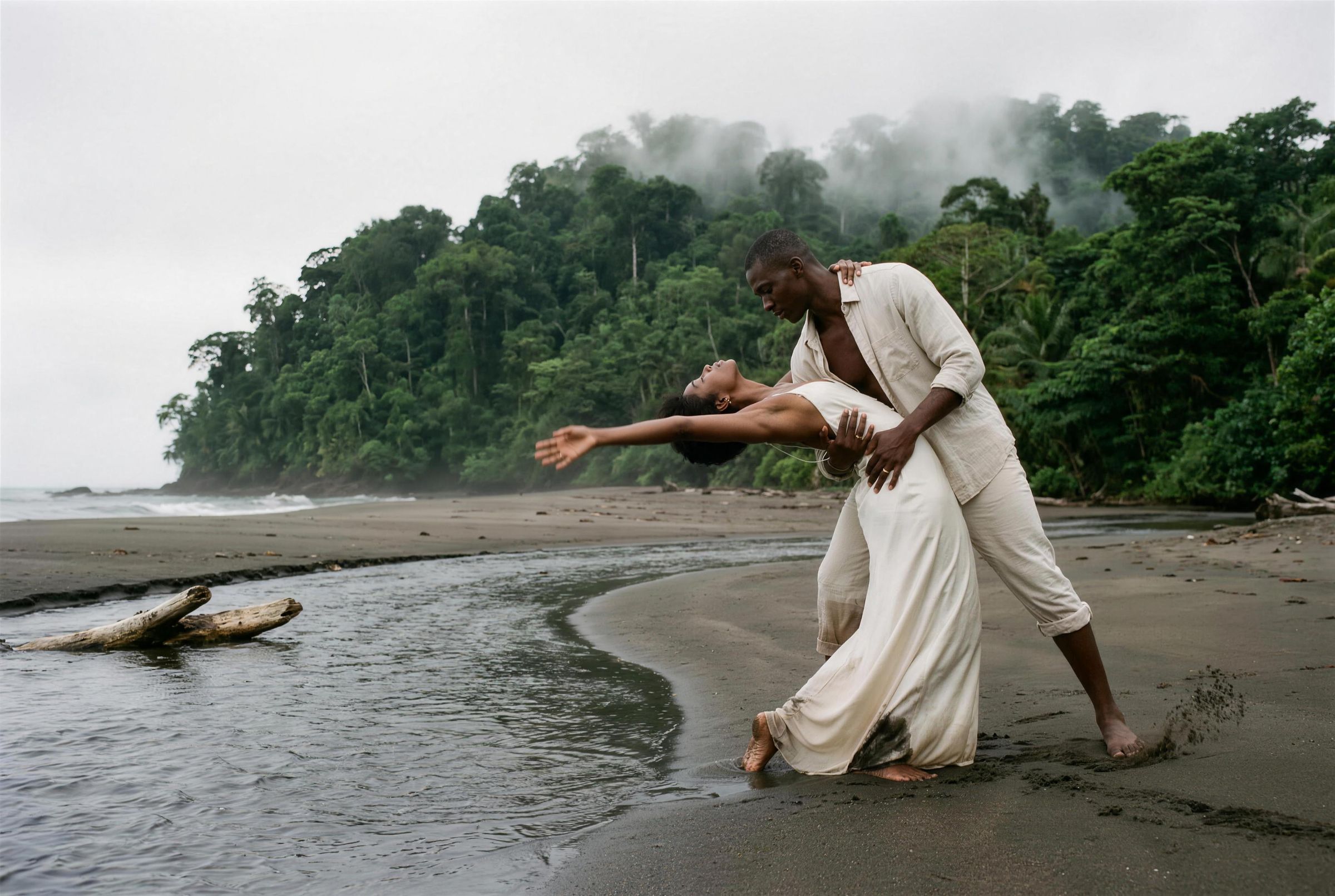
What makes it work for a ceremony is scale and emptiness in the same frame. The forest comes right down to the sand with no transition, so a couple standing at the waterline has jungle behind them and ocean in front and nothing built anywhere in shot. At low water the wet sand mirrors all of it, which doubles the trees and the sky and is the single most reliable frame on this coast.
Huina, and the walk you can only take at low tide
Playa Huina sits across the bay from Bahía Solano and it is the calm counterpoint to El Almejal. Sheltered water, a few places to eat, a small community, and swimming that is actually pleasant rather than a fight with the surf.
You get there in about twenty five minutes by boat. Or, and this is the good version, you walk it, in something like two hours along the beaches and the flats, but only when the tide is out far enough to let you.
That walk is one of my favourite things to build into a day here, and it is entirely governed by a tide table. Get it right and you spend two hours crossing beaches with nobody on them. Get it wrong and you are cut off, which is why I check the tide before I suggest it and why we always have the boat as the way back.
Cabo Marzo and the far north
North of Bahía Solano the coast runs on toward the Panamanian border and the water gets clearer. Cabo Marzo is the cape up there, known for diving and fishing, and it is reached by boat as an excursion rather than as somewhere you stay.
It is a long morning on the water and it is entirely weather dependent. I would not put a ceremony at the far end of it, because a ceremony that depends on a two-hour open-water crossing is a ceremony that gets cancelled. It belongs in a multi-day trip as the day you take if the sea is flat, not as a fixed item on a one-day plan.
The waterfalls, and the one you can walk to
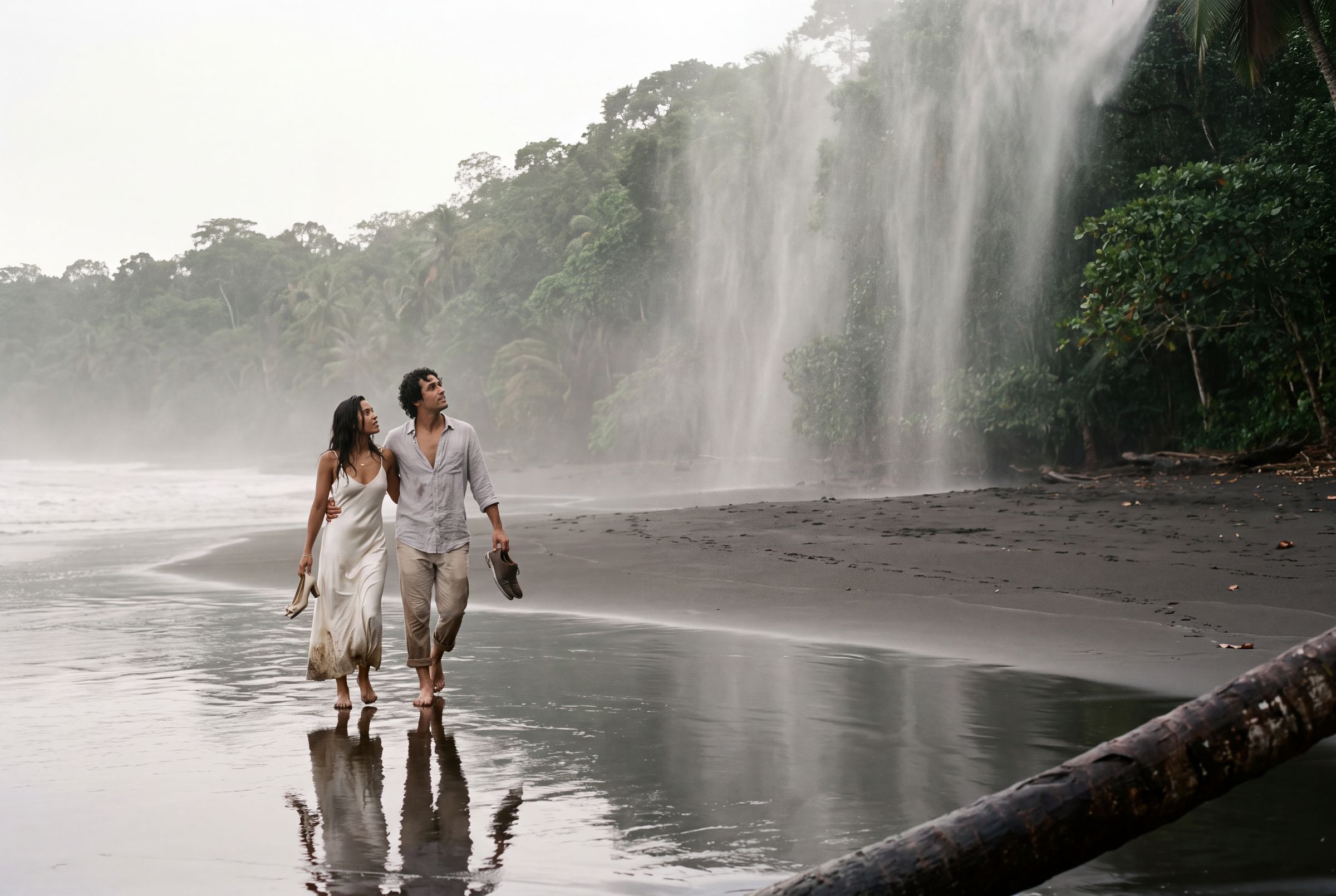
Fresh water is everywhere here and some of it falls off cliffs into pools you can stand under.
Cascadas Cocacola is the accessible one, reachable on foot from Bahía Solano in under two hours. Take a local guide and check the tide, because part of the route uses the shore. From El Valle there are trips out to El Tigre and to various swimming holes back in the trees.
Why this matters for the day rather than as an activity: a waterfall is the one location on this coast that is completely unaffected by the sea. When the surf is too big to launch a boat and the beach is a mess of driftwood and brown river water, the forest is exactly as it always is. It is my standing weather backup, and on this coast you need one.
The turtles at Cuevita
Sea turtles nest on the beaches around El Valle, and Playa Cuevita has a release programme run locally, where hatchlings are protected and then let go at the water's edge.
I am not going to print a season for it, because I could not verify the months and the species to a standard I am comfortable publishing. What I do is ask, for your specific dates, and tell you whether it is happening.
If it is, take it. It is a genuinely moving twenty minutes and it costs almost nothing. It is also the kind of thing that belongs to the community running it rather than to your day, so we fit around them and we do not ask them to hold anything for the photographs.
Utría from the northern side
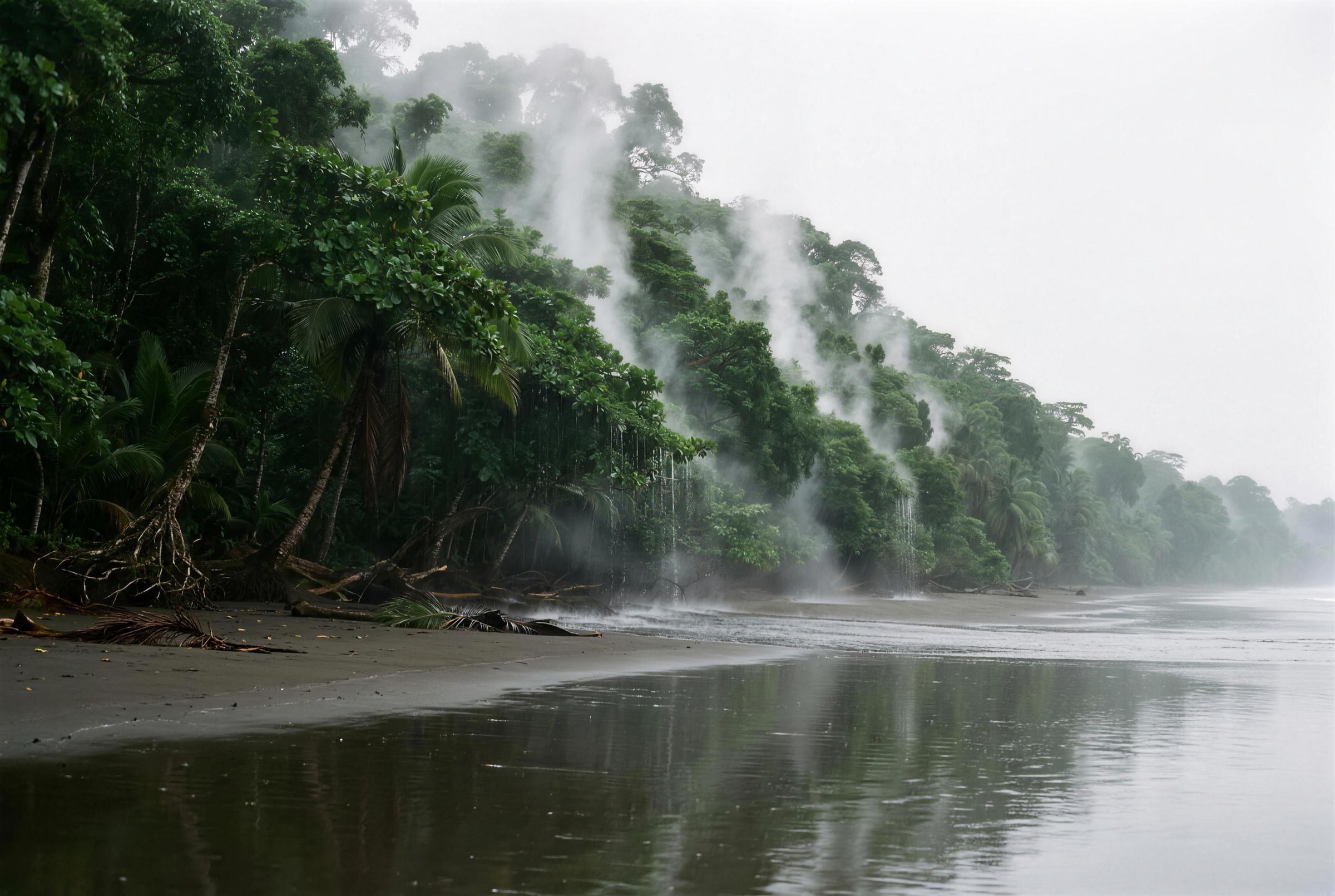
Utría National Natural Park is south of El Valle and it is reachable from this side by boat. It holds a long, narrow, still inlet with forest on both banks, and whales use it to calve.
The operational facts, which decide the day: entry and exit run between eight in the morning and two in the afternoon, the fee for a non-resident foreigner is 80,000 Colombian pesos, and the park manages capacity in advance rather than admitting whoever turns up.
So a Utría day is an early one. We leave in the dark, we are at the mouth around opening, and we are out by early afternoon. The eight-to-two window is not negotiable and it is the reason this cannot be a sunset location, which surprises couples who have seen it in evening light in somebody's film.
The whale morning, in detail
The pillar covers when the whales are here and the rules that protect them. This is what the morning is actually like, because couples imagine something different from what happens.
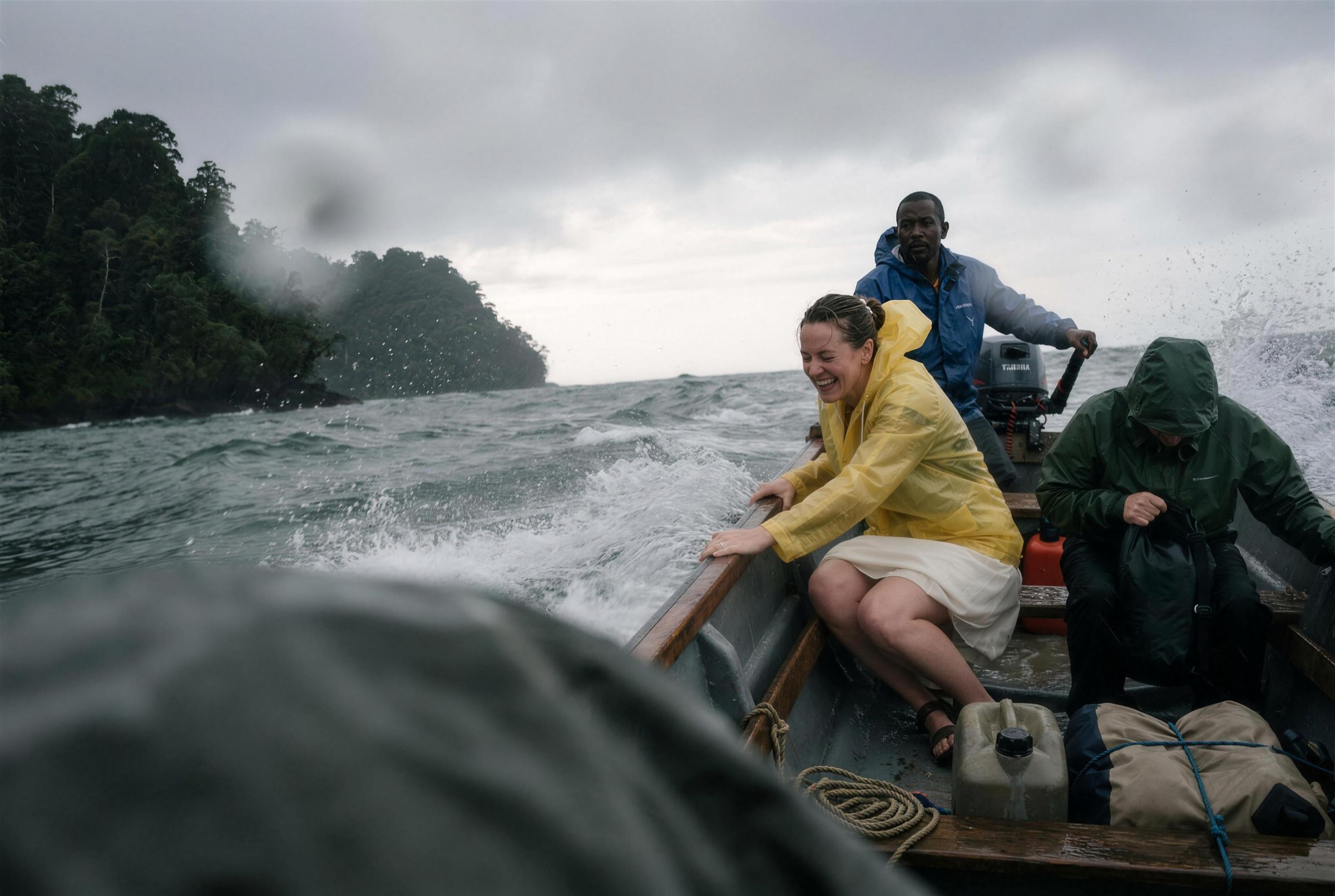
You leave early, and you leave off the beach. There is no pier. The boat is pushed off the sand through the shore break and everybody gets wet to the knee getting in, in whatever you are wearing. That is the first thing people are not ready for.
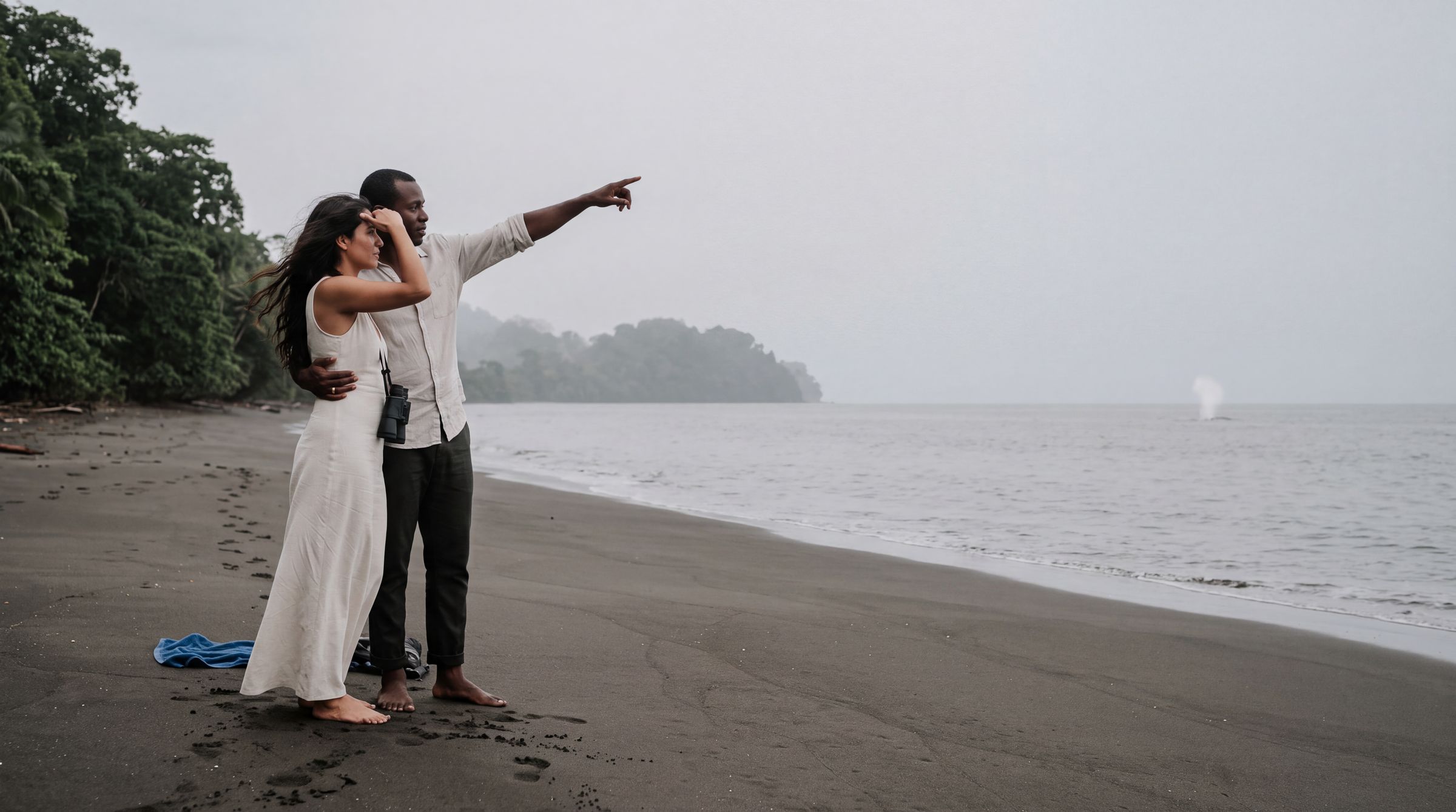
Then it is mostly waiting. Engines idle, then off. Somebody spots a blow a long way off and everybody looks the wrong way. The animals decide the encounter and they are frequently uninterested in you, which is exactly as it should be. Thirty minutes with a group is the limit and two hundred metres is the distance where calves are involved.
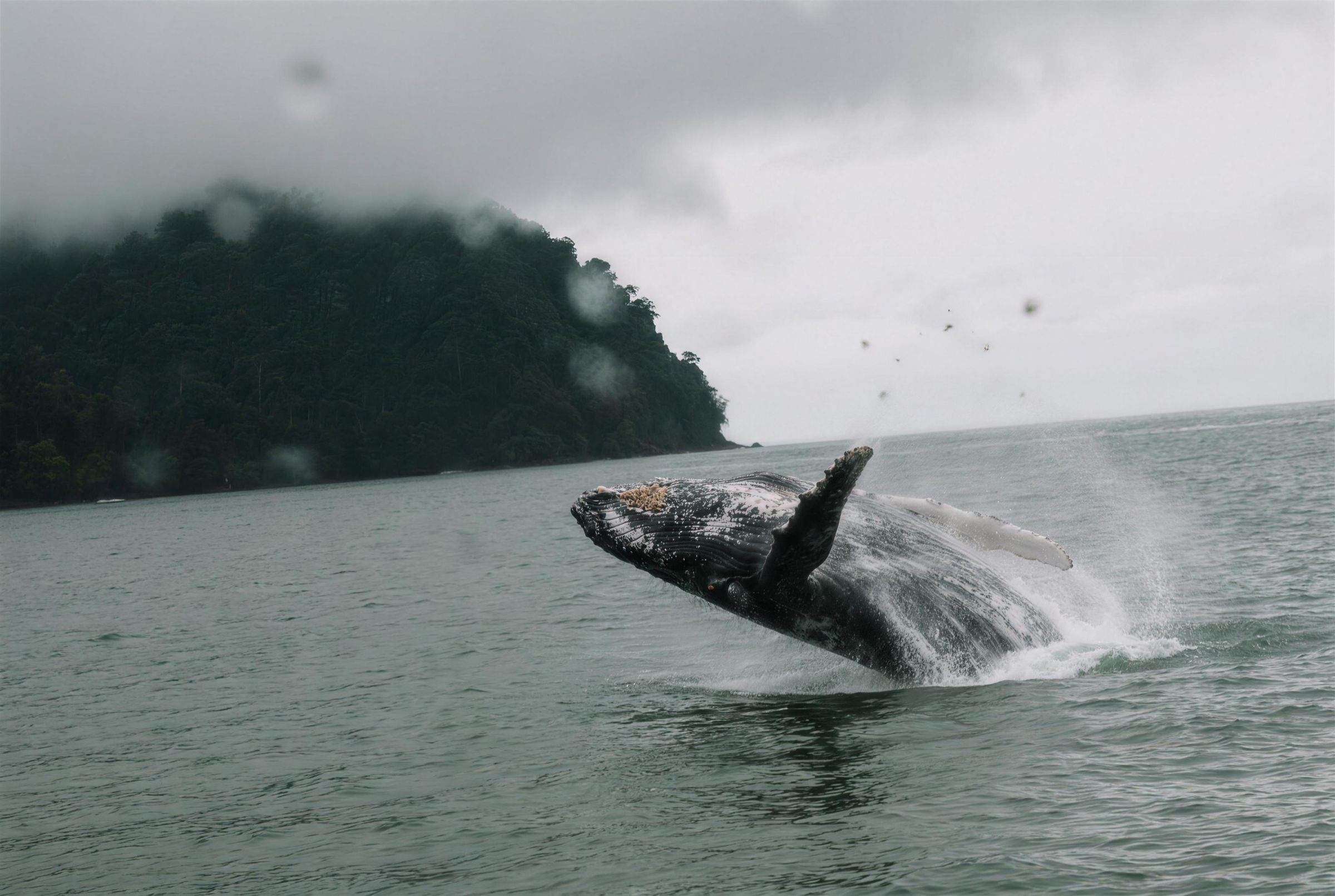
When it works, it works completely. A forty-tonne animal comes out of the water within a few hundred metres of a small wooden boat and the noise it makes landing arrives a beat late. Nobody in the boat says anything sensible for about a minute afterwards.
Bring nothing you mind getting soaked. Wear the life jacket. The photographs from these mornings are wet, grey, grainy and among the best I take anywhere.
Whose beach this actually is
This is the section I would most like couples to read, and it is the one nobody else writing about this coast seems to include.
Chocó is around eighty per cent Afro-Colombian, with Emberá and Wounaan Indigenous communities making up roughly another twelve. Those are not visitor statistics, they are who lives here, and the coast has been theirs for centuries.
The legal shape matters. Law 70 of 1993 created collective property rights for Black communities on the Pacific, held through community councils rather than by individuals, and Indigenous territory is held through resguardos. So the beach you are standing on to say your vows is very likely collectively titled land belonging to a council with a name and a governance structure.
What that changes in practice. Permission is a relationship, not a form. Access to a beach, a river, a waterfall or a village is arranged through the people who hold it, the guides are from the community, and the money should stay there. I book locally, I pay locally, and I do not treat a village as a backdrop that happens to have people in it.
It also means you should ask before photographing anybody, and accept no. That sounds obvious written down and it is routinely ignored by people who have flown a long way and feel entitled to the pictures.
What you eat, which is better than you are expecting
The food on this coast is one of its genuine pleasures and almost nobody mentions it.
It is fish and seafood, and it is built on coconut. Encocado, which is seafood cooked in coconut milk, rice with coconut, whole fish that was in the ocean that morning. The Pacific tradition is distinct from anything you will eat in Medellín or Cartagena and it is the thing couples talk about afterwards more than they expect.
There is no menu. There is what came in on the boat. If you have a dietary requirement that is genuinely non-negotiable, tell me at the planning stage rather than on arrival, because a six-room lodge on a coast with no road cannot improvise around it.
You will also be offered viche, the traditional cane spirit of the Pacific, which is made artisanally here and is culturally central in a way that a bottle of rum is not. Accept it.
When the flight does not go
It happens, and the honest answer is that I cannot tell you how often.
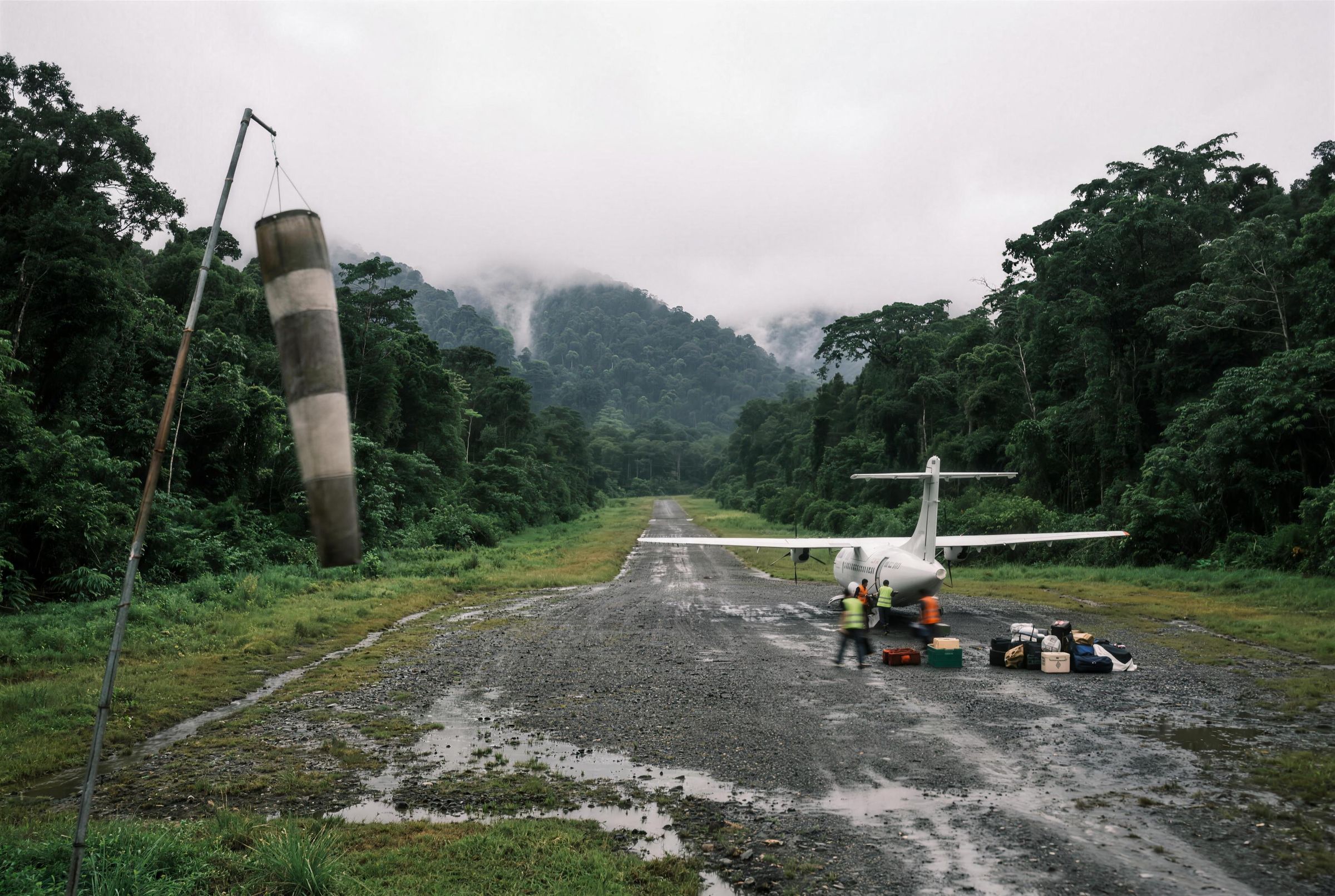
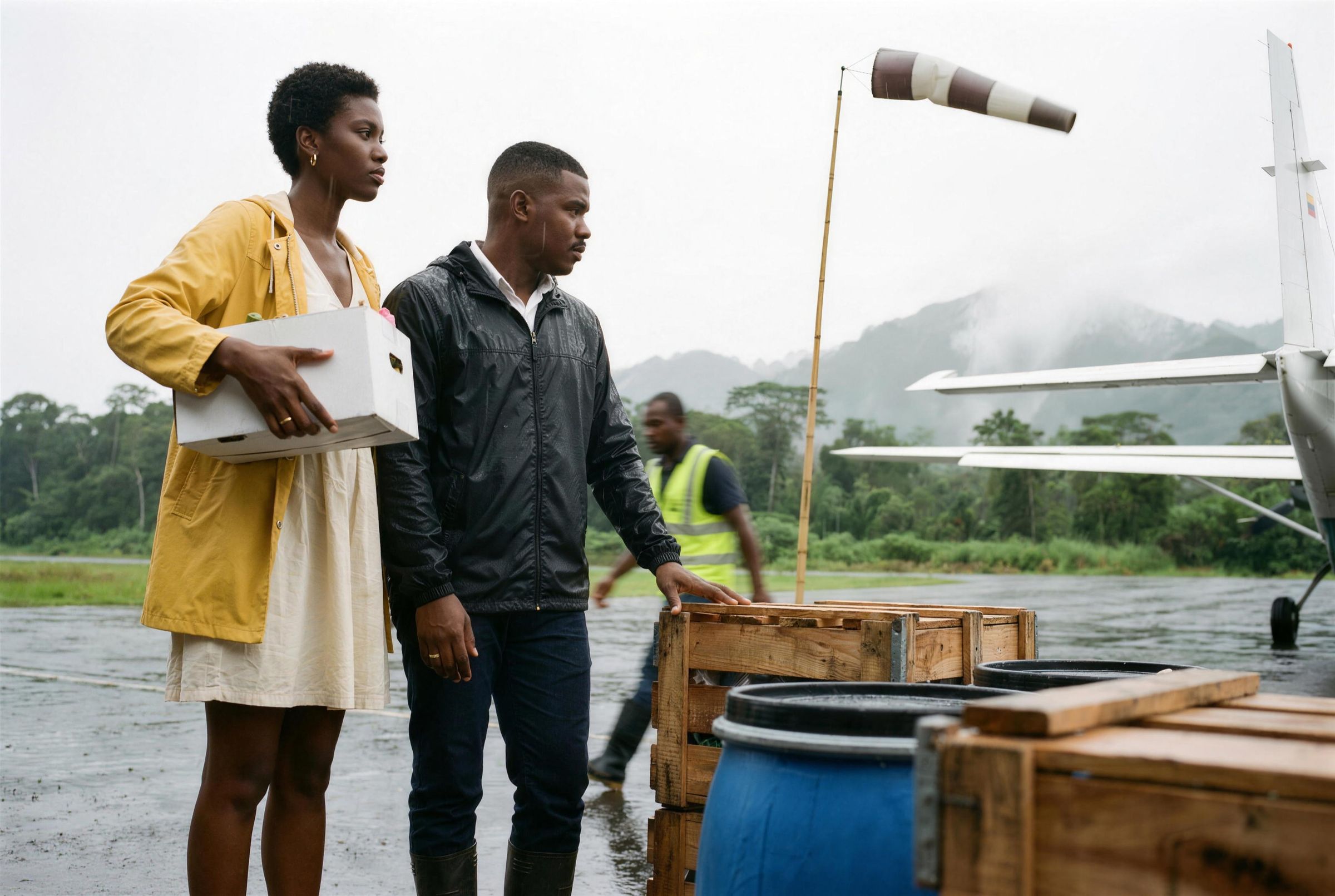
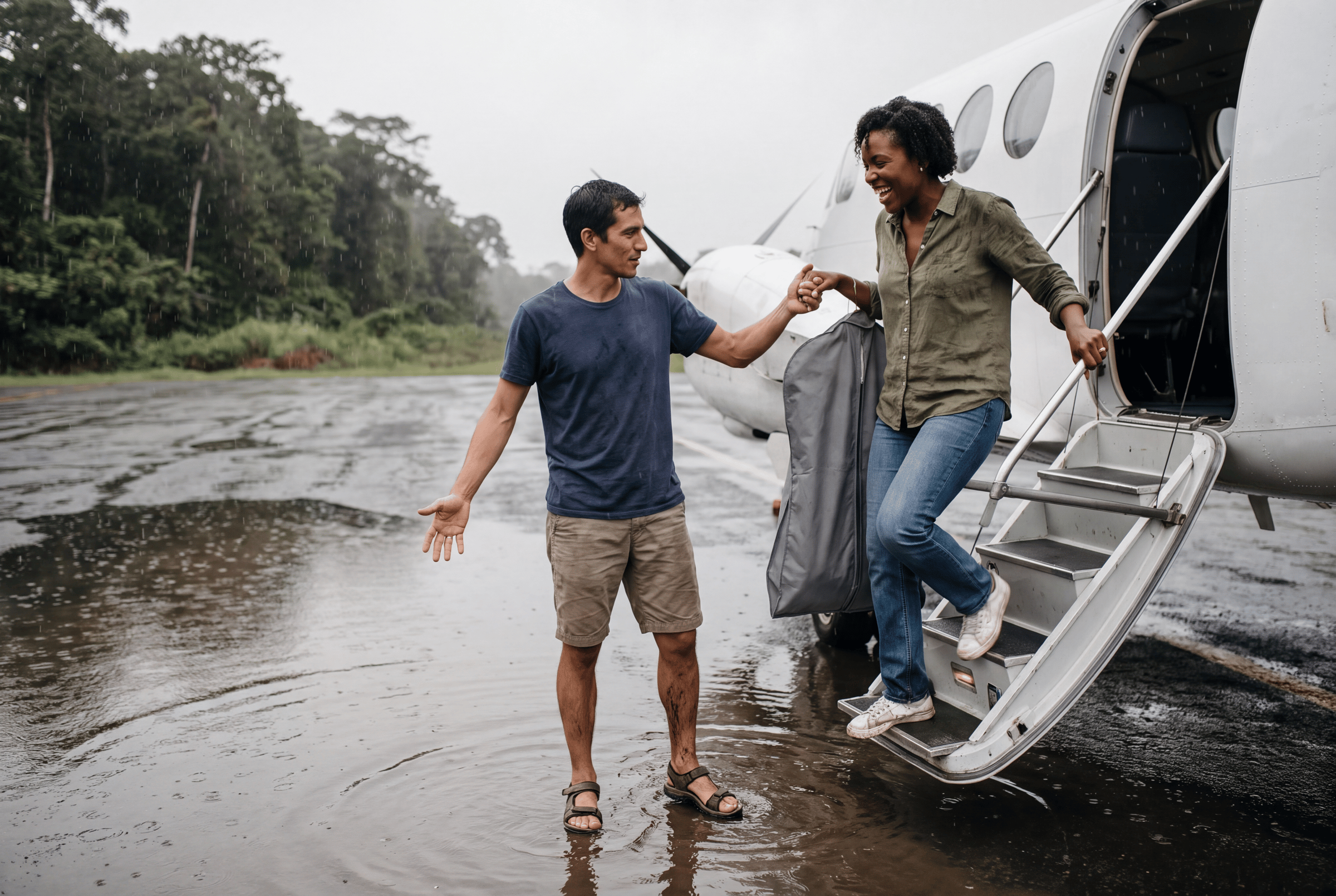
What I can tell you is what it means. These are small aircraft into a jungle strip in one of the wettest places on earth, and when the weather closes the aircraft does not come. There is no road alternative. There is no later flight the same evening. You wait for the next one.
Which produces one piece of advice that matters more than anything else in this guide. Build a buffer day at each end. Arrive two days before the ceremony, not the night before, and do not book an onward international flight for the day you are due to leave the coast.
Couples who do this are relaxed when a flight slips, because it costs them a morning. Couples who do not are the ones sitting in a terminal doing arithmetic about a connection in Bogotá. It is the cheapest insurance on the whole trip and it costs one night of accommodation.
Where you stay, and how many rooms there are
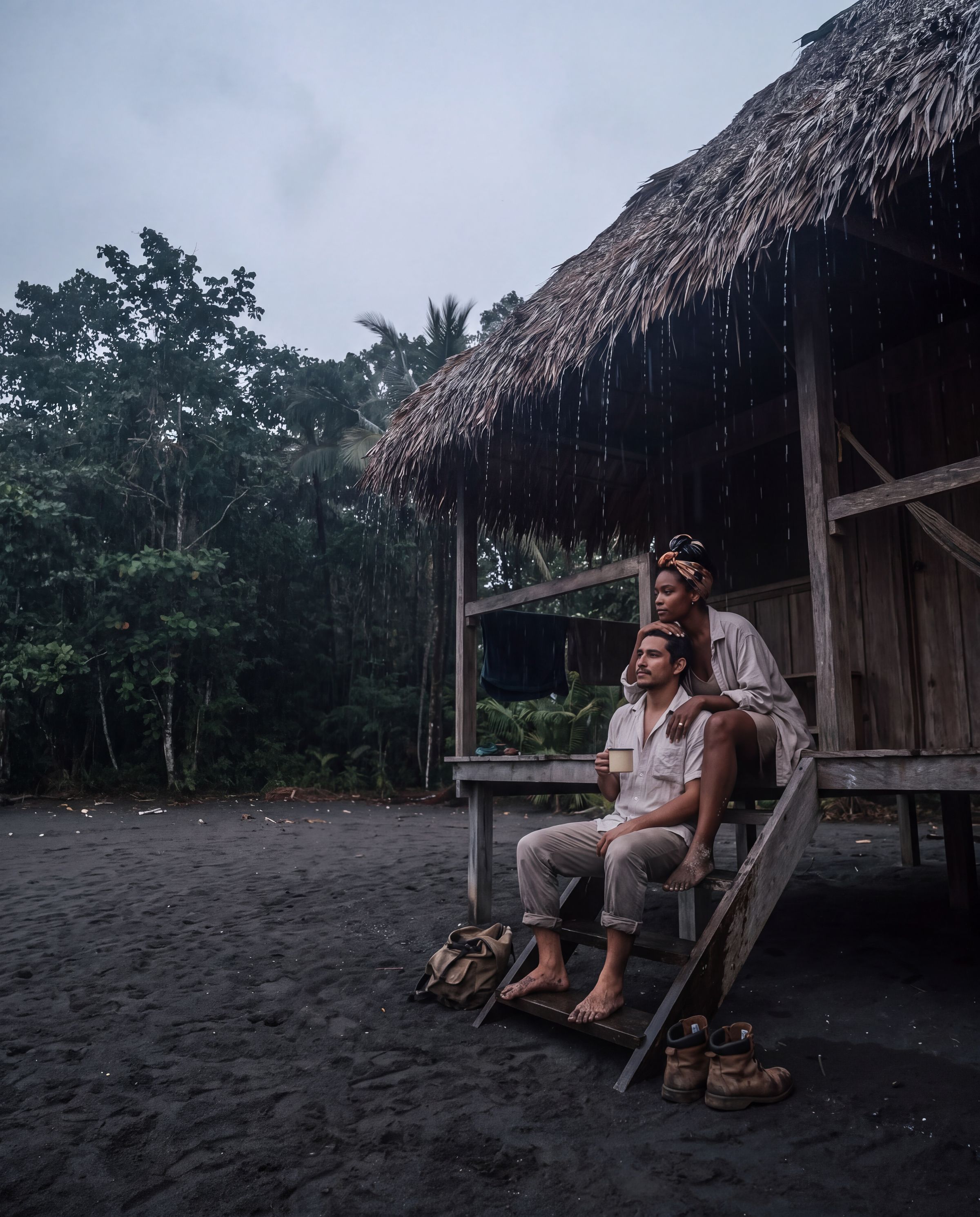
The lodges around El Almejal are timber and thatch on stilts at the treeline, open on at least one side, and small. Some have six rooms.
That number is the planning constraint that catches people. In whale season a six-room lodge on the best beach on this coast is full a long way out, and there is no overflow option twenty minutes down the road, because there is no road.
Power is a generator on a schedule. Signal is poor to absent. Everything you own will be damp by day two. I name the exact lodge and the arrival day and you book it directly, because I do not hold a travel agency licence and will not pretend to.
What a Chocó celebration sounds like
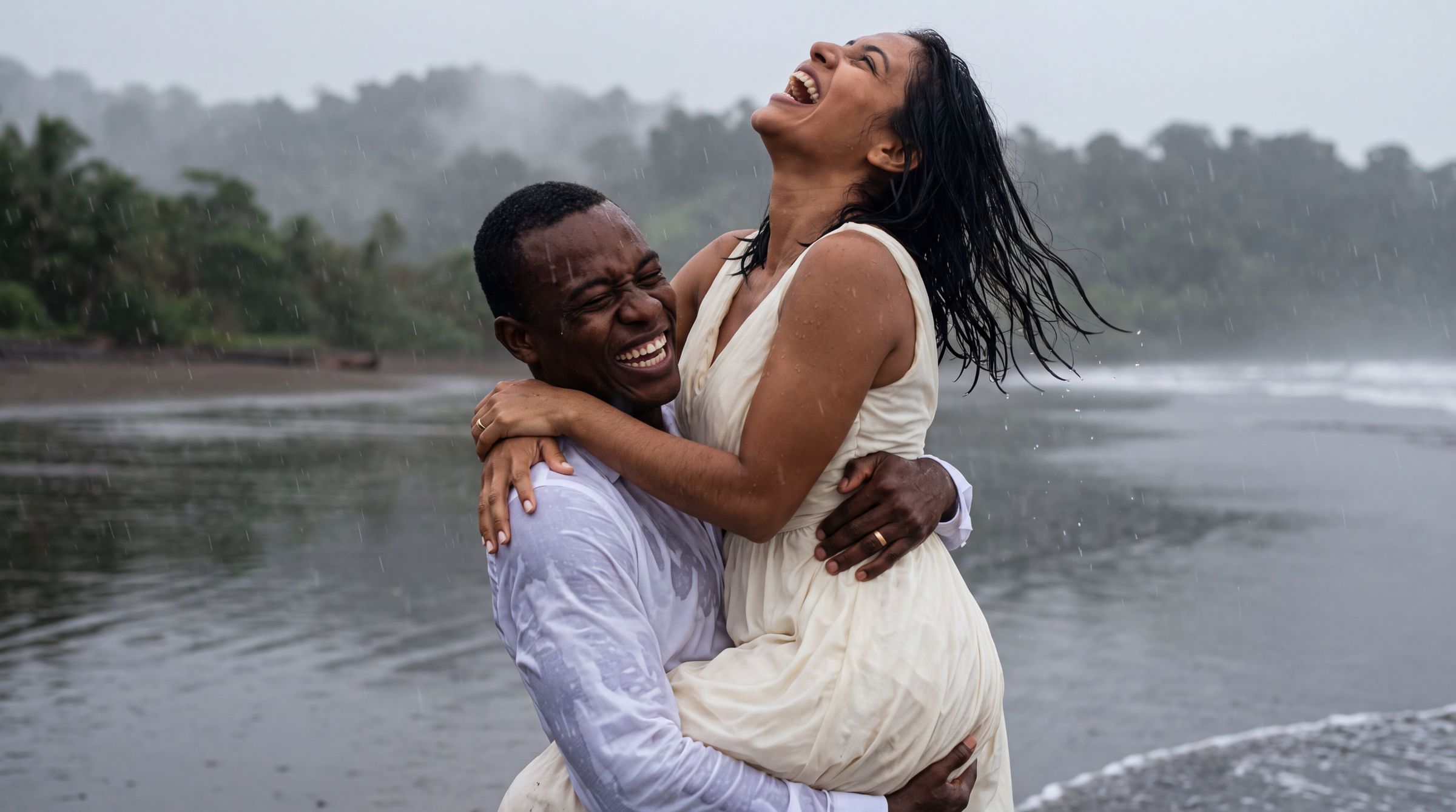
The Pacific has its own music and it is nothing like the vallenato and reggaeton you will hear everywhere else in Colombia.
The instrument is the marimba de chonta, made from palm wood, played with drums and voices in an ensemble that sounds like nothing else in the country. There is also chirimía, the wind and percussion tradition of the region, and alabaos, unaccompanied funeral songs sung by women, which are among the most extraordinary things you will ever hear standing up.
Why it belongs in a planning guide: if you want music at your ceremony, the answer here is people rather than a speaker. Live musicians from the community, playing the tradition of the place you chose, cost a fraction of what a hired band costs anywhere you are flying from, and they are the single best decision most couples make out here.
It also makes the day belong to the coast rather than being imported onto it. A playlist through a Bluetooth speaker on a beach in Chocó is a small tragedy and I will gently argue you out of it.
What a two-day build looks like here
The shape I argue for, and the reasoning behind the order.
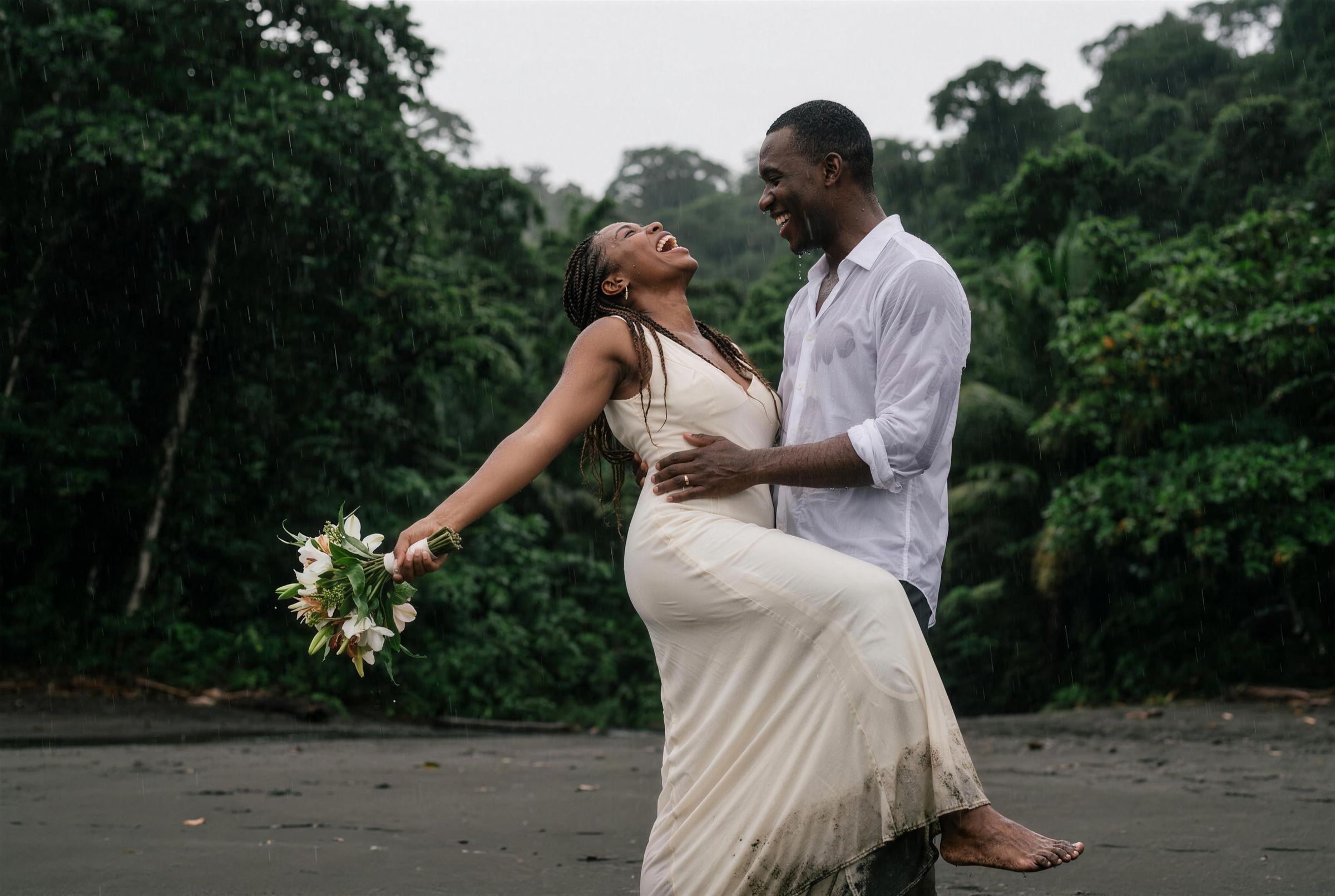
Day one is the ceremony, on the beach, near the lodge. Not because it is the best possible location but because it is the one location that cannot be taken away by weather. You have travelled a long way. The married part should not be hostage to a boat launch.
Late on day one, the waterfall or the forest, which work in any conditions.
Day two is the water. Whales in season, Utría, Huina at low tide, or the run north if the sea has gone flat. This is the day that flexes, and because it flexes it is the day that produces the surprises.
A single-day trip out here is possible and I will build one. I will also tell you that one day on this coast is a coin toss, and that the couples who came for two or three are the ones who got the morning nobody planned.
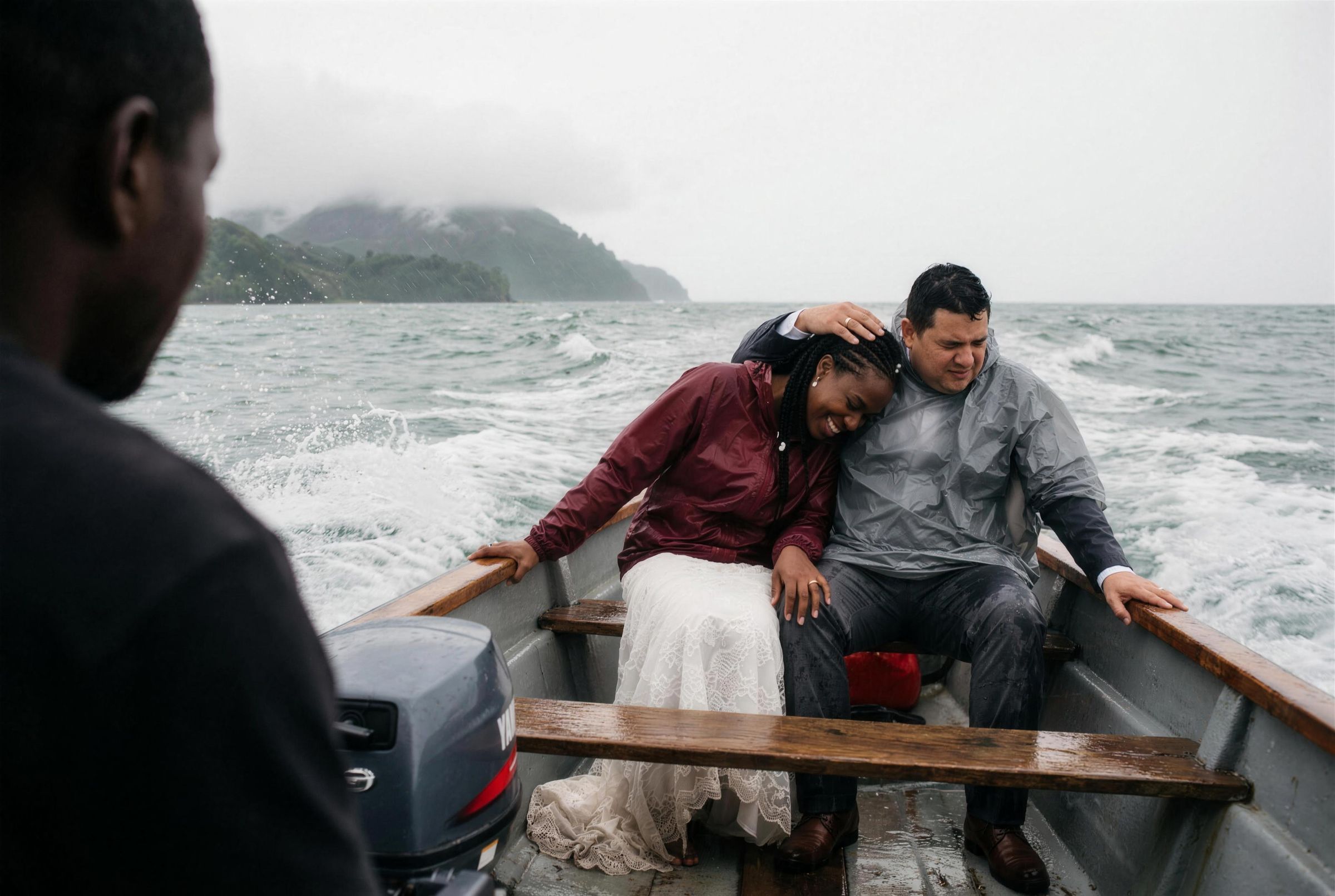
What it costs
Bahía Solano is sold inside the Pacific circuit. The Essential is $8,900 for one designed elopement day. The Curated Signature is $15,500, adding a second full day and a film. The Curated Adventuremoon is $21,500 for the full circuit across several days, which is the one I would argue for here for the reason above: the weather will take a day and hand you a better one, and you want the room for that to happen.
Everything I curate on the ground is inside the tier. Your flights and your lodge are not.
The full picture is in how to elope in Chocó, the softer alternative down the coast is Nuquí, the tiers are on the pricing page, and the day is laid out on the Chóco hub.
Tell me your month and I will tell you what the sea is likely to be doing →
Enquiries to the publisher, armanarai.com.