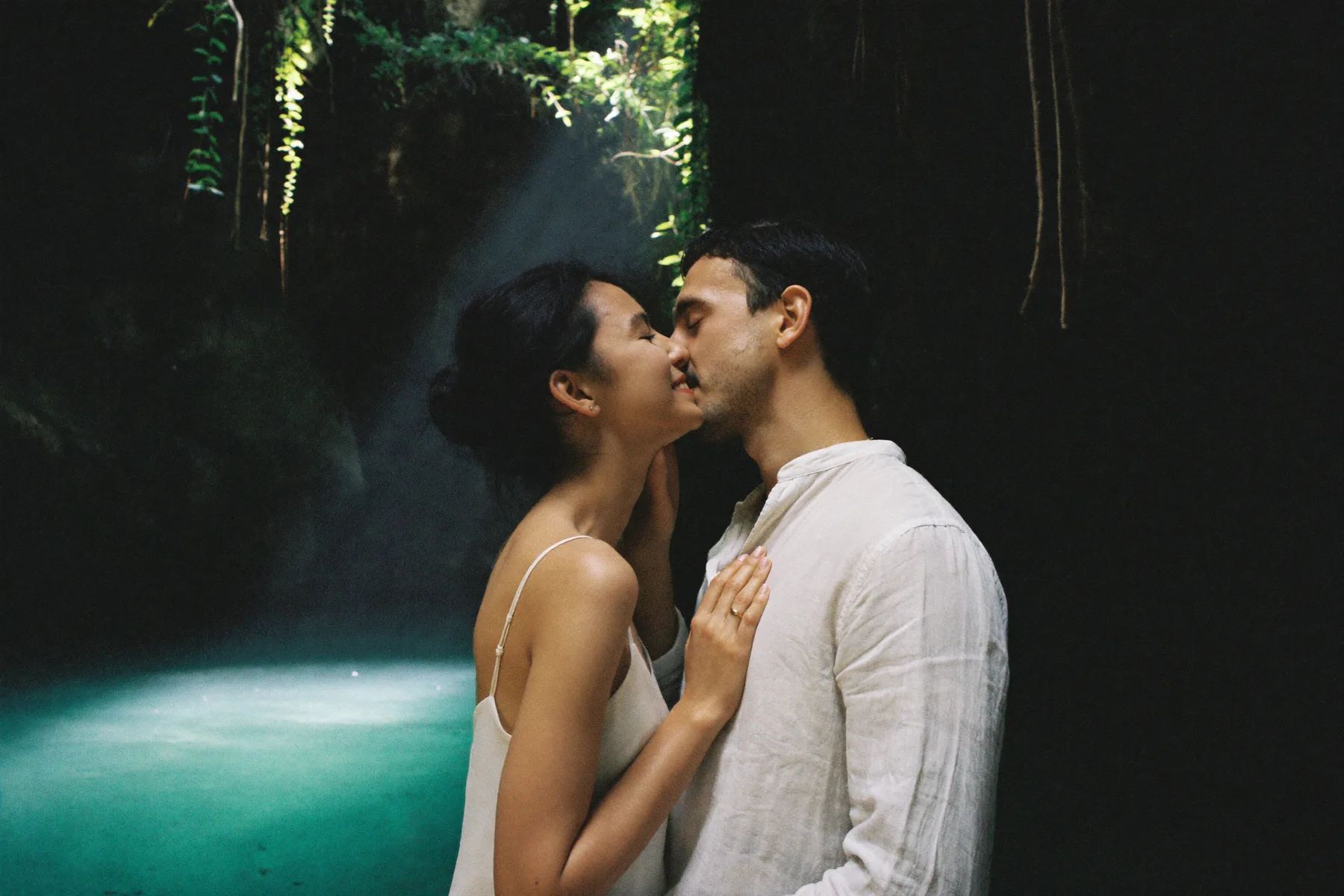
How to Elope in Cancún Without Getting the Cancún Everybody Warns You About
The hotel strip is nine miles long and almost none of it is where you should be married. Everything good here is at the two ends of the day and off the strip entirely.
Cancún has a reputation problem with exactly the kind of couple who would read this site, and it is half deserved. The hotel zone is a nine mile sandbar of large resorts, and if you fly in, stay on it, and get married on the beach behind your hotel at four in the afternoon, you will get precisely the photographs you were afraid of.
None of that is a fact about Cancún. It is a fact about that itinerary. The same peninsula has Caribbean water that genuinely is the colour it looks in photographs, Maya ruins on the beach that almost nobody visits, freshwater caves inland, and an island half an hour offshore that is a different country in atmosphere.
This post is the argument for the good version, and the specific decisions that produce it. It starts at $8,700, which makes it one of the cheapest destinations I sell anywhere, and the reason to consider it is not only the price.
(Continued on Page 2, Col. 1)
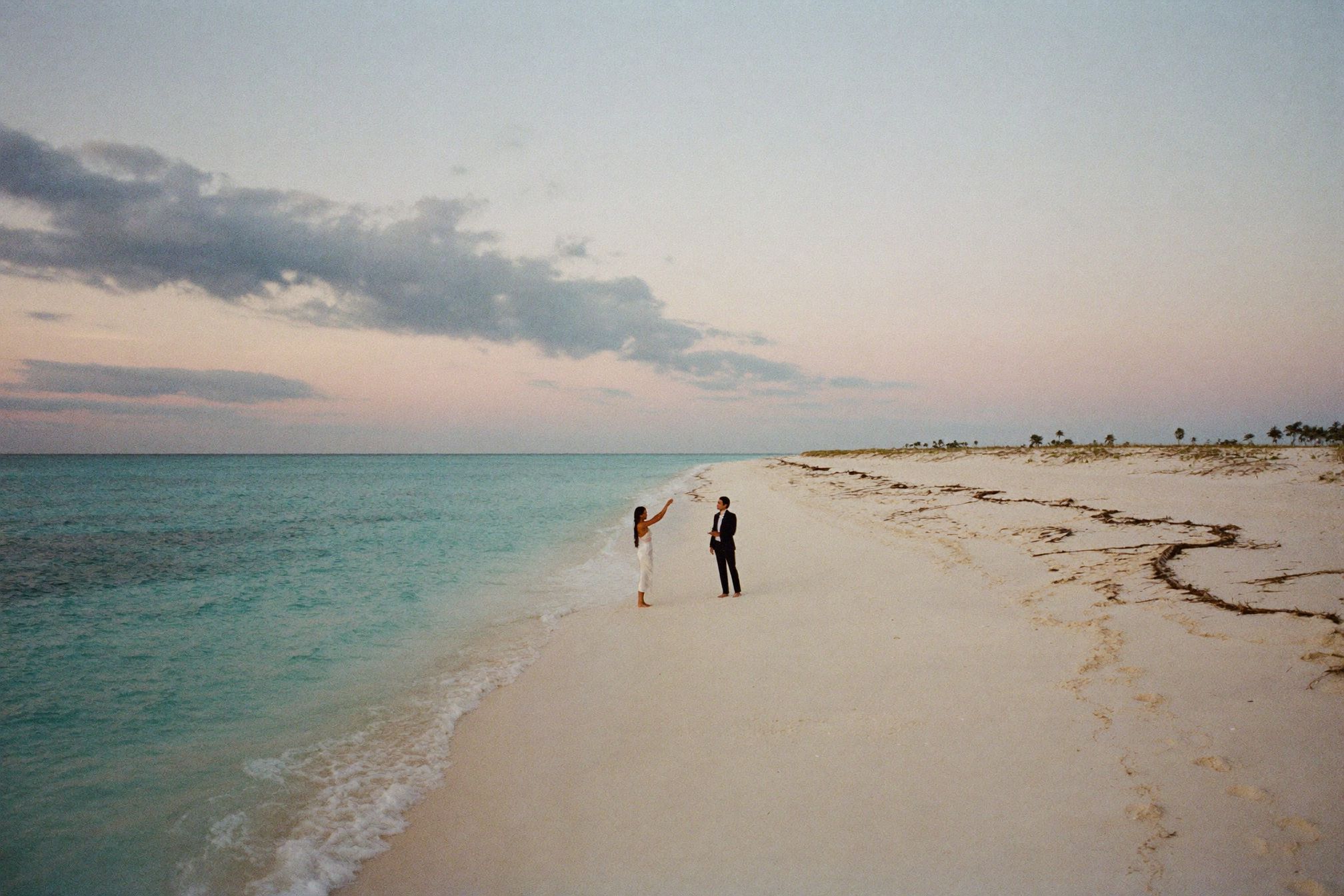
The beaches face north, and that changes everything
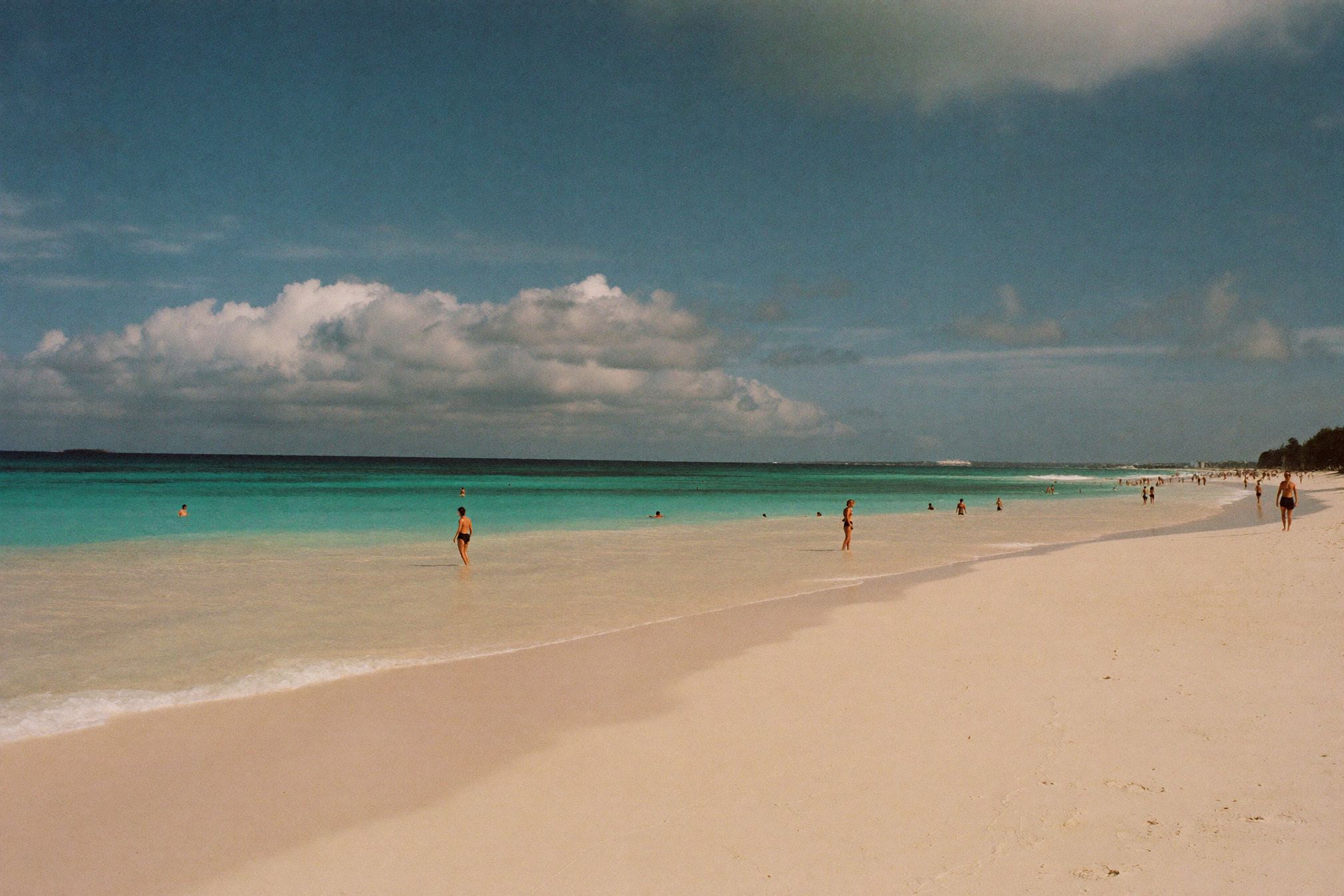
Here is the piece of geography that most planning ignores. The main Cancún beach faces roughly north and east, not west. The sun comes up out of the Caribbean in front of you and sets behind the lagoon at your back.
The consequence is that this is a sunrise coast. The first hour of light comes low across the water directly at the beach, the sand is empty because it is six in the morning, and the sea is flat before the day's wind gets going. The last hour of light is soft and pink on the water but the sun itself is behind buildings.
So every ceremony I build in Cancún is at sunrise. Not because early is virtuous, but because at half past six that beach belongs to you and at half past four it belongs to a thousand people. Playa Delfines is the one I use most: public, wide, undeveloped along its back edge, and big enough that two people at one end of it read as alone.
It also means you are finished by nine, which leaves an entire wedding day for something other than photographs. Most couples find that is the part they end up valuing.
Sargassum, honestly
This is the question every couple asks and it deserves a straight answer rather than reassurance.
Sargassum is a floating brown seaweed that arrives on Caribbean beaches in large quantities, rots on the sand, and smells. The season runs roughly May to October and it is worst in the central Riviera Maya, the stretch around Playa del Carmen and Tulum. It is a genuine problem and no amount of careful wording makes it not one.
It does not hit everywhere equally. The north facing beaches at the top of Cancún, Isla Mujeres and the west side of Cozumel are consistently less affected than the coast running south, because of how the currents deliver it. That is the single most useful thing to know when choosing between Cancún and Tulum for a summer date.
What I do about it: if your date falls in the season, we plan around the north facing beaches and the island, and we keep the boat day and the cenote day as the fallbacks that are completely unaffected by it. If your date is November to April, it is largely not a consideration. And if somebody tells you they can promise you a clear beach in August, they are guessing.
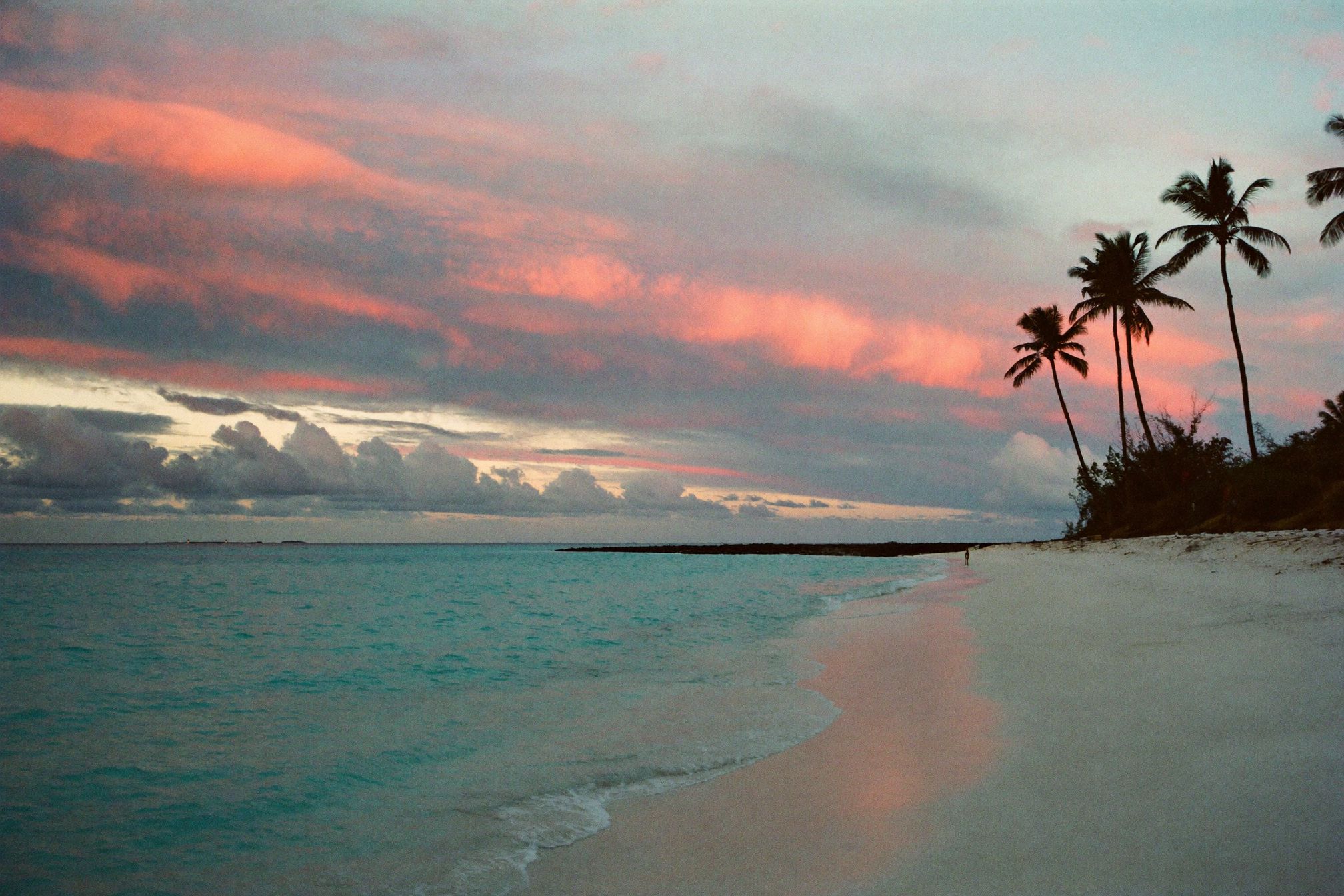
The ruins on the beach nobody visits
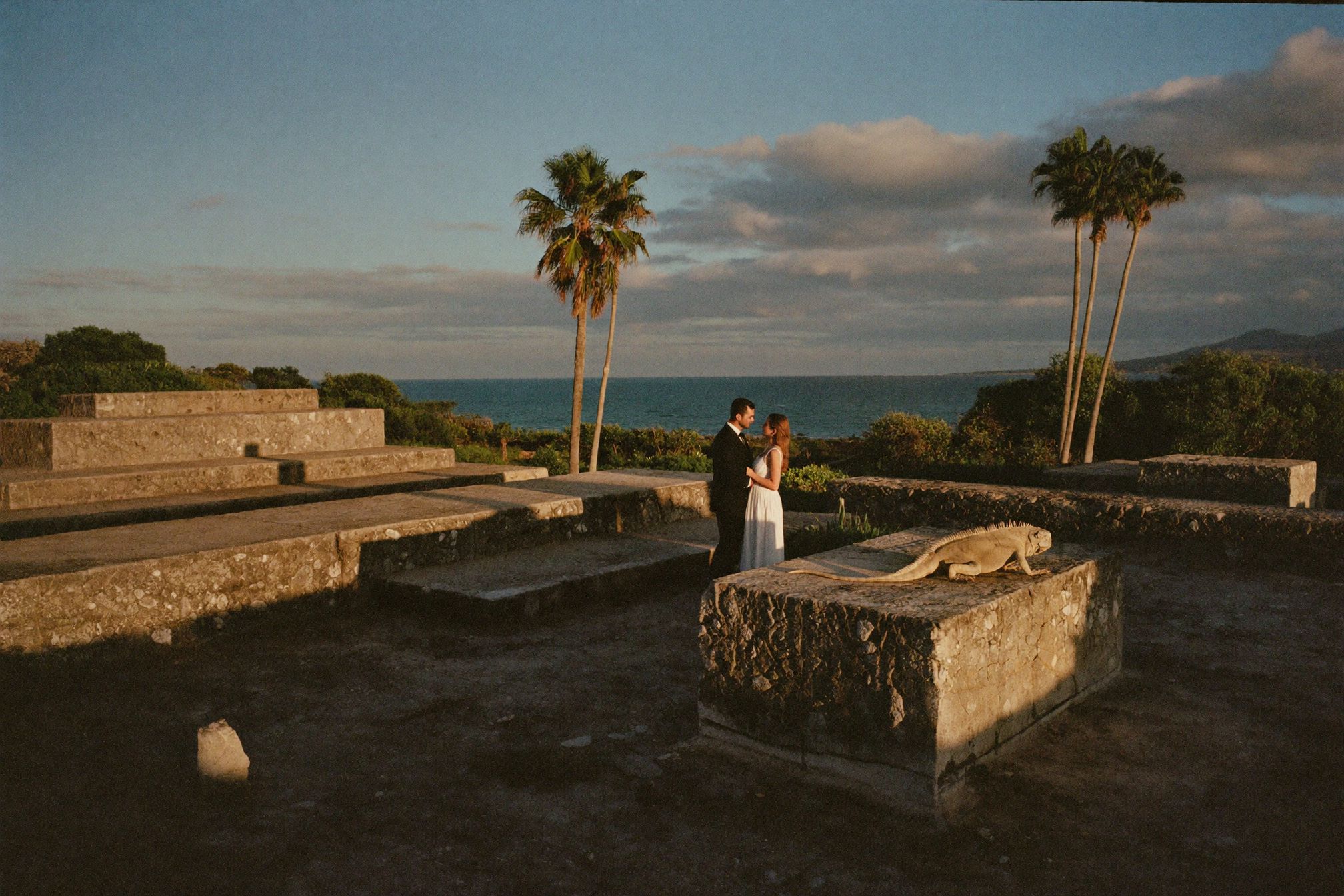
There is a Maya site inside the hotel zone. Most people who stay a week never learn it is there.
El Rey is small, low and spread out along the lagoon side of the strip, with iguanas living all over it in numbers that surprise people. It is nothing like Chichén Itzá in scale and that is the entire point: it is empty, it is five minutes from where you are staying, and in the last hour of light the stone goes the colour of the sand.
The permission question here is real and worth understanding once. Archaeological sites in Mexico are administered by INAH, and professional or commercial photography and filming at an INAH site requires permission and a fee, applied for in advance with a written description of what you intend to do. The trigger is broadly the equipment: tripods, lighting and production gear put you firmly on the permit side of the line.
I arrange that where the plan needs it. Just as often I build the ceremony elsewhere and use the ruins as a walk, which needs nothing and is faster.
The crossing to Isla Mujeres
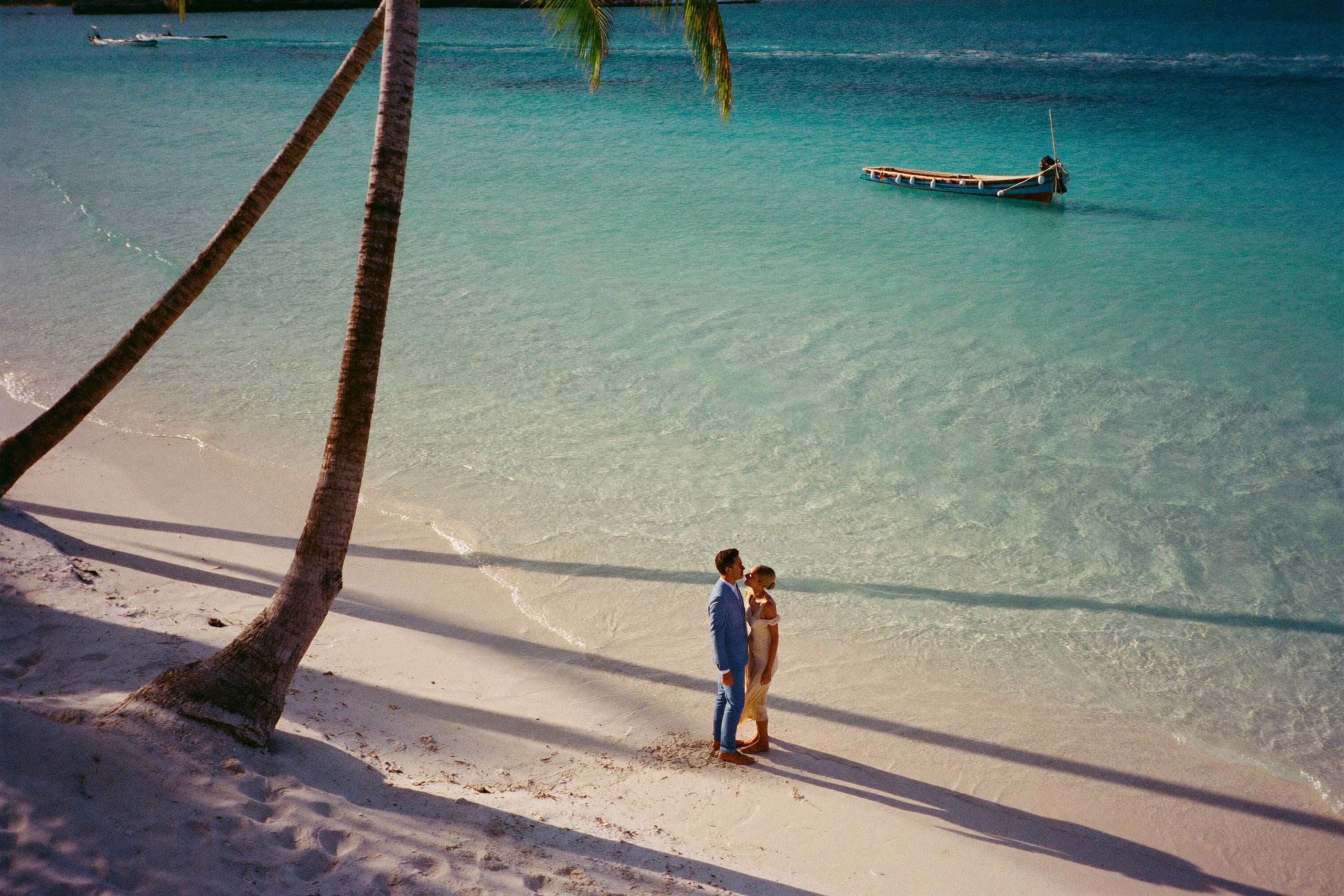
The ferry to Isla Mujeres takes about half an hour and it is the best value hour in the region.
The island is small enough to drive around in a golf cart, which is how everybody gets about. The north beach has the shallowest, palest water anywhere near Cancún, the south end has cliffs and a lighthouse, and the whole place runs at a quarter of the speed of the mainland.
It is also on the good side of the sargassum problem, which makes it the obvious fallback for a summer date. If your beach on the mainland is unusable, the island frequently is not.
Go for the day rather than the afternoon. The last ferries back get busy and the best hour on that island is early, before the day trips land.
The cenotes, and who actually owns them
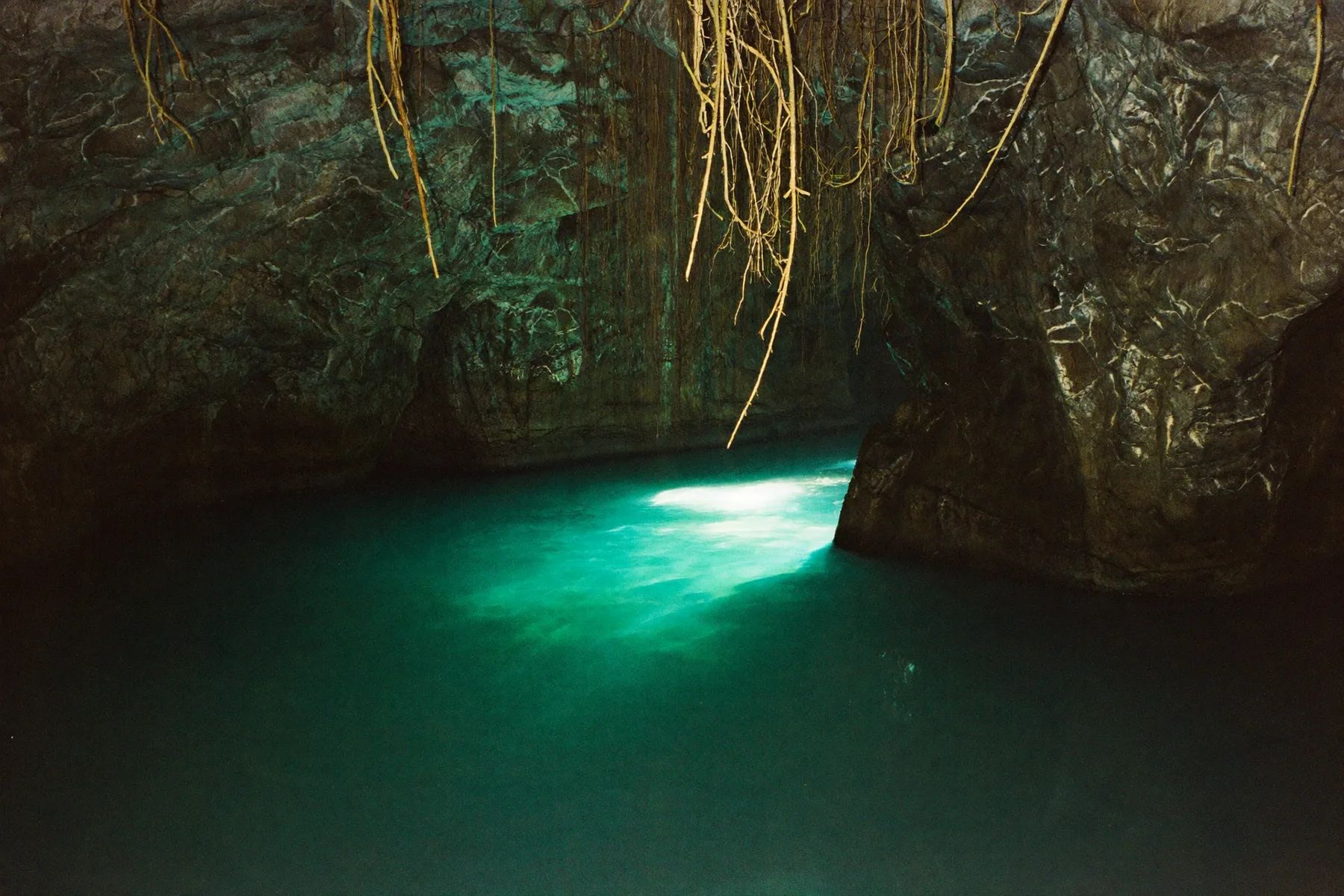
Inland from the coast the limestone is full of freshwater caves and sinkholes, some open to the sky, some entirely underground with a shaft of light coming down through a hole in the roof. They are the most photographically distinctive thing in this part of Mexico and they are unlike anything else I work with.
Here is what nobody explains. There is no statewide cenote permit. Permission is negotiated cenote by cenote with whoever controls it, and that is sometimes a private landowner and sometimes an ejido or a community. Many charge a separate fee for commercial photography on top of entry, and the terms vary from one to the next.
I have not found any official register that says how the ownership splits across the state, so I am not going to guess at a proportion. What matters practically is that this is an arrangement made in advance with a named person, not a ticket you buy at a gate, and the cenotes that are worth having at seven in the morning with nobody else in them are exactly the ones that require it.
Bring nothing you mind getting wet. The water is cold, genuinely cold, in a way that is startling after a Caribbean beach.
Drones, and why I will not promise you aerial footage
Aerials are the first thing couples ask for on a coastline like this one, and the honest position is more complicated than most photographers admit.
The sources genuinely conflict on Mexico's rules for visitors. Some state that any drone over 250 grams must be registered with AFAC; others put the practical threshold for recreational flying at two kilograms. What they agree on is that the registration route is built around Mexican identification and residency, and that commercial drone work is expected to go through AFAC authorisation with insurance and frequently a Mexican operator.
They also agree that drones are not permitted at INAH archaeological zones, which rules out the ruins entirely.
So my position is this. Where aerial footage is part of the plan it goes through a licensed local operator who can show me their authorisation, and where that is not available for your location, I say so rather than flying anyway and hoping. A confiscated drone on your wedding morning is a bad trade for six seconds of footage.
The two charges nobody mentions
Two costs that are not in anybody's quotation and that catch people at the hotel desk.
Quintana Roo charges VISITAX, a state tourism fee, per foreign visitor. It is a small amount, in the region of 280 to 300 pesos per person, and I am giving a range rather than a figure because it moves. It is paid online and you should do it before you travel rather than at the airport, where the queue exists purely because people did not.
Cancún separately adds a municipal environmental sanitation charge per room per night. It is collected by the hotel, it is small, and it is not usually shown in the booking price. I am not printing an amount because I could not verify a current one.
Neither is large. Both are the kind of thing that makes people feel they were not told, which is why they are in this post.
Marry at home, hold the ceremony here
This is the piece of advice I give more often than any other in Mexico, and it is worth the paragraph it takes to explain.
A Mexican civil marriage is a real, achievable thing. It also requires a blood test taken in Mexico, and the number of witnesses varies by state, two in some, four in Los Cabos. Documents need translating, appointments need making, and a chunk of your trip goes on administration.
So most foreign couples do what I would do. Sign the legal paperwork at home in front of a registrar, quietly, before you fly. Then the ceremony on the beach is entirely yours: your words, your order, at the hour you chose, with no statutory text read out in the middle of it and no witnesses required who you have never met.
That is not a lesser wedding. Every couple I have taken through it has said the same thing afterwards, which is that separating the paperwork from the ceremony made the ceremony better. If you specifically want the legal marriage to happen in Mexico I will build it, and I will tell you honestly what it costs you in days.
What it costs, and what Cancún is actually for
Cancún starts at $8,700 for the Essential, $15,500 for Curated Signature and $22,000 for the Curated Adventuremoon. That makes it one of the least expensive destinations on the whole site, alongside Sayulita.
Why it is cheap is straightforward and worth saying out loud: this is the most developed tourism market in the Americas, everything is competitive, vendors are plentiful and good, and flights from North America and Europe are frequent and cheap. You are not paying a scarcity premium here and you should not pretend you are.
What the Signature adds that matters: the catamaran at sunset, the second day, and a cinematic film. On this coast the boat is the upgrade I would take first, because being offshore at the end of the day is the one perspective the crowded strip cannot spoil.
Flights and lodging are excluded, always, everywhere on this site. The full ladder is on the pricing page and the day is written out on the Cancún elopement planner.
When I would send you south instead
If you want ruins on a cliff above the sea, go to the Riviera Maya. Tulum is ninety minutes south, it costs seven hundred dollars more at the Essential, and it is a genuinely different landscape with the jungle coming down to the sand.
If sargassum is your main worry and your date is in the season, Cancún's north facing beaches and Isla Mujeres are the better bet, and I would keep you here rather than send you south.
If you want somewhere that does not feel like a resort at all, this is the wrong coast entirely. Look at Sayulita on the Pacific, or Oaxaca inland.
The whole country is in the Mexico elopement guide.
Tell me your month and I will tell you which beach it belongs on →