How to Elope in Puerto Viejo, on the Coast That Runs Backwards
The Caribbean side of Costa Rica has no dry season and it does not need one. Its best windows are the exact fortnights that drown the Pacific.
Every couple who asks me about Costa Rica in September gets the same answer, and it surprises all of them. Go to the other coast.
September and October are the wettest weeks of the year on the southern Pacific. Roads wash out, rivers run brown, and I will talk couples out of booking Uvita in those months. On the Caribbean side, three hundred kilometres away, September and October are one of the two driest windows of the year.
The Caribbean coast of Costa Rica does not have a dry season in the way the Pacific does. What it has instead is a rhythm that runs almost exactly backwards: drier spells around February to April and again around September and October, and rain the rest of the time. It is the single most useful fact in Costa Rican elopement planning and almost nobody uses it.
(Continued on Page 2, Col. 1)
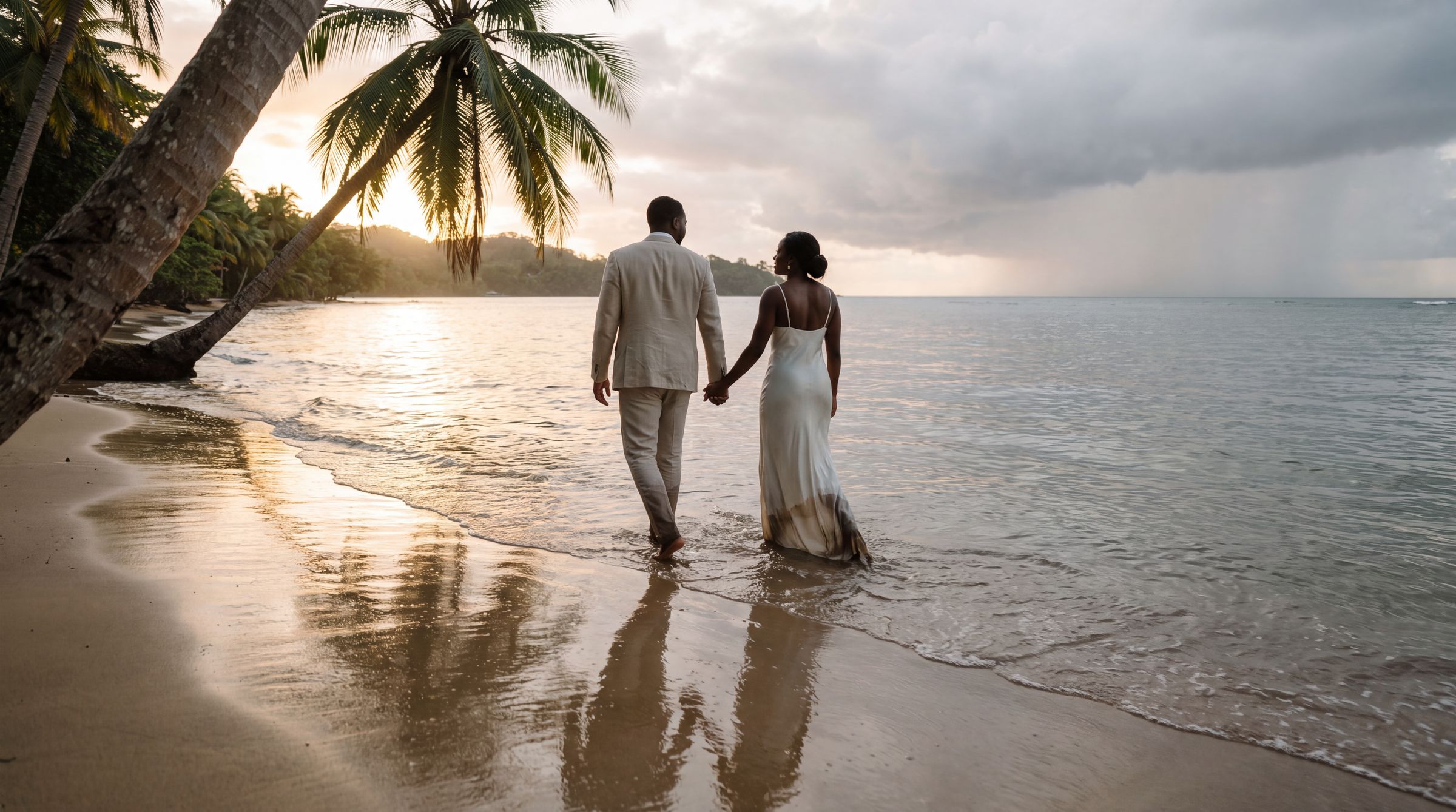
The coast that runs backwards
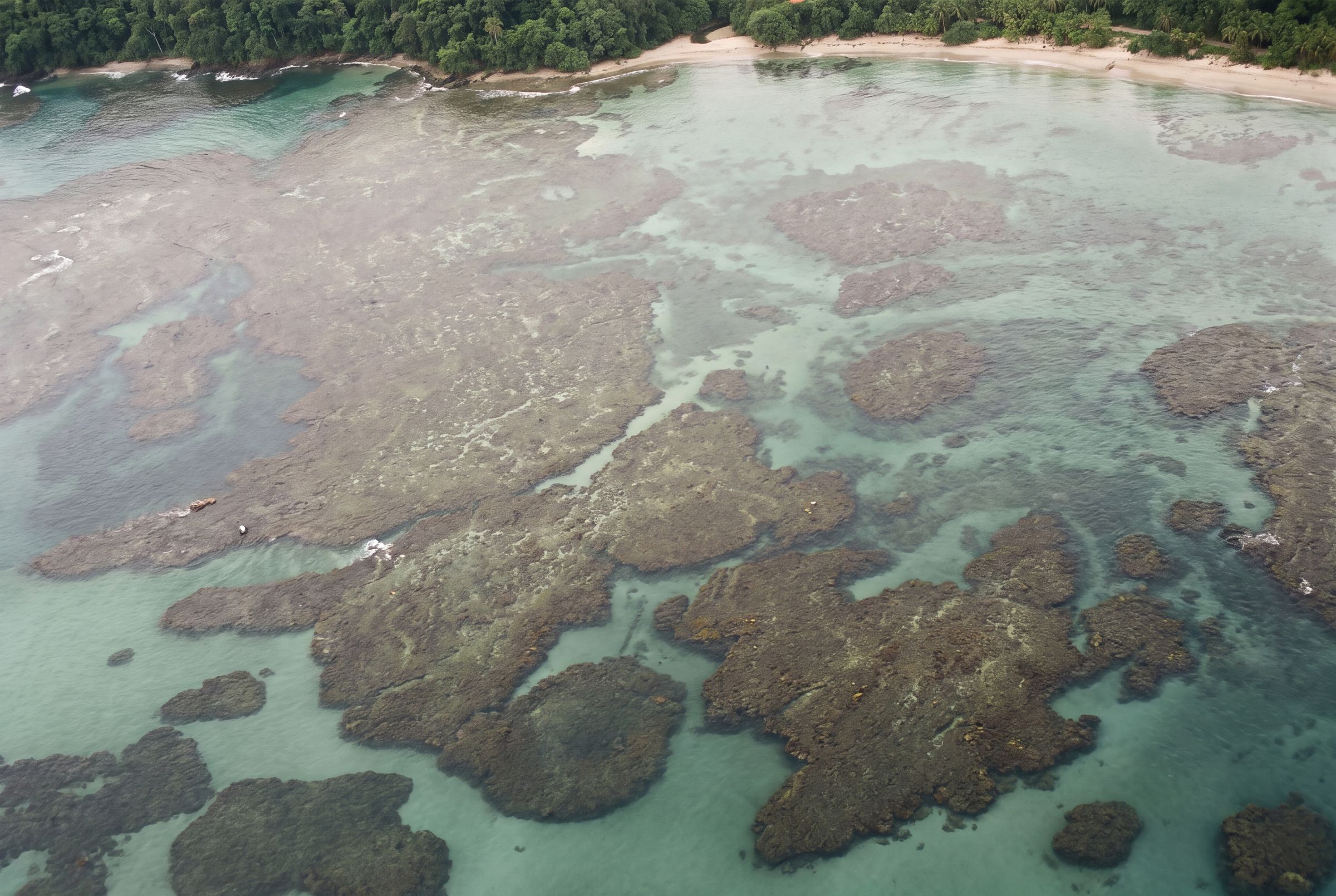
Understand the calendar and you understand why this coast is underbooked.
Costa Rica's tourism runs on Pacific weather. The guidebooks say December to April and everybody plans around that, so the Pacific coast is full and expensive in exactly those months. The Caribbean does not follow that pattern at all. It rains here in some quantity most of the year, and the drier windows fall roughly February to April and again around September and October.
September is the one that matters. It is the deadest month on the Pacific coast, prices are at their lowest everywhere, flights are cheap, and it is one of the better months on this side. A couple willing to fly into San Jose and drive east rather than west can have the best fortnight of their year for less money than almost any other week.
None of this means it will not rain. It will. It rains here in a specific way, hard and warm and then finished, usually in the afternoon, and then everything steams. Plan the day around mornings, keep the afternoon loose, and rain stops being a problem and becomes the reason the light is what it is.
Four beaches, south of town
The town of Puerto Viejo is not where you get married. It is where you eat. The beaches run south from it in a sequence and each one does something different.
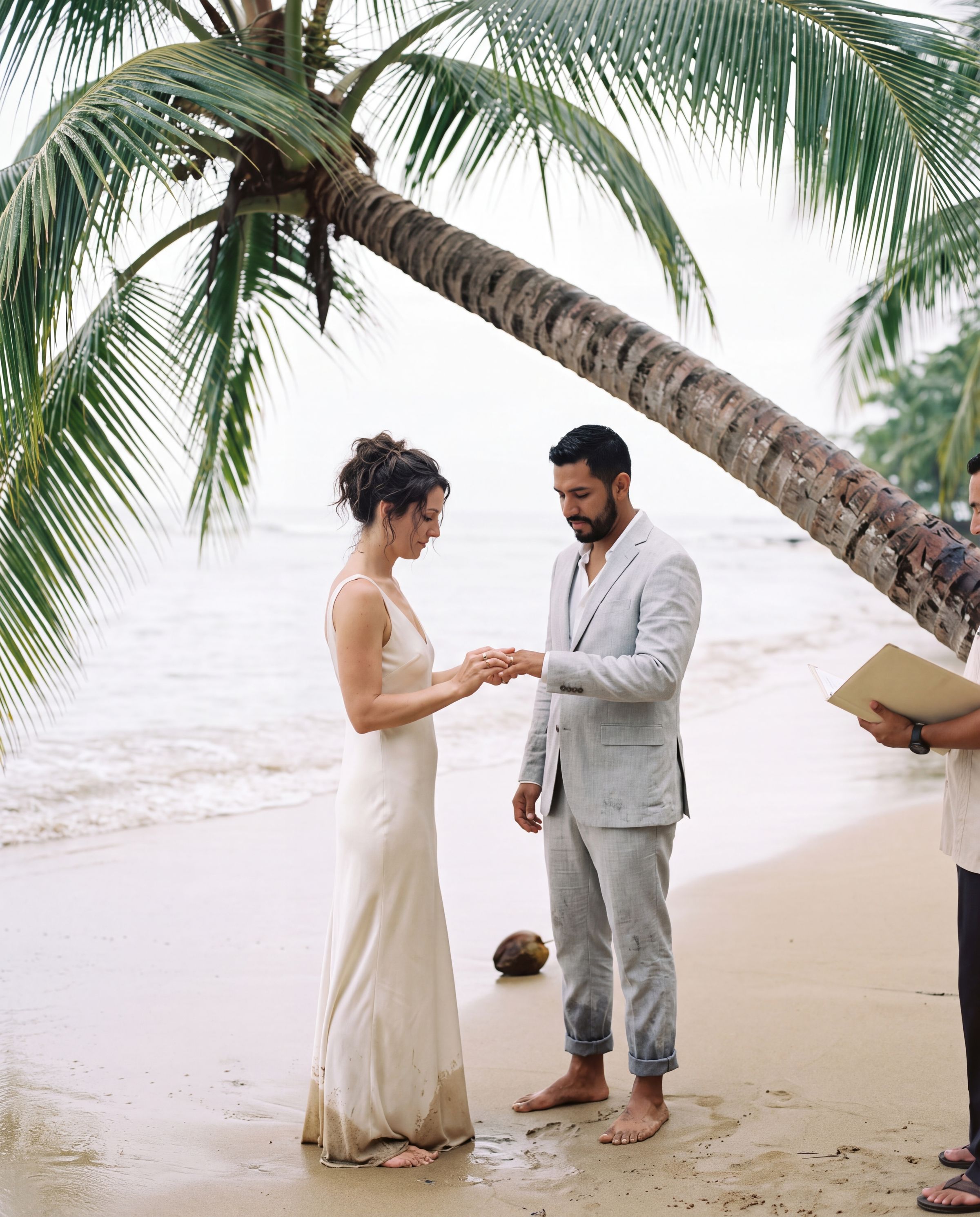
Playa Cocles is the first, long and open with real surf, backed by forest. Playa Chiquita is next, smaller, with reef close in and shallows that go turquoise. Punta Uva is the one you have seen: a headland dividing two bays, leaning palms, pale sand and calm water because the reef is doing the work offshore. Manzanillo is last, at the end of the road, where the tarmac stops and the wildlife refuge starts.
Punta Uva is where most ceremonies happen and it deserves the reputation. The palms lean out over the sand at an angle that looks arranged and is not, the water is genuinely calm enough to stand in, and the headland gives you two completely different backdrops within a hundred metres.
All four are reachable by bicycle from town, which is how everybody moves here and which I will come back to.
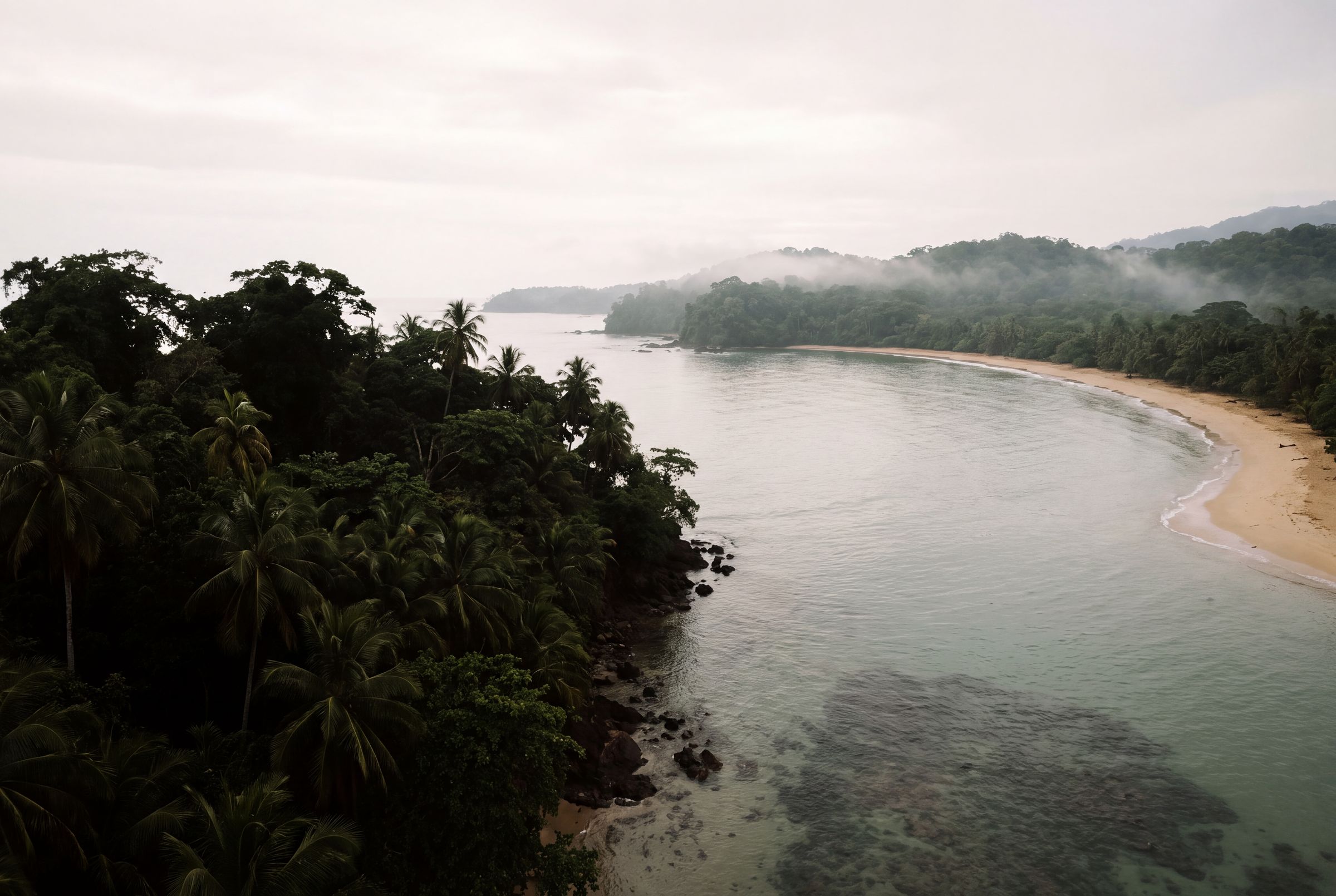
Cahuita, early, and its two entrances
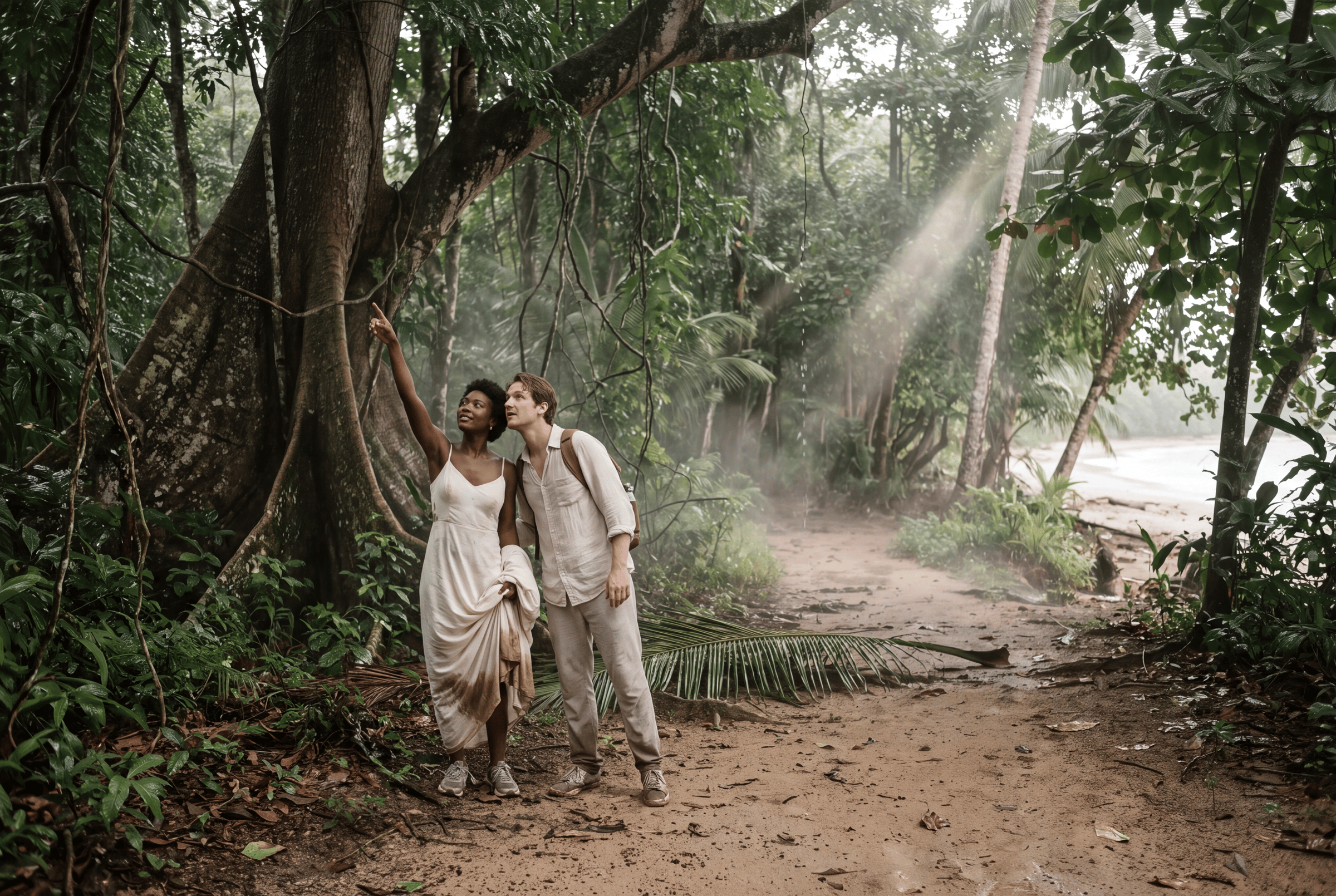
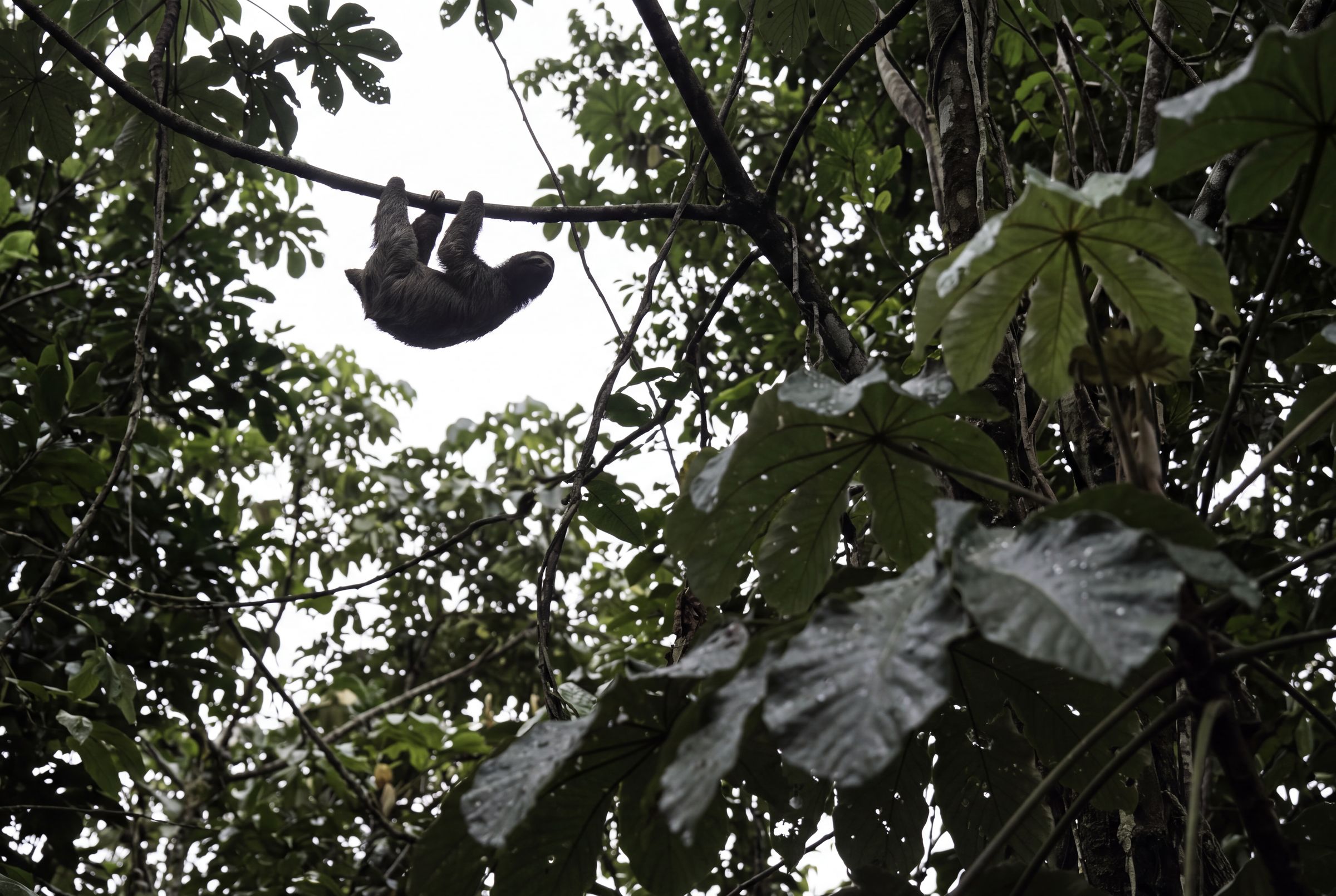
North of Puerto Viejo is Cahuita, and the national park there has a coast path that runs for kilometres with sea on one side and forest on the other. It is flat, easy, and full of animals: sloths, howlers, capuchins, and land crabs the colour of a warning sign.
Here is the detail worth knowing. The park has two entrances and they work differently. The Kelly Creek entrance at the Cahuita village end takes a voluntary donation. The Puerto Vargas entrance further south charges a fee. Same park, two arrangements, and almost nobody explains it in advance.
I use Kelly Creek at opening. You are in the forest early enough that the animals are still moving, the path is empty, and the light is coming through the trees from the sea side. By ten it is a busy walk and by noon it is hot enough that everything with sense has stopped.
The donation is exactly that, and it goes into keeping the place running. Give properly.
A day in Bribri territory
Inland from this coast the land climbs into the Talamanca mountains, and a large part of that is indigenous Bribri territory. It is not a tourist attraction and it should not be treated as one.
What is possible, arranged properly and with the community rather than around it, is a day spent with people who live there, walking their land, seeing how cacao is grown and processed, and eating what they cook. It is arranged through community contacts, the money goes where it should, and it happens on their terms.
I put this on the Signature and Adventuremoon itineraries and I am careful about how I describe it, because there is a version of this that is extractive and I want no part of it. If you would rather not, that is a completely reasonable answer and I will build the day differently without comment.
The chocolate part is worth its own sentence. Cacao grows here, it is processed here by hand, and the difference between that and a supermarket bar is not a small difference. It is one of the few genuinely local things you can take home.
The end of the road
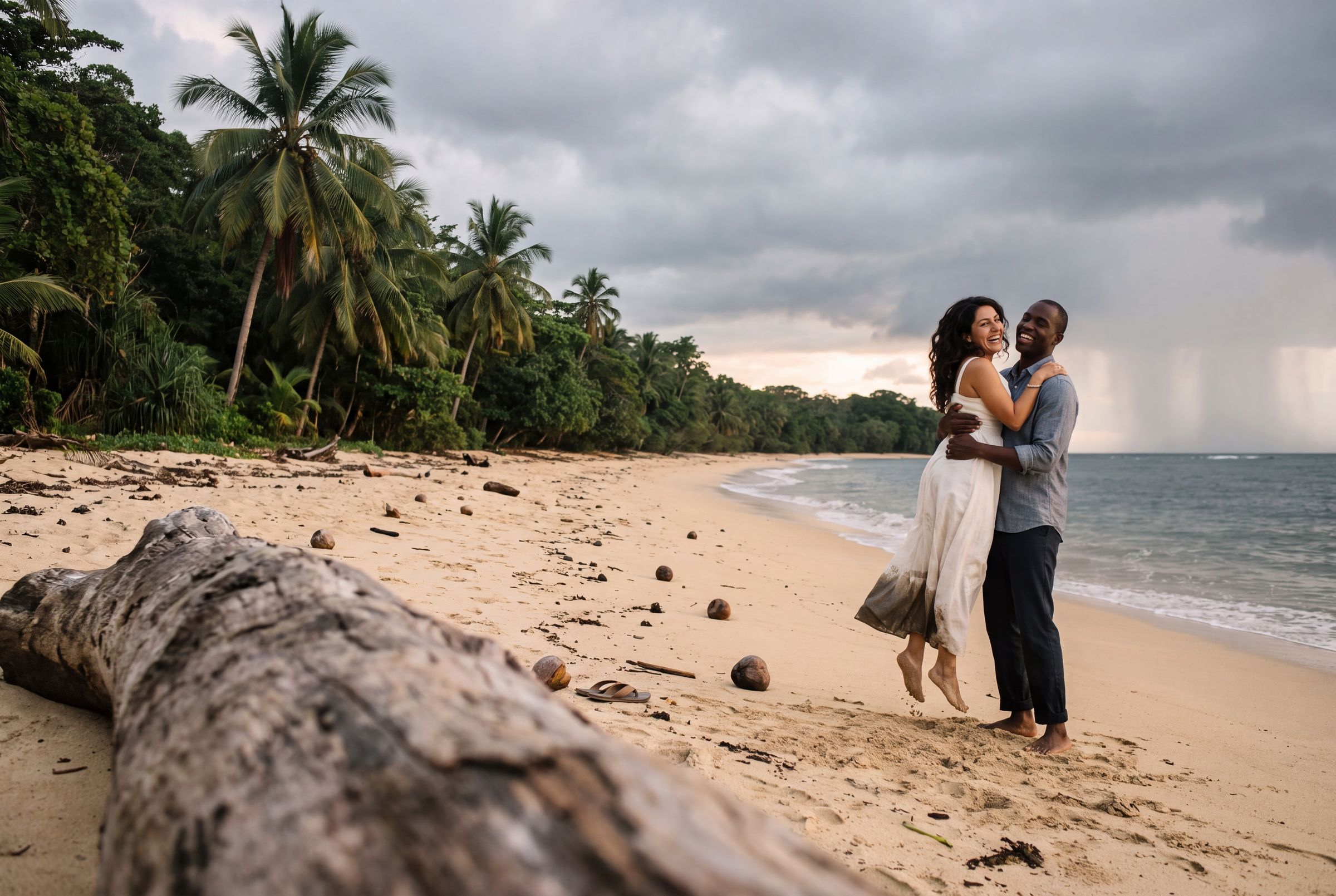
The road south ends at Manzanillo. Past it is the Gandoca Manzanillo wildlife refuge and then, eventually, Panama, and there is no way through by car.
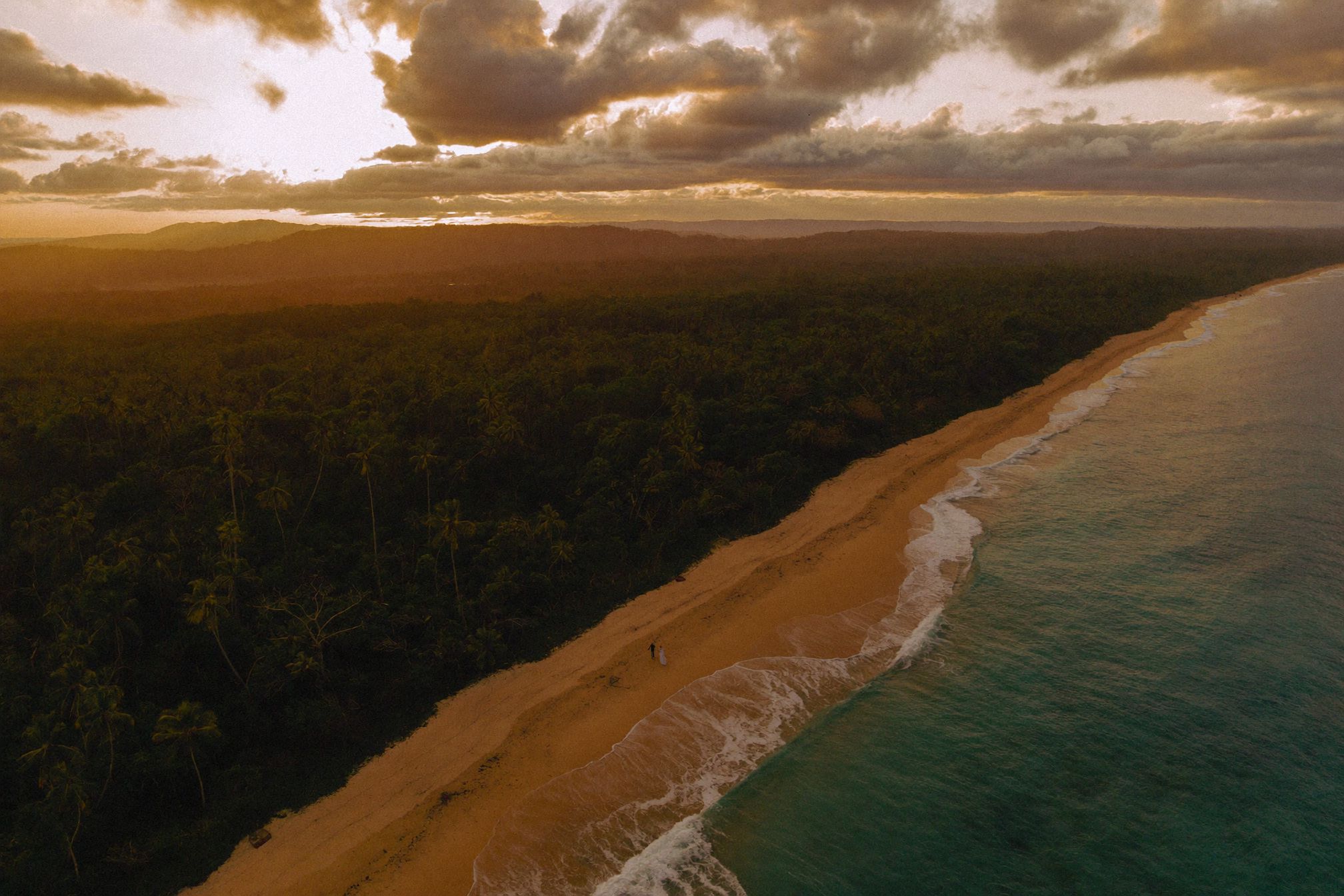
Roads that end are good places to be married. There is no through traffic, nobody arrives by accident, and the beach past the village empties out completely within a ten minute walk. The forest here comes right down to the sand and the reef is close enough in that the water is flat.
It is my choice for a late afternoon ceremony on this coast, for a reason specific to the geography: the Caribbean coast faces east, so the sun sets behind the land rather than into the sea. That means the beach at the end of the day is in soft open shade with a warm sky above it, which is a more flattering light than a Pacific sunset and considerably easier to work in.
Dawn is the other end of it. Facing east means the sun comes up out of the water, which the Pacific coast cannot give you at all.
The coast road by bicycle
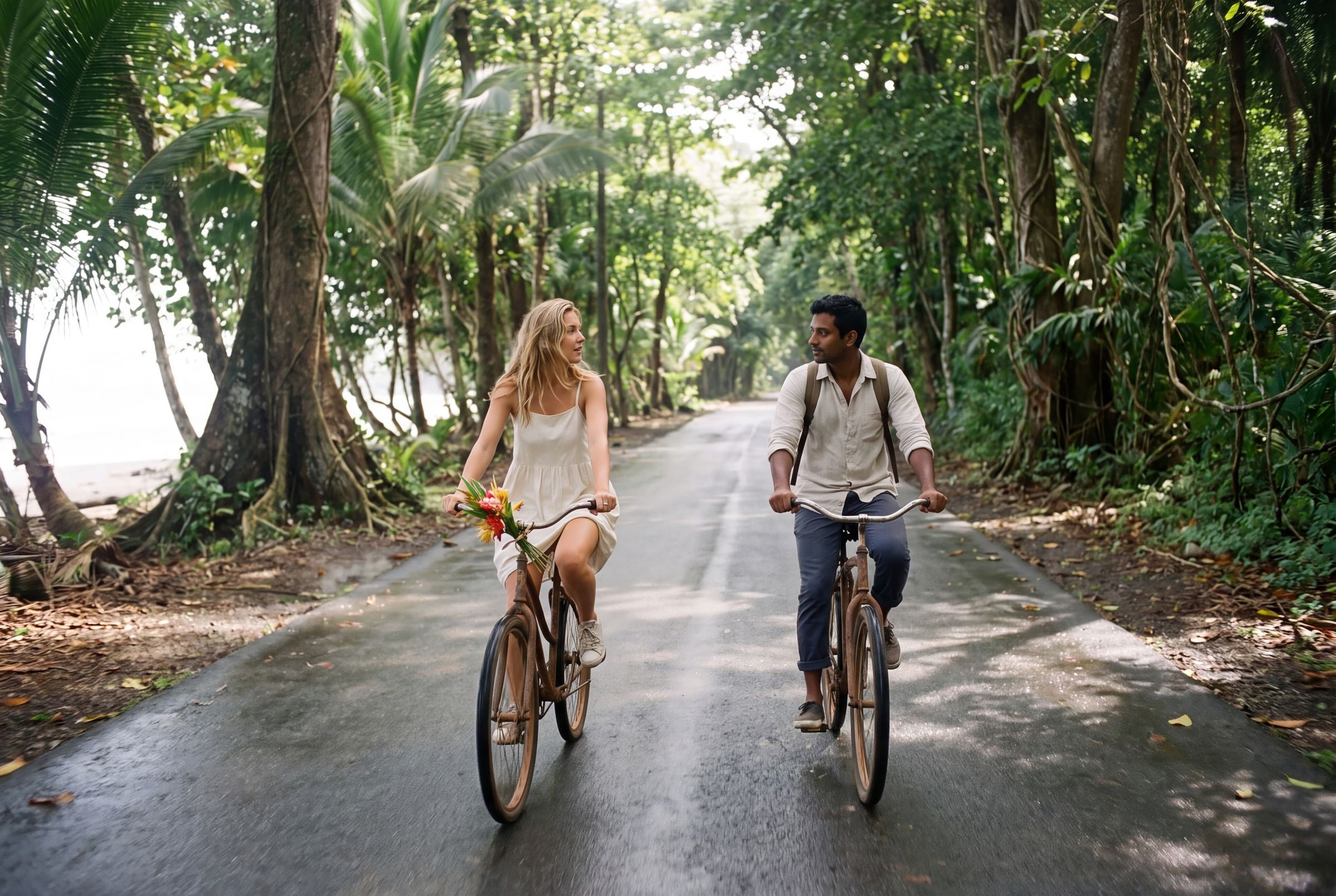
Everybody in Puerto Viejo gets around by bicycle. The road from town to Manzanillo is flat, shaded, and runs a few metres in from the water for most of its length, and hiring bikes is the first thing any local will tell you to do.
So the day moves by bicycle rather than by car, at least in part. That is not a styling decision. It changes the pace of the whole thing. You stop where you feel like stopping, you arrive at each beach having actually travelled to it, and there is no waiting in a vehicle while somebody parks.
The photographs it produces are the best argument for it. Two people on bicycles on a wet road under palms, wedding clothes and all, is a frame I cannot get anywhere else in Costa Rica, and it looks like the place rather than like an idea somebody had.
The town, in the rain
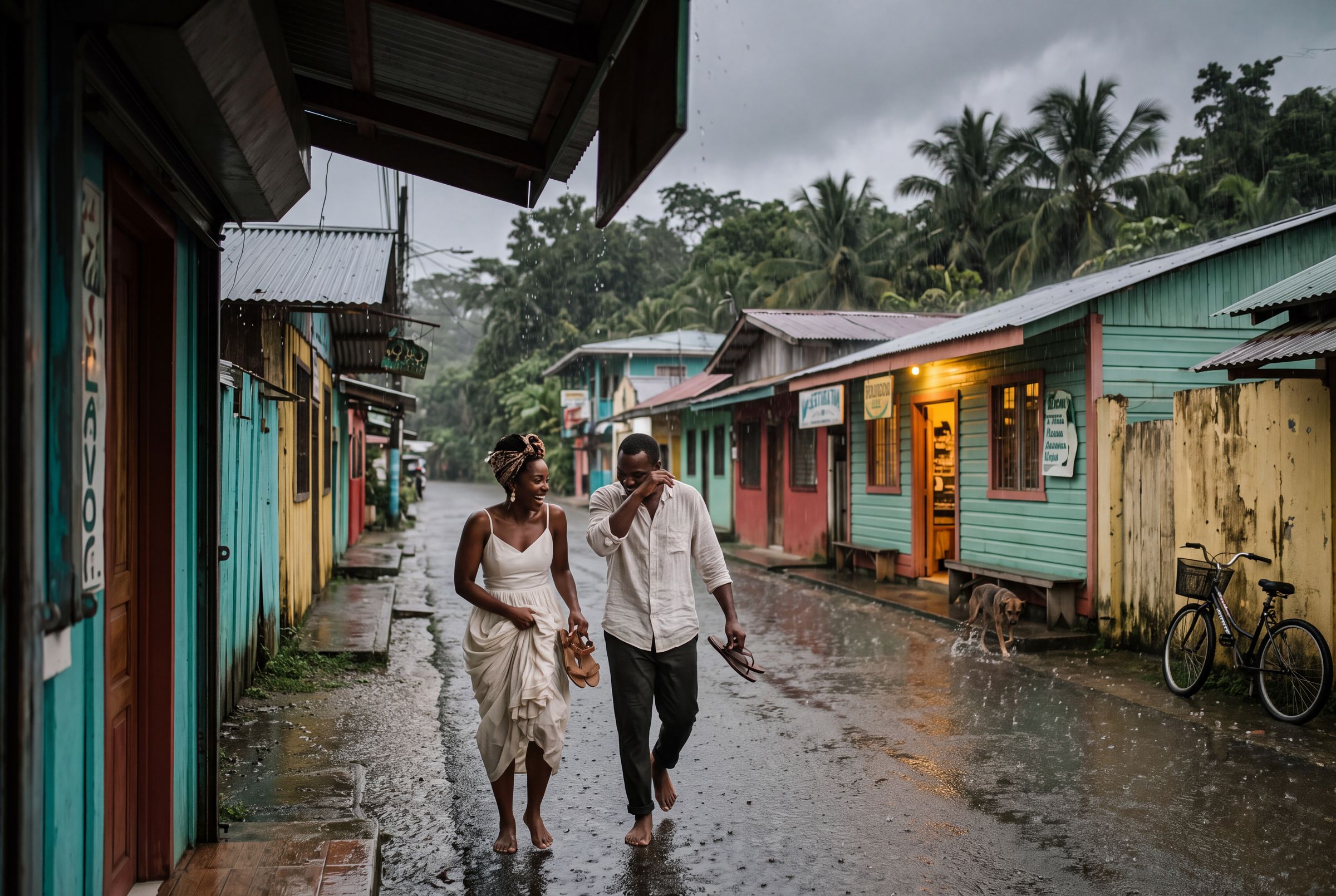
When the afternoon rain arrives, and it will, go into town rather than back to the hotel.
Puerto Viejo is painted. Every building is a colour, most of them are wooden, and in the rain the whole street saturates: the greens go deeper, the reds go crimson, the road turns into a mirror. It is the best hour of the day to photograph the town and almost nobody is out in it.
This is a general principle on this coast and it is worth stating plainly. The couples who have the best week here are the ones who stopped treating rain as an interruption by day two. It is warm rain. You are already going to be wet from the sea. The only thing standing between you and the best light of the trip is a decision about whether to go outside.
The food, which exists nowhere else in Costa Rica
Costa Rican food has a reputation for being plain and on the Pacific side that is not entirely unfair. This coast is a different cuisine.
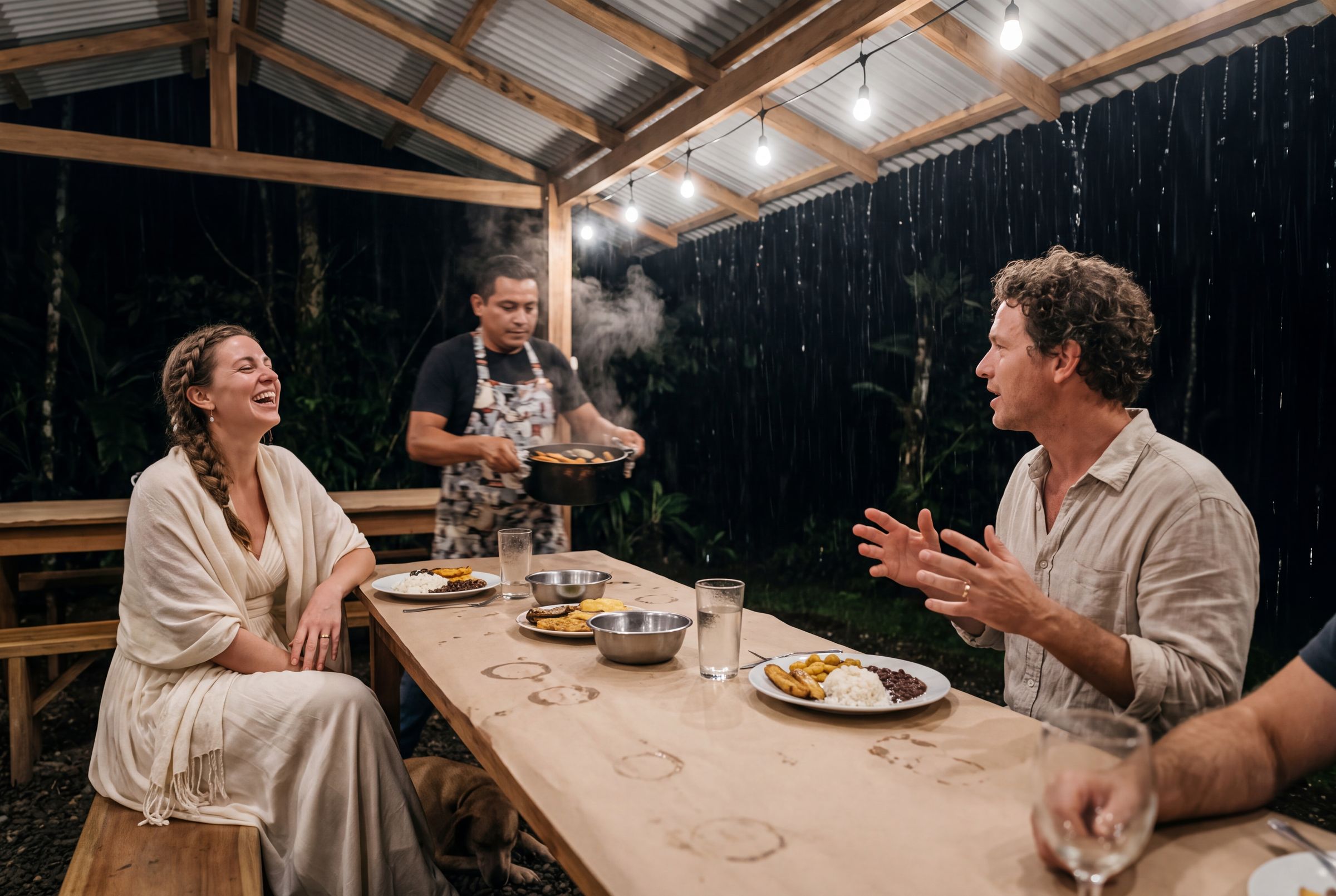
Coconut milk in everything. Rice and beans here is not the gallo pinto of the rest of the country, it is cooked in coconut with thyme and a whole chilli in the pot, and it is a different dish with a similar name. Rondon is a slow stew of whatever the sea gave up that day, cooked down in coconut milk for hours. Patacones, jerk seasoning, breadfruit, and Caribbean spice that the rest of Costa Rica simply does not use.
Eating well here is easy and cheap and it is one of the genuine pleasures of the region. On the Signature and Adventuremoon the wedding dinner is a proper piece of the itinerary rather than an afterthought, and on this coast that is worth more than it would be elsewhere.
Getting legally married
No residency requirement, no waiting period, no blood test. A Costa Rican notary public performs the civil marriage. Two adult witnesses are required and I bring them. It is registered with the Registro Civil, and the certificate needs an apostille and a translation before it is any use at home.
The three hundred day rule can apply to a divorced or widowed woman unless she can show she is not pregnant. It moves dates. Tell me first, not last.
Getting here: San Jose to Puerto Viejo is four to five hours by road. That is the real number and it is the main practical objection to this coast. You can break it in Cahuita or at the Braulio Carrillo side of the drive, and I would rather you did than arrive at eight in the evening before a dawn ceremony.
Access on the beaches follows the same principle as the rest of the country. Public does not mean permitted for an organised ceremony, and on a coast this small and this community minded, asking properly matters more than the paperwork does.
Why this is the cheapest of the seven
Puerto Viejo starts at $9,700 for the Essential, $20,000 for Curated Signature and $25,800 for the Curated Adventuremoon. That is the bottom of my Costa Rica ladder, fifteen hundred dollars under Nosara at the entry tier.
The reason is straightforward and it is not quality. There is no international resort market on this coast. Accommodation is small, local and independent. Vendors live here rather than flying in. There is no airport within four hours pushing prices up. The whole cost base of the region is lower, and that flows through rather than being kept.
What you give up is the drive from San Jose and the certainty of a dry fortnight. What you get is the most distinctive corner of Costa Rica, the emptiest beaches with paved access anywhere in the country, and a coast whose good months are the months everything else is closed.
Flights and lodging are excluded, always. The whole ladder is on the pricing page, and the locations, tiers and timeline are on the Puerto Viejo elopement planner.
Who should not come here
If you want a guaranteed dry week, this is not it. Nowhere on this coast is, in any month. Guanacaste in February is the closest thing to certainty in Costa Rica and it is a two hour flight and a world away.
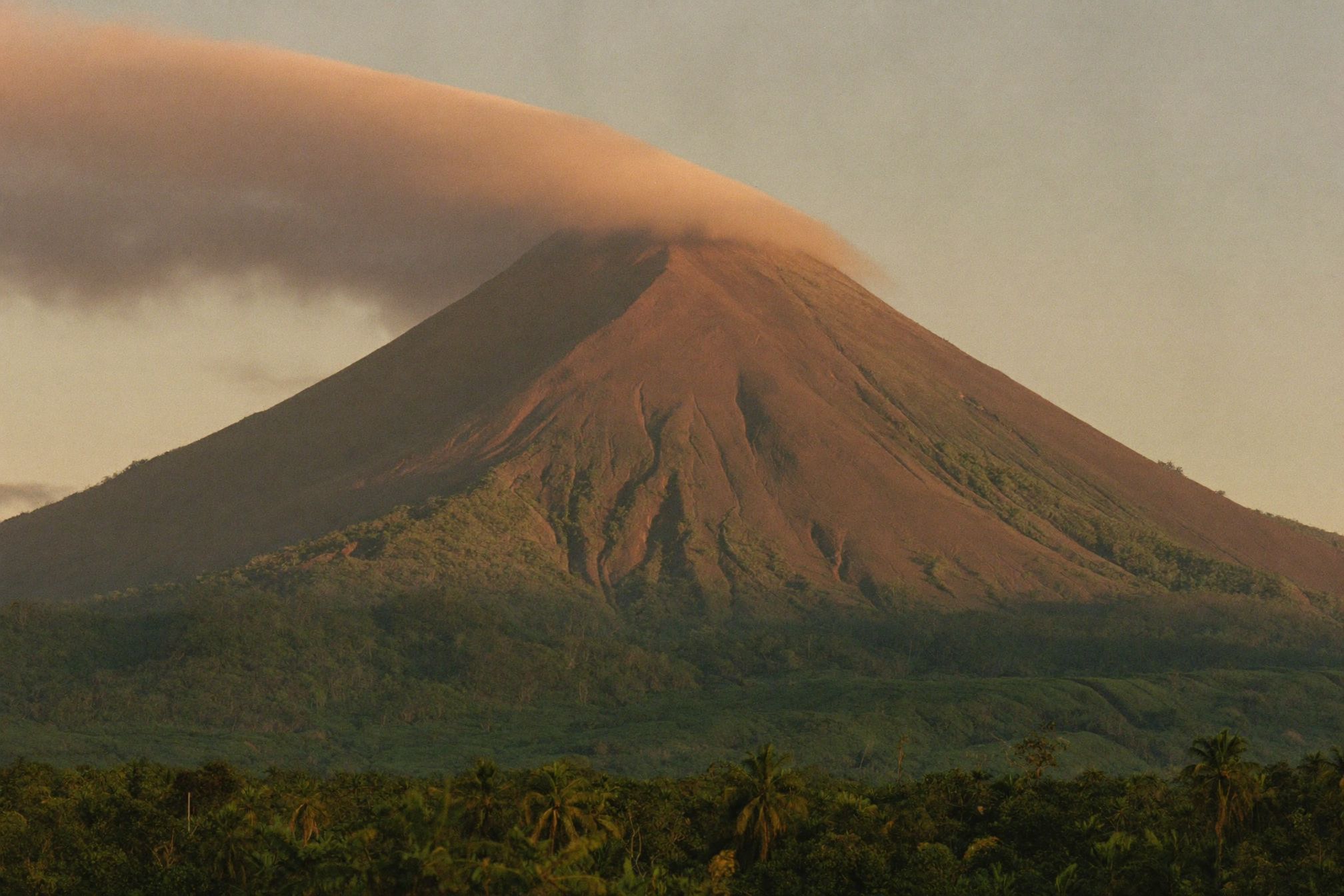
If you want a volcano, cloud forest or a dramatic landscape, this coast is flat and green and it is about texture rather than scale. Go to Arenal or Monteverde.
If a four to five hour drive from the airport is a deal breaker, say so early and we will look at the Pacific. It is a genuinely long way and I would rather lose the booking than have you resent the first day of it.
Everything else about Costa Rica is in the Costa Rica elopement guide.
Tell me your month and I will tell you which coast it belongs to →
Enquiries to the publisher, armanarai.com.