How to Elope in Tulum, Where the Coast Faces the Wrong Way
The sun rises out of this sea and sets behind the jungle. Once you know that, the whole day rearranges itself, and the cenotes turn out to be the reason you came.
A Tulum elopement is $7,300 for one day, $8,900 for two and $11,400 for three, in US dollars, for the two of you, with the planning, the ceremony, the flowers, hair and makeup for one, my photography and my film all inside the number. That is the same figure I charge anywhere in Mexico, because the region you pick changes what we do rather than what it costs.
Now the part that matters more than the price. Tulum is the most searched elopement destination in Mexico and a great deal of what it is sold on does not survive contact with the place. The coast faces the wrong way for the photograph most couples have in their head. The beach has a season nobody advertises. The ruins are not a venue. I would rather lose the enquiry than take a deposit against any of those three things.
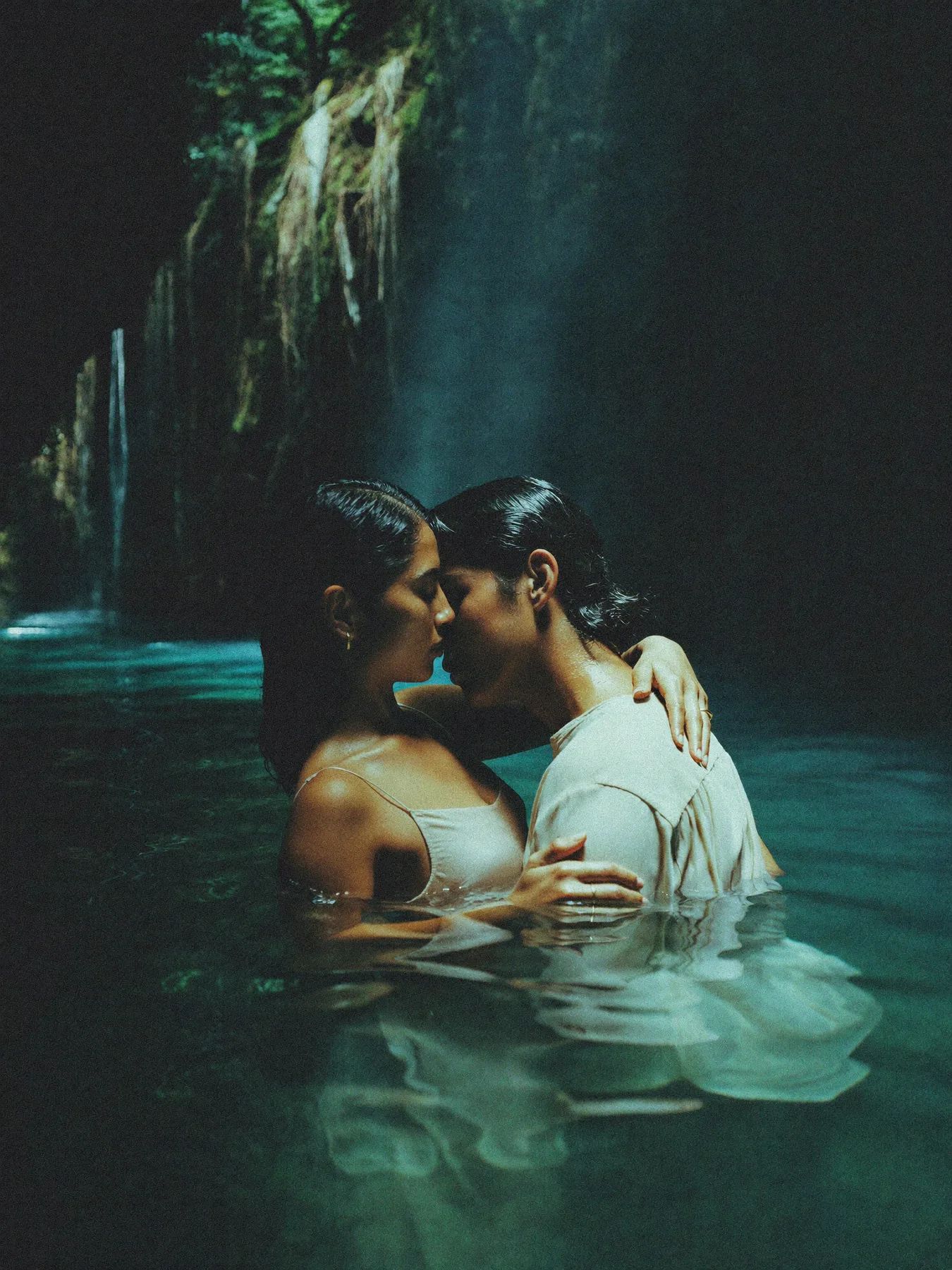
What Tulum does have, at a density that exists almost nowhere else on earth, is the cenotes. That is the reason to come here, and it is what I build the day around.
(Continued on Page 2, Col. 1)
What does it actually cost to elope in Tulum?
Three collections, all in US dollars, all for two people. Essential is $7,300 and covers one designed day with six hours of coverage. Signature is $8,900, runs across two days with ten hours of coverage, and includes your choice of one private charter, either a yacht out of Puerto Aventuras or a helicopter from Cancún. Honeymoon is $11,400, runs three days with fourteen hours, and adds a private candlelit dinner on the sand with a musician.
Every one of them includes the same spine: the full planning and the itinerary, a symbolic ceremony with a celebrant, the location access and its fees, personal flowers, hair and makeup for one of you, photography and a film made by me rather than handed to a second person, airport pickup, and the driving between locations. In Mexico the Essential and the Honeymoon also carry two hours of underwater portraits in a cenote, which sits inside your coverage hours rather than being sold alongside them.
What is not included, and I will not pretend otherwise: your flights and your accommodation. I do not book either. Booking travel on your behalf would make me a travel agent, which requires a licence and insurance I do not hold. What I will do is tell you the exact property and the exact arrival day that makes your itinerary work, down to which end of the beach road to be on, and then you book it yourself in ten minutes.
Here is the thing that costs me money to say. If what you actually want is four hours of photographs on a beach, you can hire that in Tulum for a few hundred dollars and you would not be making a mistake. There are good photographers here. What I sell is the other job, the one where somebody designs the day, negotiates the cenote, pulls the permits, books the celebrant and the flowers and the table, and then photographs and films the whole thing without handing you off. If you do not need that job done, do not pay for it.
Why is there no sunset over the water in Tulum?
Because the Tulum coast faces east. The sun comes up out of the Caribbean and goes down inland behind the jungle. That single fact is the most useful thing on this page and it is the one couples most often arrive without, usually because every mood board they have collected was assembled by someone who has never stood here.
A late afternoon ceremony on the beach still gets warm, soft, flattering light. What it does not get is the sun going down into the sea behind you, because the sea is in the other direction. If that specific frame is what you are picturing, you want a west facing coast.
So I schedule ceremonies into the sunrise instead, which means an alarm in the dark and a beach with nobody on it in either direction. At nine in the morning that same stretch of sand is unrecognisable. Couples grumble about the alarm in the planning calls and nobody has ever mentioned it again afterwards.
If the sunset is non negotiable, I will build you that day somewhere else and tell you honestly what it costs you. The sheltered west side of Isla Mujeres gives you sun into water and is a ferry away. Sayulita and Todos Santos on the Pacific give it to you every clear evening. All three are the same price as Tulum, because the ladder is national. What you trade is the cenotes, which do not exist anywhere but here.

When is the sargassum, and which months are actually safe?
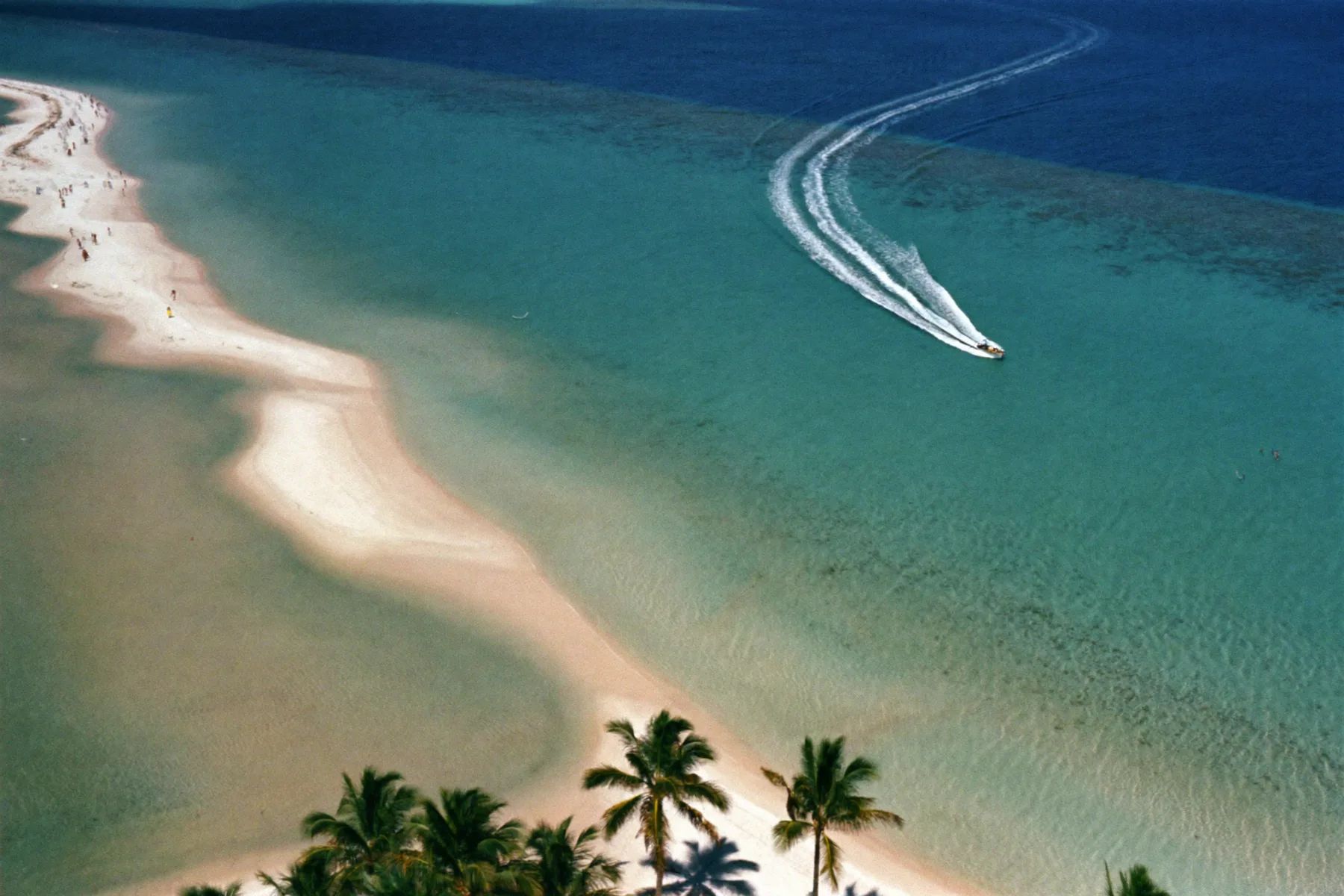
The Tulum municipality publishes April through August as the season of elevated sargassum probability, and it says plainly that this does not mean every beach is covered every day. In practice the heaviest exposure sits in the May to August stretch. It is seaweed, it arrives in drifts, it varies beach by beach and week by week, and nobody can promise you a clean shoreline inside that window.
December through March is the dependable period and it is also outside the Atlantic hurricane season, which officially runs from the first of June to the thirtieth of November with the most active stretch falling across August to October. November is quieter for seaweed but still inside the storm season. If you have a free choice of month, take January or February and stop reading this paragraph.
If you cannot move your dates, say so early and I will change the shape of the day rather than the promise. The limestone does not care what the sea is doing. A June couple gets a cavern ceremony, jungle portraits, and the beach used only for a short walk at first light if the morning happens to be clear. That is a genuinely good day and it is a different day from the one in the brochure, and you should know which one you are buying before you pay for anything.
Can you get married at the Tulum ruins?
Realistically, no, and I would rather write that here than explain it to you after a deposit.
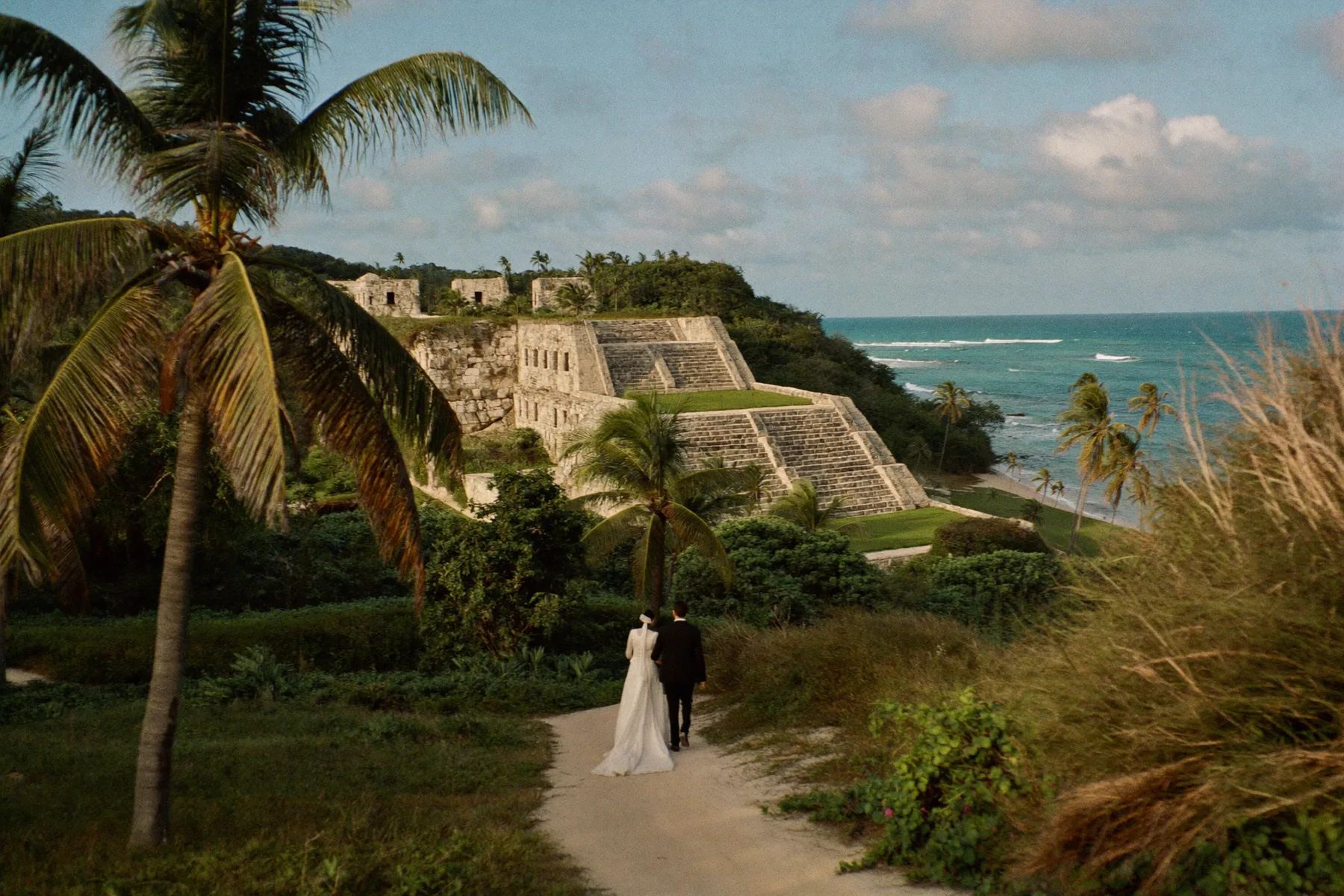
The archaeological zone is administered by INAH, the national institute that holds Mexico's ancient sites. It publishes visiting hours of eight in the morning to five in the afternoon with last entry at half past three, and there is no published route for booking a ceremony inside it. It is a ticketed visitor attraction, not a venue with an events office.
Professional photography and filming there needs INAH authorisation, applied for in advance on their own form, with a lead time of at least ten business days and a published daily fee that runs into thousands of pesos and is charged differently for stills and for video. Tripods and production equipment are what move you from ordinary visitor photography into the category that needs the permit. Drones are prohibited over the protected boundary whether or not you launch from outside it.
What I do instead, for couples who came for that look, is put the ceremony in a cavern cenote or a private jungle clearing where the rock is the room and nobody is counting tripods. It photographs better, it costs less in permits, and it belongs to you for the hour rather than being shared with a ticket queue.
How does cenote access actually work?
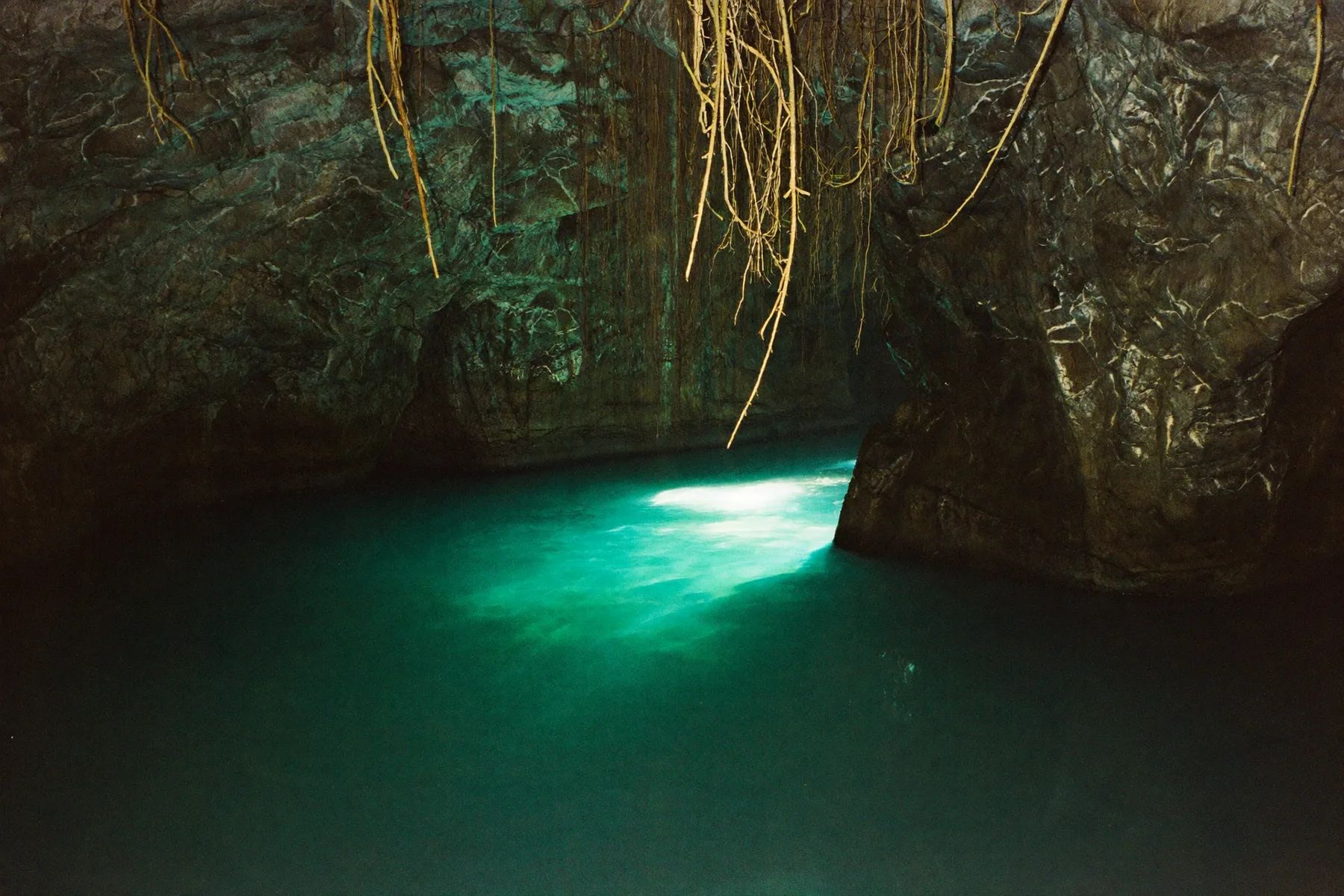
There is no statewide cenote permit in Quintana Roo. This surprises people who assume there must be a single office to apply to. There is not. Permission is arranged site by site with whoever holds the ground: many cenotes are privately owned, others are ejido or community controlled, and a photography or filming fee charged on top of the ordinary entry ticket is completely normal rather than a shakedown.
I arrange that as part of the planning and the fee is inside your number. What I cannot arrange is exclusivity at a site that sells general admission, and I will not tell you otherwise. What works instead is arriving at opening. For roughly the first hour after the gate lifts, the water is effectively yours. By half past ten there are vans in the car park and the light has moved off the opening anyway.
The two hours of underwater portraits are inside the coverage rather than an extra. That is the part couples do not expect and it is deliberate, because on this coast it is the thing worth travelling for. The water is cold enough to be a shock, the acoustics are strange, and the frames that come out of the darker half of a cavern, where the light from the opening has almost run out but the water still carries it, are the ones that end up printed.
Is the ceremony legally binding?
The ceremony I plan and photograph is symbolic. A binding Mexican civil marriage has to go through the local Registro Civil, and for two foreigners that generally means apostilled and officially translated documents, a local medical certificate, a declaration about the property regime you are marrying under, and witnesses. Quintana Roo can ask for four witnesses where some other states ask for two, which tells you how much the detail moves from one municipality to the next.
Almost every couple I work with marries legally at home, before or after the trip, and keeps the day in Tulum entirely about the vows. It removes a stack of translation and certificate work from a week that is supposed to be the good part, and it means nothing about your legal status depends on a registry appointment in a language you may not read.
If you do want the legal version performed in Mexico, I will arrange it with a local professional and quote it separately rather than folding a guess into the headline figure.
What does a Tulum elopement day actually look like?
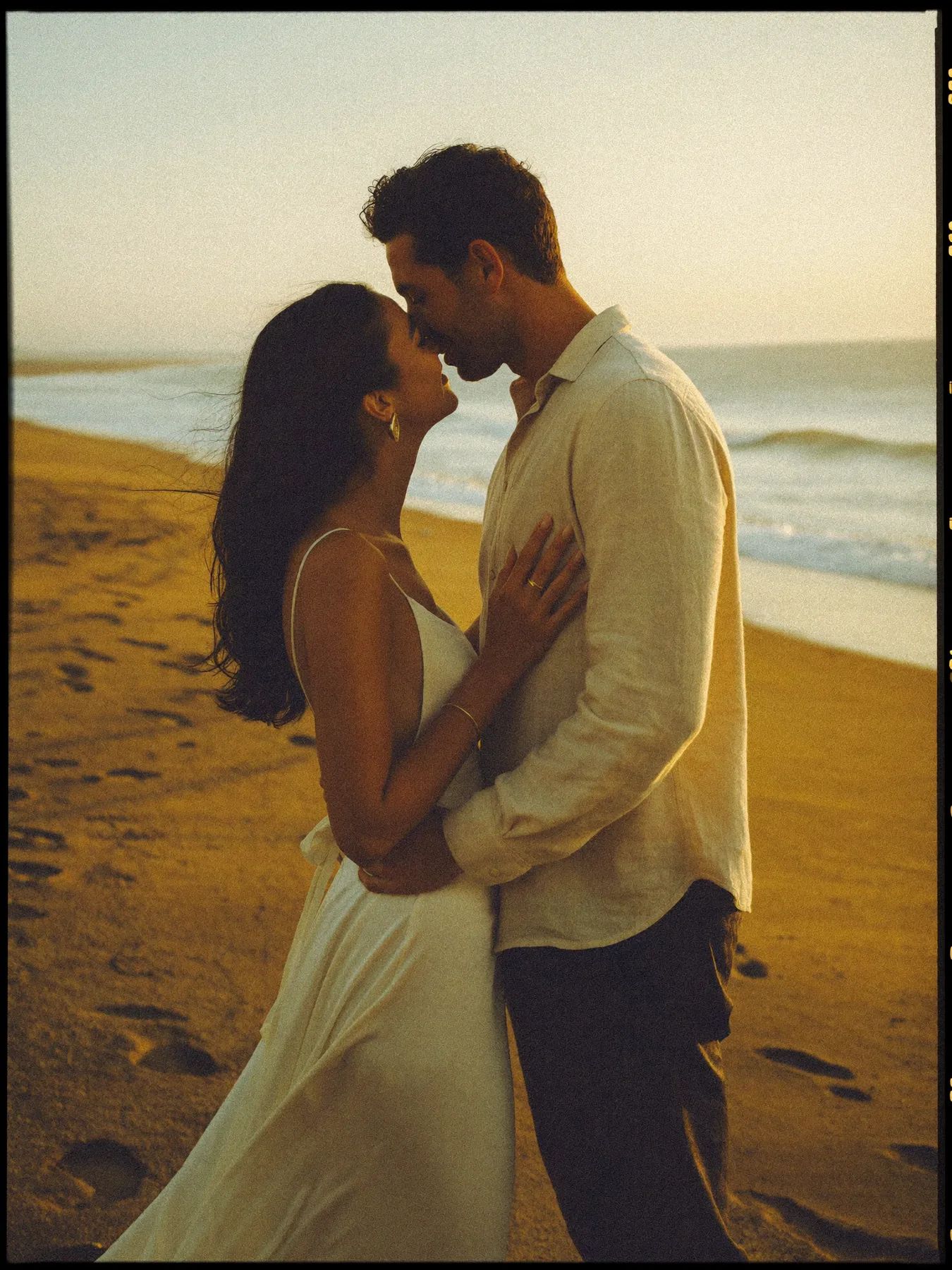
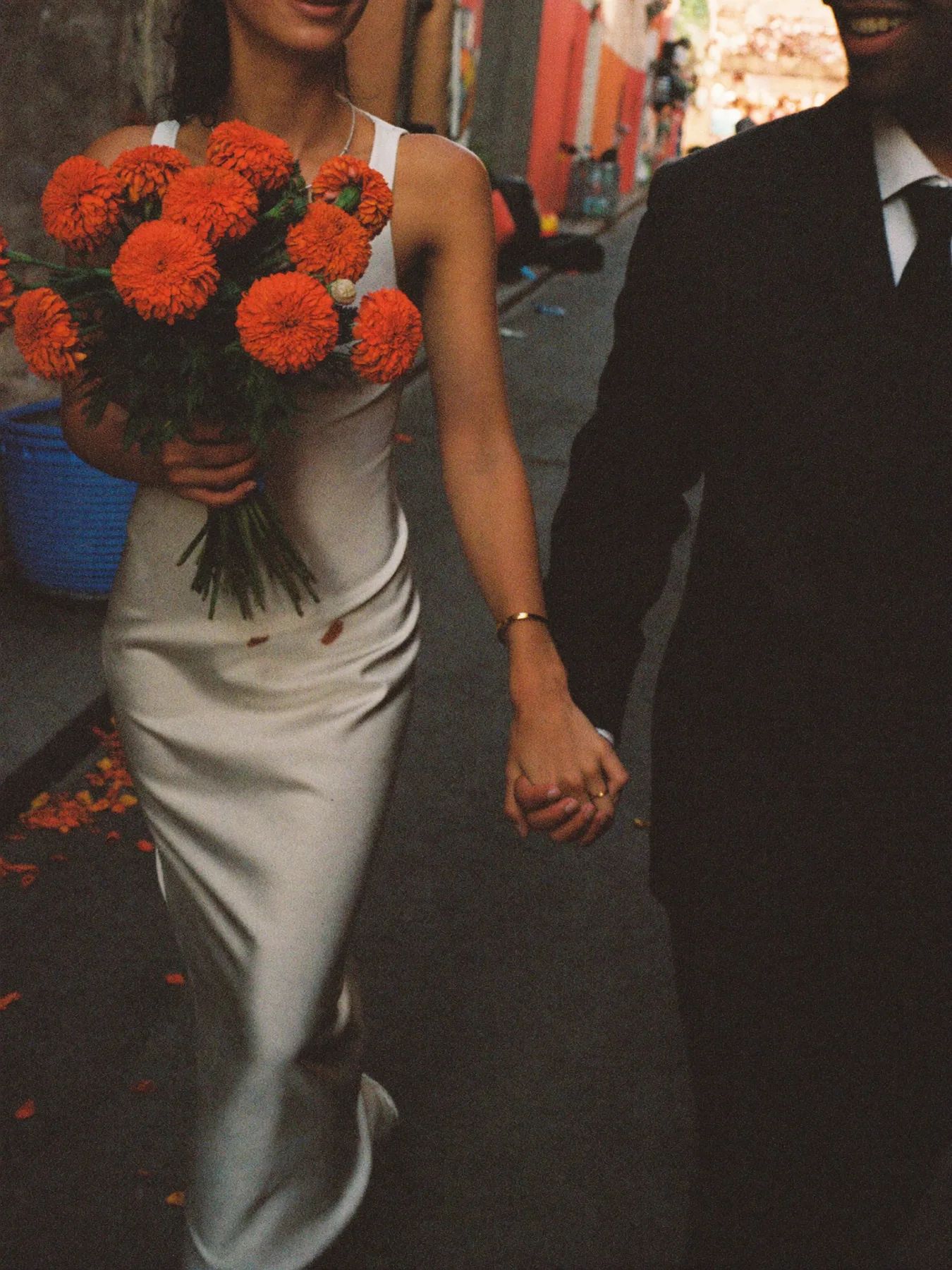
It starts in the dark, and that is not a flourish. Hair and makeup come to you before five. We are on the sand by ten past six with the sky going orange behind the water and the beach empty in both directions. Vows, the walk, the first hour of light, and you are married before most of the coast has had breakfast.
Then the cenote, at opening. Twenty minutes inland, through the gate as it lifts, and into the water for the underwater portraits while the light is still coming down in one column through the roof. This is the part of the day that looks like nowhere else and it is why the morning is built the way it is.
The middle of the day is unusable outdoors on this peninsula for most of the year, so it goes to a long lunch and doing nothing, which I plan for rather than apologise for. Late afternoon takes the jungle, where the light goes green and even and the heat finally breaks.
On the Signature the second day carries the charter, a yacht with a captain and nobody else aboard or a helicopter over the reef, and you pick one at no difference in price. On the Honeymoon the third evening ends at a table set on the sand with candles and a musician for about forty five minutes. Couples describe that table afterwards more often than they describe the ceremony, which I have stopped finding strange.
Getting there, and where to stay
Tulum has its own international airport now, TQO. It is roughly twenty to thirty five minutes from town and forty five to sixty minutes to the far end of the beach road depending on traffic, which on that road is a real variable rather than a rounding error. Cancún, CUN, is the alternative at about two hours.
Where you stay decides how much of the morning you lose. The beach road is slow and one way in places, and a property at the wrong end of it can cost you the hour that the entire sunrise plan depends on. I tell you exactly which stretch to book for your itinerary and why, and then you book it.
Arrival is always its own day. I never put a ceremony on the day you land, anywhere, and on this coast that goes double because a delayed flight into a five in the morning start is not a plan, it is a hope.
When I would tell you to go somewhere else
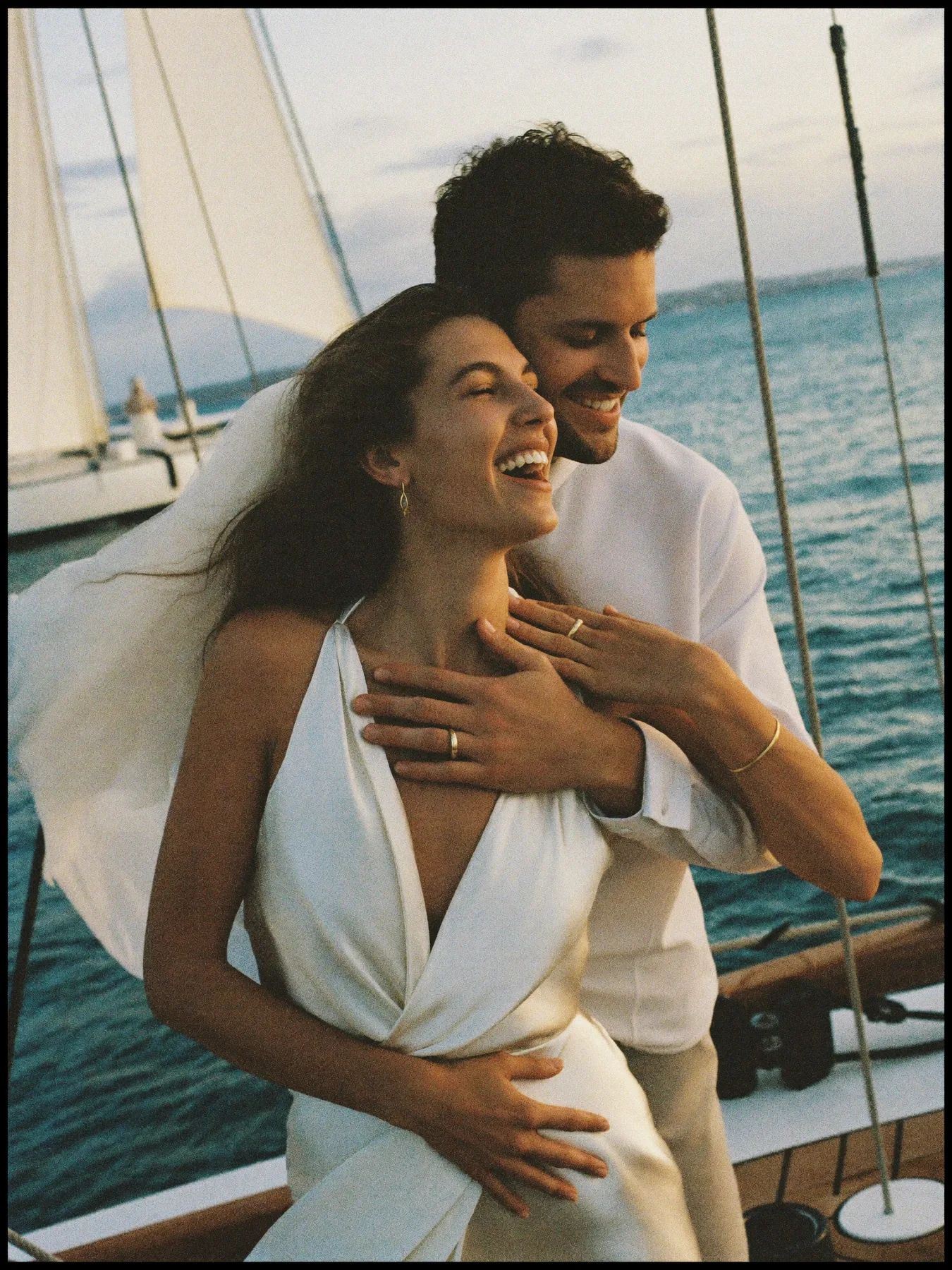
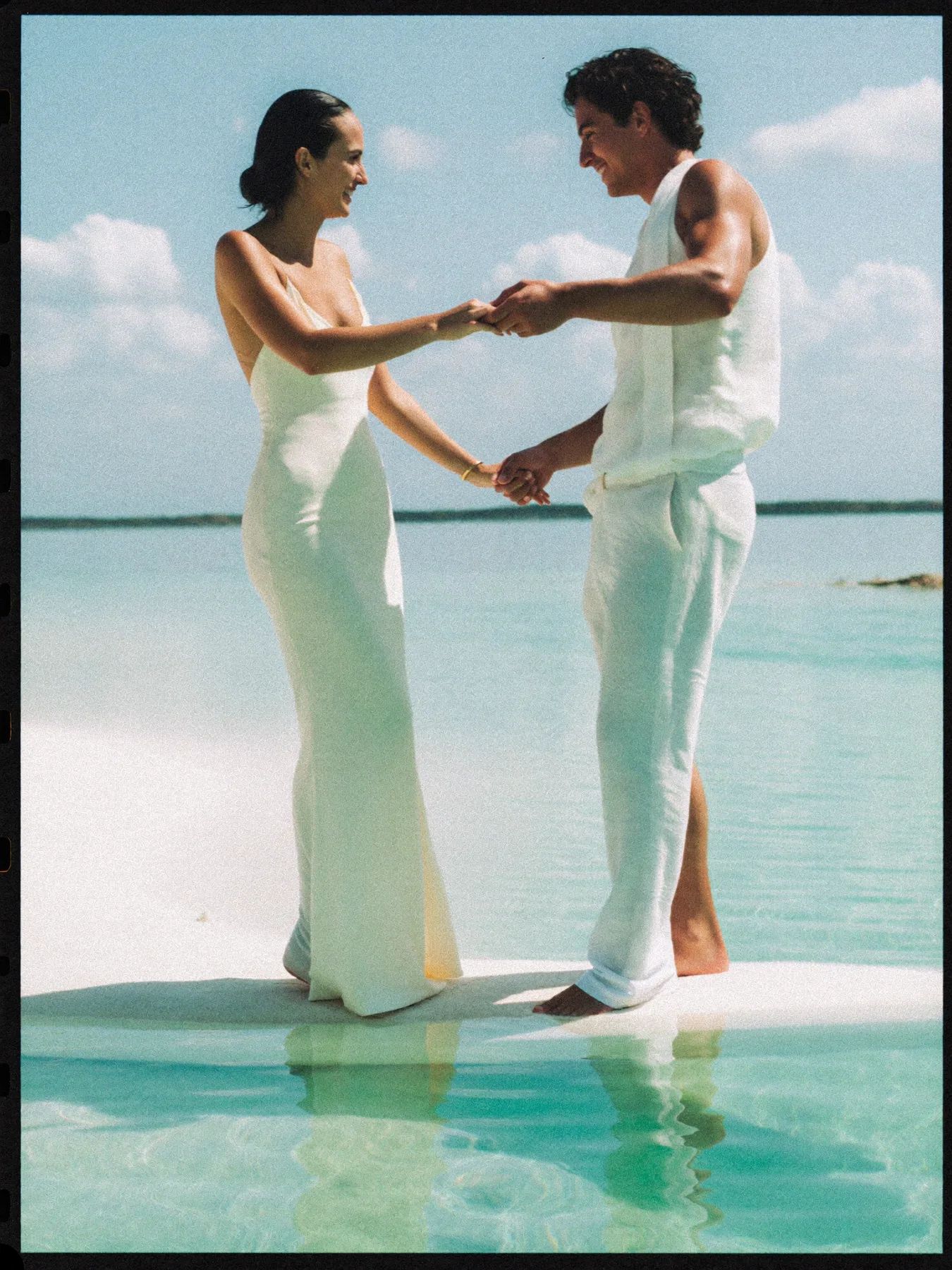
If you want a sunset over the sea, this is the wrong coast and I have said so twice already because it is the single most common mismatch. Isla Mujeres, Sayulita or Todos Santos, same price, different ocean.
If you are locked into May through August and the beach is the entire point, think hard. I can build you a very good inland day in those months and I will, but if the image in your head is clean white sand and nothing else will do, move the month or move the country.
If you want a cool evening and old architecture, Mexico has that and this is not it. San Miguel de Allende sits near two thousand metres where the evenings are genuinely cold, and Oaxaca gives you courtyards and the best food argument in the country. Both cost exactly what Tulum costs.
And if you want the cenotes, which is the honest reason to be here, then come in January, get up at four, and I will show you a room made of limestone and water with one hole in the roof that no other place on this list can offer you at any price.
Begin the journey
Tell me your dates and what you are picturing, and I will come back within 48 hours with availability, an honest estimate, and the sunrise, the tide and the cenote I would point you toward. If your month is a difficult one I will say so in the first reply rather than the fifth.
The full Tulum companion is here, with the collections, the experiences and the planning timeline laid out. The Mexico guide puts the whole country side by side if you are still choosing a region, and you can write to me here.
Enquiries to the publisher, armanarai.com.