How to Elope in Oaxaca
A Zapotec valley with a Spanish city dropped in the middle of it. The locations that work, the permissions that are not optional, and the two weeks to avoid.
Couples picture a Mexican elopement as a beach. Warm water, white sand, a dress moving in the wind off the sea.
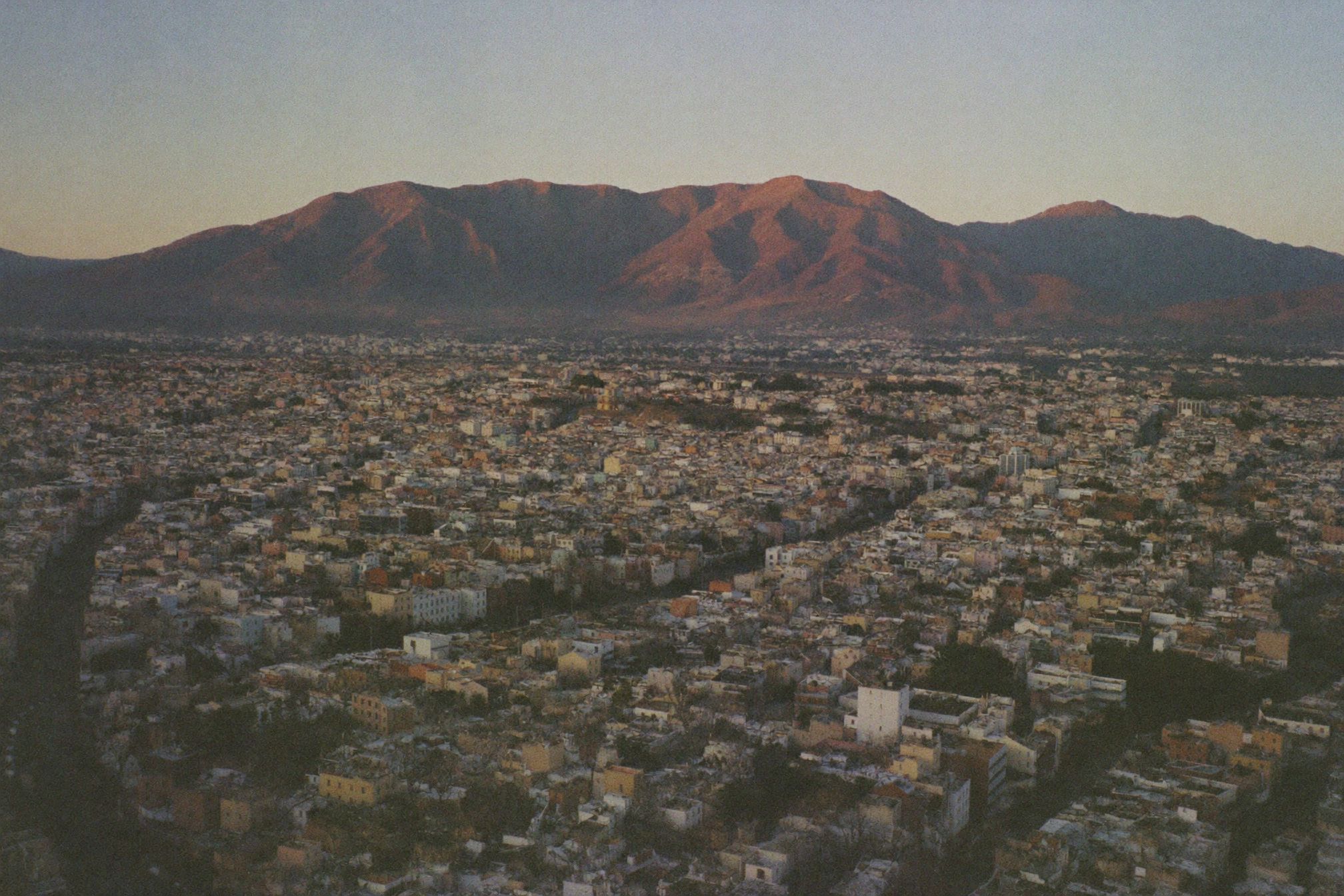
Oaxaca is the argument for everything a beach cannot give you. It sits at around fifteen hundred metres in the folds of the Sierra Madre del Sur, six hours inland from the nearest coast, and it is the most culturally dense place I work anywhere in Mexico. The whole valley is a Zapotec and Mixtec landscape with a Spanish city dropped into the middle of it, and every part of a day here is layered in a way that a resort cannot manufacture.
This is the long version: the locations that actually work, the permissions that are not optional, the two months I would avoid, and what it costs.
(Continued on Page 2, Col. 1)
Why the mountains instead of the coast
Altitude changes the light and it changes the weather. At fifteen hundred metres the air is thinner and drier than the coast, so mornings are cold enough for a jacket and the middle of the day is bright rather than hazy. The light goes gold earlier and stays gold longer than it does at sea level. That is not a poetic claim, it is the reason the schedule works: you can hold a ceremony at half past five and still be photographing an hour later.
There is also no hurricane season here. The coast of Oaxaca gets Pacific storms. The valley gets afternoon rain in the wet months and that is the extent of it. If you are choosing Mexico in September and you want a date that will not be moved by a storm track, inland is the answer.
What you give up is the ocean. If the image in your head is bare feet in surf, go to the Baja Sur circuit or the Riviera Maya and be happy. I can build either. Oaxaca is for couples whose answer to "what do you want the day to feel like" is not "warm" but "old".
Santo Domingo and the centro
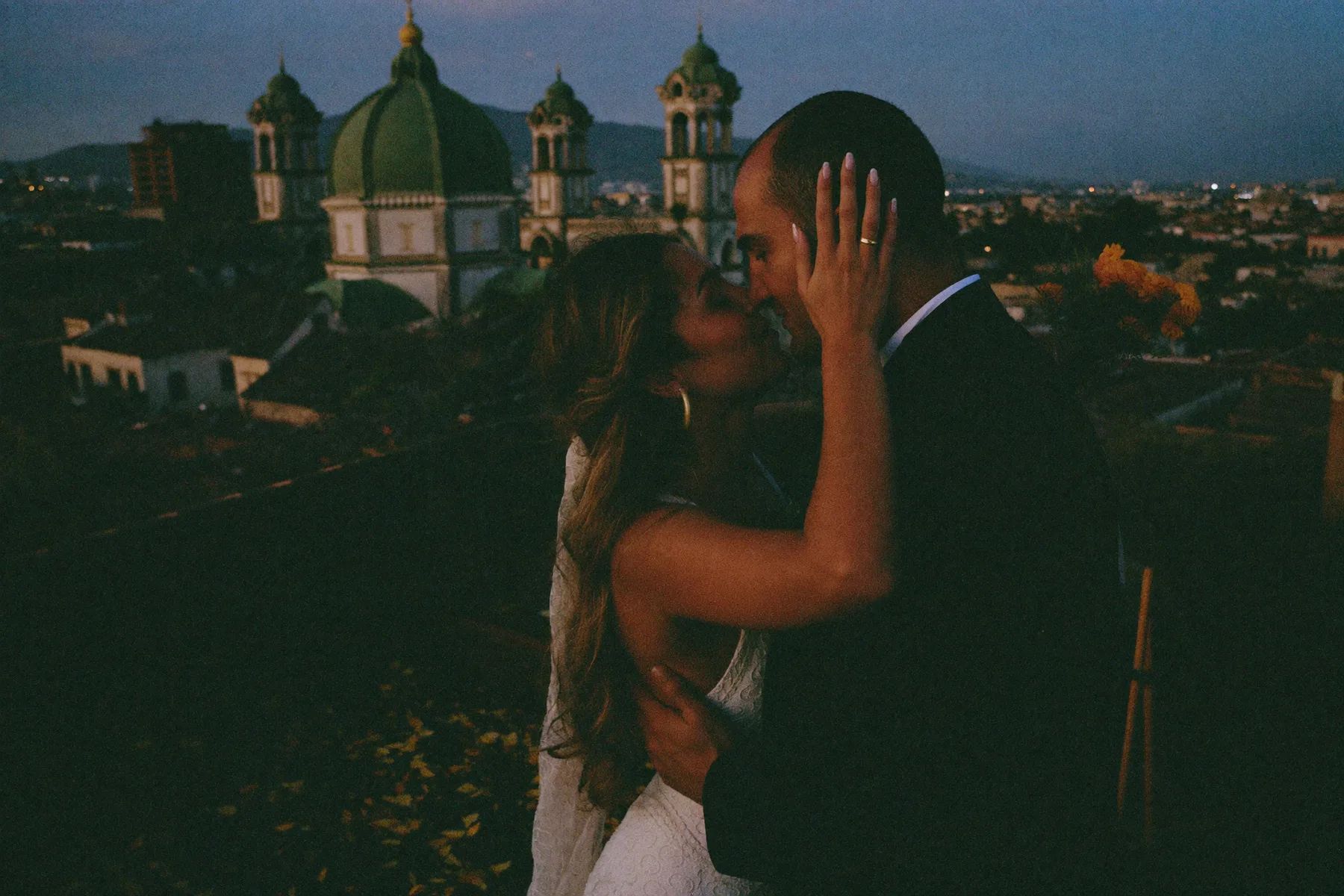
The church of Santo Domingo de Guzman is built from green cantera stone, and the interior is carved and gilded to a degree that genuinely stops people in the doorway. It is the anchor of the historic centre and the single most recognisable thing in the city.
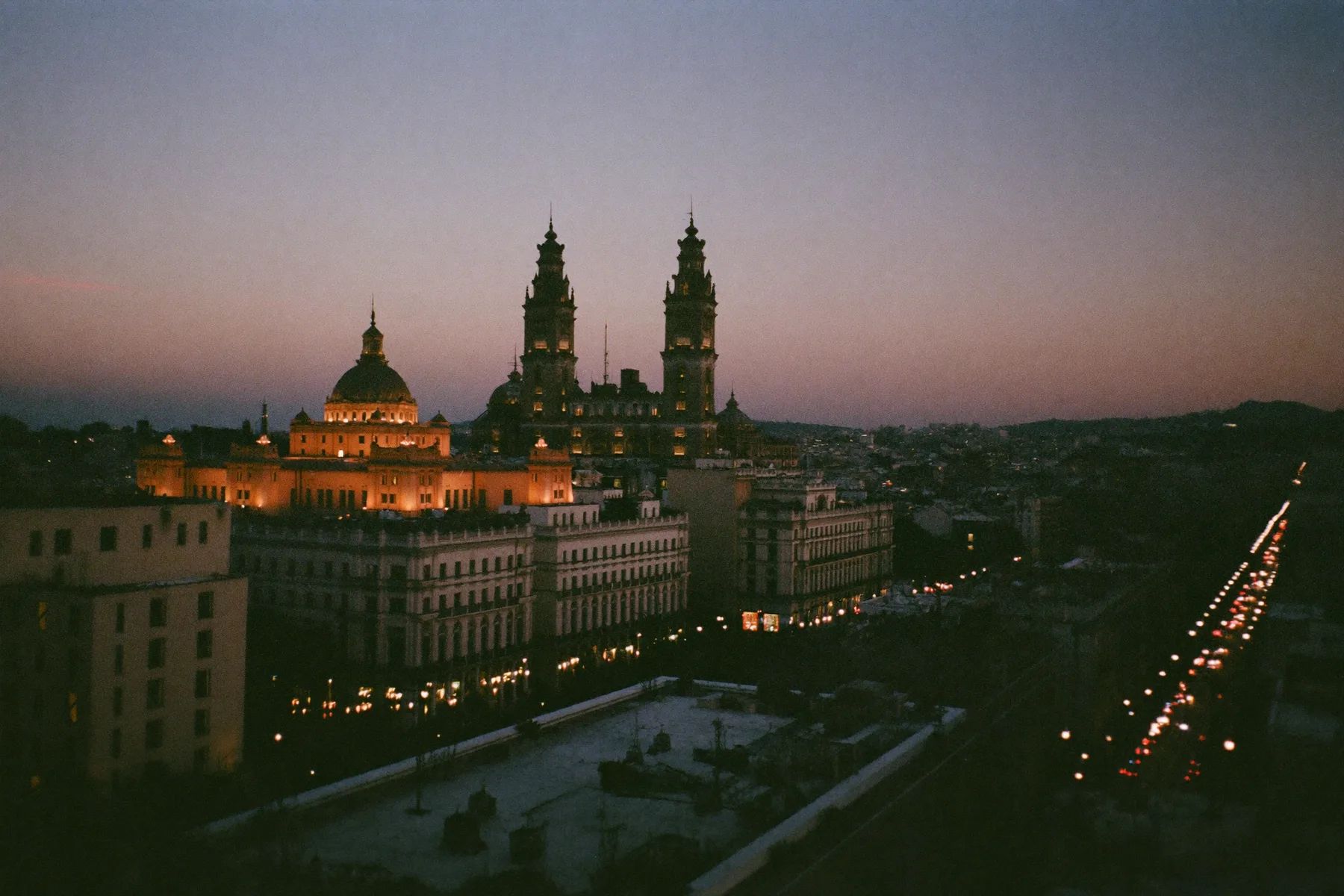
Be clear about which version of it you want. The walled atrium and the street in front are public, and a symbolic ceremony there or on one of the rooftops that look onto it is straightforward. That is what most of my couples do and it is the frame in the photograph above.
A Catholic wedding inside Santo Domingo is a different undertaking and I will not soften it. The diocese requires your civil marriage to be done first, along with baptism, confirmation and first communion records, a completed marriage preparation course, and a letter of transfer from your home parish. Foreign couples add passports and apostilled birth certificates to that. The parish process has to be walked by you, not by a planner, which means months of correspondence in Spanish with a diocesan office. I will tell you exactly what to ask for and in what order. I cannot do it for you, and anyone who says they can is selling something.
Jalatlaco and the painted streets
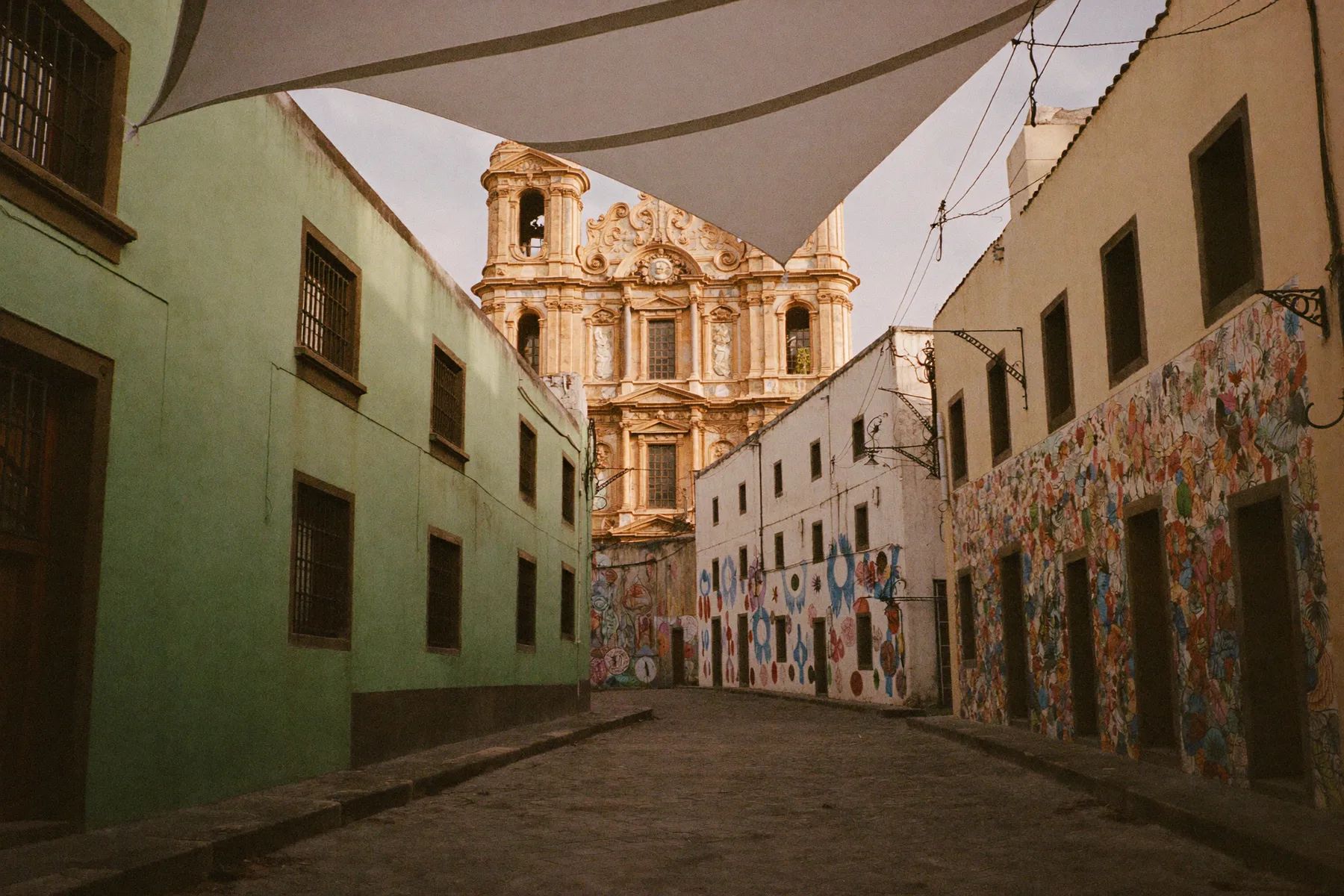
Jalatlaco is a small quarter east of the centre with cobbled lanes, houses painted in colours nobody would dare use at home, and paper cut banners strung overhead between the roofs. It is the most photographed street scene in the city and for once the reputation is deserved.
It only works before about eight in the morning. After that it fills with people doing exactly what you came to do, and a lane four metres wide does not hide a crowd. I schedule Jalatlaco first thing, in the flat light just after sunrise, when the colours are strongest and the street is still local. By the time the tour groups arrive we are somewhere else.
The painted lanes, and knowing when to stop
There is a version of an Oaxaca day that is nothing but colourful walls, and I would push back on it. Twenty frames against twenty different painted facades is a catalogue, not a story. Two or three lanes, chosen for how the light hits them at the hour we are there, and then out.
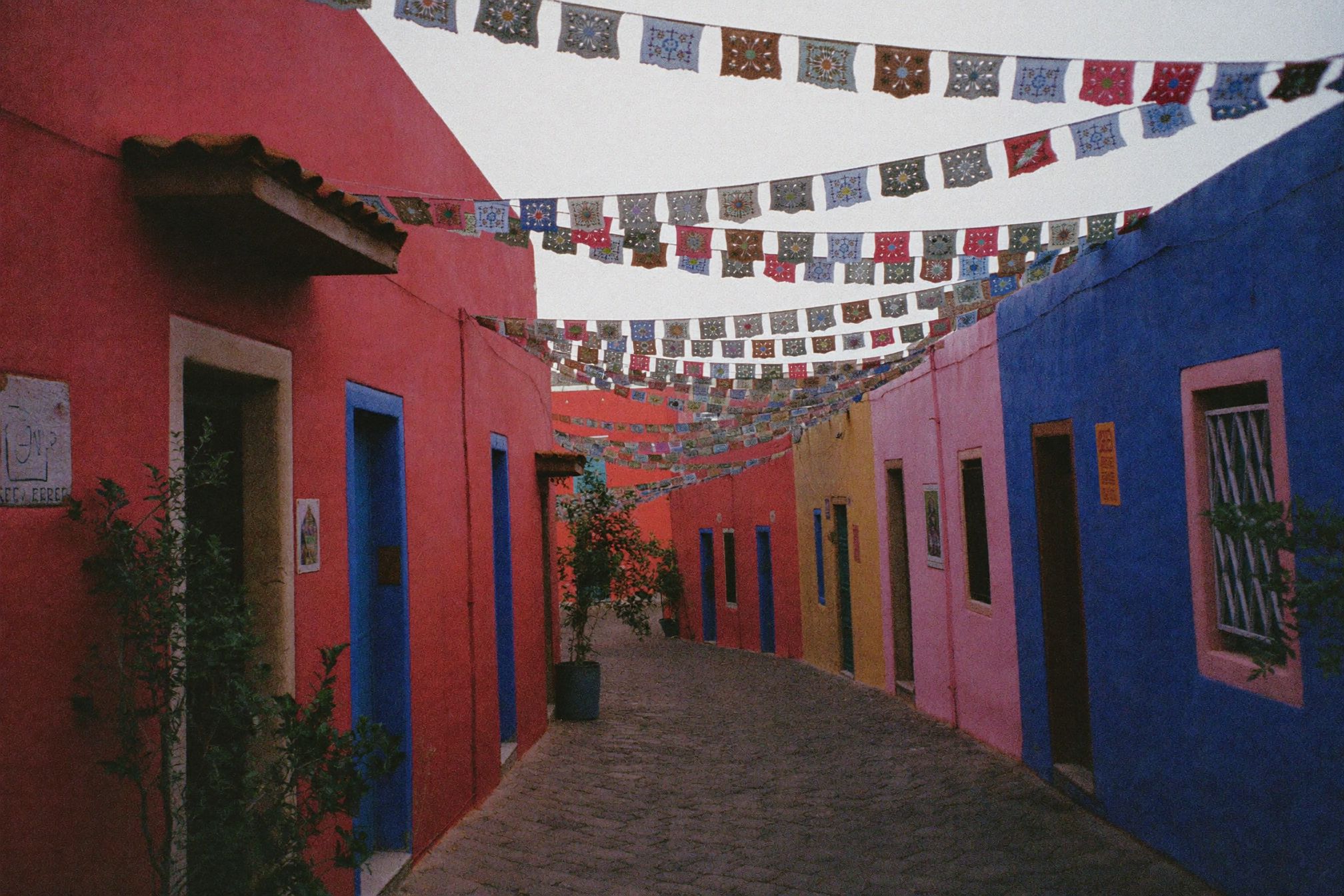
The thing I actually look for is the paper banners. They go up for festivals and nobody takes them down, so they fade and tear through the year and throw coloured shadows onto the cobbles by mid morning. A ceremony under those, with the wind moving them, is one of the few genuinely distinctive frames this city offers that no beach anywhere can copy.
Monte Alban, and the permission nobody mentions
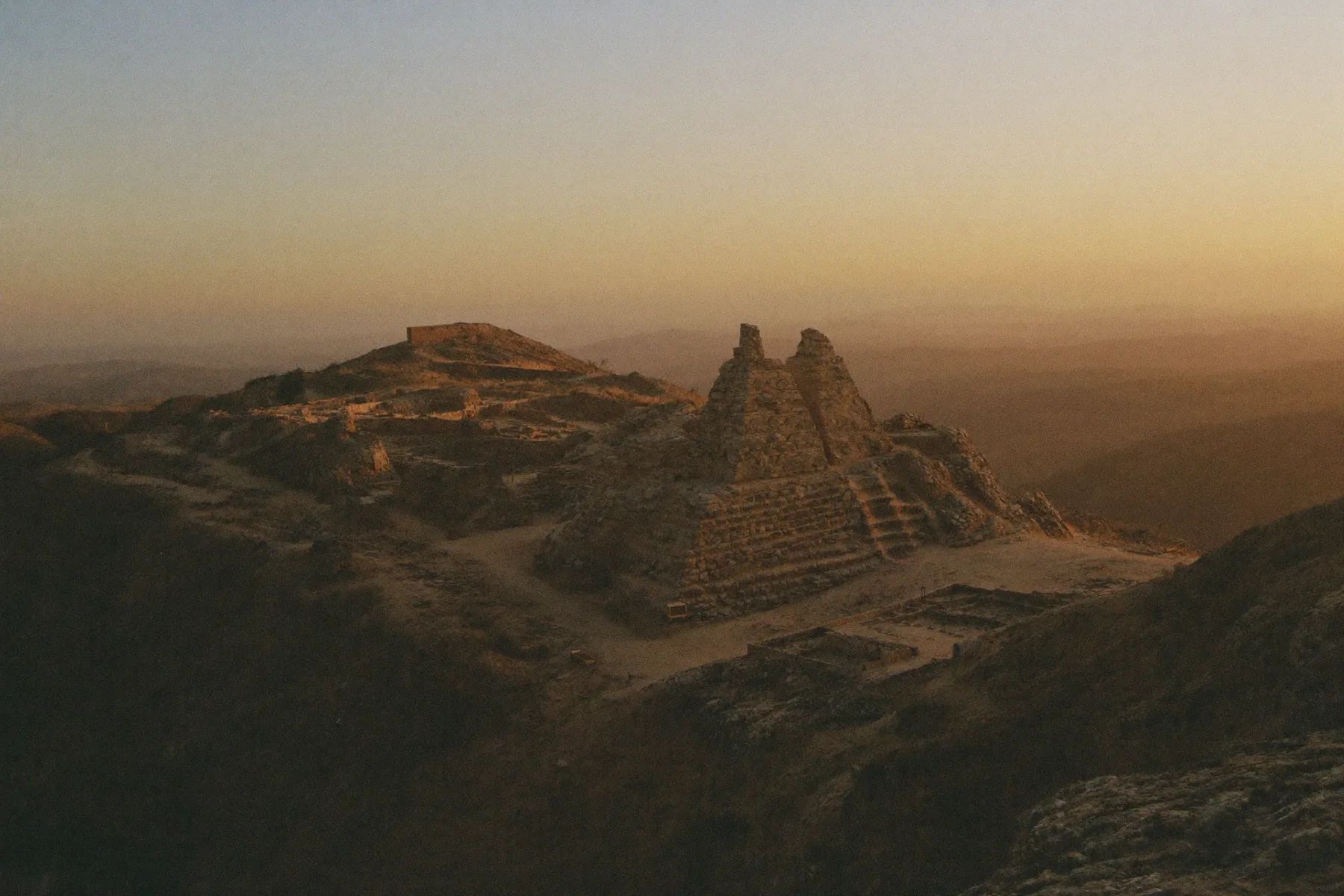
Monte Alban is the Zapotec capital, and the Zapotecs did something remarkable to build it: they flattened the top of a mountain. The Gran Plaza runs roughly two hundred metres by two hundred, ringed by low broad platforms, four hundred metres above the valley floor, and the drive up from the city takes about twenty minutes.
Here is the part that gets left out of every other guide to this: it is a federally protected archaeological zone, and you cannot simply turn up in a dress. A ceremony, symbolic or otherwise, needs advance written authorisation, and professional photography is handled as its own separate permission through the site administration. Tripods are commonly treated as professional equipment and restricted accordingly. None of that is impossible. All of it takes lead time, and it is the first thing I start when a couple chooses Monte Alban.
If the authorisation does not come through, and occasionally it does not, the honest fallback is the ridge road below the site, which looks out over the same valley with the complex on the skyline. It is not the plaza. It is also not a consolation prize.
Hierve el Agua, which I will never promise you
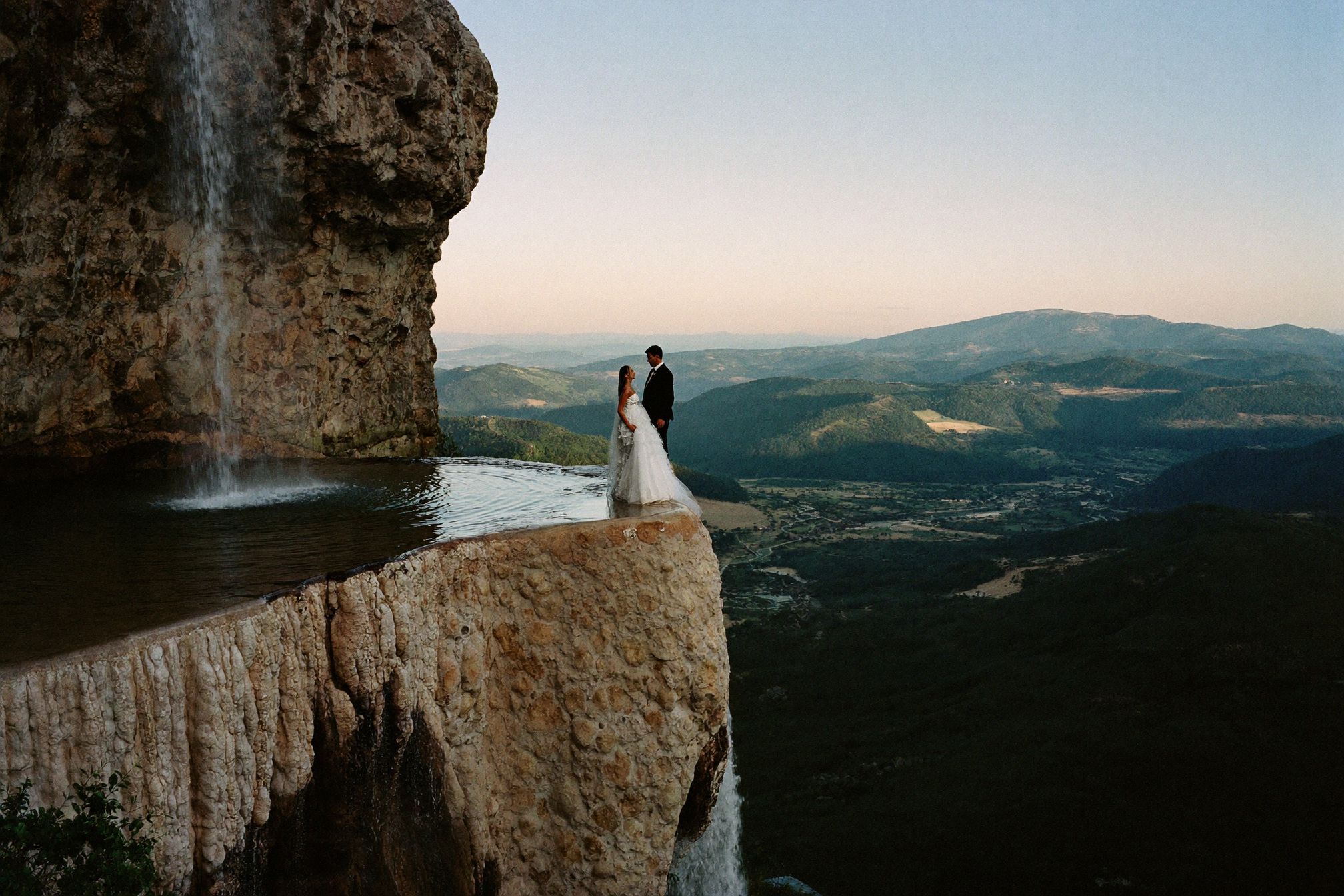
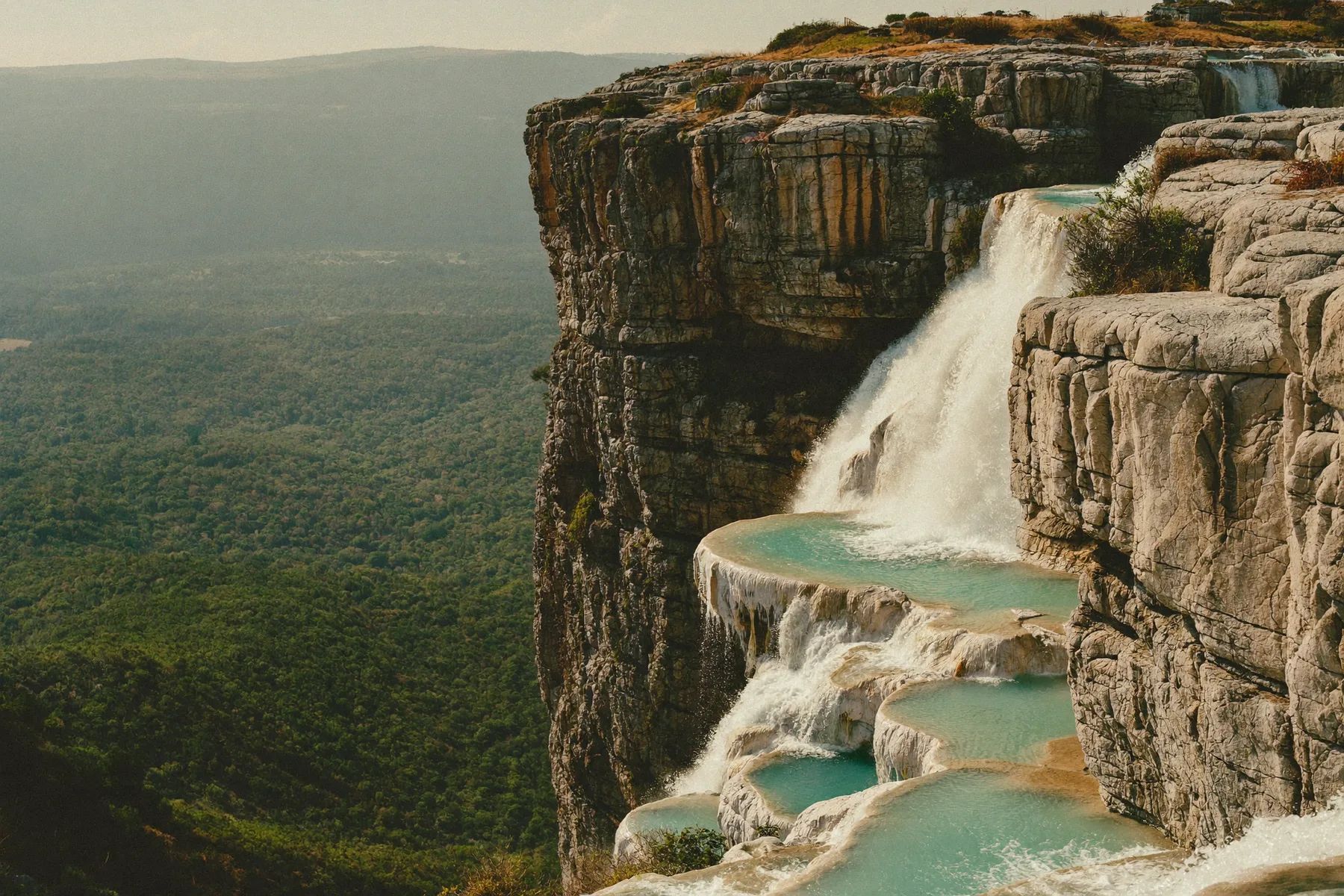
Hierve el Agua is a cliff edge where mineral springs have deposited calcium down the rock face over thousands of years until it looks like a waterfall frozen mid fall. There are spring fed pools at the top that end in nothing but air and the valley. It is about ninety minutes from the city on mountain road.
It is also the one location in my whole Mexican inventory that I refuse to guarantee. The site is controlled by the local communities rather than by a national agency. It was shut completely for a long stretch after 2021 over a dispute between two neighbouring communities about who administers it. It reopened, and access has been steady since, but the fees are collected in cash at the roadside, they change, and the site can close at very short notice for reasons that have nothing to do with you.
So I build it as a bonus rather than a pillar of the day. We check on the morning. If it is open we go and it is extraordinary. If it is shut we go to the valley towns instead and nothing about your day was resting on it. Any planner who puts Hierve el Agua at the centre of your itinerary and promises it either does not know this or is hoping you will not find out.
Mezcal country and the valley towns
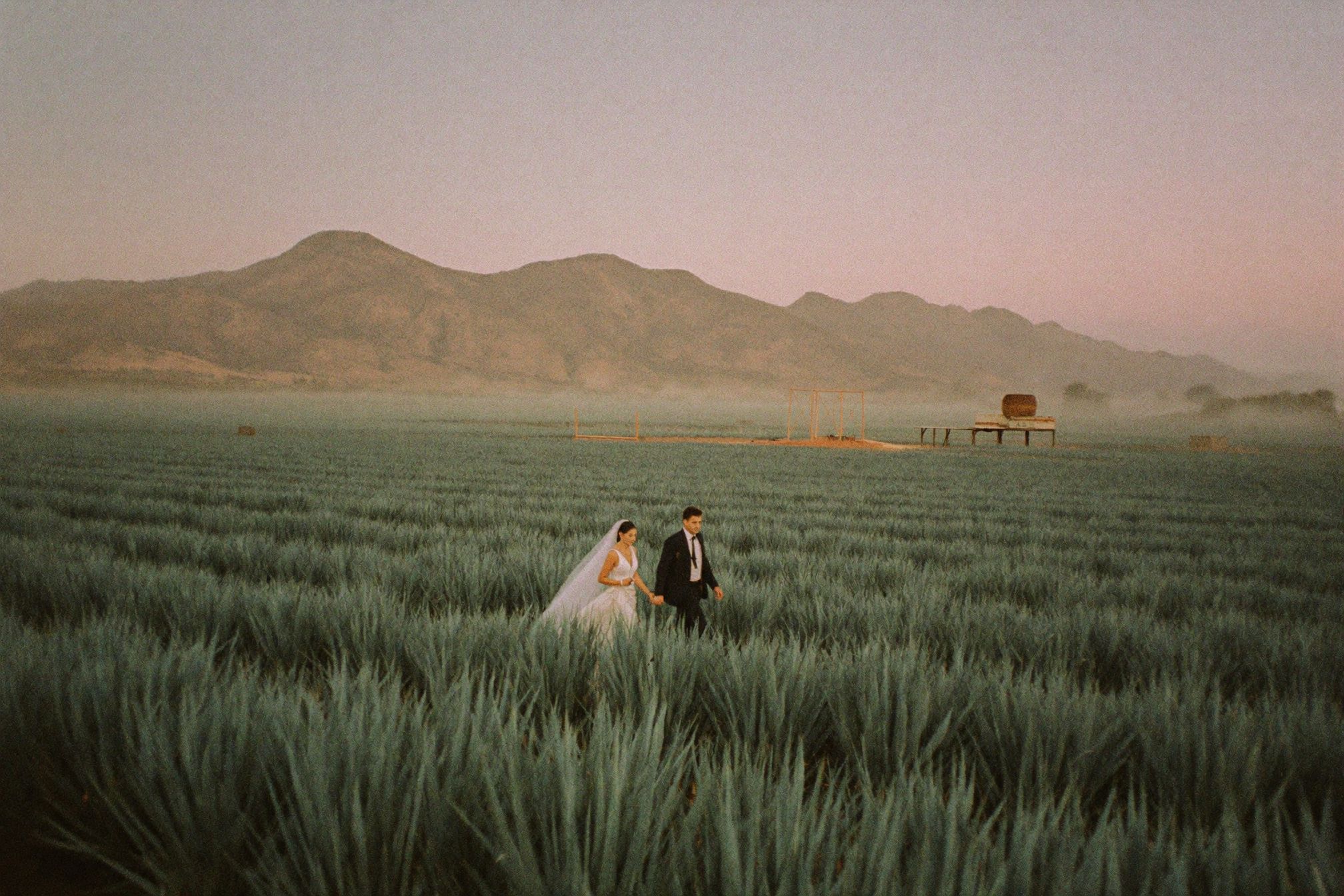
East of the city the valley opens into agave and a string of towns that each do one thing extremely well. Santiago Matatlan is where the mezcal actually comes from, and the small family distilleries there will pour for you in a dirt yard next to the roasting pit. San Bartolo Coyotepec makes the black clay you will see everywhere in the city. Teotitlan del Valle weaves, and the dyes are still made from insects and plants.
These are the afternoon of a good Oaxaca day. Not a tour. One town, chosen because it matches something about you, with enough time in it that you are not performing. The couple who spend two hours learning how the dye is made in Teotitlan get a better afternoon than the couple who tick off four towns.
The legal question, answered properly
Almost nobody who elopes here marries here in the legal sense, and that is the right call. The civil process in Mexico is state administered, needs apostilled and translated documents, commonly wants four witnesses, and in some states still requires a medical certificate taken inside the country within a short window. It will eat two days of a trip you came a long way for.
The version that works: sign at home, quietly, before you fly, and hold the ceremony here. Nothing about the day changes except that no registry office gets a say in what time you stand where. I have written the whole thing out, including what varies by state and what your certificate needs to be usable back home, in symbolic versus legal marriage in Mexico.
When to come, and the two weeks to think hard about
The dry season runs from about November to April and it is the straightforward answer. Clear mornings, cold at dawn, warm by eleven, and reliable light. The wet season is roughly May or June through October, and it rains in the afternoon rather than all day, which is workable if you accept that the schedule bends around the sky.
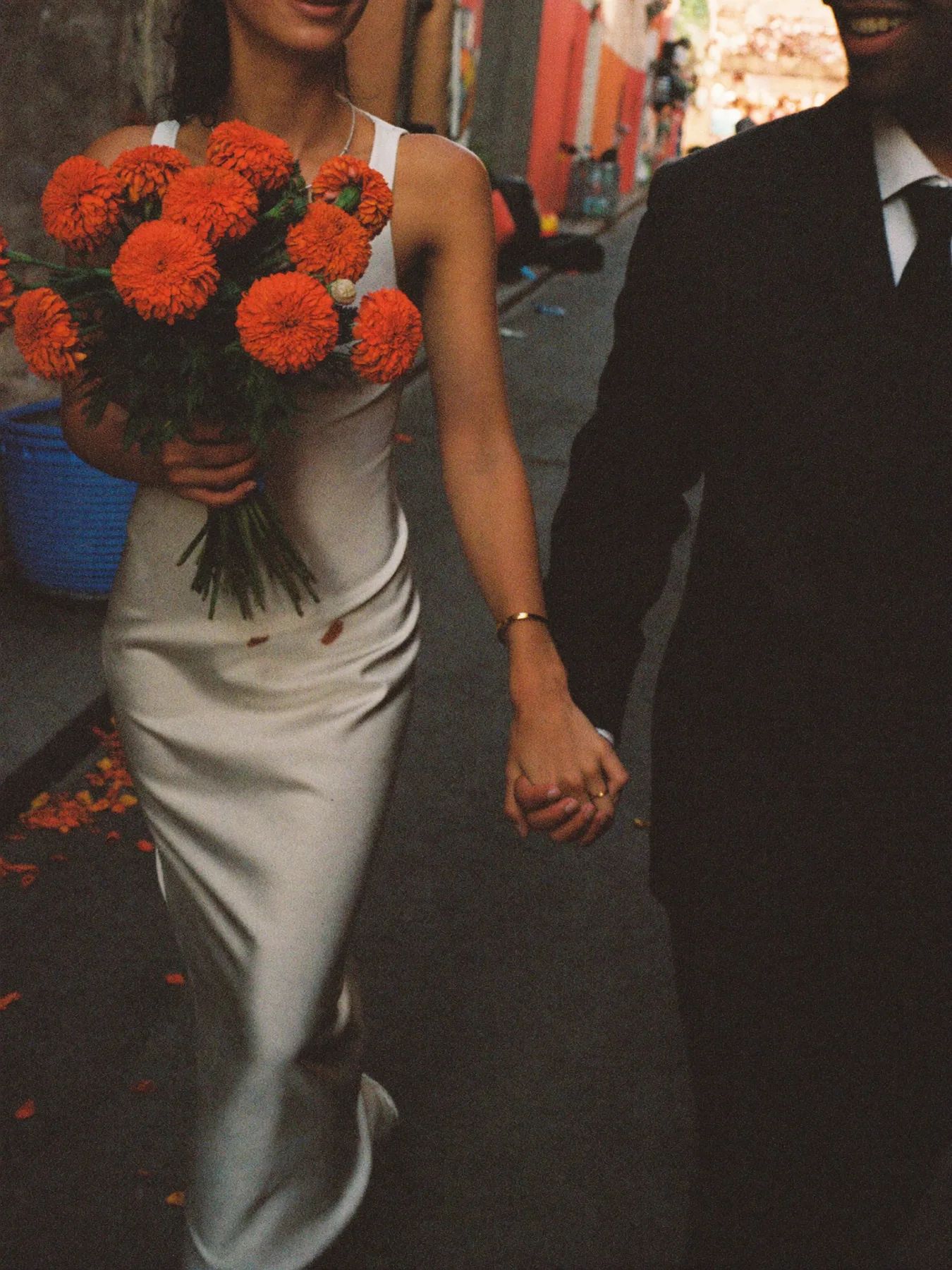
Then there is the first week of November. Day of the Dead falls on the first and second and it is the most extraordinary time to be in this city and the worst time to try to elope in it. The cemeteries are full through the night, the streets are a procession, marigolds are stacked on every corner, and hotel prices go up while availability disappears. I will happily build a day around it if that is genuinely what you want, and I will tell you plainly that you will be sharing every location with several hundred other people.
My own preference is the last week of January. The city has emptied, the light is at its cleanest, and the agave fields are still cold enough at dawn to hold mist in the rows.
What it costs, and how the day is built
Oaxaca is priced in three tiers, in US dollars. The Essential is $9,300 for one designed elopement day. The Curated Signature is $17,000 and adds a second full day and a film. The Curated Adventuremoon is $24,000 and weaves the elopement and the honeymoon into one four day journey. Each is all inclusive of everything I curate on the ground, and each comes with its own album.
Your flights and your hotel are not in that and never will be. I do not hold a travel agency licence, so booking your travel is not something I am permitted to do. What I do instead is name the exact hotel and the exact arrival day, and you book it directly. You will usually pay less than I could get it for anyway.
A full Oaxaca day, in the shape I would argue for: Jalatlaco at first light while it is empty, back for breakfast, the drive out to the valley late morning, one town properly rather than four badly, the ceremony in the late afternoon where the permission allows, and the rooftops above the centro at blue hour when the green stone goes warm and the city lights come up underneath you.
The full breakdown sits on the pricing page, the regional picture is in the Mexico elopement guide, and the day itself is laid out on the Oaxaca hub.
Tell me the week you have in mind and I will tell you what the light is doing →
Enquiries to the publisher, armanarai.com.