How to Elope in Mexico City, at Two Thousand Two Hundred Metres
The only city elopement I sell in the Americas, and the only place on this site where the first thing I tell you to plan for is the air.
Almost everything on this site is a landscape. This is the exception, and I keep it because a certain kind of couple wants a city and no beach in the world will substitute.
Mexico City is one of the great cities. It is enormous, it is old in layers going back to a lake city the Spanish built on top of, it has more museums than almost anywhere, the architecture runs from baroque to Barragán, and the food is arguably the best of any city on earth. It is also at about 2,240 metres, which is higher than most ski resorts, and that is the first thing to plan around.
Not the light, not the locations, not the permits. The air. Everything else follows from getting the first two days right.
(Continued on Page 2, Col. 1)
The altitude, and the first forty eight hours
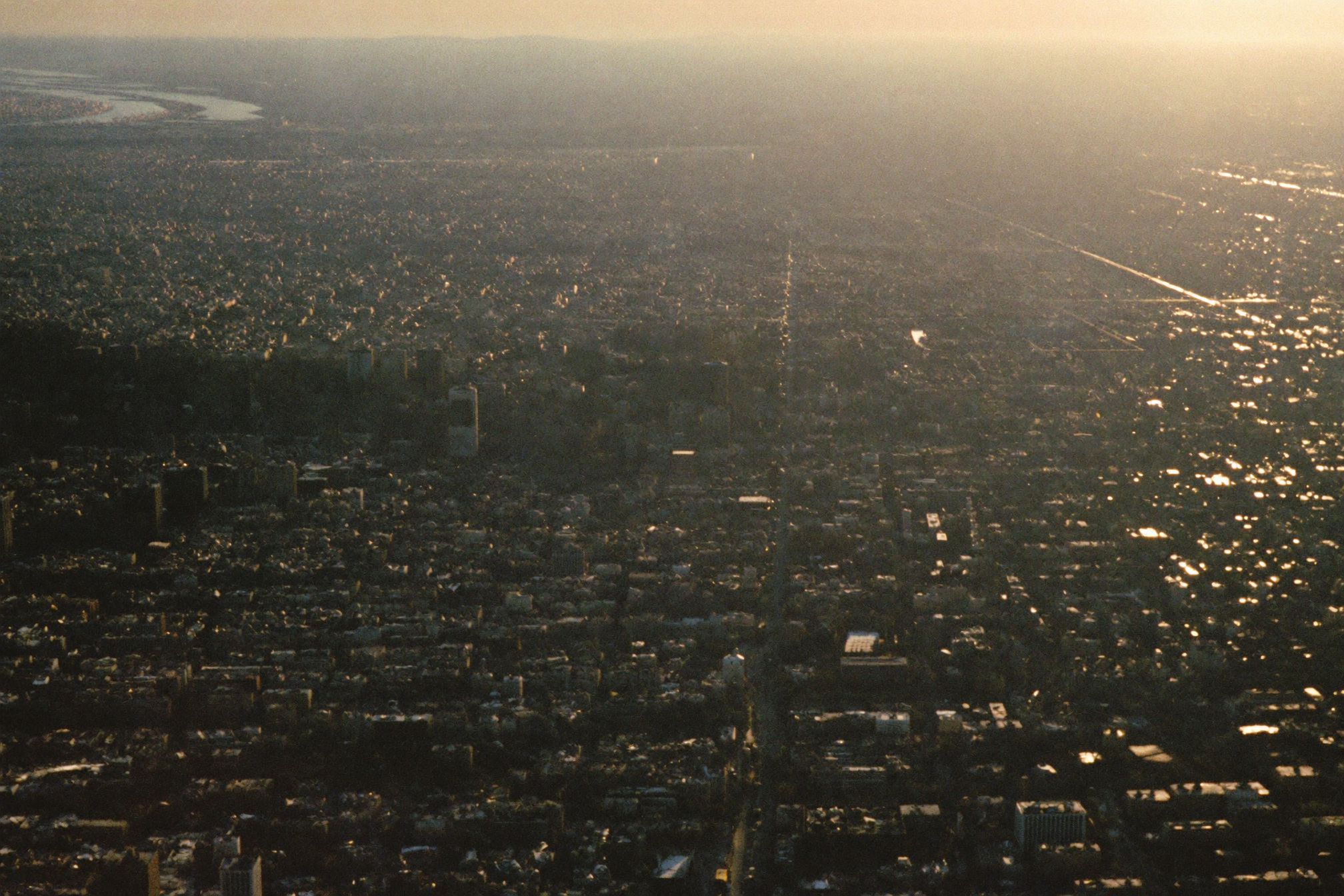
Mexico City sits at roughly 2,240 metres above sea level. For a couple flying in from London, New York or anywhere at sea level, that is enough to be felt, and the way it is felt is unhelpful: a headache, shortness of breath on stairs, poor sleep the first night, and alcohol hitting considerably harder than expected.
None of it is dangerous for most people and all of it fades. The standard advice is the correct advice: arrive a day or two early, keep the first day light, drink far more water than feels necessary, and go easy on the alcohol until you have adjusted.
What that means for the plan is concrete. I do not put the ceremony on day two. The first full day is walking, eating and looking at things, at a low altitude of effort. The pyramids, which involve climbing, go later in the trip rather than earlier. And if either of you has a heart or lung condition, tell me, because that is a conversation with a doctor rather than with a photographer.
Couples who ignore this arrive at their own wedding tired and headachy, and it is entirely avoidable by moving one flight.
The jacarandas, and how much to trust the window
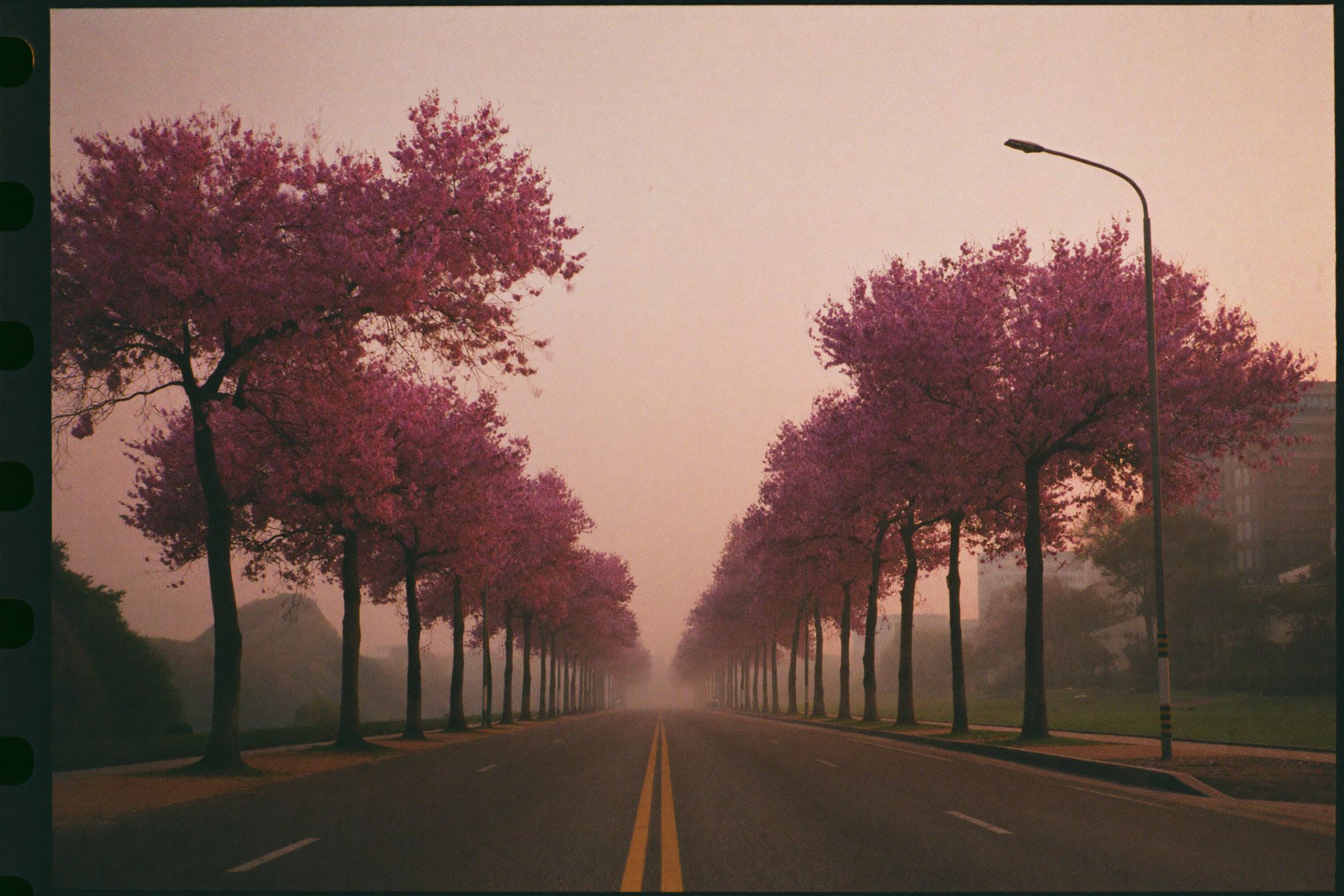
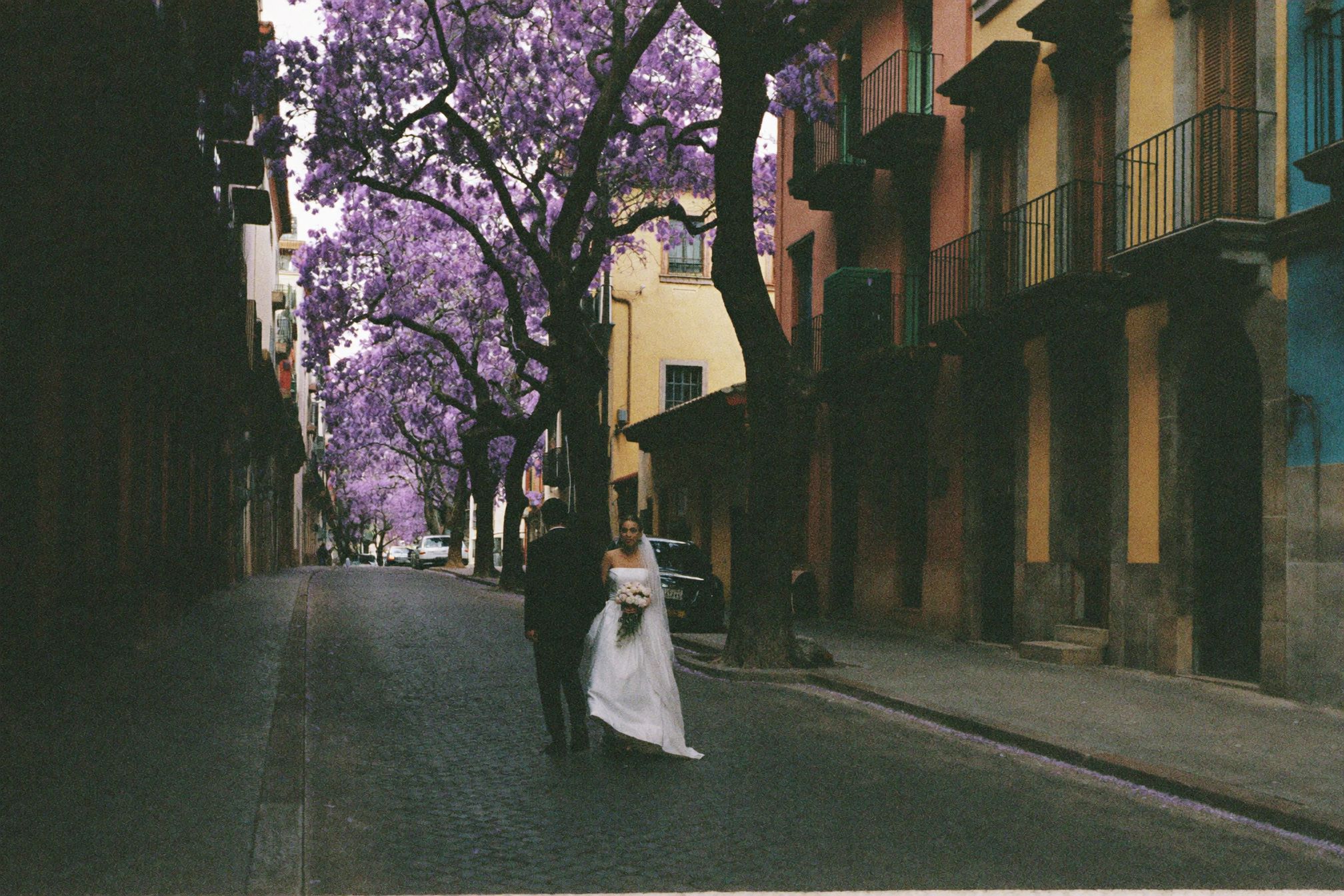
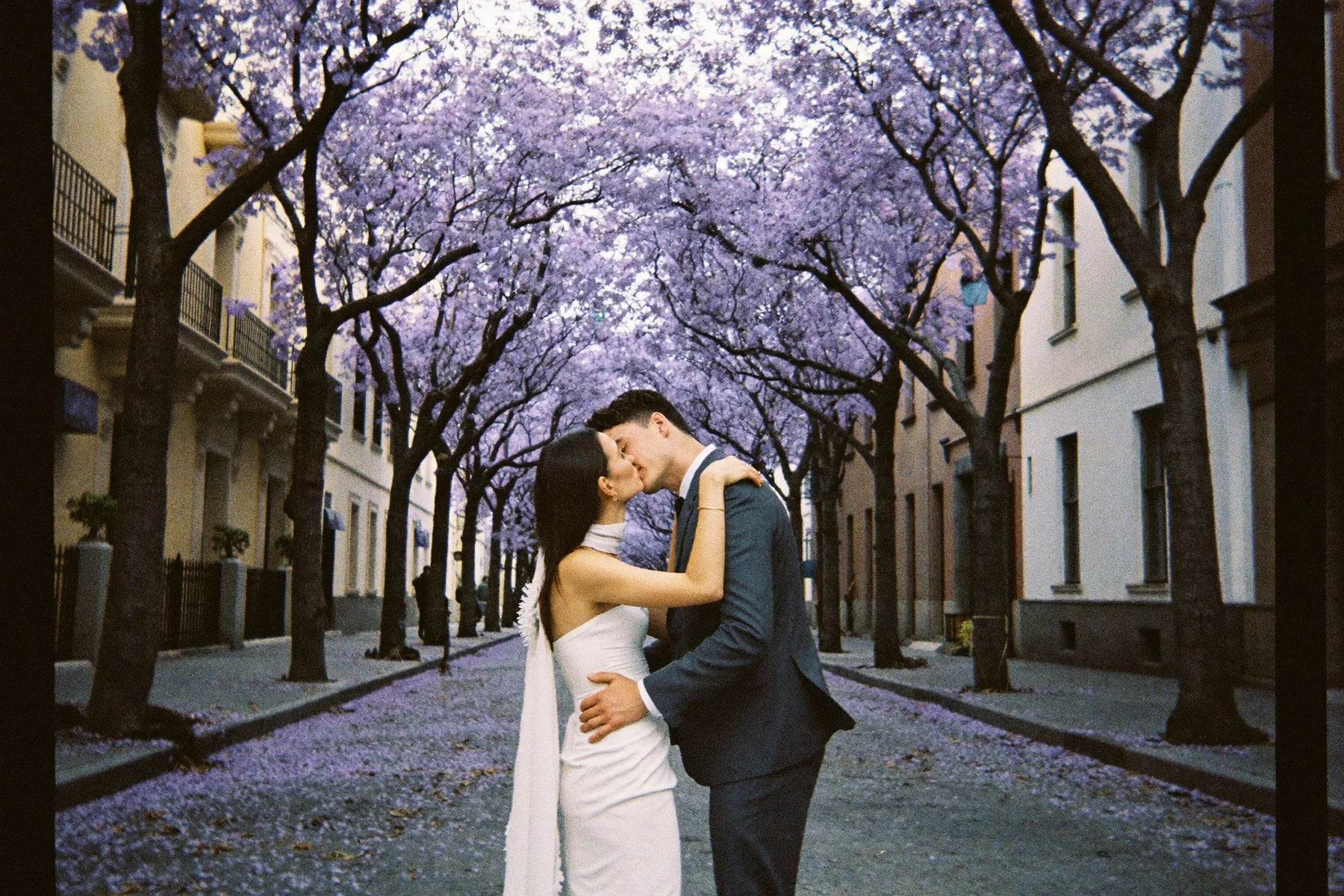
For a few weeks each spring the whole city turns purple. Jacarandas line entire avenues, and when they go over, the fallen flowers carpet the pavements in the same colour. It is the single most photogenic thing that happens in this city and couples plan whole trips around it.
The window runs roughly late February through April, peaking in March and into early April. That is the honest range. There is no official municipal bloom calendar, the timing tracks the spring conditions of that particular year, and it can shift by a couple of weeks in either direction.
So book March if the jacarandas matter, understand that you are playing odds rather than reading a timetable, and build a day that is good without them. Every couple I have taken in that window has had them and I would still not promise it, because a promise about a tree is not mine to make.
Coyoacán is where I would use them. The streets are cobbled and low and coloured, so purple against a red or ochre wall is a better frame than purple against traffic.
Teotihuacán, and what the INAH rules mean for you
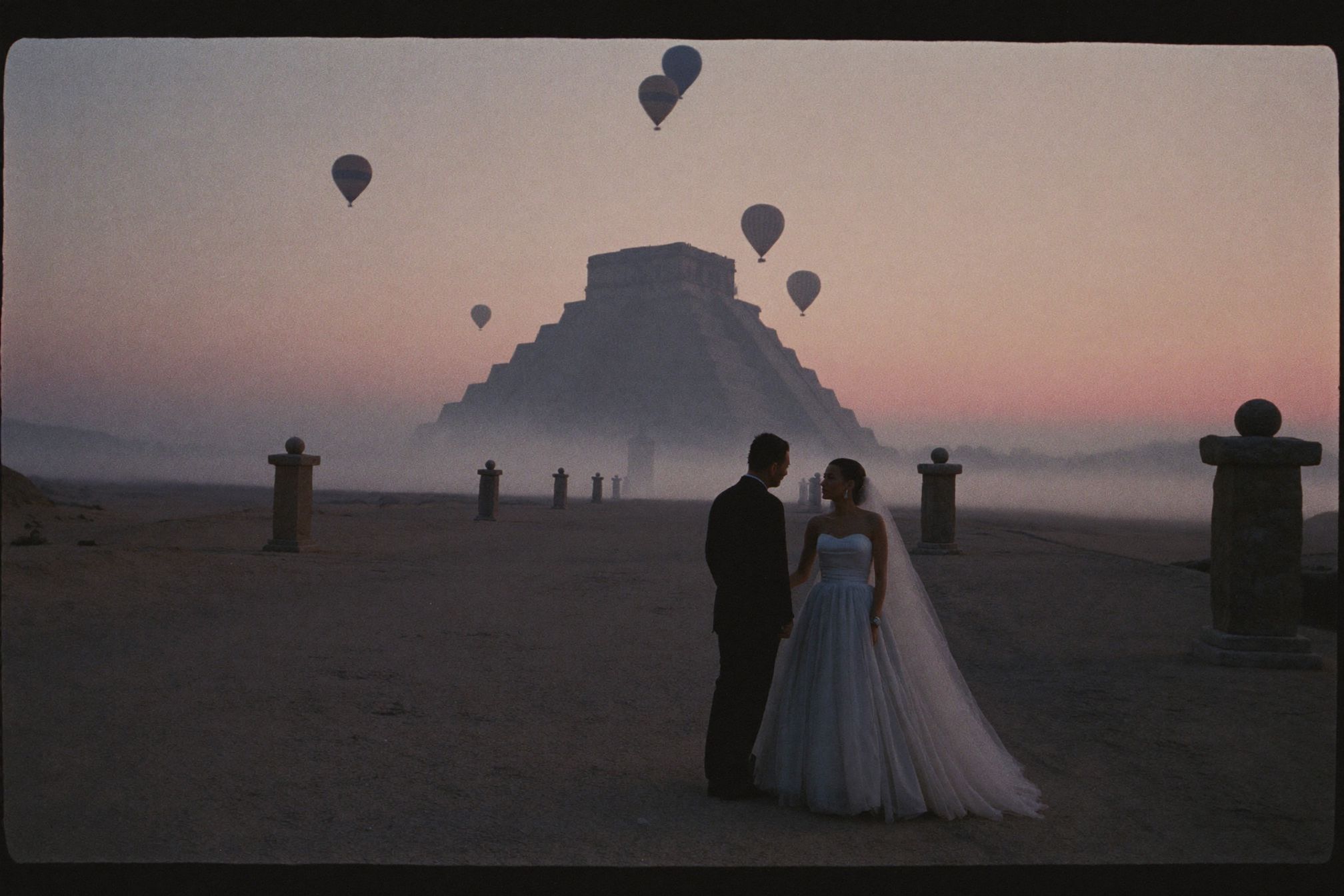
An hour outside the city is Teotihuacán: an enormous pre Aztec city with two pyramids and a two kilometre avenue running between them, abandoned centuries before the Aztecs arrived and named by them, because nobody knows what its builders called it.
It is administered by INAH, which puts it under the same regime as Tulum and Chichén Itzá. Professional or commercial photography and filming at an INAH site requires permission and a fee, applied for in advance. Tripods and production equipment are what trigger it. Climbing the pyramids has also been restricted in recent years, so do not build a plan around standing on top of one.
What I have not been able to establish, and I would rather say so than pretend, is a clean official answer on whether the city's own film commission requires a permit for a small photographic crew in public spaces like Coyoacán, Xochimilco or Chapultepec. The available sources do not settle it either way. What is consistent is that organised commercial work in this city is expected to be authorised, and that tripods are refused in a lot of ticketed places as a matter of course.
My approach is to arrange authorisation where the location and the plan need it, work light and fast where it does not, and never assume that the absence of a published rule is the same as permission. That is a slower answer than couples want and it is the accurate one.
The balloon at dawn
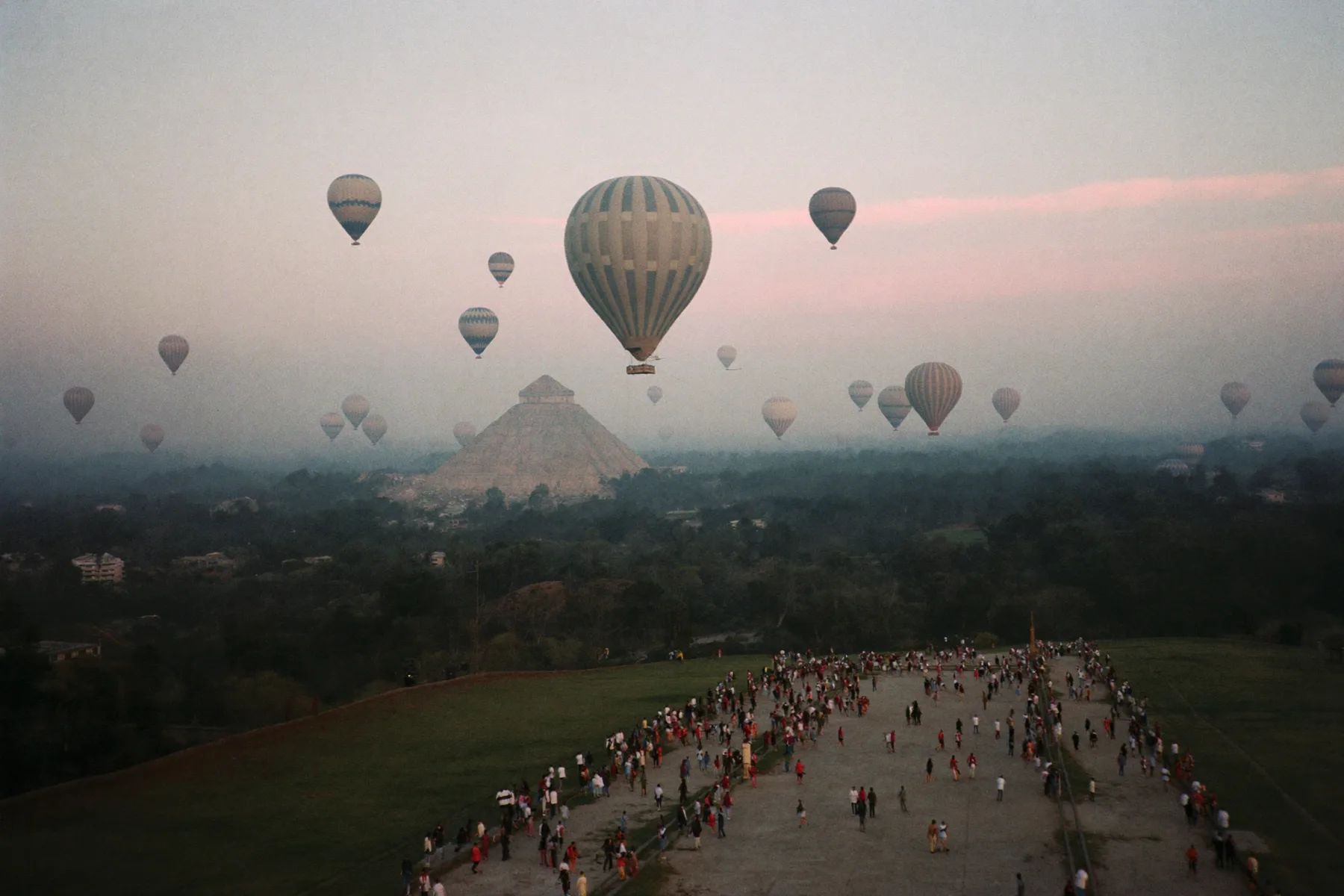
Balloons go up over Teotihuacán before sunrise, and it is the one genuinely spectacular thing on this itinerary that requires no permission at all.
You are in the air as the light comes up over the valley with the pyramids underneath you and mist in the low ground. It is quiet in the way only ballooning is quiet, apart from the burner. It also solves the crowd problem, because you are above the site before it opens.
It is early, genuinely early, a pickup somewhere around four in the morning. It is also weather dependent and cancels for wind. Build it into a trip with a spare morning rather than the day before you fly home.
Xochimilco, which is not what the photographs suggest
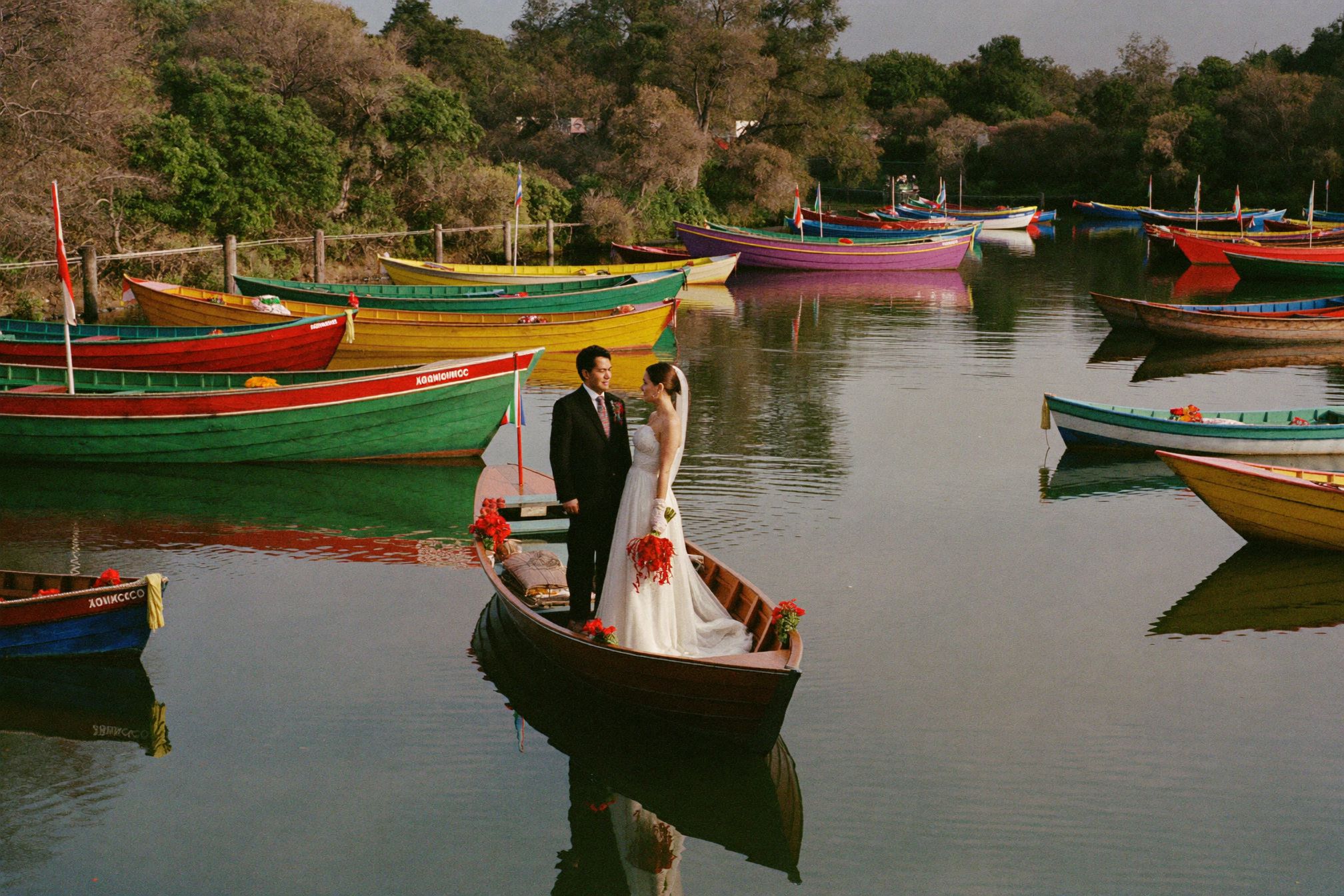
Xochimilco is the surviving fragment of the lake that the city was built on: a network of canals with painted flat bottomed boats called trajineras, poled along by hand, with floating gardens between them.
Two things to know. On a Saturday afternoon it is a party, boats lashed together, mariachi bands hopping between them, beer, and a great deal of noise. That is wonderful and it is not a ceremony. On a weekday morning it is almost silent, the water is flat, and you have a painted boat and a canal to yourselves.
Book the second one. It is one of the strangest and best hours available in this city and it is completely different from the version that shows up in most photographs.
Take the mariachi anyway, on your own boat, at your own hour. Paying a band to play for two people on a canal is one of the more absurd and enjoyable things you can do with a wedding morning.
The architecture, which is the real reason to be here
The buildings are why a city elopement works here and would not work in most places.
Palacio de Bellas Artes is a marble art nouveau opera house with an art deco interior, and the view down onto it from the café across the street is one of the great city views anywhere. Casa Luis Barragán is a modernist house of pink and orange planes and hard sunlight, and it is a photographer's building in the most literal sense. Biblioteca Vasconcelos is a library with the shelves suspended in the air. Coyoacán is cobbled and low and painted, and it is where Frida Kahlo lived.
Each of those has its own access rules and its own attitude to a camera, and several of them will not have a couple in wedding clothes inside at all. That is worth establishing before you fall in love with a location rather than after.
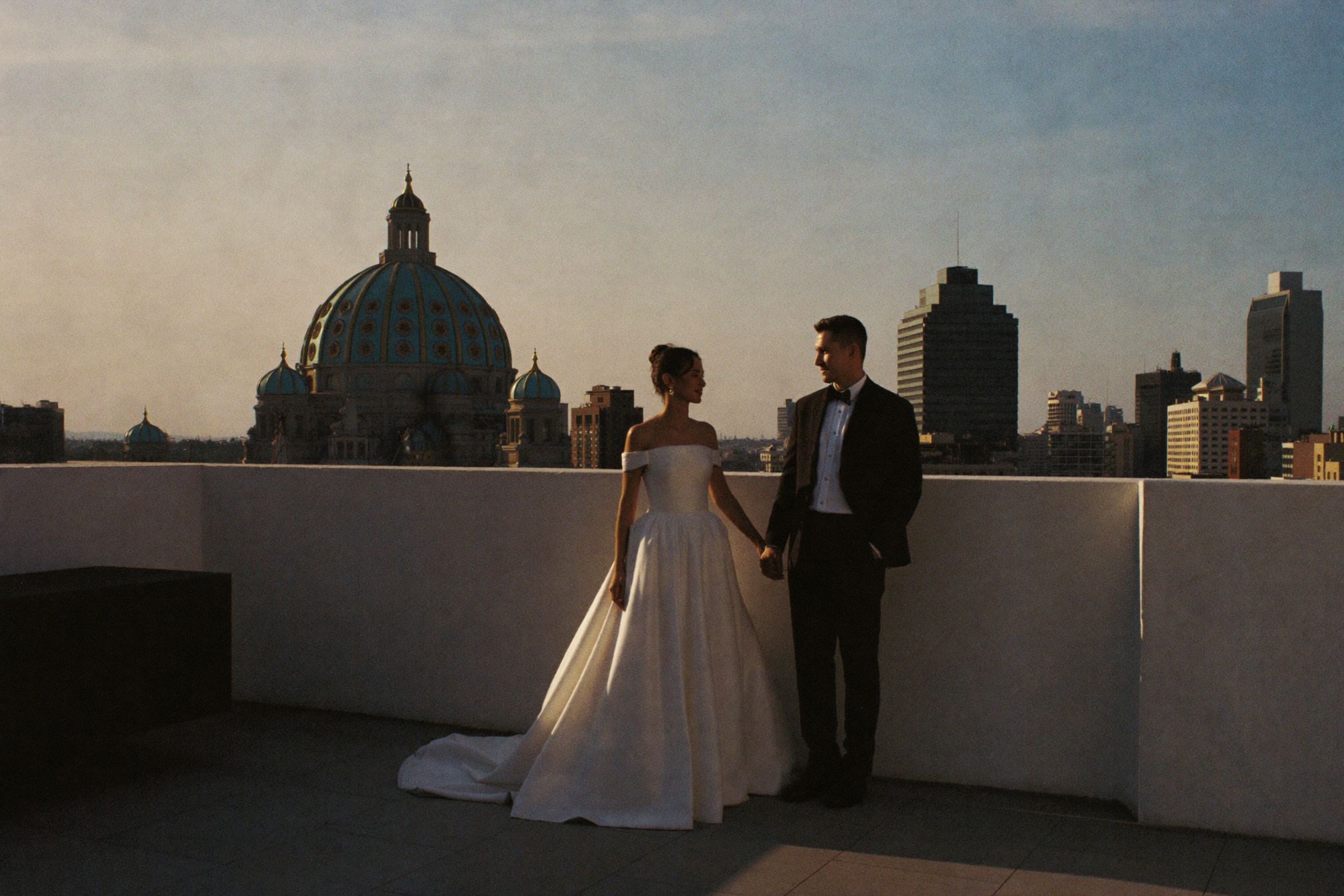
The rooftops are the fallback that is not a fallback. There are bars and terraces across the historic centre looking down at the cathedral and the Zócalo, and at the end of the afternoon they are the best light in the city.
The food is a legitimate reason to choose this
I am going to make an argument that sounds frivolous and is not.
Every other destination on this site sells you a landscape, and the hours between the locations are a gap. In Mexico City the gaps are the point. You can eat better here, at every price level, than in almost any city in the world, from a tacos al pastor stand at midnight to a tasting menu that people fly in for.
A wedding day that runs from a rooftop at dawn to a cantina in the afternoon to one of the great tables in the evening is a genuinely different kind of day from a beach and a chef in a palapa. Some couples want that and no amount of turquoise water substitutes.
Add a lucha libre night if you are that sort of person. It is loud, absurd, entirely sincere, and the best possible way to spend the evening of your wedding if you are not the candlelight kind.
Marry at home, and what it costs
The legal position is the same as everywhere in Mexico. A civil marriage requires a blood test taken in Mexico and the witness count varies by state. Sign at home before you fly, and let the ceremony here be yours. I will build the legal version if you want it and tell you honestly what it costs in days.
Mexico City starts at $8,700 for the Essential, $16,500 for Curated Signature and $23,500 for the Curated Adventuremoon. It is one of the cheaper things I sell, which surprises people who assume a capital city costs more than a beach.
What the Signature buys here specifically is the permit work and the second day. This is the destination where authorisation and scouting are the largest part of the job, because the locations are buildings with owners and rules rather than beaches. One day in a city this size forces you to choose between the centre, Coyoacán and the pyramids, and they are an hour apart in traffic that does not forgive optimism.
Flights and lodging are excluded, always. The full ladder is on the pricing page, and the locations and timeline are on the Mexico City elopement planner. The rest of the country is in the Mexico elopement guide.
Enquiries to the publisher, armanarai.com.