Bariloche or El Chaltén: Two Argentinas
Sixteen hundred kilometres apart, both called Patagonia, and they ask completely different things of you.
Bariloche and El Chaltén are sixteen hundred kilometres apart, and calling both of them Patagonia hides more than it explains. One is an Andean lake district with roads, lodges and four real seasons. The other is a granite village at the end of a gravel road with one usable window a year.
Couples arrive at this choice having seen photographs from both and assuming the difference is scenery. The difference is what the trip asks of you, and it is large.
(Continued on Page 2, Col. 1)
The distance nobody accounts for
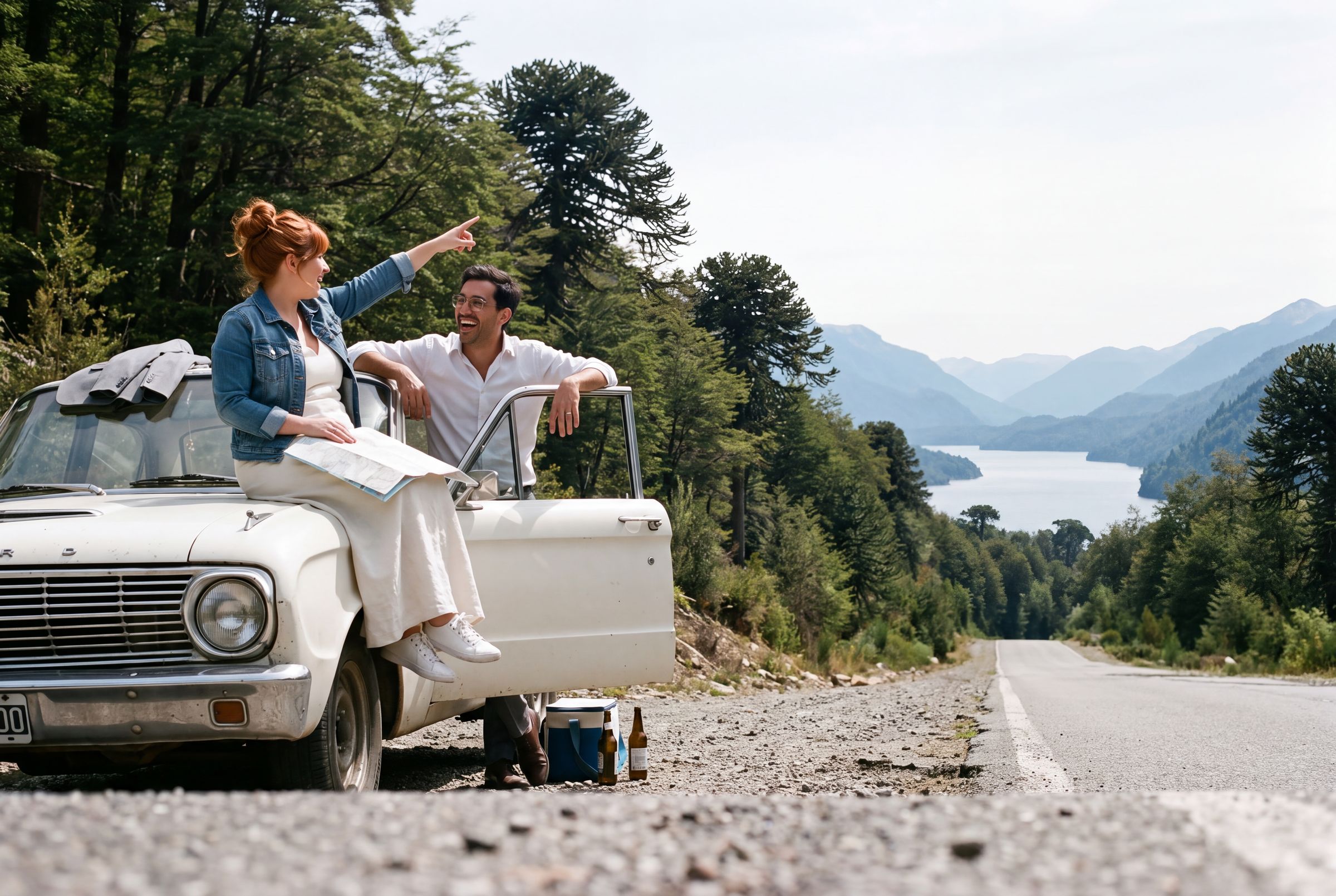
You cannot combine these two in a normal trip and you should stop trying. Bariloche sits in Río Negro province in the northern Lake District. El Chaltén is deep in Santa Cruz, most of the way to the southern icefield.
Flying between them means routing through Buenos Aires in most cases, which eats two days. El Chaltén pairs naturally with El Calafate, three hours away. Bariloche pairs with the Seven Lakes road and the villages north of it. Pick a region, not a country.
What the landscape actually gives you
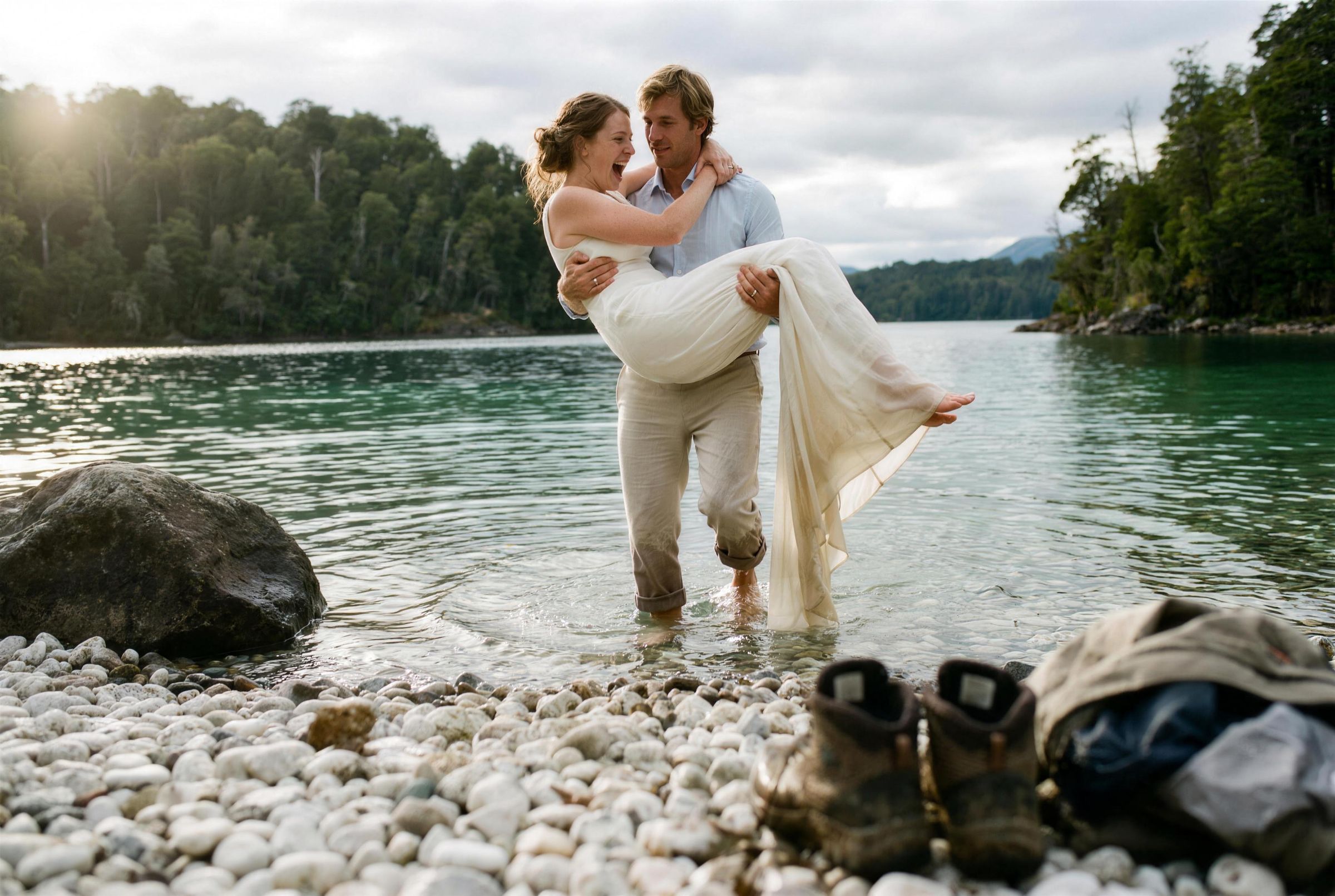
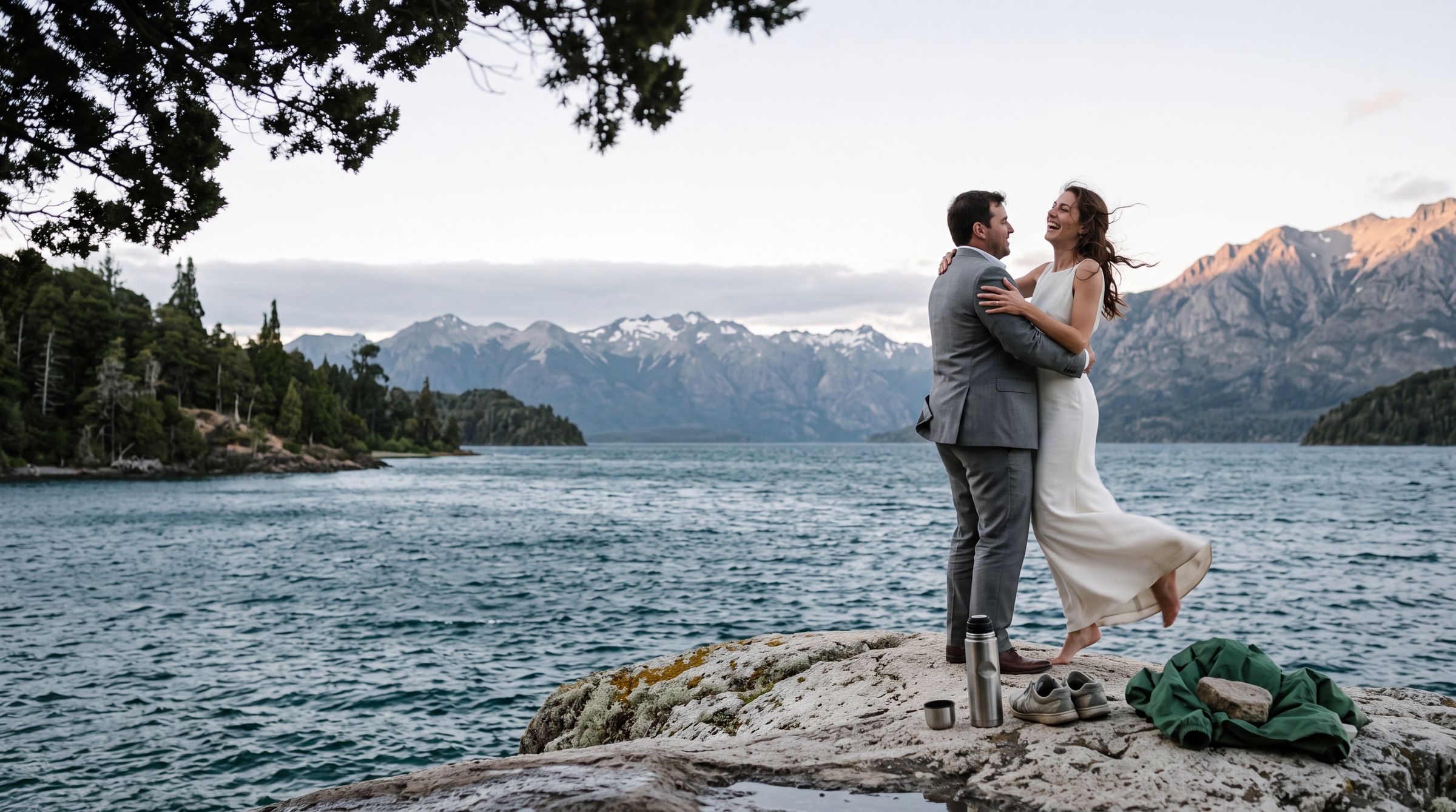
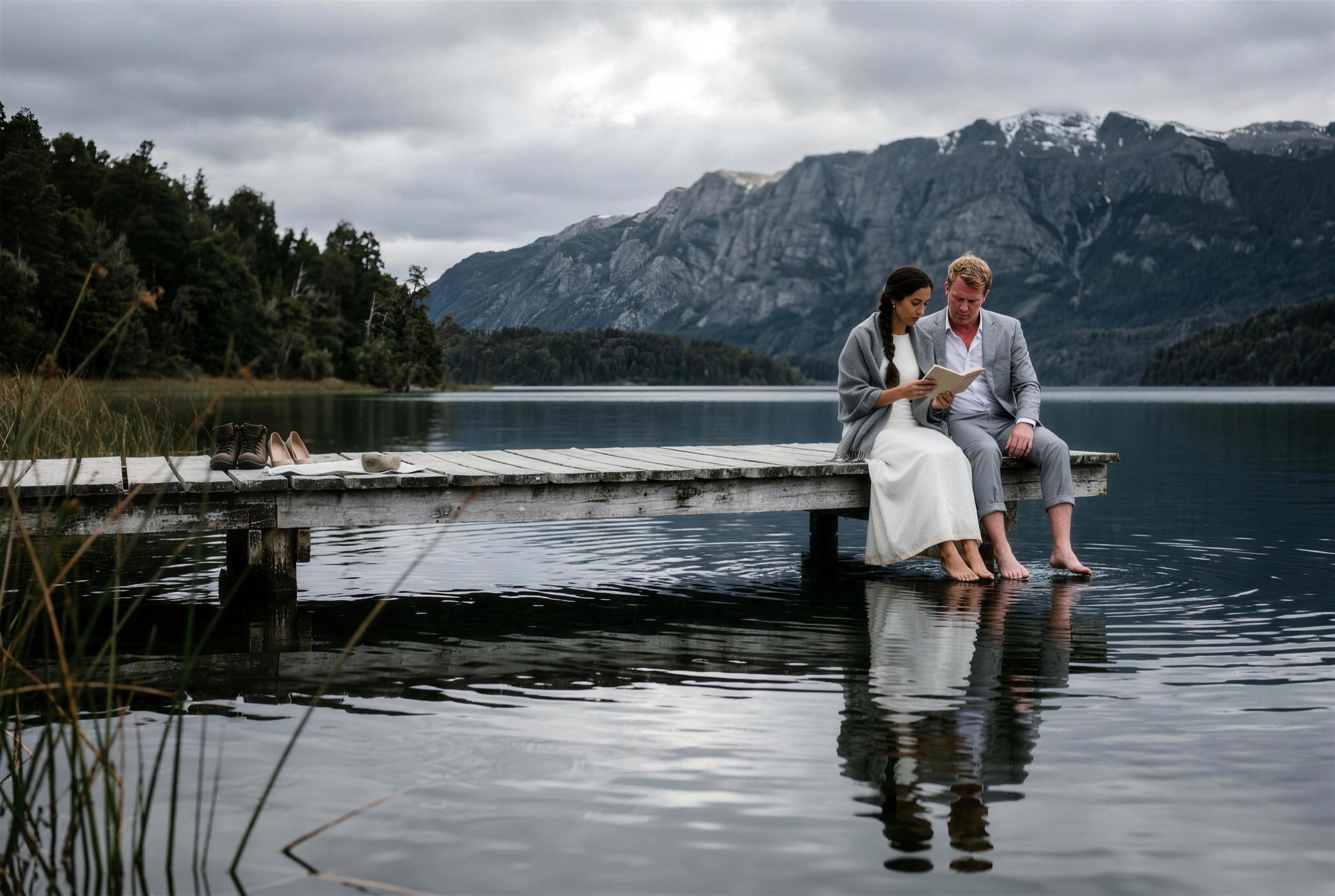
Bariloche is water. Nahuel Huapi and the lakes around it, forested slopes, a chairlift to a summit with the whole basin below, boats, jetties, and ranges that are handsome rather than severe. It reads closer to an alpine lake district than to the icefield.
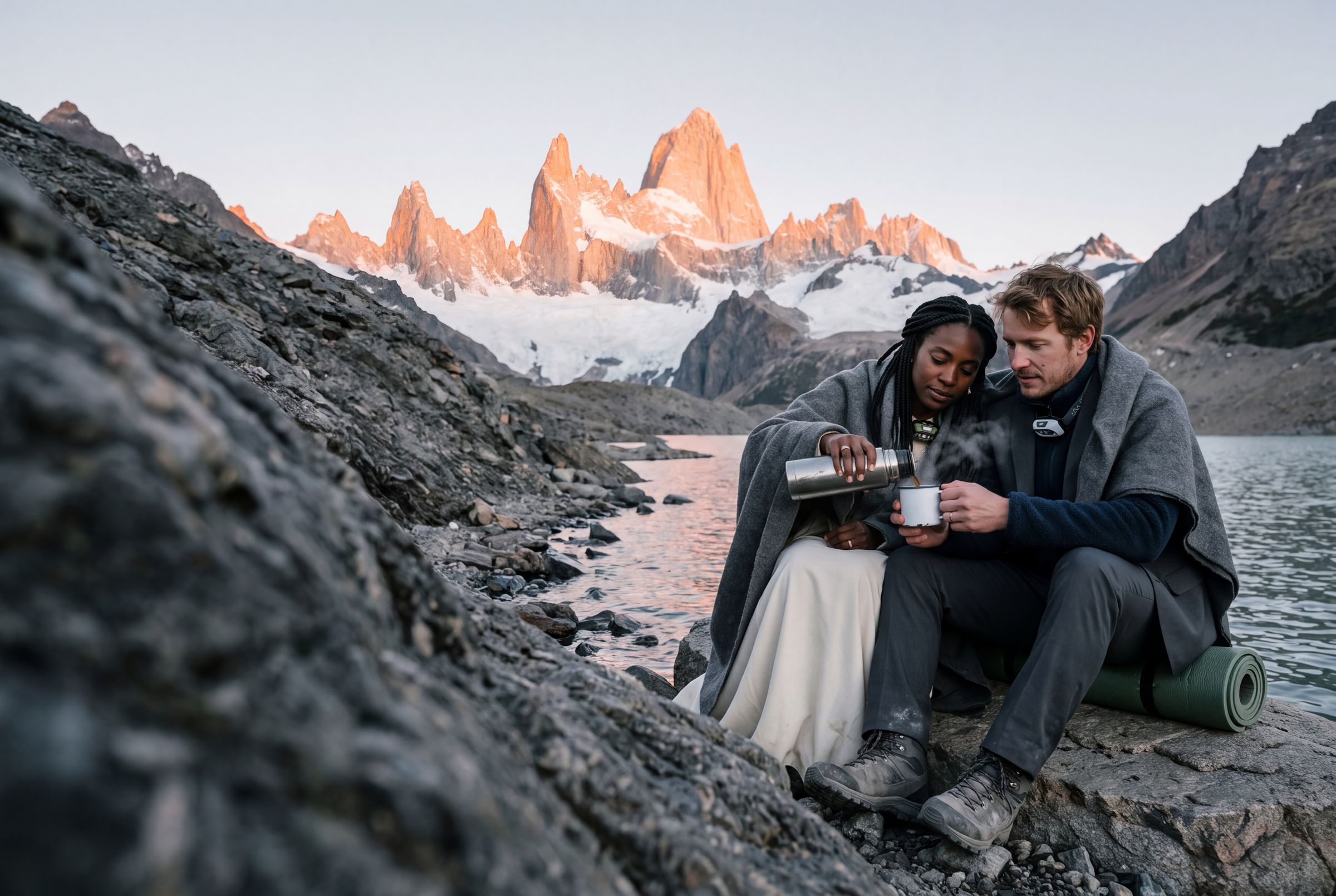
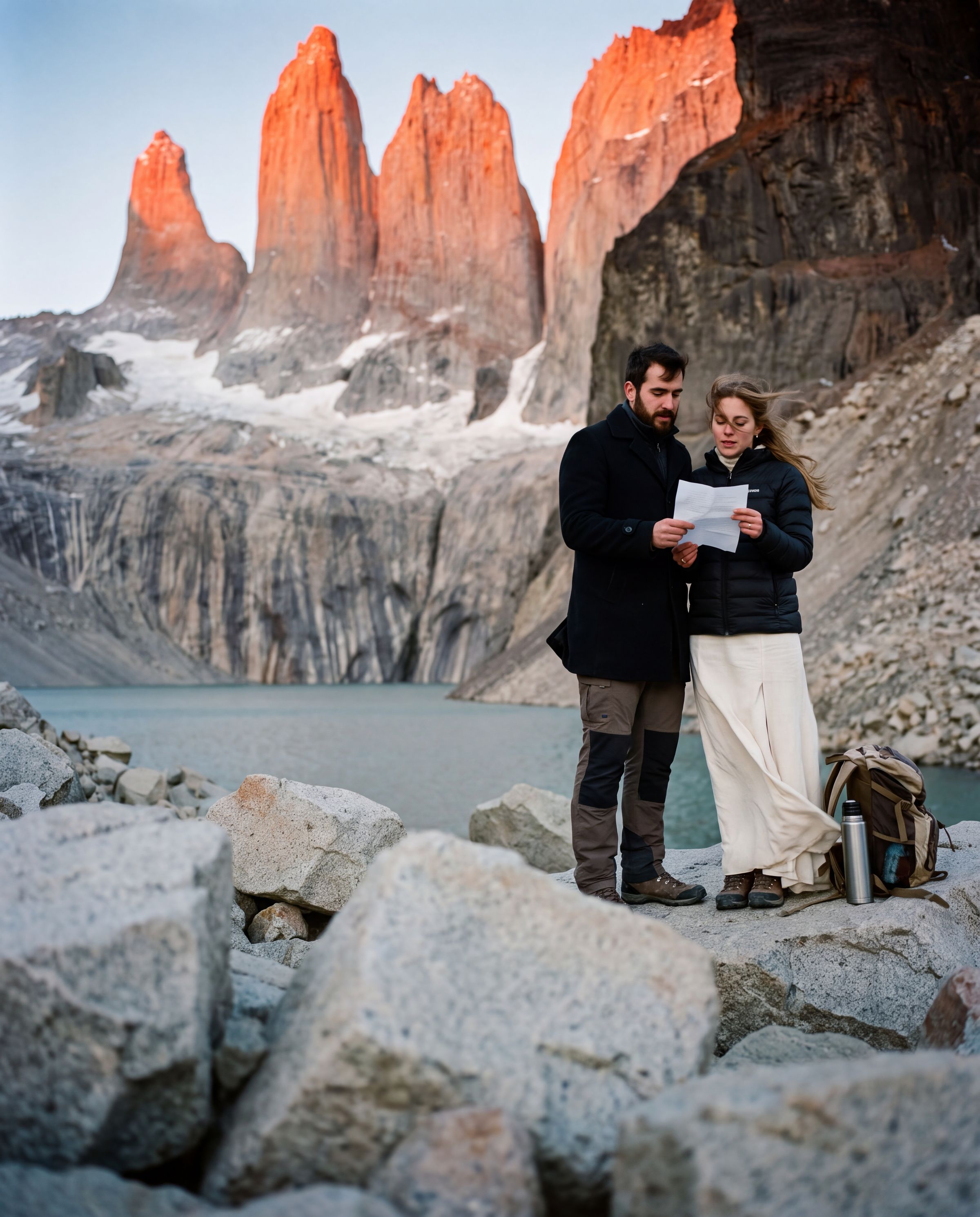
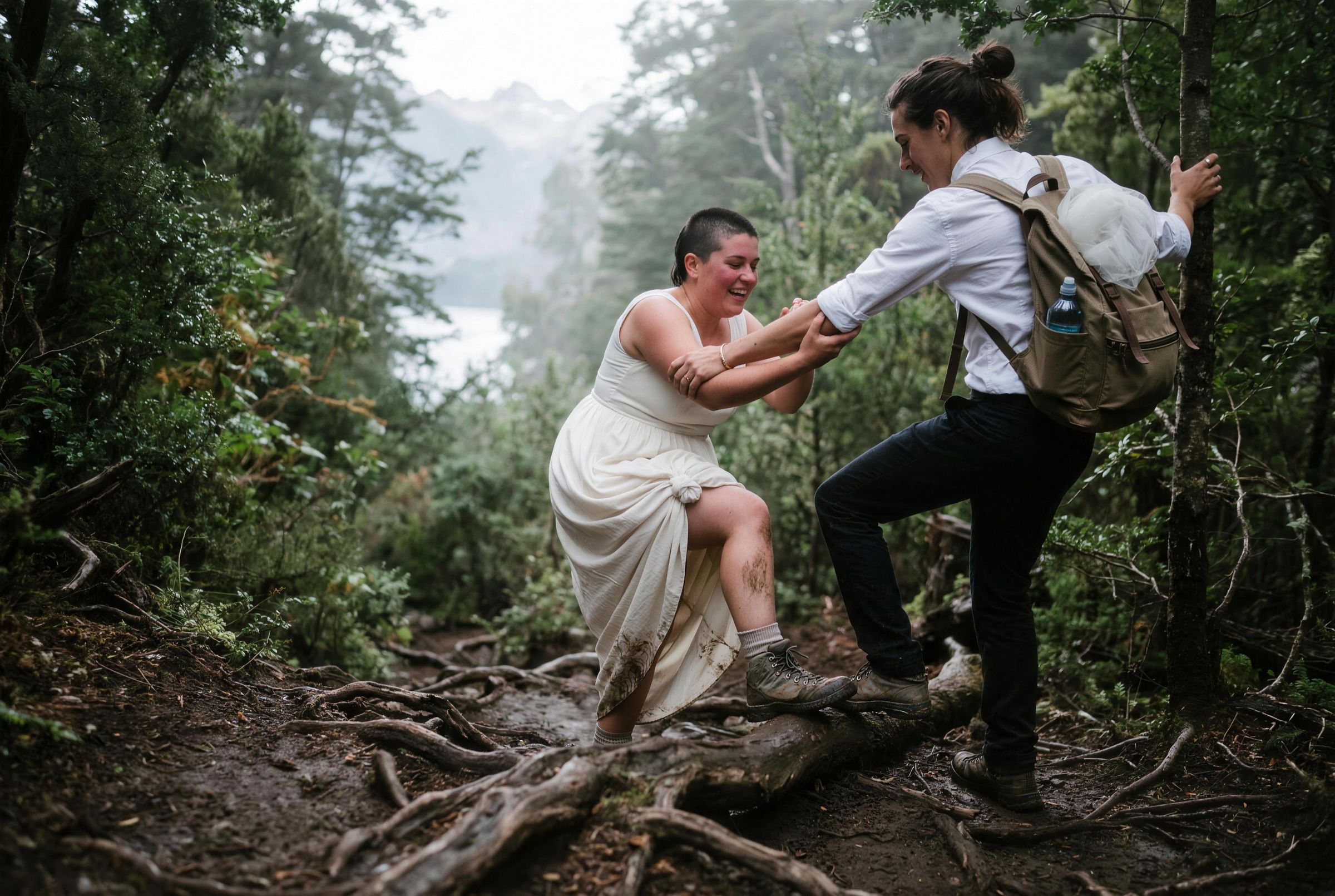
El Chaltén is granite and wind. Two of the most dramatic spires on the planet, a treeless steppe, and weather that arrives sideways. It is severe in a way Bariloche never is, and that severity is exactly what people go for.
Neither is a lesser version of the other. They are different arguments about what a wedding day should feel like.
Effort, and who is coming with you
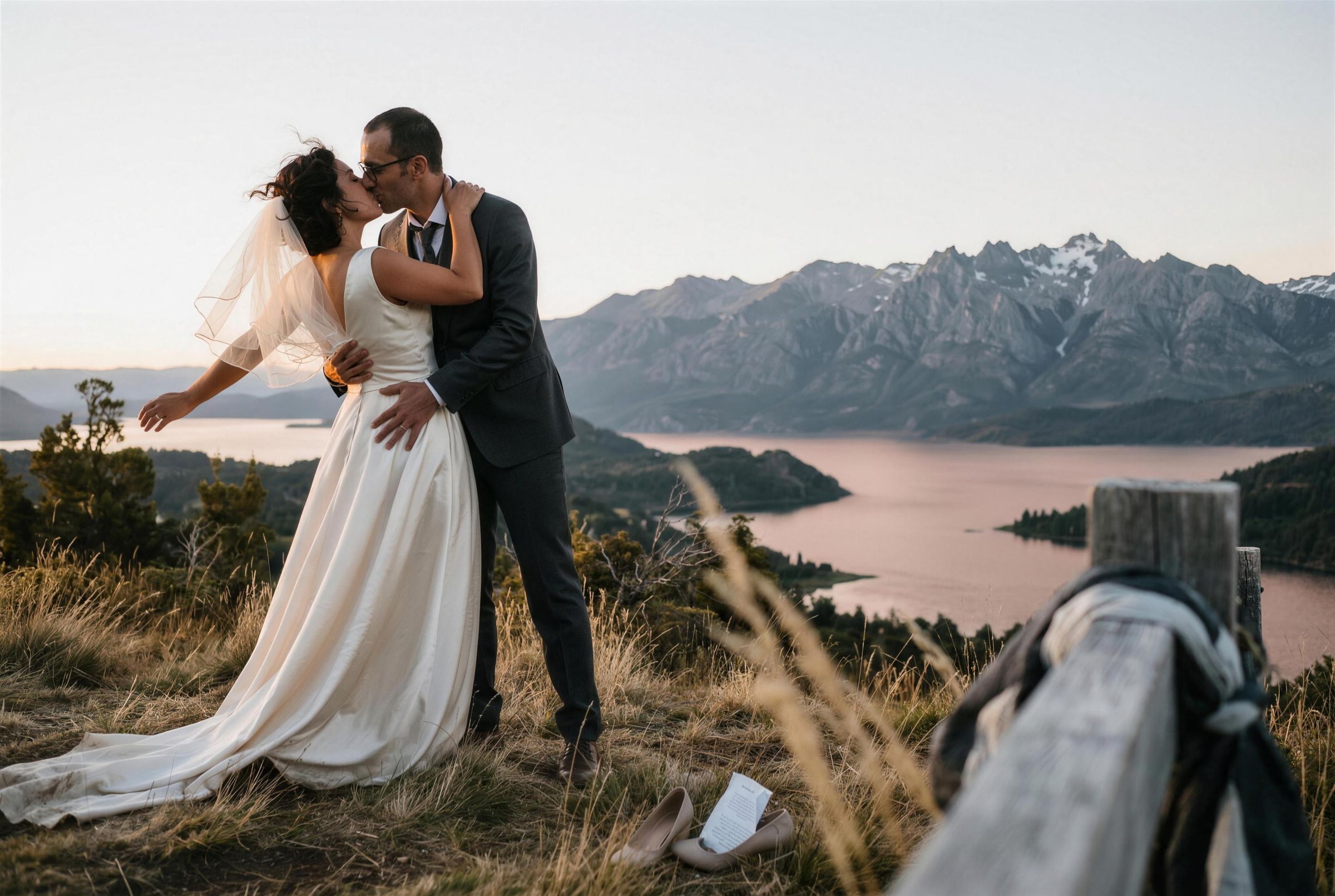
Bariloche's best places are reachable by road, chairlift and boat. The Circuito Chico, the Llao Llao shoreline, the shallows at Lago Moreno, the myrtle boardwalk: all of them are available to a couple who does not want to climb, and to a parent who cannot.
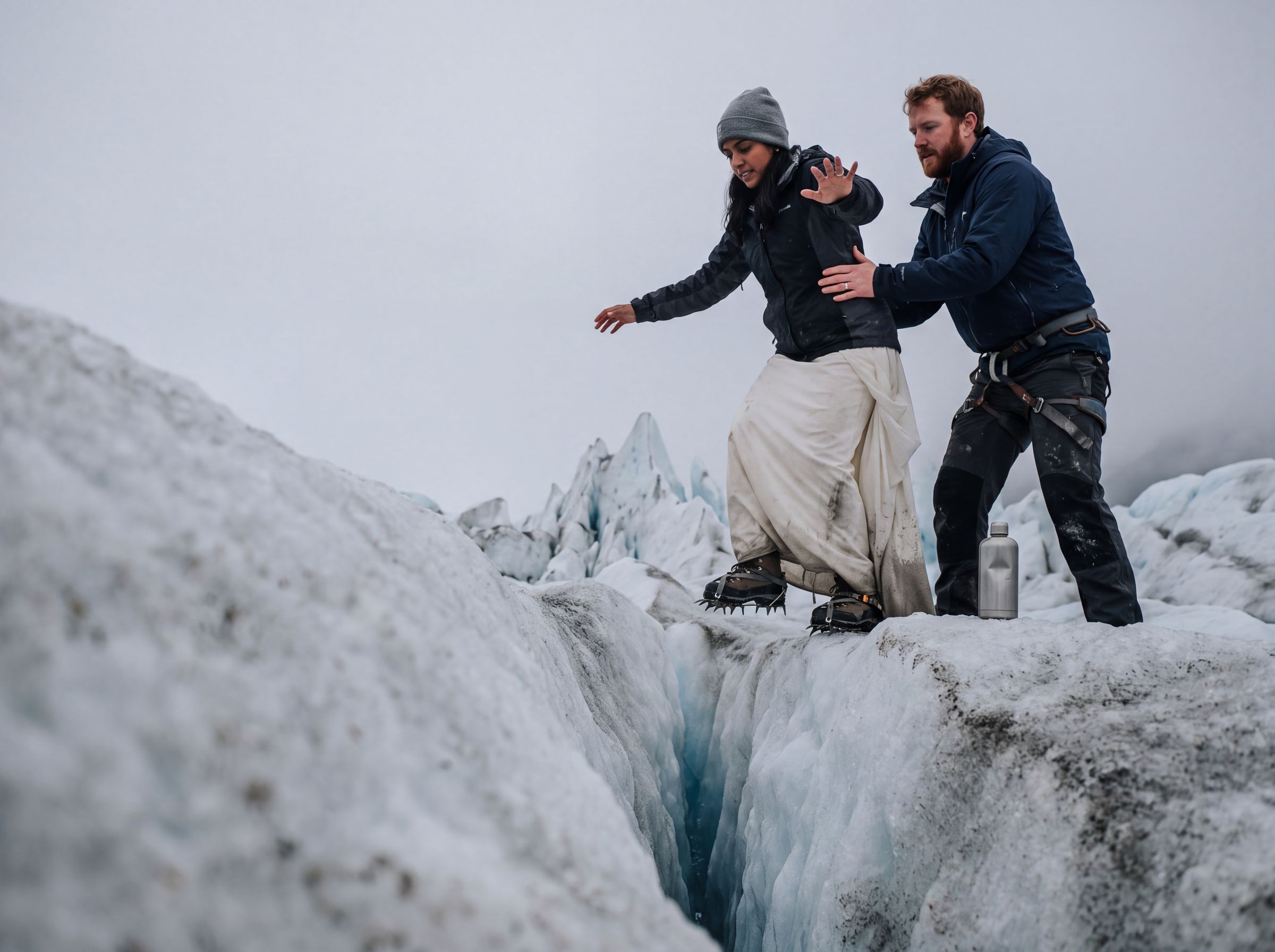
El Chaltén's best places are earned on foot, some of them across several hours with a steep final stretch. There are lower options and I use them constantly, but the trip is built around walking and pretending otherwise is dishonest.
If anyone travelling with you has limited mobility, this paragraph decides your destination.
Bariloche has four seasons. El Chaltén has a window.
This is the most underrated difference between them. El Chaltén works from November through March, with March into April as the quiet shoulder I prefer. Between June and September the high routes shut and the daylight collapses to eight hours, so I do not build elopements there.
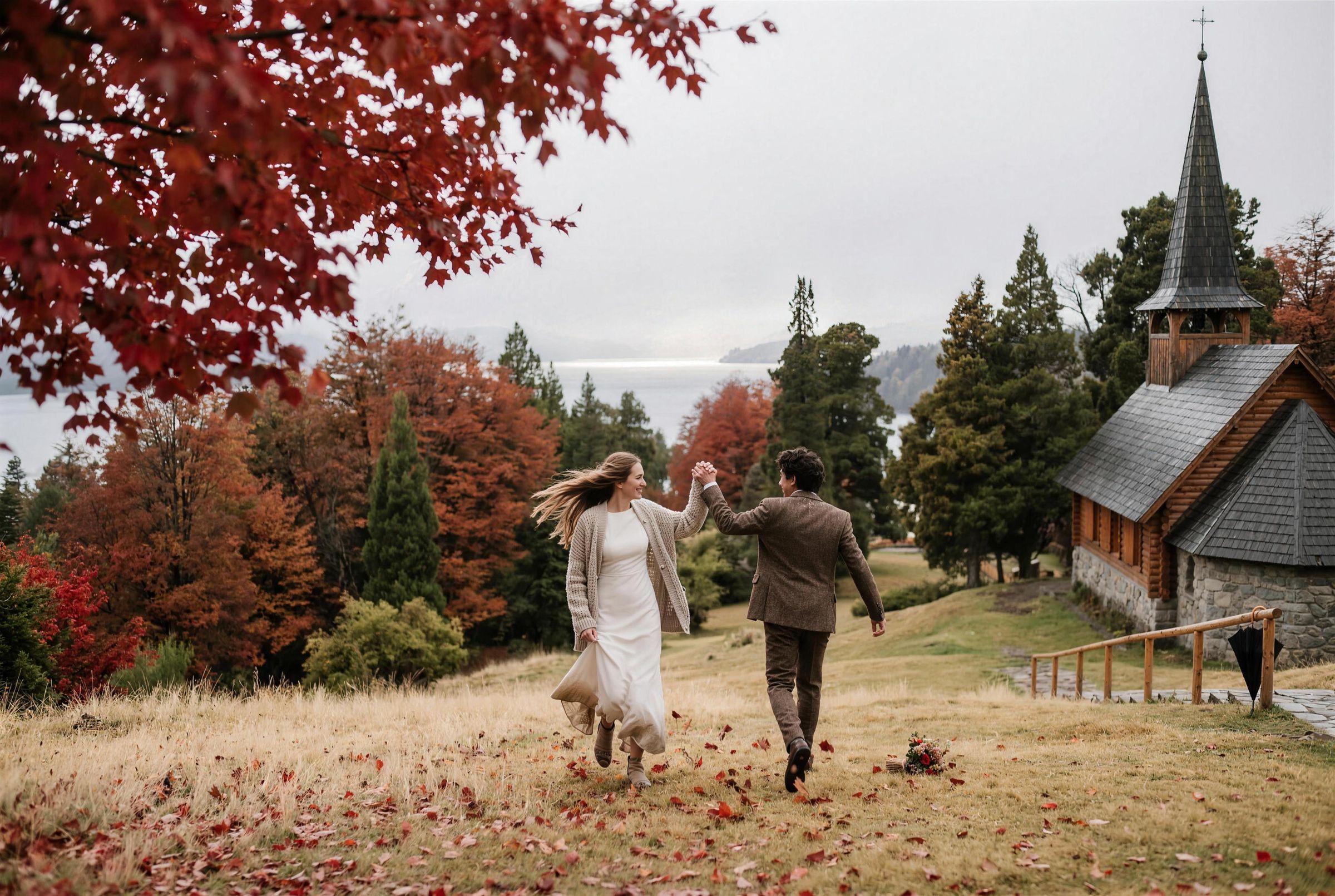
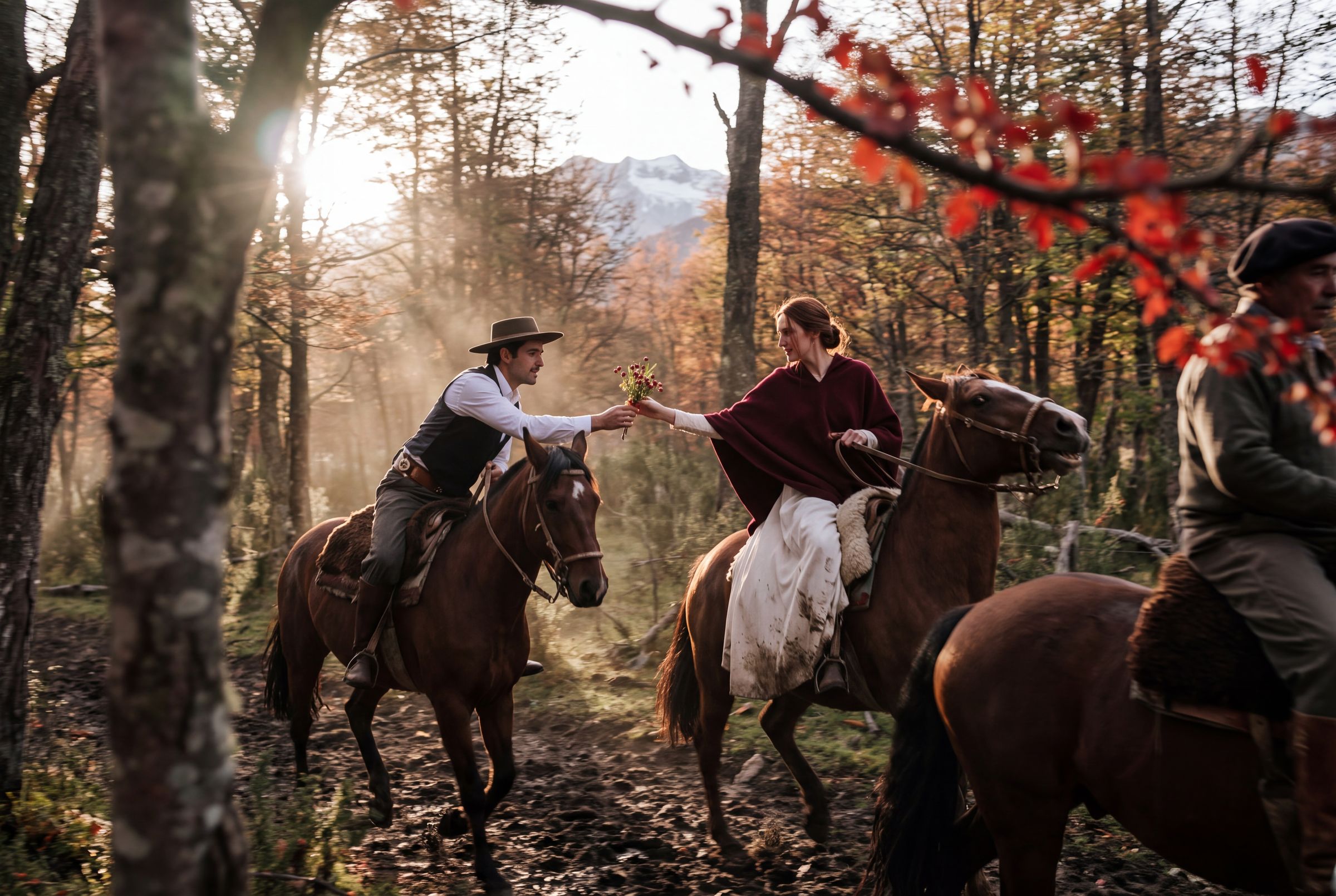
Bariloche works all year. Summer for the lakes and the long evenings. April for the forests going scarlet on the hillsides. July for genuine snow on the spires at Cerro Catedral, with a ski town awake around it. Spring for meltwater and flowers.
If your date is fixed and it falls outside the southern window, that is not a compromise, it is simply the right region. A July wedding in the Lake District is a real and beautiful thing. A July wedding in El Chaltén is not something I will sell you.
Getting there
Bariloche is one flight from Buenos Aires into an airport twenty minutes from town. You can be at the lake the same day you land in the country.
El Chaltén is two flights and a three hour drive, roughly a day and a half door to door from most of North America, and it needs a buffer day for weather and for the flights.
That gap is two full days of a trip, and for a couple with limited leave it frequently settles the question on its own.
What is waiting when you arrive
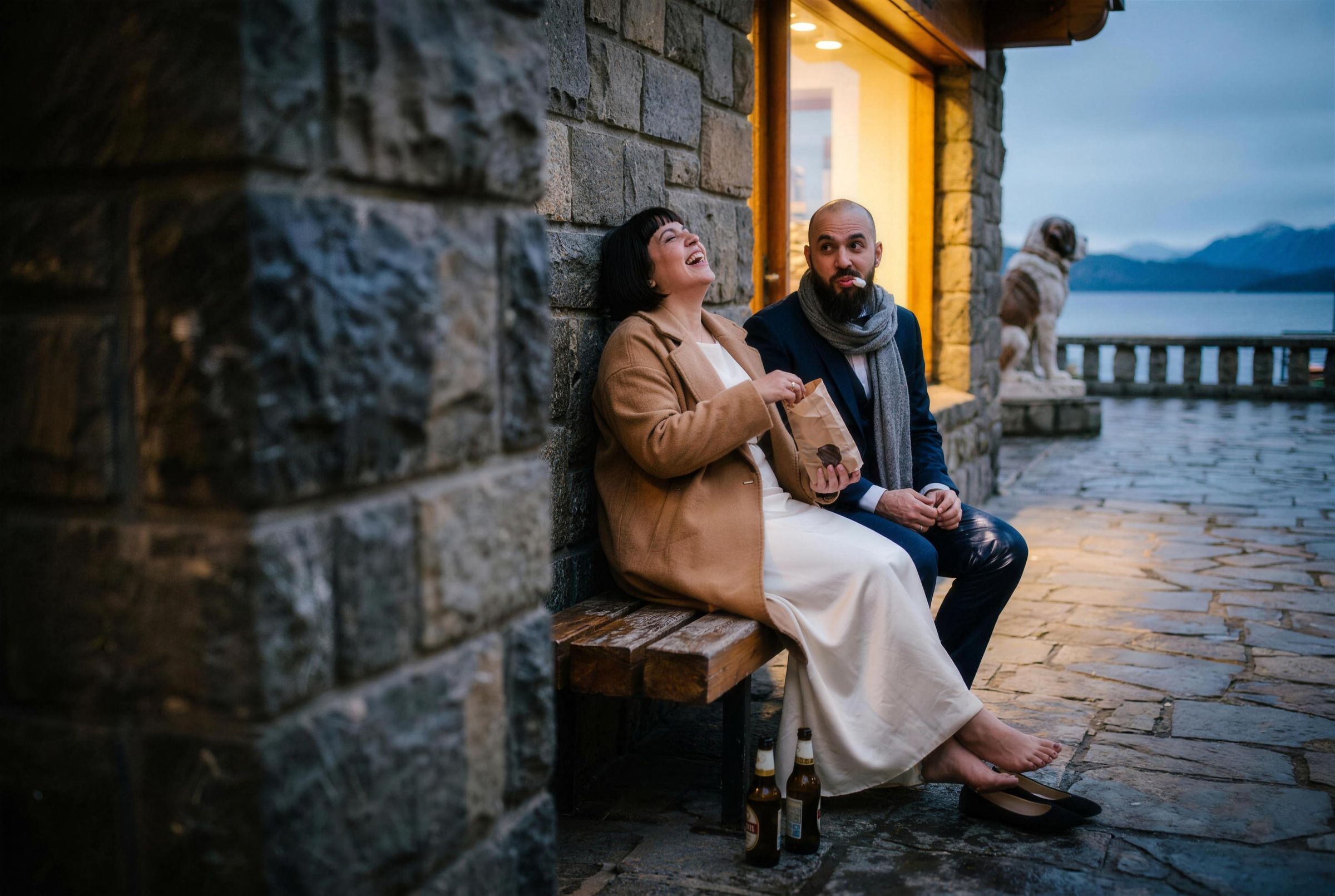
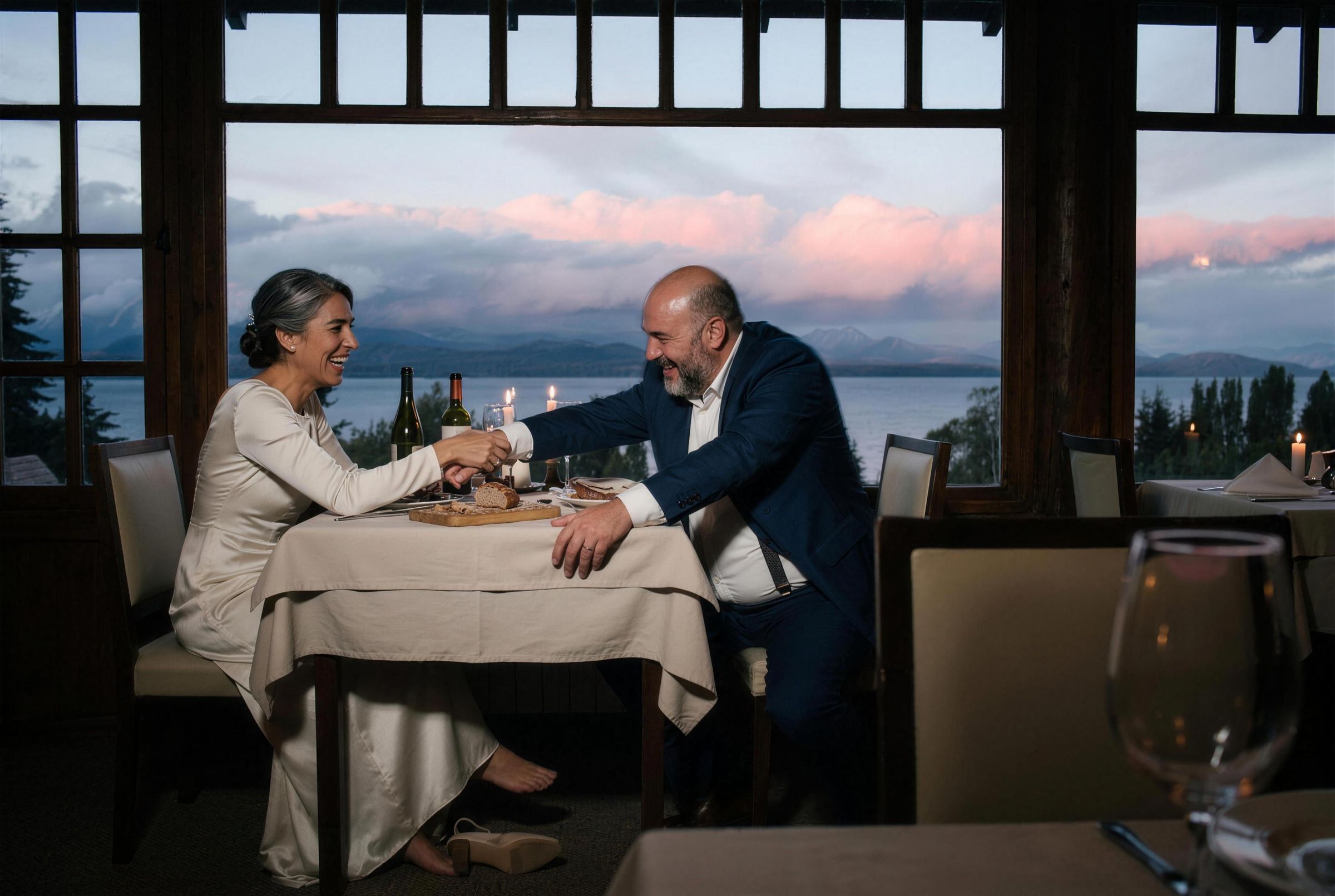
Bariloche is a town of a hundred thousand or so with hotels at every level, restaurants, and a genuine culinary reputation, built by Central European settlement and visible in everything from the architecture to the chocolate shops along the main street.
El Chaltén is two thousand people, a handful of good small places, and rooms that sell out. That scarcity is charming right up until it is the reason you cannot get the dates you wanted.
In both, I name the hotel and the arrival day and you book it yourself. I do not book rooms or flights for anyone, which needs a licence I do not hold, and I would rather say that in writing than have it discovered later.
What Bariloche does in bad weather
This is the argument for the Lake District that nobody makes, and it is the strongest one. When the weather turns in El Chaltén, the thing you came for disappears. When it turns in Bariloche, the thing you came for improves.
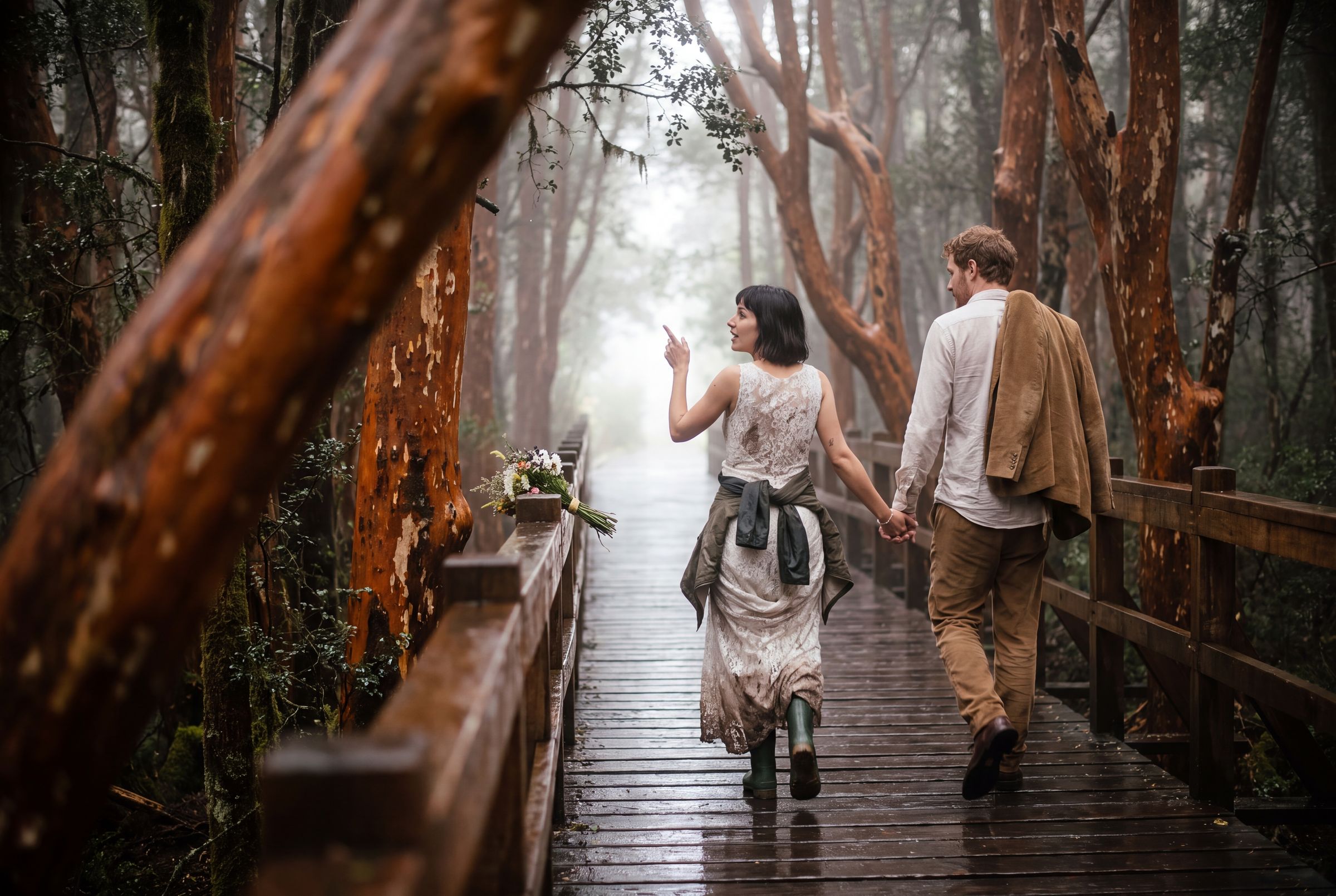
The forests hold water and colour. The myrtle boardwalk is at its best after rain, when the bark goes deep cinnamon and the boards darken. Mist sits on the lake surface and the far ranges soften into layers. A wet morning here is not a rescue plan, it is a different and frequently better day.
That changes what I have to build. In Chaltén I hold several ceremony windows across several days because the mountain may never show. In Bariloche I hold one, with a sheltered alternative twenty minutes away, because the weather changes the character of the day rather than cancelling it.
Mornings on the water
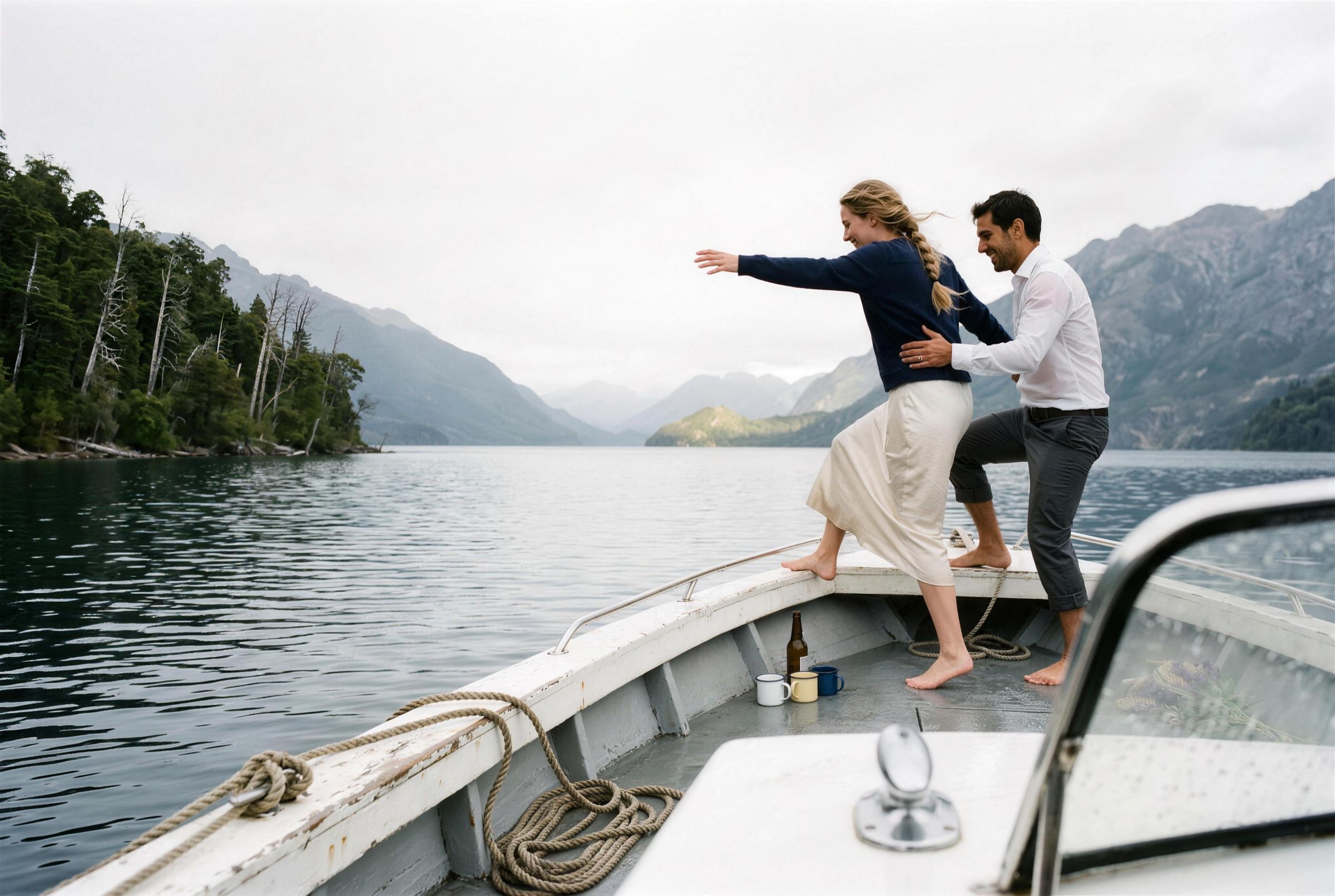
Nahuel Huapi is flat at dawn and rarely flat by mid afternoon, which is the one piece of Bariloche timing that genuinely matters. The wind builds across the day here as it does everywhere in Patagonia, just with far less violence than the far south.
So if you want the mirror, the boat, the jetty and the reflection of the far range in the water, that is a morning. It is a comfortable morning rather than an alpine one: you are on the shoreline in twenty minutes from town, not on a moraine after three hours of climbing.
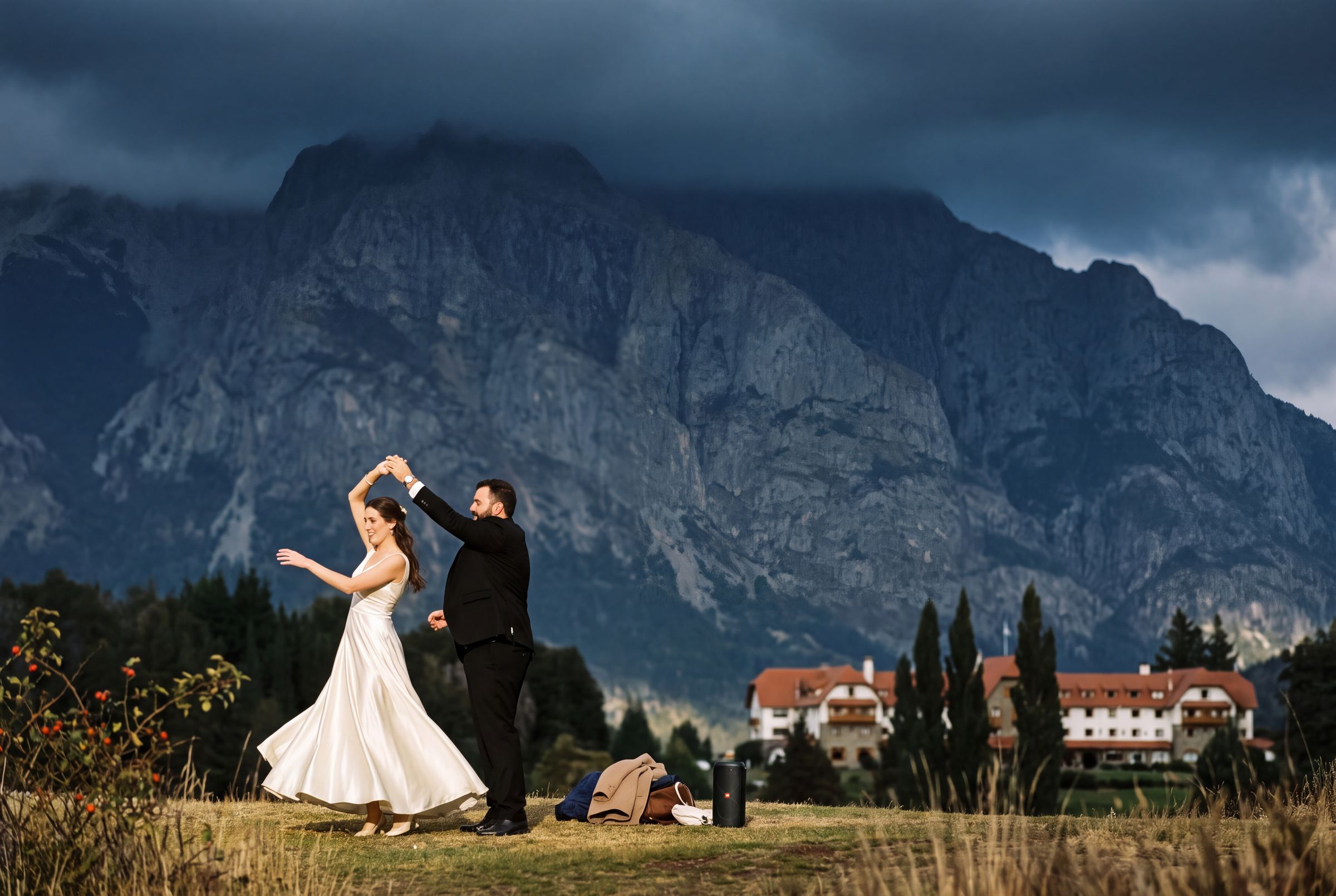
The afternoons belong to the summits and the road. The chairlift at Cerro Campanario puts the entire basin under you in fifteen minutes of ascent, and the Circuito Chico is a loop of shoreline and viewpoint you can drive slowly with the day still ahead of you. It is the same country as the south and an entirely gentler proposition.
The legal position is the same in both
Neither will give visiting foreigners a legally binding marriage. Argentina requires residency documentation and a civil registry appointment that is effectively closed to visitors, in Río Negro as in Santa Cruz.
Both get the same structure from me: a symbolic ceremony with a bilingual officiant, written with you rather than read off a template, and the legal filing at home before or after. If a binding ceremony on the day itself is essential, I would point you to Banff or Vancouver, where a visitor can hold a licence.
What each costs
Bariloche runs $9,900 for Essential, $20,500 for Curated Signature and $26,700 for Curated Adventuremoon. El Chaltén runs $10,200, $21,500 and $28,500. USD, photography and film in every tier, an album with each.
The gap between them is small and it should not decide anything. What differs materially is the trip around the day: two fewer flights, two fewer days of leave, and a far wider choice of rooms in Bariloche. Those are the real costs, and they do not appear on my ladder at all.
The full ladder, including what each tier contains, is on the pricing page.
Who should choose which
Choose Bariloche if your date falls outside November to March, if anyone with you has limited mobility, if you want a real town with real dinners at the end of the day, if your leave is short, or if the idea of a wedding built around water and forest appeals more than one built around rock.
Choose El Chaltén if you want to walk, if you have five days or more, if you want the most dramatic granite in the southern hemisphere, and if an uncertain shot at something extraordinary is worth more to you than a certain shot at something lovely.
If it is the ice rather than either, El Calafate is the comparison to read next.
The question that settles it
Ask what you want to be doing at four in the afternoon on your wedding day. Standing on a moraine in wind having walked for hours, or on a jetty with the lake flat and a boat waiting.
Both are Argentina, both are Patagonia by name, and only one of them is yours. Tell me which and I will build the whole thing around it, from the hour of the ceremony to what is on the table at the end of the night.
The Bariloche page and the El Chaltén page each lay out the day in full. When you know, start the conversation.