Eloping Under Fitz Roy in El Chaltén
The mountain is hidden on most days of the year. Everything I build in El Chaltén follows from that one fact.
Fitz Roy makes its own weather and spends most of the year inside it. That is the single fact an El Chaltén elopement has to be built around, and almost nothing you read about this place says it plainly.
So I do not sell you an hour under the mountain. I build a run of days with several ceremony windows in them, each paired with somewhere sheltered that photographs beautifully when the granite refuses to appear. Some of the strongest frames I have made in Patagonia came out of a morning that looked, at nine o'clock, like a write off.
This is what that actually involves, in the order it matters.
(Continued on Page 2, Col. 1)
The mountain decides, and you plan for the mountain
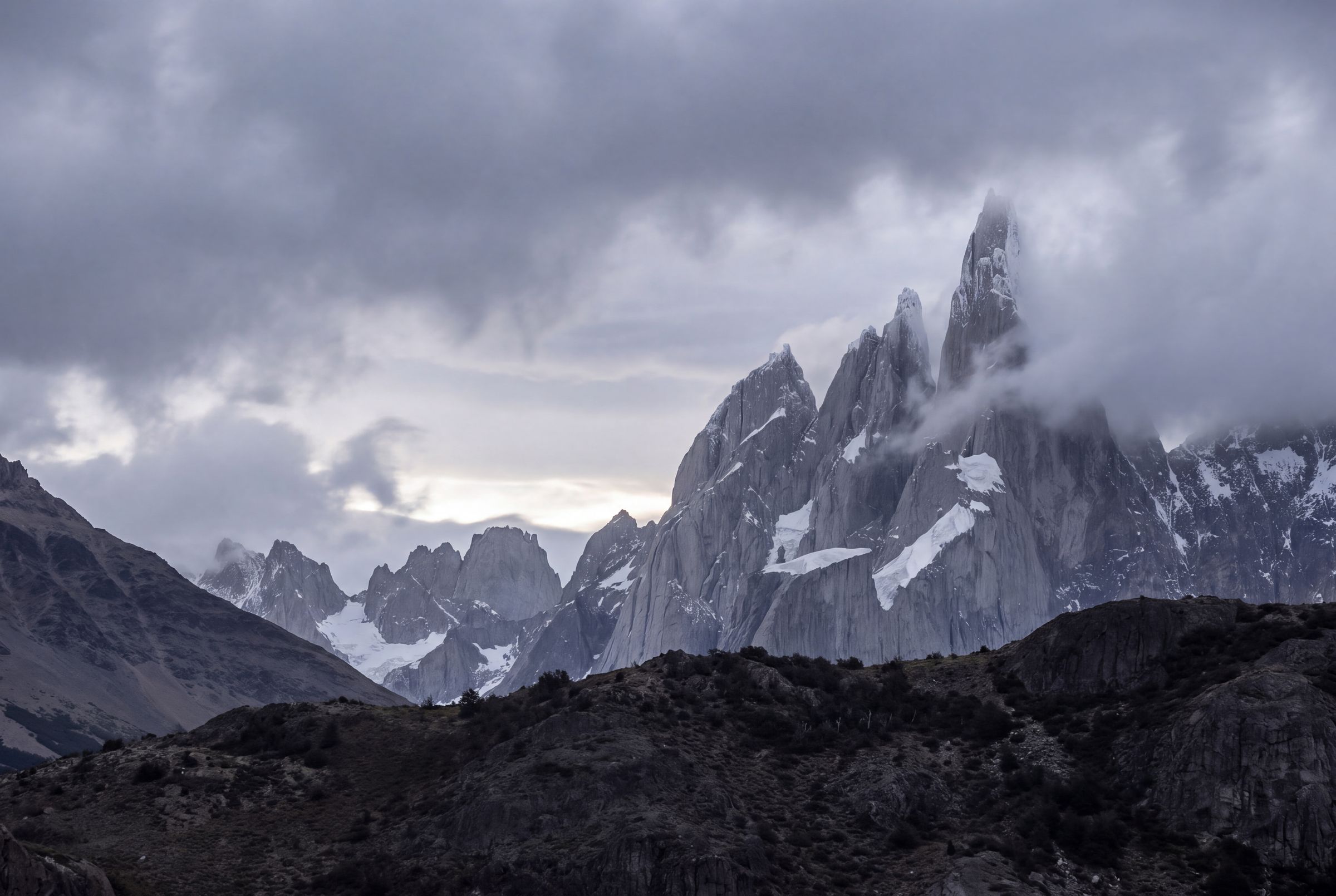
The Fitz Roy massif stands where the Patagonian icefield meets the steppe, and that boundary generates cloud almost continuously. Locals will tell you the mountain is fully clear on a minority of days in any given month, and after enough time down there I believe them.
A single fixed ceremony hour on a single day is therefore a coin toss with your wedding on it. What I do instead is hold three or four windows across a run of days, watch the forecast and the actual sky, and call it the evening before or the morning of. That flexibility is the product. It is also why my shortest tier here runs three days rather than two.
The corollary matters as much: a cloudy day is not a cancelled day. The valley floor, the forest and the lake shores are at their best under broken sky, and moving weather is the reason this landscape photographs the way it does.
Sunrise happens before five in the morning
In December and January the day runs to sixteen or seventeen hours and the sun reaches the massif before five. That is not a detail, it is a scheduling problem with a beautiful answer.
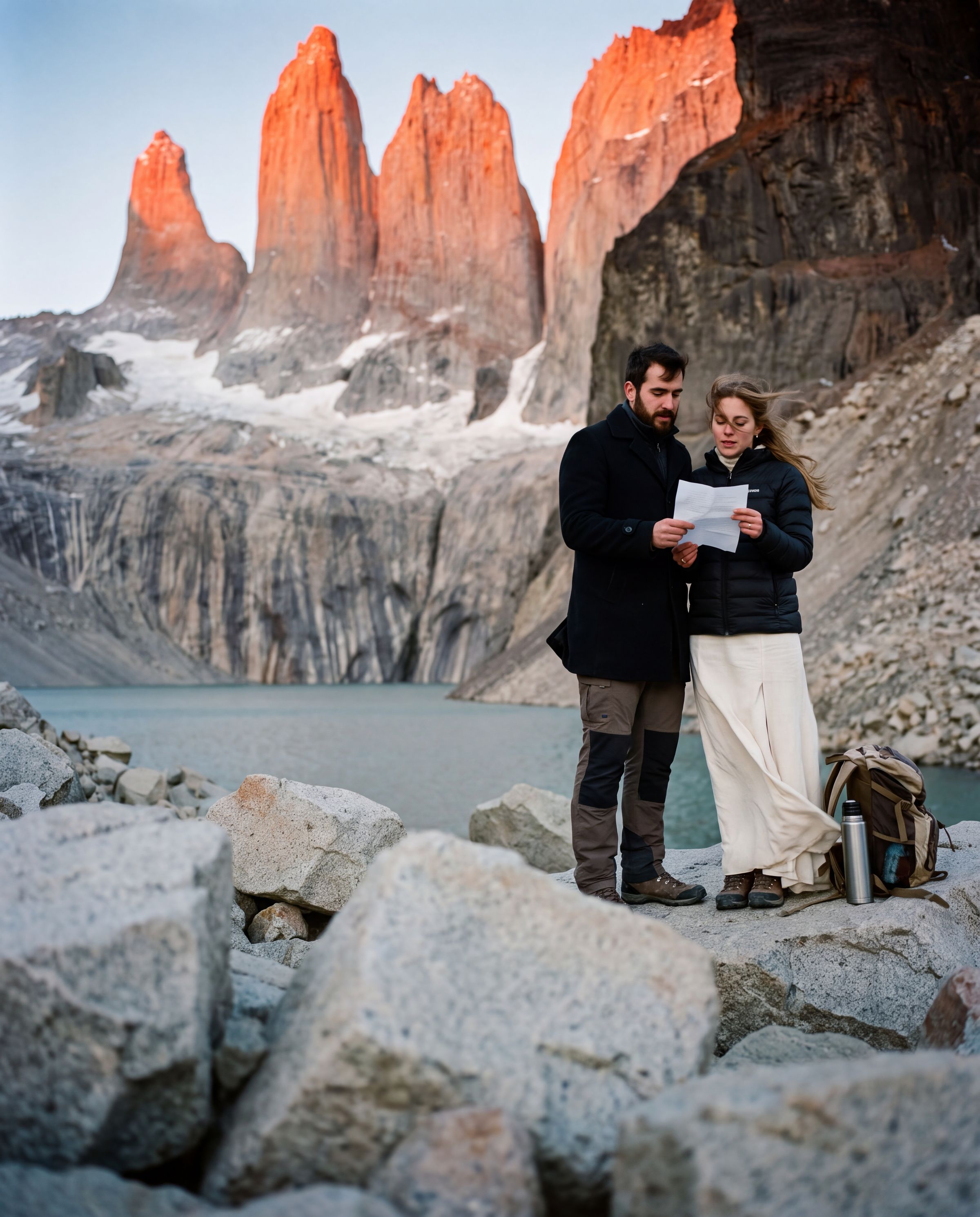
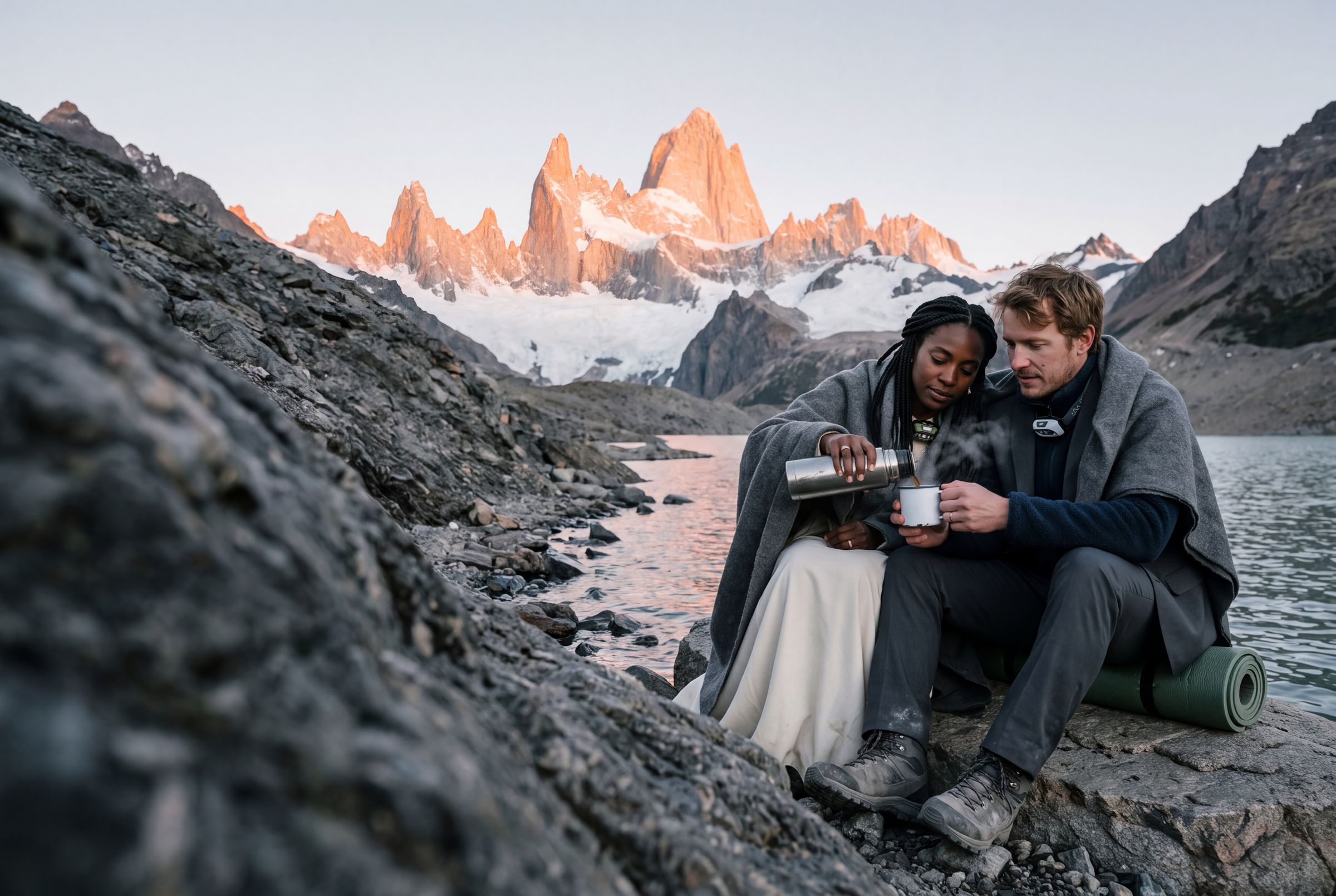
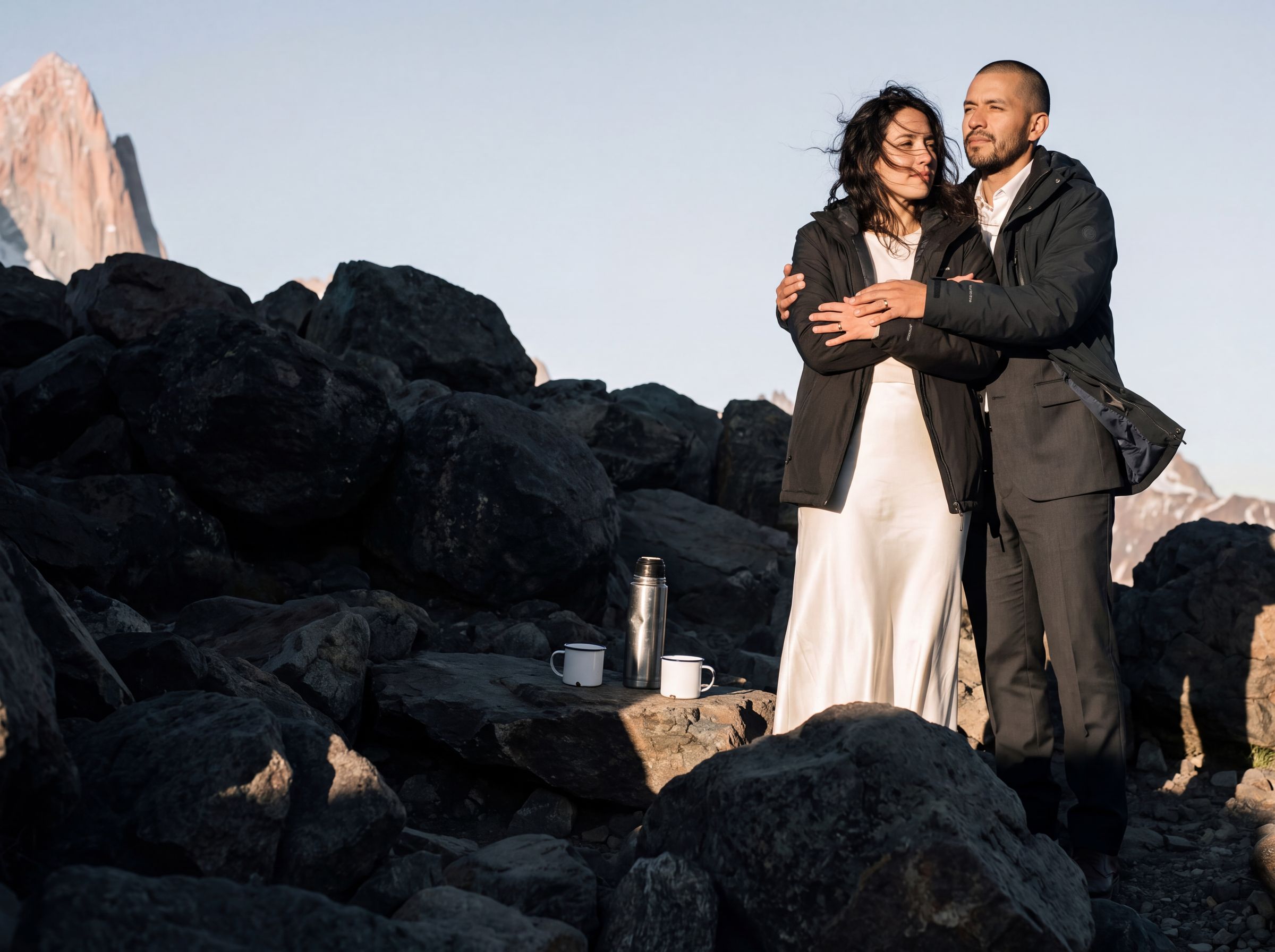
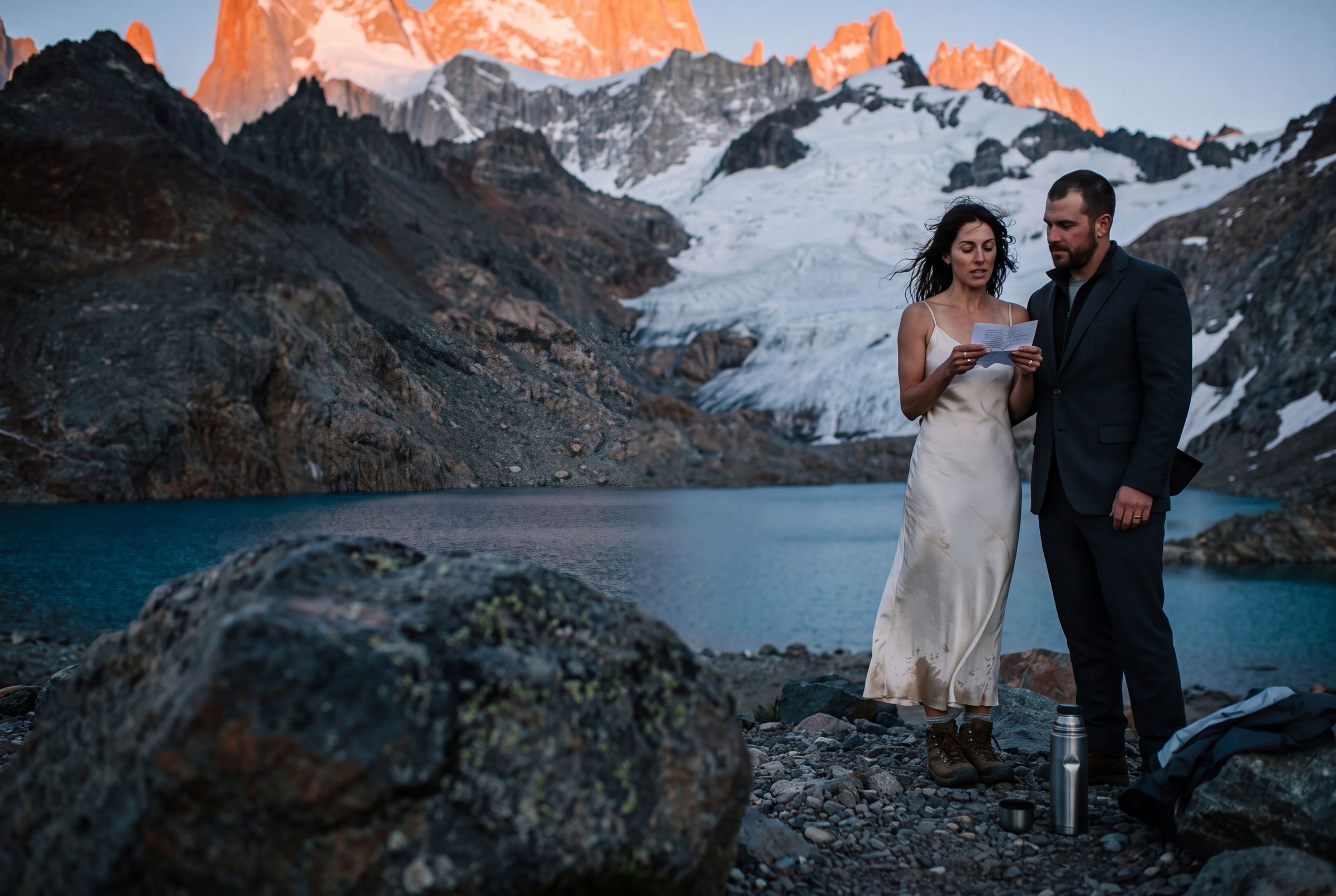
The alpenglow on Fitz Roy lasts a few minutes. To be standing on the moraine when it happens you leave town in the dark, walk in with headlamps, and stand in the cold waiting for something that may not arrive. Couples who agree to that get the frames nobody else has. Couples who would rather not are better served by an evening ceremony, and I will say which one I think you are after the first conversation.
The reverse is also true and rarely mentioned. Long days mean a genuinely late dinner. The sun is still up at nine in high summer, so the meal at the end of the day happens in light, and the town is still awake at eleven.
Which routes a wedding party can actually walk
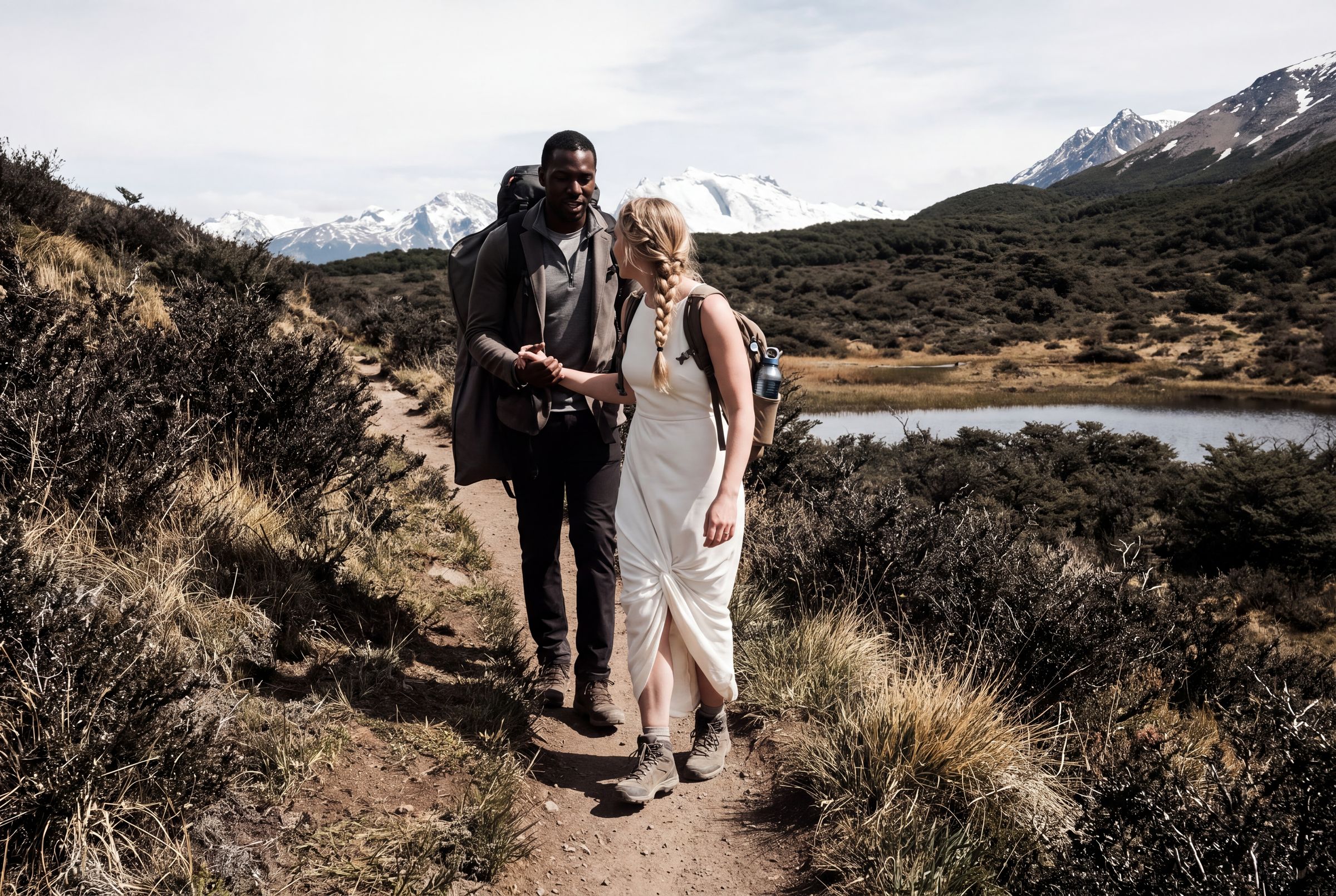
The trailheads begin at the edge of the village, which is the practical reason El Chaltén works for an elopement at all. You are not driving to a mountain. You walk out of your door and you are on it.
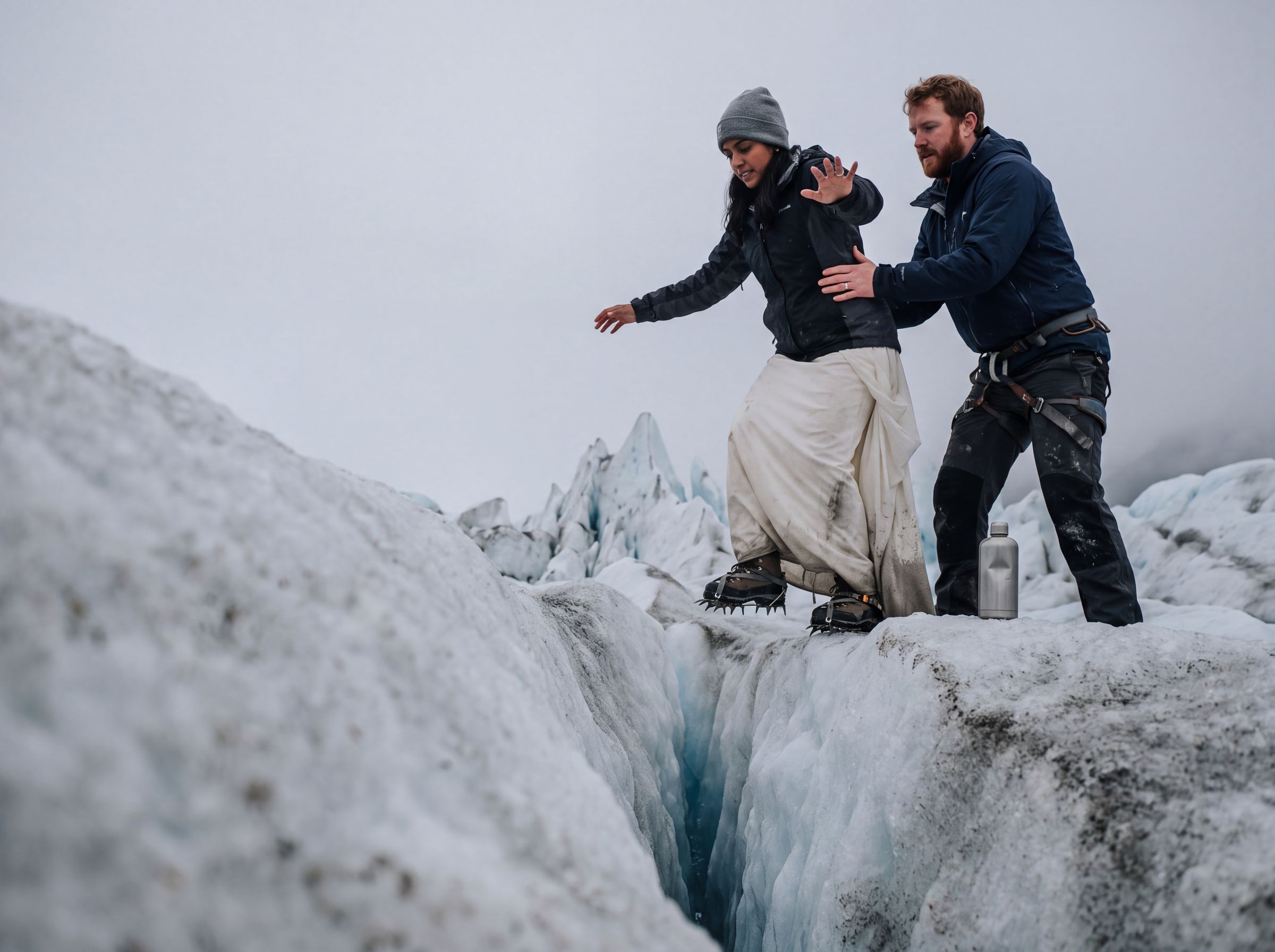
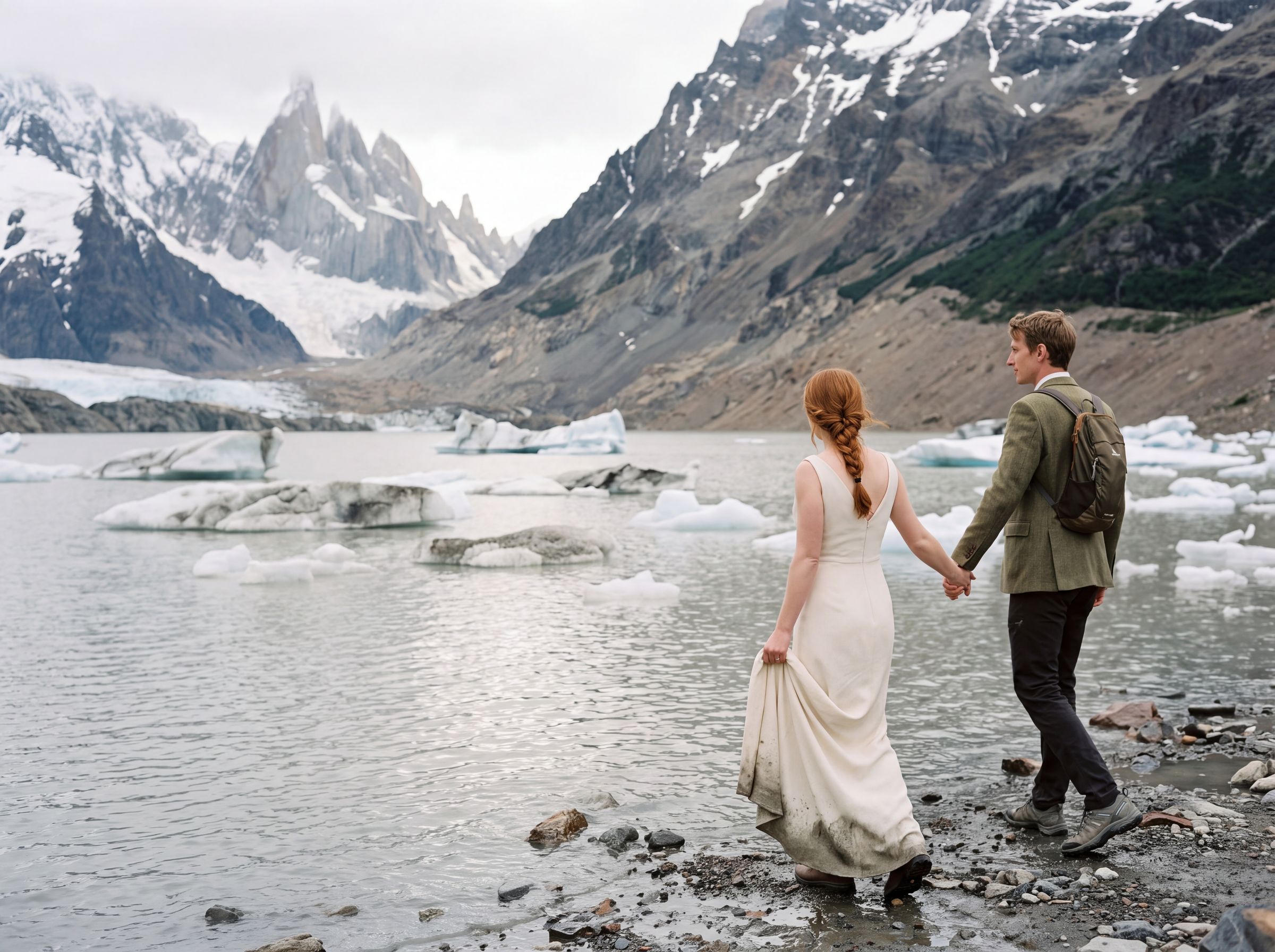
What differs enormously is effort. Chorrillo del Salto is close, flat and forested, and it is where I take couples who want the place without the climb. Laguna Capri is a moderate walk with the massif across the water. Laguna de los Tres, the classic viewpoint directly beneath Fitz Roy, is a long day with a steep final hour on loose ground, and it is a genuine undertaking in a dress and formal shoes.
I have taken couples up all of them. I have also talked couples out of the last one, which is the more useful thing I do. The photograph you have in your head is usually available two hours lower down and you will enjoy the day considerably more.
Lago del Desierto, and the road that ends at a border
Thirty seven kilometres north of town the gravel runs out at Lago del Desierto, a long finger of water in dense forest that sits right against the Chilean border. It is the alternative I reach for most when the massif is buried.
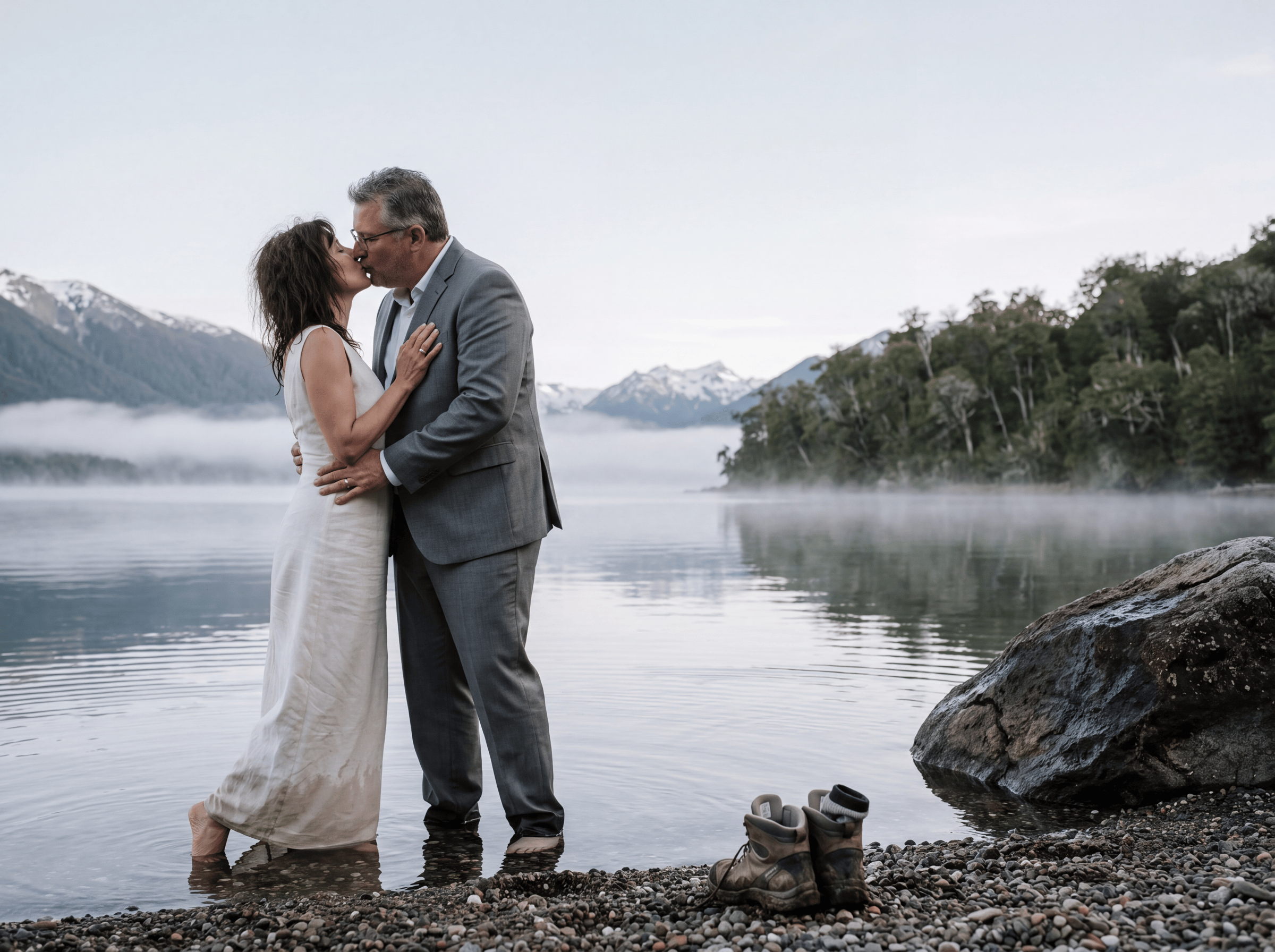
The register is entirely different: soft, wet, green, enclosed. Where the high routes are granite and wind, this is water and moss and mist, and it holds up in exactly the conditions that shut the mountain down. There is a boat, and there is border zone access to arrange, both of which I handle.
It also solves a mobility problem honestly. You can reach the waterline without walking uphill at all, which makes it the answer for a couple bringing a parent, or anyone who would rather spend the day being married than climbing.
The wind is a character, not a hazard
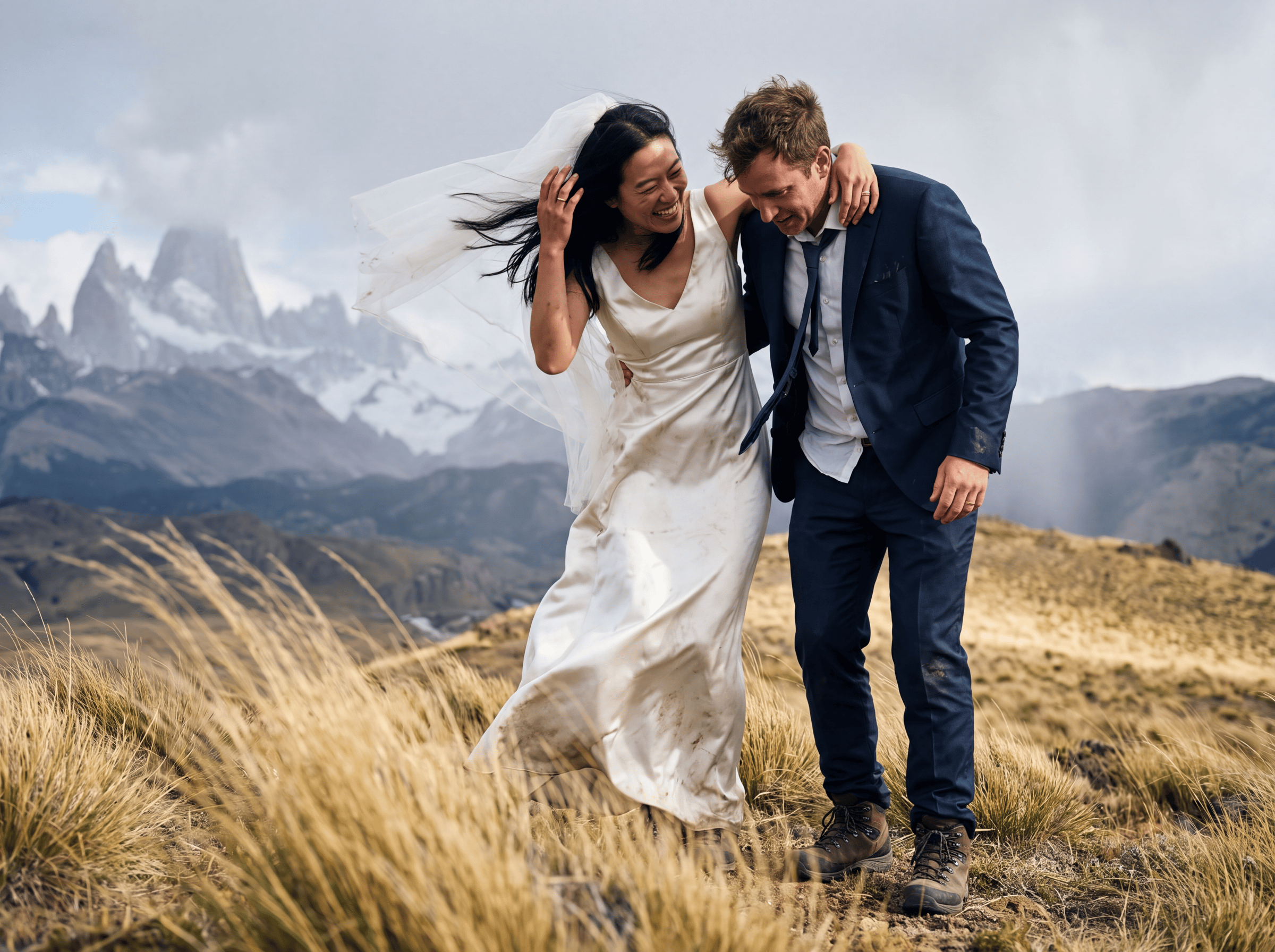
A fifty knot gust off the icefield is an ordinary afternoon in El Chaltén, and pretending otherwise is how couples end up miserable in clothes that were never going to survive it.
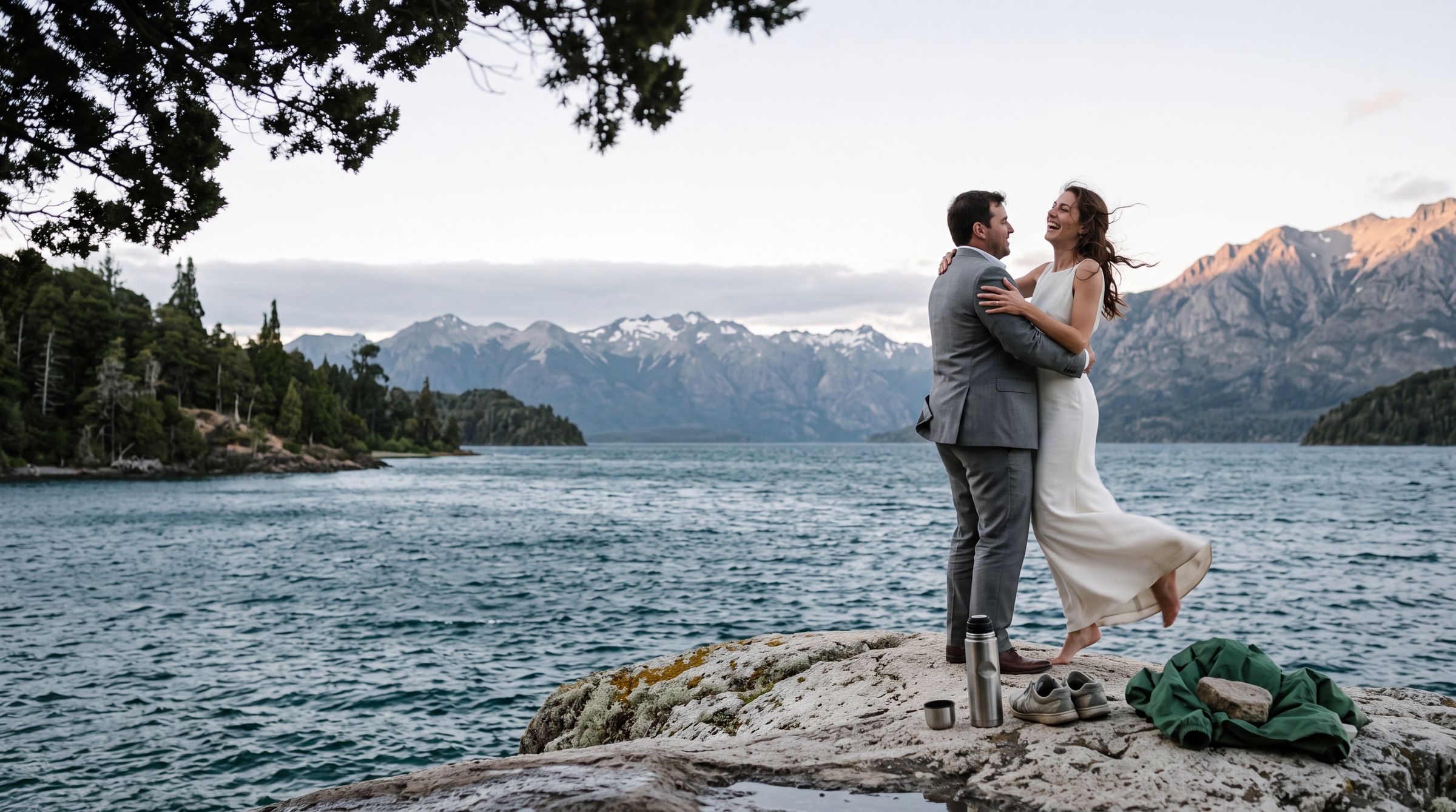
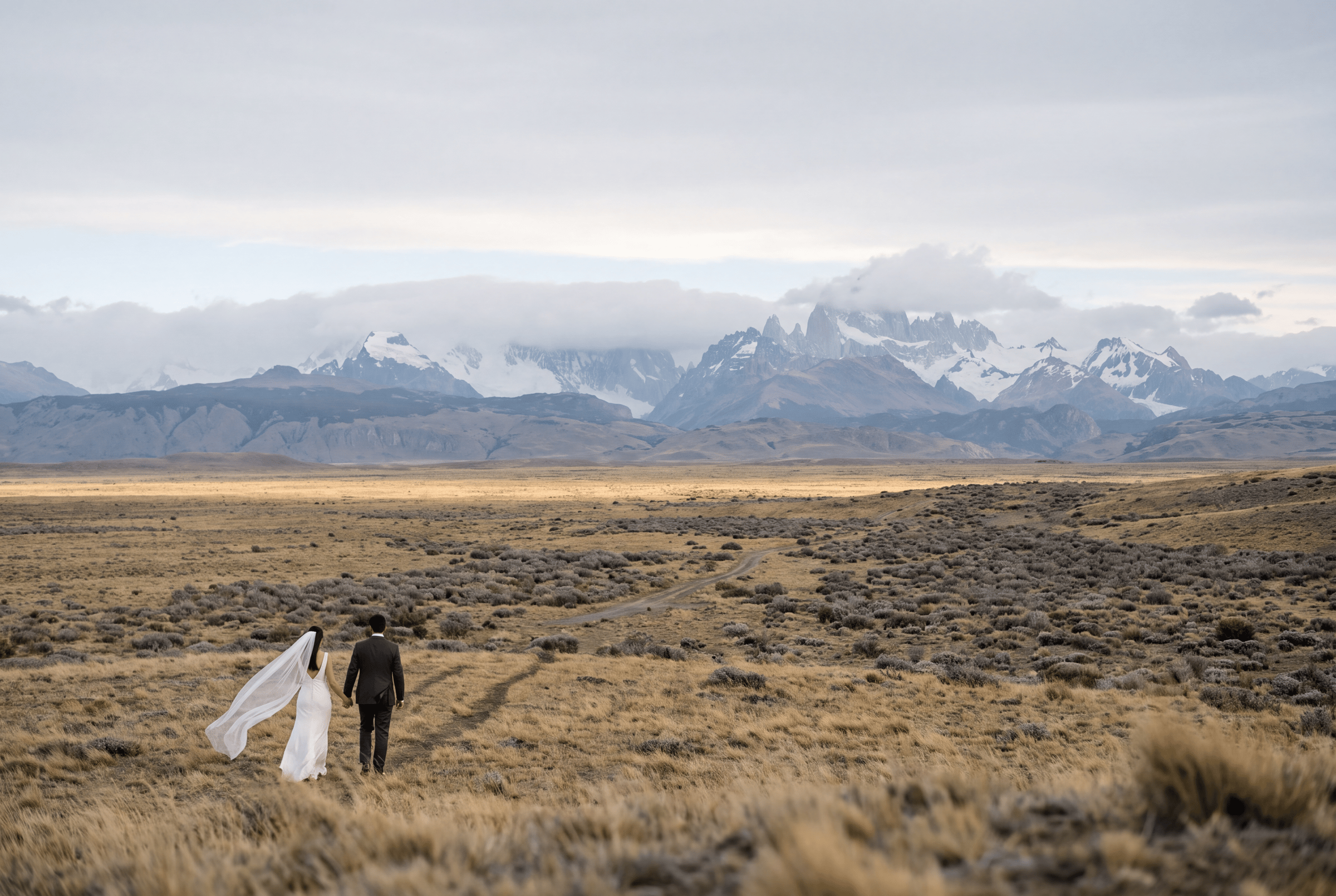
Plan for it and it becomes the best thing in the gallery. Fabric that moves is the entire argument for a long veil out here. What does not work is anything pinned to hold a shape, any hairstyle built for indoors, or paper you intend to read from. I bring weights for the paper and I say all of this months in advance rather than on the ridge.
The practical rule I give everyone: the wind climbs through the afternoon and drops in the evening. If your ceremony needs stillness, it belongs at either end of the day, not in the middle of it.
The paperwork, and who files it
El Chaltén sits inside Parque Nacional Los Glaciares, administered by the Administración de Parques Nacionales, and the distinction that matters is between access and permission.
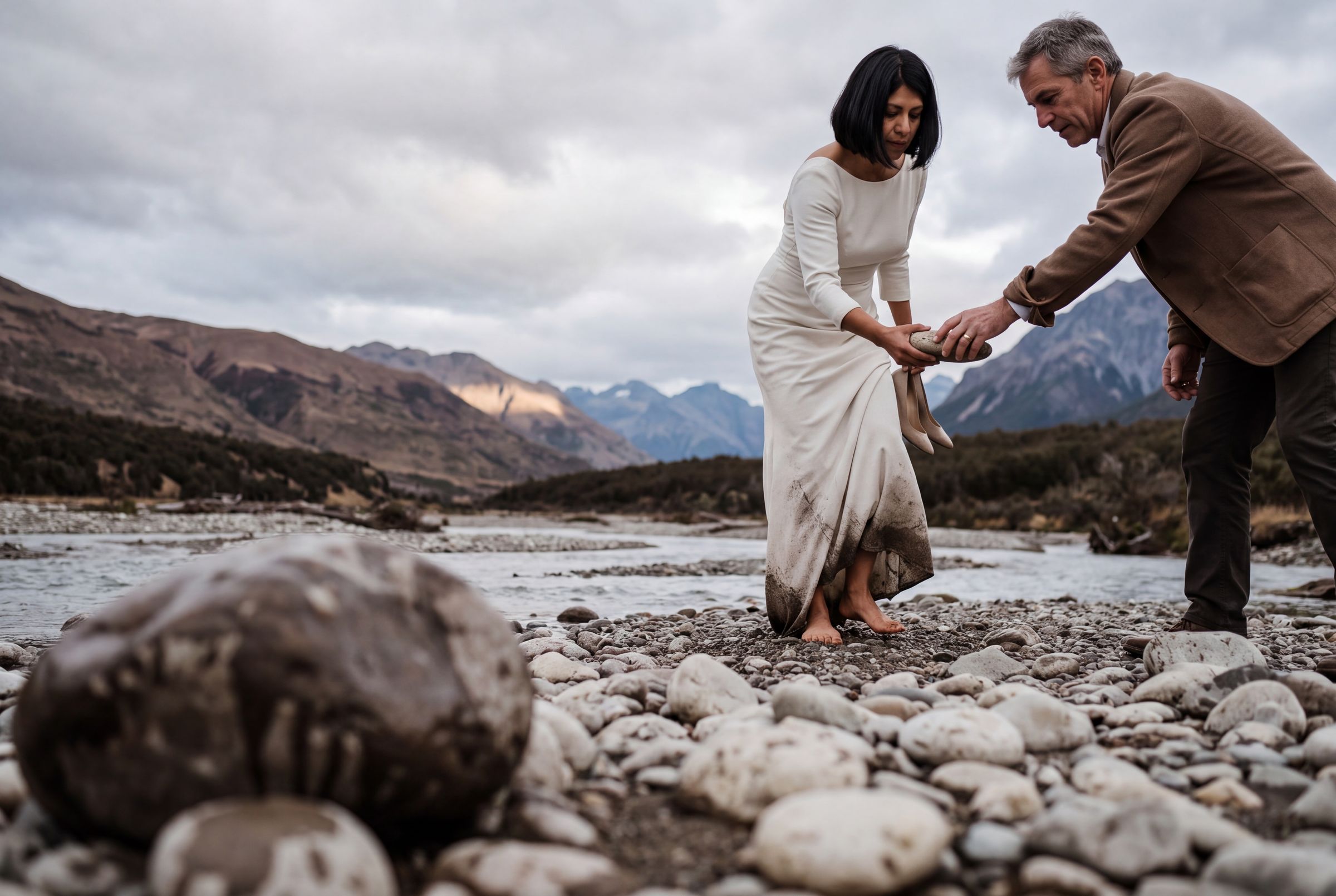
Walking the classic routes is free and open, and a small ceremony is tolerated where a commercial production would not be. That is one of the quiet advantages of eloping here rather than staging a wedding. What does need arranging is the professional filming authorization, the guide requirements on the routes that carry them, the boat and border zone access at Lago del Desierto, and drone use, which is restricted inside the park.
I file all of it. Nothing lands on you, and nothing about that arrangement is unusual for me; it is the reason the tier costs what it costs.
The legal reality, said plainly
An Argentine ceremony will almost certainly not be legally binding for you, and I will not pretend otherwise. Argentina requires residency documentation and a civil registry appointment that is closed to visiting foreigners in nearly every case, and Santa Cruz province is stricter than most.
So essentially every international couple I take to El Chaltén holds a symbolic ceremony under the massif and signs the legal paperwork at home, before or after the trip. I coordinate a bilingual officiant who gives the ceremony real weight in both languages, and I write the ceremony with you rather than handing you a script.
Couples worry this makes the day lesser. It does not. The day in the mountains is the wedding. The signature at home is administration, and it takes twenty minutes in an office you will not remember.
When to come, and the month nobody books
November through March is the Patagonian window and December through February is the peak. Trails clear, daylight enormous, everything open, and the wind at its most theatrical.
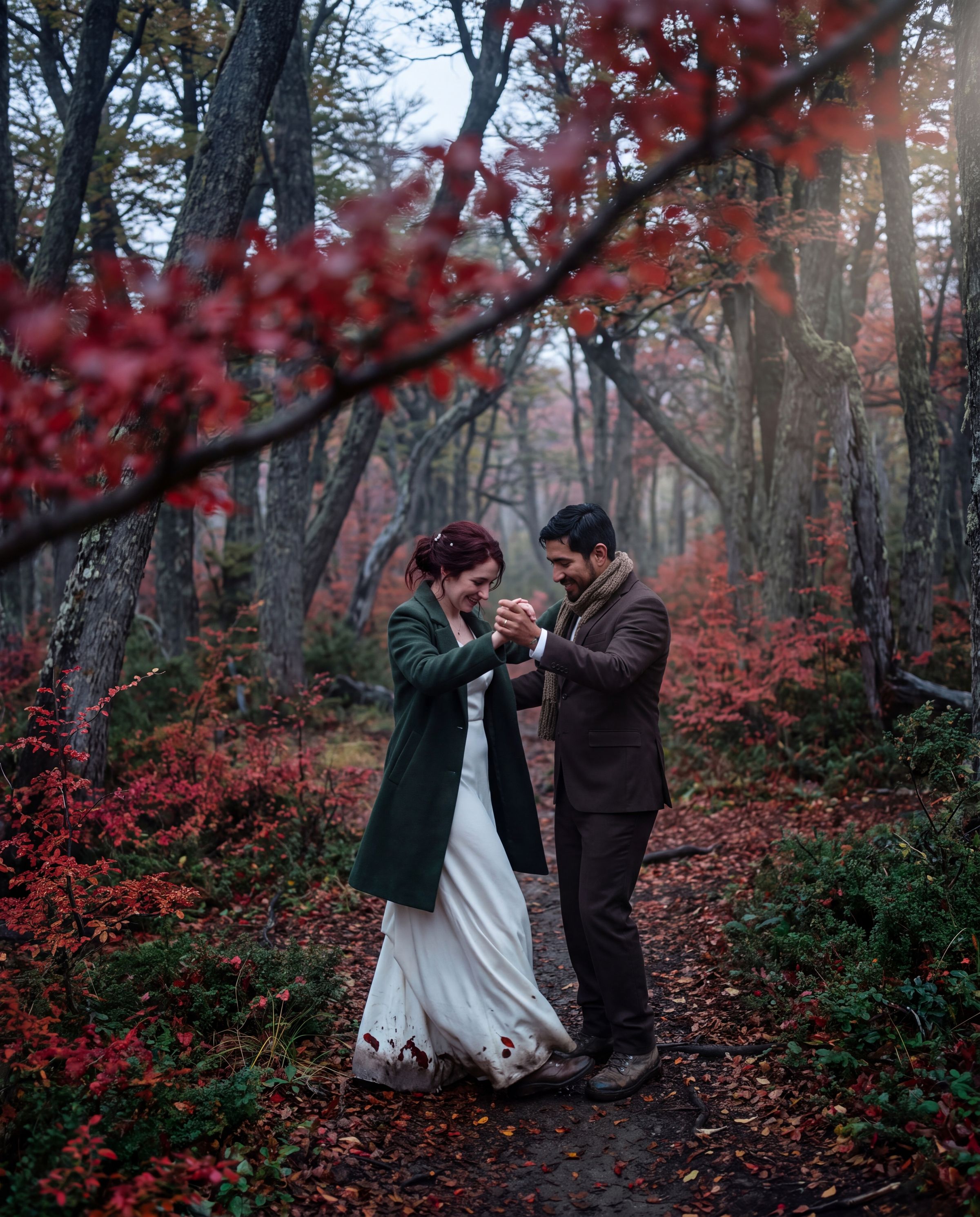
My quiet favourite is March into April. The forests turn crimson and gold, the wind eases, the town empties, and the light softens into something you cannot get in January at any price. If your dates are flexible at all, this is where I would put you.
Winter shuts most of the high routes and collapses the daylight to eight hours, so I do not build far south elopements between June and September. That is a real limitation rather than a preference, and I would rather say it here than after you have chosen a date.
Getting there is a day and a half
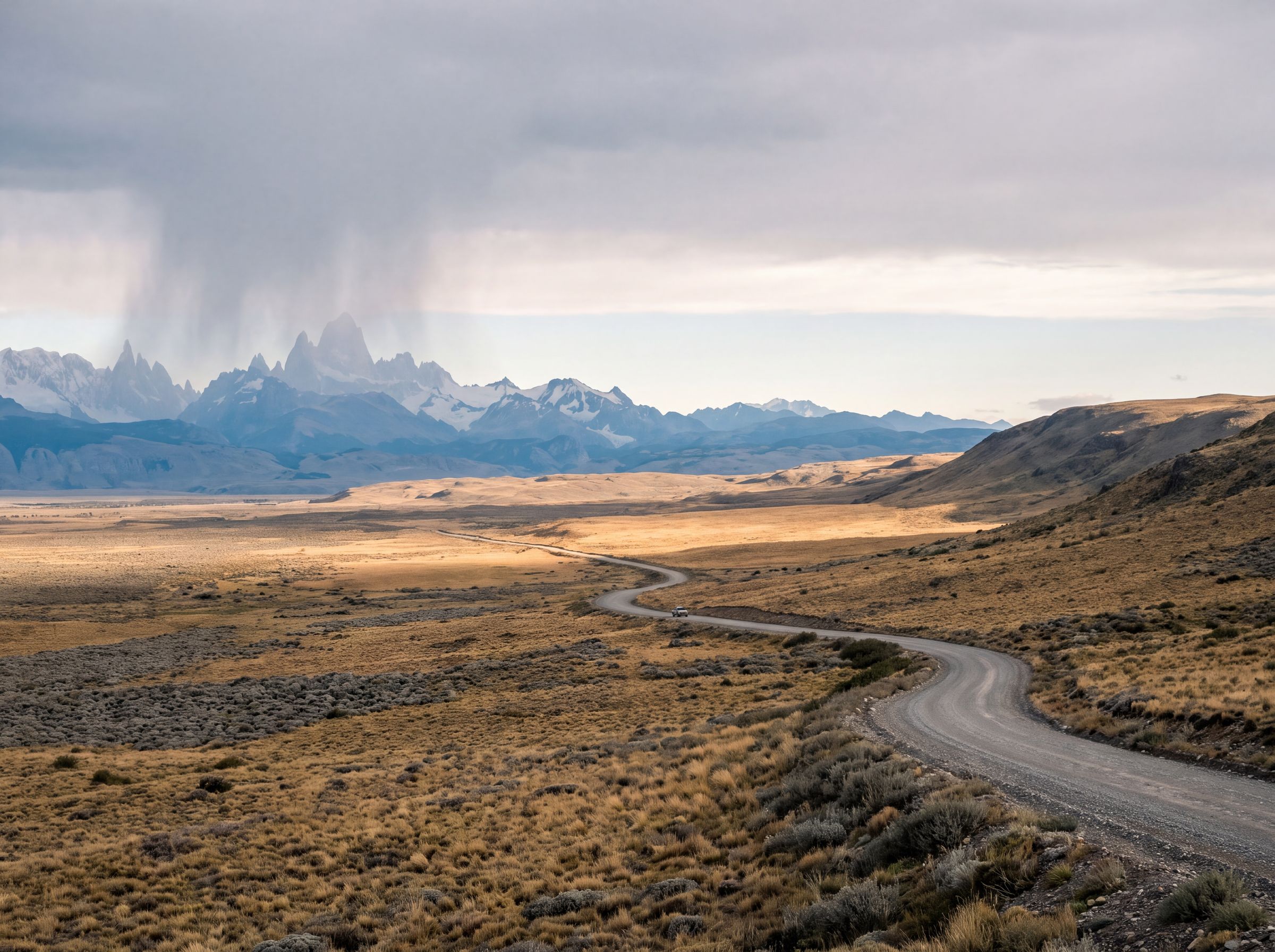
Two flights and a drive. Buenos Aires, then a connection to El Calafate, then three hours north on Ruta 40. From most cities in North America that is a full day and a half door to door.
Build a buffer day before the ceremony, for the weather and for the flights, both of which will eventually test you. This is the second reason my shortest tier here is three days: one of them exists to absorb a delay without touching the ceremony window.
Once you are in town, everything is walkable. There is no transport problem inside El Chaltén at all, which after the journey in feels like a gift.
What it costs, and what sits underneath the number
Three tiers, in USD. Essential from $10,200 for one designed elopement day. Curated Signature at $21,500 adds a second elopement day, a cinematic film and the bundled experiences. Curated Adventuremoon at $28,500 weaves the elopement and the honeymoon into one four day journey through El Chaltén and El Calafate. Photography and film are in every tier, and each comes with its own album.
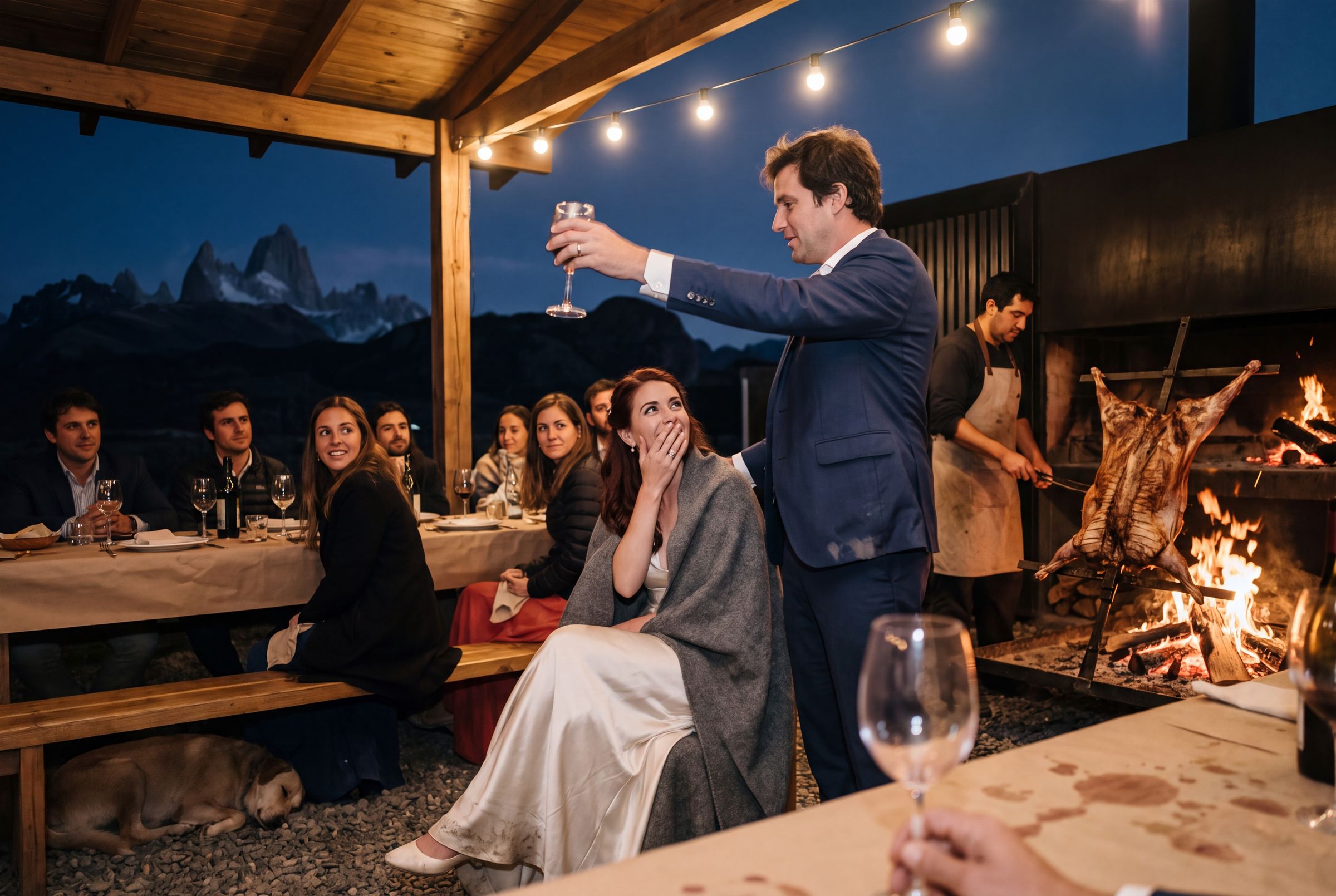
What that pays for, itemised rather than gestured at: the bilingual officiant, the mountain guide and the trail timing, the styling and the florals into a village of two thousand people at the end of a gravel road, the transfers from El Calafate, the filming authorization, the boat and border access at Lago del Desierto, the dinner, and the itinerary rebuilt around the light and the wind as the week goes.
Airfare and accommodation you book yourself. I name the exact hotel and the arrival day and you book it directly, because booking travel on your behalf requires an agency licence I do not hold. Saying that plainly is better than a line item that quietly is not what it appears to be. The full ladder is on the pricing page.
Dates are finite, and here is why
I work Patagonia in concentrated runs rather than flying down for one booking at a time, usually a stretch of weeks between November and March. That is what keeps a trip of this scale sensible for everyone involved, and it means the dates genuinely run out.
Eight to twelve months of lead time gets you the pick of the window. It also gets you the rooms, which in a town this small are the real constraint long before I am.
Who should not elope in El Chaltén
Four kinds of couple, and where each should go instead.
If you cannot give the trip five days, do not come here. Two flights, a three hour drive and a weather buffer do not compress. Bariloche is a single flight from Buenos Aires and gives you an Andean lake district with roads to it.
If walking is not something you want on the day, the value of El Chaltén drops sharply. El Calafate puts glacier ice in front of you from a boardwalk and a boat.
If you need a legally binding ceremony on the day itself, Argentina will not give you one. Banff or Vancouver will, with a licence you can obtain as a visitor.
If a guaranteed mountain view is the point, no honest person can sell you that here. I would rather you knew now than stood on a moraine in cloud at five in the morning feeling cheated.
What I would tell you to decide first
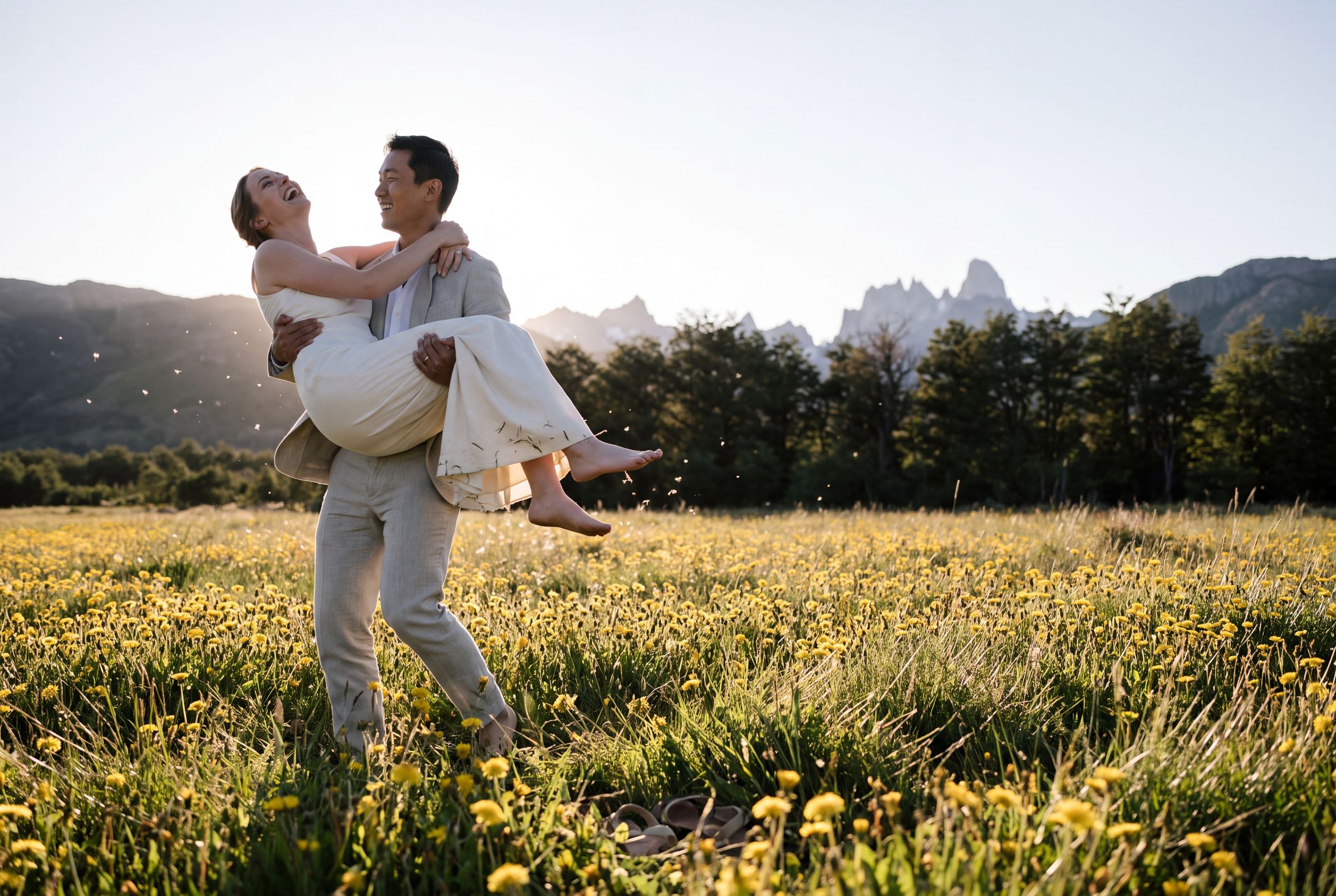
Decide how far you are willing to walk, honestly, and tell me the true answer rather than the aspirational one. Every other decision in El Chaltén falls out of it: which viewpoint, which hour, which shoes, whether we are leaving in the dark.
Then give me your window and let me tell you which weeks of it I am in the country. The mountain will do what it does, and my job is to make sure that whatever it decides, you were standing somewhere worth standing when it happened.
The El Chaltén page has the routes, the experiences and the day itself laid out in full. When you are ready, start the conversation and tell me what you are imagining, even if it is only a feeling so far.