How to Elope in Manuel Antonio, and Why Tuesday Is the Best Day of the Week
The national park is the smallest part of a good Manuel Antonio elopement. The day it closes is the day I would choose to be married here.
Manuel Antonio is the easiest place in Costa Rica to sell and the easiest to get wrong. Rainforest running down to a turquoise cove, sloths overhead, monkeys on the path, and the whole thing packed into a few square kilometres on the central Pacific coast. It photographs beautifully and it is popular for entirely good reasons.
Which is the problem. On a February morning the queue for the park gate is a real queue and the beach inside it has several hundred people on it, and no amount of framing hides that from a photograph of two people who came here to be alone.
So this post is mostly about timing, and about a fact almost nobody plans around: the park is closed on Tuesdays, and Tuesday is the best day of the week to be married in Manuel Antonio.
(Continued on Page 2, Col. 1)
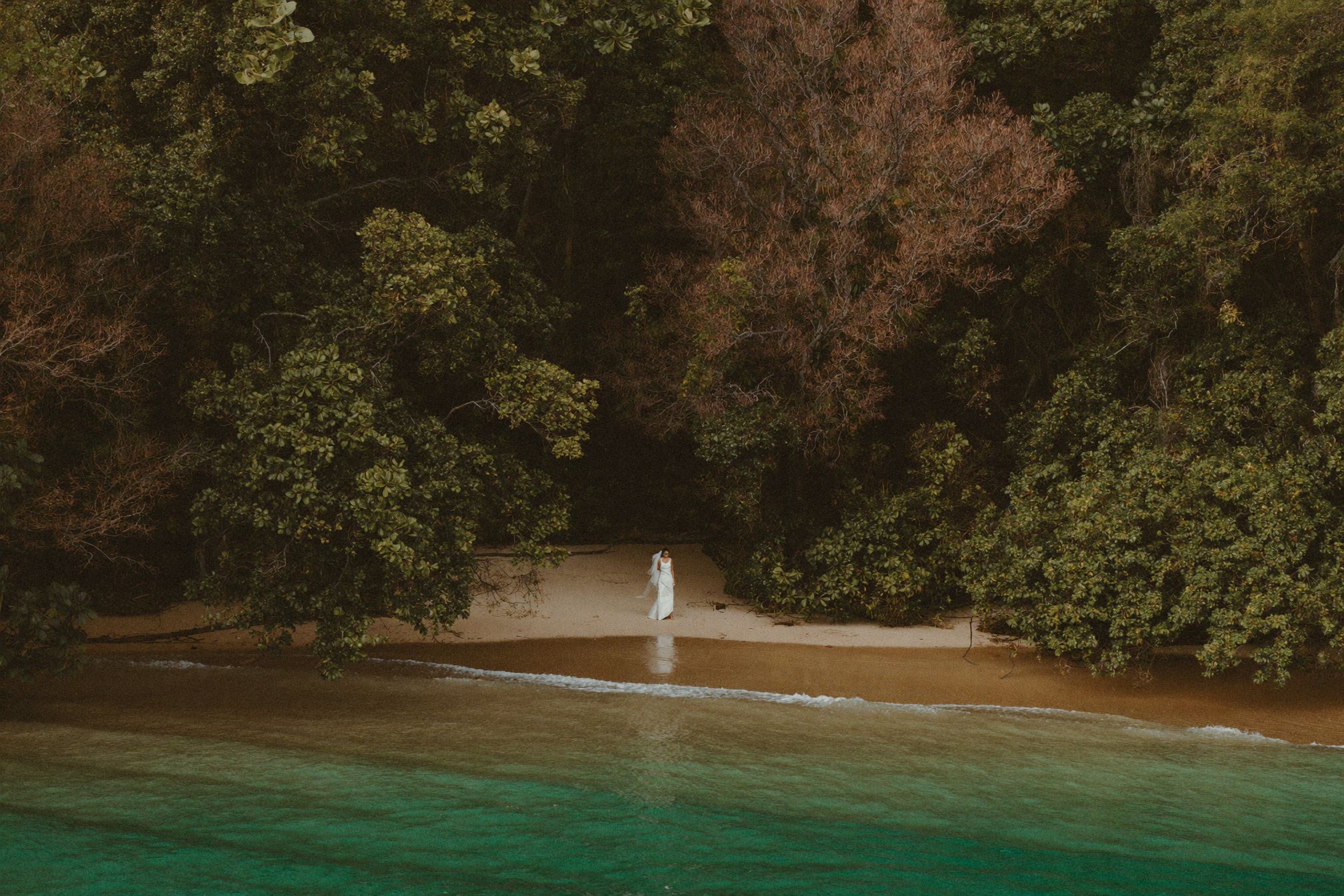
The park is the smallest part of the plan
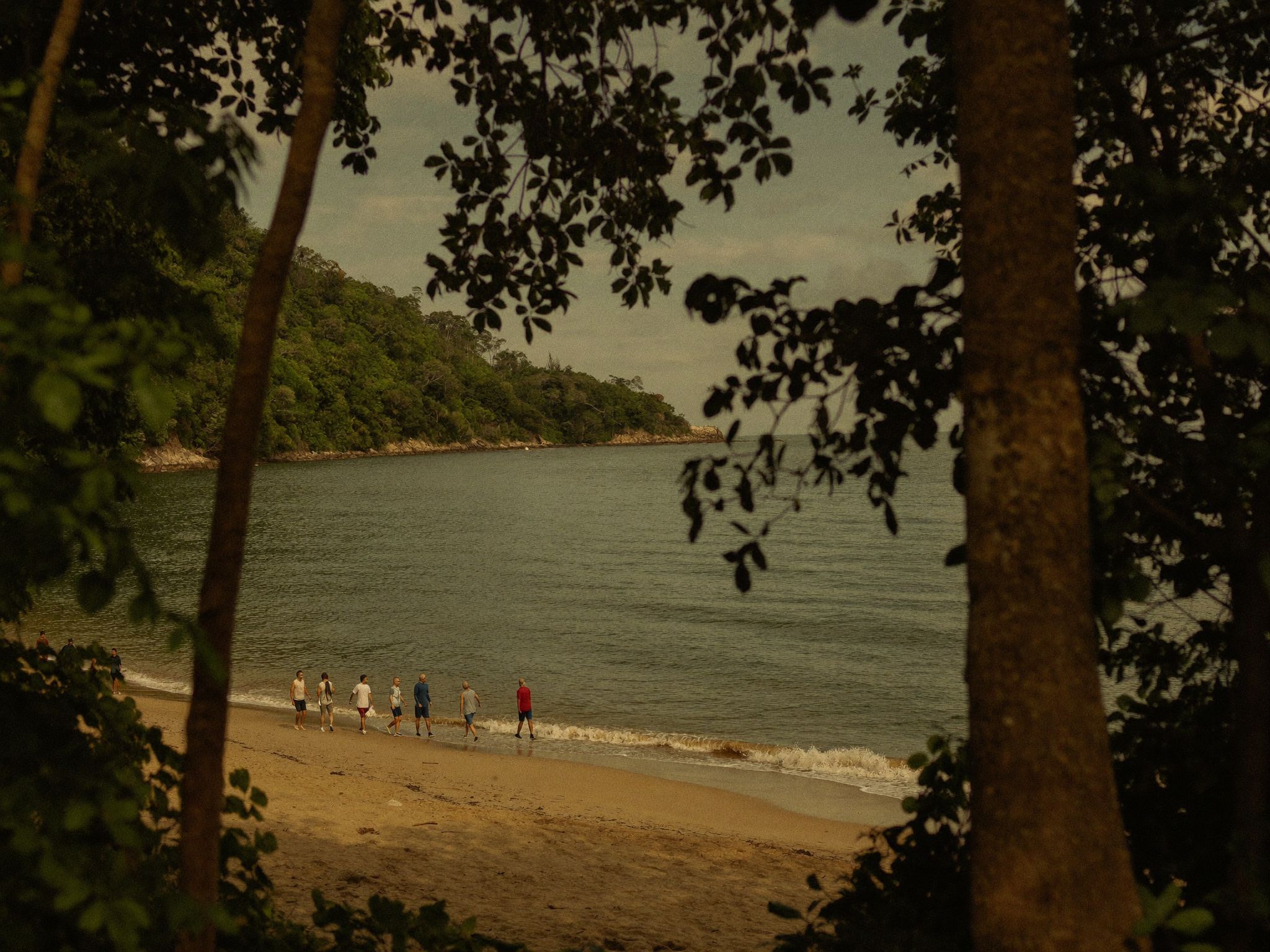
Start here, because it inverts the way most people build this trip. Manuel Antonio National Park is wonderful. It is also small, ticketed, timed, busy, and closed one day a week, and there is a great deal of the same landscape on the outside of the fence.
The headland above the cove, the coast road viewpoints, the mangrove channels, the jungle stream that crosses the sand at the north end, the forest above Quepos, the waterfall inland: none of that is inside the boundary. All of it is the same forest and the same coastline, and none of it requires a dated ticket or a ranger.
So the park becomes one hour of a good itinerary rather than the frame the whole day hangs on. That single decision is what separates the galleries from this coast that look calm from the ones that look like a public holiday.
Closed on Tuesdays, and why that is a gift
The park is open Wednesday to Monday and closed every Tuesday. It is closed for a reason: the forest gets a day without people in it, which is a policy I wish more places had.
Here is what most visitors do with that information. They avoid Tuesday. They look at the calendar, see the closure, and book Wednesday to Monday, which means the entire town's demand piles into six days and Tuesday becomes the quietest day on the whole coast.
Everything outside the boundary is emptier on a Tuesday. The headland, the coast road, the beaches to the north, the restaurants, the roads. If your day is built around locations outside the park, and it should be, then Tuesday is the day with the fewest strangers in it and I will steer you there every time.
One couple this year nearly booked a Tuesday by accident, panicked when they read about the closure, and asked to move. I talked them out of it. They were married on the headland at seven in the morning with the cove empty below them, had the coast road to themselves at golden hour, and went into the park on the Wednesday as a walk with nothing riding on it.
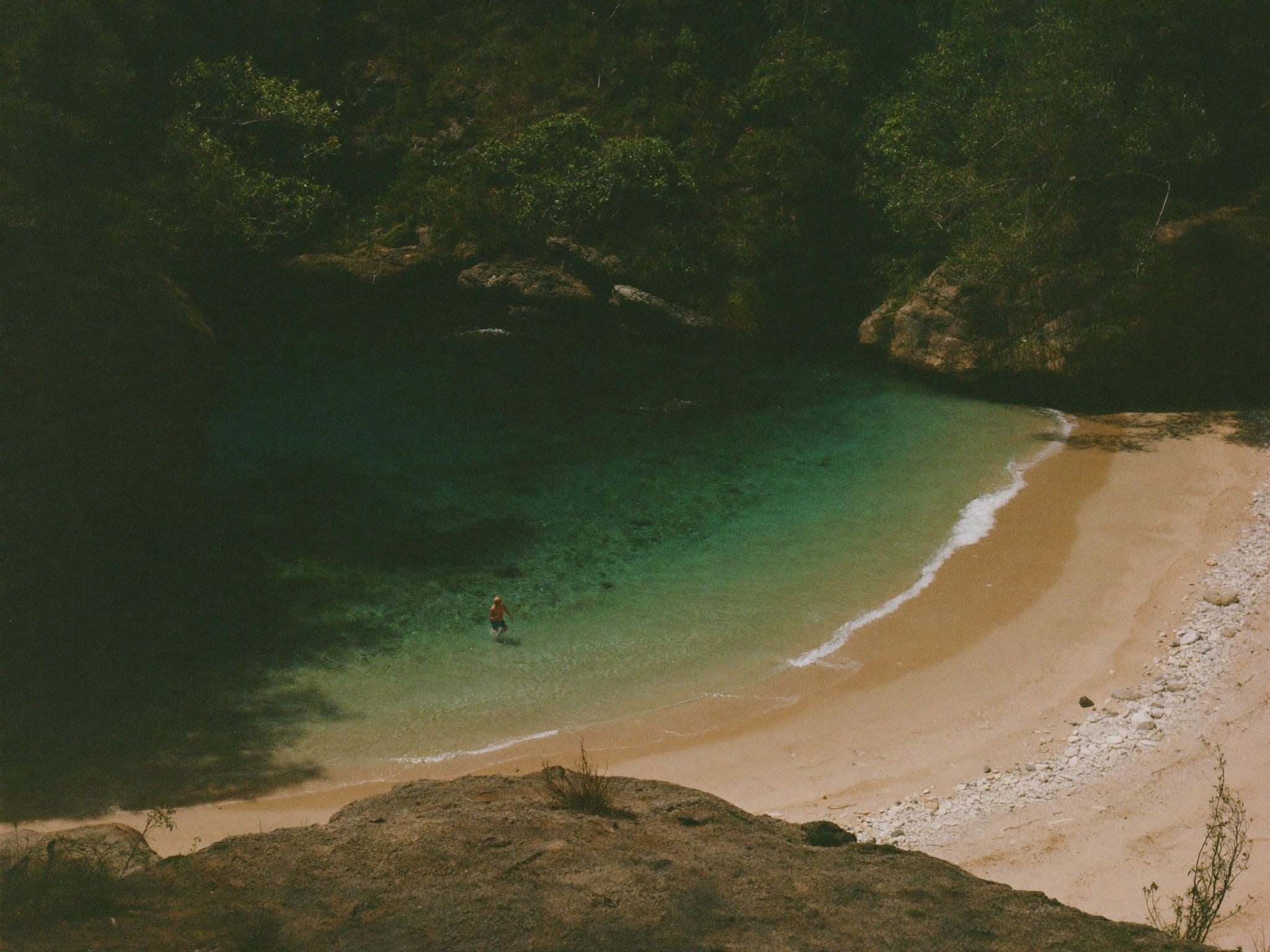
Timed tickets, and the hour before the gate
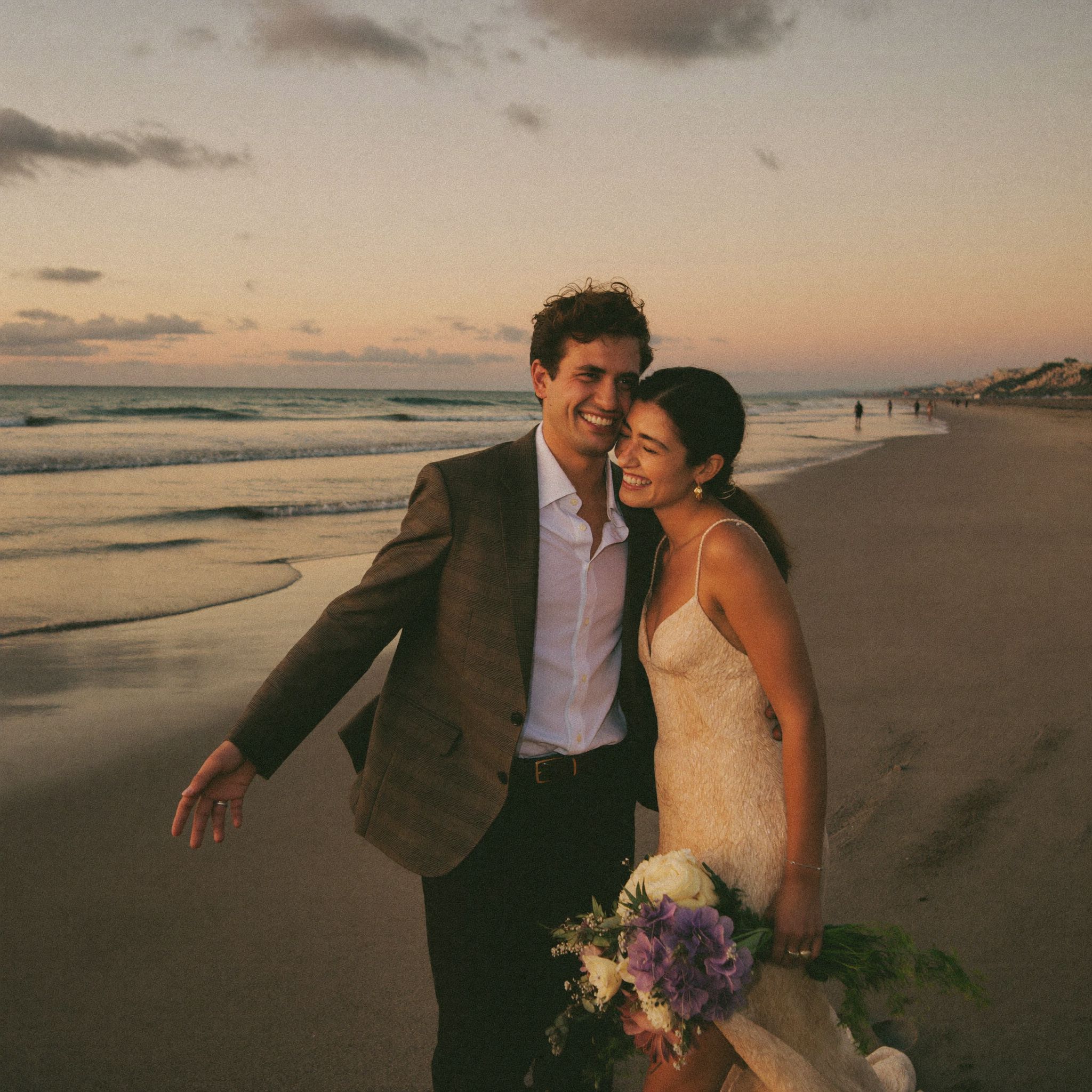
When you do go in, understand the system, because it is not the turn up and pay arrangement people expect from a national park.
Entry is on dated, single use tickets bought online through SINAC in advance. Each ticket is valid once, for a date. There is a daily visitor cap and I am deliberately not printing a number for it, because every source quotes a different one and I could not find an official figure I would stand behind. What matters practically is that it is capped, the cap is reached in high season, and you cannot fix that on the morning.
So tickets get bought weeks ahead. If you are working with me, I do it. If you are not, do it yourself the day your dates are fixed and do not leave it, because the failure mode is a locked gate on a day you cannot move.
Inside, be there at opening. The first hour is a different park: the light is still coming in low through the trees, the animals are active before the heat, and the beach is empty enough to stand on. By eleven it is a busy public beach with excellent trees behind it.
The headland above the cove
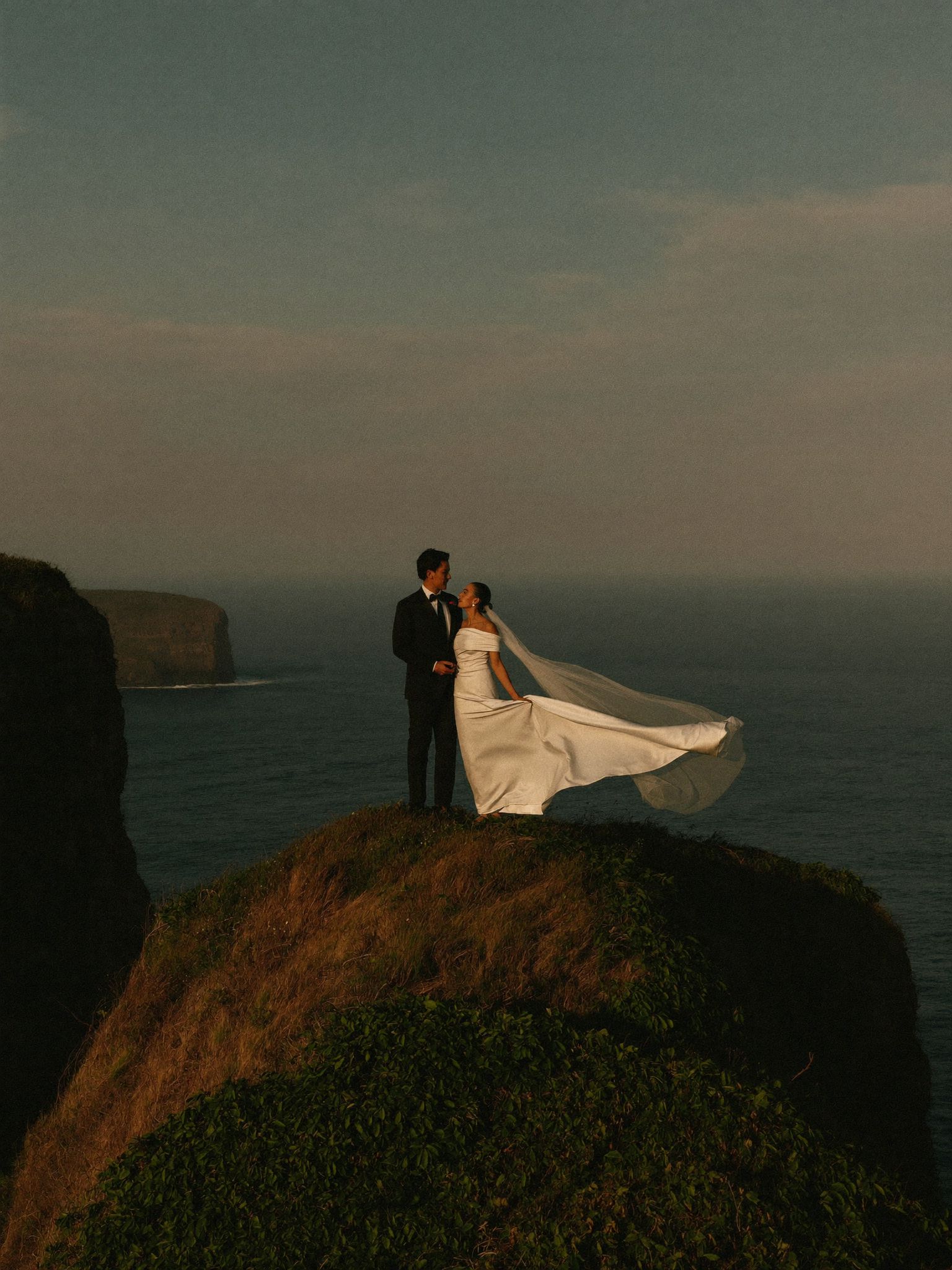
This is where I hold most ceremonies here and it is the location the whole hub is built around.
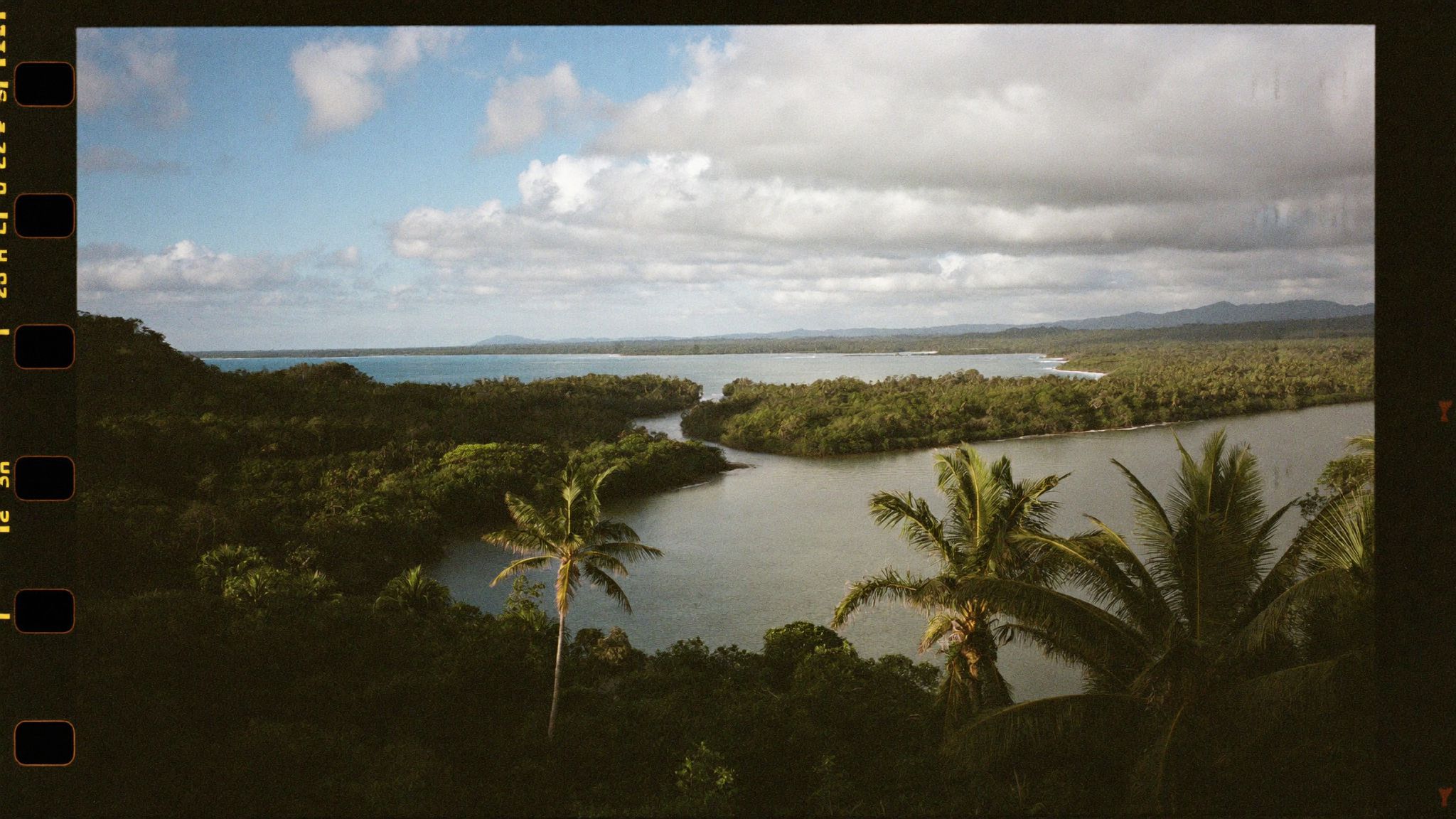
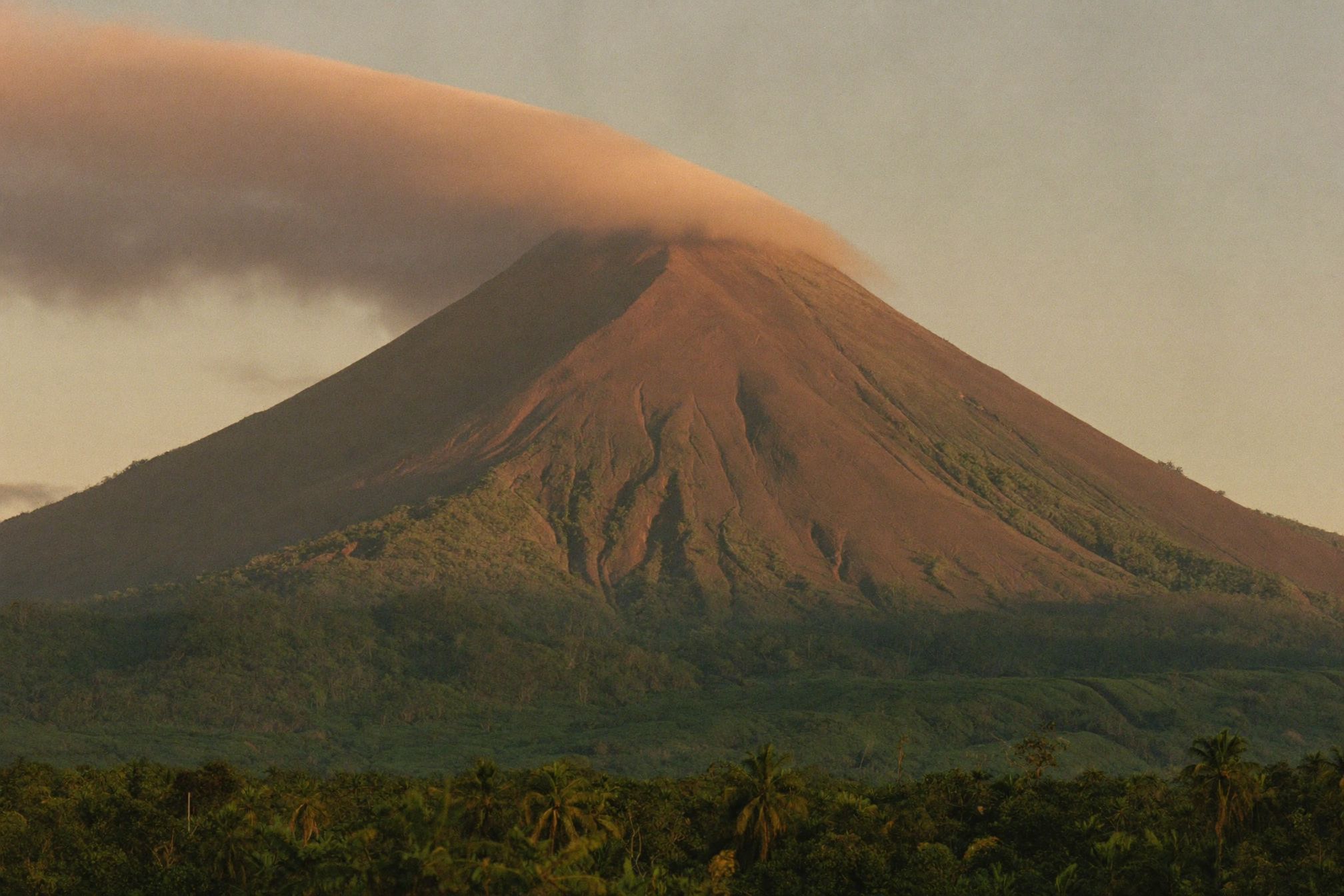
The coast north and south of the park runs in a series of green headlands that drop straight into the water, and from the top of one you have ocean on two sides, forest behind you, and the cove below. The light in the first hour is coming across the water rather than down onto it. There is almost always a breeze, which solves the heat and does the styling for you.
It is private land, which is exactly why it works. No ticket, no cap, no closing day, no ranger, no strangers walking through the vows. I have a small number of these arranged along this coast and which one we use depends on your date, the swell and where the sun is coming up that week.
It is also, bluntly, the reason a curated day here costs what it costs. Access to a headland at six in the morning is not something you can arrange from another country a week out.
The mangroves at dawn
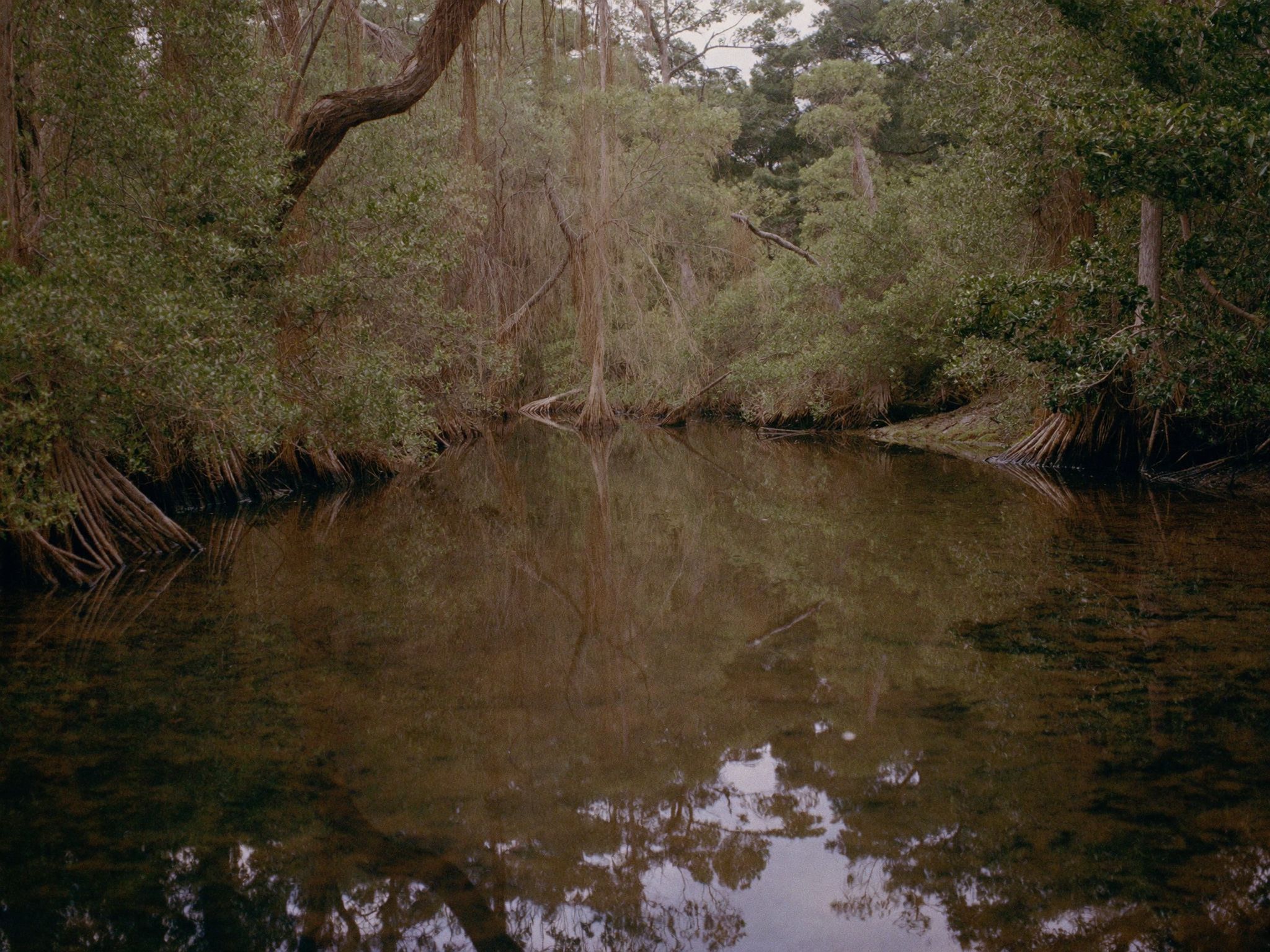
The most underrated hour on this coast, and almost nobody puts it in an elopement.
The estuaries behind the coast are mangrove channels, and at first light they are glass. You go in by kayak, quietly, and the water is so still that the reflection is as sharp as the thing reflected. Herons, crabs, the occasional caiman keeping its distance, and no engine noise anywhere.
It is the calmest photography I do in Costa Rica and it is the perfect counterweight to a coastline that is otherwise all surf and wind and heat. On a two day itinerary I will usually put the headland ceremony on one dawn and the mangroves on the other, because they produce completely different galleries in the same forty minutes of light.
Wear something you do not mind sitting down in. A kayak is a kayak.
The stream where it crosses the sand
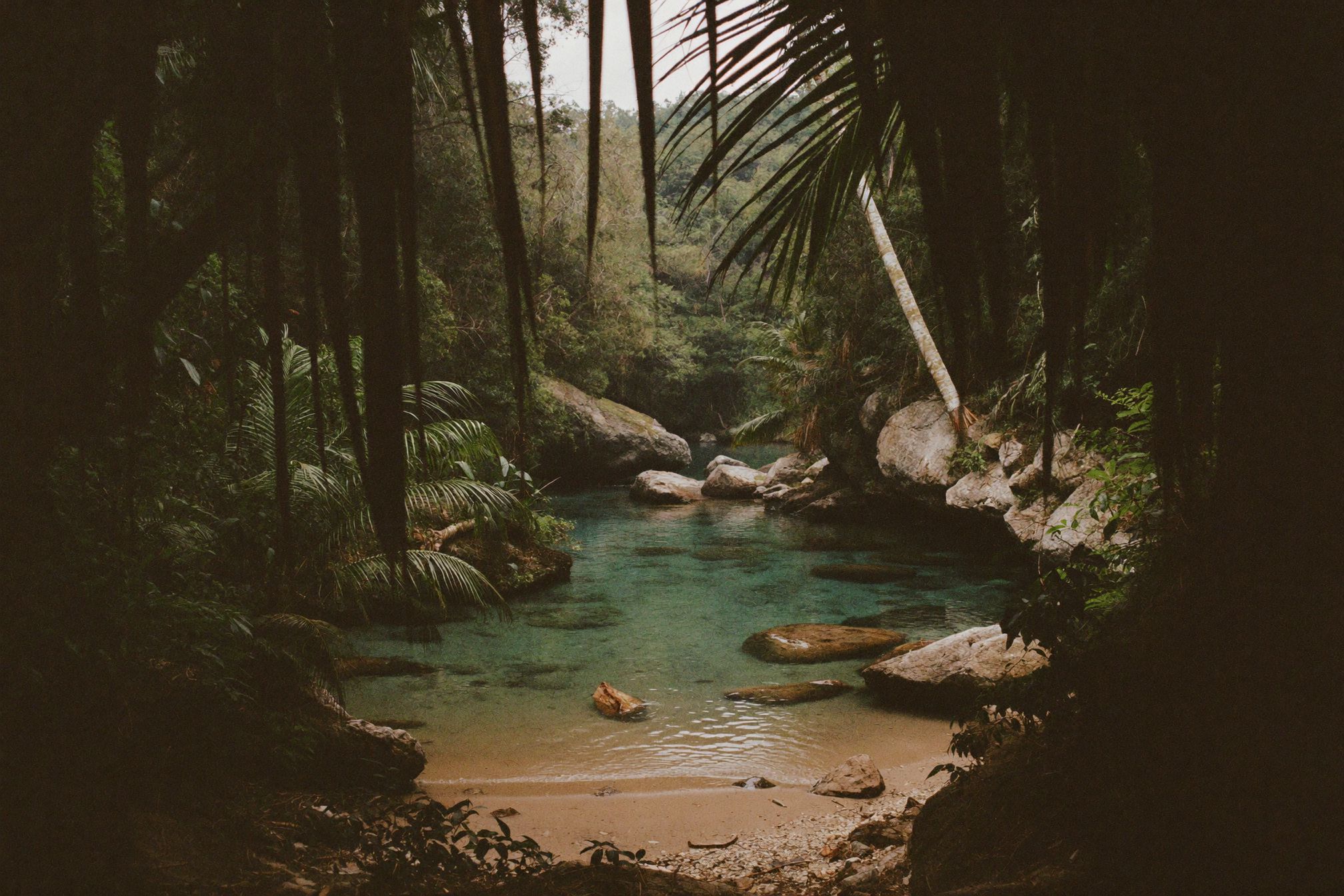
A small thing that produces some of the best frames on this coast. Several streams come out of the forest here and cross the beach on their way to the sea, cutting shallow channels through the sand that change shape every wet season.
At low tide you get a mirror running through the middle of the beach, forest on one side, ocean on the other, and two people walking down it. It is the sort of location that does not photograph well as a landscape and photographs superbly with somebody in it.
Where the channel is, and whether it is there at all, depends on the rains. That is not something anybody can promise from a desk in another country in March. It is the kind of thing I check on the ground the day before, which is what a local fixer is actually for.
Sloths, and the pace they force on you
People come to Manuel Antonio for the wildlife and then treat it as a bonus that happens between locations. Give it an actual hour instead.
The forest along this coast has sloths in it, both two toed and three toed, and they are genuinely everywhere once you have a guide pointing. Capuchins on the beach path, howlers waking you at five in the morning whether you like it or not, and if you are lucky the small squirrel monkeys that live only on this stretch of coast.
Wildlife is a patience exercise and patience is a good thing to have booked into a wedding day. Standing still in a forest for twenty minutes with somebody you have just married, waiting for an animal to move four inches, is a better memory than most of what people plan.
A naturalist doubles what you see and I put one on the itinerary whenever the timings allow. The difference between walking that forest alone and walking it with somebody who knows it is not marginal.
The coast by boat
The last hour of light, offshore, looking back at the coast. It is the one perspective the land cannot give you and it changes what the place looks like entirely: the headlands stack up behind each other, the forest reads as one continuous green wall, and the sun goes down into open Pacific with nothing between you and it.
It also solves a real problem. This coast faces roughly west and slightly north, which means golden hour on land is often looking into a bright hazy sky over water. From a boat you turn around and use the coast as the background instead.
It is on the Signature and Adventuremoon tiers. Take it if the sea is behaving. If it is not, I will tell you, and we will do the coast road viewpoints instead rather than spend an hour of your wedding day being thrown around.
The legal part
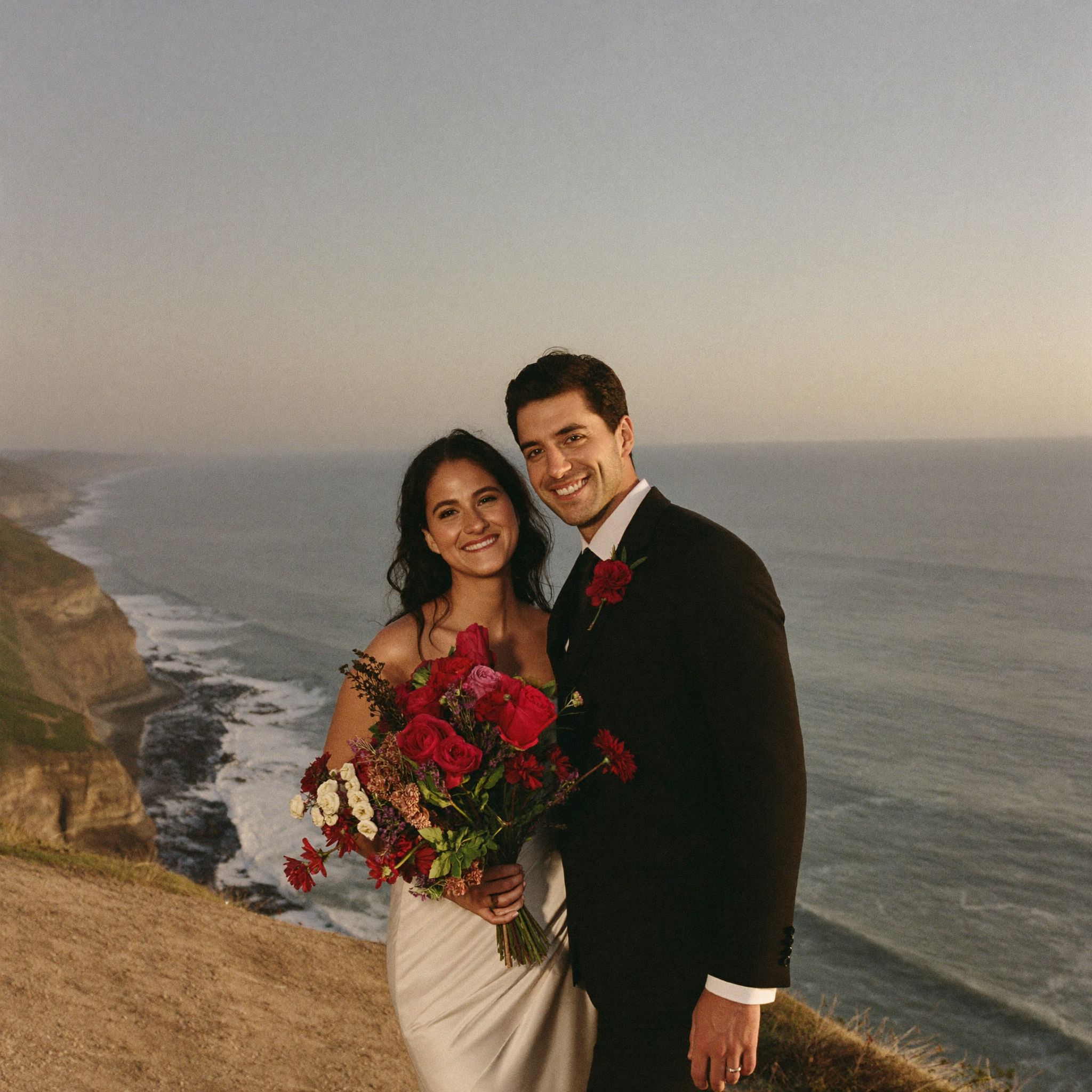
Costa Rica is one of the simplest countries in the region for this. No residency requirement, no waiting period, no blood test. A notary public performs the civil marriage, which means no registry office diary to wait on, and two adult witnesses are required. I bring them if you are travelling alone, which most couples eloping here are.
It is registered with the Registro Civil afterwards, and the certificate needs an apostille and a translation before it will be accepted at home. Start that immediately on your return.
The rule that catches people: a divorced or widowed woman can face a three hundred day wait before remarrying unless she can show she is not pregnant. Raise it in the first conversation. It moves dates, and it is a much smaller problem in January than in April.
Also worth knowing: a beach being public does not mean an organised ceremony on it is permitted, and commercial photography inside a SINAC protected area needs authorisation arranged in advance while personal photography does not. Those two sentences save more trouble on this coast than anything else in this post.
What it costs, and why it is near the top of my Costa Rica list
Manuel Antonio starts at $10,400 for the Essential, $21,500 for Curated Signature and $28,200 for the Curated Adventuremoon. That makes it the second most expensive of the seven Costa Rican cities I sell, behind only Nosara.
I would rather explain the number than defend it. It is access. The private headlands, the boat at the right hour, the mangrove launch before dawn, the timed park tickets held weeks in advance, and a fixer who can tell you on the Monday whether the stream has moved. This is the most visited stretch of coast in the country and everything scarce about it has a price attached.
What the Signature buys here specifically is the second day and the boat. One day on this coast forces you to choose between the mangroves and the water, and they are the two best things in the region.
Flights and lodging are excluded everywhere on this site, always. The full ladder for all seven cities is on the pricing page.
When I would send you to Uvita instead
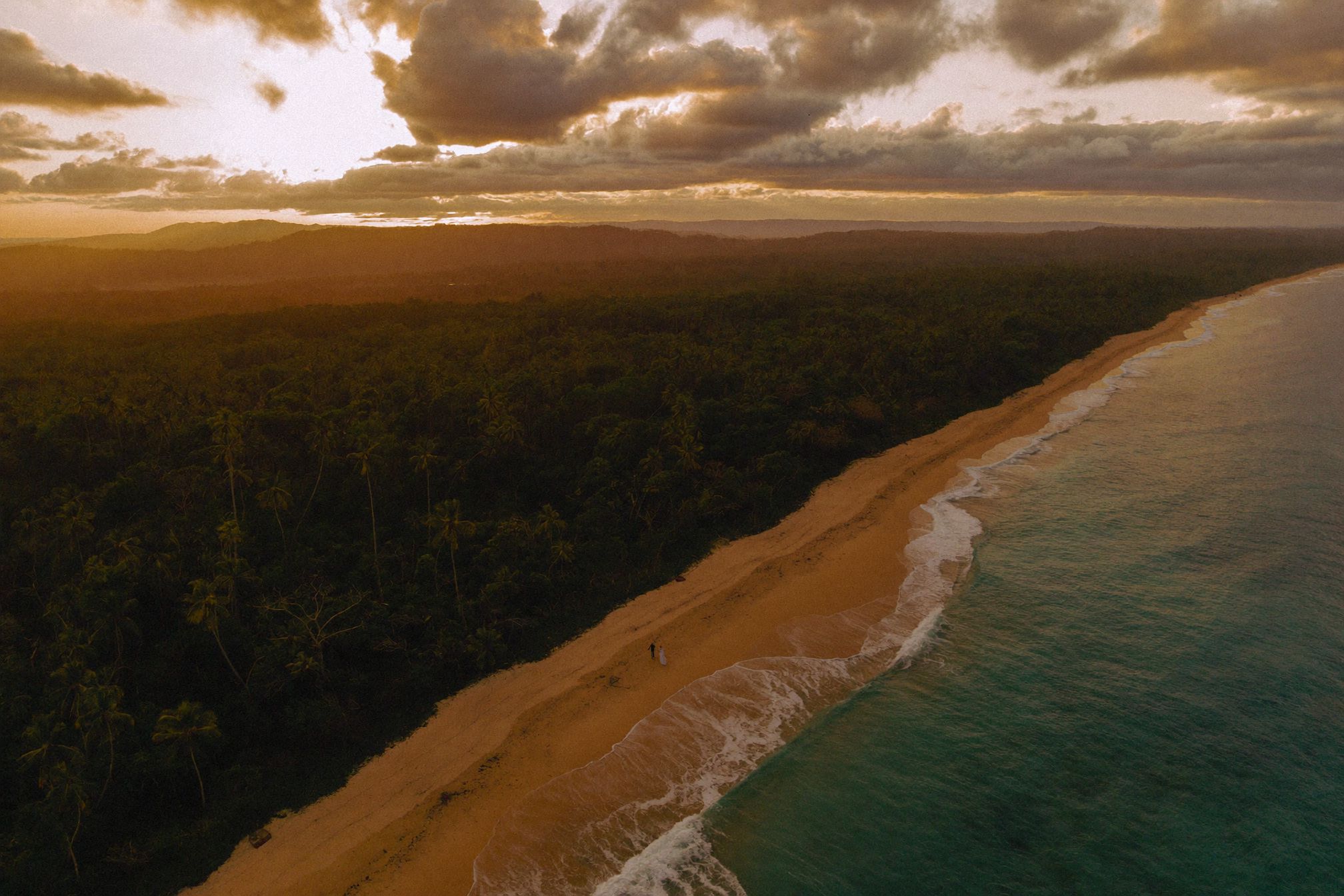
An hour south of here the coast keeps going and gets steadily wilder. Uvita has the whale tail sandbar, humpbacks on both sides of the year, tiered waterfalls inland, and the Osa Peninsula beyond it. It is two hundred dollars cheaper at the Essential and it has a fraction of the people.
Choose Manuel Antonio if you want the wildlife density and the turquoise cove and you are willing to plan around the crowd. Choose Uvita if the emptiness matters more than the postcard. Both are true answers and I build both.
One more: if you want this coastline without the Pacific dry season crowd at all, look at the Caribbean. Puerto Viejo runs on the inverse calendar, so the fortnight that drowns this coast can be the best fortnight over there.
The locations, tiers and timeline are written out on the Manuel Antonio elopement planner, and the whole country is in the Costa Rica elopement guide.
Enquiries to the publisher, armanarai.com.