How to Elope in Nosara, and Why the Bad Road Is the Whole Point
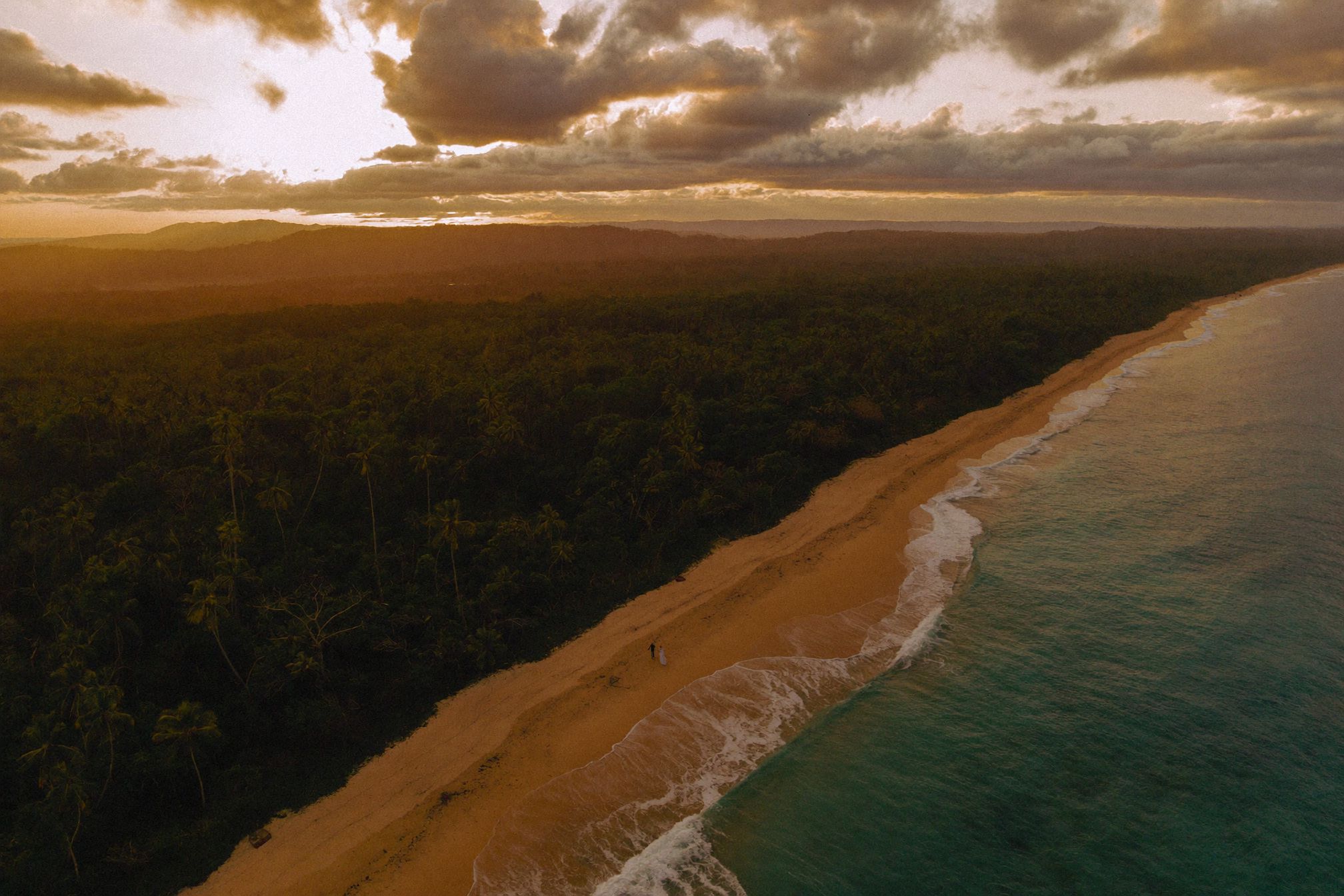
Seven kilometres of beach with almost nobody on it, at the end of a gravel road that the community has deliberately never fixed.
Nosara is the most expensive city on my Costa Rica list. It starts at $11,200 against $9,700 for the Caribbean, and I would rather explain that up front than have you find it on the pricing page and wonder what the difference buys.
It is not glamour and it is not a resort premium. There is barely a resort here. What you are paying for is a place that made itself difficult to get to on purpose and has stayed that way for fifty years, and difficulty costs money to work in.
The last stretch of road in is gravel. Building is restricted. There is no beachfront hotel strip because the community would not allow one. The result is seven kilometres of Pacific beach that on most mornings has a handful of surfers on it and nobody else at all, an hour and a half from a beach that has several hundred people on it. That gap is the product.
(Continued on Page 2, Col. 1)
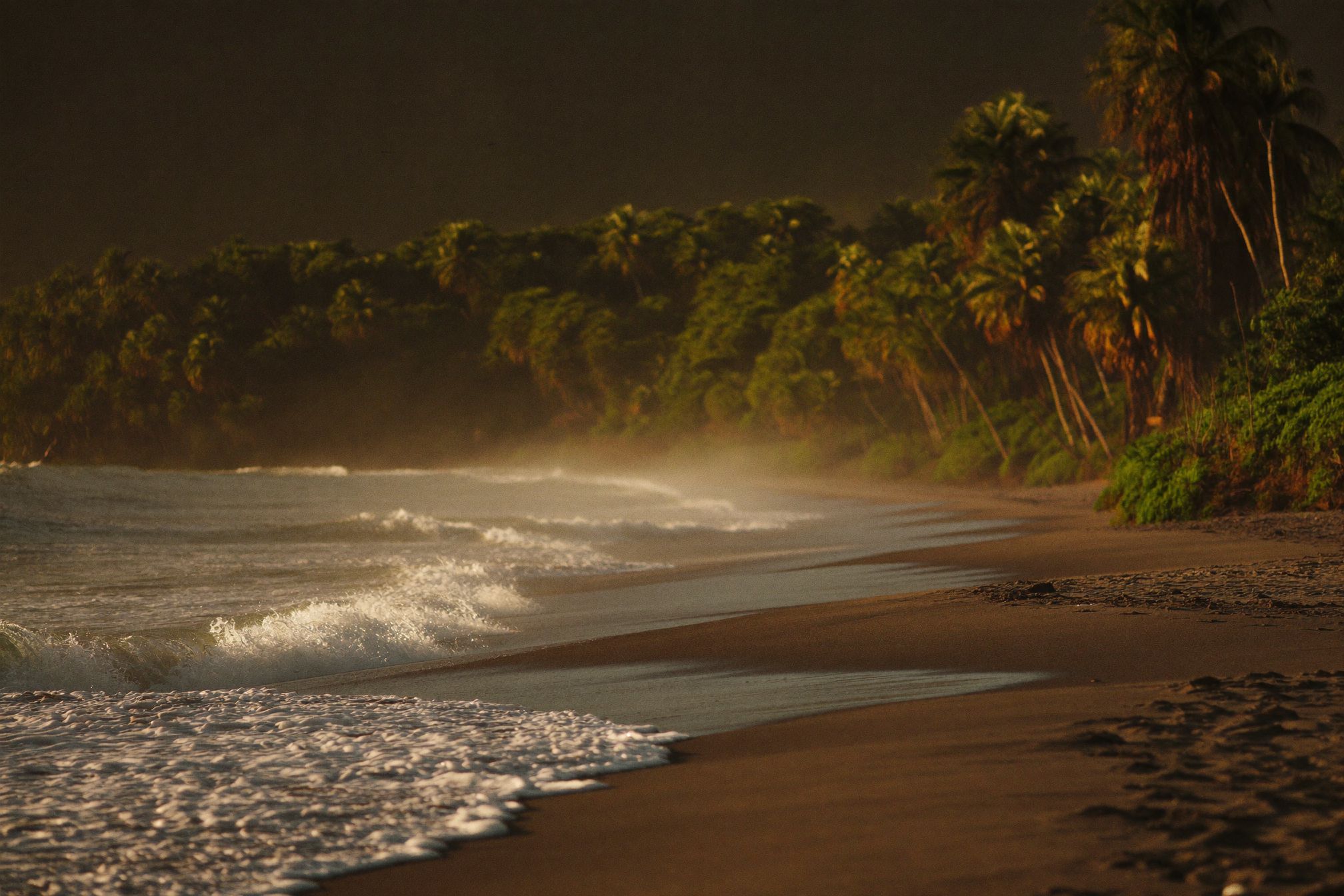
Seven kilometres and nobody on it
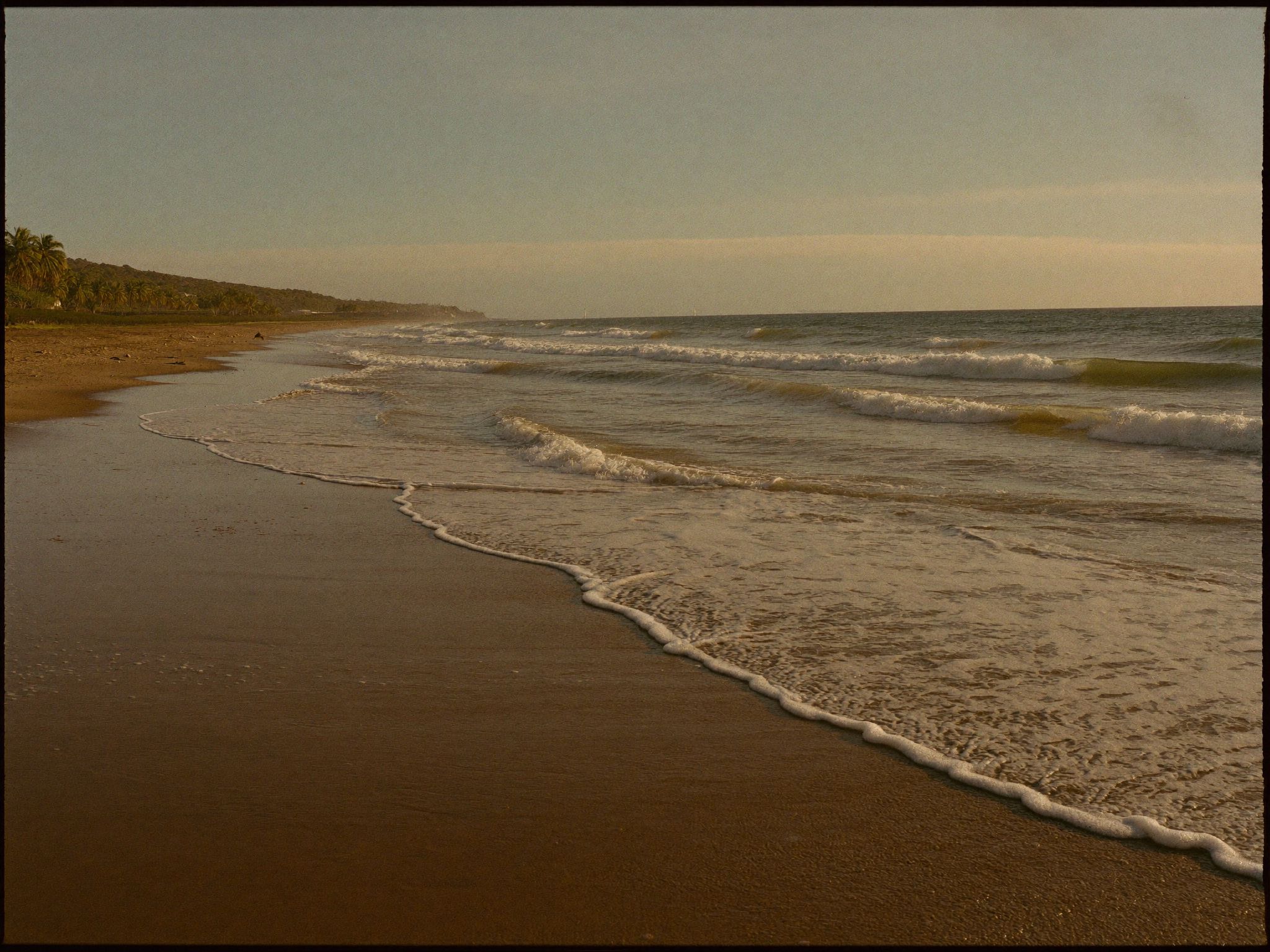
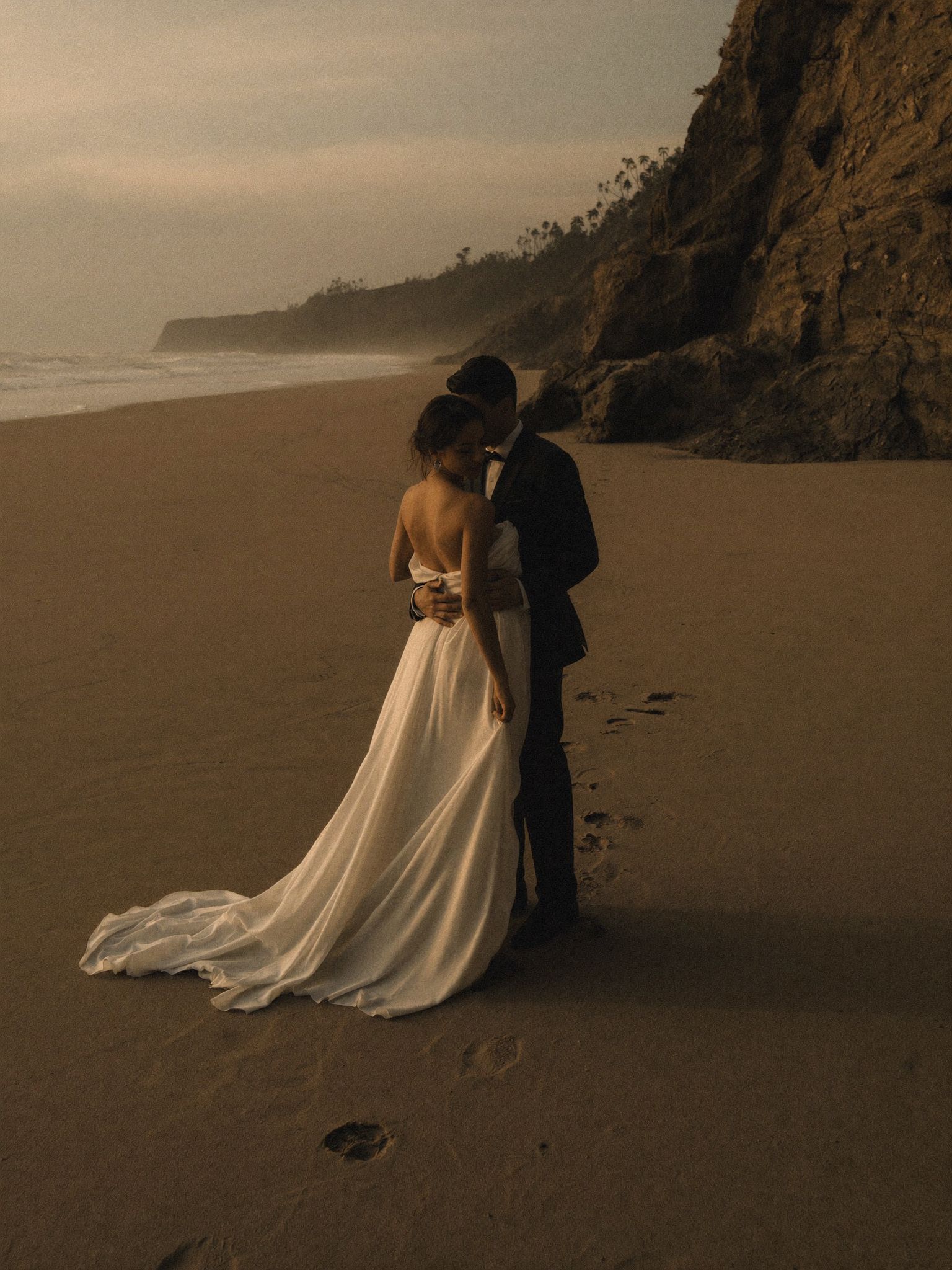
Playa Guiones runs for about seven kilometres in a single unbroken arc. It faces west and slightly south, it is wide at low tide, and the sand is firm enough to walk fast on. There is no road along it, no vendors, no loungers.
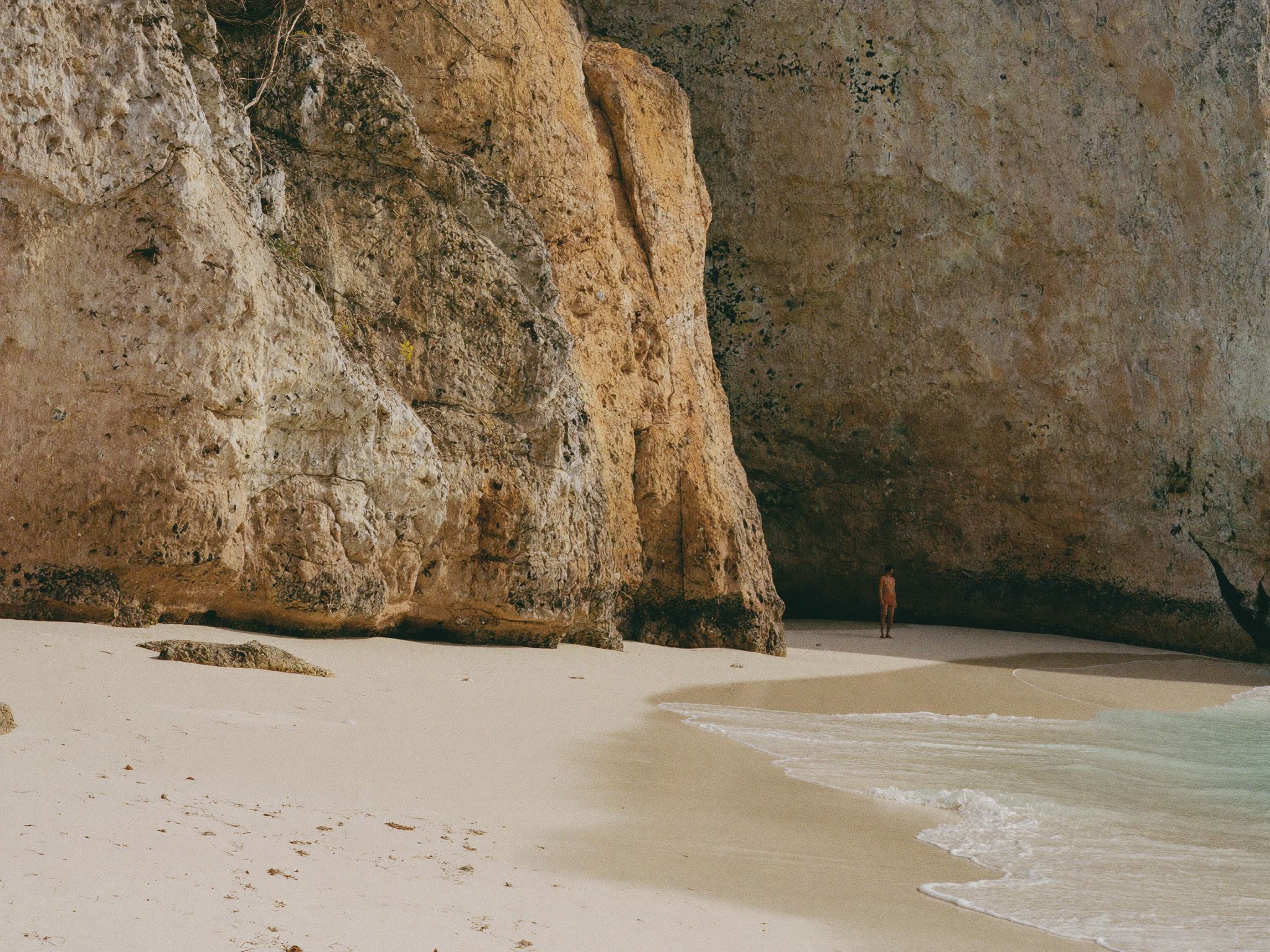
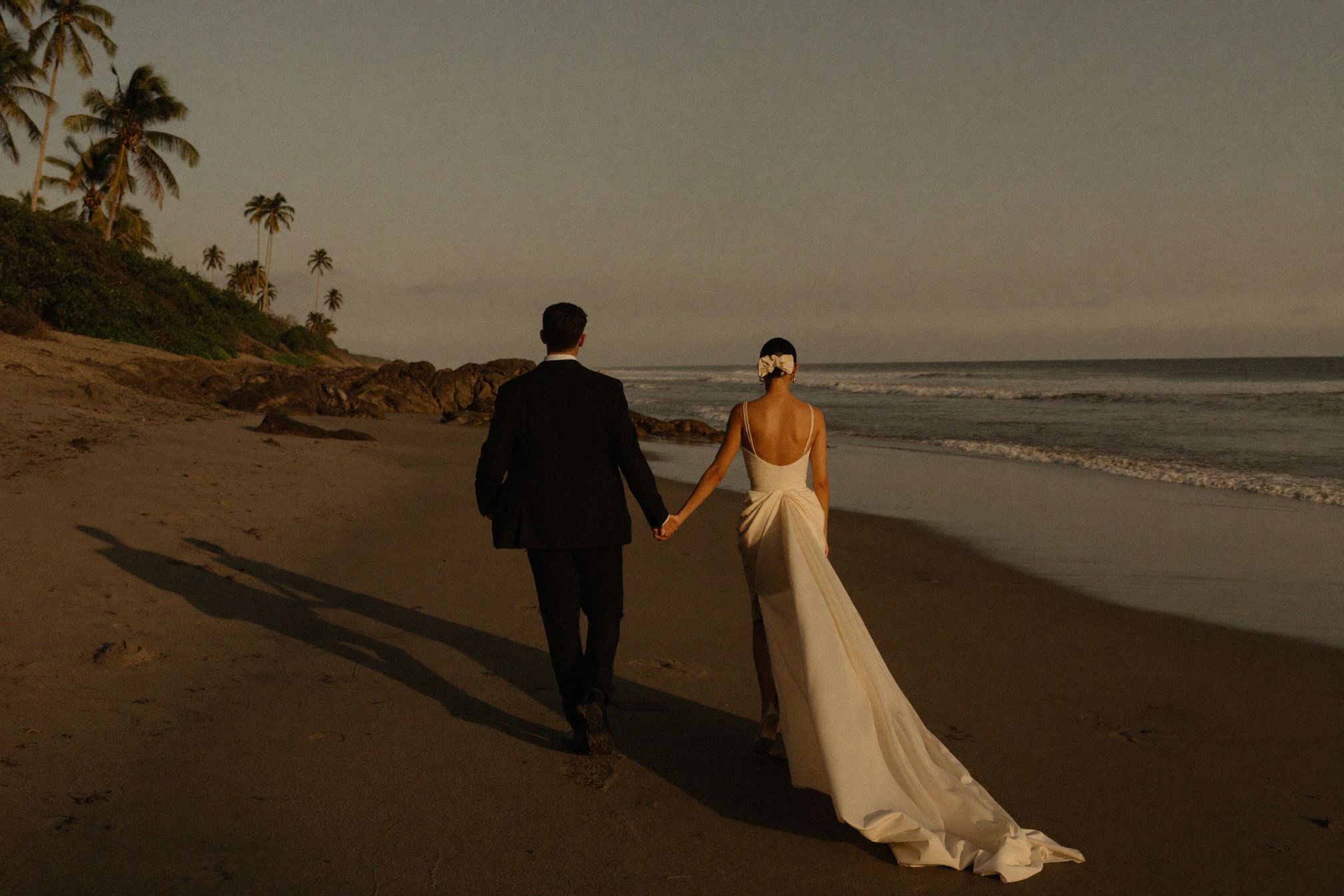
The scale is what does the work photographically. Two people on a beach that size read as very small, and that is a difficult thing to arrange elsewhere on this coast without a boat. On Guiones you walk ten minutes from the access path and you are alone in a way that looks alone in a frame rather than merely feeling alone.
The town, such as it is, sits back behind the trees rather than on the sand. Everything is low, wooden, and set into forest. Howler monkeys wake you. It is closer to a large village that happens to have very good coffee than to a beach resort, and that is not an accident either.
The road in, and the 4x4 you should book for the whole week
Practical, and it is the single most common thing I have to fix for couples who booked their own transport.
The last stretch into Playa Guiones is gravel and a 4x4 is genuinely advised, not a rental upsell. In the dry months a small car will manage it slowly. In the green season the same road has holes in it that will end your trip. It is roughly two hours from Liberia, which is the airport to use.
Book the 4x4 for the whole week rather than trying to be clever about it. Every good thing here is at the end of a track: the north end cliffs, the jungle behind the beach, Ostional up the coast, the river mouth at the south end. A car that limits where you can go on your own wedding week is a false saving.
If you are going on down the peninsula to Santa Teresa, that is a separate piece of planning. It involves the Puntarenas ferry and rough road, and it is a genuine journey rather than a transfer. Worth doing, on the four day itinerary, with the right vehicle and no timetable pressure.
Dawn, because the afternoon belongs to the surf
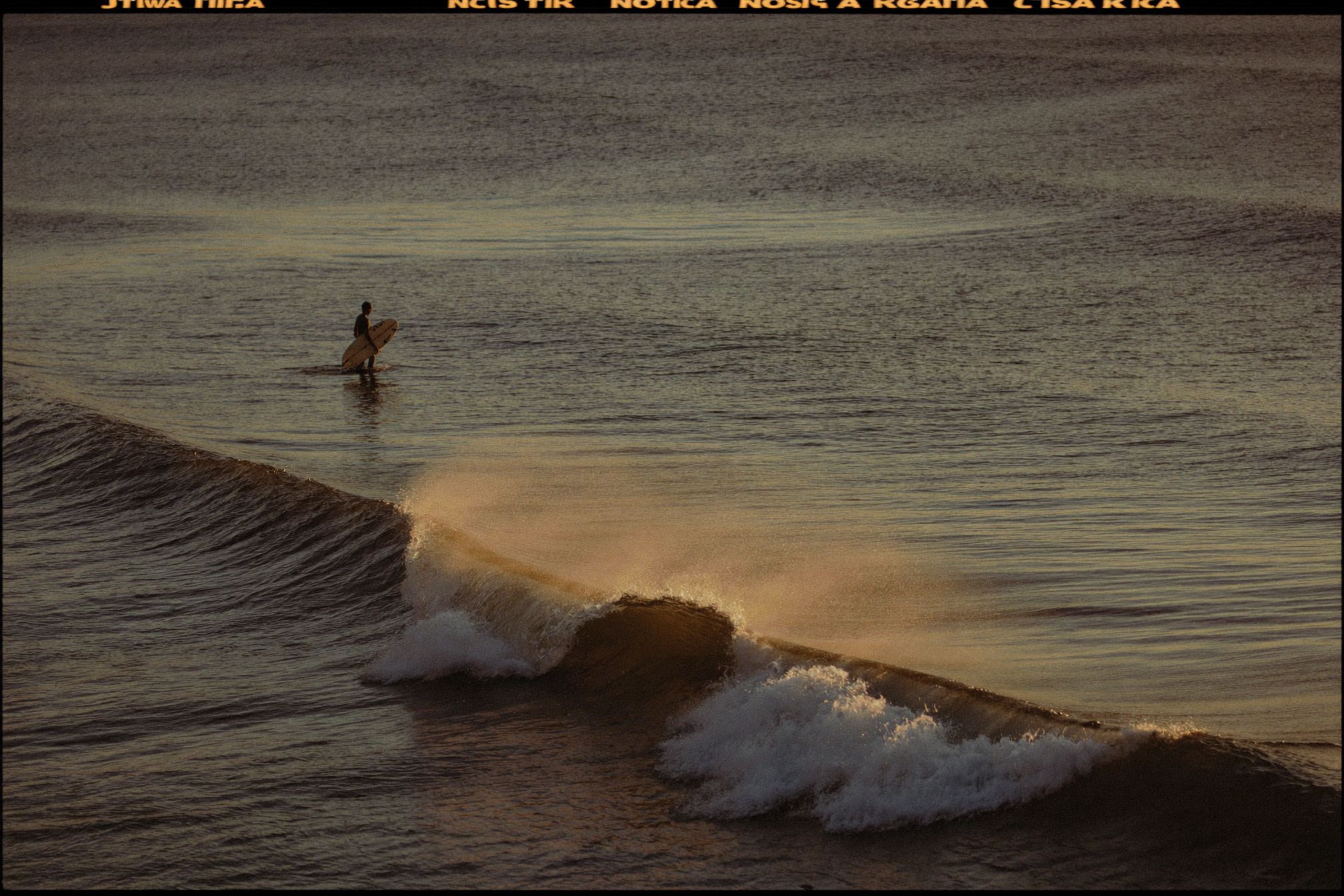
Nosara is a surf town and has been since the seventies. That shapes the day in a way worth planning around rather than resenting.
At dawn the light is behind the land, the water is glassy, and there are perhaps six people in it a long way down the beach. By mid afternoon there are forty, the wind is up, and the beach has the pleasant busy energy of a place where everybody is doing the same thing. Both are good. Only one of them is a ceremony.
So the vows go at first light and the surfing goes in the afternoon, which is also the sensible order for a couple who have never stood on a board. I put a lesson on most itineraries here. It is not a photographic exercise, it is a good hour, and the frames of somebody falling off repeatedly on their wedding week are usually better than the posed ones.
Yoga is the other half of what this town is known for. If that is your thing, it is genuinely world class here, and if it is not, nobody will make you.
The jungle behind the sand
The thing that separates this coast from a generic warm beach is how abruptly the forest starts. There is no landscaped margin. You walk off the sand, through a line of trees, and inside twenty metres you are in dry forest with monkeys in it.
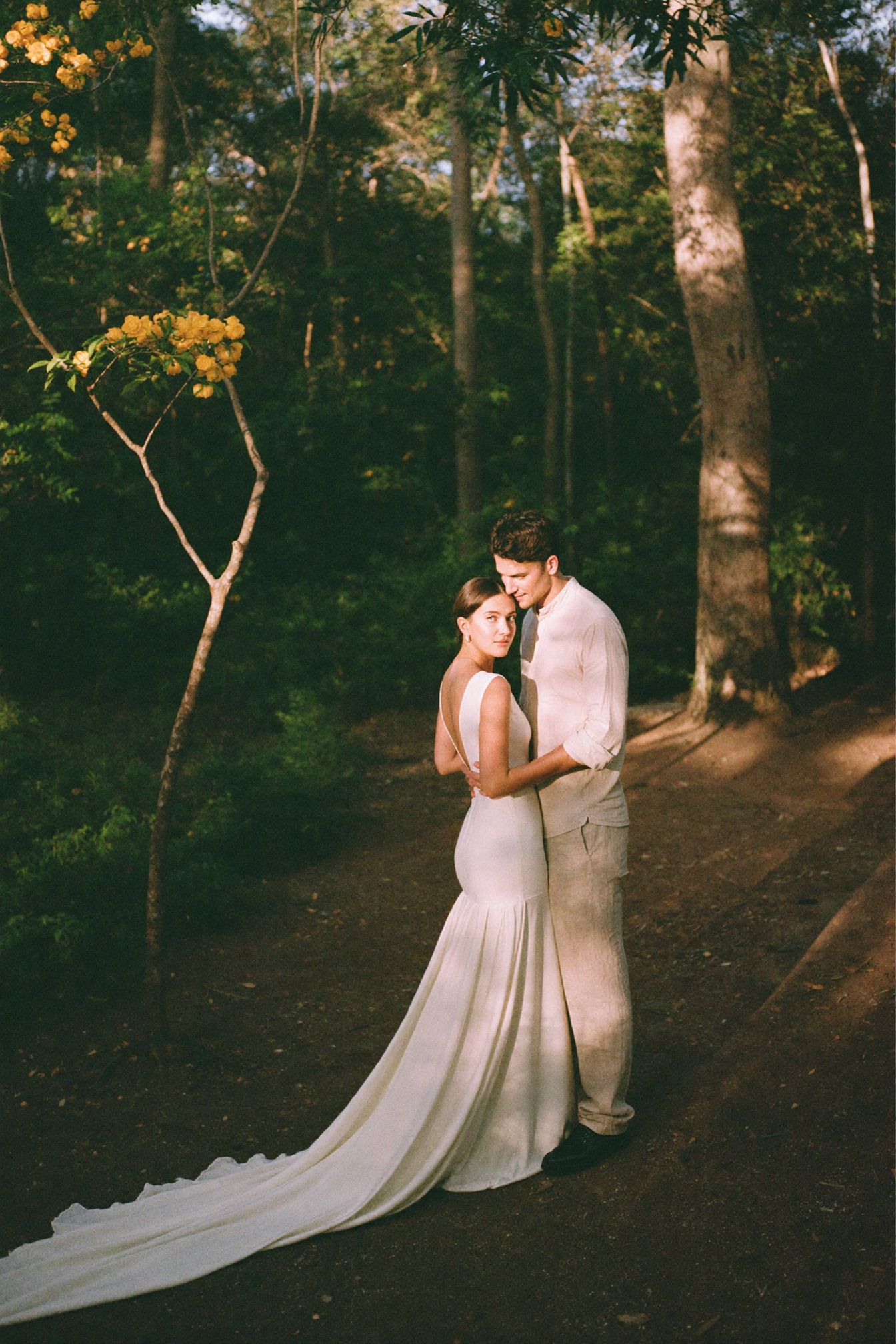
The tracks behind Guiones are where I take couples in the hour after the ceremony, and they produce a completely different set of photographs from the beach: dappled, green, close, with the light coming through in shafts. It is the counterweight the beach needs, and it is thirty seconds away.
Horses through those tracks at golden hour is the one I recommend hardest. They are working horses from the local ranches, the riding is gentle, and it takes you along the back of the beach and out onto the sand at the exact hour the light is worth having. Couples remember it.
The turtles at Ostional
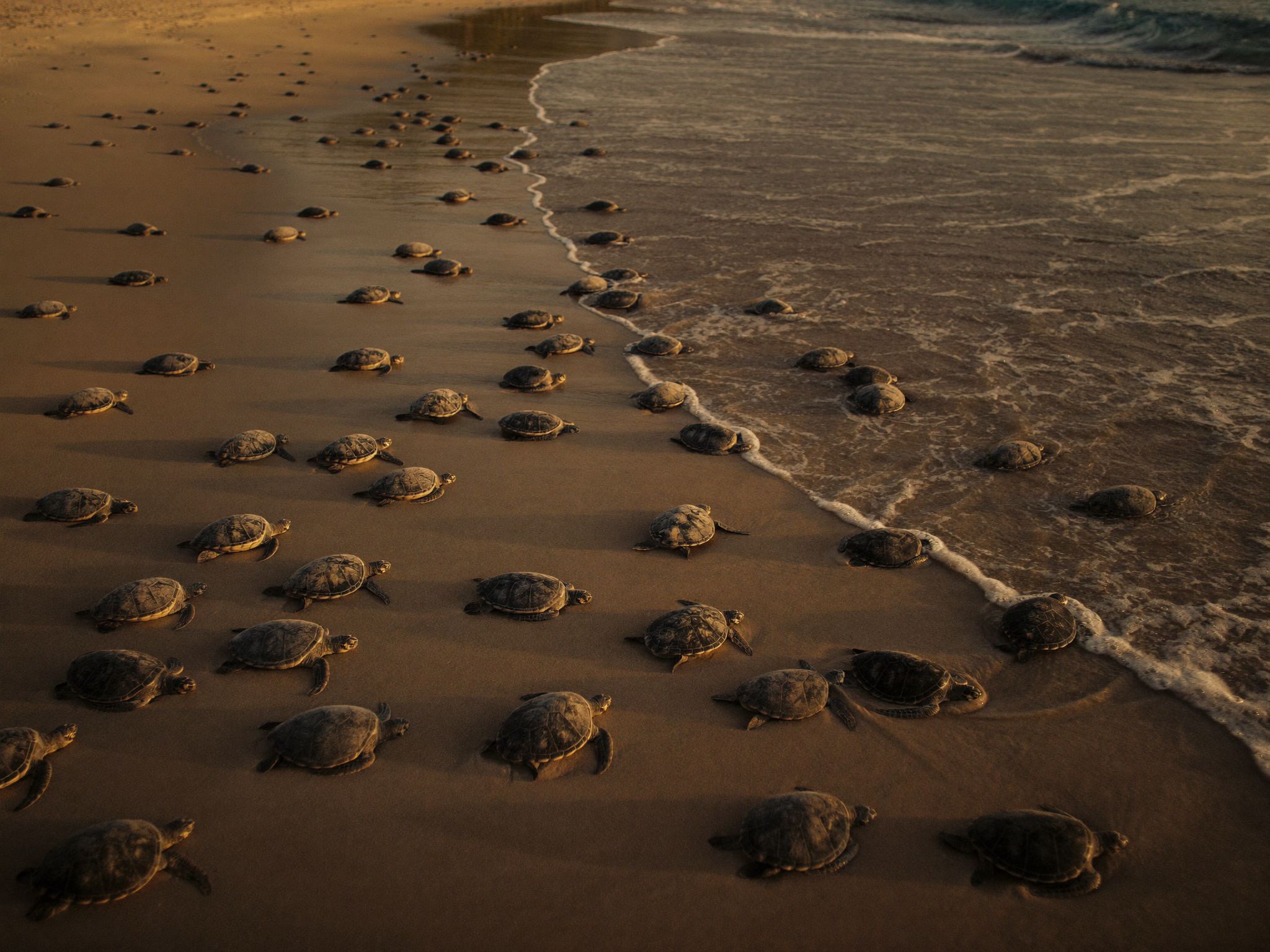
Up the coast from Nosara is Ostional, and it is one of the very few beaches in the world where an arribada happens: not turtles arriving, but thousands of turtles arriving at once over a few nights, the whole beach moving.
I am not going to print a month window for it and I want to explain why. Arribadas are tied to lunar cycles and local conditions and every source I checked gave a different set of months. I could write down a plausible looking range and a fair number of readers would plan a wedding week around it. So instead: it happens most often in the wetter half of the year, it is confirmed locally days rather than months in advance, and the honest way to plan it is to be in Nosara for a week in the right season and ask on the ground.
If it happens while you are there it will be the thing you talk about for the rest of your life, and it has nothing to do with your wedding. Access is managed by the local community and there are rules about lights and distance which exist for good reason and which I follow without negotiating.
Treat it as a gift rather than an itinerary item. Every couple I have taken who framed it that way has been happy either way.
South to Santa Teresa
The Nicoya peninsula continues south from Nosara and gets progressively less connected. Santa Teresa at the far end is a longer, harder journey involving the Puntarenas ferry, and it is the natural second half of a four day itinerary.
It is a different atmosphere: younger, scruffier, more crowded on the main strip and completely empty either side of it, with cliffs at the north end and some of the best sunsets on the Pacific coast. On the Adventuremoon we run the peninsula as one journey rather than treating either end as a base.
The drive is the reason to do it. Dirt road, river crossings in the wet months, cattle, and long stretches with the ocean on your right and nothing on your left. Do it with a day set aside for it and it is one of the best drives in Central America. Do it as a transfer with a dinner reservation at the other end and it is stressful.
Getting legally married
No residency requirement, no waiting period, no blood test. A Costa Rican notary public performs the civil marriage and two adult witnesses are required, which I arrange if you are on your own. It is registered with the Registro Civil afterwards and the certificate needs an apostille and a translation to be used at home.
The three hundred day rule can apply to a woman who is divorced or widowed unless she can show she is not pregnant. It is real, it is common enough that I ask everybody, and it moves dates rather than blocking them if it is known early.
On the beach itself: public access is not the same as permission for an organised ceremony. In a small community like this one that distinction is social as much as legal, and being the couple who turned up with an arch and no conversation is a bad way to spend your first morning. It is arranged, quietly, in advance.
What it costs, and why it costs it
Nosara starts at $11,200 for the Essential, $23,500 for Curated Signature and $30,000 for the Curated Adventuremoon. It is the top of my Costa Rica ladder by a clear margin.
Where the money goes, itemised, because otherwise it is just a number. Vendors travel. There is no florist, no hair and makeup, no film support living at the end of that road, so people and equipment come in from further away and that is a real cost rather than a markup. Transport is 4x4 across gravel for every movement of every day. Accommodation supply is deliberately restricted, which pushes everything up. And the four day version crosses the peninsula, which is a logistics exercise rather than a drive.
What you get for it is the thing that is genuinely scarce on the Pacific coast of Costa Rica, which is emptiness with infrastructure behind it. Guanacaste is easier and cheaper and busier. Nosara is the one where the beach is actually yours.
Flights and lodging are excluded, always. The whole ladder is on the pricing page, and the locations and timeline are on the Nosara elopement planner.
Who should not come
If the gravel road sounds like an inconvenience rather than a feature, book Guanacaste instead. Same peninsula, same ocean, half the journey, twelve hundred dollars cheaper, and a sunset that is every bit as good. I will not think less of the choice and I build a lot of them.
If you want rainforest rather than dry forest, this is the wrong side of the country. Go south to Uvita or inland to Monteverde.
If your budget tops out under ten thousand dollars, Nosara is not the place to force it. Puerto Viejo on the Caribbean starts at $9,700 and is a completely different and equally good country.
The rest of it is in the Costa Rica elopement guide.
Tell me how far you are willing to drive and I will tell you what is at the end of it →
Enquiries to the publisher, armanarai.com.