How to Elope in Los Cabos, Where Most of the Beaches Will Not Let You Swim
Desert running into two oceans, one of the great arches in the world, and a coastline where the difference between a green flag and a black one is not decorative.
Baja California Sur is the strangest landscape I work in and it takes people a day to adjust. It is desert, properly: cardón cactus fifteen metres tall, dry mountains, dust. And then it stops at the water, twice, because the peninsula has open Pacific on one side and the Sea of Cortez on the other, and they are completely different oceans.
I do not sell Los Cabos as a town. I sell it as a circuit, because the good things are spread out and one airport reaches all of them: Cabo San Lucas at the tip, Todos Santos and the Pacific bluffs up the west side, La Paz and the Sea of Cortez to the north, the East Cape to the east. One flight into SJD, four landscapes.
But before any of that, the thing nobody puts in a brochure and which genuinely matters here: most of these beaches are not safe to swim.
(Continued on Page 2, Col. 1)
The green flag is not decoration
Los Cabos publishes a swimmable beaches guide, and the reason it exists is that the difference between the two coasts is dangerous rather than academic.
The beaches officially listed as swimmable include El Médano in Cabo San Lucas, Chileno and Santa María on the Corridor, Palmilla, Las Viudas and El Bledito. Chileno and Santa María carry Blue Flag certification. Those are the ones with calm water, and the two on the Corridor are also the good snorkelling.
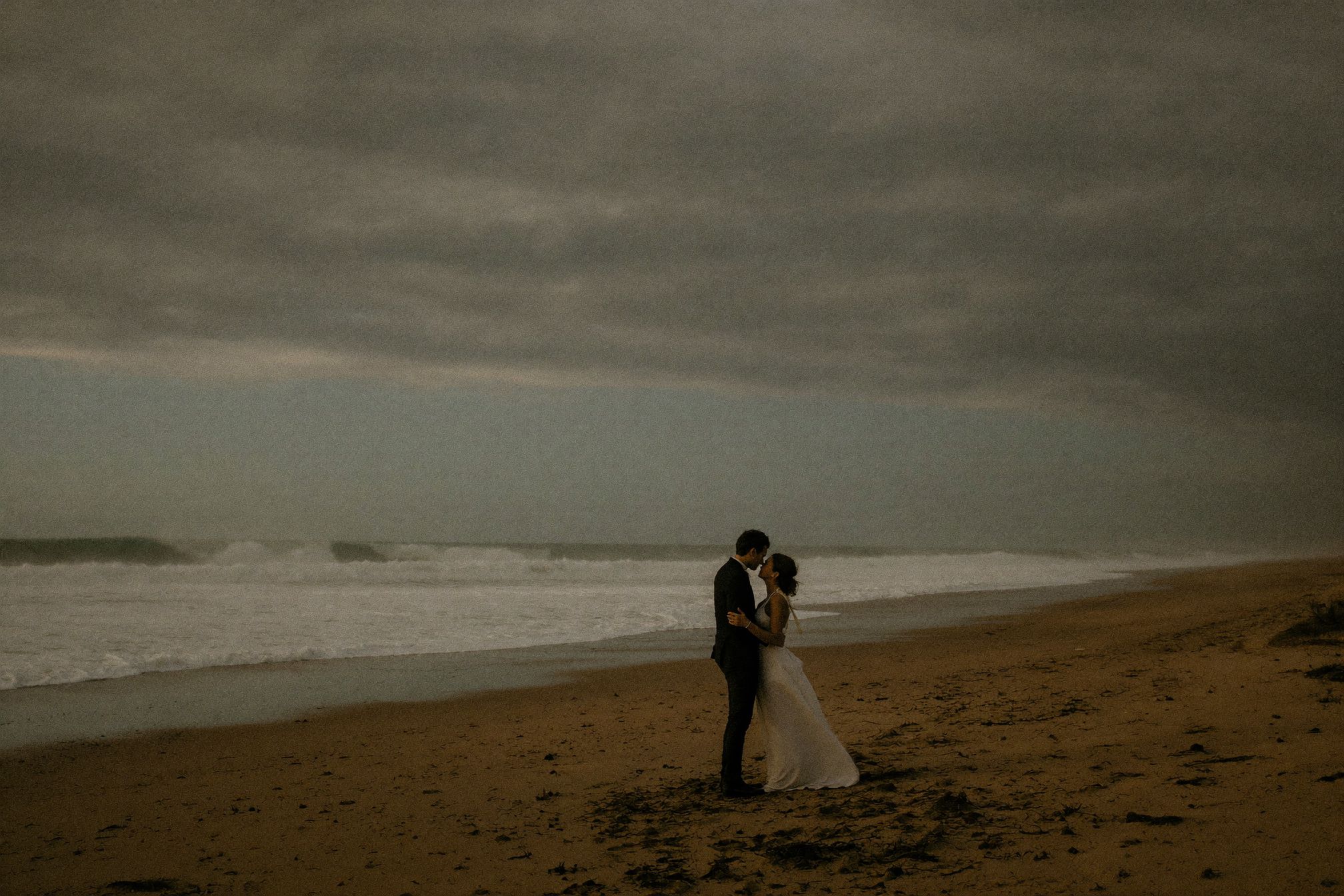
The Pacific facing beaches near Cabo San Lucas and almost everything at Todos Santos are not swimmable. Undertow, rip currents, and a shore break that lands on hard sand. People drown on this coast every year and they are usually visitors who did not understand that a beautiful empty beach can be lethal.
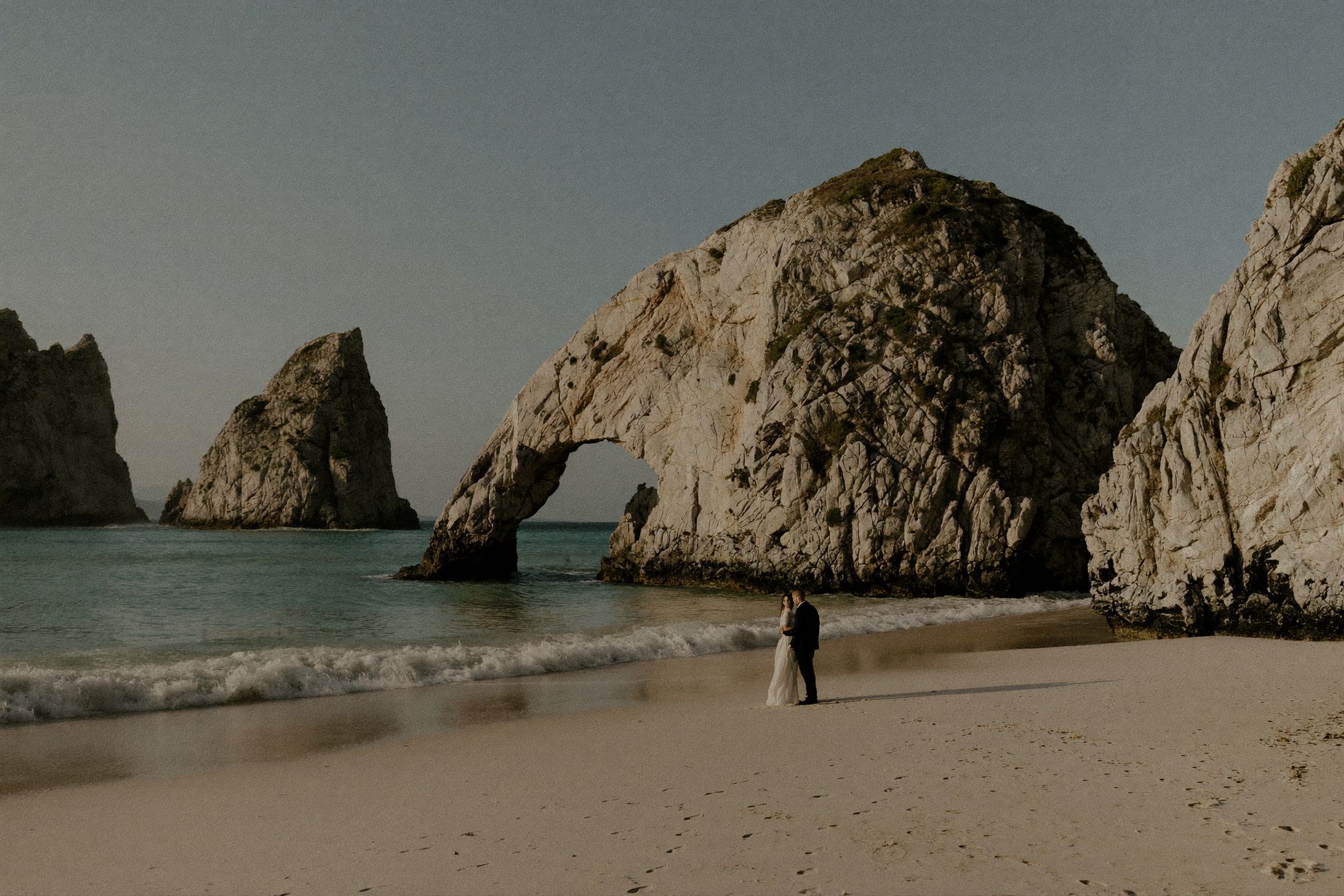
The clearest illustration is at Land's End itself. Lover's Beach, on the bay side, is swimmable. Divorce Beach, on the Pacific side of the same narrow neck of sand, is not. They are a two minute walk apart. The names are a joke that is also a warning.
Beaches fly warning flags and you follow them. Green is safe, black or red is not, and there is no version of your wedding day worth ignoring one for. I could not find an official numbered count of safe beaches, so I am not printing one. Use the published guide and use the flags.
The arch, and the only way to see it
El Arco is where the peninsula ends: a natural arch cut through the last rock, with the Pacific on one side and the Sea of Cortez on the other. It is genuinely one of the great coastal formations and it is the reason most people have heard of Cabo.
You reach it by boat and only by boat. Water taxis run constantly from the marina, and going early is the difference between having it and sharing it with forty vessels. First light is best: the rock faces roughly south and east, so the sun comes up along the Cortez side and lights the arch from the correct angle.
Sea lions live on the rocks around it in numbers and they are loud. Nobody is warned about this and everybody enjoys it.
Getting married at the arch itself is not really a thing, and I would rather say so than sell it. The photographs happen there. The ceremony happens at Lover's Beach beside it, or on a cliff above, or on a boat.
The desert, which is the actual differentiator
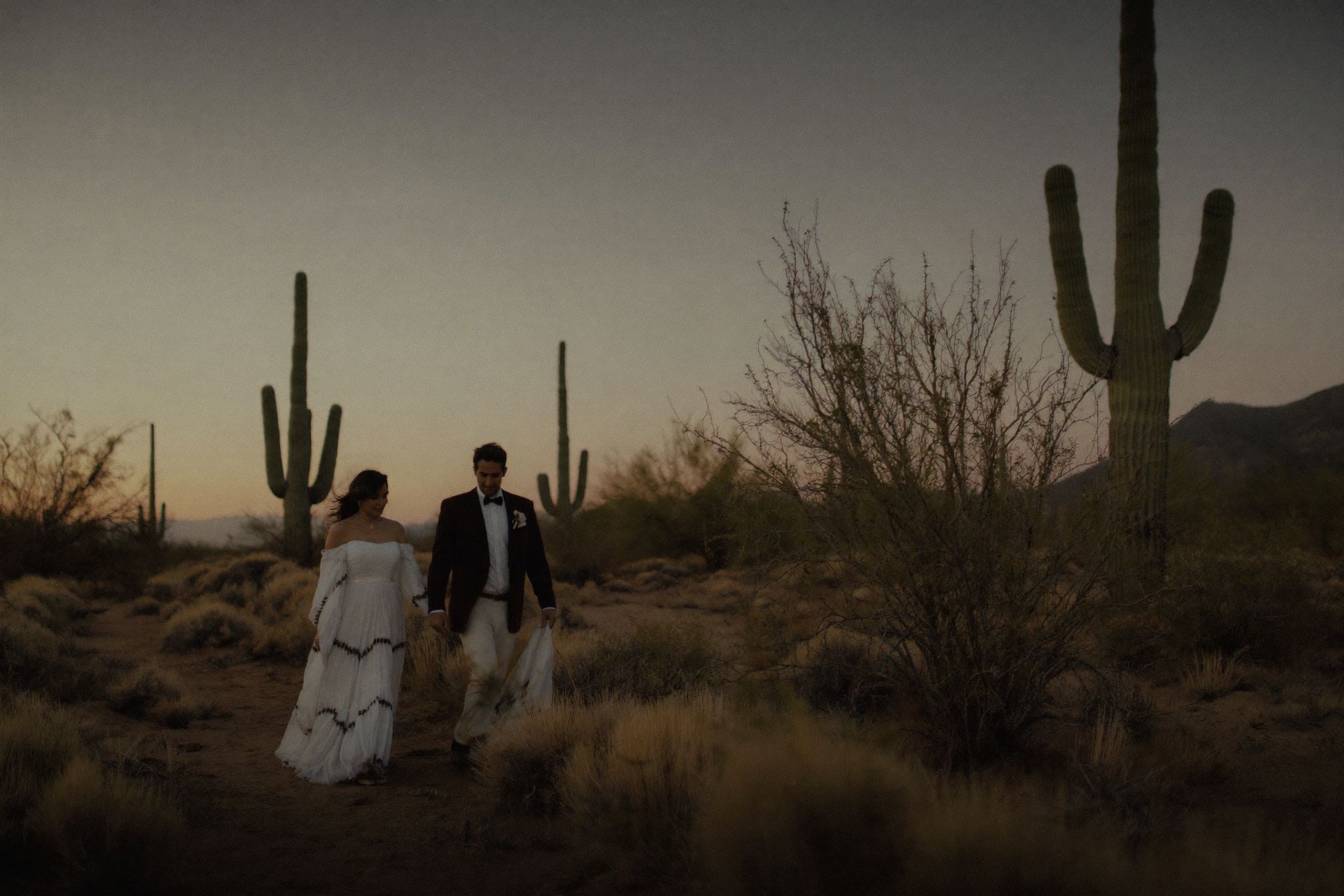
If you take one thing from this post that changes your plan, take this. The beaches in Baja are good. The desert is unique.
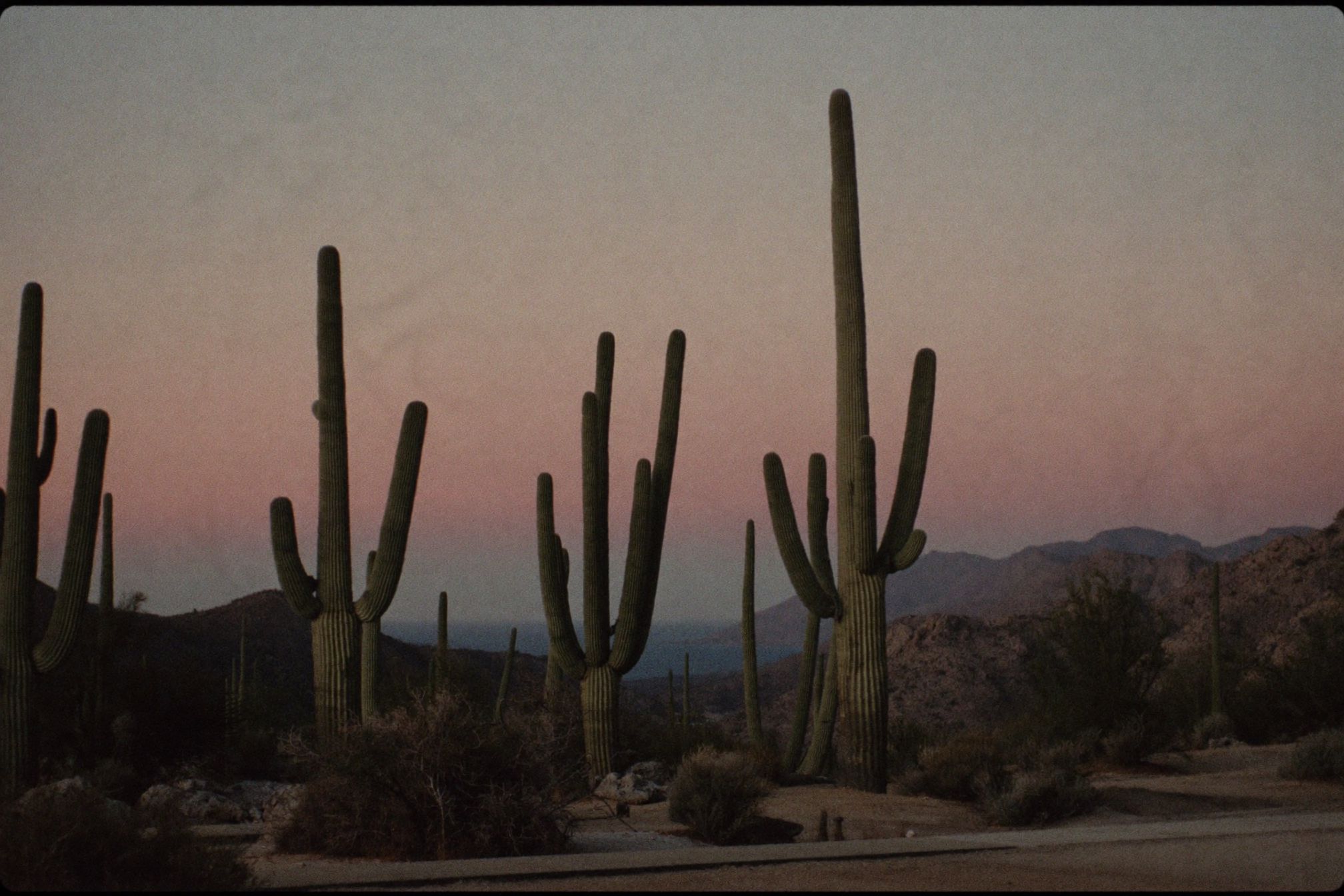
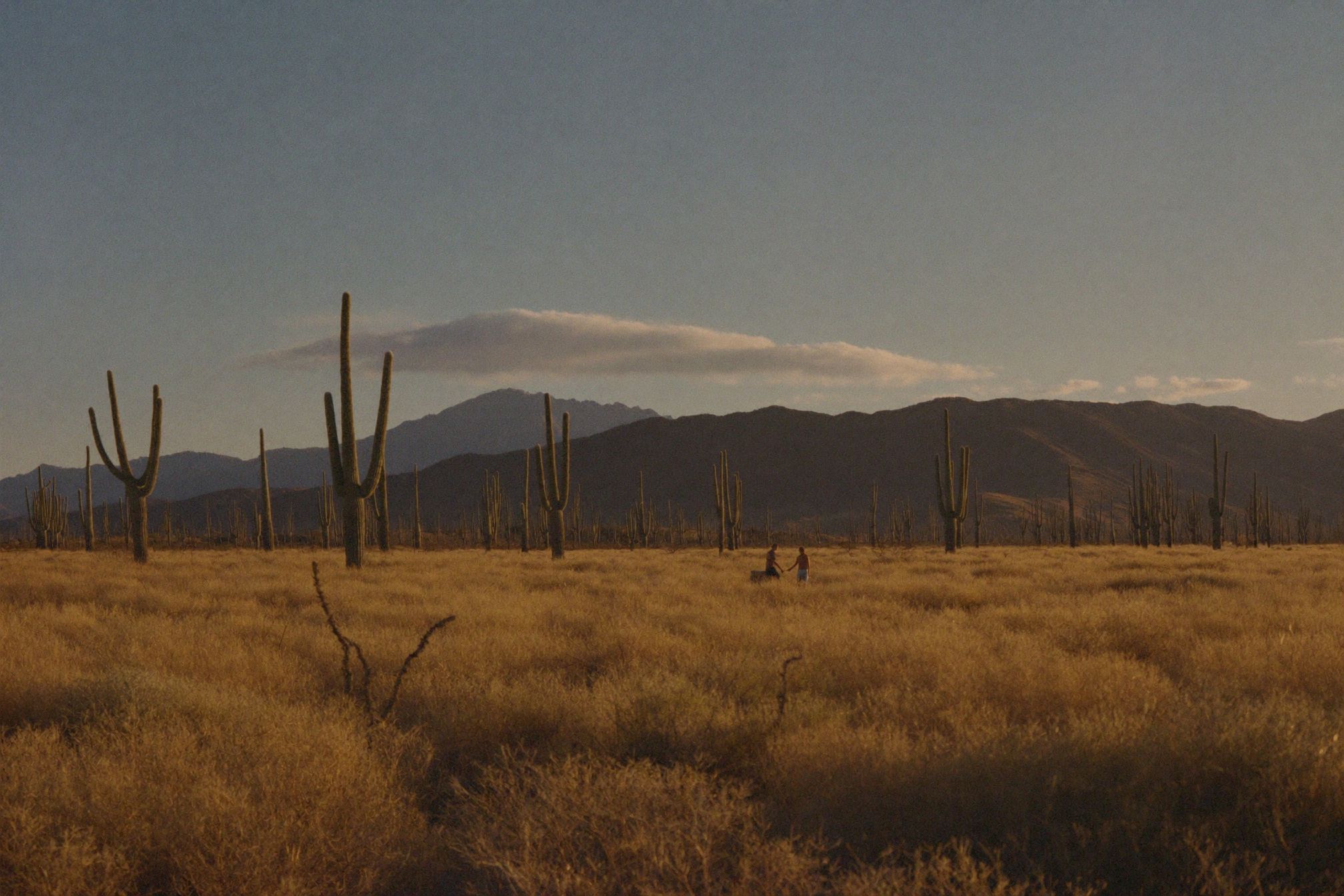
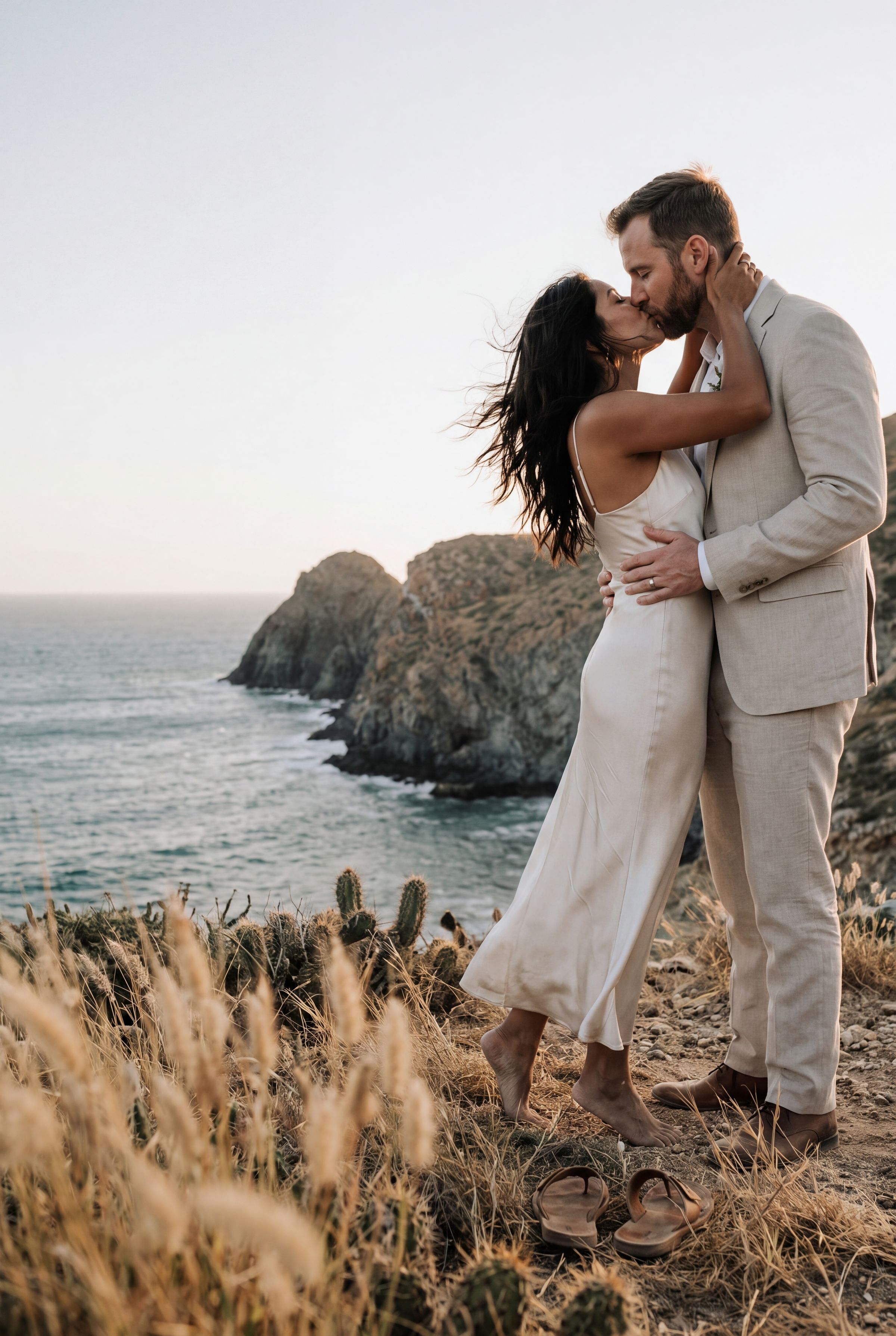
Cardón cactus grow to fifteen metres here and stand in open dry country with mountains behind them, twenty minutes from the water. Nowhere else I work has anything remotely like it. At dawn the light is horizontal and hot coloured, the ground is pale, and two people in wedding clothes in the middle of it produce a frame that could not be anywhere else on earth.
It is also the coolest part of the day by a wide margin. Baja in the wrong month is genuinely punishing, and the desert at six in the morning is pleasant while the desert at noon is not survivable in a suit.
Bring proper footwear, watch where you sit, and take the warnings about wildlife seriously rather than treating them as colour. This is a real desert.
Todos Santos and the Pacific bluffs
An hour north on the Pacific side is Todos Santos, a small town of galleries and old buildings with a long wild coast below it. It is the antidote to Cabo San Lucas and it is the reason the circuit exists.
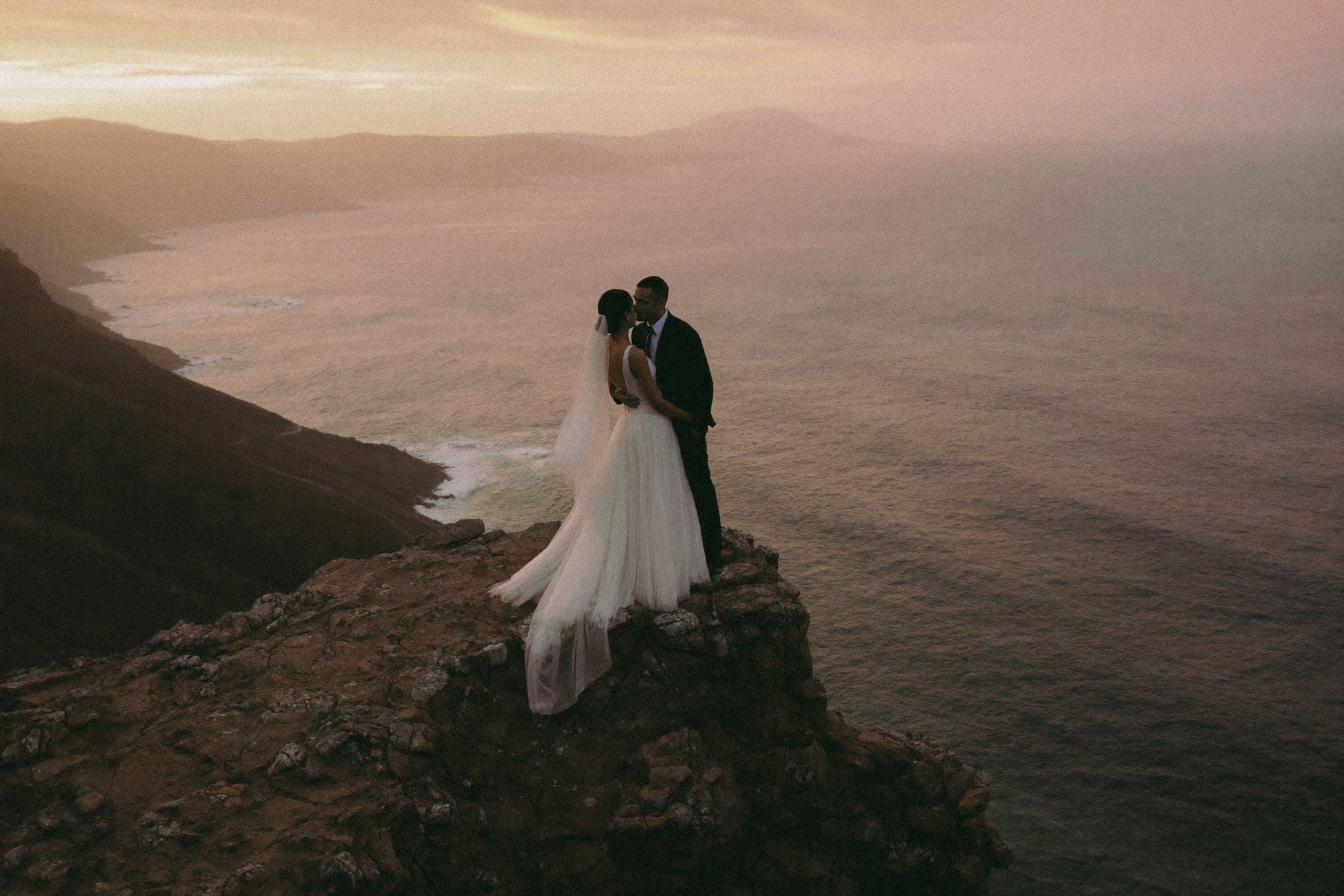
The bluffs above those beaches are my favourite ceremony location in Baja. You are above a beach that runs for miles with nobody on it, the Pacific is doing something violent below you, and the desert is behind you. The wind is constant and the light in the last hour goes across it rather than down.
The beaches themselves are for looking at. As above: this is the unswimmable coast, and the fact that a beach is empty and beautiful is not evidence that it is safe. Stand on the bluff, walk the sand, do not go in.
The town is worth a morning. Galleries, a mission church, and food that is better than the population would suggest.
La Paz, Balandra and the other ocean
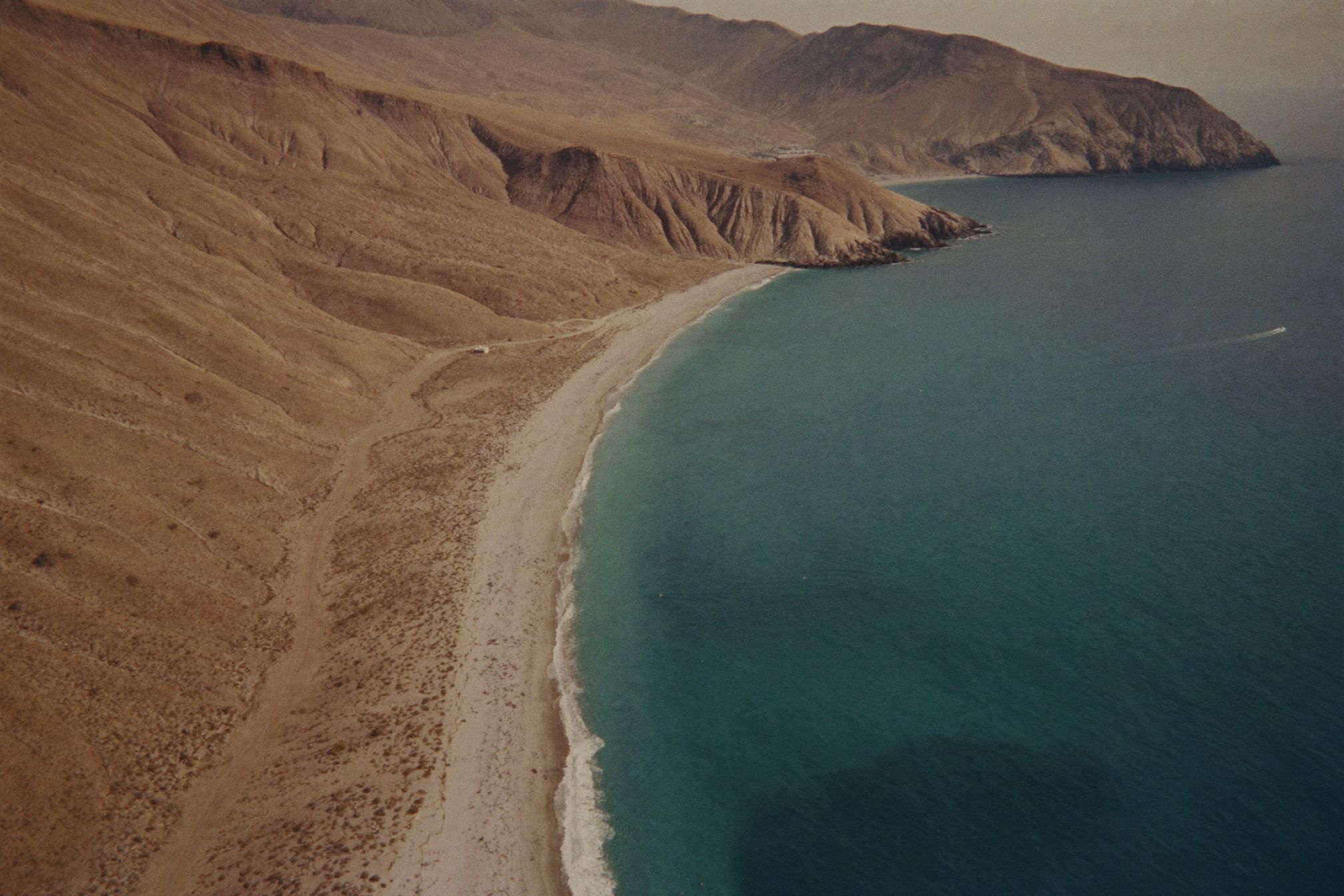
Two hours north the peninsula reaches La Paz on the Sea of Cortez, and it is a different ocean in every respect: flat, warm, shallow, and pale enough that the water reads white in photographs.
Balandra is the famous one, a shallow bay with a mushroom shaped rock in the middle where you can walk a long way out and still be knee deep. It is protected, and access is managed rather than open.
What is widely reported is two daily shifts, roughly eight until twelve and one until five, with a cap of around 450 visitors per shift, booked through CONANP. I could not confirm that against an official notice, so treat the specific numbers as reported rather than certain and check close to your date. What is not in doubt is that access is capped and booked in advance, which is the part that affects your plan.
La Paz is also where you go for the sea life. This is the bay with whale sharks in season and sea lion colonies you can swim with, and it is a much better half day than anything on the Corridor.
Four witnesses, which is unusual
The Mexican legal marriage requirements I give everywhere apply here, plus one local difference worth knowing.
A Mexican civil marriage requires a blood test taken in Mexico, and the number of witnesses varies by state. Los Cabos requires four, where a good many states require two. If you are two people who flew in alone, that is four strangers standing at your wedding, and it is a large part of why almost every foreign couple here chooses a symbolic ceremony.
So the recommendation is the same as everywhere in Mexico. Sign the legal paperwork at home before you fly. Hold the ceremony on the bluff at the hour you chose, with the words you chose, and nobody present who does not need to be.
If the legal marriage has to happen in Baja, I will build it and I will find the witnesses, and I will tell you first how many days it takes.
The month matters more here than anywhere
Baja has a genuine hot season and a genuine hurricane season, and they overlap.
The comfortable months run roughly November through May. Late summer and early autumn are hot in a way that changes what is possible, and the Pacific hurricane season affects this peninsula directly rather than theoretically. I will plan a September date if you want one and I will be straight with you about the risk.
The best combination is probably January to March: cool mornings, clear light, whales in the Cortez, and low humidity. It is also the busiest and most expensive stretch, which is the trade everywhere.
Whatever the month, the day starts before sunrise. That is not a photographic preference, it is a heat strategy, and by ten in the morning you will understand why.
What the circuit costs
The Baja Sur circuit starts at $10,000 for the Essential, $19,500 for Curated Signature and $29,500 for the Curated Adventuremoon. It is the most expensive thing I sell in Mexico by a wide margin and the reason is the geography.
You are covering distance. Cabo to Todos Santos is an hour. Cabo to La Paz is two. The East Cape is another road again. A circuit that touches all of it is transport, drivers, and a fixer holding four locations rather than one, and that is a genuinely different operation from a beach ten minutes from a hotel.
The Adventuremoon at $29,500 is the version this destination is actually built for: four days, four landscapes, one airport. If you are only going to see Cabo San Lucas, you are paying circuit prices for a town, and I would rather point you at Sayulita for fifteen hundred less.
Flights and lodging are excluded, always. The full ladder is on the pricing page and the route is written out on the Los Cabos elopement planner.
Who should not come to Baja
If you want green, this is the wrong country. Baja is brown for most of the year and spectacular because of it. If a jungle is what you pictured, go to the Riviera Maya or Costa Rica.
If swimming is central to the trip, understand the flag system before you book and choose accommodation on the swimmable side. This is not a coast where you wander into the water wherever you happen to be standing.
If you want to stay in one place, do not buy a circuit. Cabo alone is fine, and the honest way to do that is to say so and let me build a shorter itinerary rather than pay for four landscapes and visit one.
The whole country is in the Mexico elopement guide.
Tell me how far you want to drive and I will draw you the route →

Enquiries to the publisher, armanarai.com.