CONAF Permits for a Torres del Paine Elopement
The most paperwork of any day I run anywhere, and the paperwork is most of what you are paying for.
Torres del Paine carries more paperwork than any other place I work, and the distinction that matters most is between access and permission. Anyone can enter the park. Holding a ceremony in it and photographing that professionally is a different question with a different answer.
Couples usually discover this in the wrong order: they choose the park, then find out about the authorization, then find out the entry is capped, then find out their preferred sector is on private land. Here it is in the right order instead.
(Continued on Page 2, Col. 1)
The park is administered by CONAF, and entry is capped
Torres del Paine is administered by CONAF, the Chilean forestry corporation, and entry is capped and booked in advance through an online reservation system. Every visitor is registered by name and by date.
That single fact reorganises the whole plan. Your wedding day is not a day you can decide on late, because the day itself has to exist in a reservation system before you stand in it. It also means the number of people you bring is a number that has to be declared rather than assumed.
I hold the entry reservations for everyone in the party. It is the first thing I do once a date is agreed, ahead of almost everything else, because it is the constraint that cannot be worked around later.
Professional filming needs its own authorization
General entry does not cover professional photography and filming inside the park. That requires its own authorization, separate from your ticket.
This is the piece that catches out couples who have booked a photographer from home. Arriving with a professional and no authorization is not a technicality nobody checks; it is a park where every visitor is already registered by name.
I file it. That is not a favour, it is a structural part of why an elopement here is priced the way it is, and it is the same reason I would rather run this day end to end than be handed someone else's plan two weeks out.
Drones are prohibited
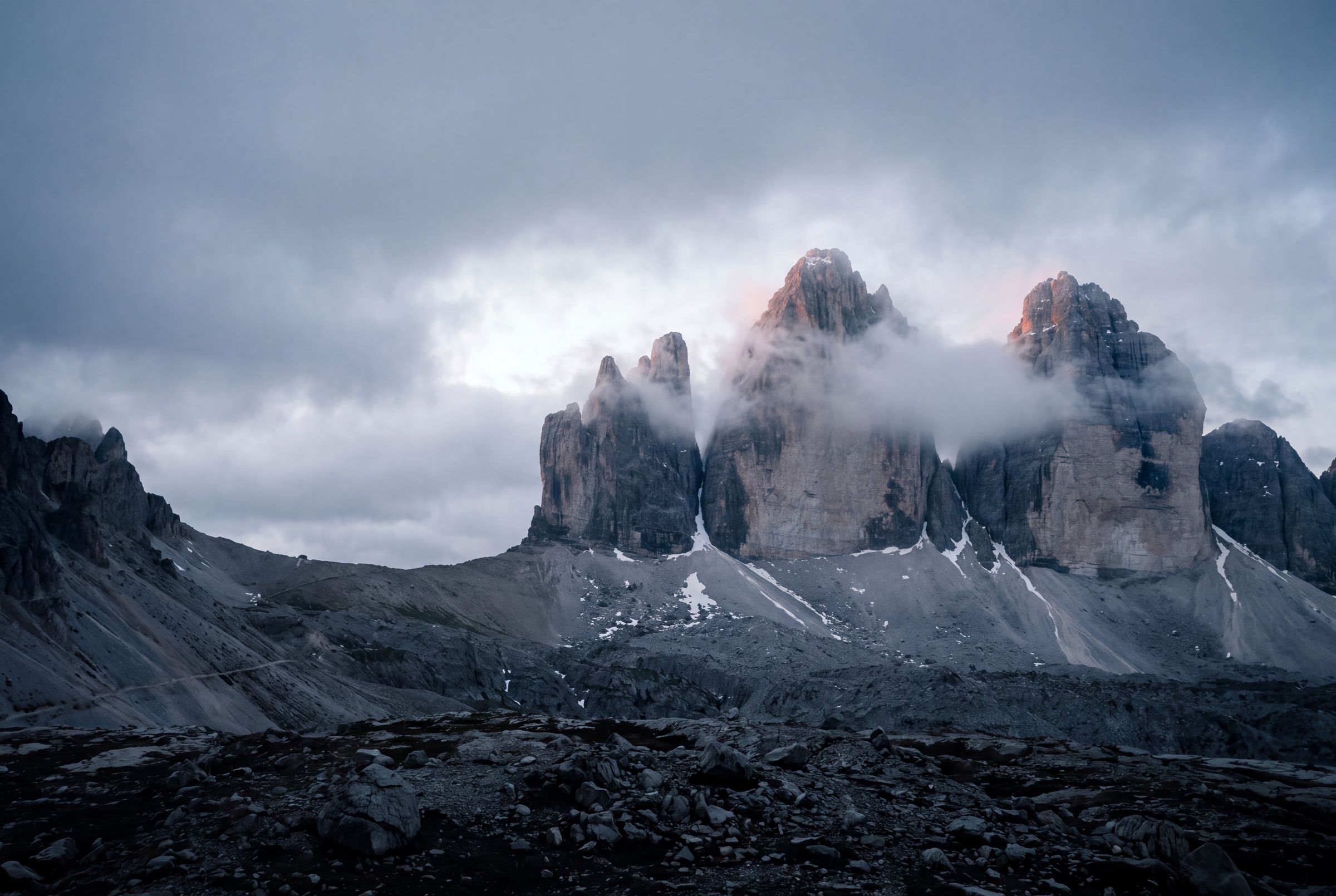
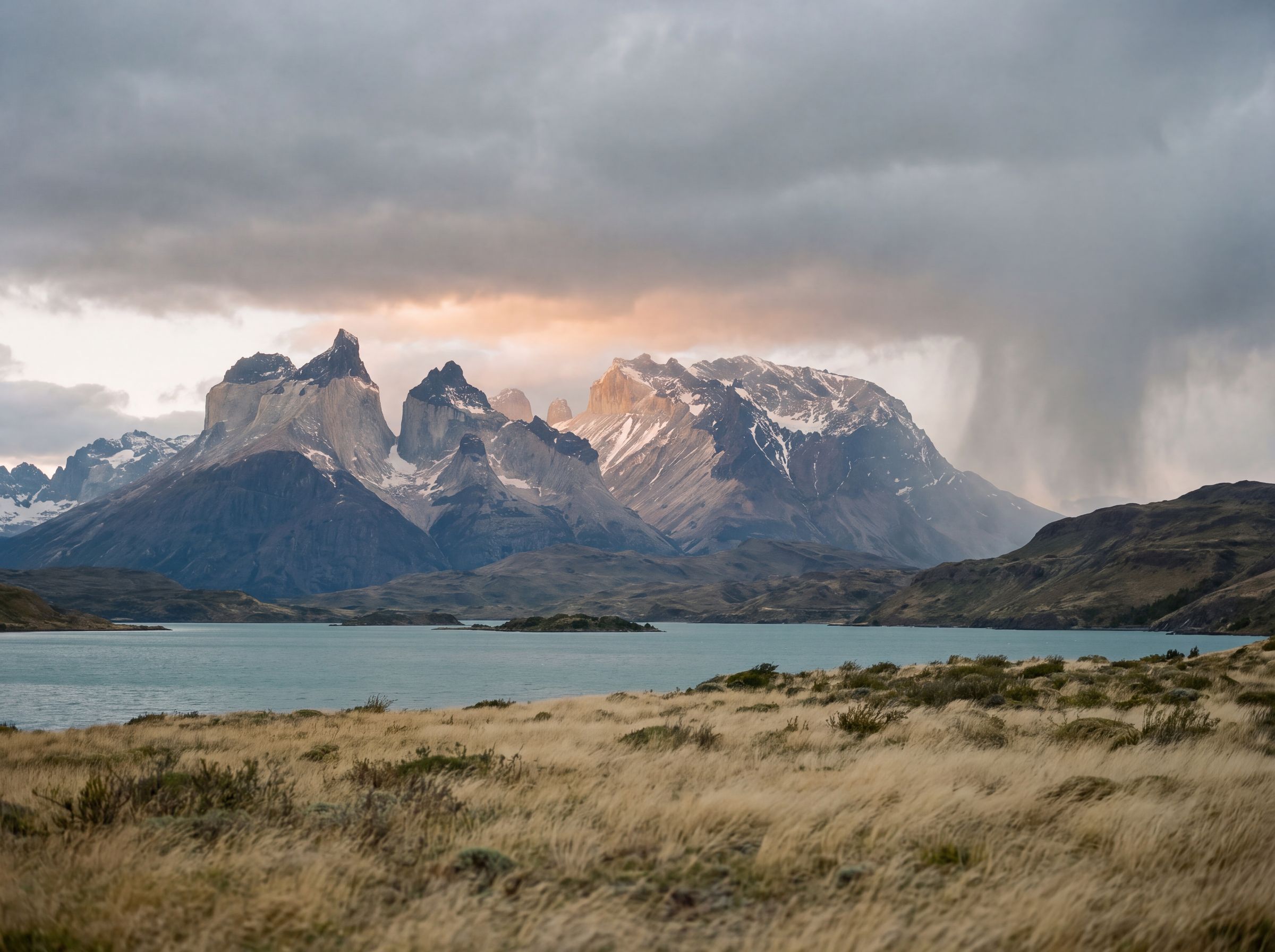
Drones are prohibited inside Torres del Paine. There is no version of this where you get aerial footage over the towers.
I state it flatly because couples arrive having seen aerial footage of the park online and reasonably assume it is available. Some of what circulates predates the current rules and some of it was not lawfully made. Either way, it is not something I will offer you.
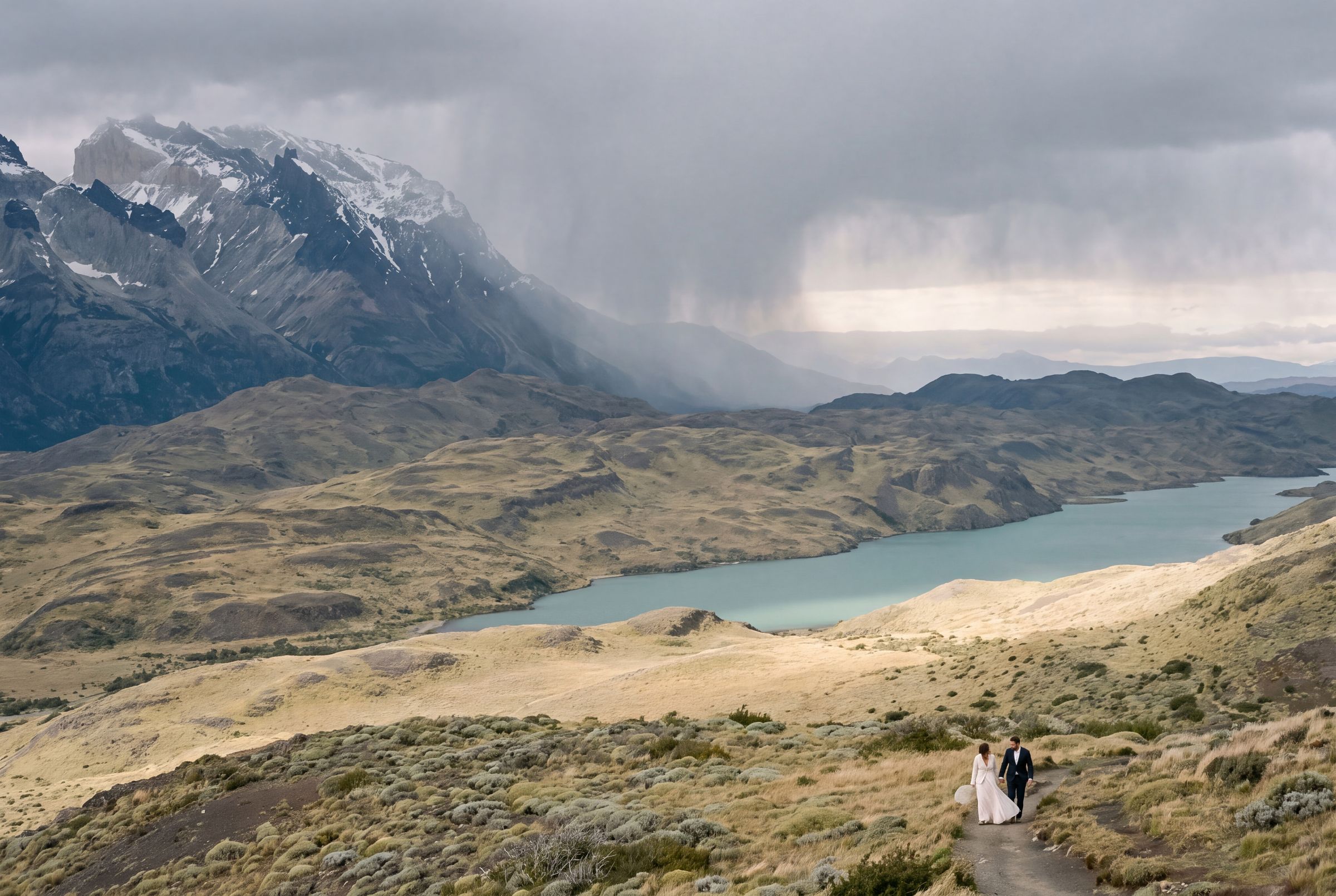
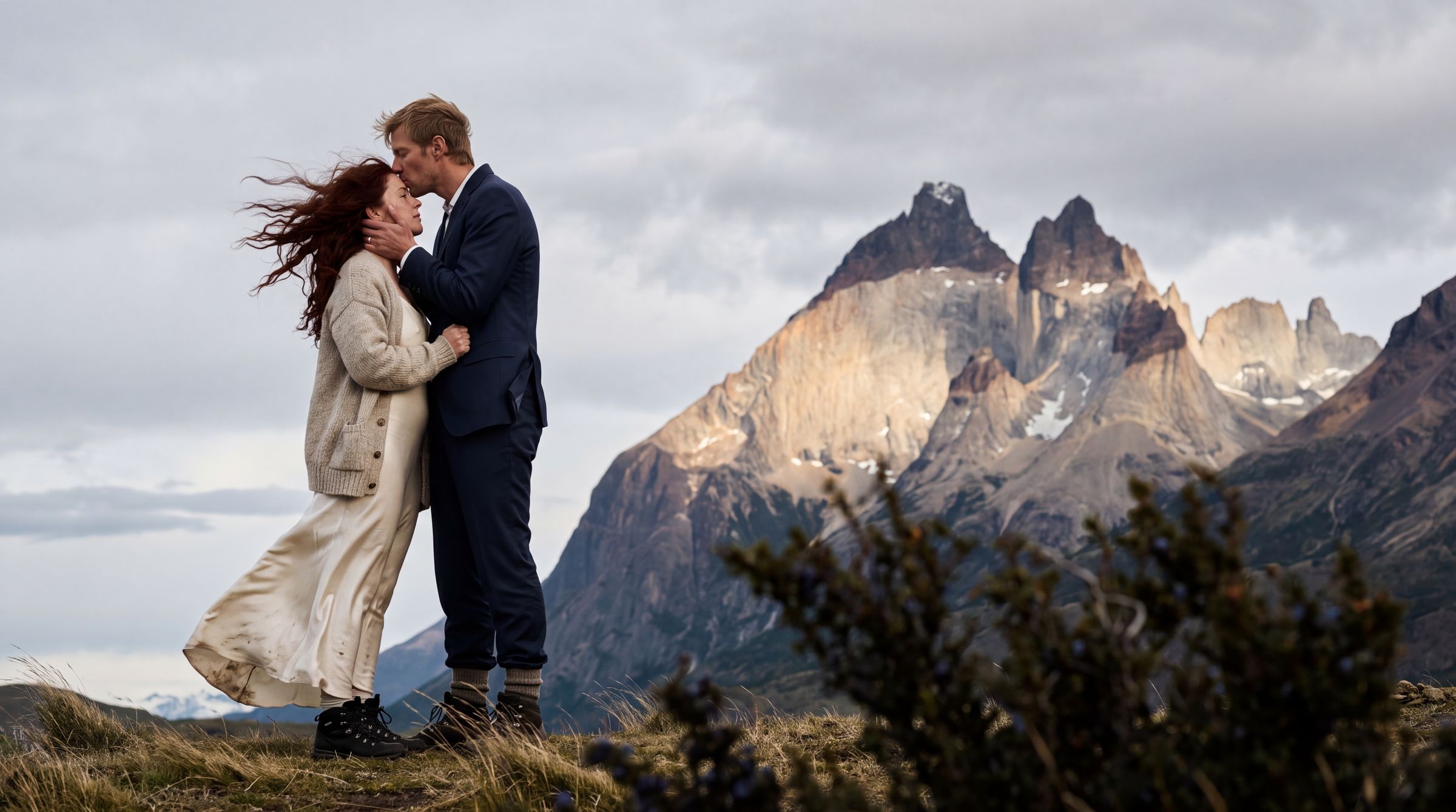
What replaces it is elevation you can walk to. The moraine bluffs above Pehoé, the ridgelines on the approach, and the plain at dusk all give scale without an aircraft, and they give it without putting your day at the mercy of a ranger's discretion.
Some of the best ground is private
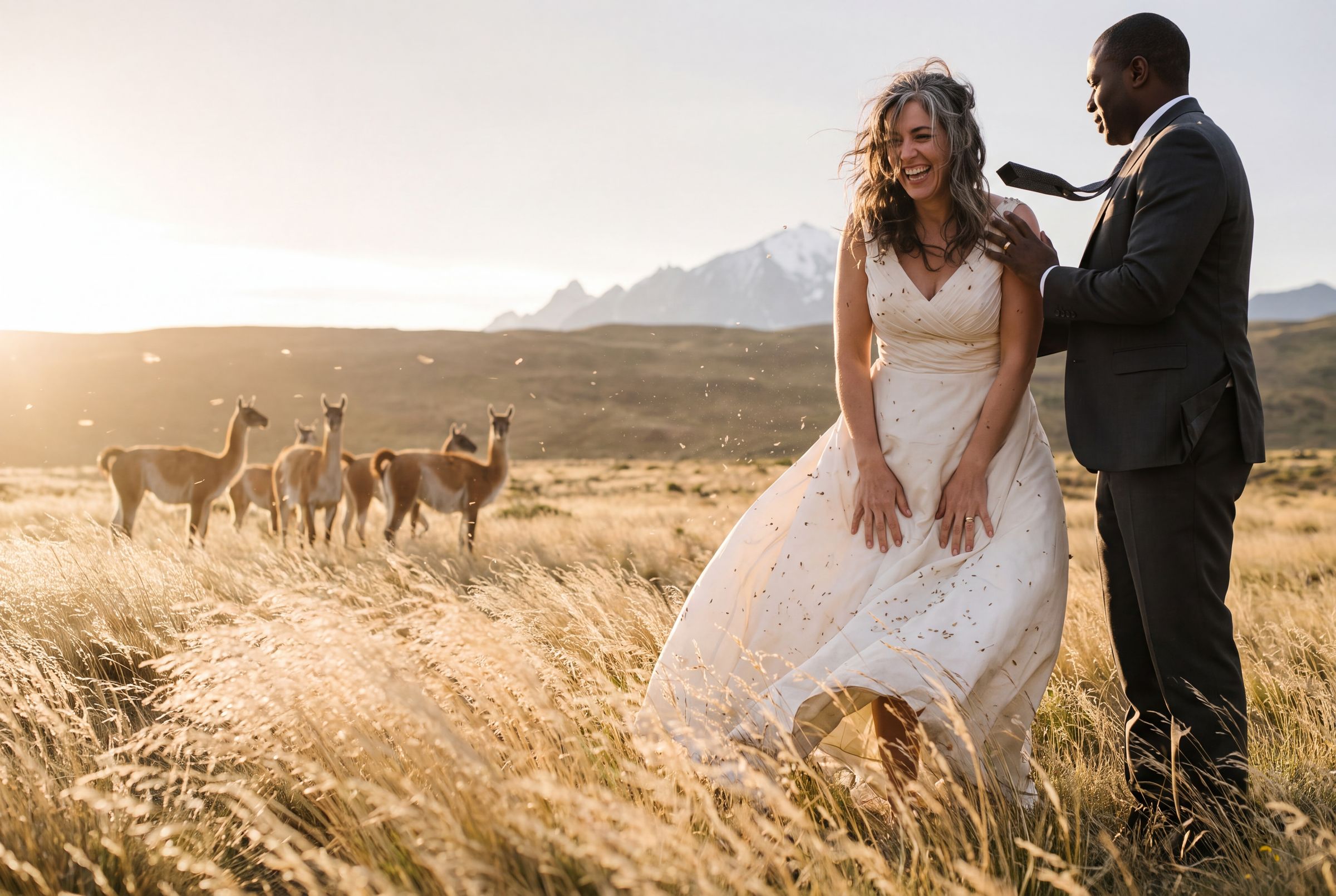
Several sectors sit on private estancia land rather than on park land, with separate access agreements. This surprises people who assume a national park is uniformly public, and it matters because some of the most usable ceremony ground falls into this category.
Private access has an advantage worth stating: it is negotiated rather than capped, which can mean a location with nobody else in it on a day when the public viewpoints are full. It also means an arrangement made in advance with a named landowner, in Spanish, which is not something a couple can sensibly do from abroad.
I negotiate those. Where a sector needs private access, that is arranged before the date rather than asked about on the morning.
The refugios are their own reservation world
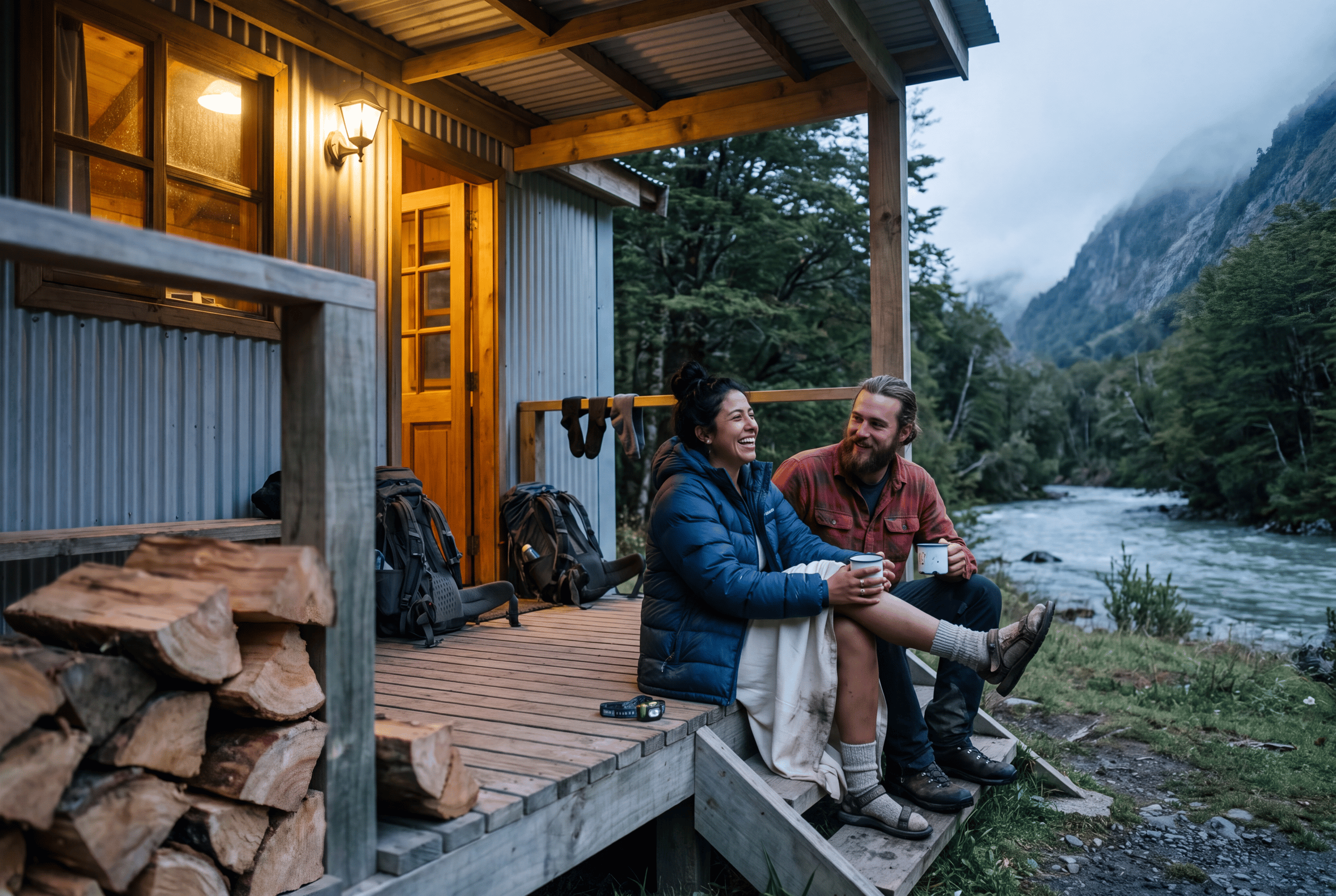
The refugios and camps inside the park run on their own reservation ecosystem, separate from park entry, and they sell out roughly a year out.
For a wedding this is the binding constraint more often than the ceremony authorization is. If you want to be inside the park rather than commuting from Puerto Natales, the beds decide your date, and they decide it a long time before you were planning to think about it.
As everywhere, I name the exact place and the arrival day and you book it yourselves. Booking accommodation for you requires an agency licence I do not hold, and pretending otherwise would be a line item that is not what it appears to be.
The legal marriage, which is a separate matter entirely
None of the above makes you married. Chile requires a Registro Civil appointment with documentation and residency conditions that visiting foreigners almost never satisfy inside a trip length timeline, and the Magallanes region offices are hours from the park.
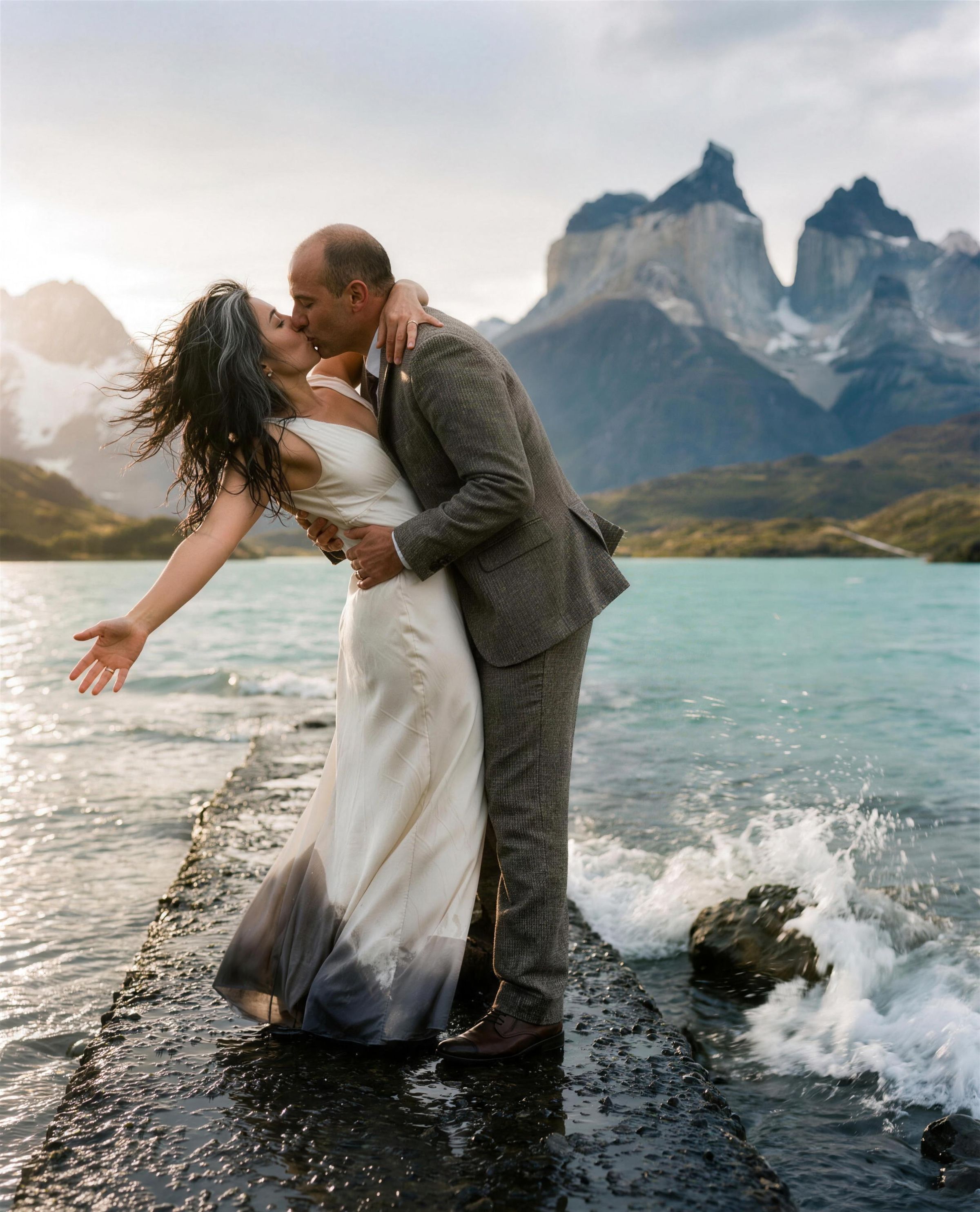
So essentially every international couple I take into Torres del Paine holds a symbolic ceremony under the towers and completes the legal marriage at home, before or after the trip. I coordinate a bilingual officiant who gives the ceremony real weight in both Spanish and English, and the words are written with you rather than read off a template.
I would rather put that in writing here than let a couple assume otherwise. The day in the park is the wedding. The signature at home is administration.
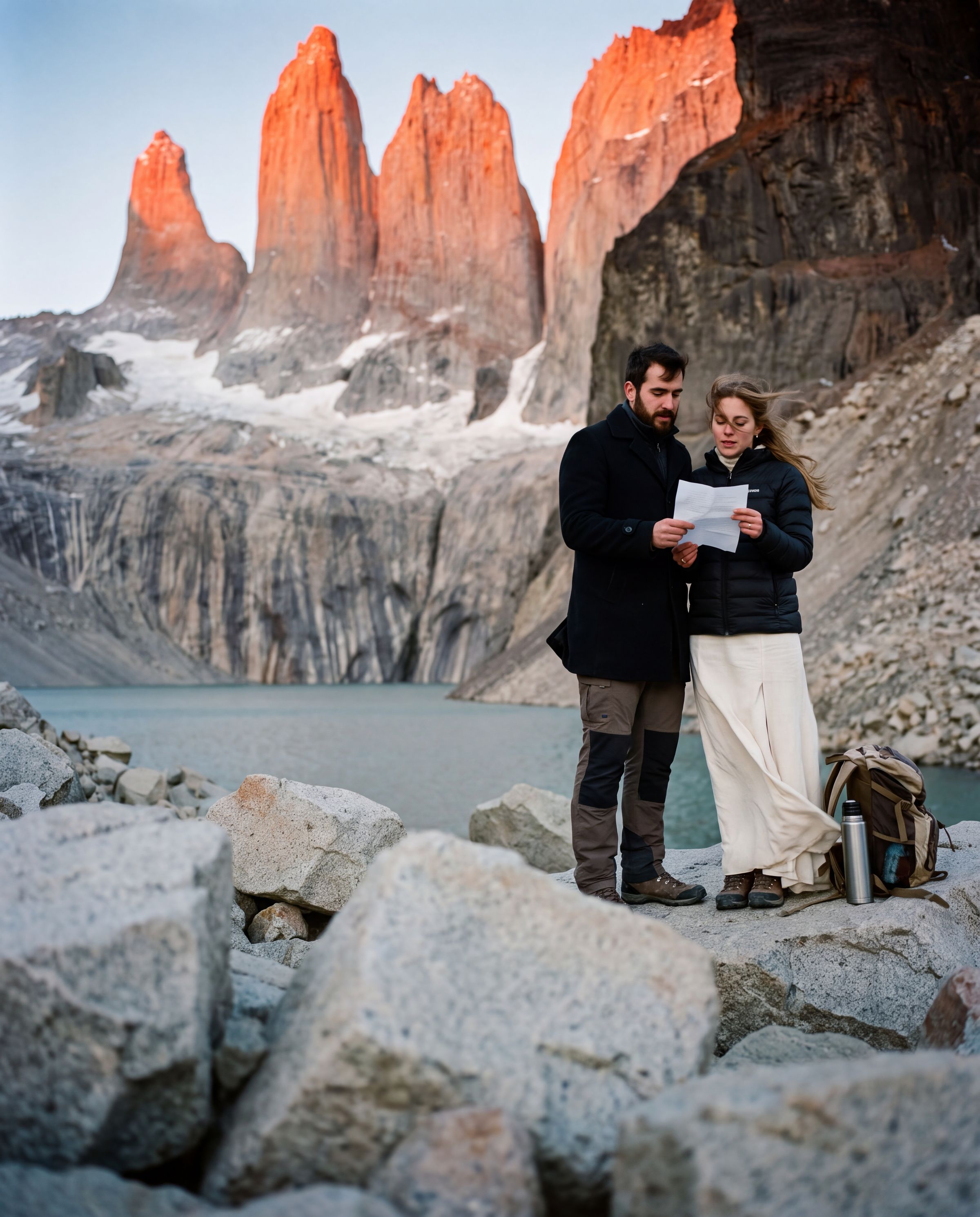
What I file, and what stays with you
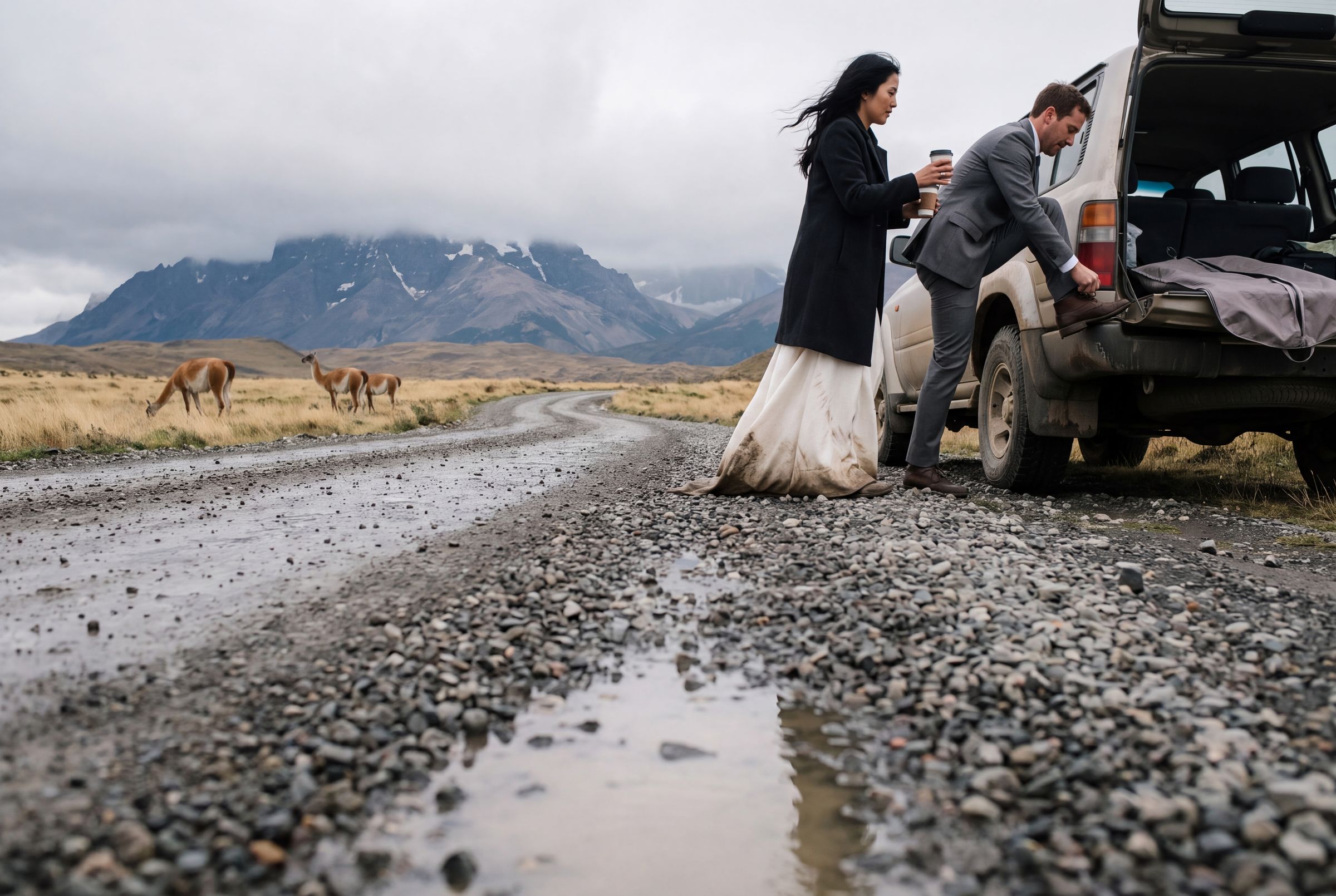
What I file and hold: the CONAF filming and photography authorization, the entry reservations for every person in the party, the private estancia access where a sector needs it, the guide arrangements, the catamaran across Lago Pehoé, the officiant, the transfers from Puerto Natales, and the itinerary itself rebuilt as the weather moves.
What stays with you: your flights, your accommodation once I have named it, your passports and any documentation for the legal marriage in your own country, and the decision about how far you are willing to walk on the day.
That division is deliberate and it is the same on every destination I work. The things requiring a licence I do not hold stay with you. Everything on the ground is mine.
Coming in through Argentina, and what that adds
Many couples reach the park from the Argentine side, flying into El Calafate and crossing at Cerro Castillo rather than routing through Santiago and Punta Arenas. It is frequently the better trip, and it is how I would build it if you want both parks.
What it adds is a second set of rules. You are crossing an international border mid trip, which means passports out, vehicle documentation on the transfer, and the crossing hours themselves, which are not twenty four hours and which shift by season. Anything you are carrying for the ceremony crosses with you and is subject to the usual restrictions on food and plant material, which catches people out with florals more often than with anything else.
It also means two separate permissions regimes rather than one. The Argentine side sits inside Parque Nacional Los Glaciares under a different authority with different requirements, and nothing filed in Chile carries across. I handle both, and I plan the crossing as a day of the itinerary rather than as a transfer squeezed between two ceremony windows, because a border on a wedding morning is a risk nobody needs.
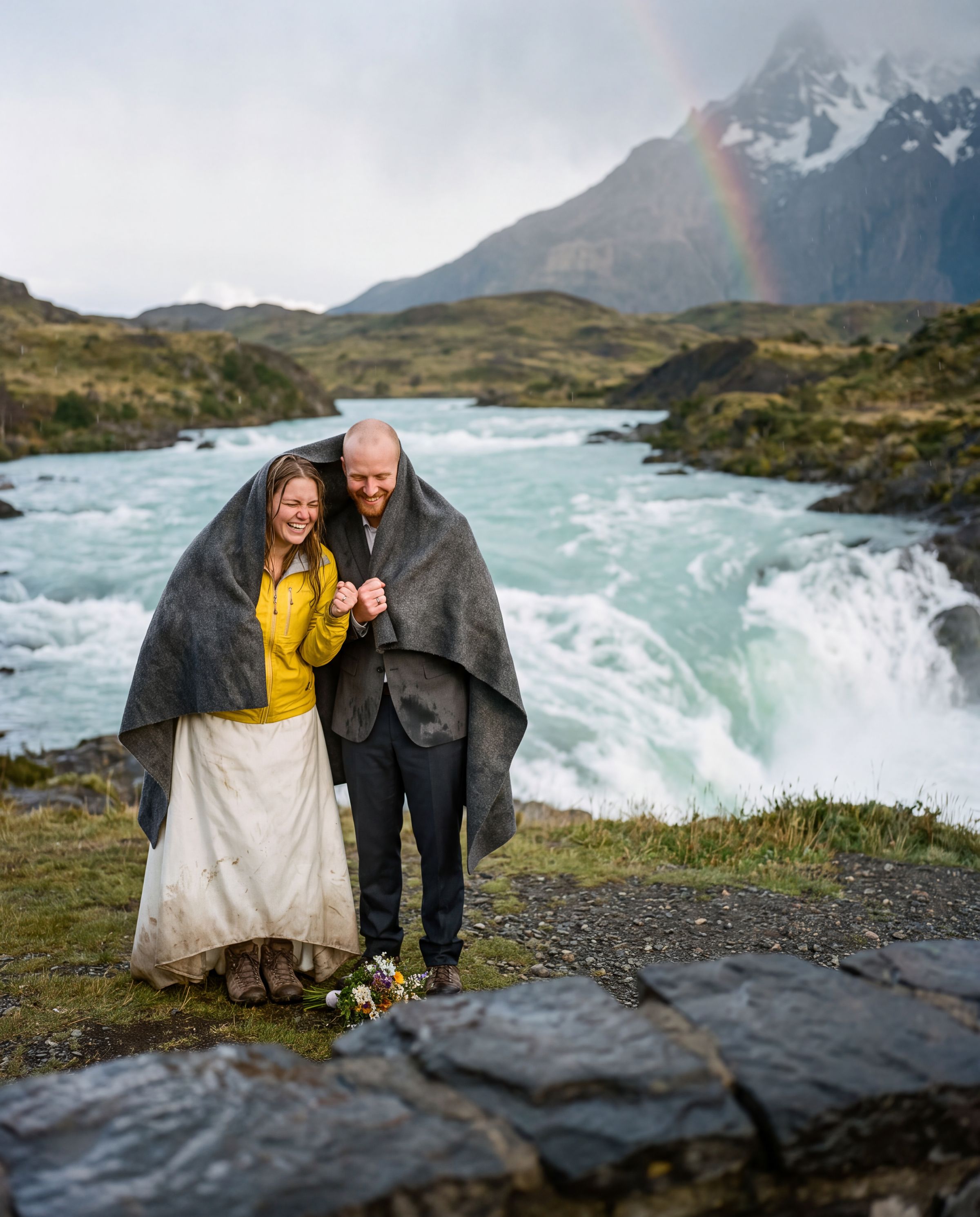
Lead time, and why eight months is not padding
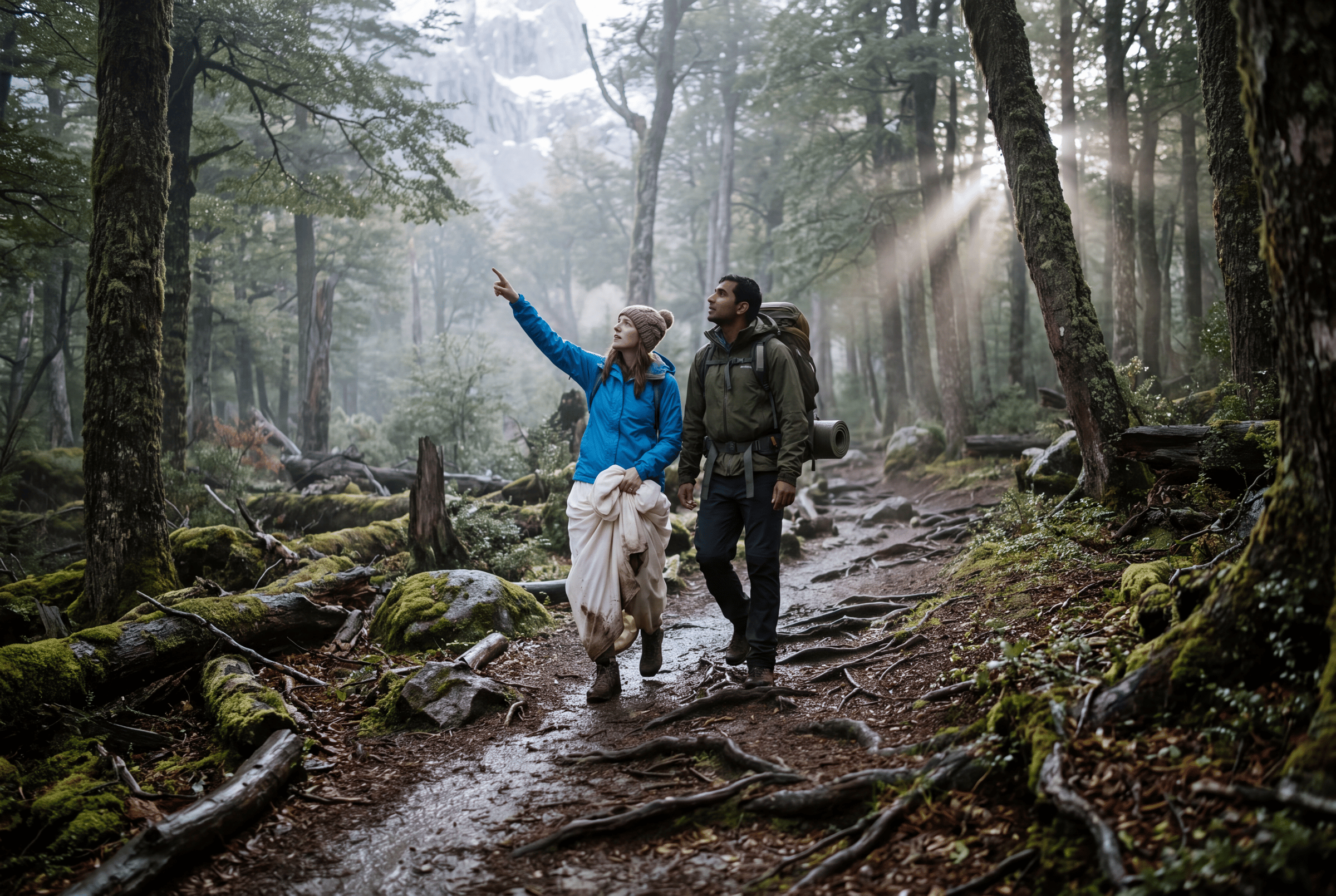
Eight to twelve months. Not because the authorization takes that long, but because three separate long clocks have to line up: the entry reservations, the beds inside the park, and the weeks I am actually in the country.
I work Patagonia in concentrated runs rather than flying down for single bookings, usually a stretch between November and March. That keeps a trip of this scale sensible for everyone in it and it means the dates are genuinely finite.
Couples who write eight to twelve months out get the pick of the window. Couples who write in October about a January date are usually choosing between what is left rather than what they wanted, and I would rather say that now than in an email in October.
What it costs, and why the paperwork is most of it
Essential from $10,400, Curated Signature at $21,800, Curated Adventuremoon at $28,800, in USD, with photography and film in every tier and an album with each.
It is worth being explicit about where that money goes here, because Torres del Paine is the clearest example on my whole list. A large share of it is administration: authorizations, capped reservations held in your names, private land negotiated in Spanish, and a plan rebuilt daily against a forecast. The photographs are the output. The paperwork is the product.
If that sounds like a strange thing for a photographer to say, it is the honest description of what this particular park demands, and it is why I would rather run the whole day than be handed a fixed plan and asked to work inside it.
Where to go next
Decide the season before you decide anything else, because it governs which sectors are open and therefore which permissions you need at all. The season guide is here, including an honest account of what winter costs you.
If you are weighing the Chilean side against the Argentine, El Chaltén has lighter paperwork and heavier weather odds, and the two pair naturally across the Cerro Castillo border.
The Torres del Paine page lays out the sectors and the day in full. When you have a window in mind, start the conversation.