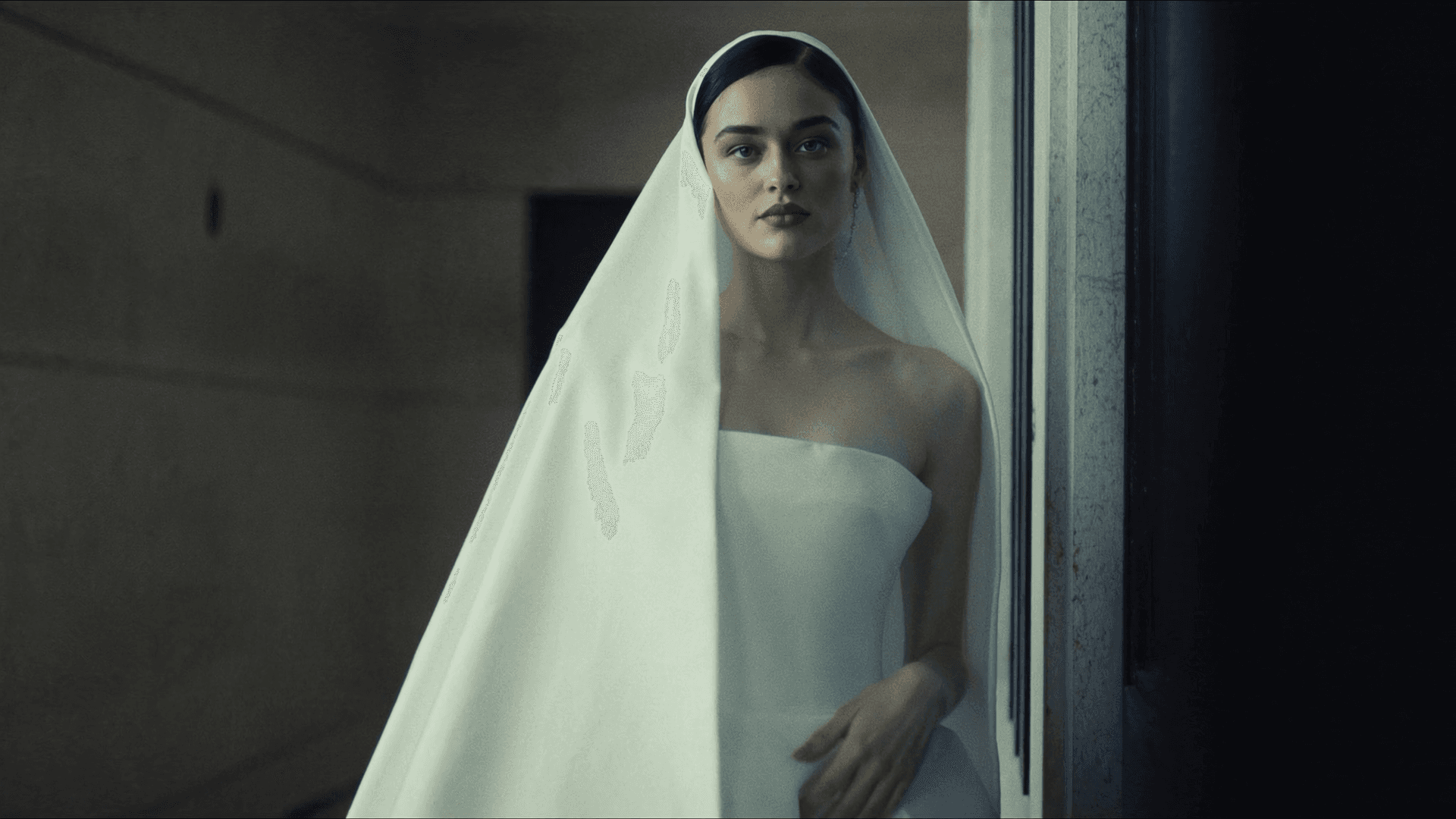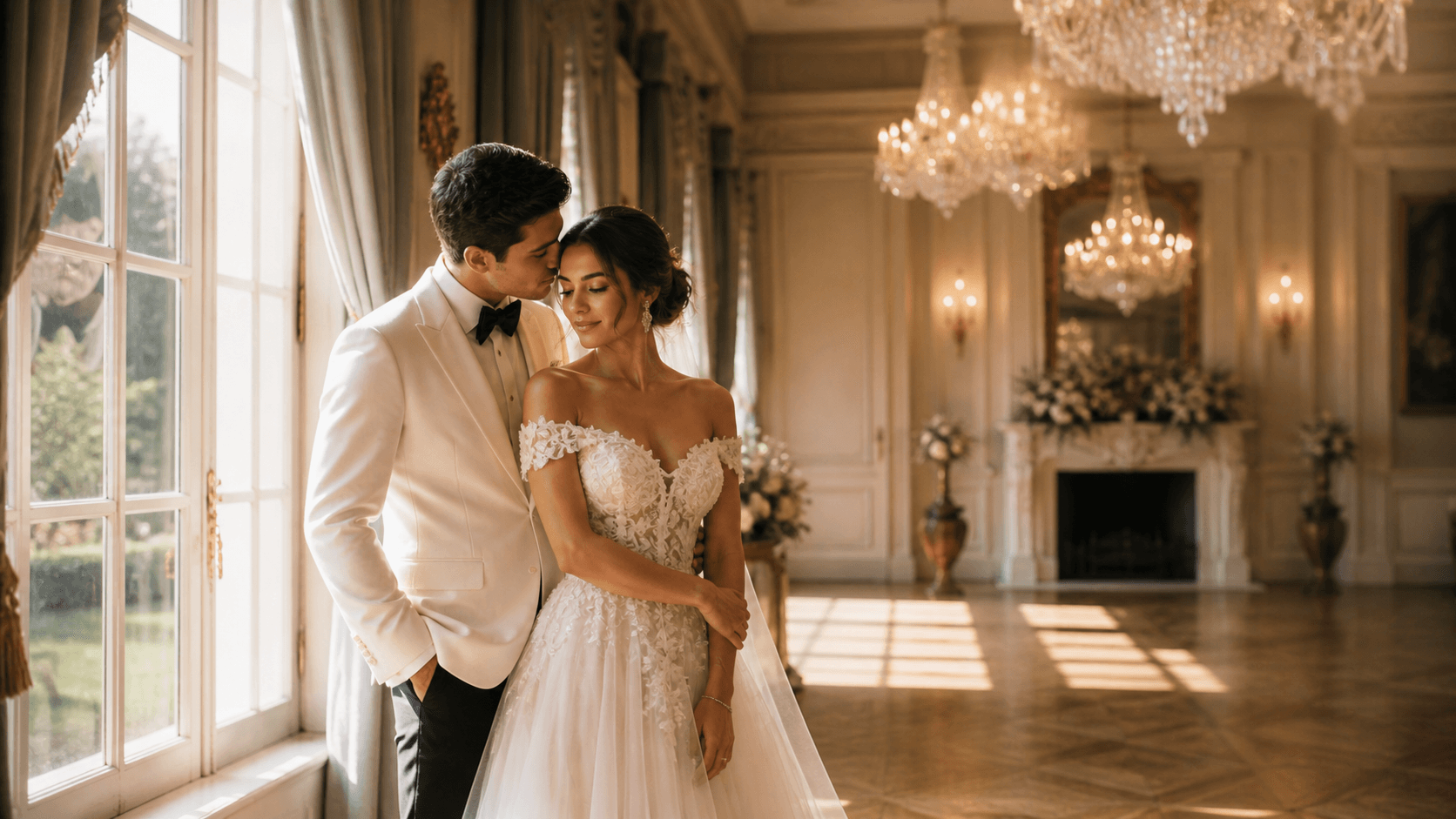
I shoot both. I have for over a decade. And I want to give you an honest account of what film actually does for elopement photographs, rather than the romanticized version you will find on most photography blogs, or the dismissive version you will occasionally find from photographers who simply never learned to shoot it well.
The resurgence of film elopement photography is real, and it is not nostalgia. Couples in 2026 are choosing film because they are tired of images that look hyperreal, over-edited, and identically graded. They want photographs that feel like photographs, not like screenshots from a movie that does not exist.
What Film Actually Does to an Image
Film renders light differently than a digital sensor. This is not a metaphor. It is physics. The silver halide crystals in film emulsions respond to light in a non-linear way, which means highlights roll off more gently and shadows retain detail in a way that digital sensors, which clip abruptly, do not. The result is an image with a natural tonal range that requires no post-processing to achieve. It simply looks that way in the camera.
The grain in a film image is also fundamentally different from digital noise. Film grain is organic and random, varying in size and distribution across the frame in a way that looks intentional rather than like an artifact of insufficient light. At ISO 400, the most common elopement film stock, the grain is fine enough to be invisible at normal viewing sizes but present enough to give images texture and life.
Color rendering on film is also distinct. Kodak Portra 400, the stock I use most frequently, has a particular warmth in skin tones that is extraordinarily flattering across a wide range of complexions. The greens render slightly differently than digital. The blues are cooler. The whole palette has a coherence that makes a set of film images feel unified even before you touch them in post.
The Case for Digital
Digital is faster, more versatile in low light, and allows real-time exposure confirmation. During the ceremony, when I am shooting at distance, often in mixed or difficult lighting, and cannot reshoot a moment, digital gives me confidence that I am not losing frames to exposure error. During the reception, when the lights go down and the dance floor ignites, digital sensors at ISO 6400 or 12800 still produce clean, usable images that film at equivalent sensitivity simply cannot match.
Digital also allows instant review, which matters more than some photographers admit. Being able to confirm that I captured the ring exchange correctly, right after it happens, is not vanity. It is professional diligence.
How I Actually Use Both
My approach at most elopements is integrated: I shoot digital as my primary system for ceremony, reception, and any coverage where reliability and speed are non-negotiable. I bring film for portraits, detail work, and any moment where I have the time and control to compose deliberately. The engagement session and bride/groom portraits before the ceremony are often entirely on film. The first dance and family formals are almost always digital.
The integration is invisible in the final gallery. I edit the digital work to complement the film, rather than the other way around. The result is a gallery that has the consistency of film's visual character with the coverage reliability of digital.
What Film Costs
Film has become meaningfully more expensive over the past four years. Kodak Portra 400, the benchmark elopement stock, has increased significantly in price due to supply constraints and increased demand from the resurgence. A 36-exposure roll costs between $25 and $35 USD depending on where you source it. Developing and scanning adds another $20 to $30 per roll. A elopement that uses 15 rolls of film adds $600 to $900 in materials alone, before the photographer's time is considered.
This is why film integration is typically offered as an add-on or included only in higher-tier packages. If a photographer offers film at no additional cost, they are either heavily subsidizing the materials cost, or they are not shooting as much film as they imply.
How to Decide
Ask yourself what you want your photographs to feel like in twenty years. Not look like, feel like. If the answer is warm, textured, and honest in a way that resists trend, film will serve you. If you want maximum coverage reliability and the ability to print very large, a hybrid or digital approach may serve you better.
The most important thing is to see finished galleries from the photographer you are considering, not selectively curated portfolio images, but complete elopement galleries that show how they handle an entire day, including the difficult moments: the dim reception, the overcast afternoon portraits, the dance floor at midnight. Those galleries will tell you everything.
Ask good questions. The best elopement photographers know exactly why they make the choices they do. And they will be happy to explain.
What You Are Actually Deciding Between
The comparison between your destination and your destination as elopement destinations is a comparison between two different versions of what a ceremony can feel like, and the photographs that each version produces. Both locations have genuine merit. The question is which version of the experience is the one that matches what you actually want, not which location is objectively better. your destination gives you one specific combination of setting, atmosphere, access, and visual character. your destination gives you a different combination. Understanding what is specific to each, rather than which one scores higher on a general quality scale, is the information that makes the decision meaningful rather than arbitrary.
The practical factors that tend to be genuinely different between your destination and your destination: access logistics, permit requirements, the type of accommodation available, the proximity to vendors who know the location well, and the travel time from major departure cities. The photographic factors that tend to be different: the quality and direction of the light at the ceremony site, the background that the location provides, the degree of privacy available during peak season, and the visual vocabulary already established by prior photography from each place. Both the practical and the photographic factors are worth researching specifically for each location rather than assuming that the one that appears more in popular travel media is the more useful choice for an elopement.

Who Each Location Is Best Suited For
The couples who choose your destination and are most satisfied with the decision tend to share certain priorities: a specific aesthetic that your destination delivers and your destination does not, a willingness to manage the logistics that your destination’s access requires, and a relationship to the place that makes its particular character meaningful rather than interchangeable. The couples who choose your destination and are most satisfied tend to prioritise the different version of each of these things: a different aesthetic, a different logistics tolerance, and a different relationship to what makes the place significant. Neither is a better decision in the abstract. Both are the right decision for the specific couple who makes it.
The couples who are most likely to feel uncertain about the choice after the fact are the ones who chose based on external pressure, recommendations from people who do not know their specific priorities, or the assumption that the more photographed location is automatically the better choice for their ceremony. The strongest elopement photographs at any destination come from couples who are genuinely present in the space and connected to why they chose it. That presence shows in the photographs regardless of which location was chosen, and its absence shows just as clearly. The location decision that produces the best photographs is the one made with full information about what each place actually is and a clear sense of which one is right for the specific couple.

Making the Most of the your destination Context
Every destination has a specific context that is worth using deliberately rather than treating as background. At your destination, that context is the combination of light quality, natural or architectural setting, and the particular atmosphere of the place at different times of day. The sessions that use this context most effectively are the ones where the couple has spent time at your destination before the ceremony day: walking the neighbourhood, sitting at a viewpoint, becoming familiar with the place at different hours so that on the ceremony morning it is somewhere they know rather than somewhere they are experiencing for the first time under the pressure of the session schedule.
I recommend arriving at your destination at least one full day before the ceremony date for this reason. The first day is for orientation: finding the route to the ceremony site, having a meal at a restaurant they want to return to that evening, walking through the area without a camera or a schedule. The second day is the ceremony day, and the familiarity accumulated on the first day shows in how the couple moves through the space and how present they are during the session rather than navigating it as strangers. The photographs from a couple who knows the place, even slightly, are different from the photographs of a couple experiencing it for the first time.
Destination Wedding Photographer
Vancouver · Medellín · Worldwide