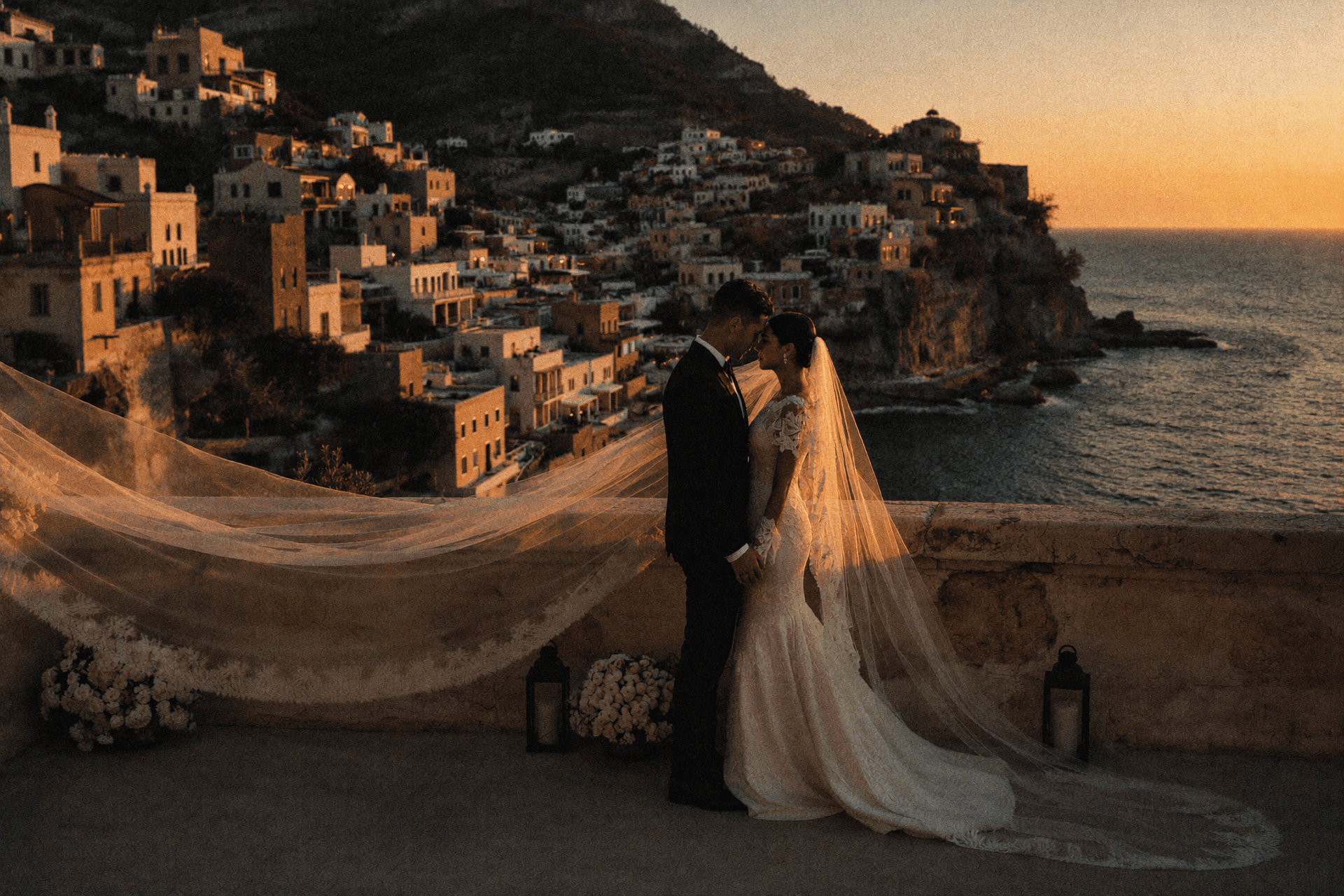
The first look versus the traditional aisle reveal is one of the most discussed decisions in wedding planning, and one of the most consistently misunderstood. Couples frame it as a choice between tradition and convenience, or between emotion and logistics. It is neither. It is a choice between two genuinely different photographic and emotional experiences, each with distinct advantages and real trade-offs.
Here is what each one actually delivers.
What the Aisle Walk Gives You
The traditional aisle reveal — the groom at the altar, the doors open, everyone stands — is a collective experience. The reaction happens publicly, in front of every person the couple has chosen to witness their marriage. The groom’s expression is unguarded and uncontrollable. The bride’s walk is witnessed by her parents, her friends, her grandparents. The room responds. That shared reaction is something no private first look can replicate.
The aisle walk also carries the full weight of ritual. Everything that has been building — the planning, the morning, the hours of preparation — arrives in that sixty-second walk. The emotion is not manufactured by a photographer’s prompt. It is produced by everything that has led to this moment, released in a specific form that exists nowhere else in the day.
What the First Look Gives You
The private first look gives the photographer complete control over context: the light, the background, the angle, the distance. It gives the couple an intimate moment together before the public ceremony, which most couples report as one of the most genuinely meaningful parts of their day. It also allows couple portraits to be completed before the ceremony, which eliminates the forty-five-minute portrait session between ceremony and reception that is the most common cause of a late-starting evening.
From a purely photographic standpoint, the first look produces better portraits. The couple has already seen each other, the nerves have already broken, and the portrait session happens at the most controlled point of the day, with the most time available. The aisle walk produces one pass, from a fixed position, under whatever light exists at that hour. The first look produces thirty minutes of images from every conceivable angle.
The Timeline Difference
A first-look couple typically completes portraits before the ceremony, joins the cocktail hour immediately after, and arrives at the reception on time. A no-first-look couple typically spends forty-five minutes to an hour on portraits between ceremony and reception while guests wait. That hour is often the source of more day-of stress than any other single factor.
If the reception start time is fixed — caterers, venue license, band start time — the portrait session after a no-first-look ceremony must be completed within a compressed window. If anything runs long (and something always runs long), the portraits are rushed, the light is worse, and the couple arrives at their own party already tired from the effort of catching up.
The Honest Answer
The first look produces more and better photographs. The aisle walk produces an emotional experience that is shared, public, and unrepeatable in its specific form. Neither is the correct answer. The question worth asking is not “which photographs better?” but “which experience do we most want to have?”
Couples who care deeply about the collective aisle moment, who want their guests to share that reaction, who value the ritual weight of the traditional reveal — those couples should walk the aisle. Couples who want more time together before the ceremony, better portraits, and a smoother transition to the reception — those couples should do the first look. Both decisions are right. Neither should be made for the wrong reason.
Destination Wedding Photographer
Vancouver · Medellín · Worldwide