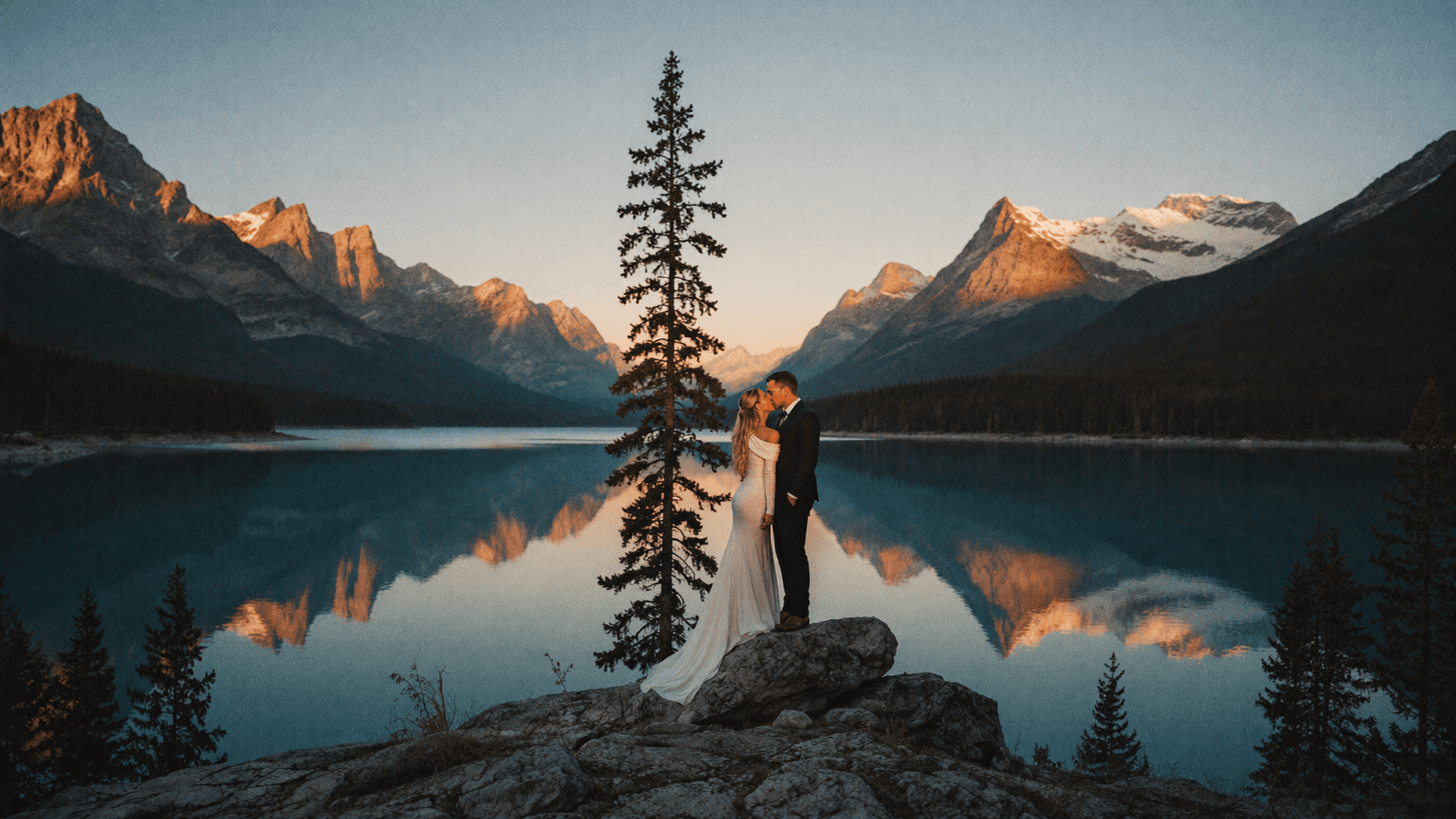
Athabasca Falls is thirty kilometres south of Jasper townsite on the Icefields Parkway, and the first thing that surprises people about it is the scale at close range. The Athabasca River is the largest river in the Canadian Rockies, and at Athabasca Falls it drops twenty-three metres through a seven-metre-wide slot canyon cut directly into the quartzite bedrock. The volume of water going through the slot produces a roar that you feel before you see the falls, and the spray carries to the viewing platforms above the gorge in any wind conditions. The canyon walls below the falls have been carved into curves and potholes by the river over thousands of years, and the specific geometry of carved rock, rushing water, and spray in the gorge produces a visual environment unlike anything else along the Parkway.
The Ceremony at the Falls
The primary viewing platform at Athabasca Falls is a stone path along the rim of the gorge, approximately fifty metres from the lip of the falls. The morning light from the east catches the spray and the canyon walls from about 7am, when the slant illumination gives the eroded quartzite a warm orange tone that overhead midday light eliminates. I position the ceremony on the south rim of the gorge where the full falls are visible and the canyon extends in both directions, which gives the geological context of the river slot as a continuous visual element rather than just the falls themselves as a backdrop.
The spray at the ceremony site reaches the couple in wind conditions. This requires accepting that wind will happen and planning accordingly: secure hairstyles, fabrics that handle water without losing their character, and the expectation that some ceremony moments will happen in mist. The mist photographs as atmospheric rather than inconvenient when the light is at the right angle, which it is in the morning. By afternoon the light is less useful and the visitor volume has increased significantly. The morning window at Athabasca is the same as at every Parkway location: arrive early, complete the session before noon, have the afternoon free.

The Gorge Walk
Beyond the main viewing platform, a trail follows the gorge rim downstream for approximately half a kilometre to where the canyon opens and the river slows to a braided channel above a gravel bar. This section of the trail, away from the falls themselves, gives a different character: the canyon walls visible below but the roar reducing to a manageable background sound, the old-growth spruce and fir above the gorge providing shade and canopy, and the specific quality of a river corridor in the Canadian Rockies that is entirely different from any of the lake-and-mountain compositions available at Moraine Lake or Lake Louise. I use the gorge walk for the portrait session after the ceremony at the falls, and the combination of the falls ceremony and the gorge walk portraits gives a Jasper gallery that is specific to the Athabasca watershed rather than generic Rocky Mountain scenery.

Combining Dark Sky and Falls
The Athabasca Falls site is dark sky-eligible at night: thirty kilometres from the townsite, the site itself has no artificial lighting except a single accessible parking area light. A day that begins at the falls at 7am for the ceremony and portrait session, spends the afternoon in Jasper townsite or at Maligne Lake, and returns to the Athabasca Valley after dark for a dark sky session gives two of Jasper’s most distinctive photographic environments in a single day. The gallery contains the waterfall gorge in morning light and the Milky Way above the same valley at night. These are photographs of the same place in two of its genuinely different conditions, and the combination is specific to Jasper in a way that no other destination in Canada can replicate.
Destination Wedding Photographer
Vancouver · Medellín · Worldwide