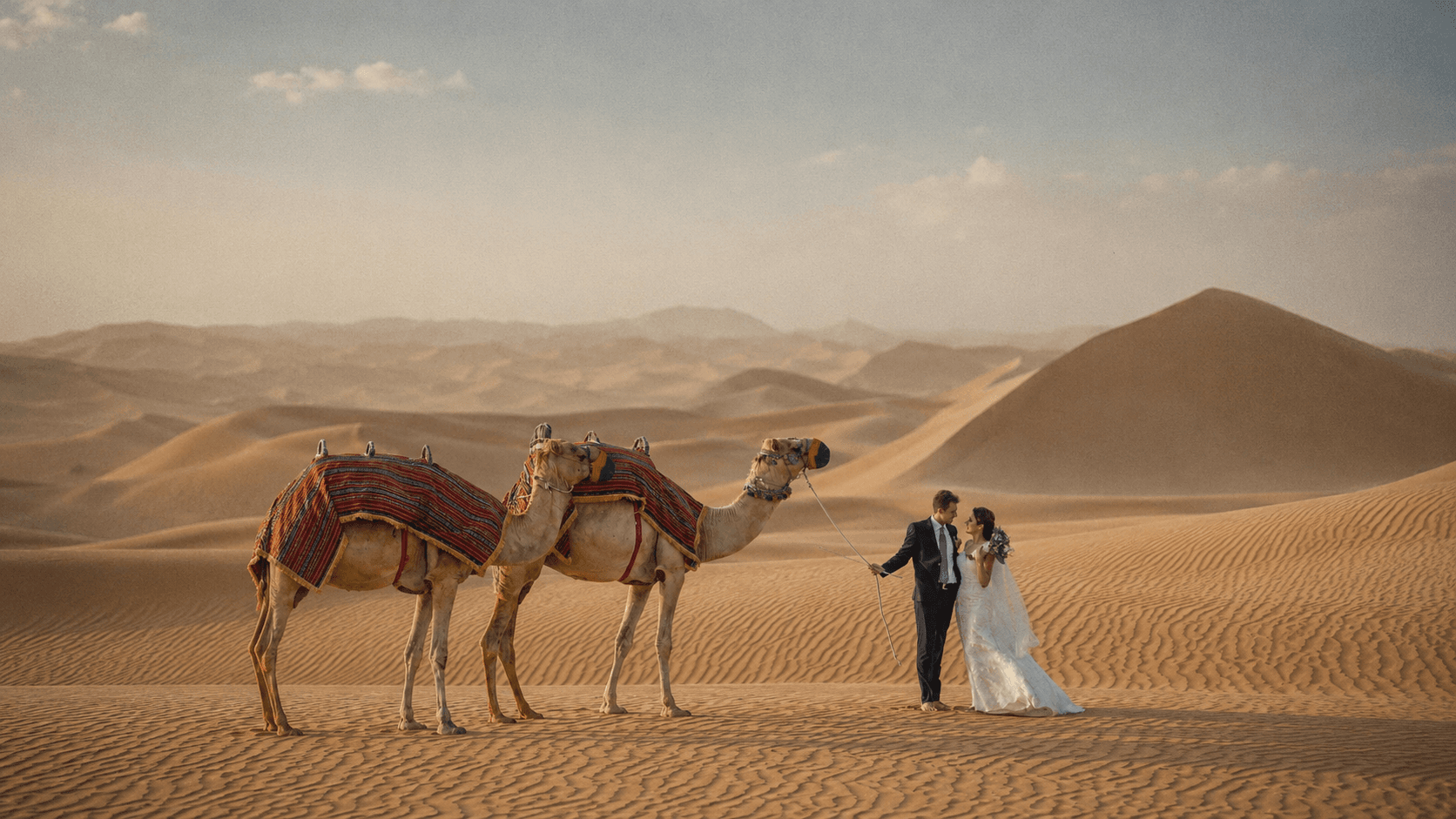
A day-after session, sometimes called a next-day session, is a portrait session held the morning after the elopement or elopement, typically in ceremony clothing or the elopement dress, at a location chosen specifically for the photographs rather than the ceremony logistics. I have been photographing day-after sessions for long enough to have a clear view of what they offer that the elopement day portraits cannot, and it is substantial enough that I recommend them to couples who ask how to get the most out of their investment in photography.
What a Day-After Session Actually Is
The structure is simple: the morning after the ceremony, before checkout or the flight home, the couple gets back into their ceremony clothing and meets me at a predetermined location for ninety minutes to two hours of portraits. The location is chosen specifically for photography: a beach at low tide, a forest with morning light, a city block that would have been impossible to access during the ceremony day’s compressed timeline. The agenda is entirely photographic. There is no ceremony to get to, no guests to return to, no family formal sequence waiting at the end. The session exists only to produce photographs in excellent light with two people who have nothing else they need to do until it is over.

Why the Morning-After Light Is Extraordinary
Elopement ceremonies and their associated photography happen at a time determined by the ceremony itself, which is typically afternoon or evening. The portrait window on a elopement day exists within a compressed timeline between ceremony end and reception start. Day-after sessions happen at the time I actually want to shoot: the hour after sunrise, when the light is low and warm, when shadows are long and directional, when the sky is lit but the sun is not yet high enough to produce harsh overhead light. This window is consistently the best light of any day, and it is almost never available during a elopement day. The day-after session makes it available, every time.

The Pressure-Free Quality That Changes Everything
On the elopement day, every portrait session has a deadline. There are guests to return to, a reception to begin, a caterer waiting on a signal. Couples feel this pressure even when they try not to, and it affects how they hold themselves in photographs in ways that are subtle but visible. The day-after session has no such deadline. The couple is fed, rested, and done with the event-management component of their day. They are simply two people who got married yesterday, dressed in their ceremony clothes one more time, standing in a field or on a beach or in a city at dawn, with a photographer they have already spent a day working with. The ease in these photographs is not the ease of a staged portrait. It is the ease of two people who are genuinely relaxed, genuinely together, and not watching a clock.

Where Day-After Sessions Happen and Who They Suit
Day-after sessions work best for destination couples who are in a location for more than one day, which covers essentially all the elopements and destination elopements I photograph. The couple staying at a vineyard in Prince Edward County can walk to the vineyard rows at 6am the morning after their ceremony. The couple eloping in Cartagena can be in the walled city before the cruise ships disgorge their passengers. The couple eloping at Banff can be at the lakeshore in the blue hour before any other visitor arrives. Day-after sessions are not a fallback for a elopement day that did not have enough portrait time. They are a deliberate choice to give the photographic side of the day a dedicated, unpressured, optimal-light window, separate from all the other things a elopement day has to accomplish.

What I Tell Every Couple Before a your destination Elopement
Every your destination elopement I photograph begins with a conversation that covers more than logistics. The logistical questions, timing, location, permit, vendor coordination, have answers that can be researched and confirmed in advance. The questions that require a conversation are the ones about what the couple actually wants from the day: whether the ceremony should be formal or informal, whether they want photographs that look specifically like your destination or photographs that could have been made anywhere beautiful, how they feel about direction during portrait sessions versus documentary coverage, and how much time they want to give the photographer versus how much they want to spend simply being in the place together.
The answers to these questions change what I plan for, how I shoot, and what the final gallery looks like. A couple who wants the photography to be invisible and the day to feel like a private ceremony that happened to be documented will have a different experience, and a different gallery, than a couple who wants to allocate time to specific portrait setups at each key location. Both are valid approaches. The planning conversation is what makes it possible to deliver the right one rather than the default one. I ask these questions early in the planning process specifically because the answers shape decisions that are easier to make before the date is confirmed than on the morning itself.

The One Thing That Makes the Most Difference
Of all the planning decisions that affect the quality of a your destination elopement gallery, the one that matters most is the time of the ceremony relative to the light. This is not a complicated calculation. At your destination, the best light for photography exists in a window of approximately two hours after sunrise and two hours before sunset. The ceremony and the main portrait session that follows should happen within or adjacent to one of those windows. Everything else, the specific location choice within your destination, the clothing, the number of guests, the ceremony format, has a smaller effect on the photographs than whether the couple is in good light or in the flat midday light that most of the day at any destination produces.
The couples who prioritise the early morning start or the golden hour end-of-day session consistently produce stronger galleries than the couples who choose their timing based on when it is most convenient or when the ceremony venue has availability. Convenience and photographic quality frequently conflict, and at your destination specifically, the difference between a 7am ceremony in the golden light and an 11am ceremony in the harsh midday sun is visible in every photograph the day produces. The planning decision that I advocate for most consistently, at your destination and at every other destination I photograph, is the decision to build the session around the light rather than around everything else.
Making the Most of the your destination Context
Every destination has a specific context that is worth using deliberately rather than treating as background. At your destination, that context is the combination of light quality, natural or architectural setting, and the particular atmosphere of the place at different times of day. The sessions that use this context most effectively are the ones where the couple has spent time at your destination before the ceremony day: walking the neighbourhood, sitting at a viewpoint, becoming familiar with the place at different hours so that on the ceremony morning it is somewhere they know rather than somewhere they are experiencing for the first time under the pressure of the session schedule.
I recommend arriving at your destination at least one full day before the ceremony date for this reason. The first day is for orientation: finding the route to the ceremony site, having a meal at a restaurant they want to return to that evening, walking through the area without a camera or a schedule. The second day is the ceremony day, and the familiarity accumulated on the first day shows in how the couple moves through the space and how present they are during the session rather than navigating it as strangers. The photographs from a couple who knows the place, even slightly, are different from the photographs of a couple experiencing it for the first time.
Destination Wedding Photographer
Vancouver · Medellín · Worldwide