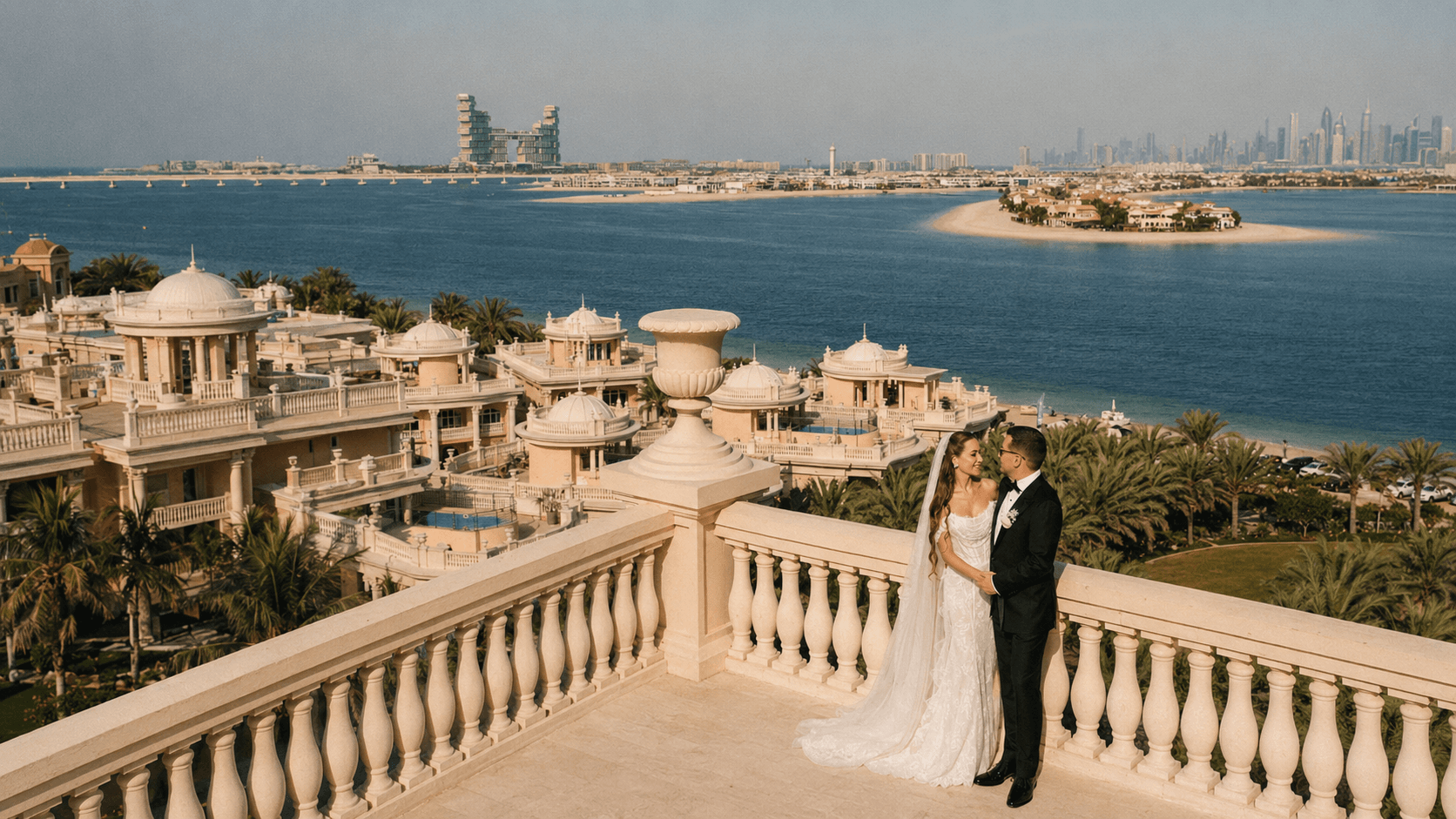
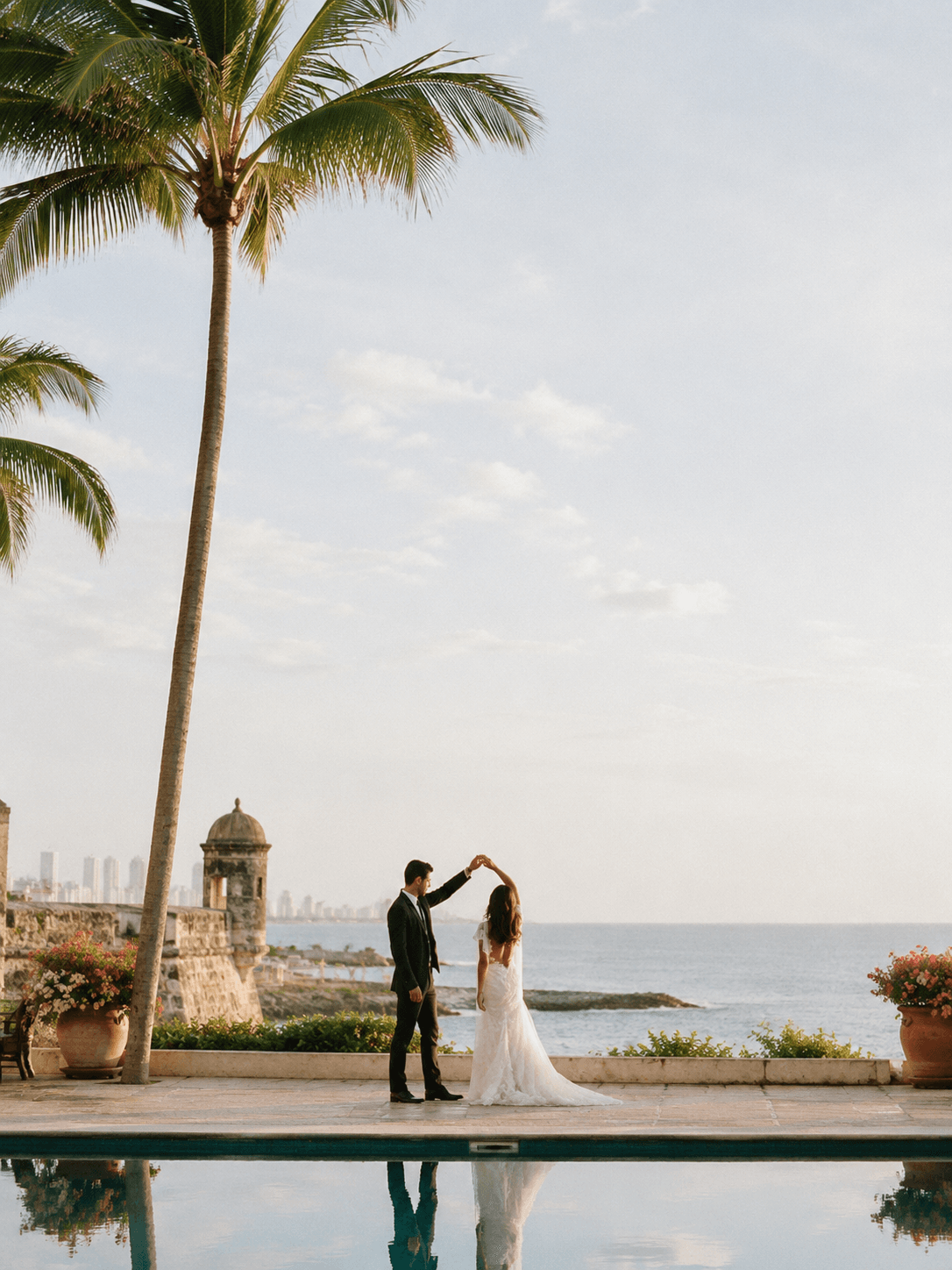
The destination wedding market in 2027 looks nothing like it did in 2019, and the changes are more structural than the surface-level trend coverage suggests. Destination weddings were always a niche within the wedding market. COVID turned the niche into a proving ground where couples discovered that a ceremony held somewhere specific and meaningful produced better photographs, better memories, and better celebrations than the default venue in their home city. That discovery did not un-happen when travel reopened. It became the foundation of a destination wedding market that is now larger, more geographically diverse, and more deliberately planned than at any previous point. 2027 is the year that market reaches a new level of maturity.
Where the Destination Wedding Market Stands Going Into 2027
The global destination wedding market has been growing at approximately 12 to 15 percent annually through 2024 and 2025, driven by three converging forces: post-COVID travel normalisation, the rise of experience-over-spectacle wedding planning values, and the increasing accessibility of destinations that were previously logistically complicated for North American couples. By 2027, industry projections place the global destination wedding market at over $45 billion USD, up from roughly $30 billion in 2022.
The North American side of this market is concentrated in a small number of category leaders but is diversifying. Mexico has been the dominant destination wedding location for North American couples for over a decade and retains that position in 2027. The Caribbean remains significant. Europe, particularly Italy, Greece, and increasingly Portugal, holds its share of the luxury market. And South America, which was a marginal destination wedding market as recently as 2020, has moved into a real growth phase that will be unambiguous by 2027.
The couples driving growth in the destination wedding market in 2027 are primarily Millennials completing their late-twenties and early-thirties marriages and the leading edge of Gen Z. Both cohorts are more experienced international travellers than previous generations at the same life stage. They have a higher comfort level with unfamiliar logistics, a stronger sense of what makes a location specific and photogenic, and a clear preference for a ceremony that produces a gallery of images that look like the place they chose rather than a set of images that could have been taken anywhere. These preferences point directly toward destination weddings rather than away from them.

South America Breaks Into the Mainstream
Of all the shifts in the destination wedding market going into 2027, South America’s emergence as a serious and growing destination is the most significant and the most underreported. Five years ago, Colombia, Bolivia, Argentina, and Uruguay were niche destinations for adventurous couples who were comfortable with ambiguity. By 2027, they are mainstream choices with developed vendor infrastructure, English-speaking professional networks, and enough photographic documentation from previous couples that future clients can see exactly what they are booking.
Colombia is the clearest example of this shift. Cartagena is now a fully established destination wedding city for North American couples. The walled city provides a UNESCO-protected architectural context that rivals anything in Europe. The Caribbean sea is accessible by boat from the city centre. Boutique hotels and private villas within the historic walls accommodate wedding parties from 15 to 150 with local catering, florals, and planning infrastructure. The cost to hold a destination wedding in Cartagena in 2027 is significantly lower than the equivalent event in the south of France or coastal Italy, while the visual result is comparable. Medellin, with its eternal spring climate and art district character, is developing a complementary market for couples who want urban Colombia over colonial Caribbean.
Bolivia’s Salar de Uyuni elopement and micro-wedding market is growing at a rate that reflects both the quality of the destination and the development of its logistics network. In 2025 and 2026, the number of English-speaking operators facilitating ceremonies on the salt flat increased significantly. By 2027, the Salar de Uyuni is a known quantity for the adventure elopement market: couples who have done their research know what to expect, know how to prepare for the altitude, and know what the photographs will look like. It is no longer exotic. It is a destination with a specific identity that attracts a specific type of couple.
Argentine Patagonia is following a similar trajectory. El Chaltén and the access point to Fitz Roy, Torres del Paine in Chilean Patagonia, Bariloche in the lakes district, and the remote Lago del Desierto are all developing as known elopement destinations for couples who want raw mountain wilderness with the accessibility that improved trail and accommodation infrastructure provides. The photography from these locations is distinct from anything available in North America or Europe, which is the primary driver of the market. Uruguay, with José Ignacio on the Atlantic coast and Casapueblo and Colonia del Sacramento as specific ceremonial locations, is developing the smallest but most curated destination market in South America: quiet, specific, and unlike anything comparable at the same latitude.

The Mediterranean Has Peaked
This is the most unpopular prediction in the destination wedding market and the one I am most confident in: the Mediterranean is oversaturated, and the oversaturation will be visible in the quality of the photographs and the experience couples have in 2027. Santorini, the Amalfi Coast, and the most photographed locations in Tuscany have reached the point where the visual vocabulary of destination wedding photography from these locations has been exhausted. Every angle has been shot, every sunset has a hundred similar images preceding it, and the crowds that attend these destinations in peak season have made the private, intimate ceremony experience increasingly difficult to produce.
The saturation affects quality in a specific way. When a destination becomes known for weddings, the vendor infrastructure grows to accommodate demand. The growth brings standardisation: the same ceremony setup, the same flower choices, the same reception venue configurations repeated across hundreds of events per year. The photographer working in Santorini in 2027 is working in a market where the creative brief is largely pre-determined by what has sold before. The photographer working in Cartagena or in Chilean Patagonia has more creative latitude because the market is younger and the conventions have not hardened.
The alternative European markets are not suffering from the same saturation. Portugal, particularly the Douro Valley and the Alentejo region, is gaining significant share of the European destination wedding market from Italy and Greece. The infrastructure is developed, the aesthetic is distinct, and the price point is lower than its Mediterranean competitors. For couples who want a European destination wedding with the sense of discovery that Santorini no longer provides, Portugal is the 2027 answer. Sicily, distinct from the Amalfi Coast in character, is holding better than the mainland Italian coastal market. But across the board, the European Mediterranean segment is the part of the destination wedding market that is in relative decline, while South America, Canada, Mexico, and Portugal are in relative growth.

Mexico’s Coastal Markets Evolve
Mexico remains the dominant destination wedding country for North American couples in 2027, but the internal distribution of that market is shifting. The all-inclusive resort wedding, long the primary format for Mexico destination weddings, is losing share to boutique and villa-based events in markets like Tulum, Sayulita, Todos Santos, and the San Lucas corridor in Baja. This reflects the broader shift in the destination wedding market from production to experience: the all-inclusive resort format optimises for logistics and consistency, while the boutique villa format optimises for distinctiveness and character.
Tulum in 2027 has matured significantly from its 2022 peak of Instagram-driven demand. The cenote access has become more regulated, cenote-adjacent venues have developed more robust booking and permit infrastructure, and the couples choosing Tulum now have a more specific understanding of what the Yucatán jungle and its underground water systems offer photographically and experientially. The 2027 Tulum wedding client is not following a trend. They are choosing a specific location for specific reasons: the cenotes, the Caribbean proximity, the particular character of the jungle light. That specificity makes them better clients and produces better photographs.
Los Cabos at the tip of Baja California continues to hold its position as the most consistently booked Mexico destination for couples who want desert-meets-Pacific drama. The arch of El Arco at Land’s End remains one of the most recognisable ceremony backdrops in North America. The vendor infrastructure in Los Cabos is the most developed of any Mexico destination and the most reliable for couples who need a high degree of logistical certainty. Puerto Vallarta, Sayulita, and the Riviera Nayarit coast serve a different segment: couples who want colonial town character, surfing culture, and a less resort-centric environment. Sayulita in particular has developed a strong elopement and micro-wedding identity that is distinct from its beach town bohemian reputation.
San Andrés, Colombia’s Caribbean island, is not Mexico but competes in the same mental category for couples thinking about Caribbean elopements. Its Seven Colors Sea has a photographic quality that no Caribbean destination in Mexico can match, and its position within Colombia makes it a natural addition to a Colombia destination wedding trip. By 2027, San Andrés is a known elopement destination for couples who are already planning a Colombia trip and want the Caribbean component without the infrastructure of larger island destinations.

Canada for International Couples
Canada’s destination wedding market has a specific dynamic that is different from the international destination markets discussed above: a large proportion of its clients are domestic. Couples from Toronto eloping in Banff, couples from Montreal having a micro-wedding in Quebec City’s Old Town, couples from Vancouver Island getting married in Tofino: these are all destination weddings by any functional definition, but they involve no international travel. This domestic destination market is both large and growing, and it is driven by the same values as the international destination market: specificity of place, photographic quality, and experience over production.
The international component of Canada’s destination wedding market is also growing, particularly in Banff and Canmore. European couples who are aware of the Canadian Rockies through outdoor media and travel photography have begun booking Banff elopements and micro-weddings in meaningful numbers. The combination of Lake Louise, Moraine Lake, and the general scale of the Rocky Mountain landscape produces a photographic result that rivals anything in the European Alps and is significantly less crowded. American couples, particularly from the Pacific Northwest and California, have long used Banff as a destination wedding location, and the market shows no sign of declining.
Quebec City holds a specific position in the international destination wedding market because it is the only UNESCO-designated historic city in North America that offers the visual character of a French or Belgian city without requiring transatlantic travel. For couples who want European stone streets, centuries-old architecture, and a formal European city aesthetic in their photographs, Quebec City is the only North American answer. It is not a perfect substitute for Paris or Bruges, but for couples who cannot or will not travel to Europe, it is genuinely exceptional. The winter market in Quebec City, built around the blue hour in the Petit Champlain and snow on the fortification walls, is the most distinctive seasonal wedding market in Canada.
Tofino represents the other end of the Canadian destination wedding spectrum: raw, coastal, Pacific, genuinely remote. The storm season elopement market in Tofino, built around October through March when the Pacific swells are largest and the beaches are empty, is the most distinct niche within Canadian destination wedding photography. Couples choosing a Tofino storm elopement in November are making an aesthetic decision that is the opposite of the traditional destination wedding framework. They want drama, not beauty. They want the Pacific in its harshest mode, not its most photogenic. The photographs that come from this context are genuinely unlike anything produced in any other Canadian market.

The Cost Reality of 2027 Destination Weddings
The persistent myth about destination weddings is that they are cheaper than local weddings because you have fewer guests. The reality in 2027 is more nuanced. Destination weddings can be less expensive in absolute terms when the guest list is small enough to eliminate the reception infrastructure cost. A couple eloping in Cartagena with a photographer and a private dinner for two will spend less than a couple having a 120-person wedding at a Toronto venue. But a 50-person destination micro-wedding in Cartagena, with flights and accommodation for all guests, is almost certainly more expensive per guest than the equivalent event held locally.
What destination weddings offer is not cost reduction but cost redistribution. The money that would have gone to a local venue, a large catering bill, and a DJ at a 120-person reception goes instead to photography, flights, accommodation, and a more intimate vendor arrangement. The total spend is often similar or higher, but the allocation reflects different priorities. Couples who choose destination weddings are not primarily doing it to save money. They are doing it because the experience, the photographs, and the specific meaning of a ceremony held in a specific place justify the investment in a way that a local event does not, for them specifically.
In 2027, the rising cost of international travel, accommodation in popular destination cities, and destination photographer day rates has made destination weddings a premium product rather than a budget alternative. Couples planning a destination wedding in 2027 should budget for airfare increases from 2024 levels, accommodation in cities like Cartagena and Tulum that have seen significant price increases as their wedding markets matured, and photographer rates that reflect the destination specialty required. A complete elopement package for two people in Cartagena, including photographer, accommodation, and private dinner, starts around $8,000 to $12,000 CAD in 2027, up from $6,000 to $8,000 in 2023. A 30-person micro-wedding in Banff with three days of photography, venue, and catering runs $35,000 to $55,000 CAD depending on the level of vendor involvement.
The couples who choose destination weddings in 2027 understanding these numbers are making an informed, values-driven decision. They are not hoping the destination format saves them money. They are investing in a specific kind of experience and a specific set of photographs, and they understand the price of both. This clarity about value is one of the most important characteristics of the 2027 destination wedding client, and it is what makes them the best kind of client to work with.

Destination Wedding Photographer
Vancouver · Medellín · Worldwide