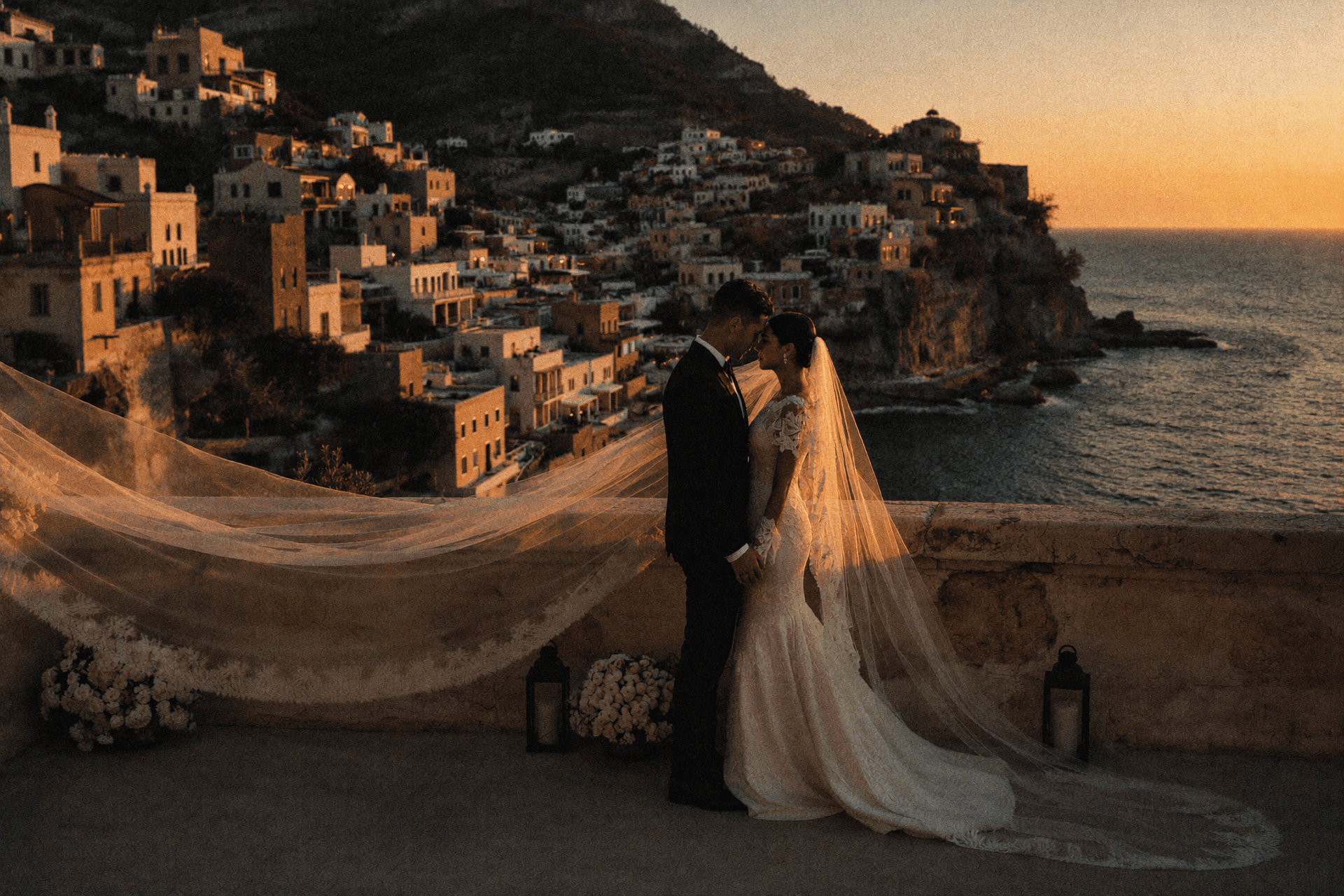
The most common reason couples say they are not photogenic is that they are comparing themselves to professional models who have spent years developing the specific skill of performing naturally for a camera. Natural photographs are not produced by people who are photogenic. They are produced by photographers who know how to create conditions where their subjects forget the camera exists. Understanding which part of this equation you control and which part the photographer controls is the most useful preparation you can do before the session.
Why People Look Uncomfortable in Photographs
The body under self-consciousness does specific things: shoulders come up slightly, the smile is held rather than felt, the eyes are watching the camera rather than the other person, and the posture is a slightly artificial version of how the person normally stands. These changes are small enough that the person doing them often cannot feel them, which is why the photographs often surprise people. “I don’t look like that,” which is the most common response to seeing wedding photographs that feel wrong, is usually accurate. The person in the uncomfortable photograph is performing a version of themselves for a camera rather than simply being themselves. The performance is what shows.
The solution is not to practice looking natural, which produces its own version of the performance problem. The solution is to give the person something to do that involves the other person rather than the camera. When two people are genuinely engaged with each other, walking somewhere, having a conversation, reacting to something the other one said, the body relaxes into its normal posture and the expression reflects what is actually happening. The camera documents that. This is what the phrase “natural photography” actually means in practice: the photographer creates conditions for genuine engagement, not for natural-looking performance.

What to Do and What Not to Do
The specific things that help on the day: arrive on time so you are not already stressed before the session starts. Eat before the portraits because low blood sugar affects every physical and emotional expression. Trust the timeline your photographer gave you, because a rushed session is a session in which neither party can be fully present. And when the photographer asks you to walk, walk to somewhere rather than walking for the photograph. Move with intention, not with awareness of the camera.
The specific things that do not help: asking the photographer to show you the images on the back of the camera between shots, which creates a feedback loop of self-evaluation that interrupts the natural state you are trying to maintain. Directing your own poses mid-session, which converts the session from natural documentation into a directed shoot and changes the body language immediately. And worrying about the angle or the light, which the photographer is already managing and which your awareness of will not improve and will visibly affect your expression.

The Engagement Session as Preparation
If your photographer offers an engagement session, book it regardless of whether you think you need one. The engagement session is not primarily about producing engagement photographs. It is about going through the experience of being photographed together in a low-stakes context where nothing significant is happening and the session exists only to make you comfortable. The couples who have an engagement session before their wedding consistently describe the wedding-day portrait session as easier and more enjoyable, because the engagement session has already answered the questions they would otherwise be asking for the first time on the most logistically and emotionally complex day of their lives.
What to tell the photographer before an engagement session: you are nervous about being photographed and you want to use the session to find out what helps. Any photographer worth their fee will adjust their approach accordingly and will treat the engagement session as a discovery process rather than a photography production. The specific things you discover about what helps you relax, what makes you laugh, what makes both of you forget you are being photographed, become the tools the photographer uses on the wedding day.
Couples who skip the engagement session because they feel confident about being photographed together often arrive at the wedding portrait session and discover that wedding-day confidence is different from ordinary confidence. The specific conditions of the wedding day, the formal clothes, the time pressure, the guests watching, the awareness that these photographs are the permanent record of a specific moment in their lives, all combine to create a self-consciousness that the ordinary, relaxed couple would not feel in any other context. The engagement session is not a rehearsal for the wedding. It is a specific experience of being photographed under low-stakes conditions that builds a muscle memory of how to be present in front of a camera. Couples who complete an engagement session before the wedding arrive at the portrait session on the day with a specific practical knowledge of what works for them: what makes them laugh, what makes them feel stiff, what instruction from the photographer helps versus what makes them more self-conscious. That knowledge is not abstract. It is physical and repeatable, and the wedding-day portrait session benefits directly from it having been accumulated in a lower-stakes context. That muscle memory is what the wedding day portrait session draws on.
The other preparation that helps and that almost nobody mentions: having a genuine conversation with your photographer about what the day actually means to you. Not the logistical details. The emotional ones. Why you chose the location. What you want to feel during the portraits. What you are most nervous about and what you are most looking forward to. A photographer who knows this context before the day approaches the session differently than a photographer who knows only the timeline and the shot list. The photographs from a session where the photographer understands the emotional context of the day are consistently more personal than the photographs from a session treated as a production of a generic wedding portrait gallery.

The summary is simple: you do not need to be photogenic to receive great wedding photographs. You need to be present with the other person, trust the photographer enough to stop monitoring the camera, and give the session enough time that it is not compressed into a rushed sequence of positions. The rest is the photographer’s job. Showing up, being present with each other, and trusting the process: that is the entirety of what you are responsible for in front of the camera. The photographer handles the rest, and the photographs that come from that division of labour are consistently the ones that look genuinely like the people in them.
Destination Wedding Photographer
Vancouver · Medellín · Worldwide