The terms documentary, fine art, and editorial are used constantly in elopement photography, often interchangeably, and almost never with a consistent shared meaning. Couples arrive at consultations having spent hours on Instagram and Pinterest with a clear visual preference they struggle to articulate, and photographers respond with labels that may or may not describe what they actually do.
Here is what each term actually means, how to identify which approach produces images you want, and why most working photographers are some combination of all three.

Documentary
Documentary photography, also called reportage or photojournalism, is defined by its relationship to the event. The photographer observes rather than directs. They do not arrange people, suggest poses, or intervene in the flow of the day to create an image. The images record what actually happened, as it happened, with the photographer present as a witness rather than a collaborator.
At its best, documentary elopement photography produces images of extraordinary authenticity, the kind that feel like retrieved memories rather than constructed records. At its weakest, it produces images that are merely present rather than considered: technically competent records of events that carry no particular emotional weight because the photographer was not engaged enough to find the frames worth keeping.
True documentary photography requires specific skills: anticipation, positioning, patience, the ability to read a room and understand where the meaningful moment is about to happen before it does. It is not the default of a photographer who simply does not direct. It is a distinct discipline that produces distinct results when practised well.


Fine Art
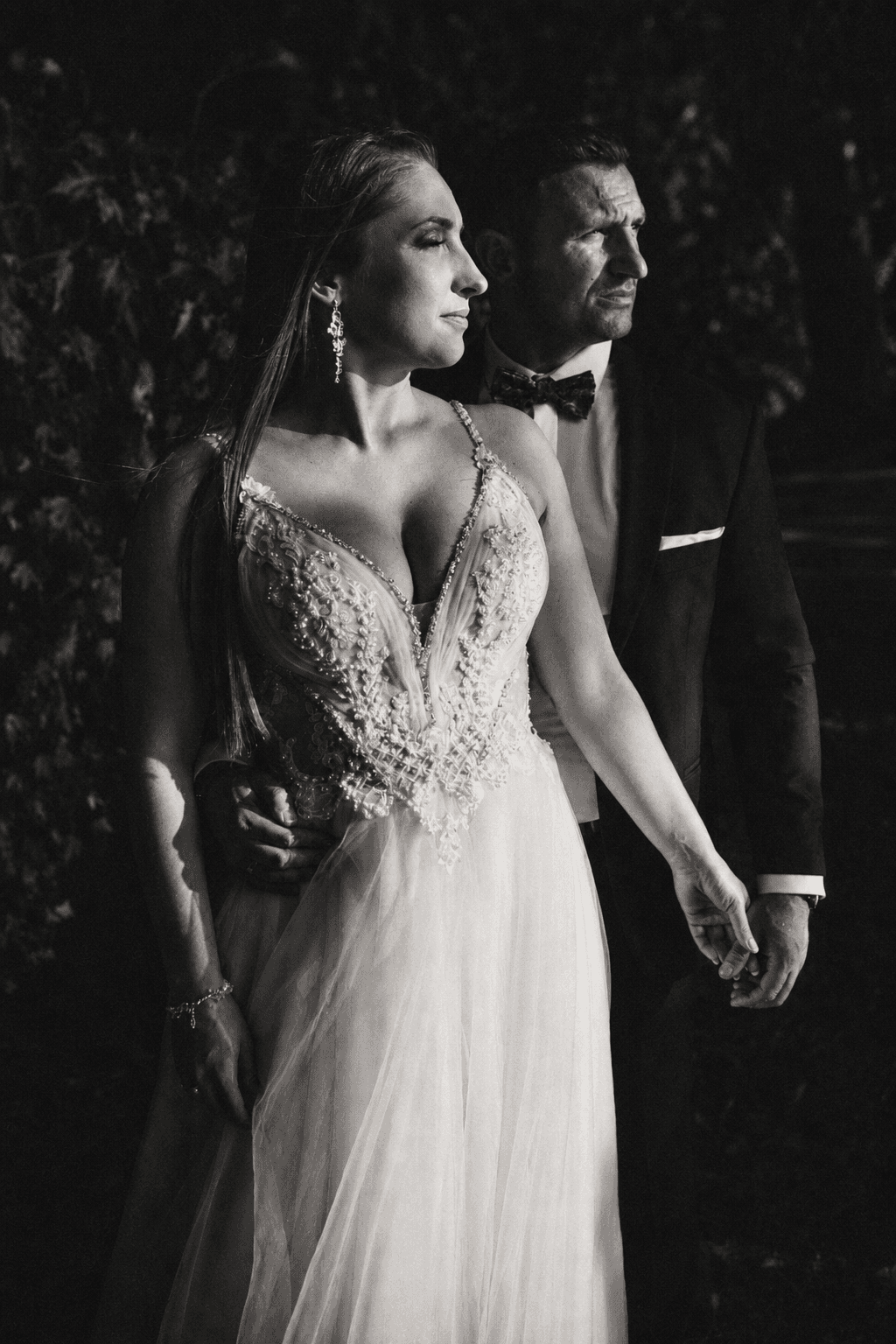
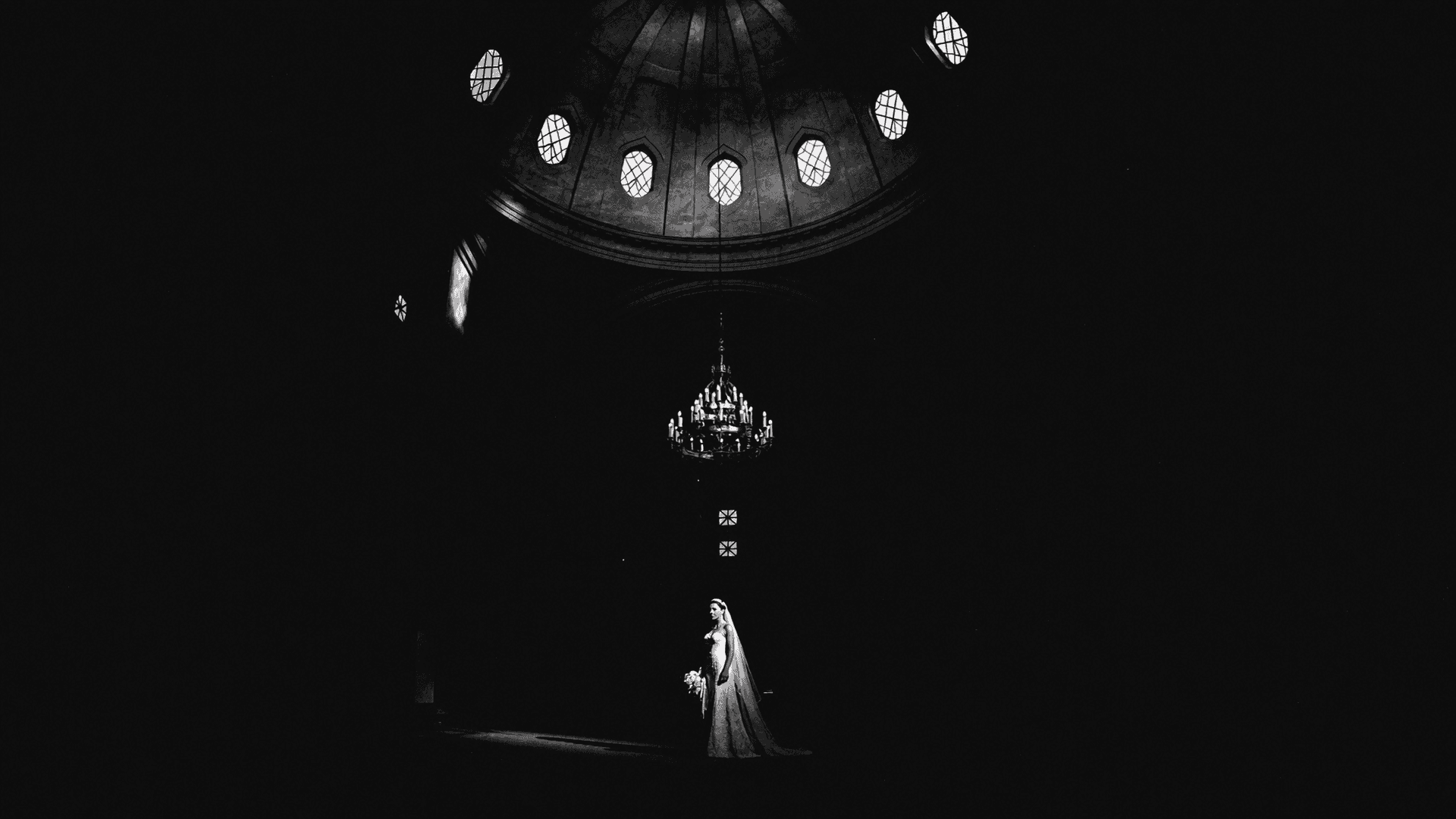
Fine art elopement photography is defined by aesthetic intention. The photographer approaches the day with a specific visual sensibility, particular tones, particular light, a particular relationship between subject and background, and produces images that reflect that sensibility consistently across the gallery. The edit is as much a part of the photograph as the capture: the muted highlights, the lifted shadows, the specific colour palette are not filters applied after the fact but the visual signature of a considered approach.
Fine art photography is the most widely appropriated label in the elopement industry, which has diluted its meaning significantly. A photographer who describes their work as fine art is making a claim about aesthetic ambition. The way to evaluate that claim is through the portfolio: does every image reflect a consistent, considered sensibility, or does the label describe the marketing rather than the work?
Editorial
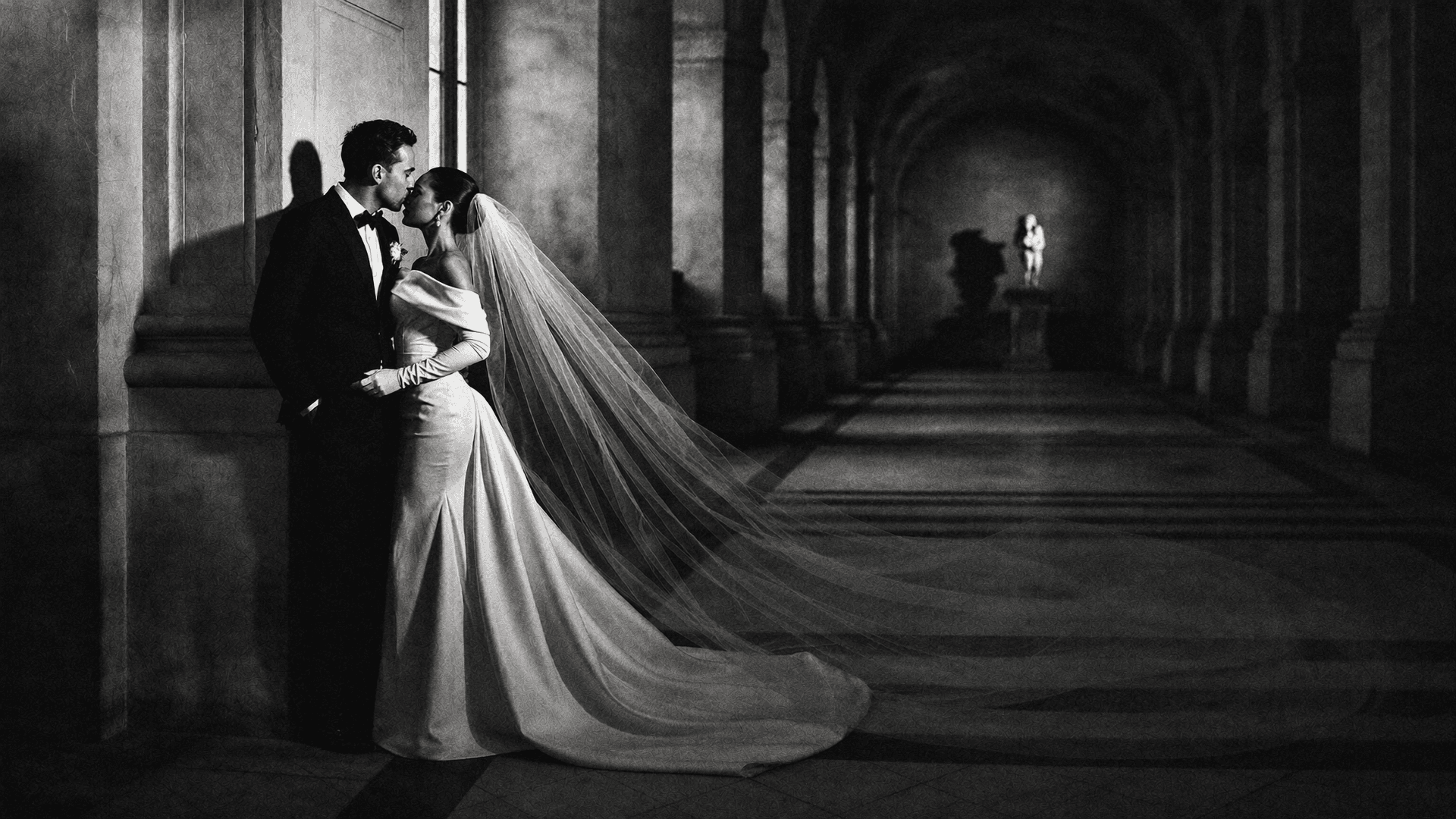
Editorial elopement photography borrows from fashion and advertising photography. The images are constructed: couples are directed, composed, and lit to produce a specific visual result. The approach is collaborative rather than observational, the photographer has a specific image in mind and works with the subjects to achieve it.
Editorial images look intentional because they are. The composition is deliberate, the posing is specific, the relationship between light and subject is designed. They differ from studio portraiture primarily in context, editorial elopement photographs use the environment, the dress, the setting as active components of the image rather than backgrounds to be managed.

What Most Photographers Actually Do
The useful reality is that most elopement photographers work across all three modes simultaneously and selectively. They shoot the ceremony documentarily, observing without intervening. They approach the portrait session editorially, directing with specific intent. They process the gallery with fine art attention to tone and colour. The labels describe tendencies rather than exclusive approaches.
The question worth asking is not “are you documentary or fine art?” but “what does your work look like across a full elopement day?” The answer is in the full gallery: how the getting-ready images compare to the ceremony images, how the portraits compare to the reception candids, whether the edit is consistent across different lighting conditions. That full picture tells you far more than any label the photographer applies to themselves.
How to Identify What You Actually Want
Pull fifteen images from your inspiration folder and look at what they have in common. Are they observational, people unaware of the camera, caught in genuine moments? Are they composed, deliberate arrangements of people in specific relationship to the light and background? Are they stylised, a consistent tone and palette that looks more like a photograph from a particular decade or process than a contemporary digital image?
The answer to that question is the brief you should bring to your photographer consultation. It is more useful than any label, it produces better conversations, and it is much harder to misrepresent in response.
Making the Most of the your destination Context
Every destination has a specific context that is worth using deliberately rather than treating as background. At your destination, that context is the combination of light quality, natural or architectural setting, and the particular atmosphere of the place at different times of day. The sessions that use this context most effectively are the ones where the couple has spent time at your destination before the ceremony day: walking the neighbourhood, sitting at a viewpoint, becoming familiar with the place at different hours so that on the ceremony morning it is somewhere they know rather than somewhere they are experiencing for the first time under the pressure of the session schedule.
I recommend arriving at your destination at least one full day before the ceremony date for this reason. The first day is for orientation: finding the route to the ceremony site, having a meal at a restaurant they want to return to that evening, walking through the area without a camera or a schedule. The second day is the ceremony day, and the familiarity accumulated on the first day shows in how the couple moves through the space and how present they are during the session rather than navigating it as strangers. The photographs from a couple who knows the place, even slightly, are different from the photographs of a couple experiencing it for the first time.
Making the Most of the your destination Context
Every destination has a specific context that is worth using deliberately rather than treating as background. At your destination, that context is the combination of light quality, natural or architectural setting, and the particular atmosphere of the place at different times of day. The sessions that use this context most effectively are the ones where the couple has spent time at your destination before the ceremony day: walking the neighbourhood, sitting at a viewpoint, becoming familiar with the place at different hours so that on the ceremony morning it is somewhere they know rather than somewhere they are experiencing for the first time under the pressure of the session schedule.
I recommend arriving at your destination at least one full day before the ceremony date for this reason. The first day is for orientation: finding the route to the ceremony site, having a meal at a restaurant they want to return to that evening, walking through the area without a camera or a schedule. The second day is the ceremony day, and the familiarity accumulated on the first day shows in how the couple moves through the space and how present they are during the session rather than navigating it as strangers. The photographs from a couple who knows the place, even slightly, are different from the photographs of a couple experiencing it for the first time.
Making the Most of the your destination Context
Every destination has a specific context that is worth using deliberately rather than treating as background. At your destination, that context is the combination of light quality, natural or architectural setting, and the particular atmosphere of the place at different times of day. The sessions that use this context most effectively are the ones where the couple has spent time at your destination before the ceremony day: walking the neighbourhood, sitting at a viewpoint, becoming familiar with the place at different hours so that on the ceremony morning it is somewhere they know rather than somewhere they are experiencing for the first time under the pressure of the session schedule.
I recommend arriving at your destination at least one full day before the ceremony date for this reason. The first day is for orientation: finding the route to the ceremony site, having a meal at a restaurant they want to return to that evening, walking through the area without a camera or a schedule. The second day is the ceremony day, and the familiarity accumulated on the first day shows in how the couple moves through the space and how present they are during the session rather than navigating it as strangers. The photographs from a couple who knows the place, even slightly, are different from the photographs of a couple experiencing it for the first time.
Destination Wedding Photographer
Vancouver · Medellín · Worldwide