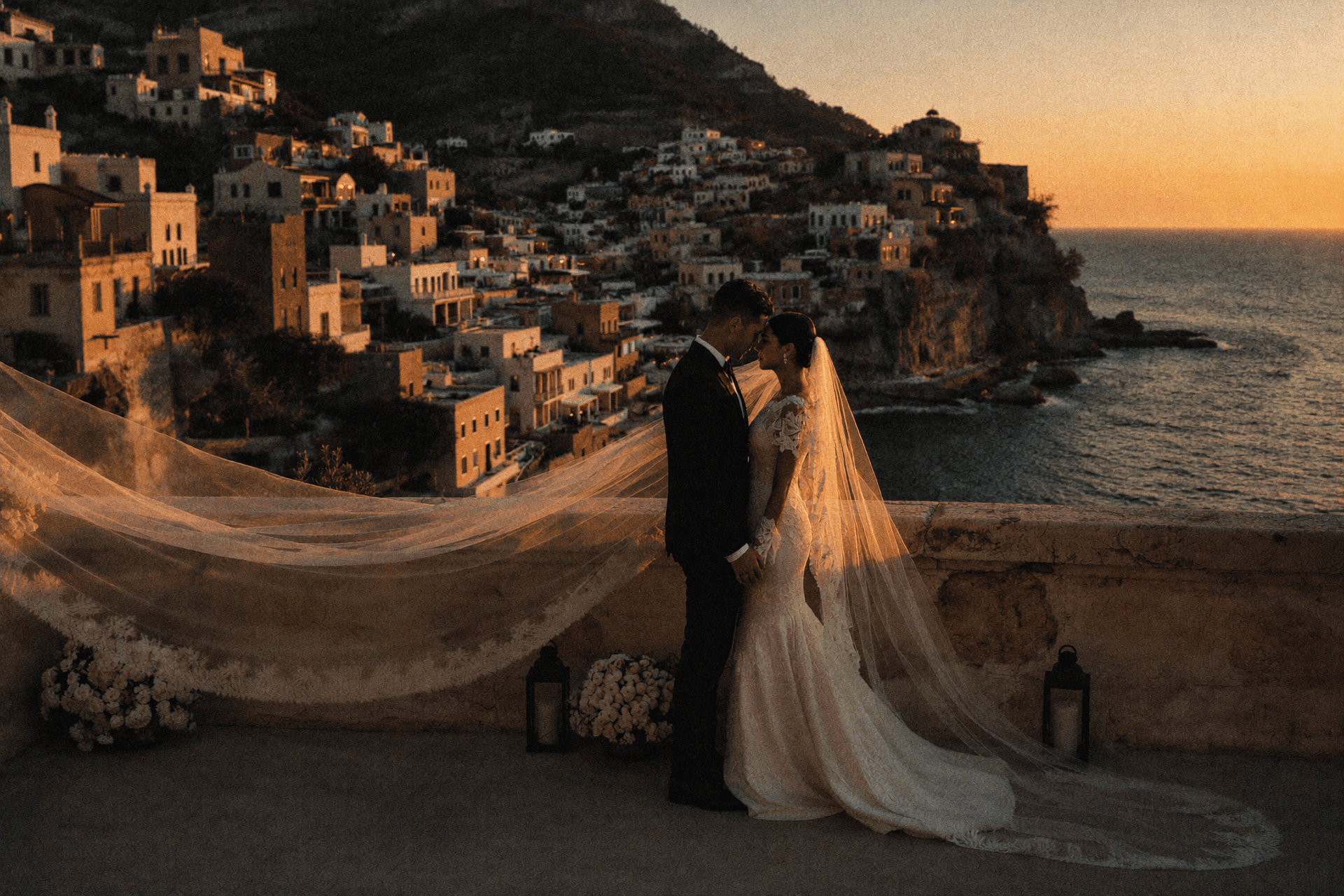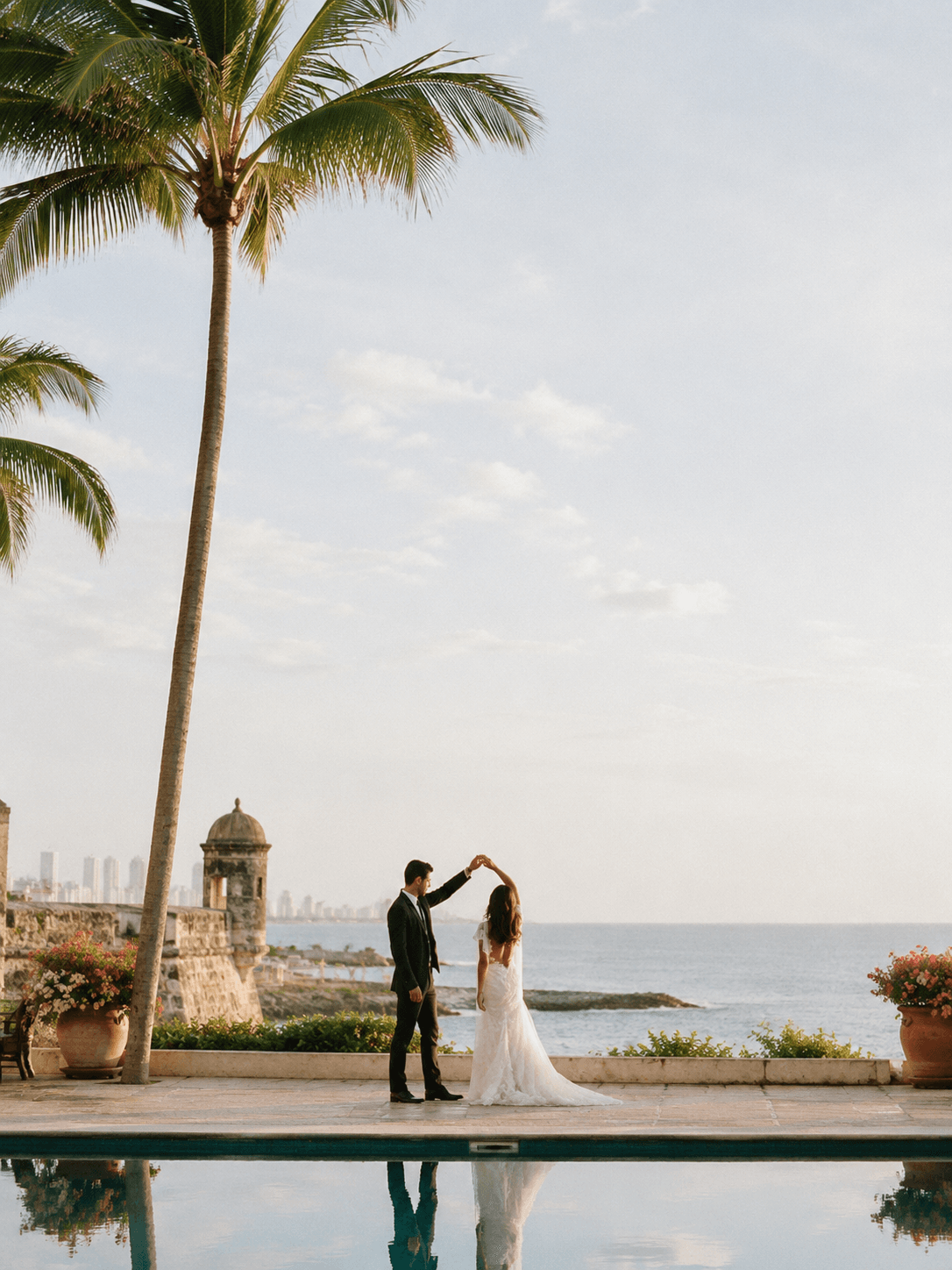
The destination elopement inquiry I receive most often in 2026 does not start with "we're eloping in [city]." It starts with "we're spending four days in [city] with our closest people and we want it all documented."
The shift is significant. Destination elopements have always been multi-day affairs in practice, travel, accommodation, logistics, pre-elopement dinners, but the expectation that photography would cover all of it is relatively new. And it changes the job entirely.
What the Modern Destination Elopement Weekend Looks Like
The welcome dinner the night before, where people arrive from across multiple countries and the first meeting of families happens over wine and nerves. The morning-of getting ready, relaxed and long because there is nowhere else to be. The ceremony itself. The reception that runs until the venue turns off the lights. The morning-after brunch where everyone is soft and tired and still slightly disbelieving it all happened. Sometimes a city walk the day before. Sometimes a boat on the second day.
All of that is the elopement. And all of it deserves a camera.
The Photography Implications
For me, this means arriving at a destination not a day early but two days early. I scout on foot. I find the courtyard that will be perfect for the welcome dinner portraits, the street that catches the 6pm light correctly, the rooftop that nobody else has noticed yet. By the time the weekend begins, I know the property and the surrounding neighborhood as well as the couple does.
It also means that the most authentic portraits often happen during the non-ceremony moments. The rehearsal walk through an old city at dusk. The morning balcony shot before everything begins. The quiet hotel breakfast the day after, when everyone is still half-inside the experience. These images carry a different weight than ceremony coverage because the pressure is off and the realness is complete.
The Shift in How Couples Frame the Value
When a couple is spending what they are spending on flights, accommodation, and venues for a destination elopement weekend, the photography stops being a vendor line item and becomes the archive of the whole trip. The gallery is the only tangible record of a four-day experience involving 30 to 60 people. Its scope needs to match that ambition.
The single eight-hour-elopement-day photography model made sense when the event was one day. The multi-day destination elopement experience needs a photographer who can sustain presence, attention, and creative energy across the full weekend. That is a different offer, and the couples who understand it are asking for it explicitly.
I offer it explicitly back.
What I Tell Every Couple Before a your destination Elopement
Every your destination elopement I photograph begins with a conversation that covers more than logistics. The logistical questions, timing, location, permit, vendor coordination, have answers that can be researched and confirmed in advance. The questions that require a conversation are the ones about what the couple actually wants from the day: whether the ceremony should be formal or informal, whether they want photographs that look specifically like your destination or photographs that could have been made anywhere beautiful, how they feel about direction during portrait sessions versus documentary coverage, and how much time they want to give the photographer versus how much they want to spend simply being in the place together.
The answers to these questions change what I plan for, how I shoot, and what the final gallery looks like. A couple who wants the photography to be invisible and the day to feel like a private ceremony that happened to be documented will have a different experience, and a different gallery, than a couple who wants to allocate time to specific portrait setups at each key location. Both are valid approaches. The planning conversation is what makes it possible to deliver the right one rather than the default one. I ask these questions early in the planning process specifically because the answers shape decisions that are easier to make before the date is confirmed than on the morning itself.

The One Thing That Makes the Most Difference
Of all the planning decisions that affect the quality of a your destination elopement gallery, the one that matters most is the time of the ceremony relative to the light. This is not a complicated calculation. At your destination, the best light for photography exists in a window of approximately two hours after sunrise and two hours before sunset. The ceremony and the main portrait session that follows should happen within or adjacent to one of those windows. Everything else, the specific location choice within your destination, the clothing, the number of guests, the ceremony format, has a smaller effect on the photographs than whether the couple is in good light or in the flat midday light that most of the day at any destination produces.
The couples who prioritise the early morning start or the golden hour end-of-day session consistently produce stronger galleries than the couples who choose their timing based on when it is most convenient or when the ceremony venue has availability. Convenience and photographic quality frequently conflict, and at your destination specifically, the difference between a 7am ceremony in the golden light and an 11am ceremony in the harsh midday sun is visible in every photograph the day produces. The planning decision that I advocate for most consistently, at your destination and at every other destination I photograph, is the decision to build the session around the light rather than around everything else.

Making the Most of the your destination Context
Every destination has a specific context that is worth using deliberately rather than treating as background. At your destination, that context is the combination of light quality, natural or architectural setting, and the particular atmosphere of the place at different times of day. The sessions that use this context most effectively are the ones where the couple has spent time at your destination before the ceremony day: walking the neighbourhood, sitting at a viewpoint, becoming familiar with the place at different hours so that on the ceremony morning it is somewhere they know rather than somewhere they are experiencing for the first time under the pressure of the session schedule.
I recommend arriving at your destination at least one full day before the ceremony date for this reason. The first day is for orientation: finding the route to the ceremony site, having a meal at a restaurant they want to return to that evening, walking through the area without a camera or a schedule. The second day is the ceremony day, and the familiarity accumulated on the first day shows in how the couple moves through the space and how present they are during the session rather than navigating it as strangers. The photographs from a couple who knows the place, even slightly, are different from the photographs of a couple experiencing it for the first time.
Making the Most of the your destination Context
Every destination has a specific context that is worth using deliberately rather than treating as background. At your destination, that context is the combination of light quality, natural or architectural setting, and the particular atmosphere of the place at different times of day. The sessions that use this context most effectively are the ones where the couple has spent time at your destination before the ceremony day: walking the neighbourhood, sitting at a viewpoint, becoming familiar with the place at different hours so that on the ceremony morning it is somewhere they know rather than somewhere they are experiencing for the first time under the pressure of the session schedule.
I recommend arriving at your destination at least one full day before the ceremony date for this reason. The first day is for orientation: finding the route to the ceremony site, having a meal at a restaurant they want to return to that evening, walking through the area without a camera or a schedule. The second day is the ceremony day, and the familiarity accumulated on the first day shows in how the couple moves through the space and how present they are during the session rather than navigating it as strangers. The photographs from a couple who knows the place, even slightly, are different from the photographs of a couple experiencing it for the first time.
Making the Most of the your destination Context
Every destination has a specific context that is worth using deliberately rather than treating as background. At your destination, that context is the combination of light quality, natural or architectural setting, and the particular atmosphere of the place at different times of day. The sessions that use this context most effectively are the ones where the couple has spent time at your destination before the ceremony day: walking the neighbourhood, sitting at a viewpoint, becoming familiar with the place at different hours so that on the ceremony morning it is somewhere they know rather than somewhere they are experiencing for the first time under the pressure of the session schedule.
I recommend arriving at your destination at least one full day before the ceremony date for this reason. The first day is for orientation: finding the route to the ceremony site, having a meal at a restaurant they want to return to that evening, walking through the area without a camera or a schedule. The second day is the ceremony day, and the familiarity accumulated on the first day shows in how the couple moves through the space and how present they are during the session rather than navigating it as strangers. The photographs from a couple who knows the place, even slightly, are different from the photographs of a couple experiencing it for the first time.
Destination Wedding Photographer
Vancouver · Medellín · Worldwide