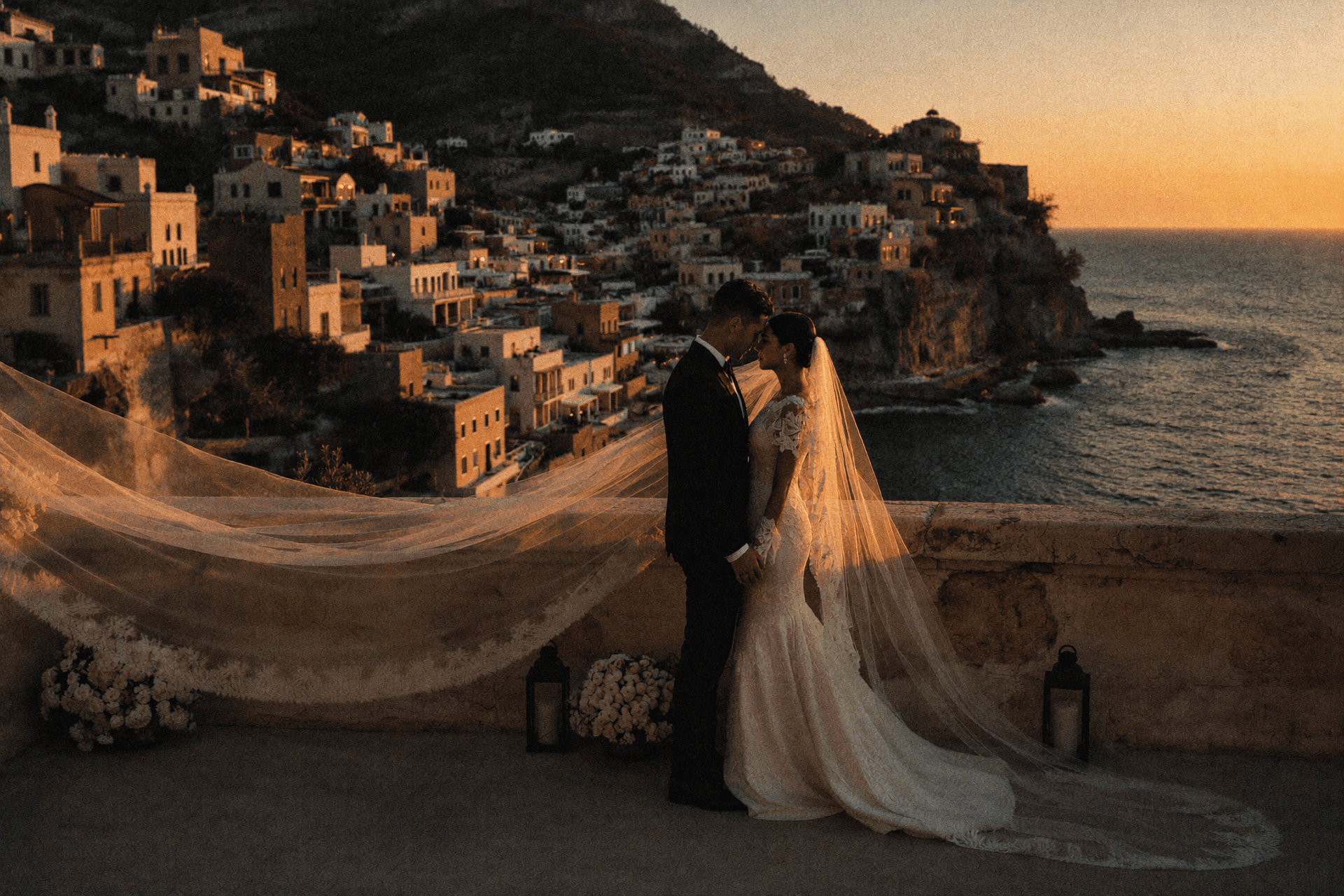
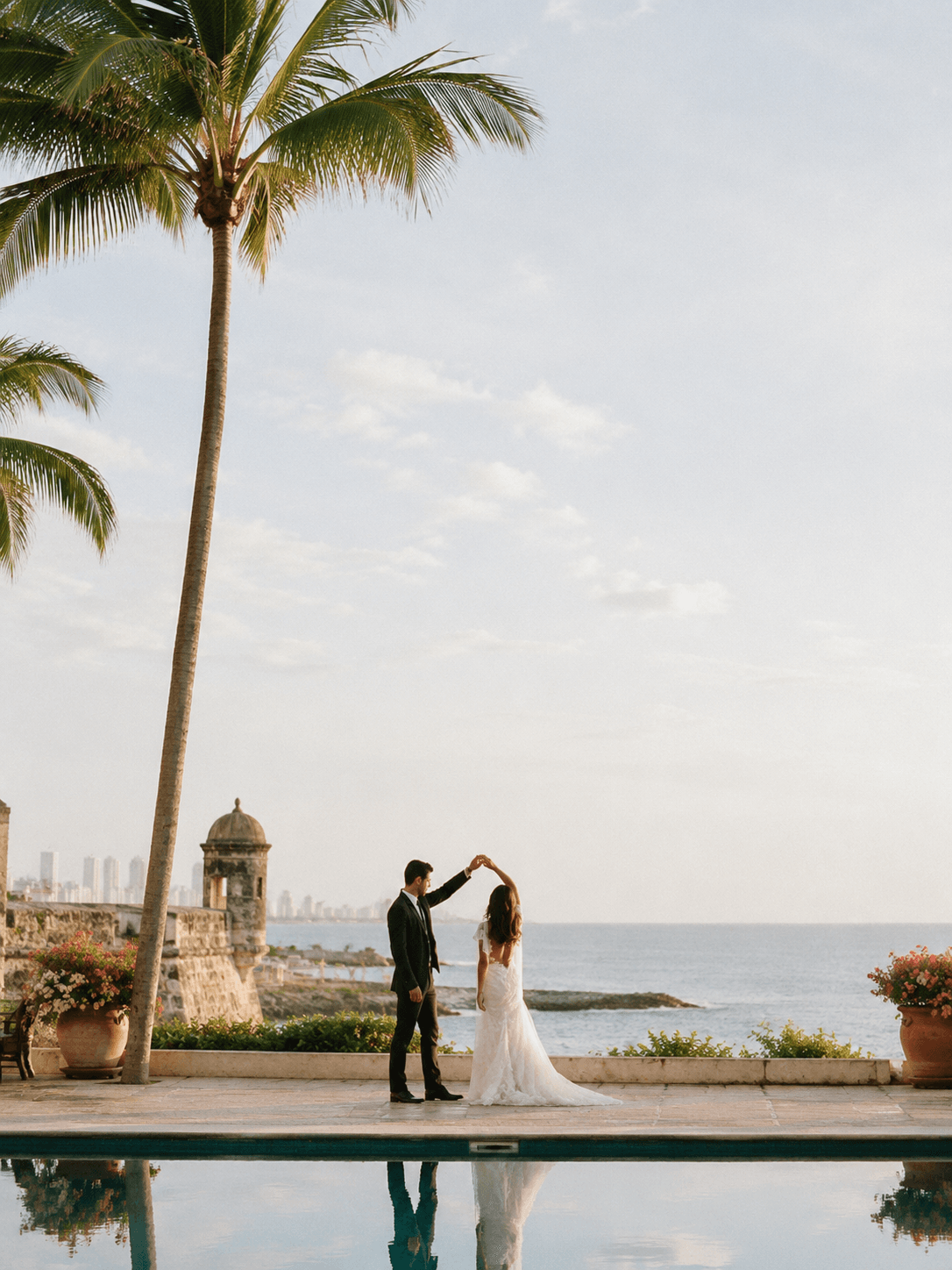
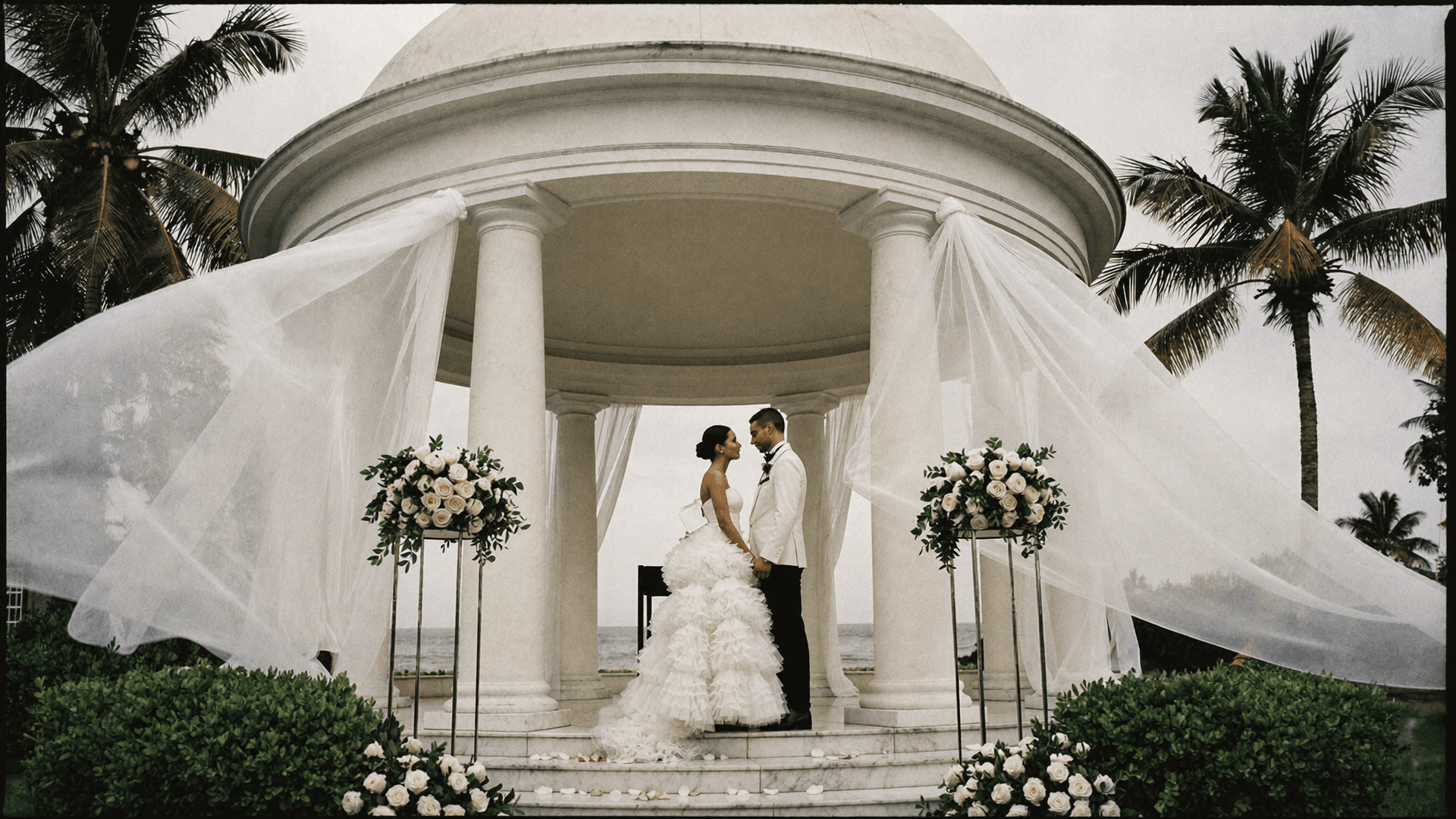
Italy is the country against which all other destination elopement markets calibrate themselves. It has held that position for decades, the Villa d'Este on Lake Como, the Amalfi cliffside terraces, the Tuscan vine-draped countryside, and it held it through the pandemic in the sense that it remained the reference image even when it was inaccessible. Two years of Italian elopements not happening did not make couples stop wanting Italian elopements. If anything, it sharpened the appetite.
But the Italy I returned to photograph in 2022 and into 2023 was not the Italy I had left in 2019. Here is what actually changed.
The Demand Surge and Its Consequences
When Italy fully reopened to international visitors in the spring of 2022, the pent-up demand was enormous. The global destination elopement market grew from $21.31 billion in 2022 to $28.31 billion in 2023, and Italy captured a disproportionate share of that growth because of its pre-existing dominance and the backlog of postponed elopements. Venues that had been locked for two years suddenly had to accommodate not just new bookings but the rescheduled events from 2020 and 2021 simultaneously.
The practical consequences: lead times extended dramatically. Couples who booked an Italian elopement in 2019 with twelve months' advance notice are now being told that prime-season dates (May through October) require 24 to 36 months. Prices across every vendor category, venues, catering, flowers, photographers, have increased meaningfully, partly due to inflation and partly due to simple demand pressure. The Italy of 2023 is a more expensive and more logistically demanding destination than the Italy of 2019.
Amalfi vs. Puglia: The Shift That Surprised Me
Pre-pandemic, the Amalfi Coast held a dominant position in Italian destination elopement photography. The cliffs, Positano, Villa Cimbrone in Ravello, it was the image that people meant when they said "Italian elopement" in the same way that the Eiffel Tower means Paris. That has not exactly changed, but what I observed clearly in 2022 is a measurable shift of sophisticated destination couples away from the Amalfi toward Puglia specifically.
Puglia offers the Amalfi Coast's visual drama at lower cost and with significantly less logistical complexity, the road situation on the Amalfi is genuinely difficult for large events, and it adds the visual vocabulary of the trulli, the whitewashed hill towns, and the masserie (converted fortified farms) that is completely unique in Italy. Couples who had done their research during two years of pandemic planning had found Puglia, and they were not choosing it as a backup to Amalfi, they were choosing it because they had concluded it was actually better for what they wanted.
I agree with them. Ostuni's white city photographed against a blue Adriatic sky is as visually extraordinary as anything I have shot on the Amalfi, and the masserie's ancient olive groves give a landscape context that the cliff-side Amalfi properties simply cannot provide. The shift toward Puglia is one of the clearest market movements I have observed in Italy since returning.
Sicily: The Pandemic's Quiet Italian Discovery
Sicily was in a similar position to Puglia, well-known as a tourist destination, largely underdeveloped as a destination elopement market pre-pandemic, when the lockdowns began. What happened during the pandemic period was that Sicily's general tourism profile exploded internationally through a combination of social media and (relevant in 2021-2022) the White Lotus effect: the HBO series filmed at the San Domenico Palace in Taormina introduced Sicilian baroque architecture to an enormous international audience at precisely the moment that audience was planning where to elope when the world reopened.
The White Lotus bump was real and visible in my inquiry data. I had a noticeable spike in Sicily-specific inquiries in late 2021 and through 2022 that I had not seen before, from couples who specifically mentioned the show or referenced the San Domenico property. Whether this is a lasting shift or a trend-driven moment is something I will be able to answer with more confidence in a few years, but the structural case for Sicily, the Baroque architecture of Noto, the Valley of the Temples at Agrigento, the Greek theatre at Taormina, is genuinely strong independent of any cultural moment.
Tuscany: The Institution, Unchanged and Immovable
Tuscany has not changed in any way that I can observe structurally. The Chianti valley, the Siena countryside, the cypress-lined roads, the visual identity is too established and too fundamental to the idea of Italian destination elopements to have been meaningfully altered by two years of closure. What the pandemic did to Tuscany is simply slow it down and then release it at higher pressure. The couples are the same couples. The aesthetics are the same aesthetics. The prices are higher. The lead times are longer.
This is not a criticism of Tuscany, the case for it remains as strong as it ever was. It is simply the observation that a destination mature enough and established enough does not transform through disruption, it consolidates. Tuscany emerged from the pandemic more dominant, not less.
The Practical Italy of 2023
Book early. That is the practical summary. Italy in 2023 requires more planning lead time than it did in 2019. The good news is that the photographic opportunities remain extraordinary, October in particular is still the finest month I know of for elopement photography anywhere in Europe, when the harvest light is horizontal all afternoon and every Italian building warms to amber. That has not changed and will not change. What has changed is simply the distance between the intention and the execution. Give yourself the time. Italy will reward it.
Making the Most of the your destination Context
Every destination has a specific context that is worth using deliberately rather than treating as background. At your destination, that context is the combination of light quality, natural or architectural setting, and the particular atmosphere of the place at different times of day. The sessions that use this context most effectively are the ones where the couple has spent time at your destination before the ceremony day: walking the neighbourhood, sitting at a viewpoint, becoming familiar with the place at different hours so that on the ceremony morning it is somewhere they know rather than somewhere they are experiencing for the first time under the pressure of the session schedule.
I recommend arriving at your destination at least one full day before the ceremony date for this reason. The first day is for orientation: finding the route to the ceremony site, having a meal at a restaurant they want to return to that evening, walking through the area without a camera or a schedule. The second day is the ceremony day, and the familiarity accumulated on the first day shows in how the couple moves through the space and how present they are during the session rather than navigating it as strangers. The photographs from a couple who knows the place, even slightly, are different from the photographs of a couple experiencing it for the first time.
Making the Most of the your destination Context
Every destination has a specific context that is worth using deliberately rather than treating as background. At your destination, that context is the combination of light quality, natural or architectural setting, and the particular atmosphere of the place at different times of day. The sessions that use this context most effectively are the ones where the couple has spent time at your destination before the ceremony day: walking the neighbourhood, sitting at a viewpoint, becoming familiar with the place at different hours so that on the ceremony morning it is somewhere they know rather than somewhere they are experiencing for the first time under the pressure of the session schedule.
I recommend arriving at your destination at least one full day before the ceremony date for this reason. The first day is for orientation: finding the route to the ceremony site, having a meal at a restaurant they want to return to that evening, walking through the area without a camera or a schedule. The second day is the ceremony day, and the familiarity accumulated on the first day shows in how the couple moves through the space and how present they are during the session rather than navigating it as strangers. The photographs from a couple who knows the place, even slightly, are different from the photographs of a couple experiencing it for the first time.
Making the Most of the your destination Context
Every destination has a specific context that is worth using deliberately rather than treating as background. At your destination, that context is the combination of light quality, natural or architectural setting, and the particular atmosphere of the place at different times of day. The sessions that use this context most effectively are the ones where the couple has spent time at your destination before the ceremony day: walking the neighbourhood, sitting at a viewpoint, becoming familiar with the place at different hours so that on the ceremony morning it is somewhere they know rather than somewhere they are experiencing for the first time under the pressure of the session schedule.
I recommend arriving at your destination at least one full day before the ceremony date for this reason. The first day is for orientation: finding the route to the ceremony site, having a meal at a restaurant they want to return to that evening, walking through the area without a camera or a schedule. The second day is the ceremony day, and the familiarity accumulated on the first day shows in how the couple moves through the space and how present they are during the session rather than navigating it as strangers. The photographs from a couple who knows the place, even slightly, are different from the photographs of a couple experiencing it for the first time.
Destination Wedding Photographer
Vancouver · Medellín · Worldwide