Contents
The first half is the dream: where to marry in Colombia, how the country actually works, and why it beats every rival on the map. The second half is the machine behind it: how one person builds the whole day, and what it costs.
Celestial Celebration on Earth
Most photographers hand you a gallery. I hand you the whole elopement.
I shot weddings for almost 12 years. The anxiety of misalignment and the fear of pictures not turning out great do exist, and the cost is this: (1) how you feel on the day itself, exhausted, not in the moment, force-fed a bunch of poses so your pictures would turn out great, which, by the way, they don’t, is conveyed in every single photograph; and (2) you’re putting on a show for others to enjoy while you, despite being the center of attention, are aware of only 10% of what’s happening.
An elopement is not a smaller wedding. It is getting rid of all the unnecessary and focusing on the core of every marriage: to celebrate a union so divine that earth, sun, and moon play a role in it. But someone has to build that trip: find the rooftop, clear the finca, charter the boat, hire the florist, time the light. Most couples try to do all of that themselves, from a spreadsheet, in a country they have never stood in and a language they may not speak.
I do it for you. You tell me how you want the days to feel. You tell me your budget. From there I design the whole experience, book every piece of it in my own name, and stay beside you from the first phone call to the final frame: the guide, the planner, the fixer, and the photographer, all one person. And unlike every photographer who flies in for your date and flies out, I live here.
Think of it the way you would think of an architect. You do not hand an architect a pile of lumber and ask them to nail it together. You hand them a feeling and a number, and they return a home. This is that, for the beginning of your marriage.
I am The Architect. Elopement Architect. And Colombia is my country.
Twelve browser tabs. A vendor who only answers on WhatsApp, in Spanish. A notaría requirement you learn about too late. A beach that looked empty in someone else’s photos. You become the project manager of your own elopement, in a country you have never visited.
A single person who lives here, has stood on that rooftop, knows that boat captain, speaks to that notary, and keeps the whole day running while you do nothing but be married and be present.
American wedding
Colombian elopement
living in Colombia. Me.
The difference goes toward the honeymoon, a down payment, or simply stays in your account.
Find Your Landscape
The Three Circuits
Colombia is not one destination. Three Andean ranges split the country into worlds that barely touch: Medellín to Cartagena is a thirteen-hour drive through the mountains. Internal flights are cheap, but I will never hang your ceremony on a delayed domestic flight. Anyone who promises you “all of Colombia in one trip” has never planned an elopement here.
So I designed the country into three circuits, each self-contained by road, each holding more variety than most entire countries. That is a logistics answer, but it is not the reason they exist. A circuit exists because an elopement is a journey and not a venue: you move through country that changes under you, and you arrive at the vows having travelled toward them. You pick the one that matches your dream. Couples who want more than one take the four-day Curated Adventuremoon, and the one internal flight sits between chapters on a buffer day, never before a ceremony. Same romance, a tenth of the failure points.
An elopement here covers two or three places at most, chosen because they sit an easy drive apart. Everything below can be recombined; my job is handing you the best combination for how you want the days to feel.
“The scenery is the passage. The vows are the destination.”
Medellín, Guatapé’s emerald lakes, and the wax-palm valleys and haciendas of coffee country. Eternal spring, green in every direction, all connected by mountain roads I drive constantly.
A 500-year-old walled city, then a 45-minute boat to coral islands and white-sand beaches. Colonial romance and Caribbean turquoise inside one long weekend, no flight in between.
Colombia sits on the equator: no winter, no summer, twelve hours of daylight every day of the year. Golden hour arrives near 5:45pm in January and near 5:45pm in July. There are only drier months and greener months.
The practical rule everywhere: mornings are almost always clear. I design ceremonies for first light, and the country rewards it.
Medellín & Guatapé
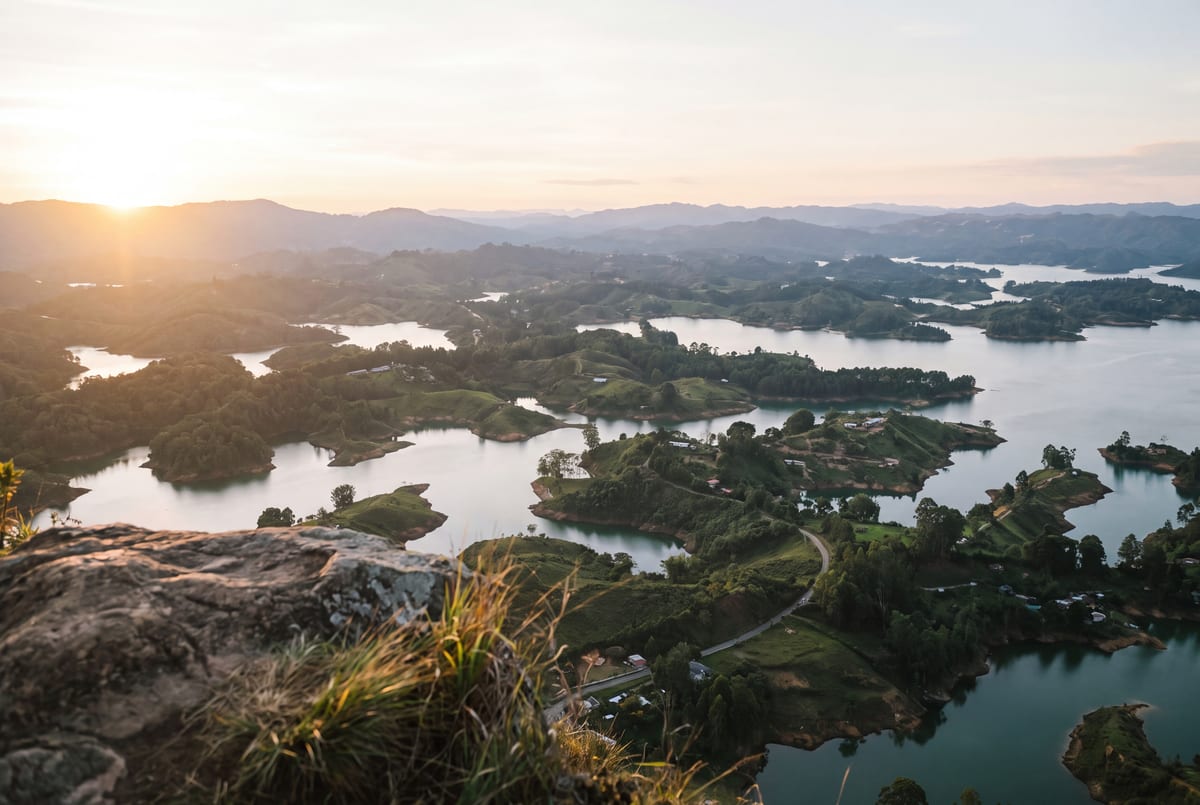
Medellín sits in a green bowl of the Andes at the altitude where the weather simply stops changing: 24°C, every day, forever. They call it the City of Eternal Spring, and it means your elopement date never fights a season. Two hours east, the land breaks into the emerald water-maze of Guatapé, an embalse of a thousand green islands watched over by El Peñol, a 200-metre granite monolith with a staircase stitched up its crack, and a lakeside town painted brighter than anywhere else on the continent.
Why I would bring you here: this is my home circuit, and it stacks wonder the way the Rockies stack peaks. A dawn ceremony on a private lake peninsula, the 740 steps of El Peñol before the crowds, a private boat through the islands by afternoon, and a rooftop dinner back in the city as the valley lights come on. Every piece connected by roads I drive every week.
El Peñol
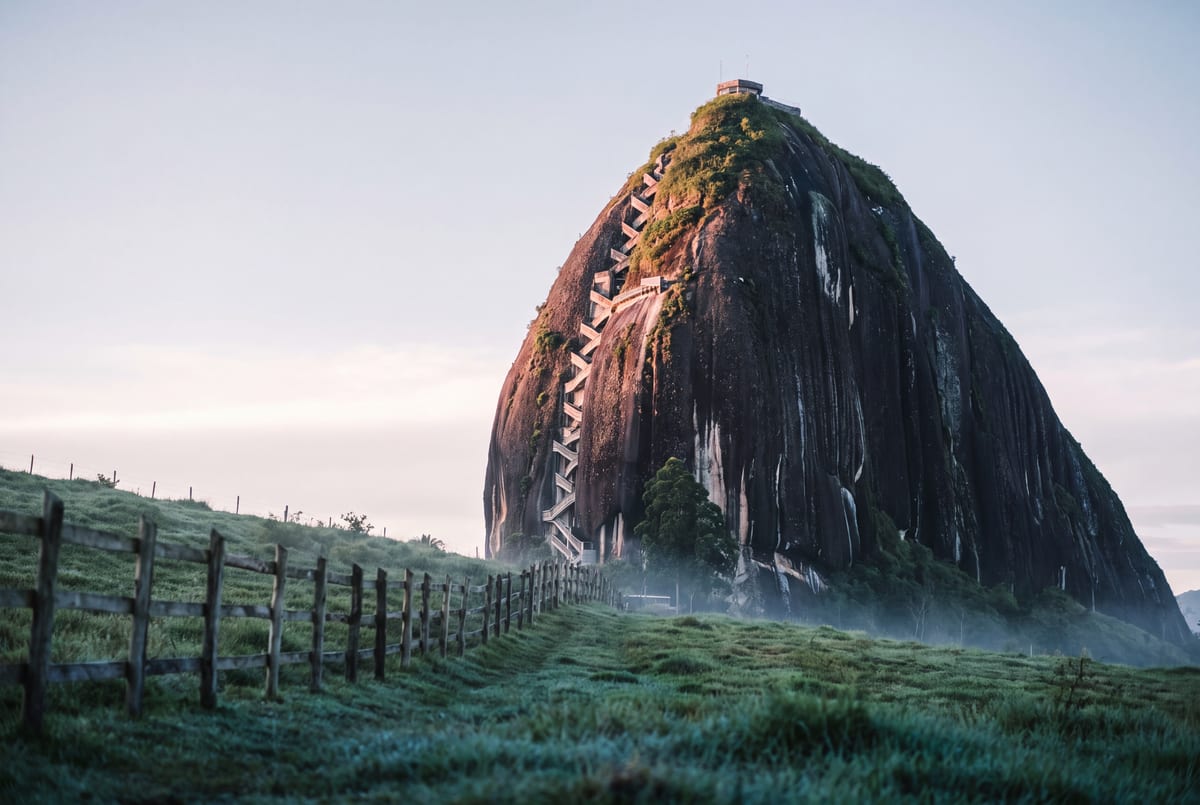
A 200-metre granite monolith rising out of the lake maze, 740 steps to a view of a thousand islands. I time it for opening light, when the staircase is empty and the water below burns green and gold.
The Embalse
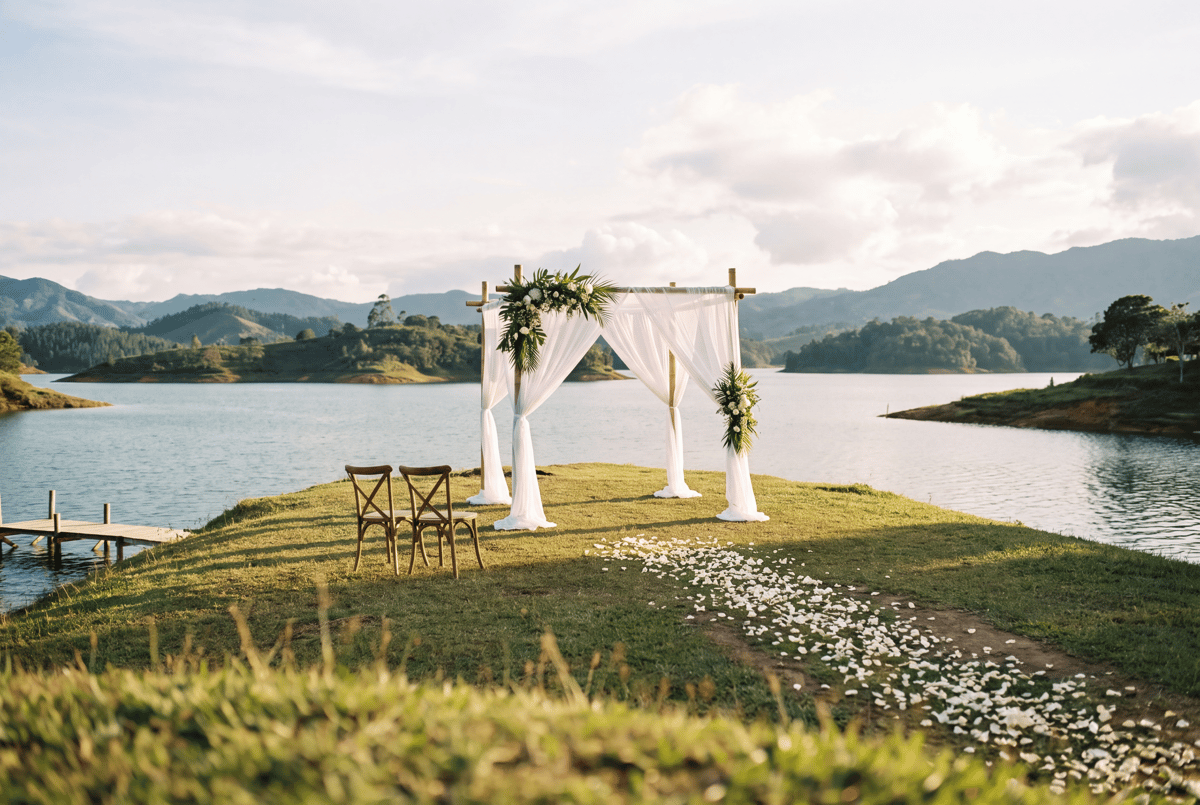
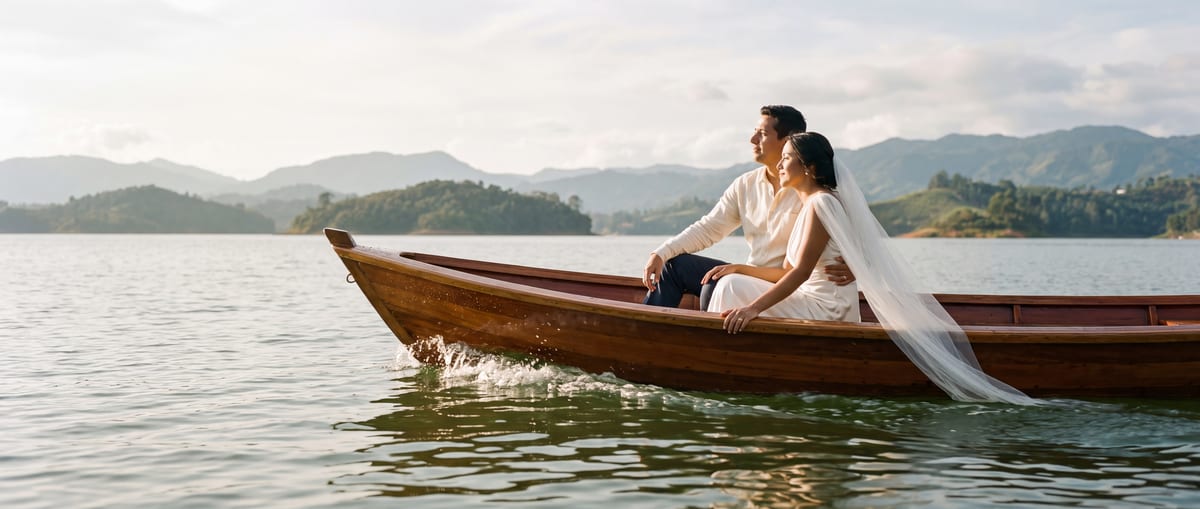
A private lakeside finca with its own peninsula, vows at the water’s edge, then a boat that is yours for the afternoon, drifting between islands with no one else in the frame.
Guatapé Town
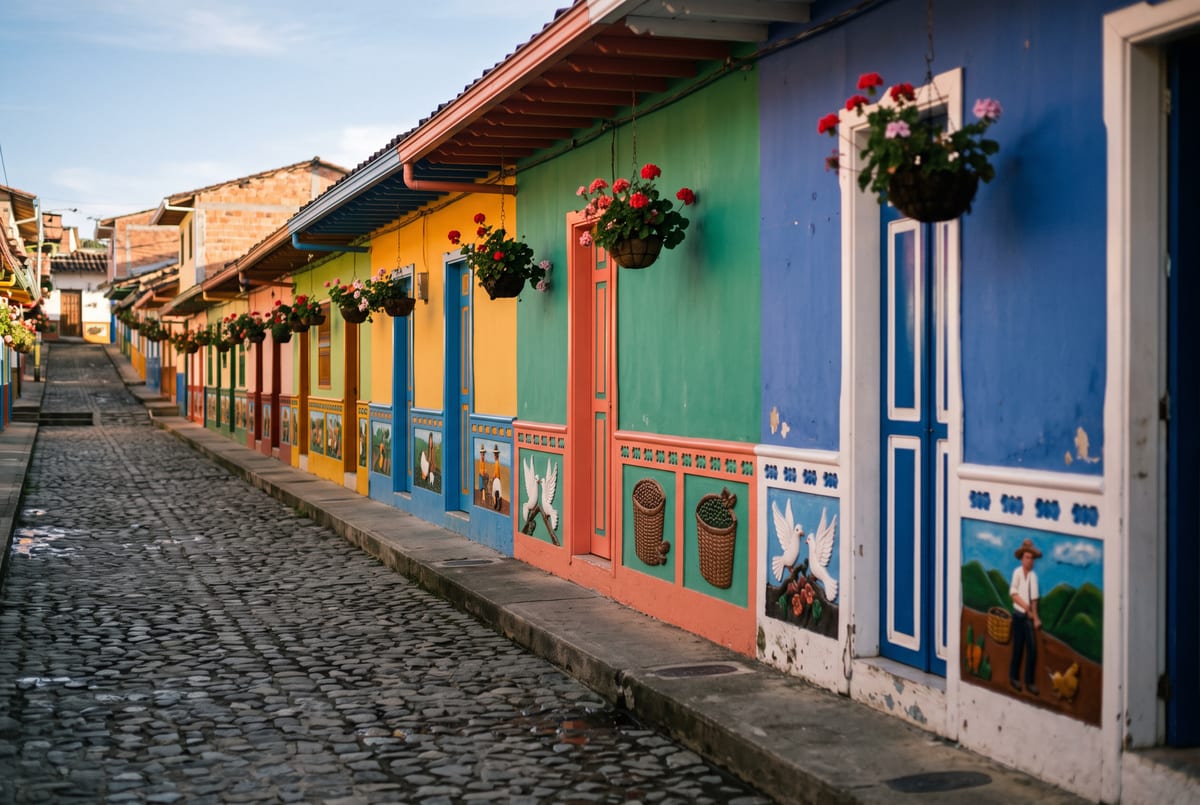
Every house wears carved, hand-painted zócalos in colours that should not work together and do. The most photogenic small town in South America, best walked at 7am with coffee in hand.
Medellín & Jardín
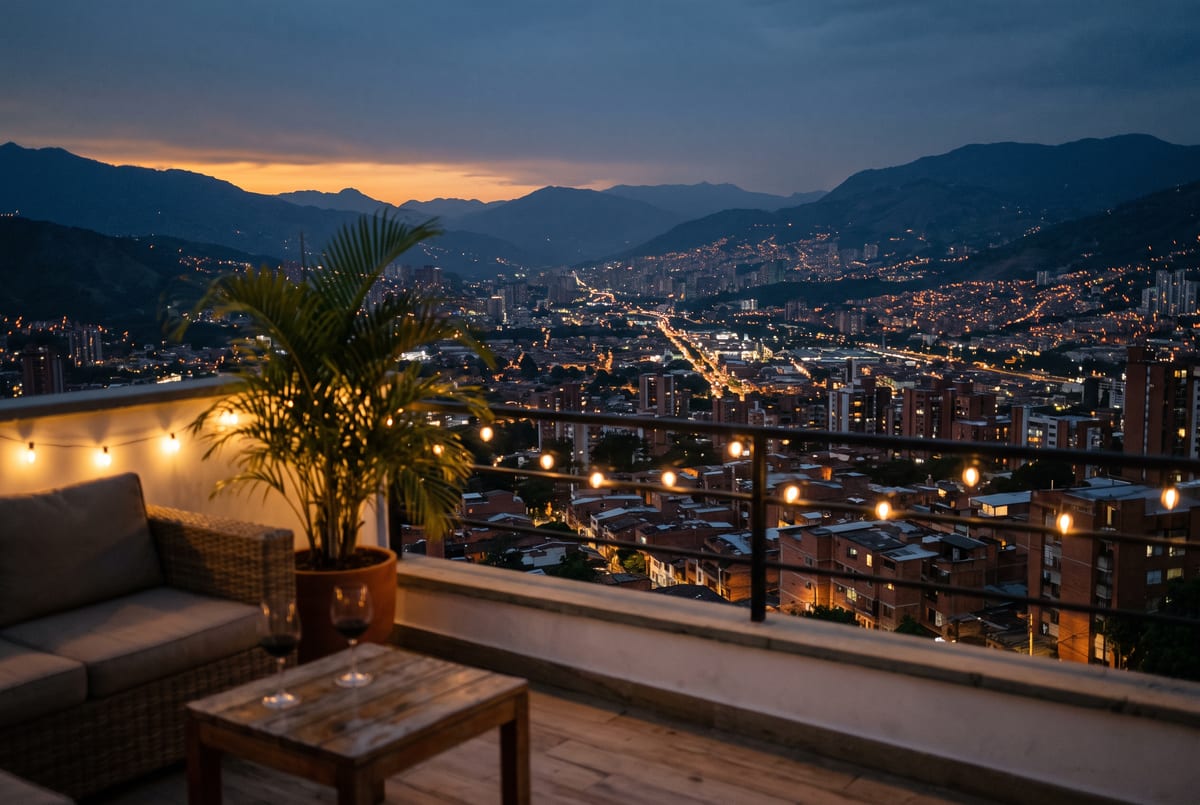
Rooftop ceremonies above the valley, the botanical garden’s orchid pavilion, and, three hours south, Jardín: a heritage pueblo of painted balconies where the cable car is a wooden box over a coffee gorge.
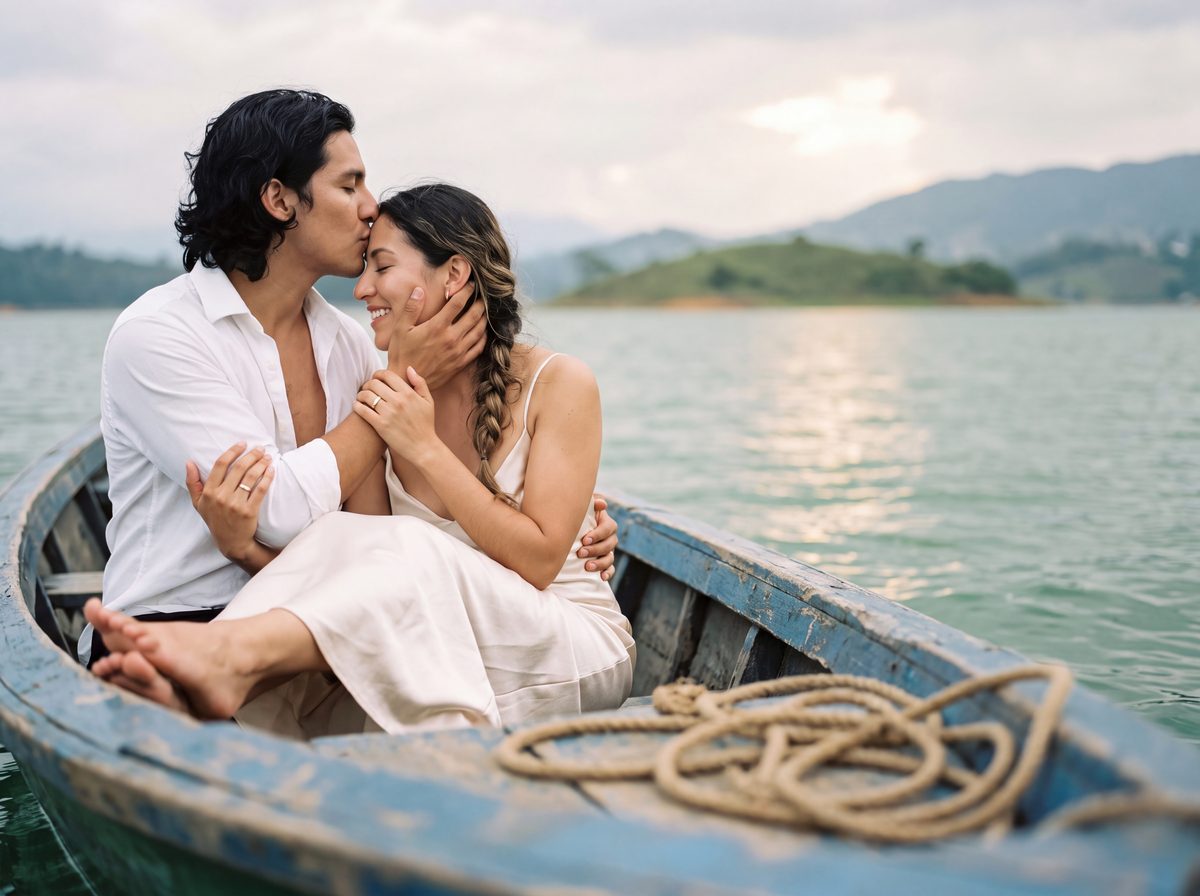
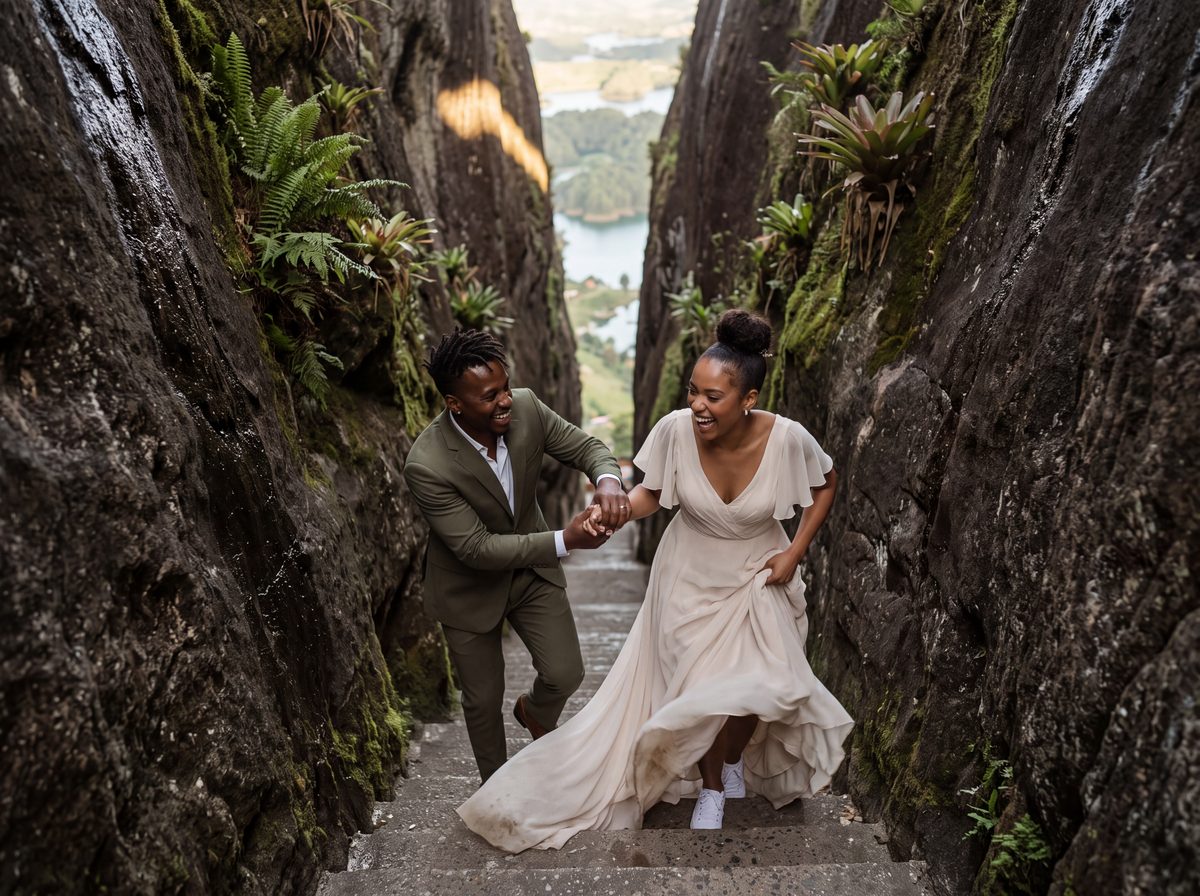
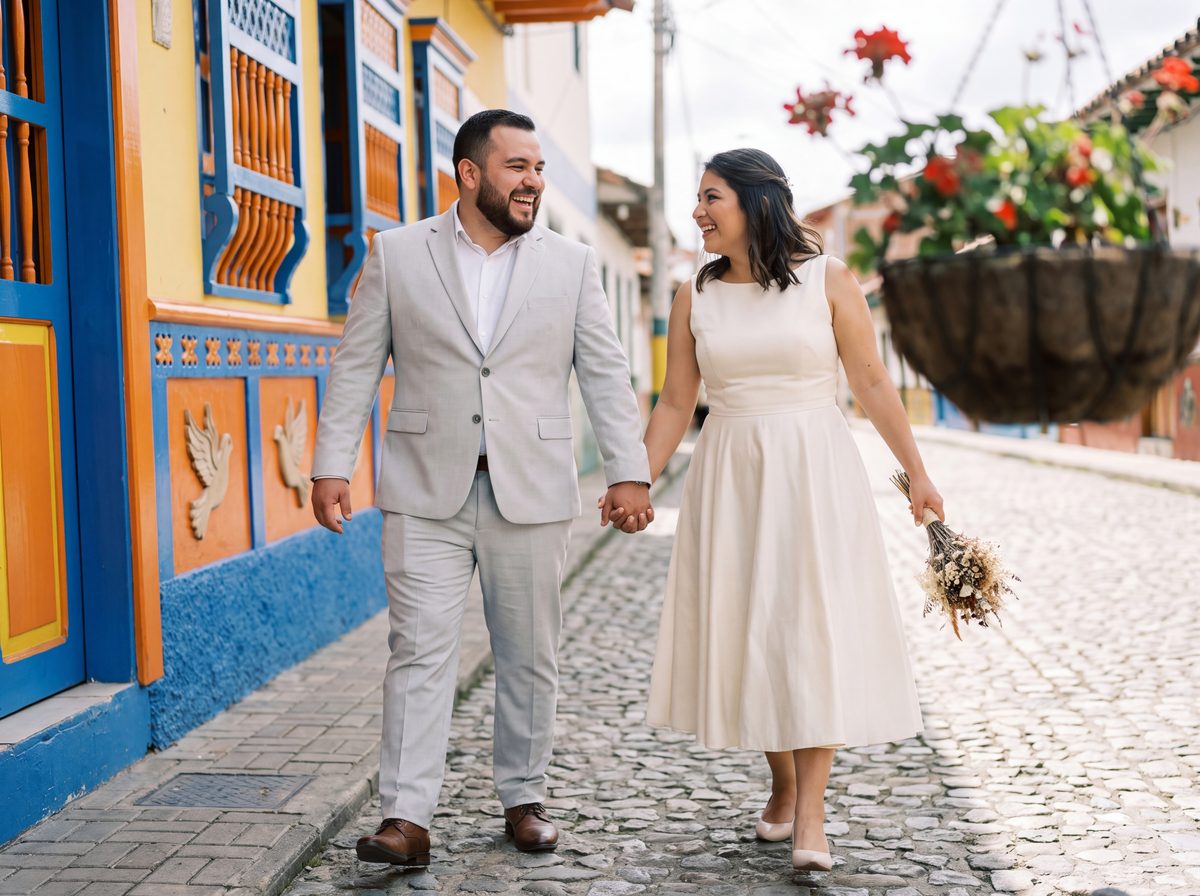
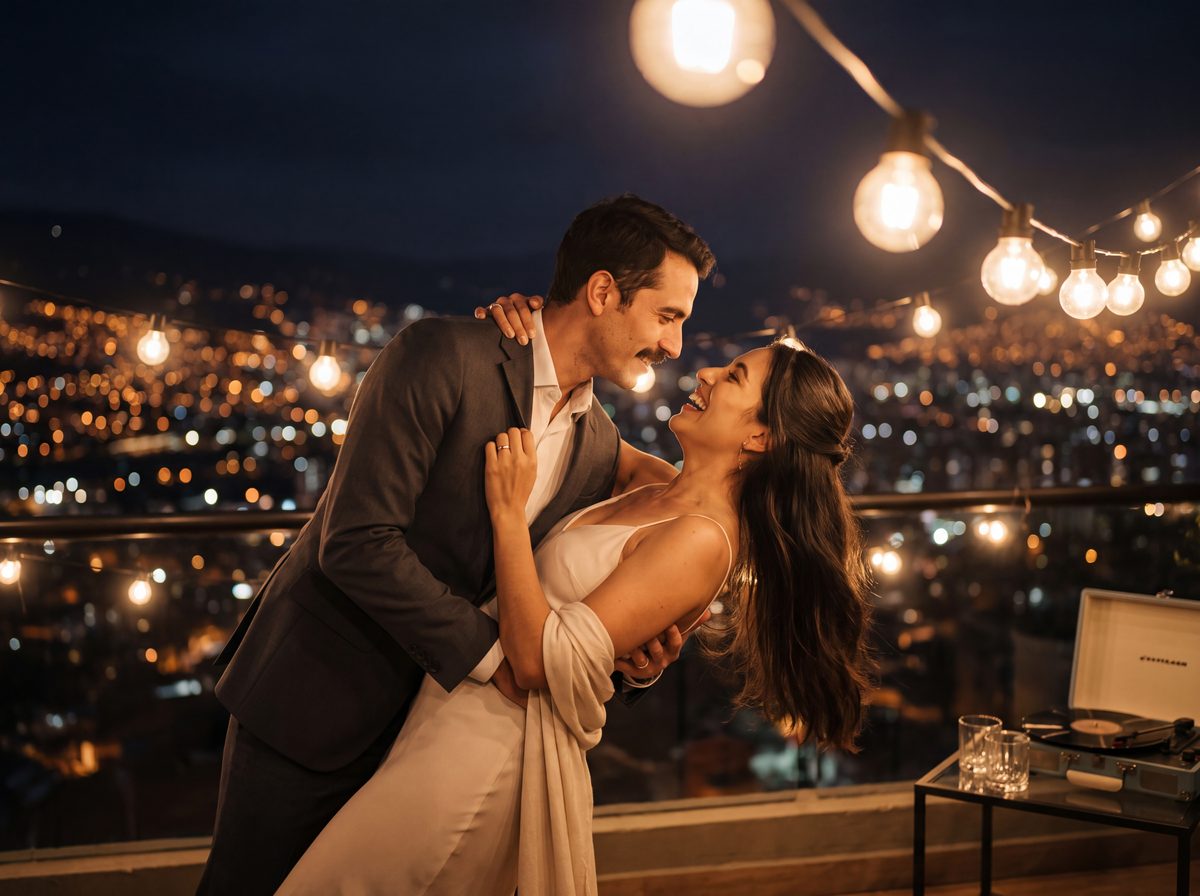
First-light vows on a private lake peninsula, mist still on the water. El Peñol’s summit before the first tour bus. A private boat and a floating lunch among the islands. Back to the city for a rooftop dinner as a million valley lights come on. One driver, zero logistics, all of it mine to run.
The Coffee Axis
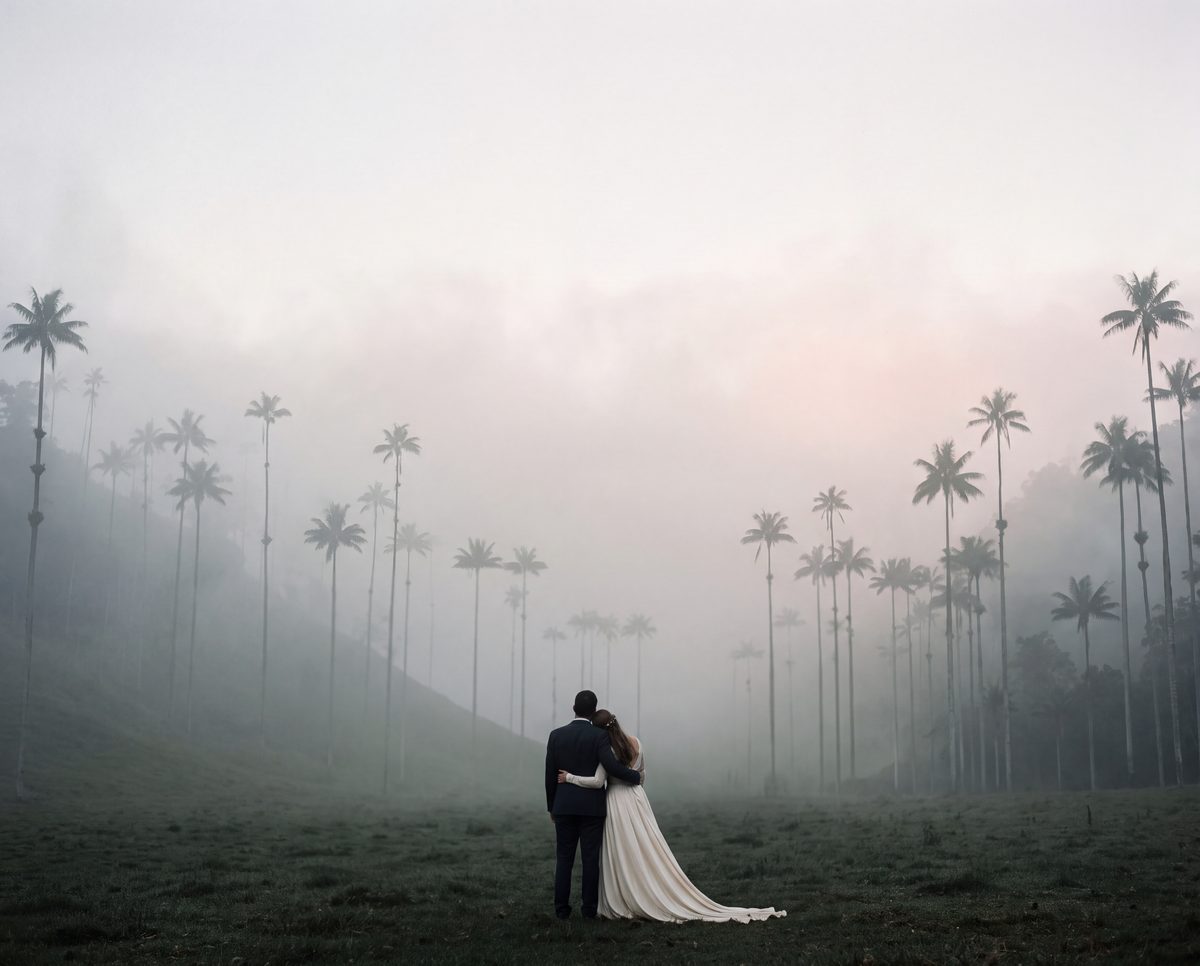
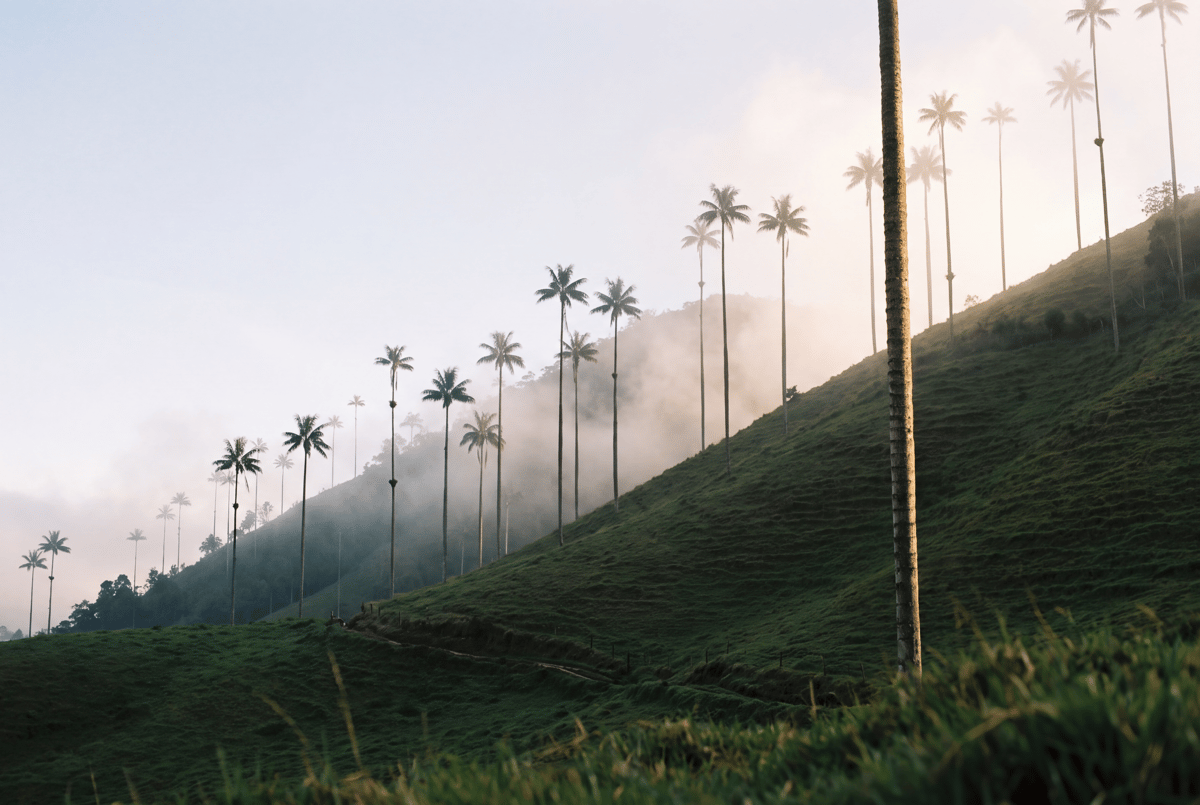
The Eje Cafetero is a UNESCO World Heritage landscape of green so saturated it looks colour-graded. Its crown is the Valle de Cocora, where the quíndio wax palm, the tallest palm on earth and Colombia’s national tree, rises sixty metres out of cloud-forest pasture like a landscape from another planet. Around it: the painted balconies of Salento and Filandia, and working coffee haciendas that have hosted a century of harvests and now host exactly one couple at a time.
Why I would bring you here: nowhere else on the continent puts a scene this surreal within a morning’s reach of a luxury finca. Vows under palms three times the height of a church nave, an arrival by vintage Willys jeep, the same 4x4s that carried the coffee down these hills for seventy years, and an evening in thermal springs under the mountains. The mist rolls through on its own schedule, and it makes the photographs, never breaks them.
Valle de Cocora
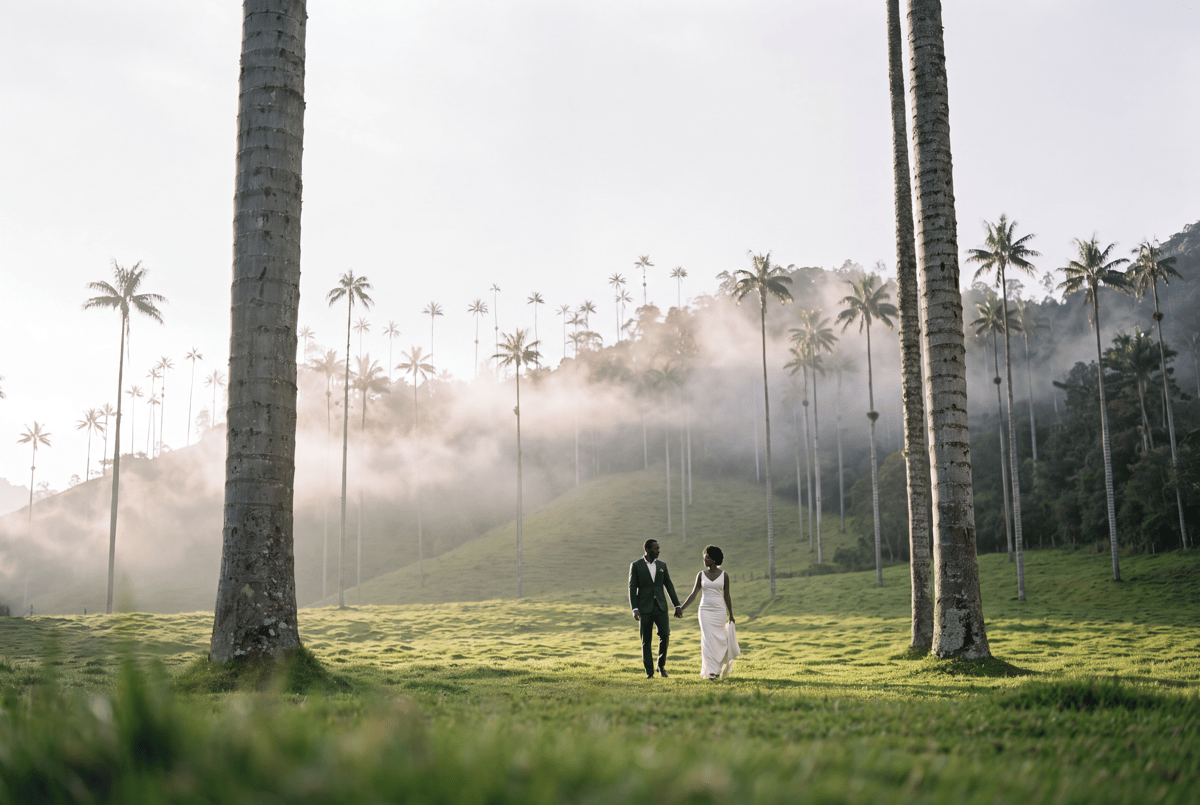
Vows among the tallest palms on earth, on a private stretch of valley the day-hikers never reach. At dawn the mist threads between the trunks and the whole valley goes cathedral-quiet.
Salento & Filandia
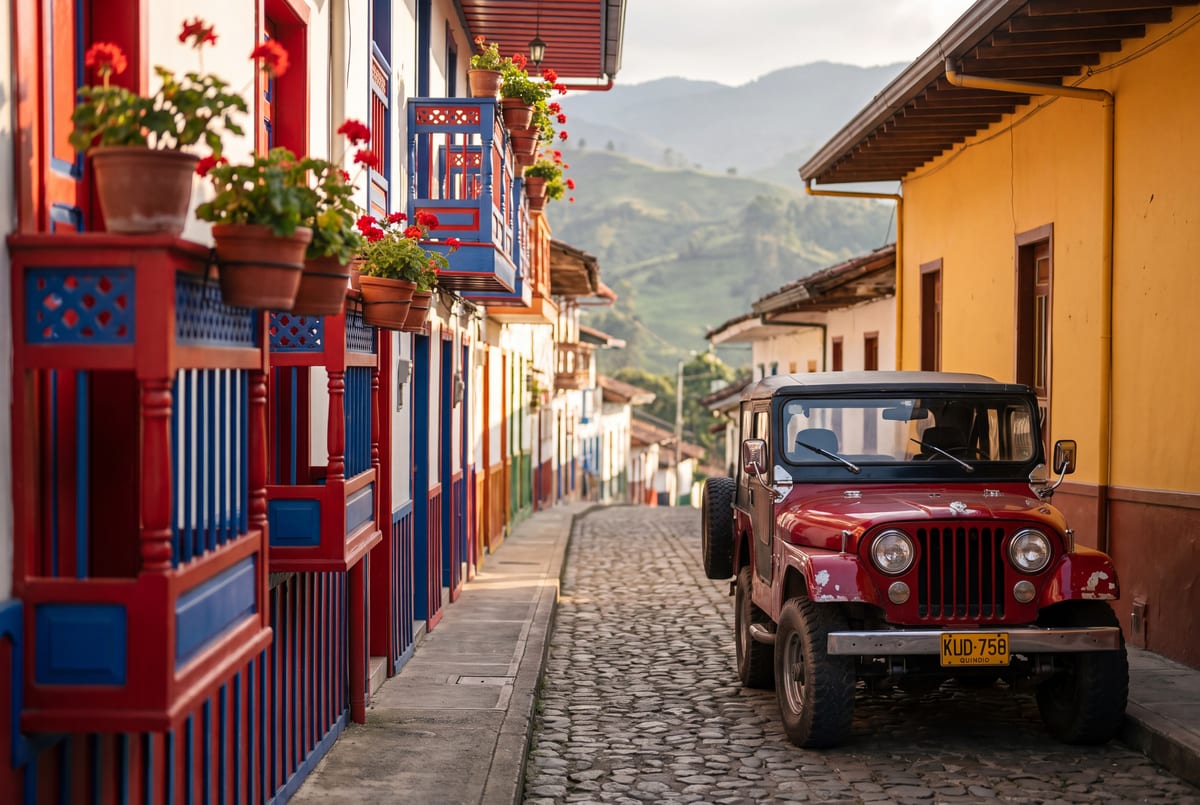
Heritage pueblos in paisa colour, balconies in red and cobalt, a plaza lined with Willys jeeps. Filandia is Salento without the crowds, and its mirador sees three departments at once.
The Haciendas
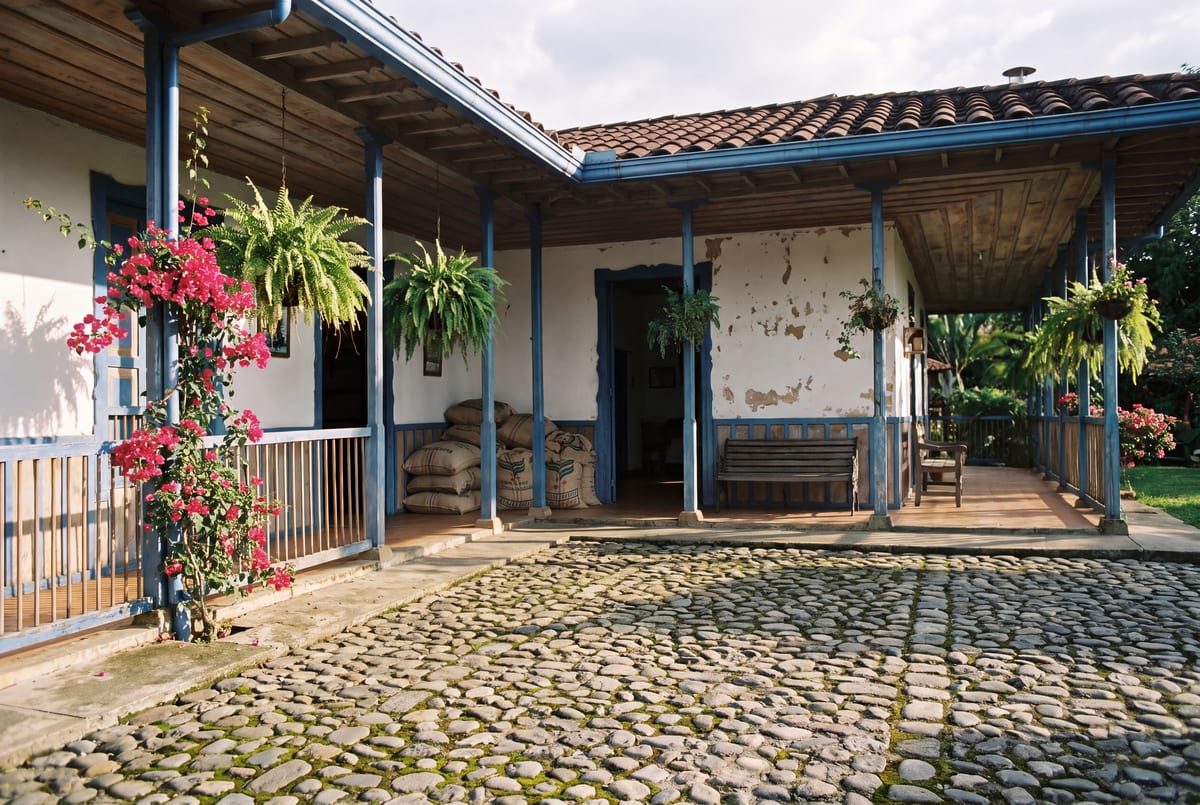
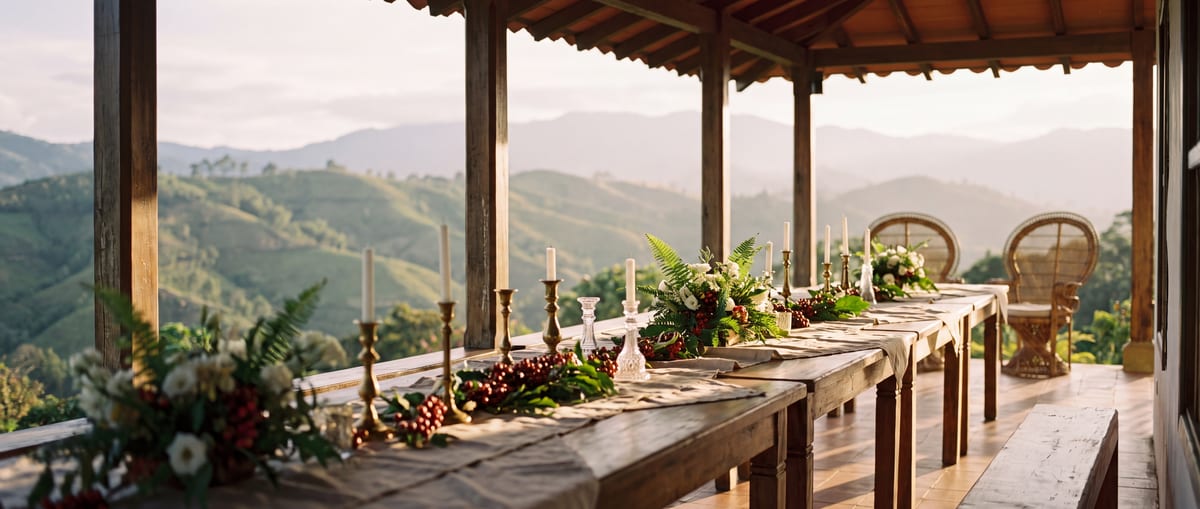
Century-old working coffee estates taken over entirely for you: verandas, gardens, a private chef, and a harvest walk with the producer whose family has picked these hills for generations.
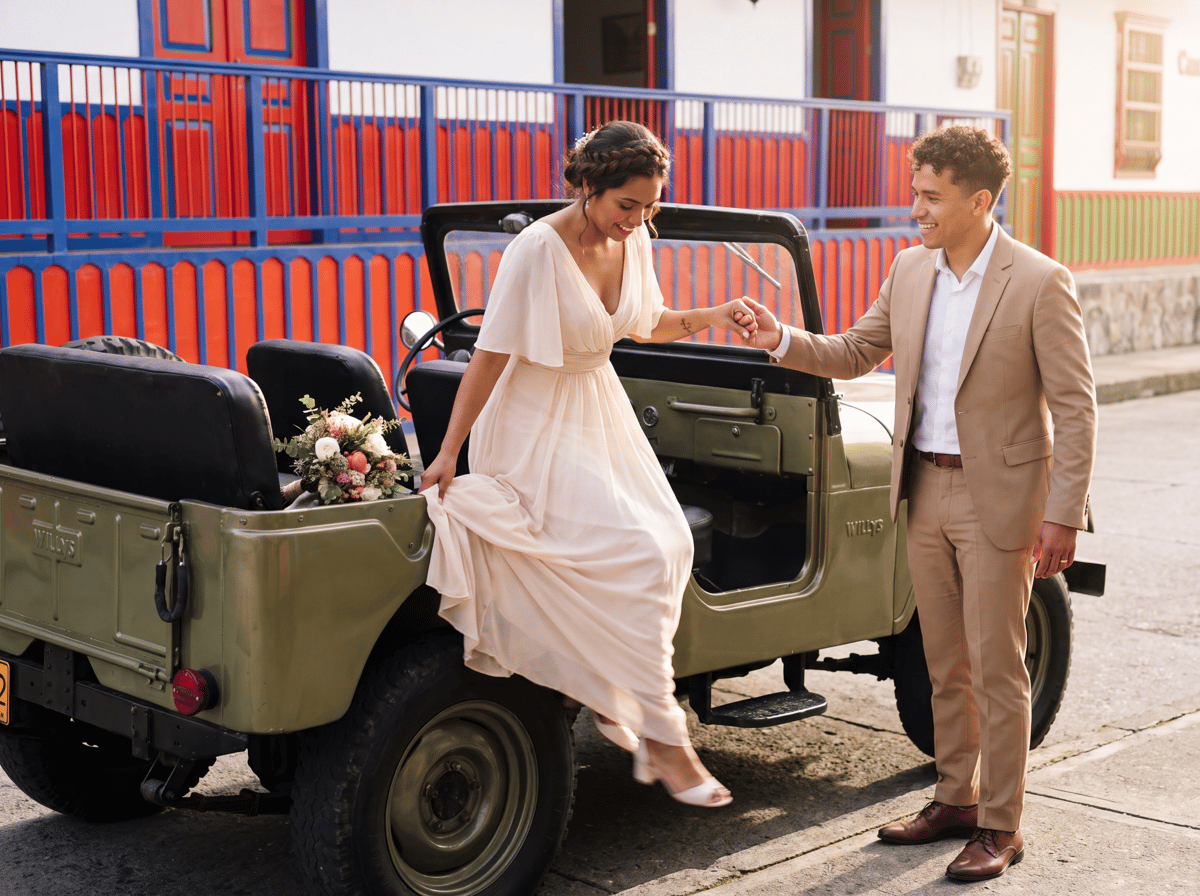
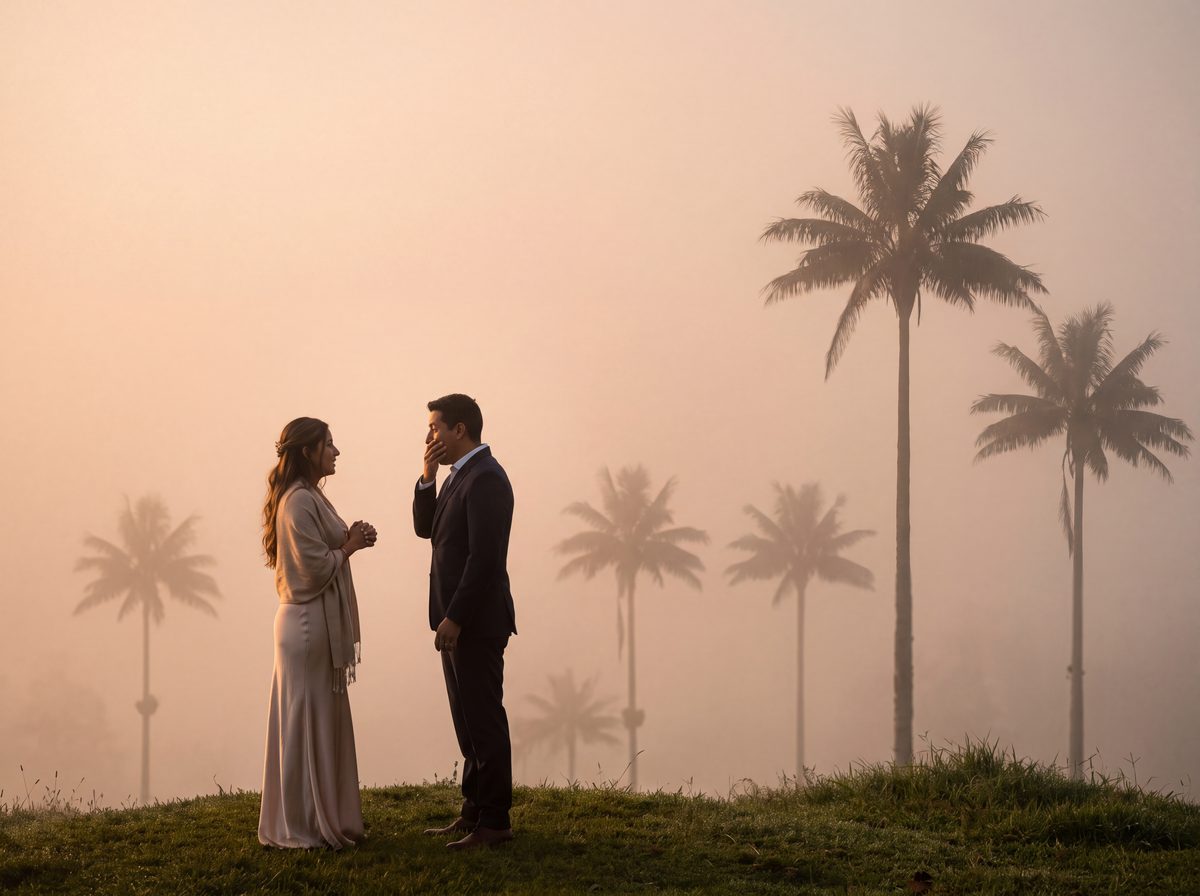
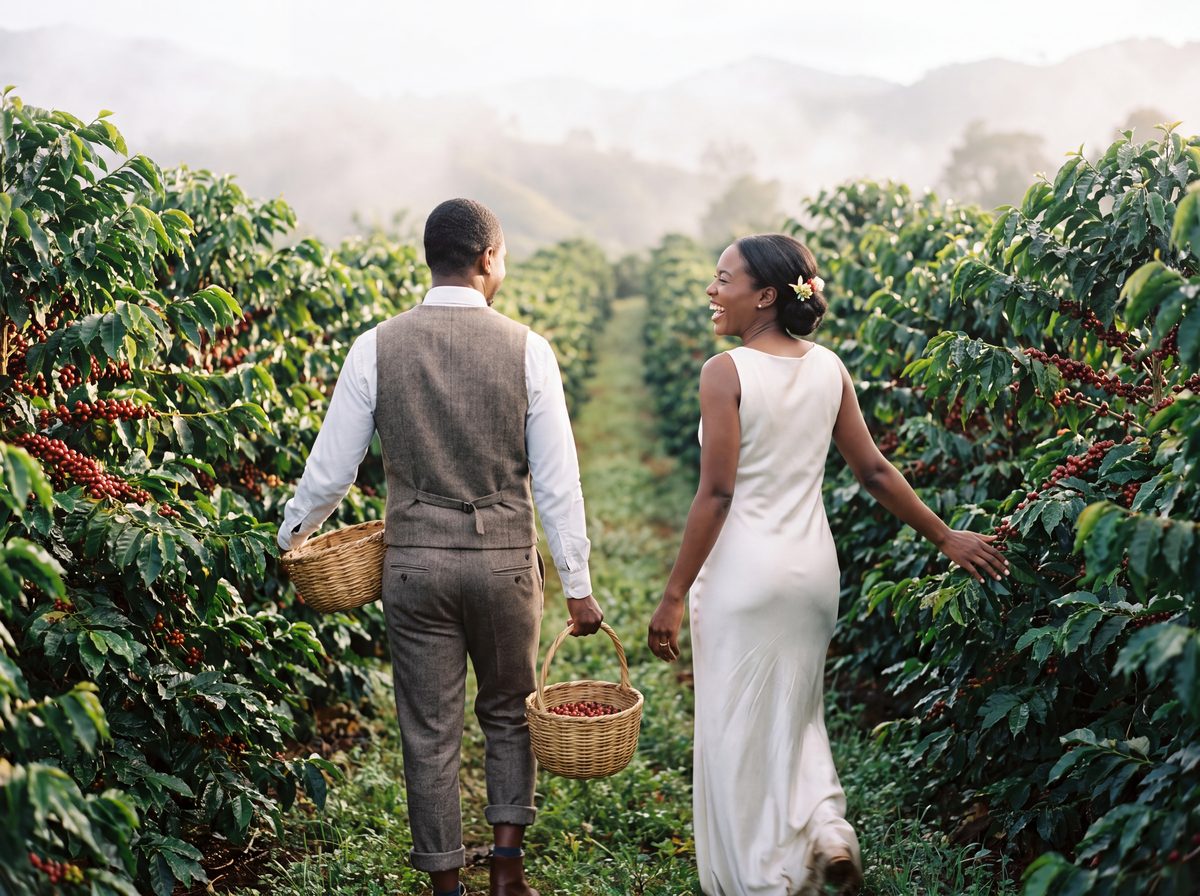
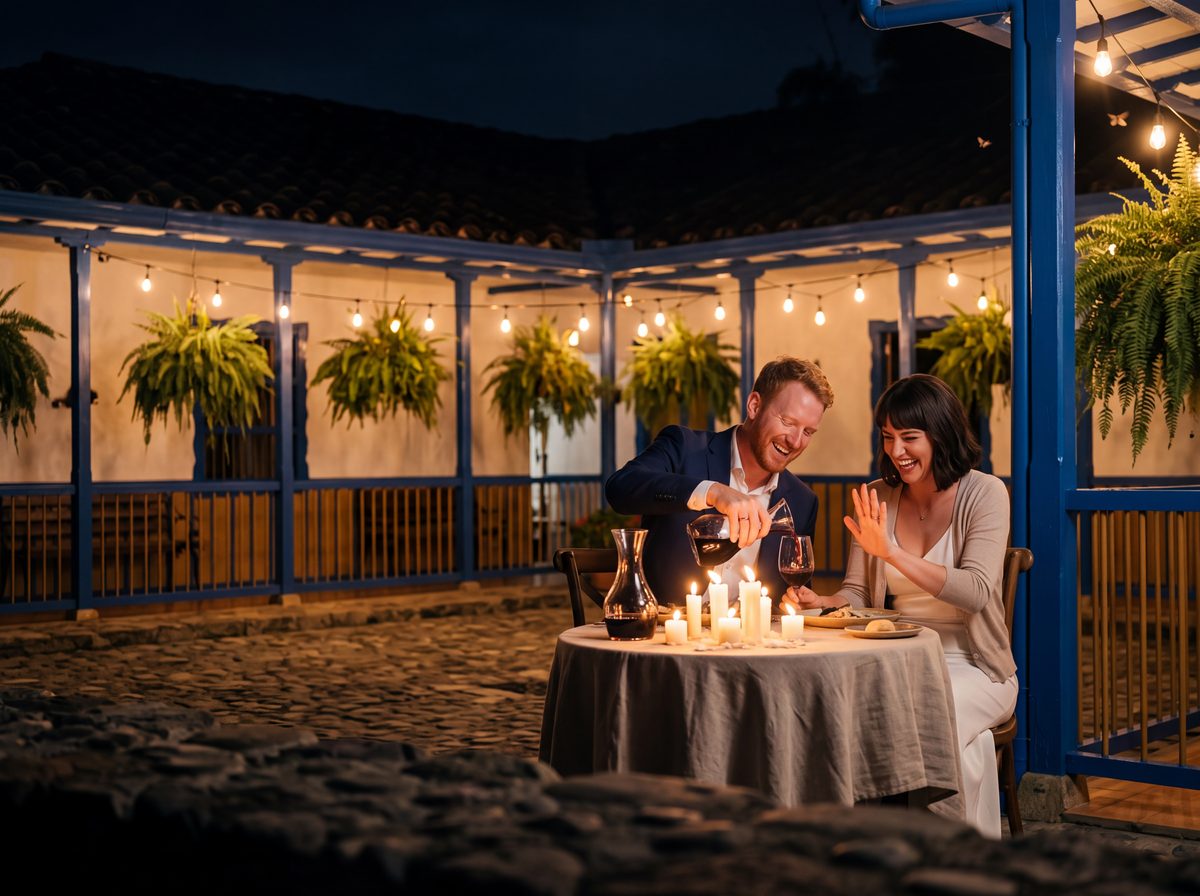
A Willys jeep carries you up into Cocora at dawn for vows under the palms in drifting mist. A hacienda lunch on the veranda, a lazy harvest walk with fresh coffee, portraits in Salento’s colour at golden hour, then a candlelit dinner in the courtyard and a thermal soak under the stars.
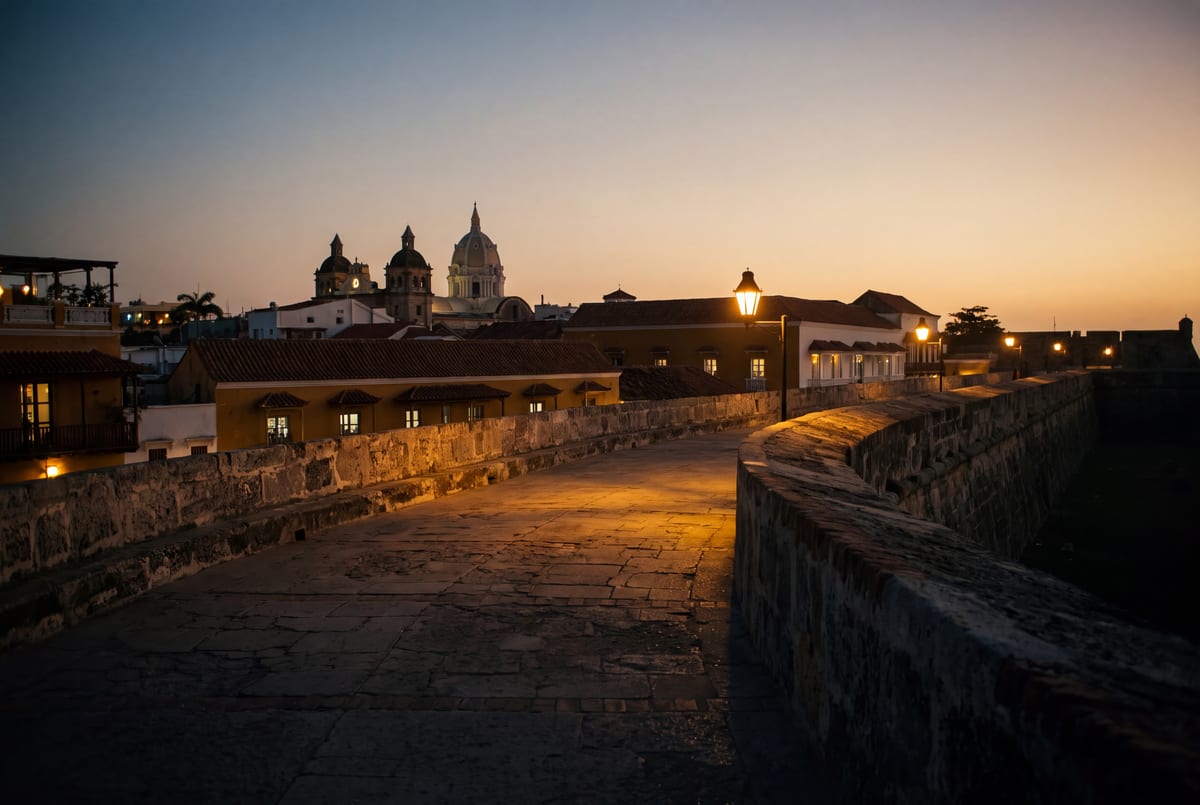
Cartagena
Cartagena de Indias is the elopement city Europe wishes it had built. Founded in 1533 and wrapped in eleven kilometres of coral-stone wall, the old city is a UNESCO labyrinth of bougainvillea balconies, cloistered convents turned hotels, and plazas that glow amber after dark. This is García Márquez country, the streets of Love in the Time of Cholera, and it photographs exactly the way he wrote it.
Why I would bring you here: it is the rare place where the ceremony, the portraits, the dinner, and the dancing all live within a ten-minute walk, no transfers, no timeline risk. Vows on the ramparts at first light before the city wakes, portraits down Getsemaní’s flag-strung lanes, a rooftop dinner above the domes. And for couples who want the marriage to be legal in Colombia, the notaría is four blocks away, and I know it well.
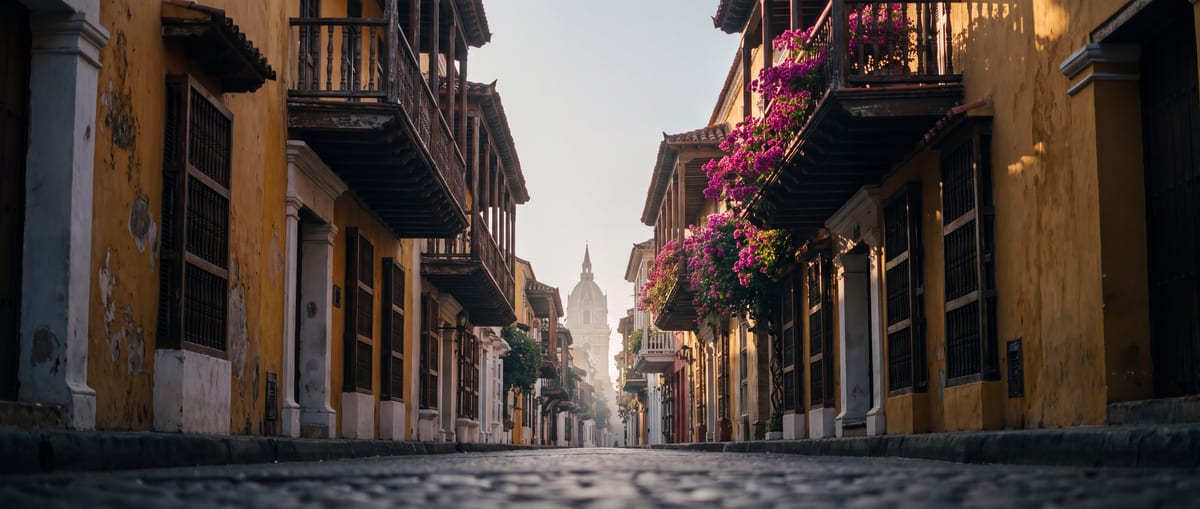
The Walls at Dawn
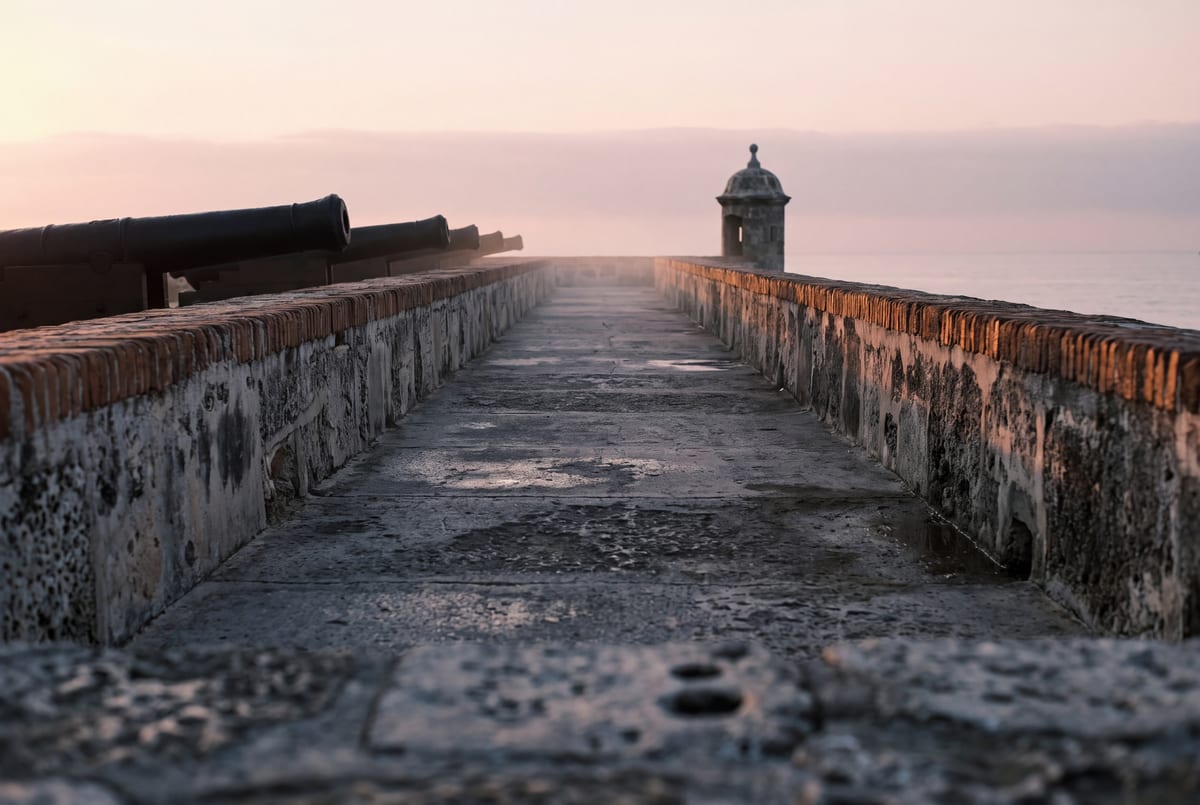
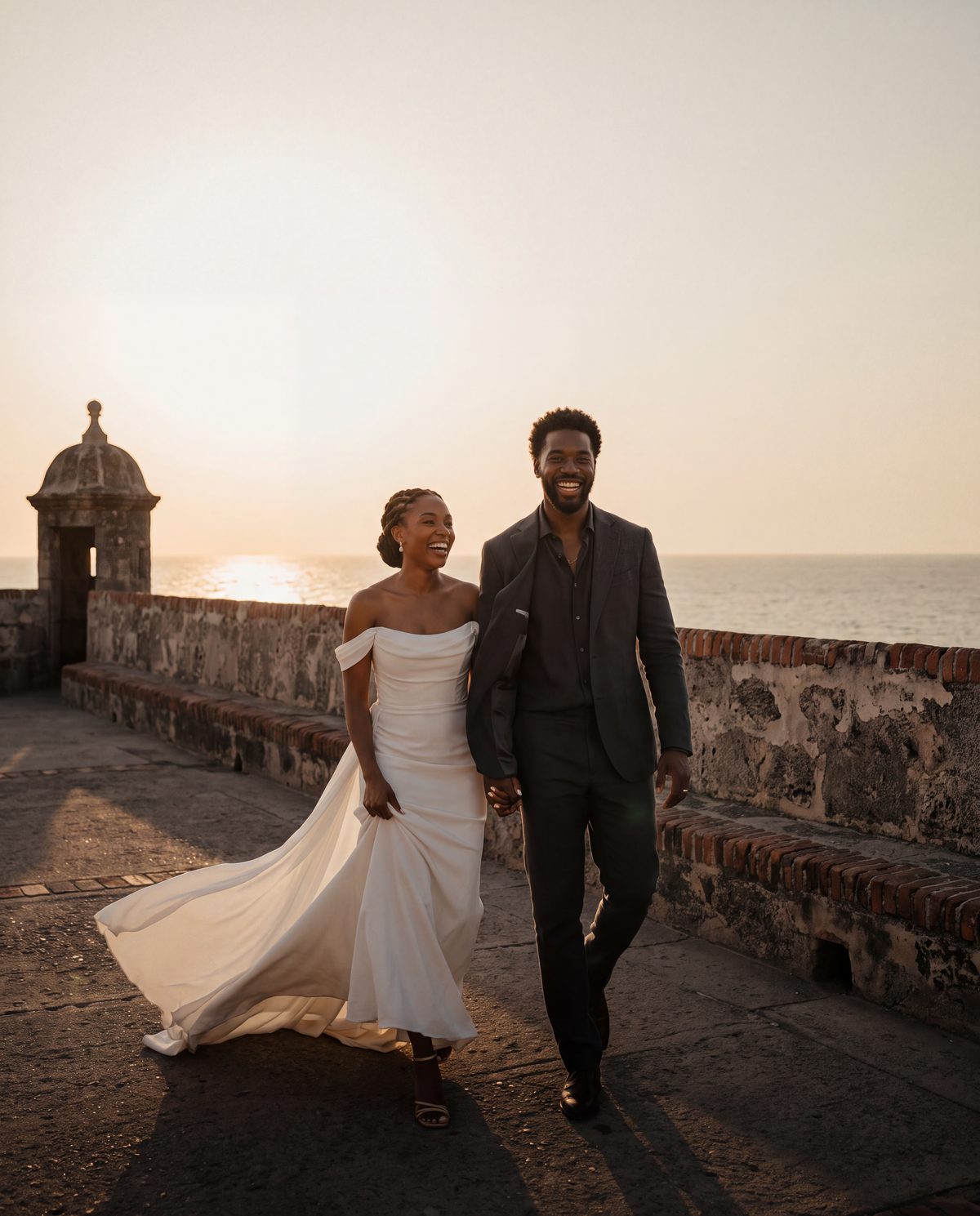
Eleven kilometres of 400-year-old rampart above the Caribbean. At 6am they are empty, the light is pink-gold, and your ceremony has the sea on one side and the sleeping city on the other.
Getsemaní
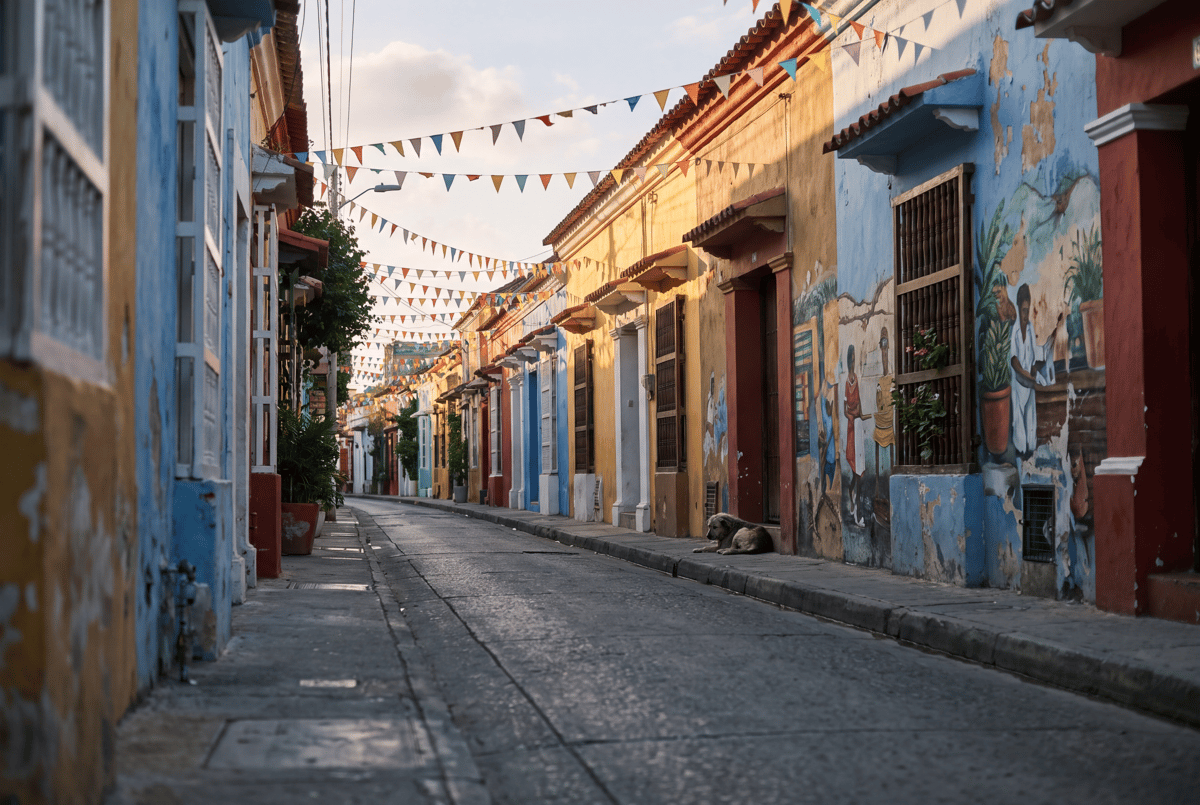
The old artisan quarter: flag-strung lanes, murals, domino games in the plaza. Rawer and more alive than the polished centre, this is where the documentary frames come from.
San Diego & the Cloisters
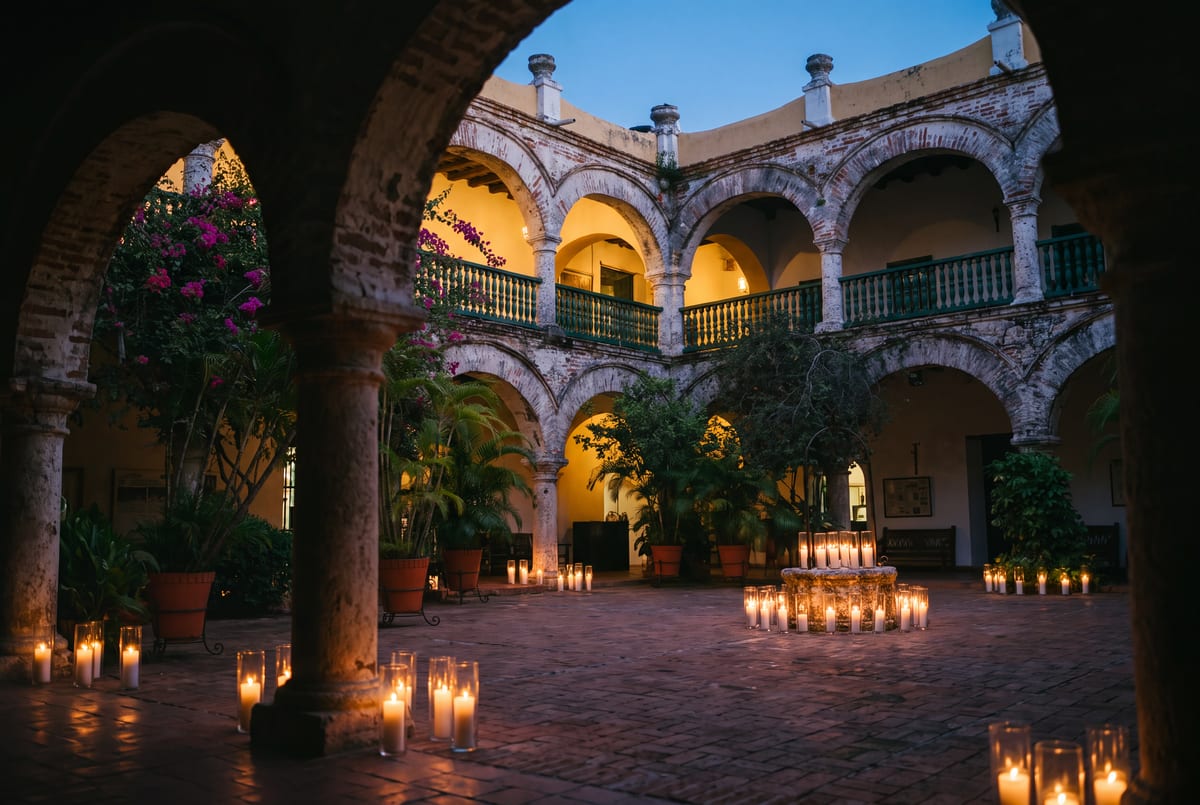
Quiet plazas and 17th-century convents turned courtyard hotels. A candlelit ceremony inside a cloister garden is the old city’s most intimate room, and I can book the whole courtyard.
The Rooftops
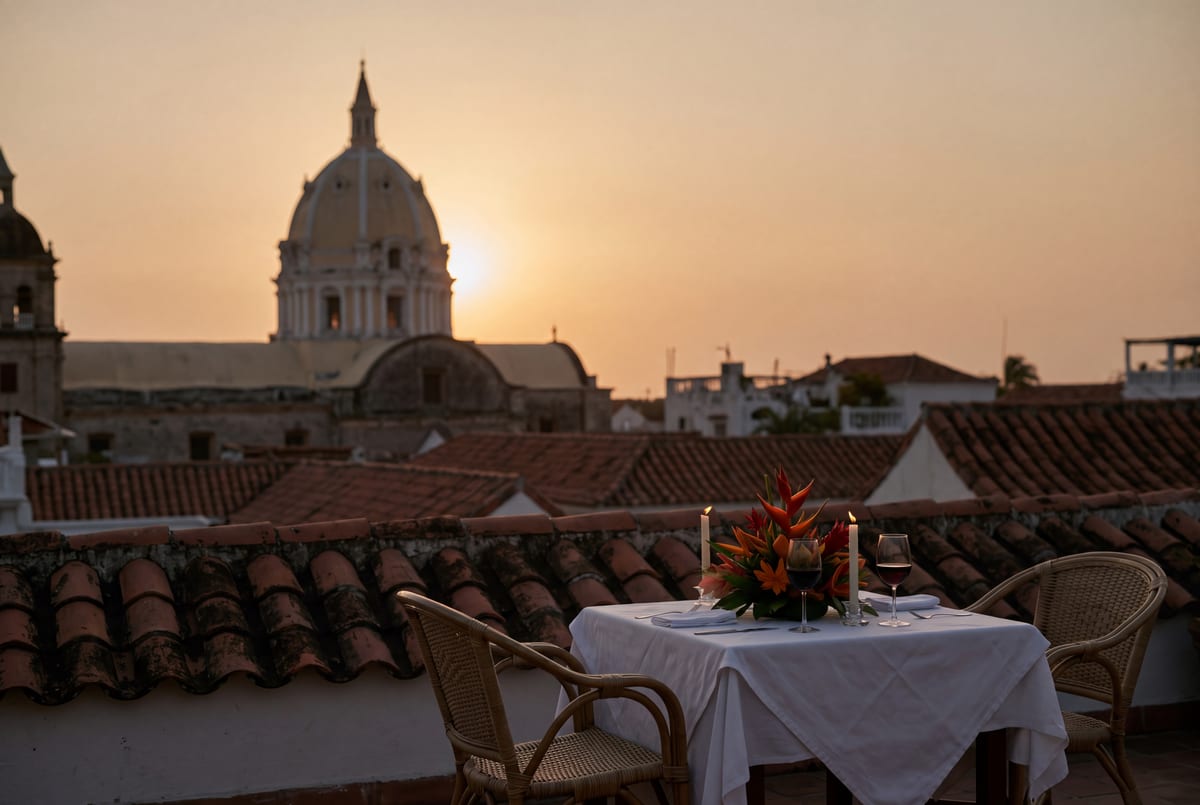
Private terraces above the domes and the wall, trade-wind cool by evening. Sunset vows or a chef’s dinner with the cathedral lit gold below, no venue fee culture, just relationships.
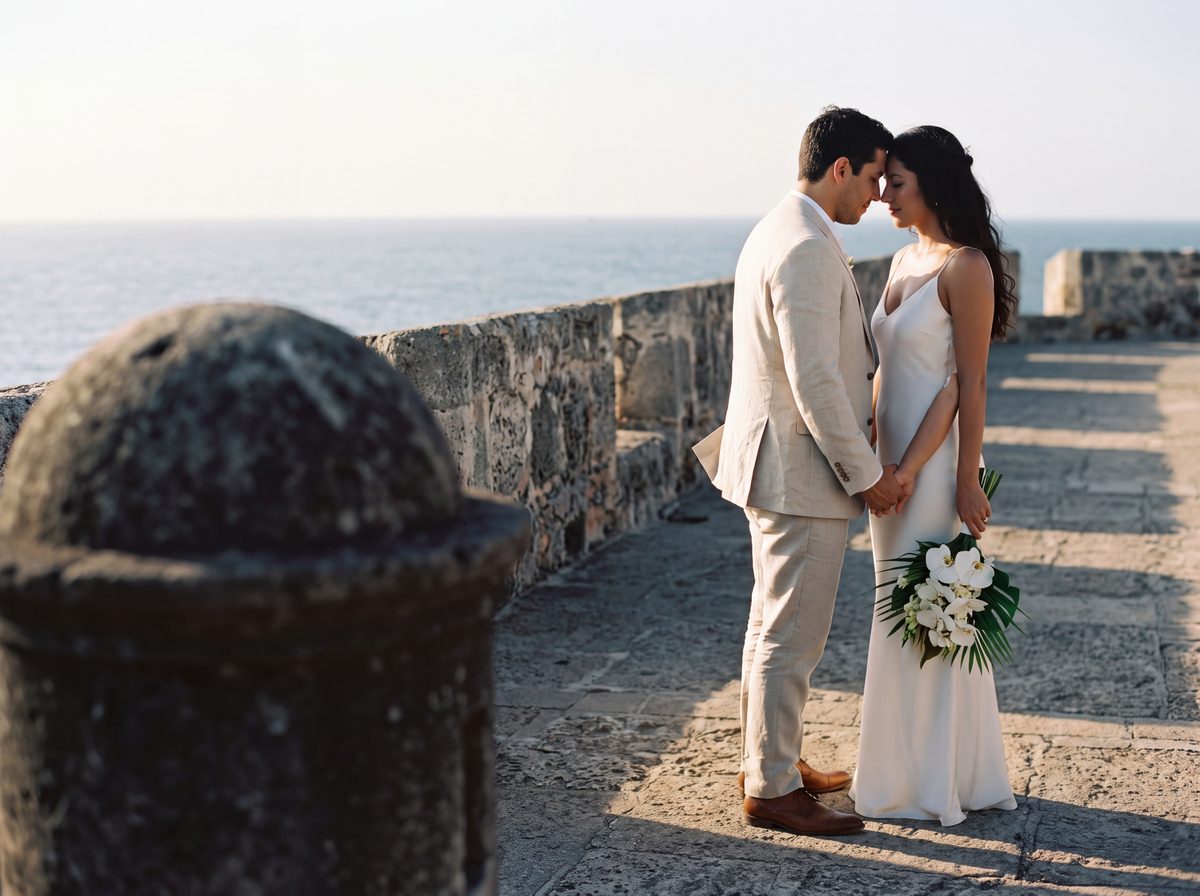
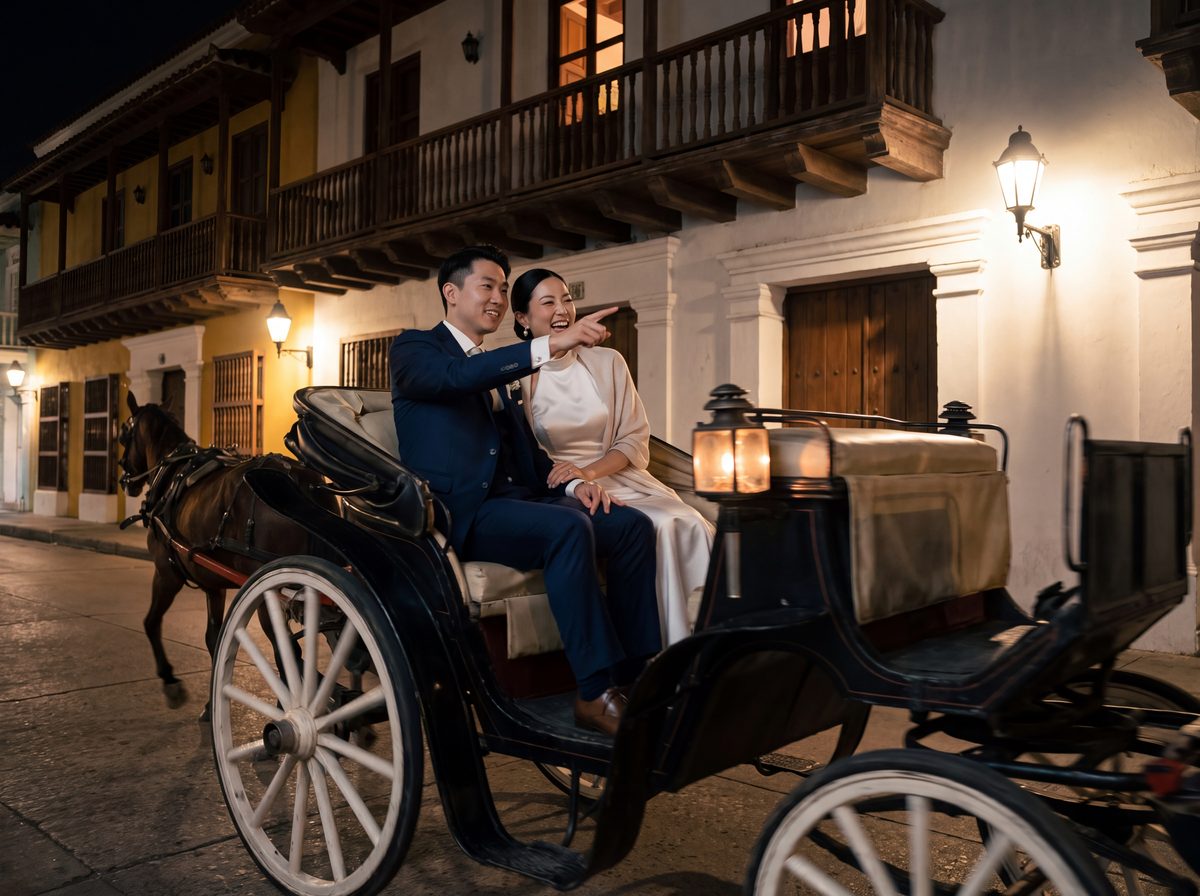
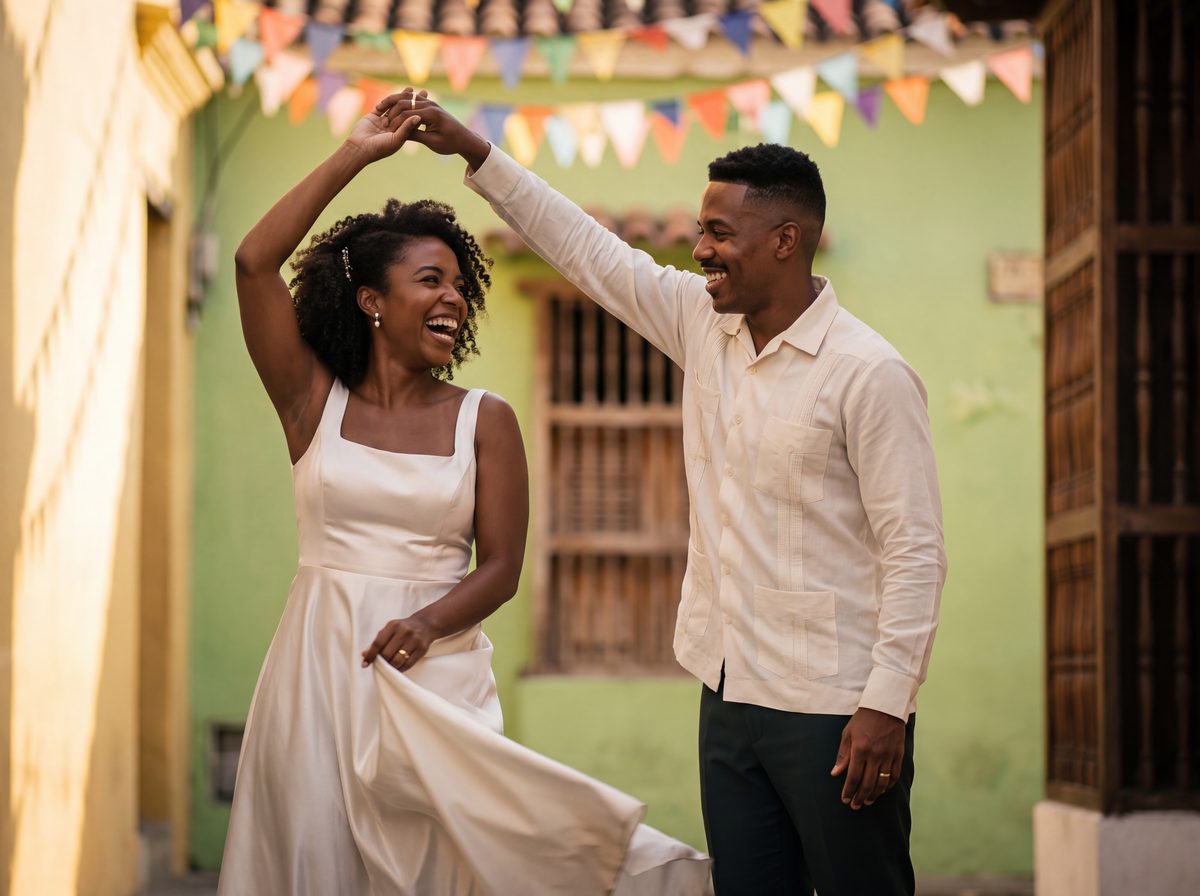
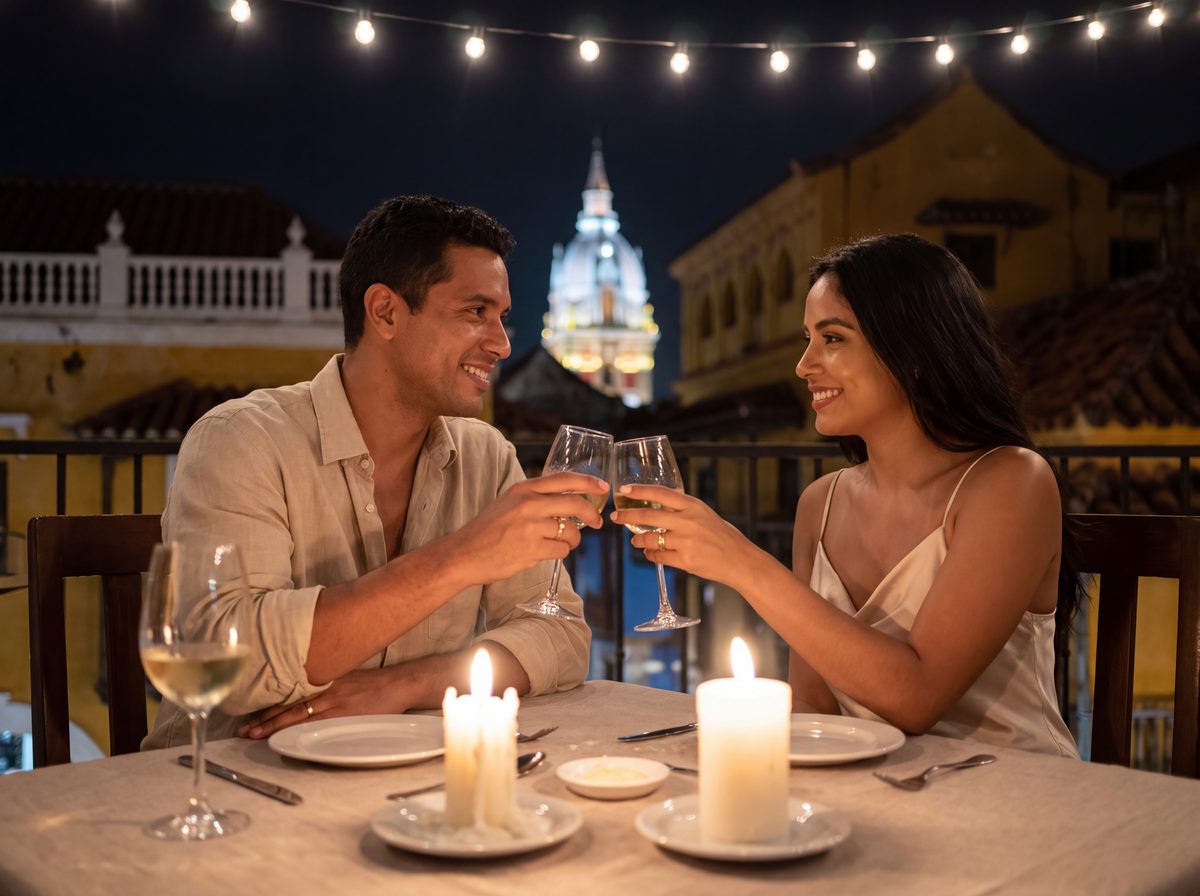
Vows on the empty ramparts at 6am, the sea turning gold behind you. Breakfast in a cloister courtyard. A siesta through the heat, then portraits through Getsemaní as the lamps come on, a horse-carriage crossing of the old town, and a rooftop dinner above the domes. You never once get in a car.
Rosario Islands & Barú
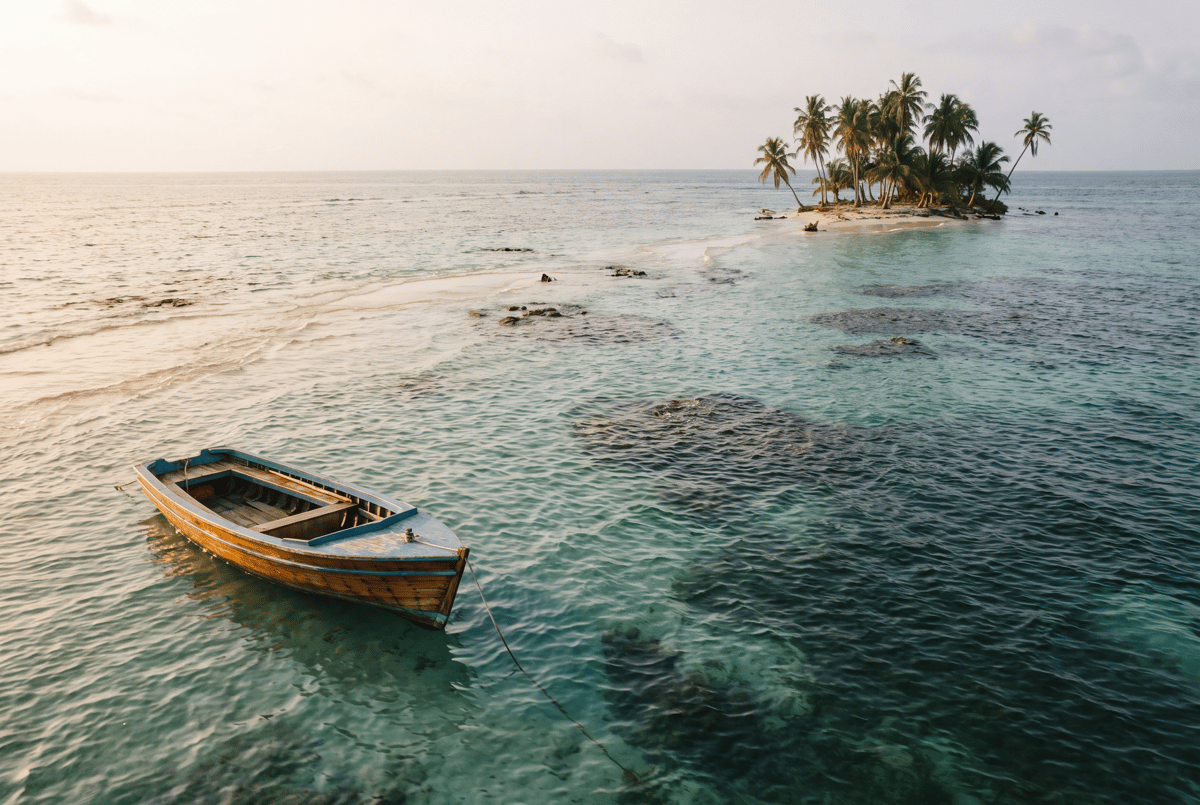
Forty-five minutes by boat from the Cartagena marina, the water changes colour. The Islas del Rosario are 27 coral islands inside a national marine park: mangrove lagoons, reef in every shade of blue, and small private-island hotels that can be bought out entirely for a couple and a handful of guests. Barú, the peninsula beside them, holds Playa Blanca’s white sand and, after dark, one of the Caribbean’s strangest gifts: a lagoon full of bioluminescent plankton that lights green around every movement of your body.
Why I would bring you here: this is the barefoot half of the Caribbean circuit, and it needs no flight. Marry in the old city one day and be on your own island the next, the boat is the transfer, and the boat is also the experience. No sargassum walls, no mega-resort skyline, no other couple posing thirty feet away. Just reef, palms, and a beach that is contractually yours.
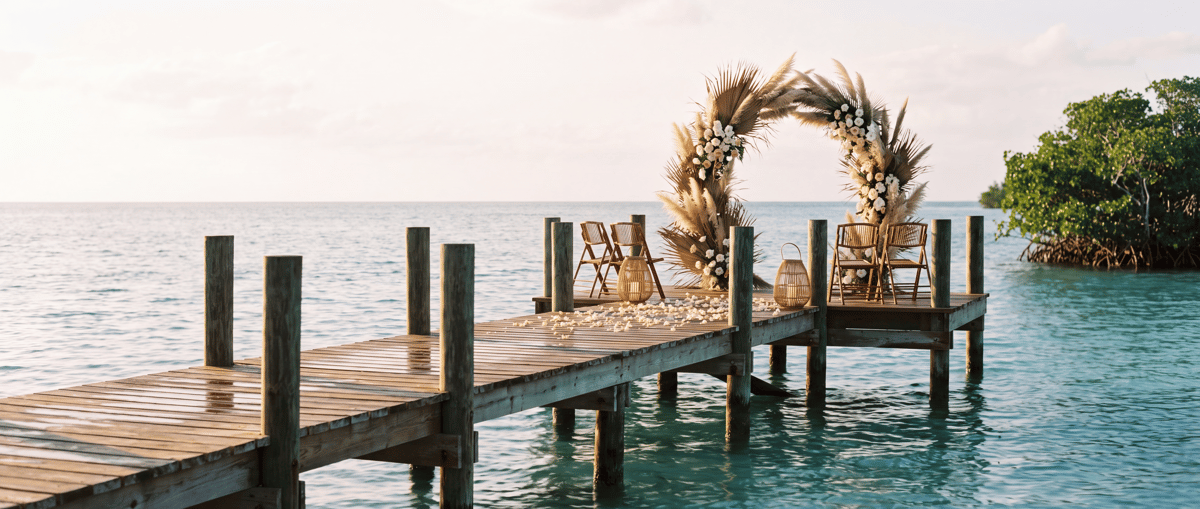
The Private Cays
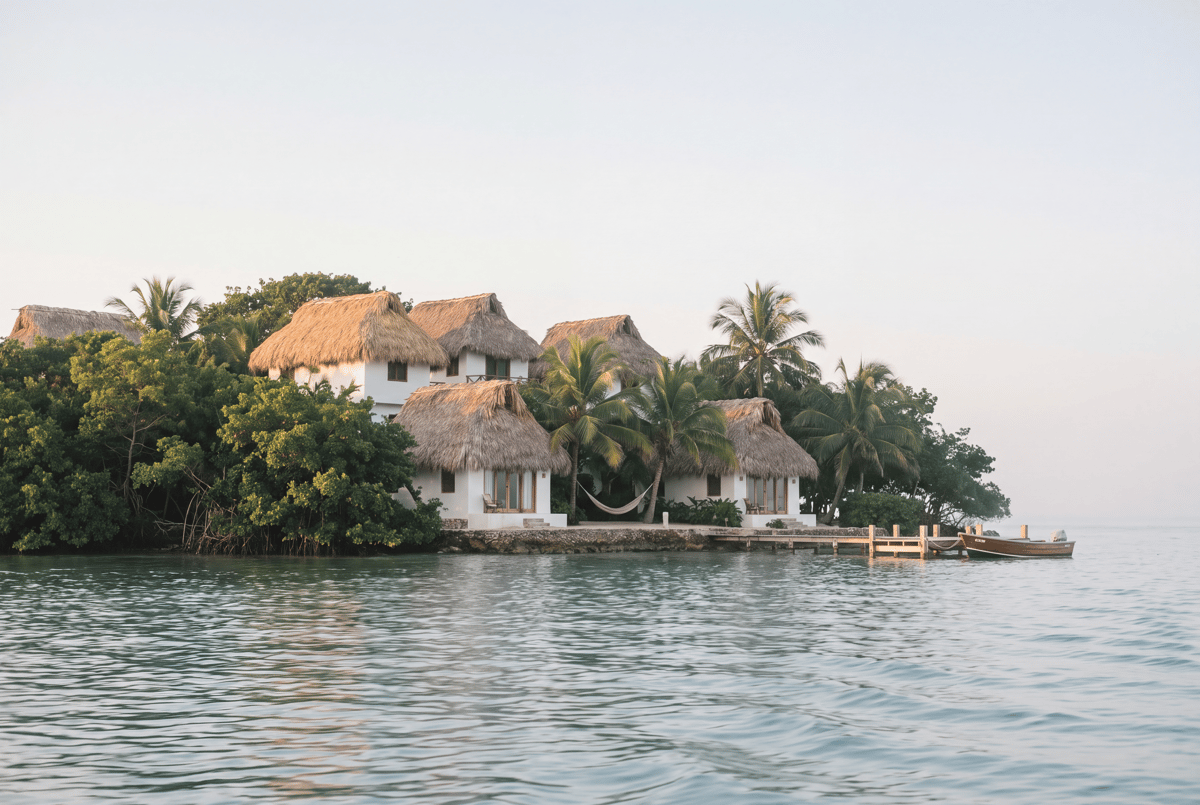
Small island hotels of six to ten rooms, taken over whole. Your ceremony on the dock at golden hour, dinner with your feet in the sand, and no other guests on the island at all.
Isla Grande’s Lagoon
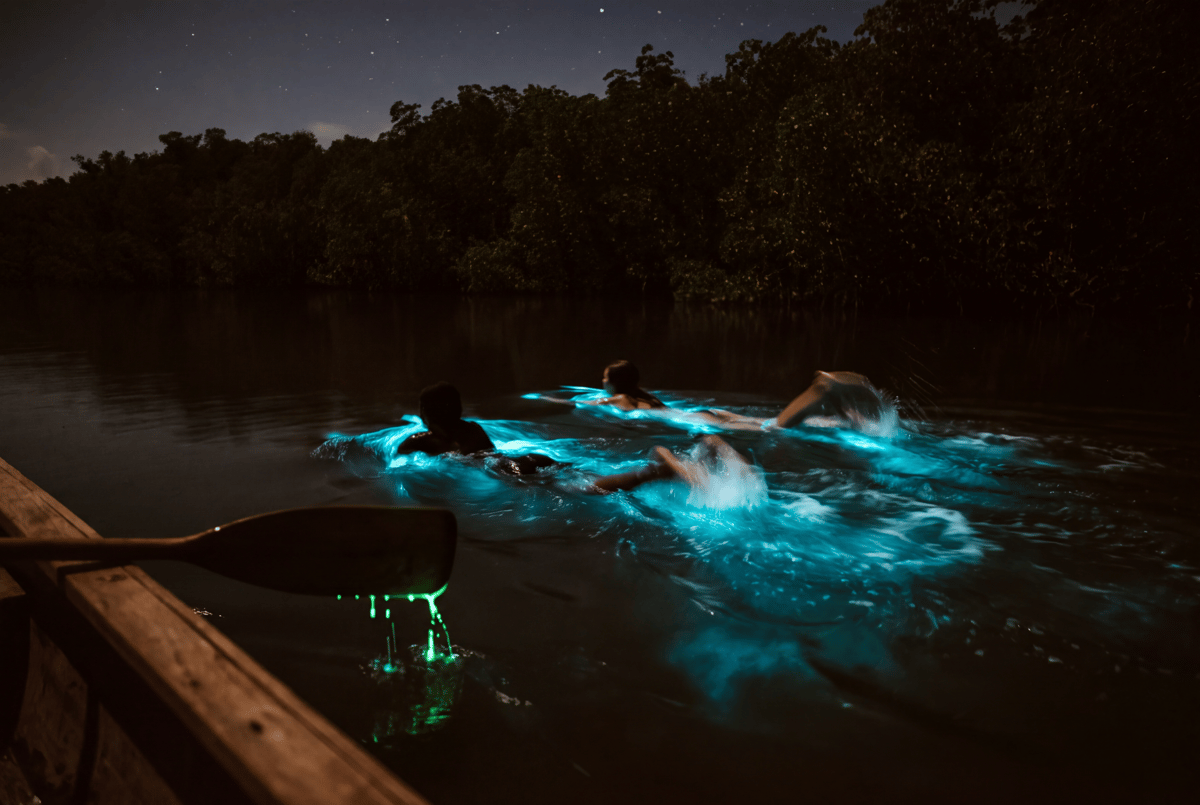
The enchanted lagoon: on a moonless night every stroke of your arms ignites green light in the water. A night swim together after the vows that no other elopement destination can copy.
Barú & Playa Blanca
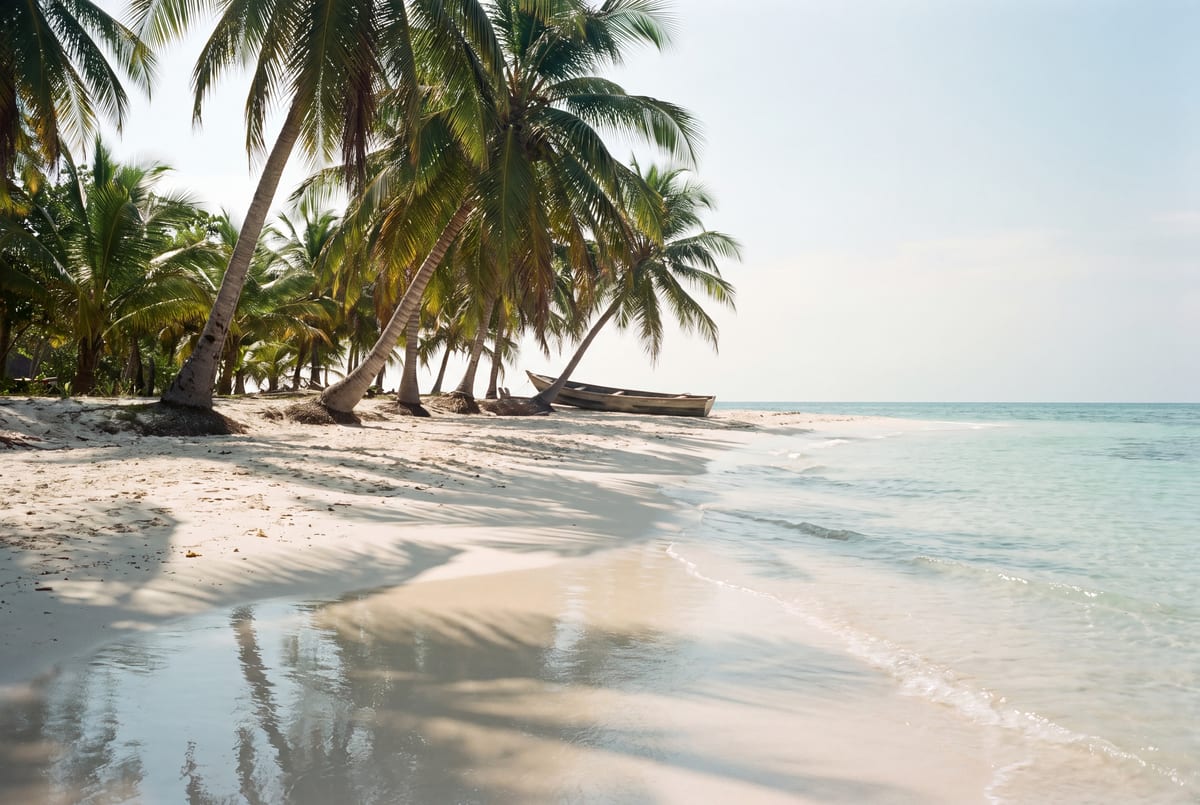
White sand and palm shade an hour from the old city by road or boat. I use its quiet ends and private beach clubs, never the crowded middle, timing is everything and it is my job.
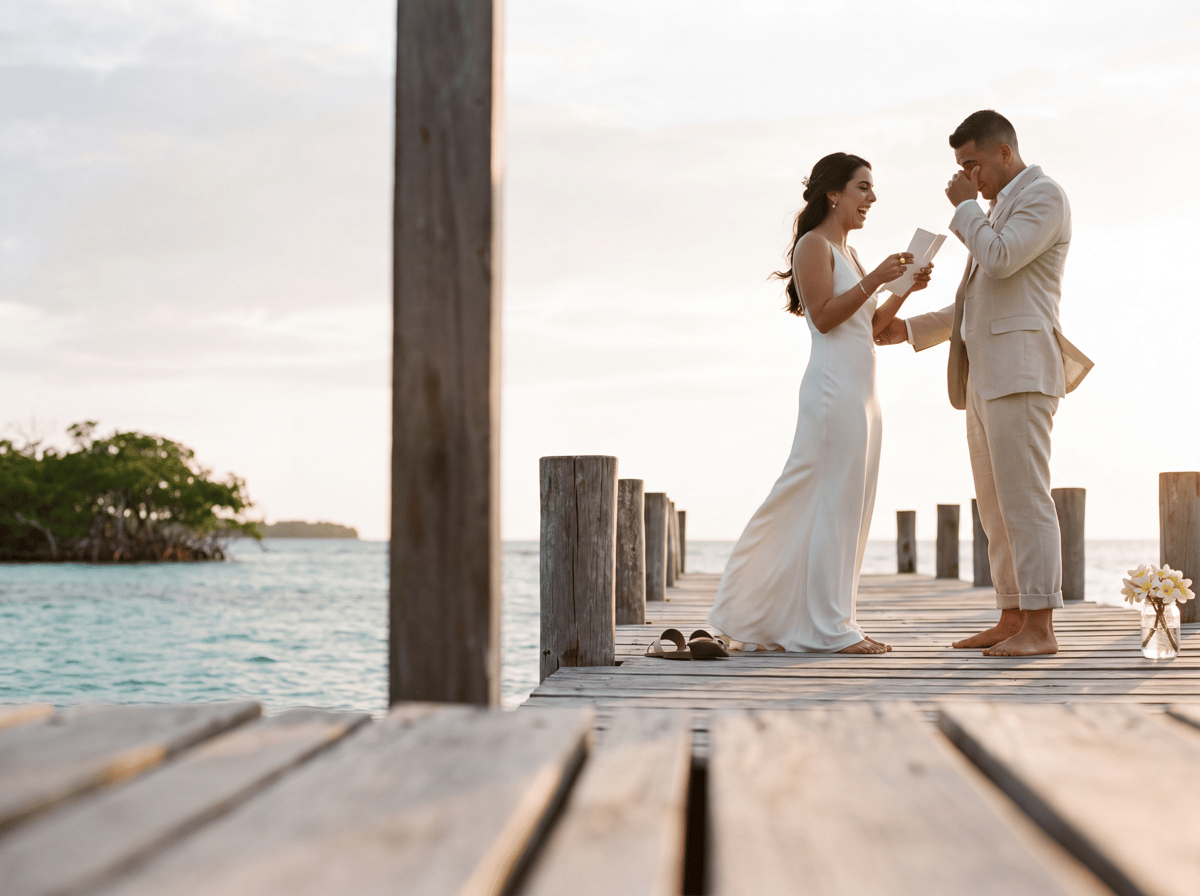
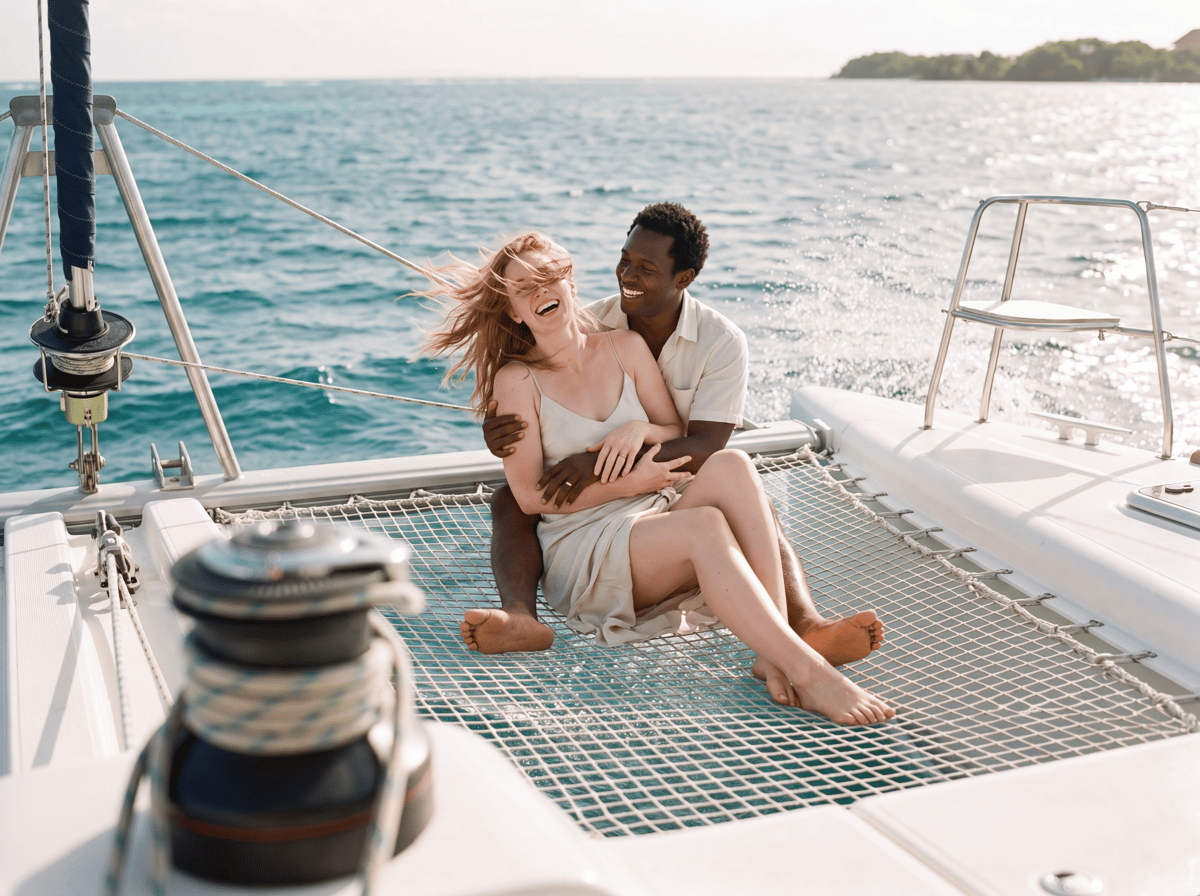
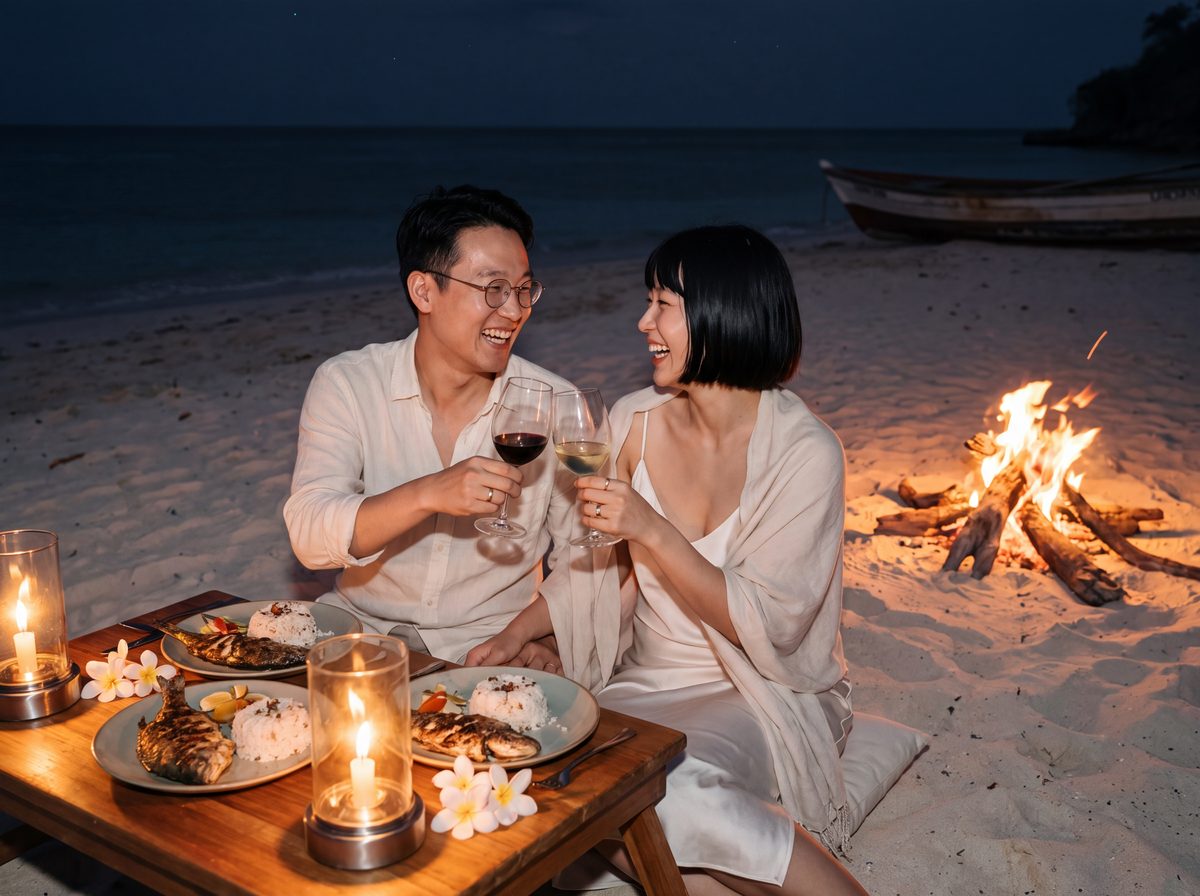
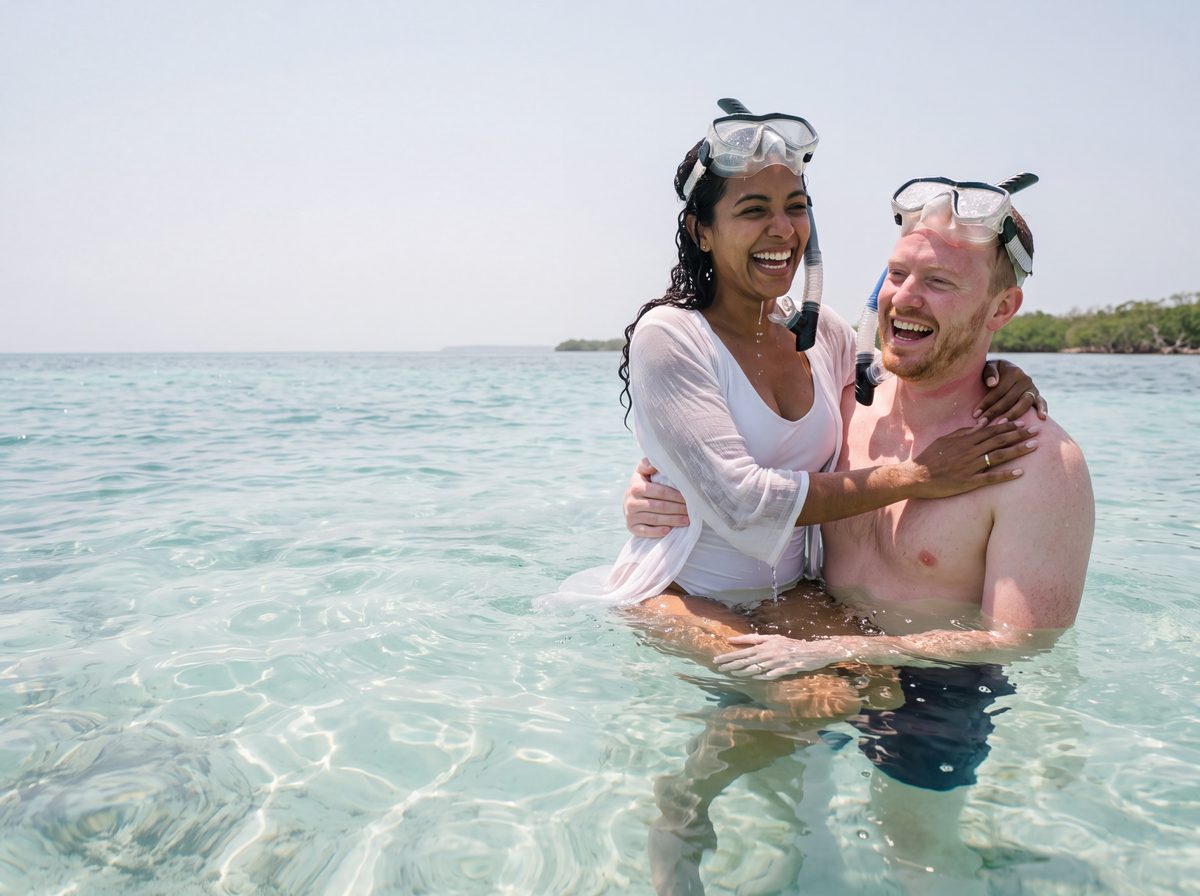
A private launch out of Cartagena after breakfast. An island that is entirely yours by noon. Dock vows at golden hour, a barefoot seafood dinner by firelight, and, when the moon stays down, a swim in water that lights up green around you. The honeymoon starts before the day ends.
Beyond the Circuits
The circuits are the backbone, not the border. Colombia holds landscapes that belong on another continent entirely, and for couples with an appetite for the far edge I build custom routes to them, with the same rule as always: two or three places at most, buffer days where the distance demands them, and nothing risky scheduled before a ceremony.
Tayrona & Santa Marta
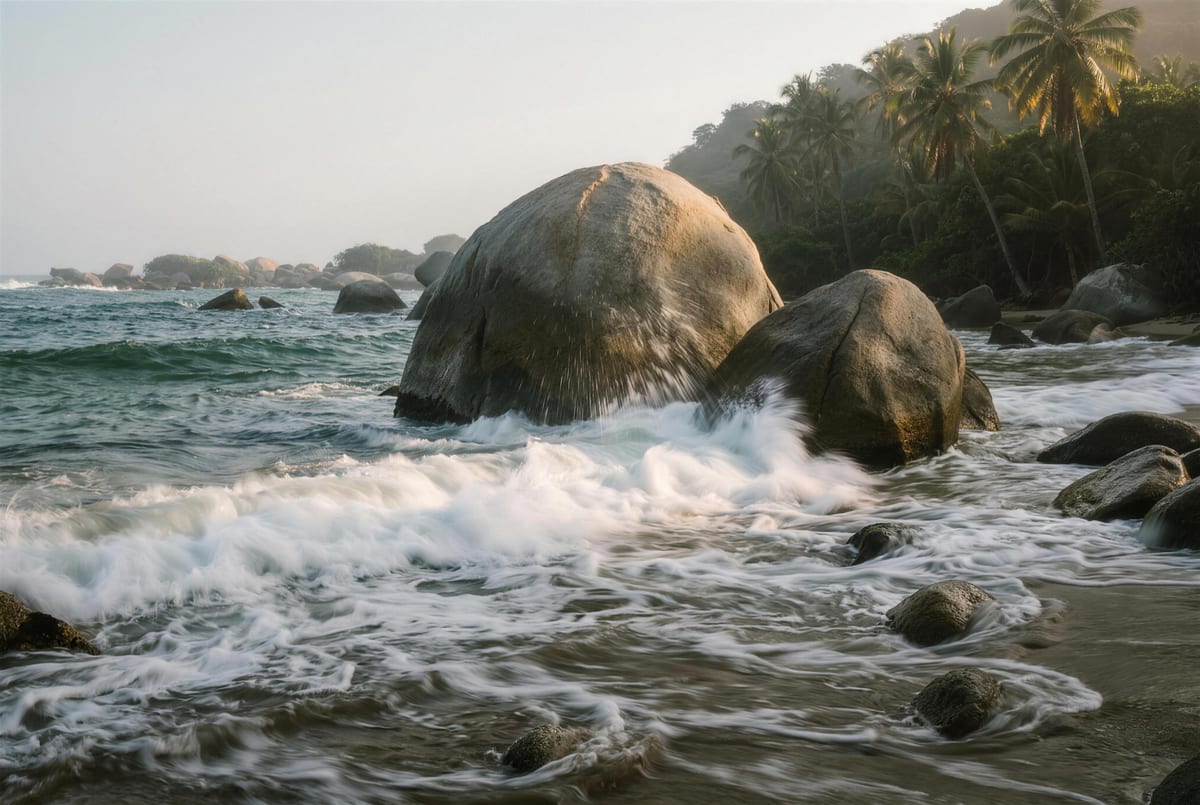
Where the world’s highest coastal mountain range falls straight into the Caribbean: jungle, giant boulders, and wild beaches. Raw, humid, and cinematic, for couples who want their vows to feel earned.
La Guajira
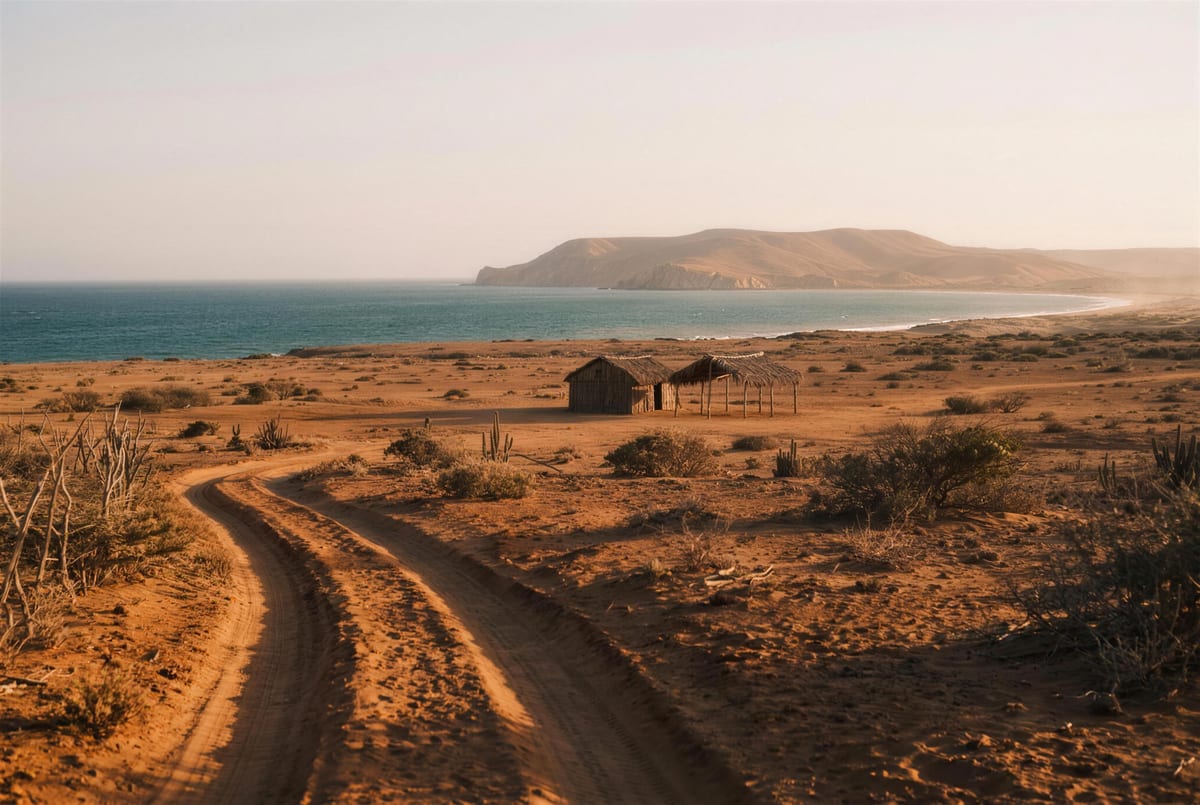
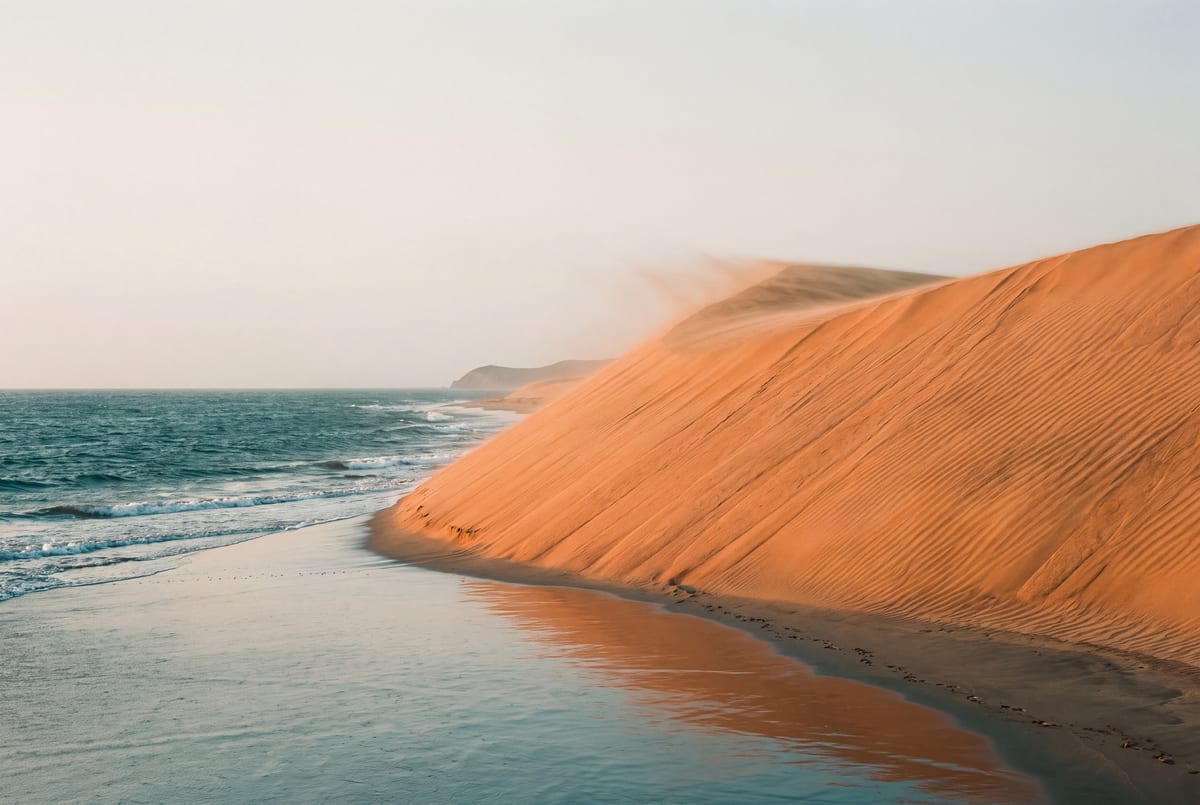
The desert at the top of South America, where orange dunes pour into a teal sea at Punta Gallinas. Wayuu territory, reached by 4x4 convoy. The most otherworldly ceremony Colombia can stage.
Barichara & Chicamocha
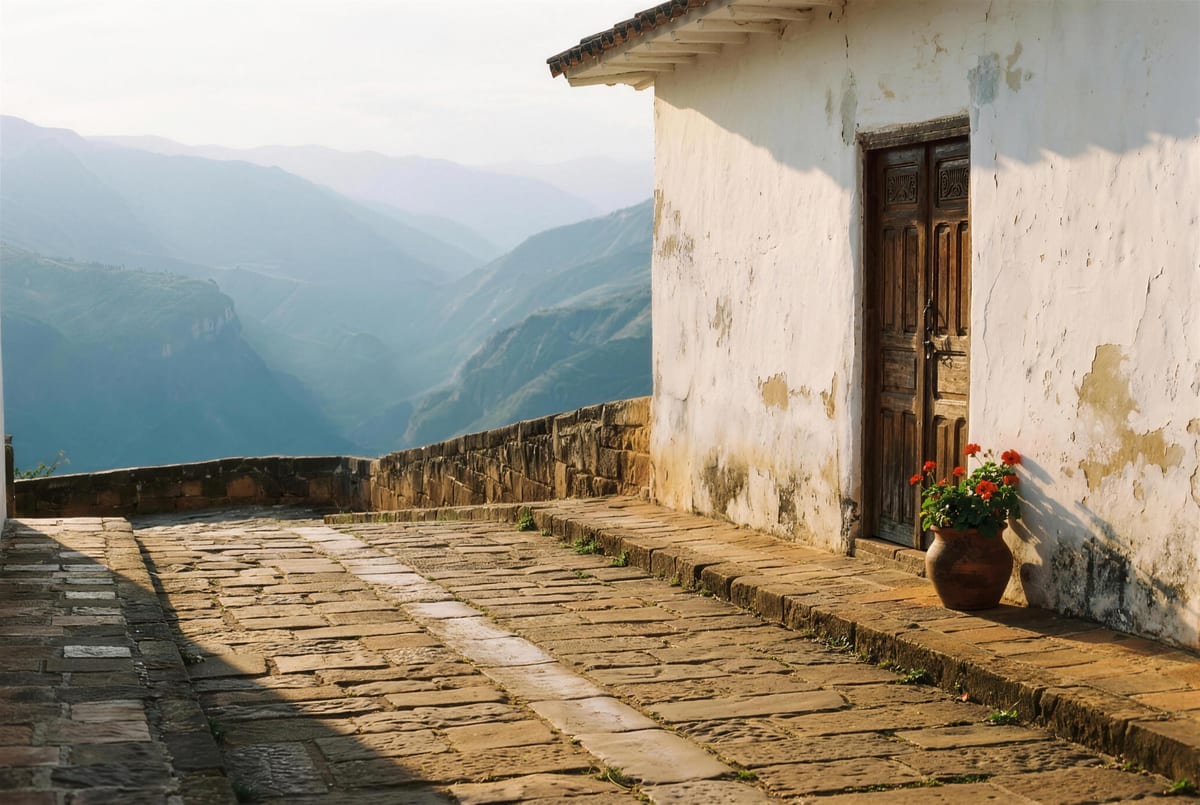
Officially Colombia’s most beautiful pueblo: ochre stone streets that have not changed in 300 years, on the lip of a 2,000-metre canyon. Old-world quiet without a single tour bus.
Villa de Leyva & the Highlands
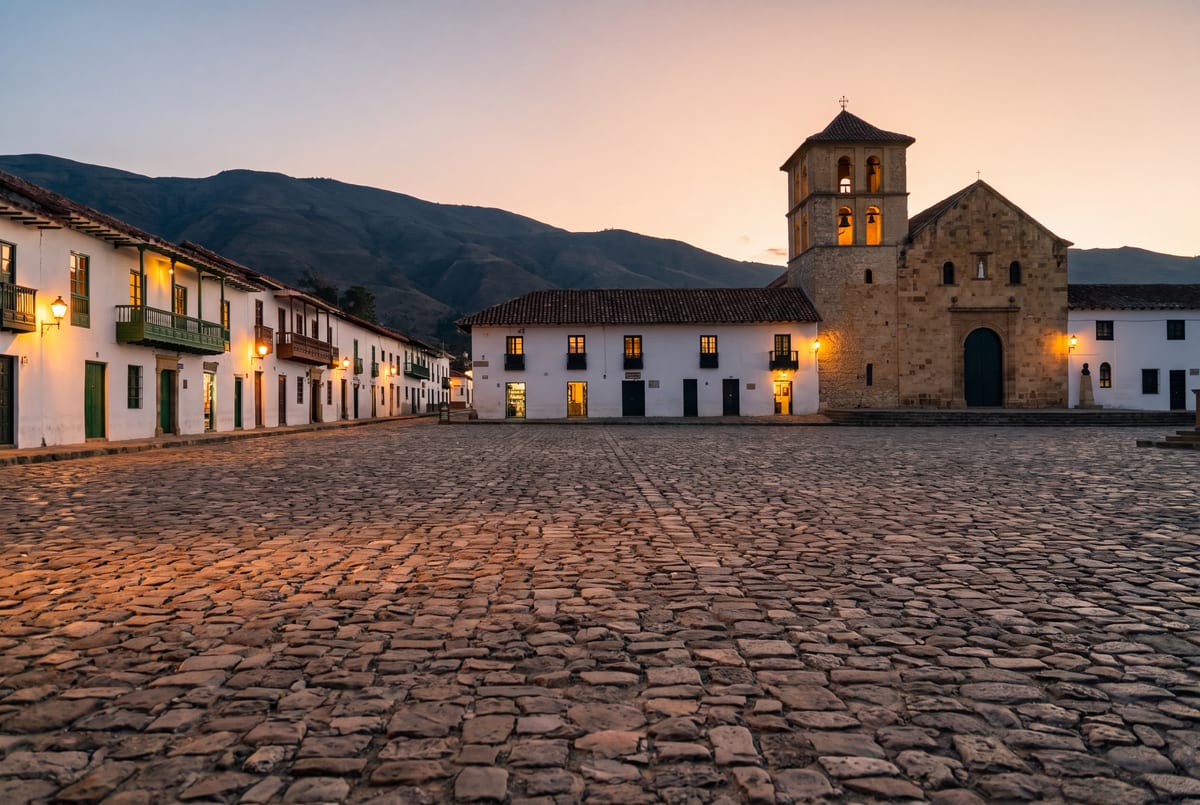
A 400-year-old town around one of the largest cobbled plazas in the Americas, high-desert light, whitewashed walls, and vineyards, three hours from Bogotá’s international hub.
Every one of these can anchor an elopement or extend a flagship into a honeymoon. What I will not do is chain four regions into five days and hope the flights cooperate. Two or three places, chosen well, beat a checklist every time, and I will tell you which combination serves your vision best before a peso is spent.
Why Colombia
You are already considering Mexico. Maybe Costa Rica, maybe Hawaii, maybe an Italian hill town. Good, compare us. Colombia wins this on the merits, and I would rather show you the math than write a love letter.
Tulum had its decade. This one belongs to Colombia, and you can still get here before everyone else does.
The Riviera Maya runs on volume: another couple at the same arch an hour after you, cenote fees climbing yearly, vendors quoting American prices because Americans keep paying them, and sargassum seasons that can bury the beach you booked. Cartagena is the same flight from Miami within an hour, the walls at dawn are empty, and your budget buys roughly twice the experience.
Costa Rica does jungle-and-beach superbly, and charges dollar-economy rates for it. Colombia does jungle and beach too, then adds a 500-year-old walled city, wax-palm cloud forest, emerald lake country, and a desert that meets the sea. Five elopements’ worth of backdrops in one country, at a fraction of the vendor cost.
Hawaii has tightened beach-wedding permits for years, and every vendor bills at US destination rates before your flowers exist. A comparable Colombian week, with a private island in it, costs less than a Maui elopement’s photography line alone.
Cartagena gives you the cobblestones, cloisters, and lamplight couples fly to Italy for, minus the transatlantic flight, the euro, the August closures, and the four other weddings at your venue that week. Half the travel time from the US, and golden hour arrives on schedule 365 days a year.
versus Tulum or Maui
of the year, on the equator
below the hurricane belt
Cancún and Tulum sit squarely in hurricane alley, June through November. Cartagena, 700 kilometres south of the belt, has never taken a direct hit in modern records. Your October elopement is safe here.
“But is Colombia safe?”
Fair question, so here is the honest answer. The Colombia in your head is thirty years old. The real one welcomed millions of international visitors last year; Medellín has become a byword for urban reinvention; Cartagena’s old city is patrolled, polished, and safer at midnight than most American downtowns. Every destination that had a difficult decade carries the reputation longer than the reality.
And you are not navigating it alone. You are with someone who lives here: my drivers, my routes, my neighbourhoods, the same ones I use with my own family. That is a level of ground truth no fly-in photographer from Denver can offer you, in Colombia or anywhere else. A fuller logistics FAQ waits in Part Fourteen.
Every argument above is about Colombia. The next chapter is about me: a custom-built editorial film set, constructed for your session alone, that cannot be delivered in Mexico, Costa Rica, or Europe at any sane price, because I live where it is built.
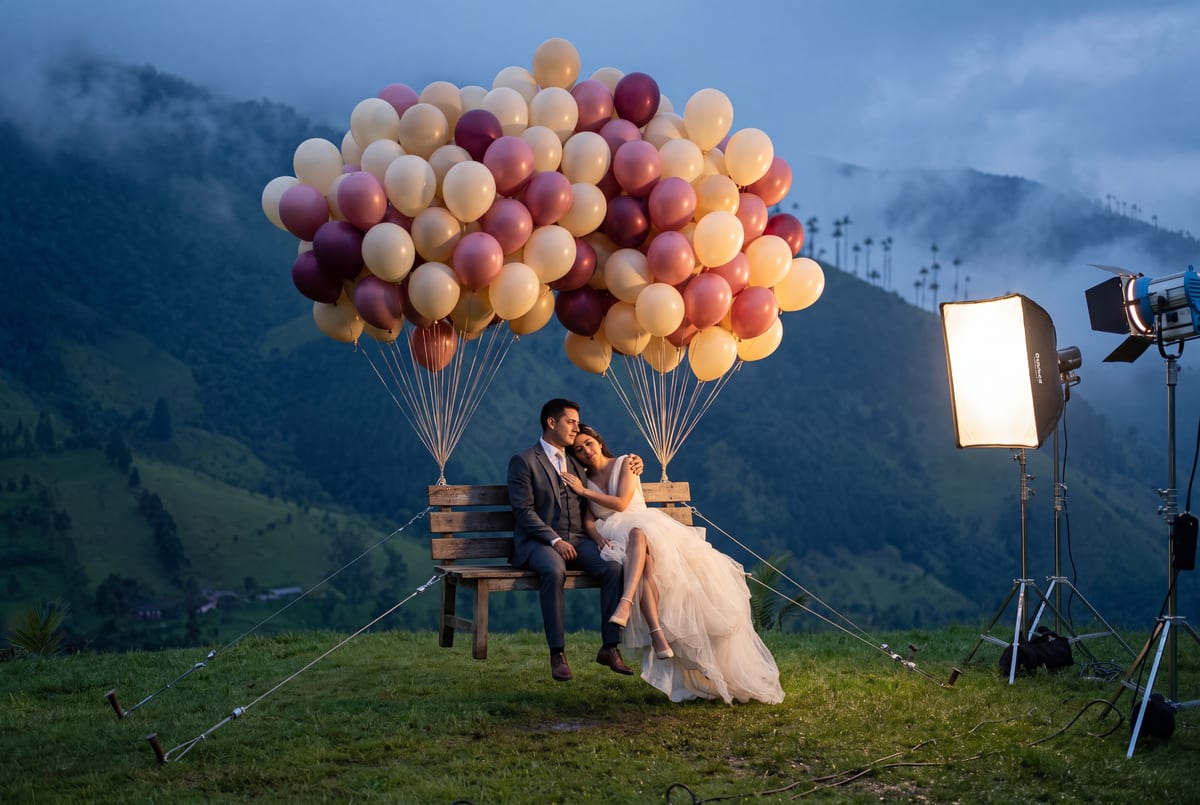
The Studio Editorial
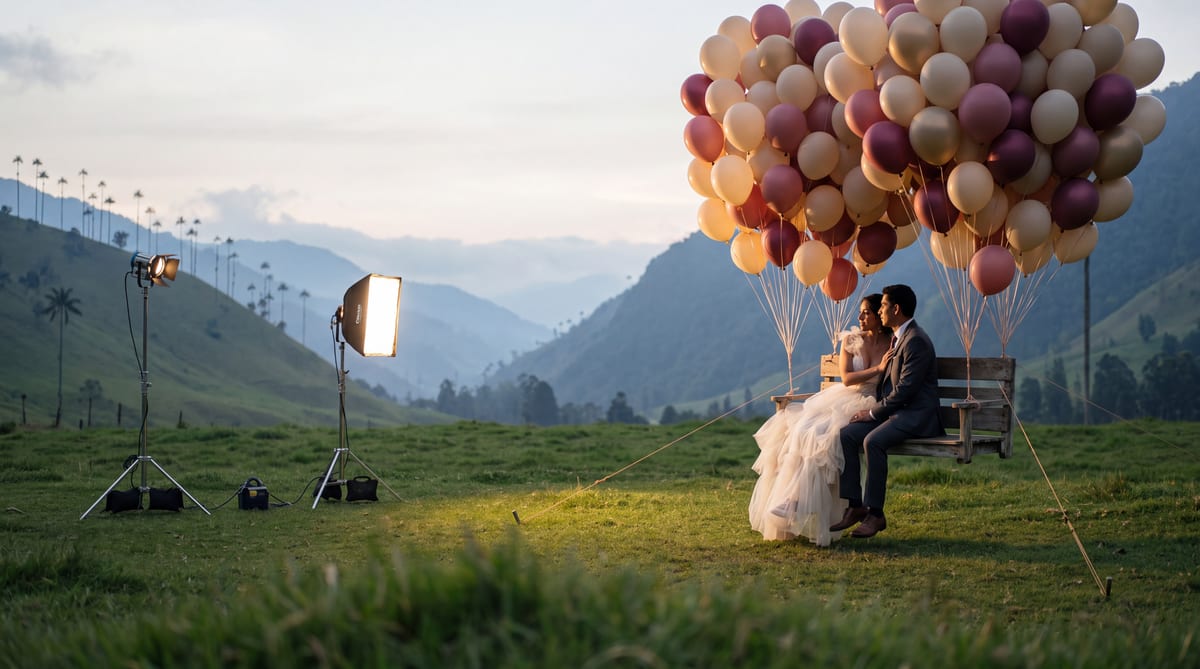
Every other offer in this guide, some rival somewhere could eventually imitate. This one they cannot. The Studio Editorial is a film set, designed and physically built for your session alone: a lovers’ bench lifted into the sky by a hundred balloons, a dinner table set in a field of candles, a doorway standing free in the middle of a palm valley. You step into a scene that exists for one evening, for two people, and is photographed like the cover of a magazine that was never printed.
Here is why it only exists here. A custom set needs an art department: carpenters, welders, scenic painters, florists, prop houses, riggers. In Los Angeles or Tulum that crew prices a one-day build like a car. In Colombia, where I live and work with these makers year-round, the same build is simply possible, at a number a couple can actually say yes to. This is not a location I found. It is a scene I manufacture, and it is the single hardest thing in this guide for anyone, anywhere, to copy.
Not a backdrop. A production. Yours for one night, then gone forever.
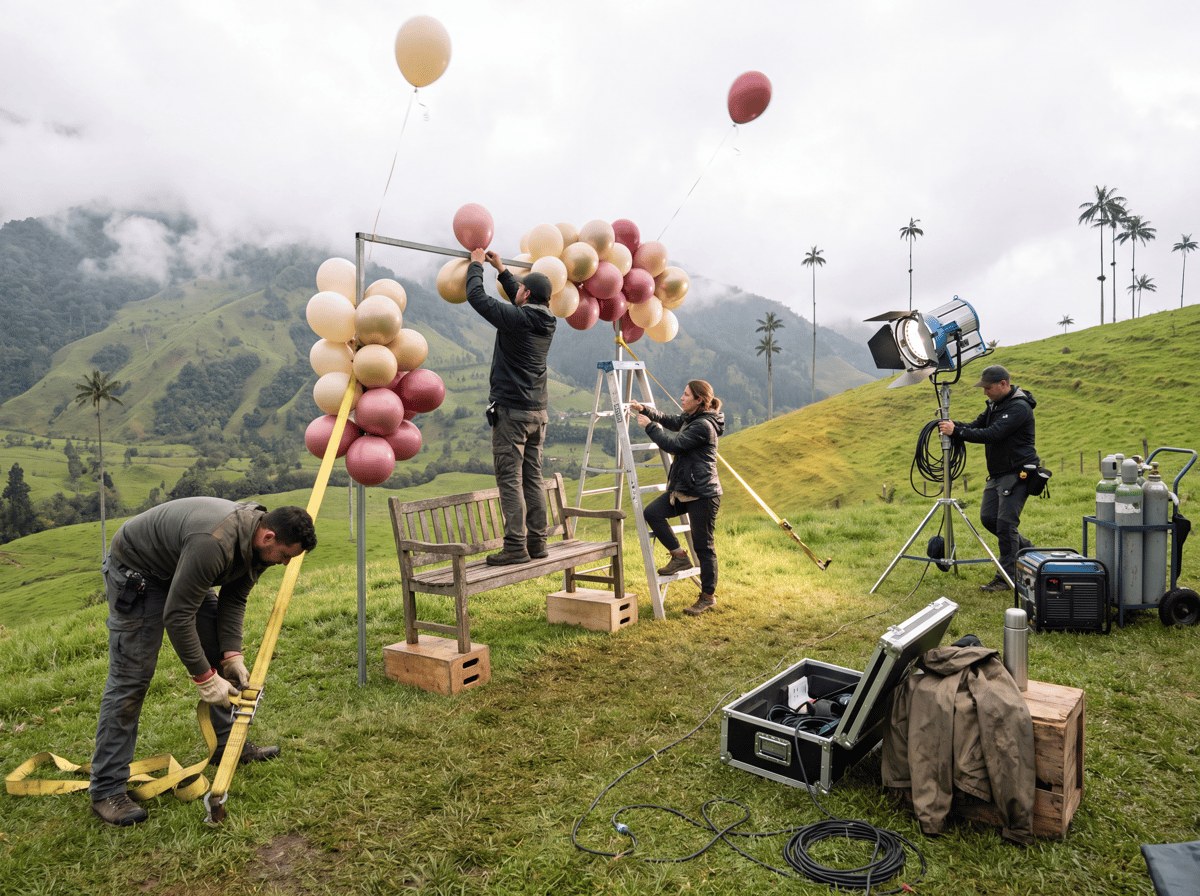
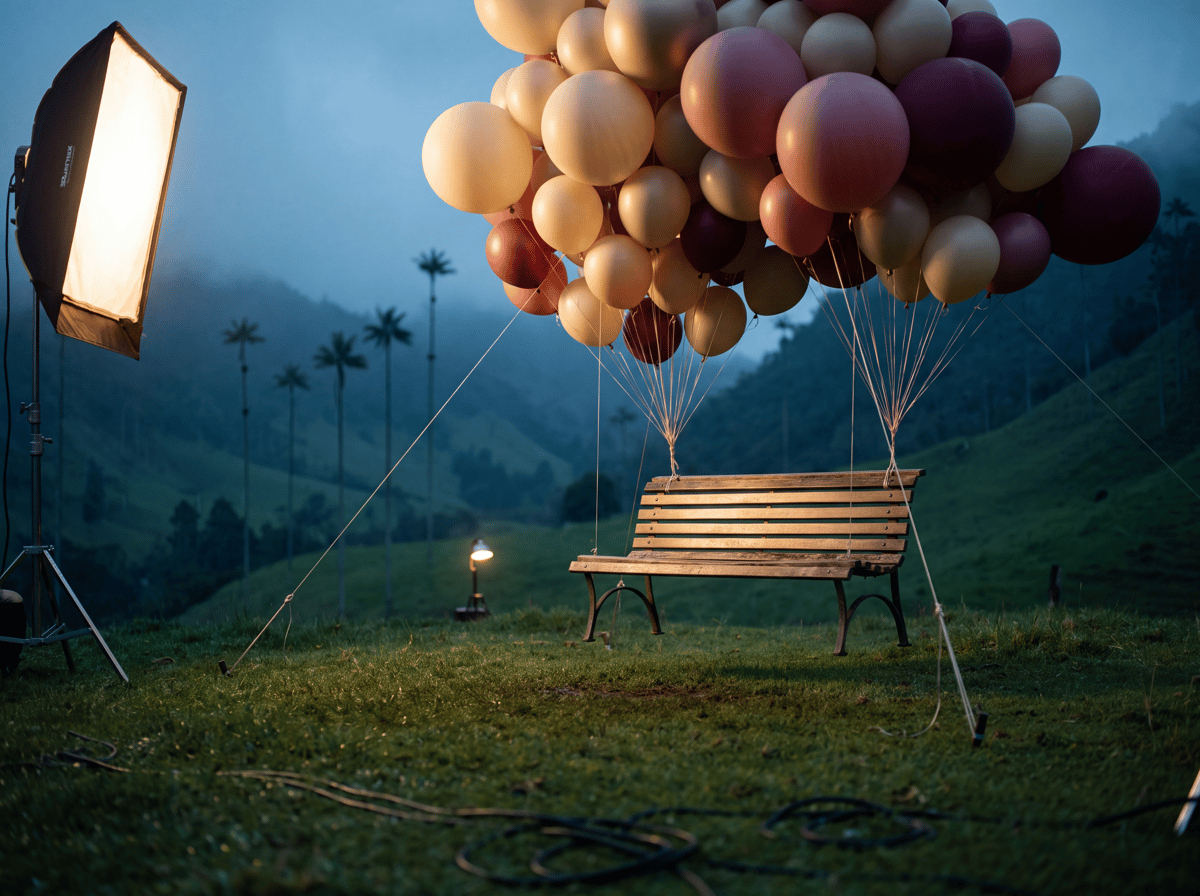
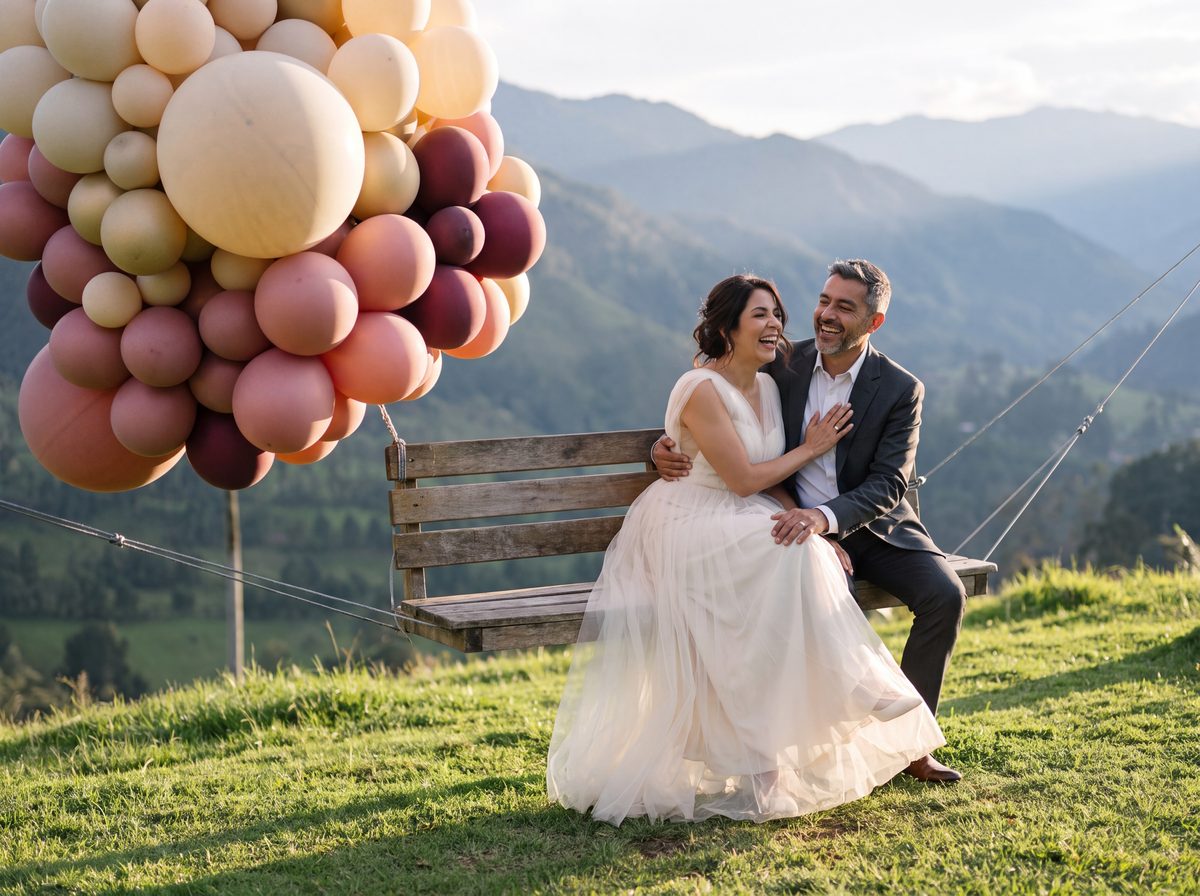
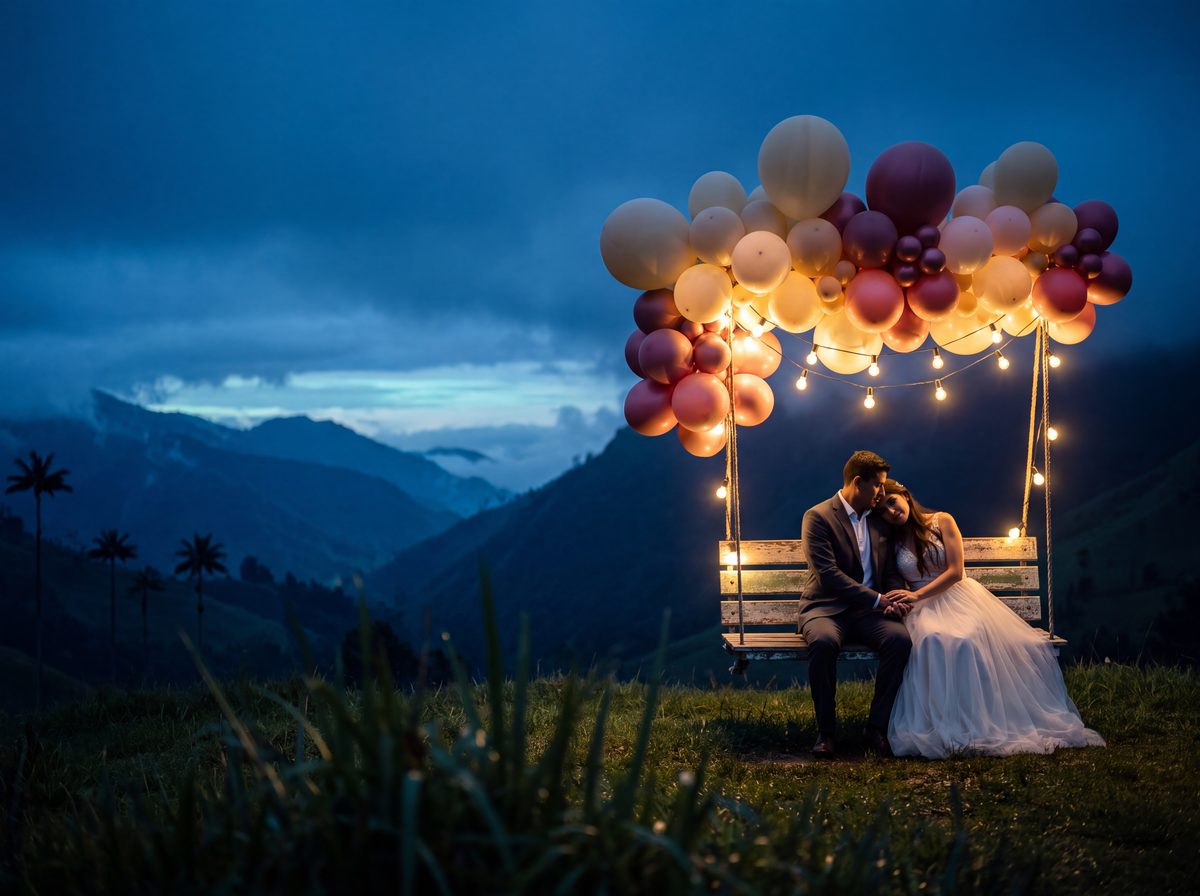
You told me you got engaged on a park bench in the rain. So in a valley outside Medellín, my crew builds that bench, floats it under a canopy of balloons, and rains golden light through it at dusk. You arrive to a finished set, hair and makeup done, and for two hours you live inside your own story while I photograph it.
Signature Experiences
These are the moments couples remember for the rest of their lives, and the reason to hire a curator instead of a photographer. Not every experience is possible on every circuit. Part of my job is matching the dream to the place, the season, and the tide.
The Studio Editorial
Only HereA film set built for your session alone, a scene from your story made physical for one evening. See Part Nine. No other elopement offer on earth includes this.
Private Island Buyout
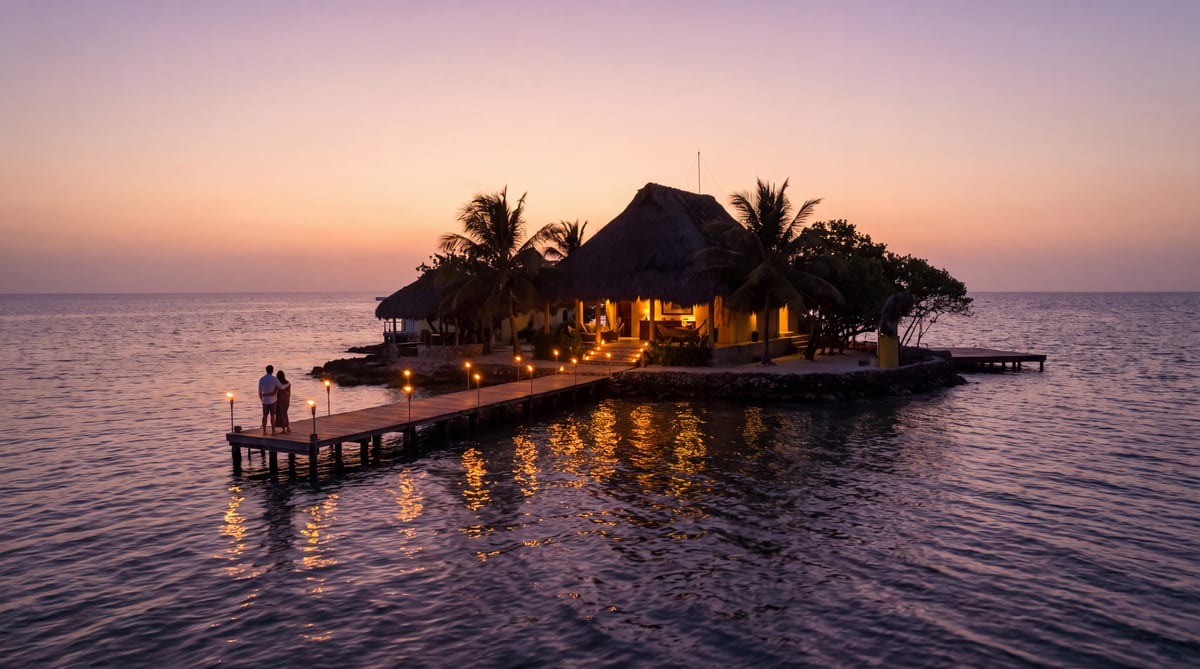
RosarioAn entire coral island held for you and up to a dozen guests: dock vows at golden hour, barefoot chef’s dinner, and a bioluminescent swim after dark.
The Walls at First Light
CartagenaA ceremony on 400-year-old ramparts while the city sleeps, sea on one side, bell towers on the other, then breakfast in a cloister courtyard.
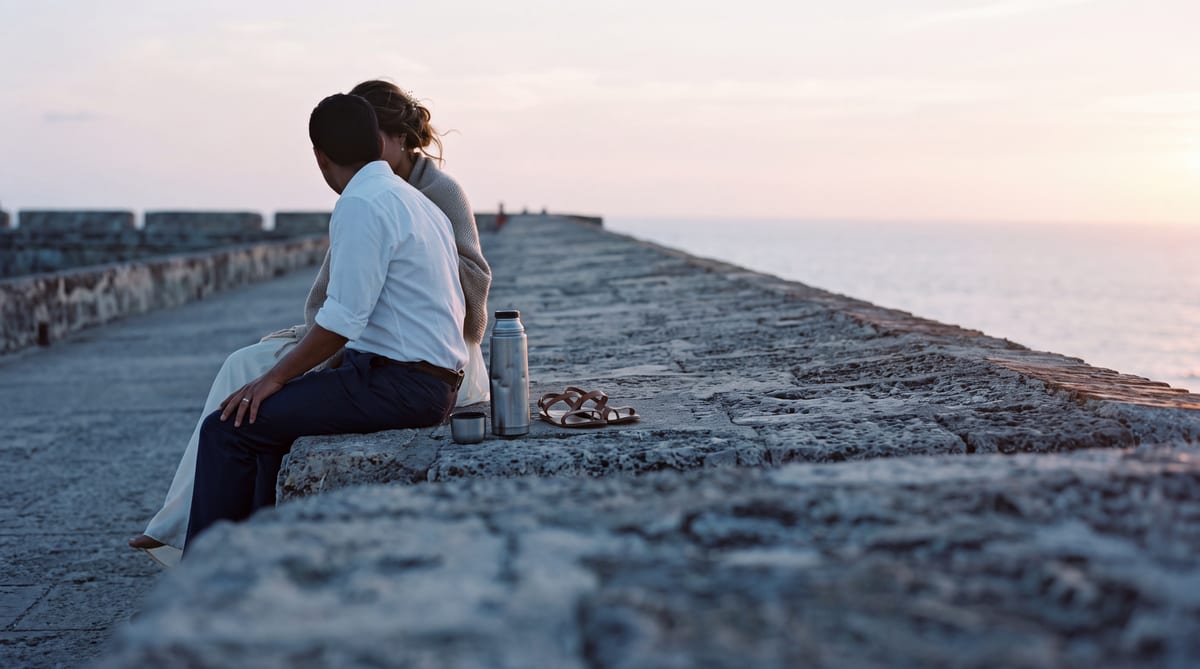
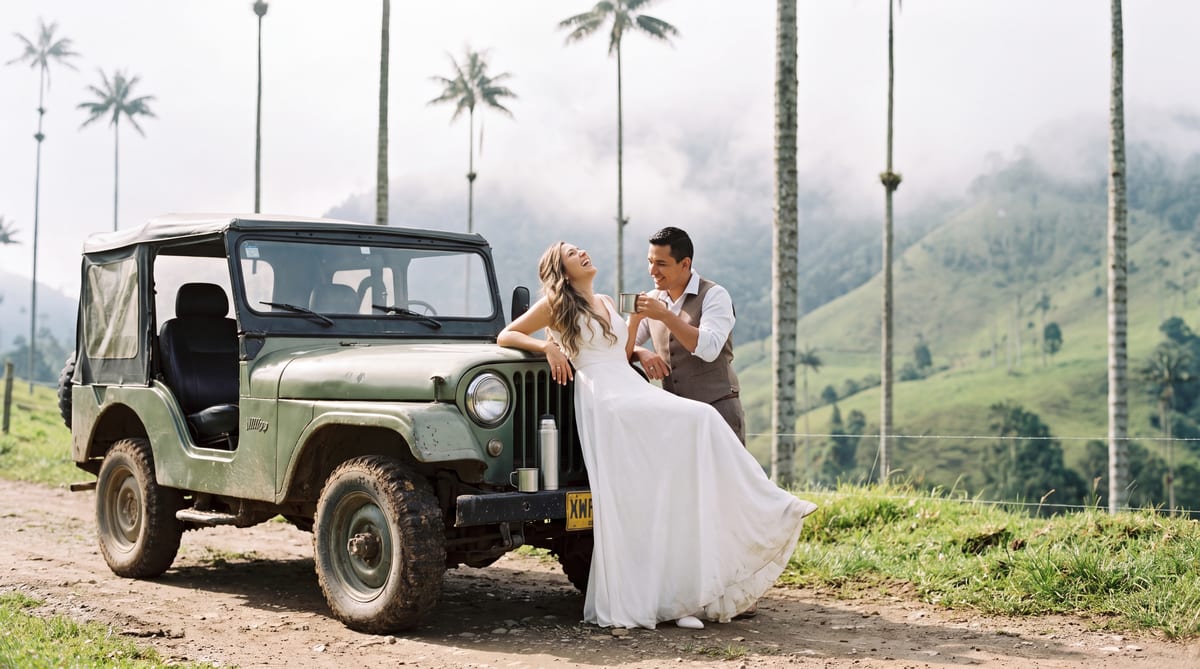
Wax Palms in the Mist
Coffee AxisVows beneath the tallest palms on earth on private valley land, arrival by vintage Willys jeep, cloud-forest mist drifting through the frame.
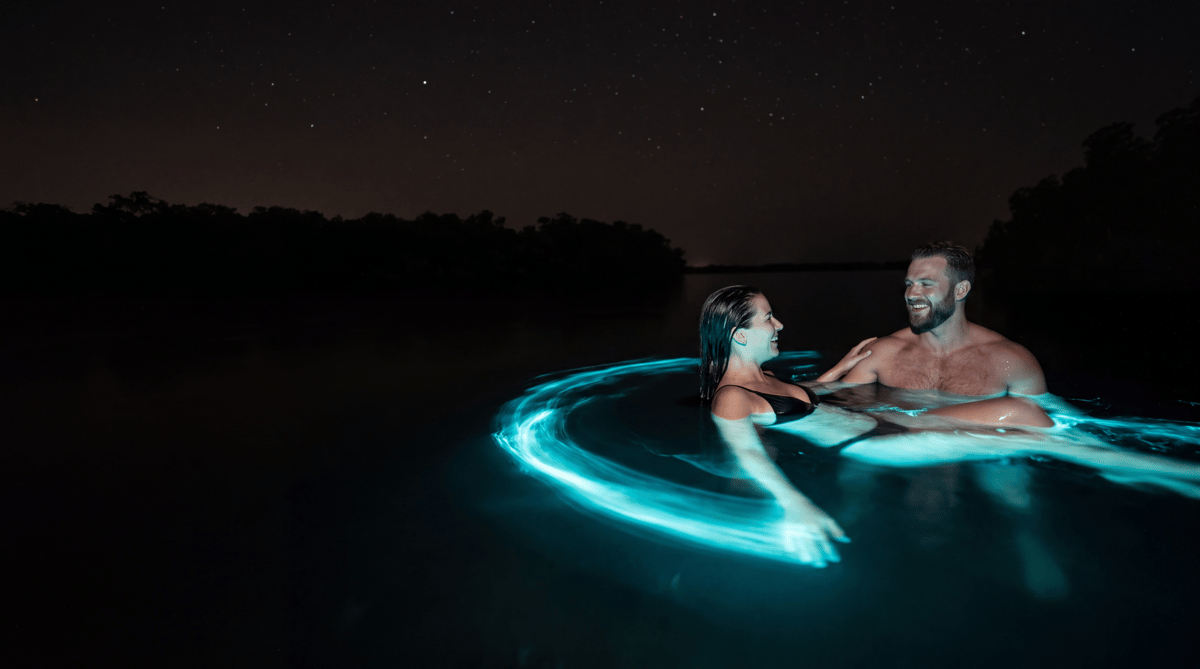
Bioluminescent Night Swim
Barú · RosarioOn a moonless night, the enchanted lagoon lights green around every movement of your bodies. Timed against the lunar calendar, months in advance.
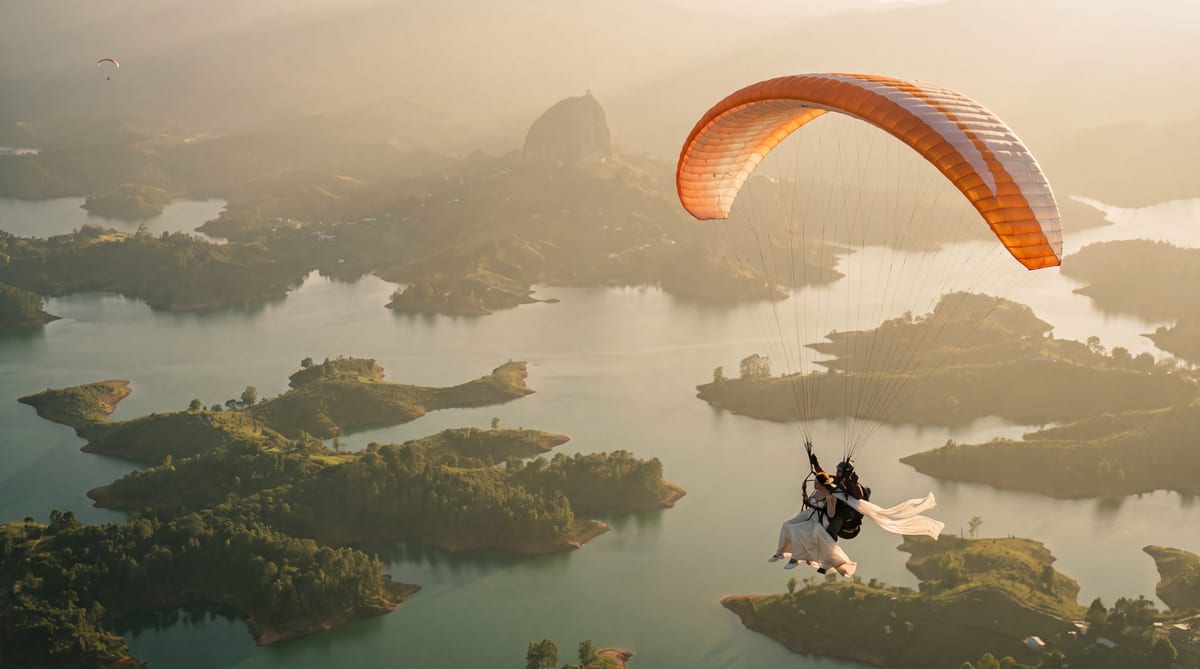
Flight Over the Andes
AntioquiaParaglide together off the ridge above the Aburrá valley, or take a helicopter over Guatapé’s thousand islands for portraits no drone can match.
Catamaran sunset vows · cloister-courtyard candlelight · hacienda takeovers · thermal-spring evenings · horse-carriage night rides · salsa and champeta nights · coffee harvests with the producer · mangrove canoes at dawn · private chefs and beach bonfires · hair and makeup on location. If you can dream it and the circuit allows it, I will find the operator and book it.
How It Works
The model is simple, and it is the whole point. You give me one budget, and I turn it into an entire experience, in addition to photographing and videographing everything. Not a deposit toward a gallery, the real number you want to spend on the whole thing. From there I allocate it across every piece, book each one in my name, and account for all of it in the open.
“Like hiring an architect. You hand over a feeling and a number, and I return a finished elopement.”
One honest number for the whole experience. I tell you right away what it can and cannot reach on your chosen circuit.
Boats, activities, florals, officiant, transport, dining. Sourced, negotiated in Spanish at local prices, and paid, each vendor vetted and booked in my name. Your flights and your accommodation are the two things I do not book: I tell you exactly where to stay for the days we have designed, and you book it yourselves.
You arrive to a finished plan and a full itinerary. I run the day, keep time, and photograph all of it. You carry nothing.
Why controlling everything makes the images better
The reason I run the whole day is the same reason the pictures and films look the way they do. When I control the location, the timing, the light, and the pace, the camera never has to fight the plan. Nothing is rushed, nothing is handed to a vendor who does not know your story, and every frame is anticipated hours before it happens. You stay present, and the coverage looks effortless because I removed everything that usually goes wrong.
Complete coverage in my cinematic style, hand-edited and delivered as a full gallery.
Motion coverage of the day, cut into a short cinematic film.
Aerial coverage where legally permitted, and a fast sneak peek within days.
Every package includes a printed album, designed to match the package you choose: the Blueprint album, the Signature album, or the Heirloom album.
The Three Tiers
One ladder, from “guide me and I’ll book it” to “handle all of it, for days, on both circuits.” Every tier includes full planning support and my photography and videography, with drone coverage where it is legally permitted. What changes is how much I carry, and how long the experience runs.
Every experience begins at $7,800 USD. From there the circuit and the tier set the number, and it is always written down before anything is booked.
Yes, I charge less than a comparable Tulum or Costa Rica elopement. That is not the headline. The headline is that my costs are Colombian, so the same tier carries far more inside it: the island buyout, the chef, the florals, the film, things that in Mexico would each be a line item you cut.
Elopement does not have to mean alone. A cloister courtyard, a hacienda veranda, or a private island absorbs up to twelve guests gracefully, and I fold their lodging, transport, and seats at the table into the same single budget. The day still feels like yours; they simply get to witness it.
Investment by Circuit
Prices vary by circuit because the real costs do. Tier I is the base: curation plus one designed elopement day of photography and videography, without accommodation, so it stays close to flat everywhere. Tier II adds lodging, in-country transport, and a second elopement day. Tier III is the four-day flagship, four elopement days across both circuits. The numbers are driven by nightly lodging, the signature activity, and boat or set-build costs. All figures USD.
A comparable all-inclusive elopement weekend on the Riviera Maya, coordinator, photographer, videographer, venue, florals, dinner, typically lands between $15,000 and $25,000 USD, and the beach is still public. Here, less money buys more experience, and the island is actually yours.
The mountain circuit sits lowest: private fincas and boats at Antioquia prices, no marine logistics. Cartagena steps up with boutique old-city lodging, and the island route adds launches and buyout premiums. The flagship carries one internal flight, always on a buffer day, and the widest coverage. The Studio Editorial is priced by the build: a balloon-rigged bench is one number, a field of levitating furniture is another, and you see the set budget itemised before a nail is driven.
Compare any row against its Mexican or Costa Rican equivalent and the same pattern holds: the number is lower, and the list of what is inside it is longer. That is the structural advantage of a curator whose costs are in pesos and whose standards are not.
“From” is a realistic starting point for a true all-inclusive experience. Your final number depends on lodging tier, activities, and guest count.
Your international flights and meals outside planned dining are the only things typically left to you. Everything else lives inside the fund.
What I Handle
Everything below is sourced, vetted, booked, and coordinated by me. You approve, I execute. This is the difference between a photographer and a curator, and in a Spanish-speaking country it is the difference between a plan and a prayer.
Location scouting and matching, finca and island access agreements, and the legal path you choose: the notaría route with apostilled documents and sworn translations handled start to finish, or a symbolic ceremony here with the paperwork done at home. Both are legitimate; I lay out the true cost and timeline of each.
Boutique casas, cloister hotels, haciendas, and island lodges, plus every transfer: private drivers I know personally, boat captains I use monthly, and airport pickups timed to your landing. You never hail anything.
Boats, helicopters, paragliders, Willys jeeps, thermal springs, bioluminescent lagoons, and the Studio Editorial build crew, booked with vetted operators and backup plans held for every weather-dependent piece.
Styling for both of you, florals, hair and makeup on location, private chefs and dining, cake, keepsakes, and a cohesive aesthetic tuned to you and the landscape, at Colombian vendor prices, not tourist quotes.
A custom day-of timeline, packing lists tuned to altitude and coast, weather monitoring, lunar-calendar timing for the lagoon, buffer days around every flight, and a ready backup for every key moment.
Full photography in my cinematic style, motion coverage and a short film, drone where legal, a fast sneak peek, and a complete edited gallery.
The Questions Everyone Asks First
No. I am your voice with every vendor, driver, and notary. In the tourist cores of Cartagena and Medellín you will manage fine solo; everywhere else, you are with me.
On my routes, yes. Every transfer is a private driver I know, every neighbourhood one I use myself, and nothing in your itinerary is improvised. The rules are the same as any big city: my job is that you never have to think about them.
Tap water is fine in Medellín and Bogotá; on the coast we stick to bottled, which your lodging stocks. Cards work almost everywhere; I brief you on the small amount of cash worth carrying and handle every vendor payment myself.
Medellín at 1,500m is gentle; only Bogotá at 2,600m asks for an easy first day, and I schedule it that way. On the coast, ceremonies live at dawn and golden hour, never under the noon sun.
No, US, Canadian, UK, and EU passports get 90 days on arrival. Your passport just needs six months of validity. That is the entire entry paperwork.
Equatorial rain is a burst, not a season. Every key moment in your itinerary has a covered or rescheduled backup already booked, and buffer time is built into the plan, not bolted on after.
Working Together
I love elopements. They’re the barebone of what a marriage ceremony is. No 200 guests to take away the attention from your soul-binding celebration. No loud music to dance to. No family members that you have to keep happy.
In essence they are the purest form of making your vows, out in the wild, as opposed to inside a concrete building.
I did weddings for 12 years. Traditional weddings often become performances for everyone except the couple. Elopements bring the attention back to the vows, the place, and the experience itself. They are not a photoshoot. They are logistical events in an unfamiliar country, with legal requirements, seasonal windows, language barriers, and weather most couples are navigating for the first time. Doing it well takes someone who is good at running an elopement, not only at photographing one.
And here is the part I will say plainly, because it is true: nobody owns the Colombia elopement. There is no established curator here, no name couples pass around, no one doing this end to end. I live here, I built the network, and I am claiming the title before anyone else knows it exists. In ten years, when eloping in Colombia is what eloping in Tulum was, you will have been here first, and so will I.
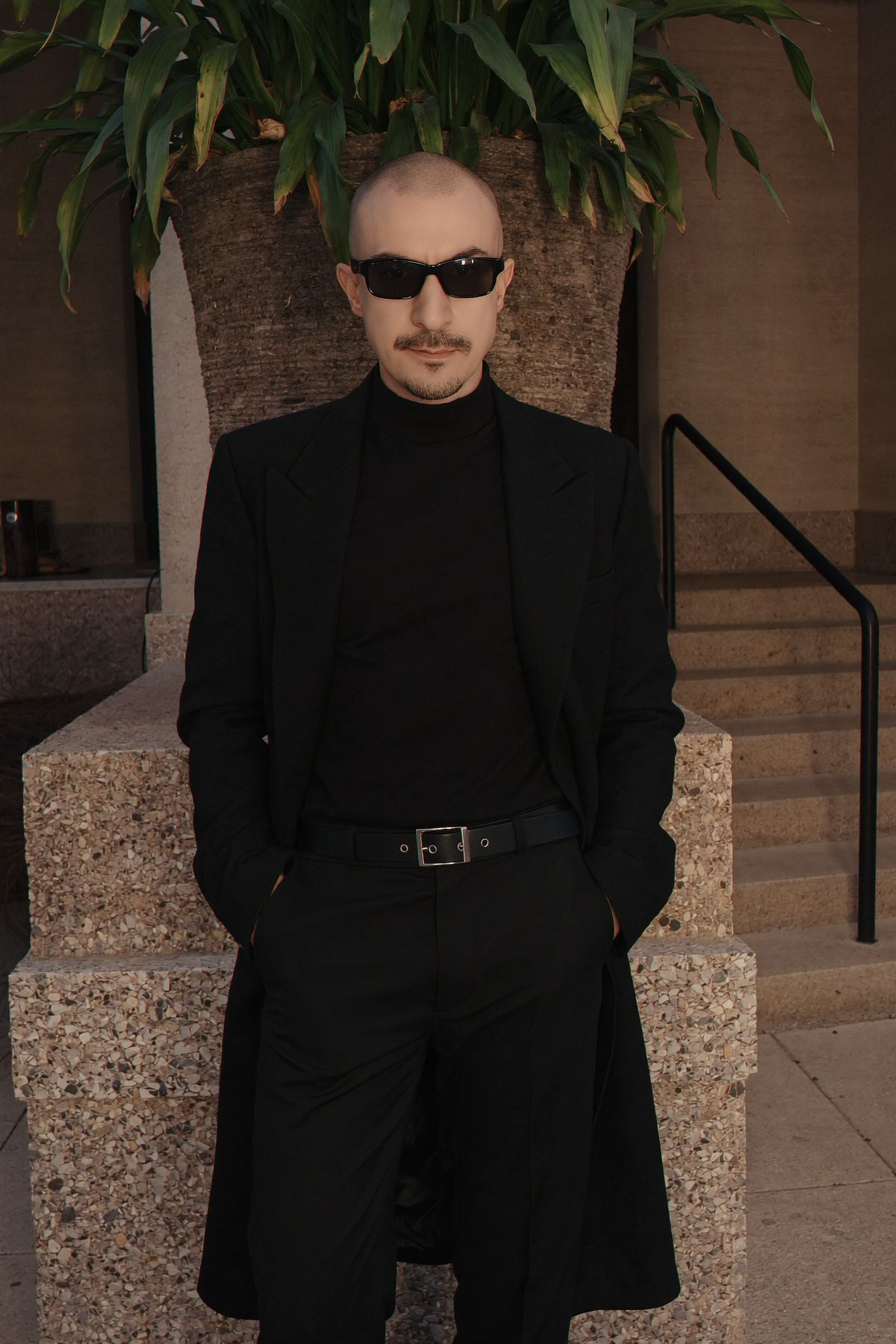
One person carries the vision, the logistics, and the camera, and that person lives in Colombia. Nothing gets lost in the handoffs, and the day simply feels like yours.
From a vague idea to a once-in-a-lifetime experience, without you managing a single vendor.
A free call. You tell me how you want it to feel, which circuit pulls at you, and your budget. Vague is fine, most couples start with nothing decided.
I design a custom proposal: circuit, experience, itinerary, and a clear budget allocation, refined with you until it is exactly right.
A retainer holds your date. Then I book everything, vendors, lodging, boats, permits, and keep you updated as confirmations land.
A finished itinerary is waiting. I run the day and photograph all of it, then deliver a sneak peek within days and the complete gallery within two weeks.
Why Couples Choose Me
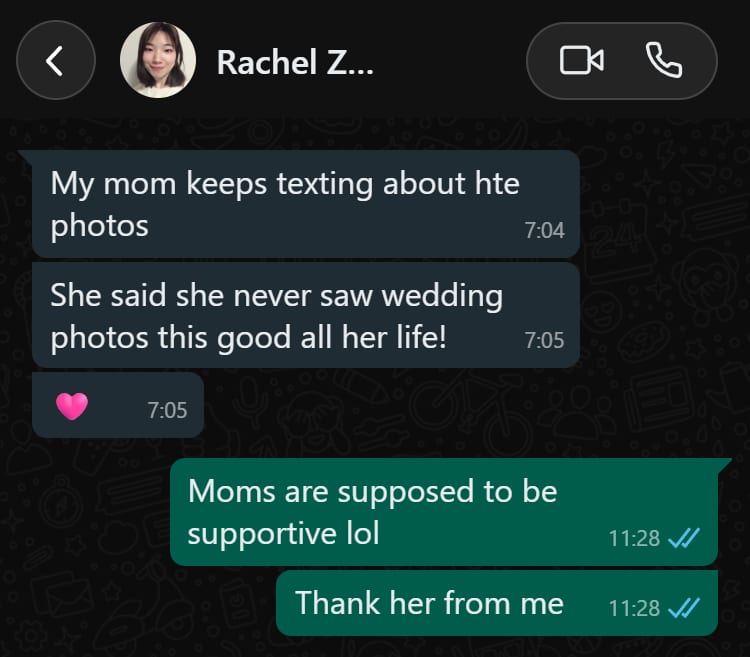
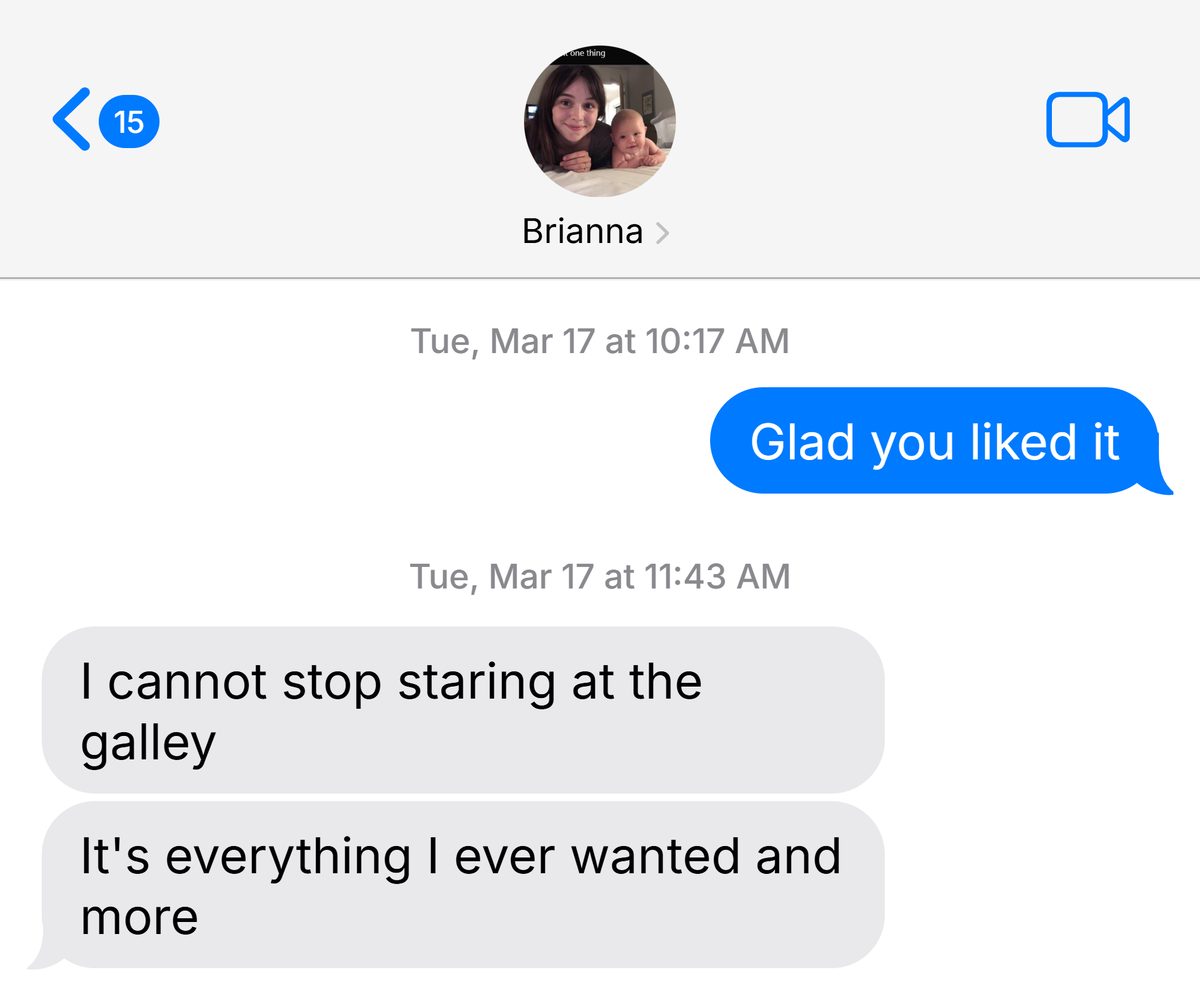
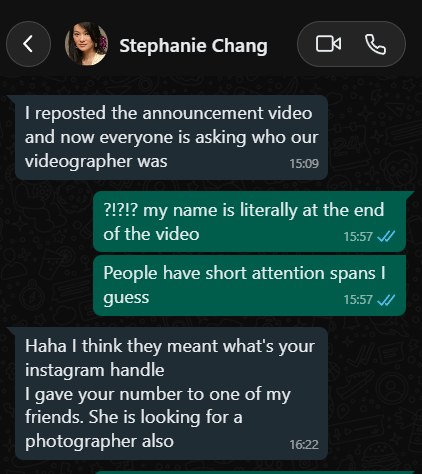
The guide is one thing. What it feels like to actually work together is another. Here is what couples have said after their day, in their own words.
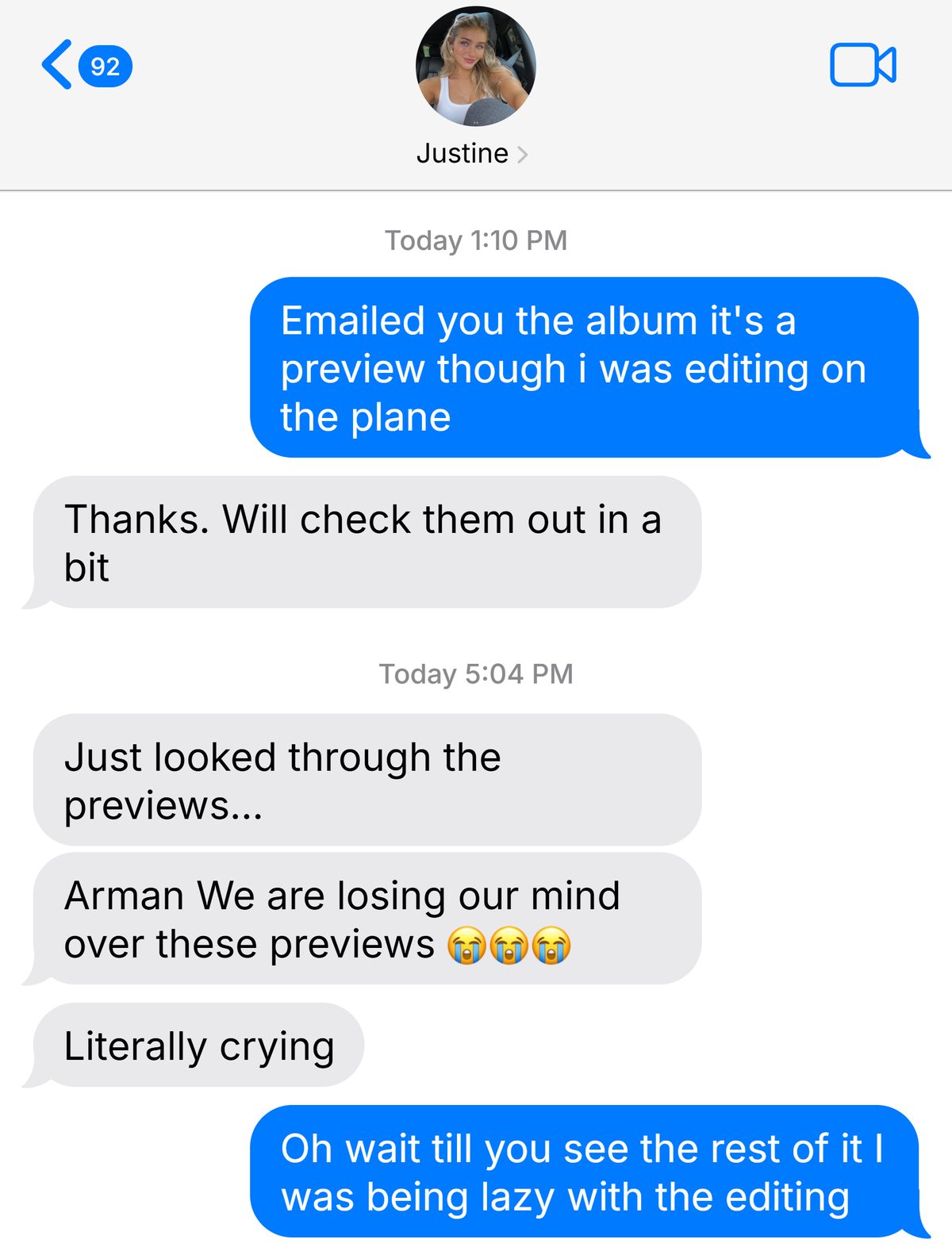
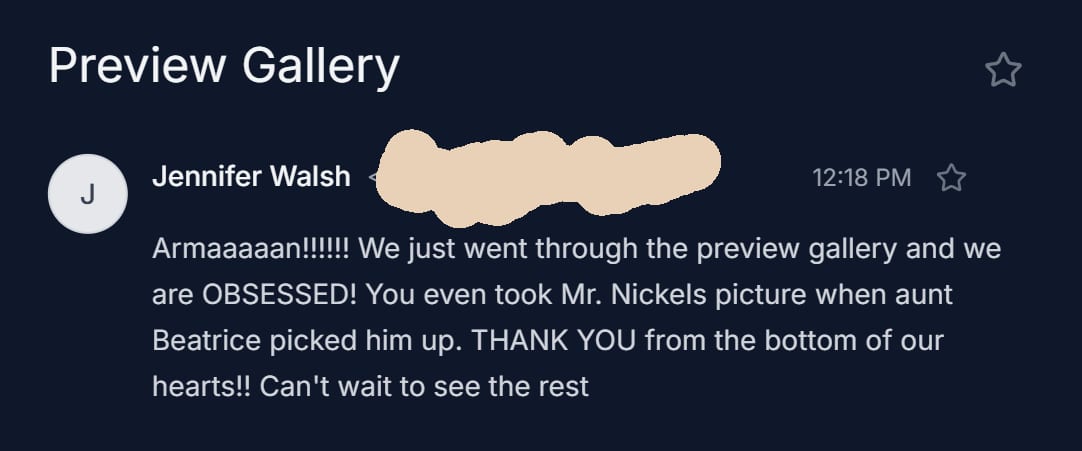
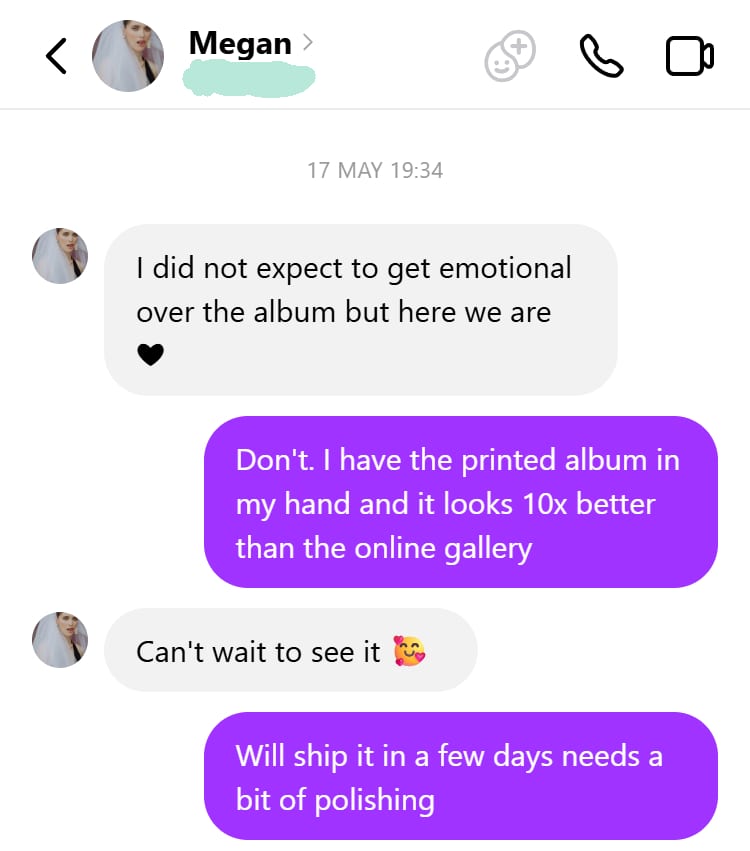
I take on a small number of curated elopements each year, so every couple gets the attention this work demands. The dry-season windows, December through April on the coast, December to February in the mountains, book out first, and the Studio Editorial calendar is smaller still.
Tell me how you want it to feel. I will take care of the rest, all of it.
@iarmanarai
WhatsApp +1 (604) 900-7876